Key takeaways
- Most AI writing tools generate content quickly but don't tell you whether that content is ranking, getting cited, or driving traffic
- The best tools in 2026 combine writing assistance with optimization signals -- SEO scores, readability, and increasingly, AI search visibility
- Tools like Surfer SEO, Clearscope, and Anyword have built-in performance prediction or optimization layers that go beyond raw generation
- If AI search engines like ChatGPT or Perplexity are part of your traffic strategy, you need a separate layer of tracking -- something like Promptwatch -- to know whether your content is actually being cited
- Picking the right tool depends on your workflow: solo blogger vs. enterprise marketing team vs. agency have very different needs
There's a problem nobody talks about with AI content tools: they're very good at making you feel productive.
You feed in a topic, get back 1,500 words, hit publish, and move on. It feels like progress. But weeks later, when you check your analytics, the article has 12 views -- 11 of which are probably you. The tool did its job. You wrote something. You just don't know if it worked.
This guide is about the tools that actually close that loop. Some are pure writing assistants that do generation well. Others layer in SEO optimization so you're not writing into a void. A few even predict performance before you publish. And at the end, I'll explain why in 2026, "working" means more than just ranking on Google.
What separates a good AI writing tool from a great one
Before the list, it's worth being clear about what we're evaluating. There are hundreds of AI writing tools now. Most of them wrap GPT-4 or Claude in a slightly different UI and call it a day. The ones worth using in 2026 do at least one of these things well:
- Generate content that sounds like a human wrote it (not a press release from 2019)
- Optimize for search intent, not just keyword density
- Give you feedback on whether the content will actually perform
- Integrate into your existing workflow without friction
- Help you understand what's missing, not just what to write
Let's get into it.
1. Jasper
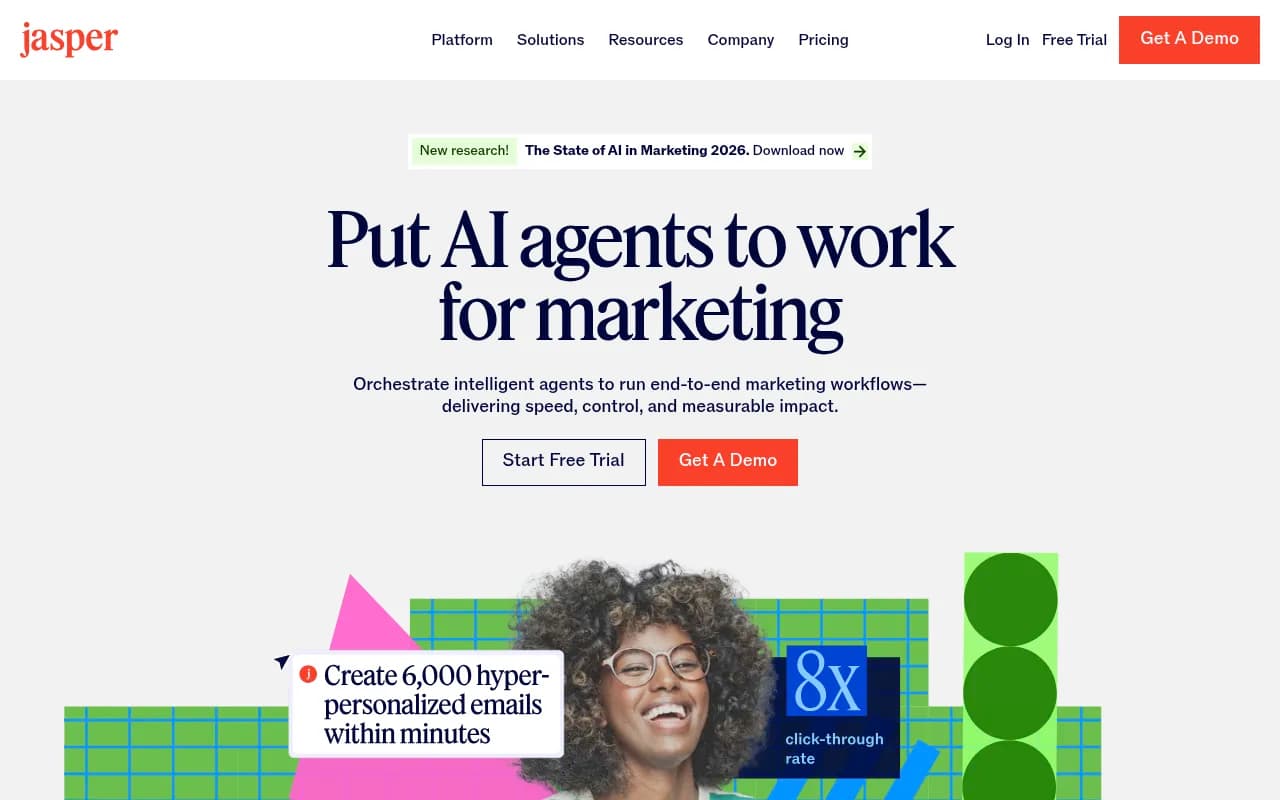
Jasper has been around long enough to have gone through several identity crises -- it started as a pure copywriting tool, then tried to be everything, and has now settled into being a solid AI marketing platform with a focus on brand consistency.
What makes Jasper stand out in 2026 is its Brand Voice feature. You train it on your existing content, and it learns your tone, vocabulary, and style. The output actually sounds like you, which is more valuable than it sounds when you're trying to maintain consistency across a team of five writers all using AI.
It also has a decent SEO mode that pulls in keyword data and helps you structure content around search intent. Not the deepest optimization layer, but enough for most marketing teams.
Where it falls short: Jasper tells you what to write but doesn't tell you much about whether it worked. You'll need Google Search Console or a rank tracker alongside it to close that loop.
Best for: Marketing teams that need brand-consistent content at scale.
2. Surfer SEO
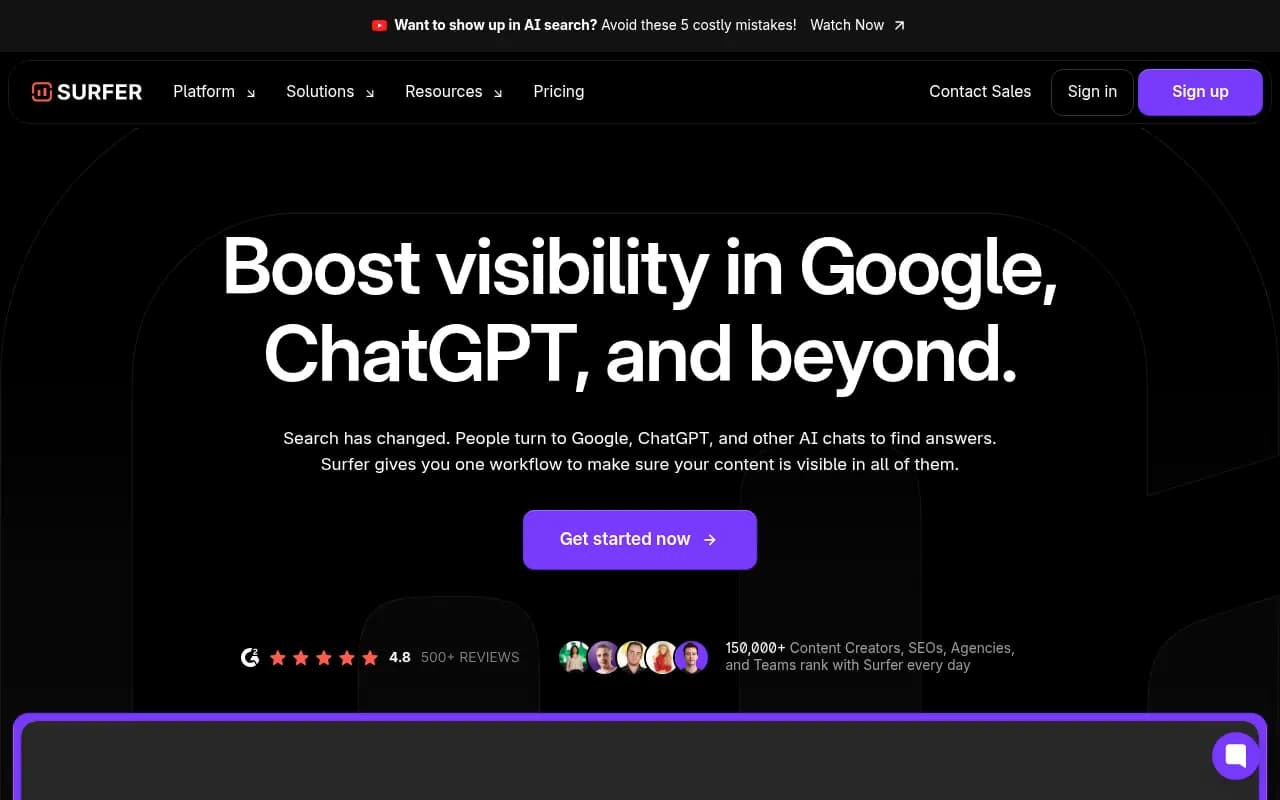
Surfer is the tool that changed how a lot of content teams think about optimization. Instead of guessing what to include in an article, Surfer analyzes the top-ranking pages for your target keyword and tells you exactly what topics, headings, and terms your content needs to compete.
The writing experience inside Surfer's Content Editor is genuinely useful. You write (or paste AI-generated content), and a real-time score updates as you add relevant terms. It's a bit like having a checklist that actually knows what Google wants to see.
In 2026, Surfer has also added AI writing capabilities directly into the editor, so you can generate a draft and optimize it in the same workflow. The quality of the AI output is decent -- not the most creative, but structured and on-topic.
The real value is the optimization layer. Surfer is one of the few tools that gives you a concrete signal about whether your content has a shot at ranking before you hit publish.
Best for: SEO-focused content teams who want to optimize as they write.
3. Clearscope
Clearscope does one thing and does it extremely well: it tells you what your content needs to cover to rank for a given keyword.
The interface is clean. You enter a keyword, Clearscope analyzes the top results, and you get a report showing which terms and topics appear in high-ranking content. Write your article in the built-in editor, and a grade updates in real time (A+ down to F). It's simple, reliable, and accurate.
What I like about Clearscope is that it doesn't try to write for you. It's an optimization tool, not a generation tool. That's actually a strength -- it works with whatever writing process you already have, whether that's human writers, ChatGPT, Jasper, or a combination.
The downside is price. Clearscope starts at $189/month, which is steep for solo operators or small teams. But for agencies or content-heavy companies, the ROI is real.
Best for: Content teams that want rigorous, data-backed optimization without changing their writing workflow.

4. Copy.ai
Copy.ai started as a quick-copy tool -- taglines, product descriptions, social posts -- and has grown into something more substantial. In 2026, it's positioned as a GTM (go-to-market) AI platform, with workflows that handle everything from prospecting emails to blog content.
For content writing specifically, Copy.ai is fast and flexible. The interface is conversational, the output quality is solid, and it handles a wide range of formats without much prompting. If you need to produce a lot of different content types -- blog posts, email sequences, landing page copy, social captions -- it's one of the more versatile options.
What it doesn't do well: deep SEO optimization. Copy.ai generates content, but it doesn't tell you whether that content will rank. You'd need to pair it with a tool like Surfer or Clearscope to get that layer.
Best for: Marketing teams that need high-volume, varied content across multiple formats.

5. Writesonic
Writesonic has carved out a niche as a solid mid-market option -- more features than basic tools, more affordable than Jasper or Clearscope. It includes an AI article writer, a paraphrasing tool, a landing page generator, and a chatbot called Chatsonic that's connected to the web for real-time information.
The article writer is genuinely capable. You give it a title and some context, and it produces a structured, readable draft. The web-connected features are useful for topics that require current information -- something that pure LLM tools struggle with.
Writesonic also has a built-in SEO checker that gives you basic optimization feedback, though it's not as sophisticated as Surfer or Clearscope. Think of it as a sanity check rather than a deep optimization layer.
Best for: Small teams or solo marketers who want a capable all-rounder without a premium price tag.

6. Anyword
Anyword is the most performance-focused tool on this list, and it's worth paying attention to for that reason.
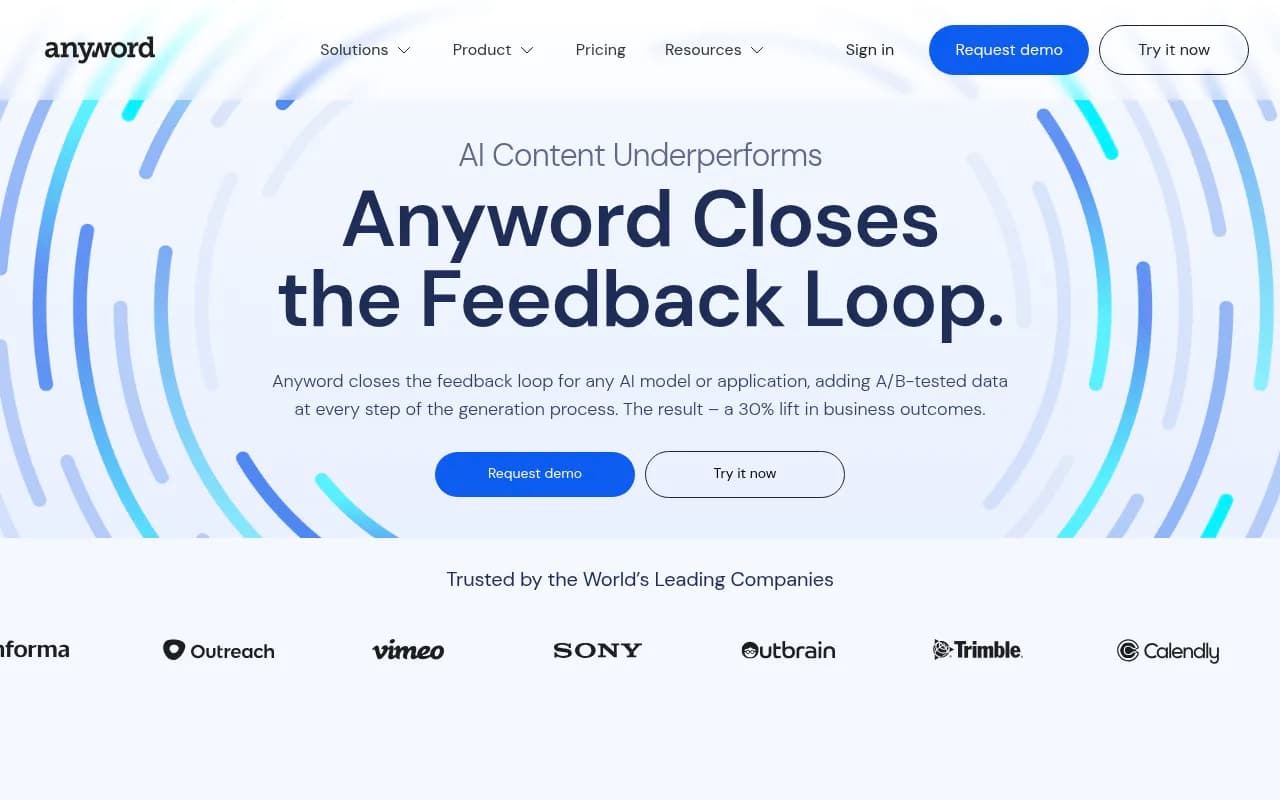
The core idea behind Anyword is predictive performance scoring. You write a piece of copy -- an ad, a headline, an email subject line -- and Anyword gives it a score based on how likely it is to perform well with your target audience. The scores are trained on real conversion data, not just general writing quality signals.
For content marketing, Anyword's Blog Post Wizard generates articles and scores them for predicted engagement. It's not perfect -- no tool can guarantee performance -- but having a signal before you publish is genuinely useful. It shifts the conversation from "does this sound good?" to "is this likely to work?"
Anyword also has a brand voice feature and integrates with Google Ads and Facebook Ads for performance-focused copy.
Best for: Performance marketers who want data-backed content decisions, especially for ad copy and conversion-focused content.
7. Grammarly
Grammarly might seem like an odd inclusion on a list of AI content writing tools, but in 2026 it's evolved well beyond spell-checking. The AI features now include full-sentence rewrites, tone adjustments, clarity improvements, and a generative writing assistant that can draft content from scratch.
What makes Grammarly worth including is that it's the finishing layer that most content workflows need. You can generate a draft in ChatGPT or Jasper, paste it into Grammarly, and get a thorough edit that catches awkward phrasing, passive voice, inconsistent tone, and readability issues that other tools miss.
The Business plan also includes a brand tone guide, which helps teams maintain consistency across writers.
It's not a replacement for a dedicated content generation tool, but it's a powerful complement to one -- and it integrates directly into browsers, Google Docs, and most writing environments.
Best for: Any team that wants to improve the quality and consistency of AI-generated content before it goes live.

How these tools compare
Here's a quick breakdown to help you decide which combination makes sense for your workflow:
| Tool | Primary strength | SEO optimization | Performance signals | Best for |
|---|---|---|---|---|
| Jasper | Brand-consistent generation | Basic | None | Marketing teams |
| Surfer SEO | Real-time SEO scoring | Deep | Pre-publish score | SEO-focused teams |
| Clearscope | Content grading | Deep | Pre-publish grade | Content agencies |
| Copy.ai | Multi-format versatility | Minimal | None | High-volume teams |
| Writesonic | Affordable all-rounder | Basic | Basic | Solo/small teams |
| Anyword | Predictive performance | Moderate | Pre-publish score | Performance marketers |
| Grammarly | Editing and polish | None | None | Any team as a layer |
The gap none of these tools fill
Here's something worth being honest about: every tool on this list helps you create or optimize content for traditional search. They're built around Google rankings, keyword density, and SERP performance.
But in 2026, a growing share of search happens in AI engines. When someone asks ChatGPT "what's the best project management tool for remote teams?" or asks Perplexity "which CRM is easiest to set up?", the AI gives them a direct answer -- and that answer cites specific sources. If your content isn't being cited, you're invisible to that user.
None of the tools above tell you whether your content is being cited by ChatGPT, Claude, Perplexity, or Google AI Overviews. They don't show you which of your pages AI models are reading, which competitors are getting cited instead of you, or what topics you're missing that AI engines want to answer.
That's a different problem, and it requires a different tool. Promptwatch is built specifically for this -- it tracks your brand's visibility across 10 AI engines, shows you which pages are being cited and which aren't, and has a content gap analysis that shows you exactly what to write to get cited more. The built-in AI writing agent then generates that content based on real citation data.

If AI search is part of your traffic strategy (and in 2026, it probably should be), you need both layers: a tool to create good content, and a tool to verify that AI engines are actually finding and citing it.
How to choose the right combination
There's no single tool that does everything well. The most effective content teams in 2026 are running a small stack:
- A generation tool (Jasper, Copy.ai, or Writesonic depending on budget and volume)
- An optimization layer (Surfer SEO or Clearscope for Google SEO)
- A quality check (Grammarly or Hemingway)
- An AI visibility tracker if AI search traffic matters to you
The mistake is treating any one of these as a complete solution. A tool that writes beautifully but never gets cited by AI engines is only solving half the problem. A tool that optimizes for Google but ignores Perplexity is leaving traffic on the table.
Start with the generation and optimization layer -- that's where most teams have the biggest gap. Then, once your content production is working, add the AI visibility layer to make sure your content is actually being found by the AI engines your audience is using.
A note on quality
One thing that hasn't changed despite all the AI advances: the content that performs best is still the content that's actually useful. AI tools can help you write faster, optimize smarter, and distribute more broadly. But they can't manufacture genuine expertise or real-world experience.
The best use of these tools is to handle the structural and mechanical parts of content creation -- outlines, drafts, optimization checklists, editing passes -- so your writers can spend more time on the parts that actually require human judgment: the specific examples, the honest opinions, the insights that come from actually knowing your subject.
That's what separates content that gets cited from content that gets ignored. By AI engines and by humans.