
Key takeaways
- Most AEO platforms are trackers. They tell you whether ChatGPT, Gemini or Perplexity mentioned your brand, then stop.
- A smaller group adds recommendations or content drafting. Fewer still publish to your CMS and measure whether the page got crawled, cited and clicked.
- Four capabilities separate platforms most clearly: crawler log analytics, AI traffic attribution, content publishing, and prompt-level data such as query fan-outs and volumes.
- Nearly every public comparison is written by a vendor. Treat pricing and rankings as claims to verify on official pricing pages.
- Pick based on the job: monitoring only, monitoring plus recommendations, or the full write-publish-measure loop.
Why a feature matrix, and why this one is split three ways
Search for "best AEO tools" and you get lists of 9, 10, 19 or 20 platforms. Profound's own guide covers 19. Nick Lafferty's report scores 9 in depth and lists 11 more. Conductor, Scrunch and MaxAEO each publish their own. They all rank themselves well, which tells you something.
What I find more useful than another ranking is a split by what the tool does for you:
- Trackers answer "Were we mentioned?"
- Advisors answer "What should we do?"
- Doers write, publish and then check whether it worked.
The terms AEO, GEO, LLMO and AI SEO get used interchangeably. The label matters less than which of those three jobs a tool covers.
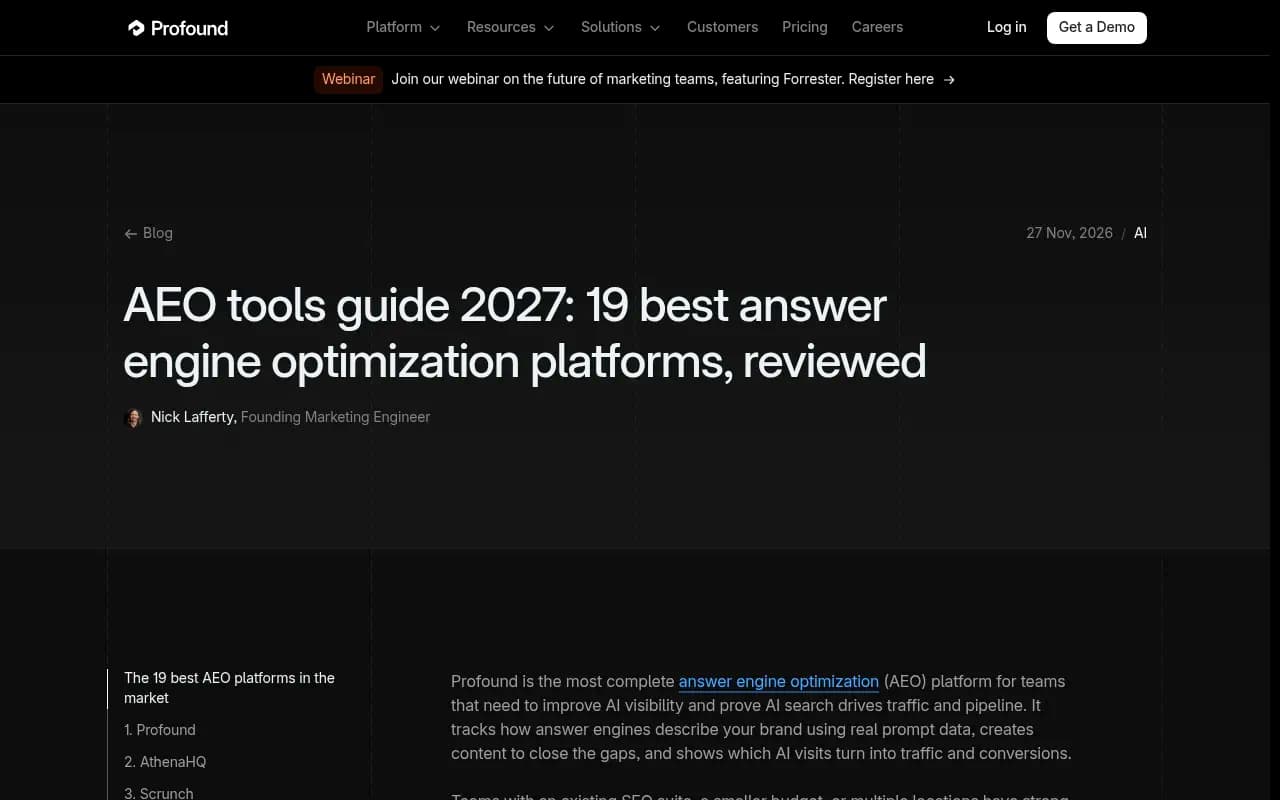
A caution about sources: the Profound guide, the Scrunch enterprise roundup, the Conductor list and the MaxAEO matrix are all published by companies that sell in this category. That is not a reason to ignore them. It is a reason to cross-check.
The capability matrix
Here are the capabilities that actually differ between platforms. Basic things like multi-engine tracking and competitor benchmarking are now common, so I left them out of the differentiators.
| Capability | Why it matters | Usually found in |
|---|---|---|
| Real-UI prompt tracking (not API-only) | User-facing answers and citations can differ from API output | Mid-market and up |
| Prompt volumes and difficulty | Tells you which prompts are worth chasing | Fewer tools, often enterprise tiers |
| Query fan-out visibility | Shows the sub-searches AI runs per response | A handful of platforms |
| Citation and source analysis | Shows which pages and domains feed answers | Most platforms |
| AI crawler logs | Separates an access problem from a content problem | Rare |
| AI traffic and conversion attribution | Proves revenue impact | Rare |
| Recommendations or action lists | Turns data into a to-do list | Advisor tier |
| Content generation | Drafts pages aimed at citation gaps | Advisor and doer tier |
| CMS publishing | Gets content live without copy-paste | Doer tier |
| Page-level tracking after publishing | Closes the loop | Doer tier only |
| Local and city-level tracking | Matters for multi-location brands | Some enterprise and higher tiers |
Tier one: trackers
Trackers are the largest group and the cheapest. They run a set of prompts against AI engines on a schedule and report visibility, position, sentiment and sources. That is genuinely useful, and for a small team that only needs a scoreboard it may be enough.
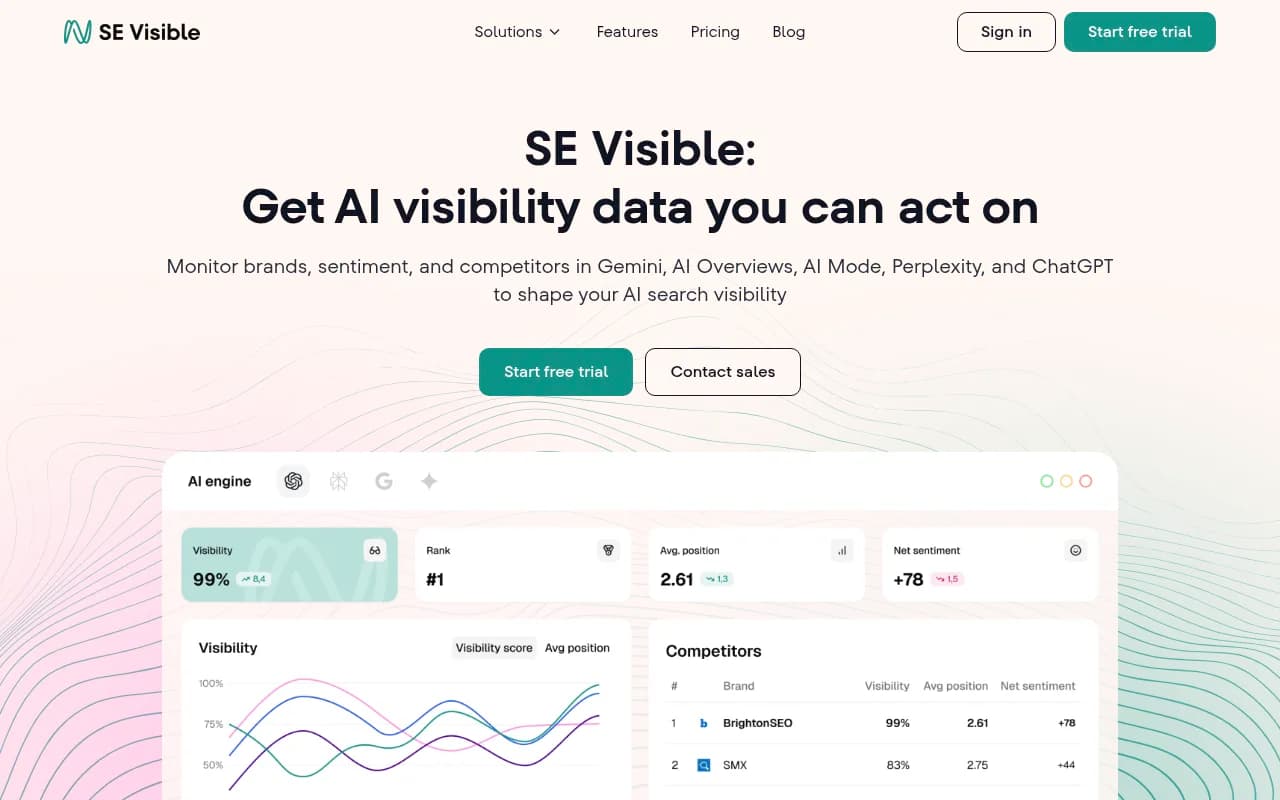
Examples in the catalog include Otterly.AI, Peec AI, Rankscale, SE Visible, Goodie AI and LLM Pulse.
Otterly.AI


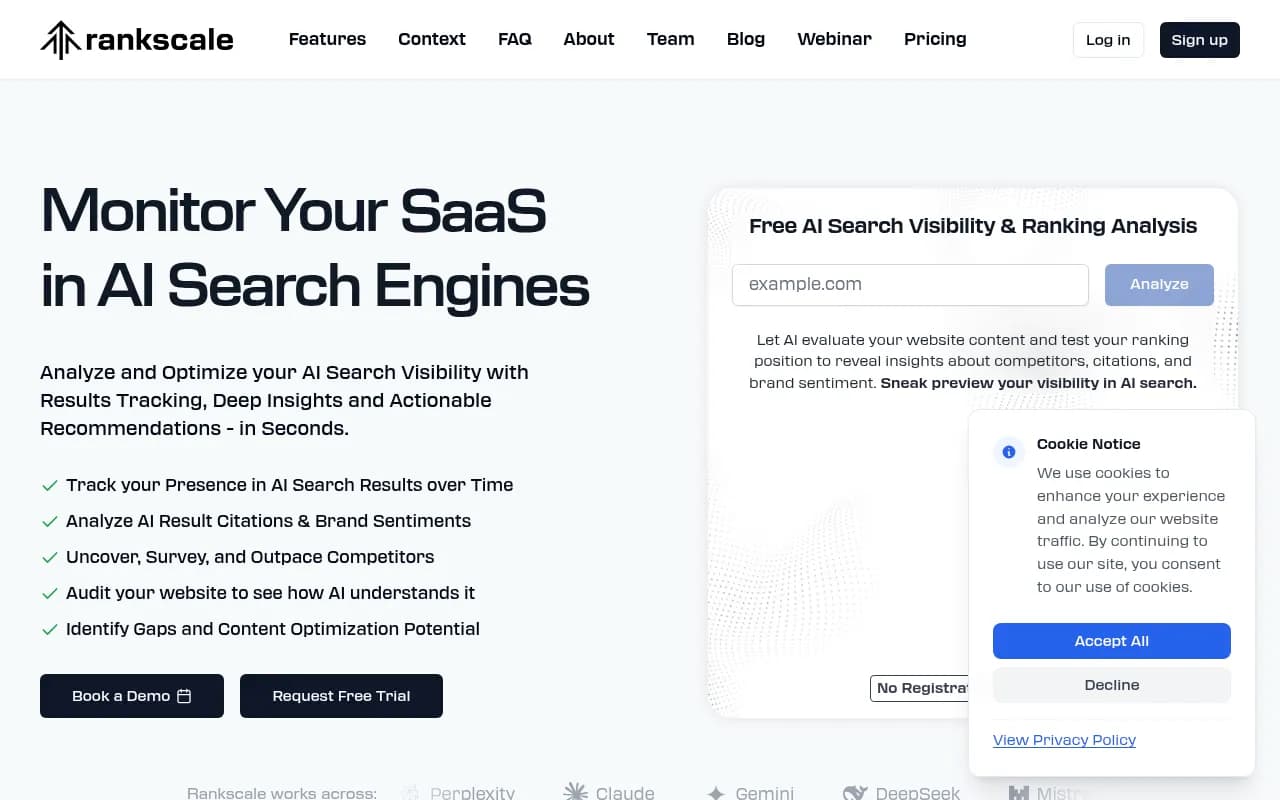
One comparison (from a vendor that sells its own product, so take it with salt) lists Otterly at Lite $29, Standard $189 and Premium $489, and Peec AI at Starter $95, Pro $245 and Advanced $495. Peec also charges per-model add-ons on some plans, and Otterly's Lite plan has 15 prompts with extra charges for AI Mode and Gemini. Entry price is rarely the real price.
The tracker ceiling is simple. You get numbers. You do not get a page written, a crawler error explained, or a traffic number tied to the visibility change.
What the data says trackers can't tell you
Promptwatch Data shows that product pages were the most cited content type in ChatGPT at 22.4% of classified citations, with landing pages at 16.8%, from Sep 28 to Oct 4, 2026 (Which Content Types Does ChatGPT Cite the Most?). For commercial prompts, product pages rose to 26.0% and landing pages to 20.6%. A tracker will report that you are missing from those answers. It won't tell you that you probably need product and landing pages written for that intent.
Tier two: advisors
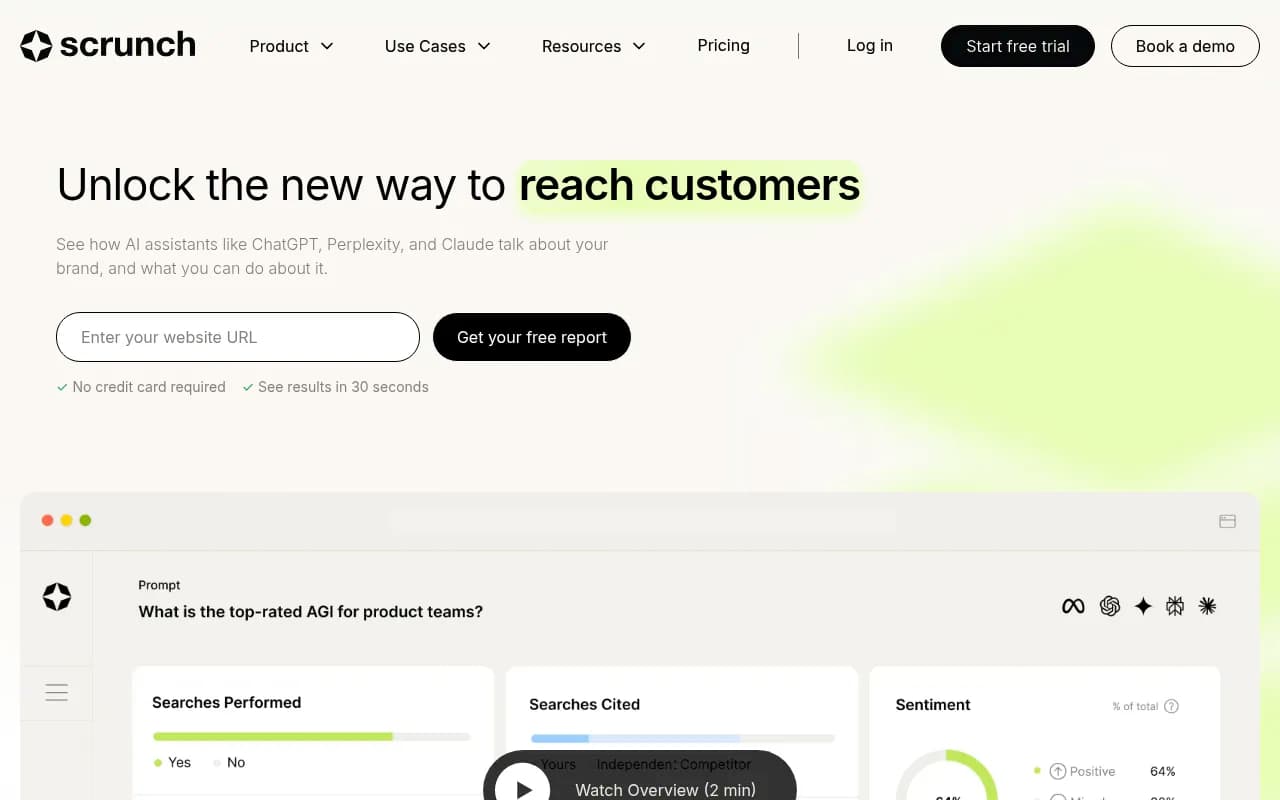
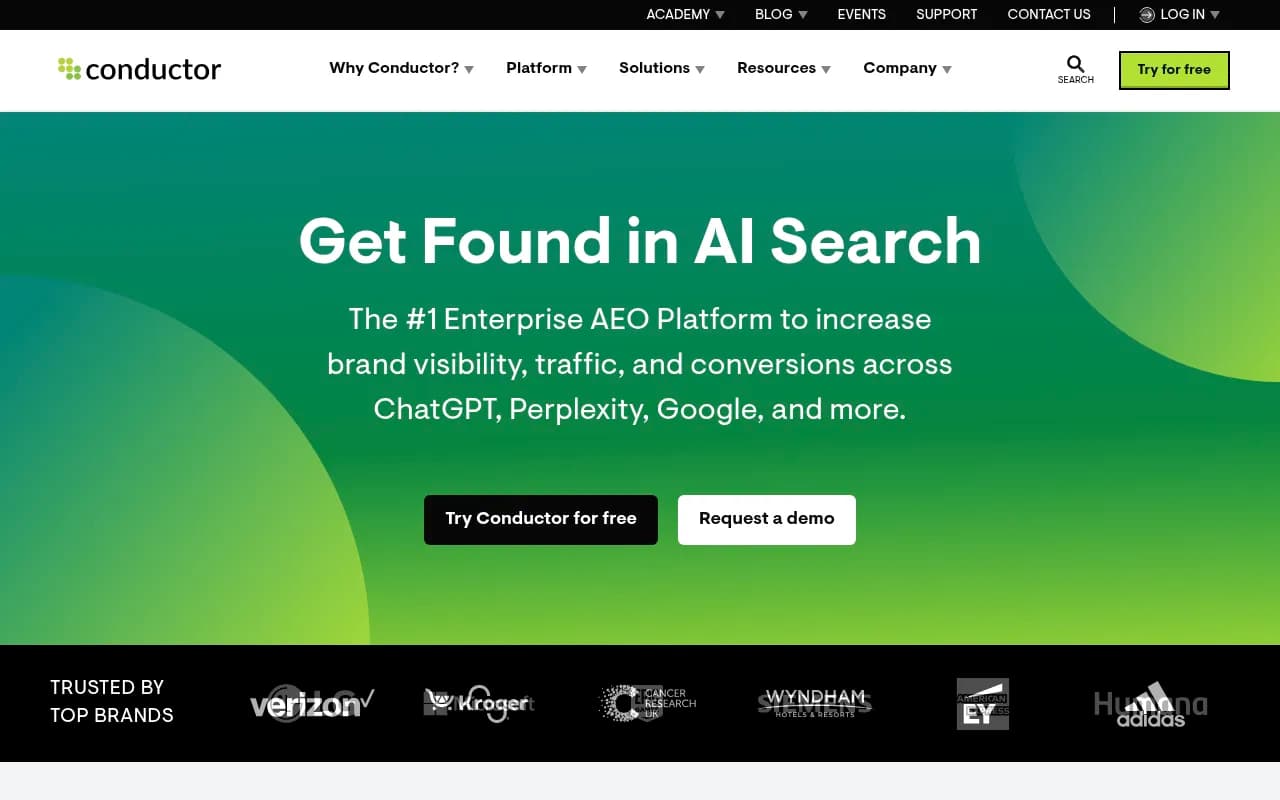
Advisors add prescriptive output. AthenaHQ built its pitch around an Action Center. Profound's own guide credits AthenaHQ for that, while pointing out that its prompt volume relies on an undisclosed estimation model and recommendations often need editing. Scrunch leans on its Agent Experience Platform, which serves AI-optimized content to agents. Conductor tracks 160+ countries down to the city level and sits inside a broader enterprise SEO suite.

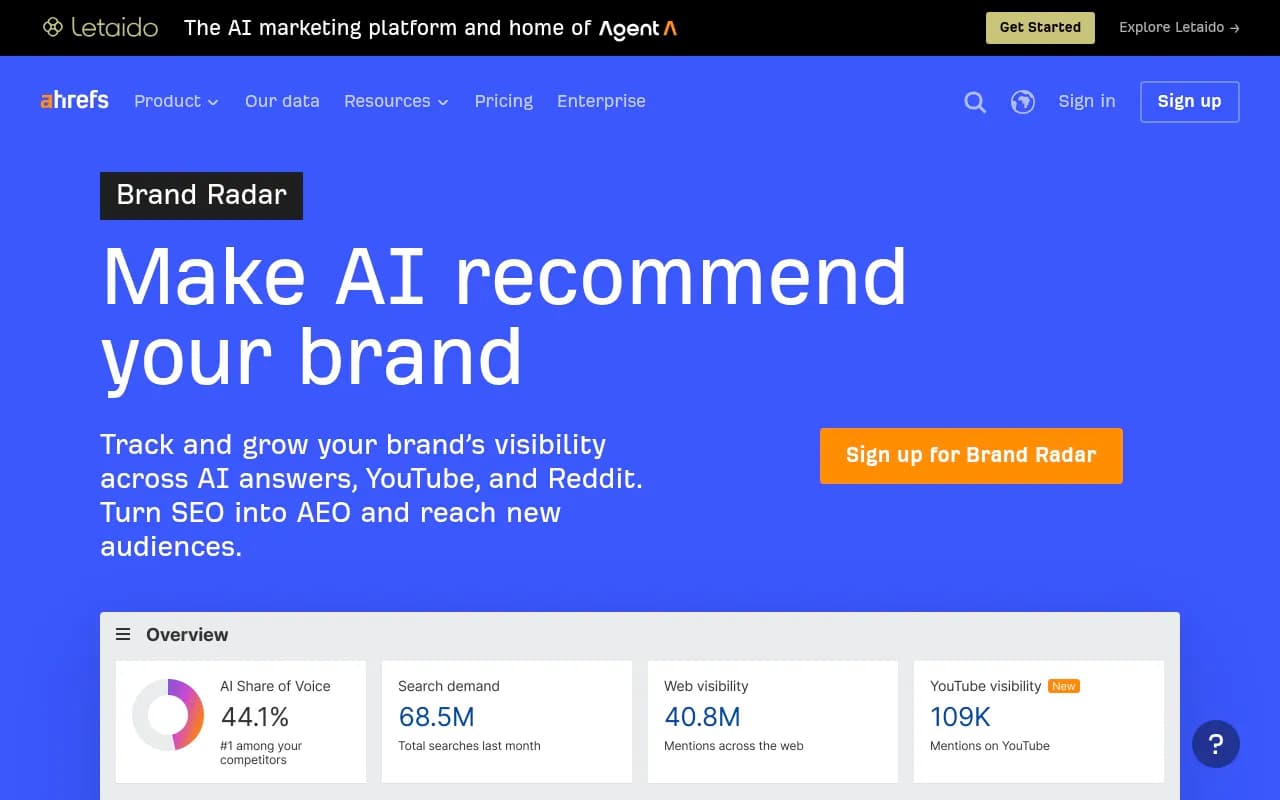
Suite vendors such as Semrush and Ahrefs (with Brand Radar) also sit here or one rung lower. Their draw is that AI data lives next to your existing keyword and backlink data. The tradeoff is typically a fixed prompt set and shallower AI-specific data.
Pricing notes from the same vendor-authored sources: AthenaHQ has a free Essential plan and then roughly $295 a month for Self-Serve, with credit metering. Scrunch Core runs about $250 to $295 a month for 125 prompts, 5 site audits and 4 platforms, though another source puts its Starter at $250 annual for 350 prompts and 3 users. These do not agree, which is exactly the point about checking official pages.
Credit-metered plans have a hidden cost. If every scan burns credits, you end up cutting scan frequency, and a thinner time series makes visibility trends noisier.
Tier three: tools that track and optimize
This is the smallest group. A tool belongs here if it can take a gap it found, produce the content, push it to your CMS, and then show whether AI crawled and cited the result.
Promptwatch is built around that loop. It monitors prompts in the real interfaces of ChatGPT, Google AI Overviews, Google AI Mode, Gemini, Perplexity, Copilot and others, traces which pages and third-party sources get cited, acts through an Action Board and a Content Agent that publishes to WordPress, Webflow or Framer, and measures with IP-verified crawler logs, page tracking and visitor analytics.

Where it differs from most of the field:
- IP-verified AI crawler logs (GPTBot, ClaudeBot, PerplexityBot and others), so you can tell whether a missing citation is an access problem or a content problem. Learn more about crawler logs.
- Visitor analytics that attribute traffic and conversions from AI engines.
- Prompt volumes, difficulty scores and query fan-outs, plus Reddit, YouTube, LinkedIn and Instagram citation reports.
- Brand Narrative and Fact Check, which pull out individual claims AI makes about you and check them against sources.
- Local targeting at exact coordinates and tracking as often as hourly on Business.
Pricing, from Promptwatch's own page (verify at promptwatch.com/pricing): Essential is $95 a month, Professional $245, Business $579. The Content Agent starts on Business, and agency plans run $199, $399 and $799. Every plan tracks all supported models, and there is a 7-day free trial on monthly billing. For a head-to-head view, see Promptwatch vs Profound and the 2026 platform comparison.
Profound belongs in the conversation too. It claims daily tracking of all major engines on 1.9B+ real prompts, plus content creation, crawler analytics and attribution. Its tradeoff, by its own guide's wording, is that it can be overkill for teams that just want a lightweight visibility score. Pricing is murky: one source lists Starter at $99 (ChatGPT only) and Growth at $399 (3 engines, 100 prompts), another says sales-quoted only. Enterprise contracts are often reported at $2,000 to $5,000+ a month plus setup fees, though that range wasn't re-verified.
Profound

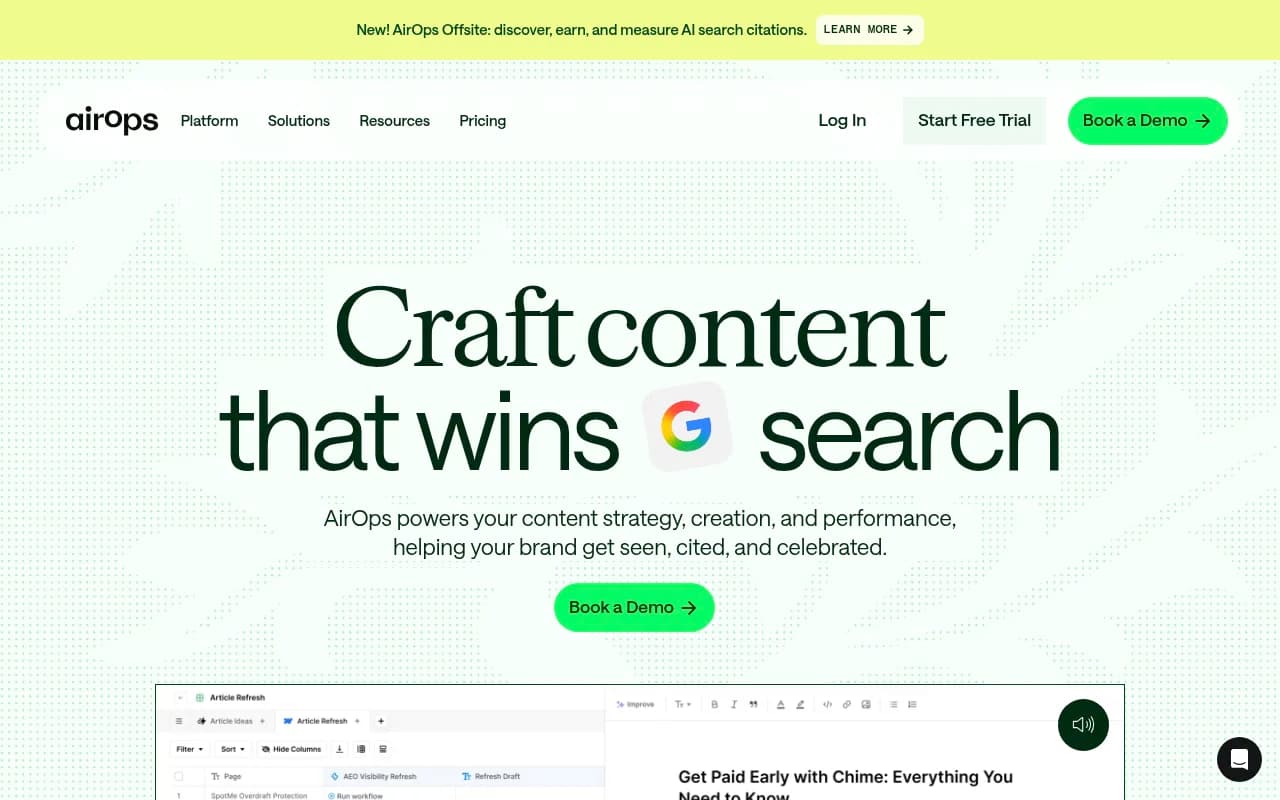
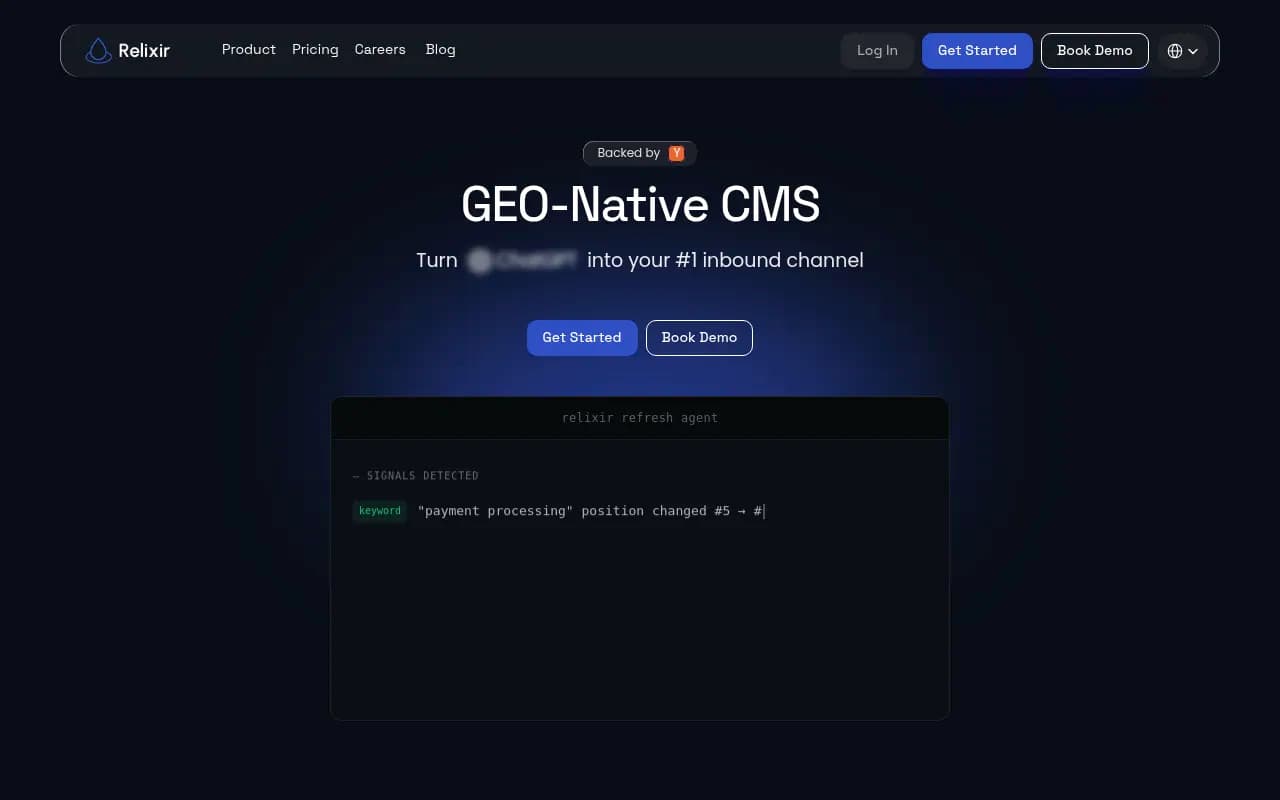
Other tools in this tier, with differing depth: Rankscale (its $295 plan adds a content agent), Searchable, Relixir, AirOps (content engineering, more doer than tracker) and Geoptie (drafts only).
Side-by-side summary
| Platform | Tracks | Recommends | Writes content | Publishes to CMS | Crawler logs |
|---|---|---|---|---|---|
| Promptwatch | Yes | Yes | Yes | Yes (WordPress, Webflow, Framer) | Yes |
| Profound | Yes | Yes | Yes | Varies by plan | Yes (per its own guide) |
| AthenaHQ | Yes | Yes | Limited | Reported via CMS connectors | Not a headline feature |
| Scrunch | Yes | Yes | Partly | AI-served content layer | Agent-focused |
| Conductor | Yes | Yes | Within suite | Within suite | Not a headline feature |
| Peec AI | Yes | Limited | No | No | No |
| Otterly.AI | Yes | Limited | No | No | No |
| Semrush / Ahrefs | Yes | Limited | Separate tools | No | No |
Treat the table as a starting shortlist. I built it from vendor claims and the published feature descriptions, and some cells are my best reading, not a lab test. Verify any cell that decides your purchase on a trial.
The three features I'd weigh heaviest
Crawler logs
Promptwatch's AI crawler traffic data (verified requests, Jun 8 to Sep 6, 2026) showed OpenAI's share of verified AI crawler requests fell from 94.8% in Jun 8-14 to 79.8% in Aug 31-Sep 6 (AI Crawler Traffic). The report's own advice is practical: compare your logs to that mix. If a provider is big in the report but near zero in your logs, you may be blocking it. Only tools with log analytics can do that check. You can run a free first pass with the Agentic Readiness Check.
Query fan-outs
ChatGPT runs sub-searches for a single prompt. Promptwatch Data tracked fanouts per response falling from 2.15 in early December 2025 to about 1.84 by early March 2026, with query length shrinking too (ChatGPT Query Fanouts). The page's intro cites a range of 3 to 8+ searches for a single prompt, which conflicts with those averages, so don't quote either number as gospel. What matters is the practical point: headings that read like short search queries are easier to match. A tool that shows fan-outs lets you write to them. See the fan-out generator for a free look.
Attribution
Profound reported that after ChatGPT moved to inline brand hyperlinks on May 7, 2026, average daily OpenAI referrals across the sites it tracks rose from roughly 158K to 249K. Referral traffic is real. If your platform can't connect it to pages and conversions, you are stuck defending a visibility score to a CFO.
How to choose
You want a scoreboard. One brand, a few dozen prompts, an analyst who will do the content work. A tracker is fine. Compare per-engine add-ons and country limits before you assume the entry price is the real price.
You want a to-do list. You have a content team but no time to find the gaps. Look at advisors, and ask how editable their recommendations are.
You want the loop closed. You need pages written, published and measured, with proof of crawl, citation and traffic. That is the doer tier, and it's where cost per outcome matters more than cost per seat.
You're an agency. Check unlimited projects, white-label output and pitch-ready reports. Promptwatch's agency plans include AI Visibility Reports for prospects. See the agency page.
You're enterprise. Ask about SSO, audit logs and security certifications (ISO 27001, SOC 2), plus city-level tracking and managed workflows.
A procurement checklist
MaxAEO's B2B matrix makes a good point: many comparison tables treat all prompts as equal, but for B2B the buyer stage matters. Score a vendor on whether it covers problem, category, comparison, purchase and trust prompts, not only branded ones. Then ask:
- Are answers collected from real interfaces, or API calls only?
- Can I see the exact sub-queries behind a response?
- Can I verify whether AI bots read my pages?
- Does the tool tie AI referrals to conversions?
- Can it publish to my CMS, and does it track the page afterwards?
- What happens to scan frequency when credits run out?
- Is pricing public, or sales-quoted with a setup fee?
Pitfalls
- Pricing drift. The same vendor shows different prices across sources. Confirm on the official page.
- Engine count. Check how many engines each tier includes, and whether extra models cost more.
- Biased rankings. Almost every comparison is vendor-written. I found no independent benchmark of tracking accuracy or recommendation quality, so run your own trial with the same 20 prompts on two tools.
- Vanity scores. A visibility score alone doesn't say whether the problem is coverage, position, sentiment or crawlability.
For more options, browse the GEO software directory or the AI rank tracking tools directory.
Bottom line
Buy a tracker if you need a number. Buy an advisor if you need a list. Buy a platform that tracks, writes, publishes and measures if you need AI search to produce traffic you can defend. Run a 7-day trial on two finalists with identical prompts before you commit. For Promptwatch, the quickest start is the free AI visibility report or the 7-day free trial.
FAQ
What is the difference between AEO and GEO tools?
In practice, nothing. AEO, GEO, LLMO and AI SEO describe the same work: improving how AI engines mention and cite your brand. Judge tools by what they do, not the acronym.
Do I need crawler logs?
If you're seeing mentions but no citations, yes. Logs show whether AI bots can reach your pages and where they fail.
Are tracking-only tools worth it?
Yes for small teams with in-house content capacity and a tight budget. They stop being enough when you need to prove impact or scale content.
How often should prompts run?
Daily is standard. Faster cadences (every 12, 6 or 1 hours on some plans) help during launches or when you need a steadier visibility number.
Which pricing numbers can I trust?
Only the ones on the vendor's official pricing page. Third-party figures in this guide came from vendor-authored comparisons and are marked accordingly.