Key takeaways
- AI assistants like ChatGPT, Perplexity, and Gemini are now a meaningful product discovery channel -- roughly 15% of e-commerce traffic comes from AI, and that number is growing fast.
- Google Analytics shows you nothing about this traffic. You need dedicated AI monitoring tools to know if your brand is being recommended, how it's framed, and whether the information is accurate.
- The biggest risk isn't just being absent from AI recommendations -- it's AI hallucinating wrong prices, incorrect availability, or outdated specs about your products.
- Monitoring alone isn't enough. The brands winning in AI search are the ones creating content specifically designed to be cited by LLMs.
- Several purpose-built tools now exist for e-commerce AI monitoring, ranging from lightweight trackers to full optimization platforms.
Why AI product discovery is now a real channel
Think about how your customers actually shop. Before they open Amazon or Google, a growing number of them type something like "what's the best wireless headphones under $100" into ChatGPT. They get a response. They often buy from whatever brand that response recommends.
According to data from TrackMyBusiness, 67% of shoppers now use AI for product research, and people who see a product recommended by an AI assistant are 3x more likely to buy it. That's not a small behavioral shift -- that's a fundamental change in how purchase decisions get made.
The problem: you almost certainly have no idea what these AI models are saying about your brand right now.
Your Google Analytics dashboard shows organic, paid, direct, referral. It has no "ChatGPT" row. No "Perplexity" column. The traffic that arrives after an AI recommendation looks like direct traffic or gets lost entirely. You're flying blind on a channel that's already sending customers to your competitors.
The three problems e-commerce brands face in AI search
1. You're not being recommended at all
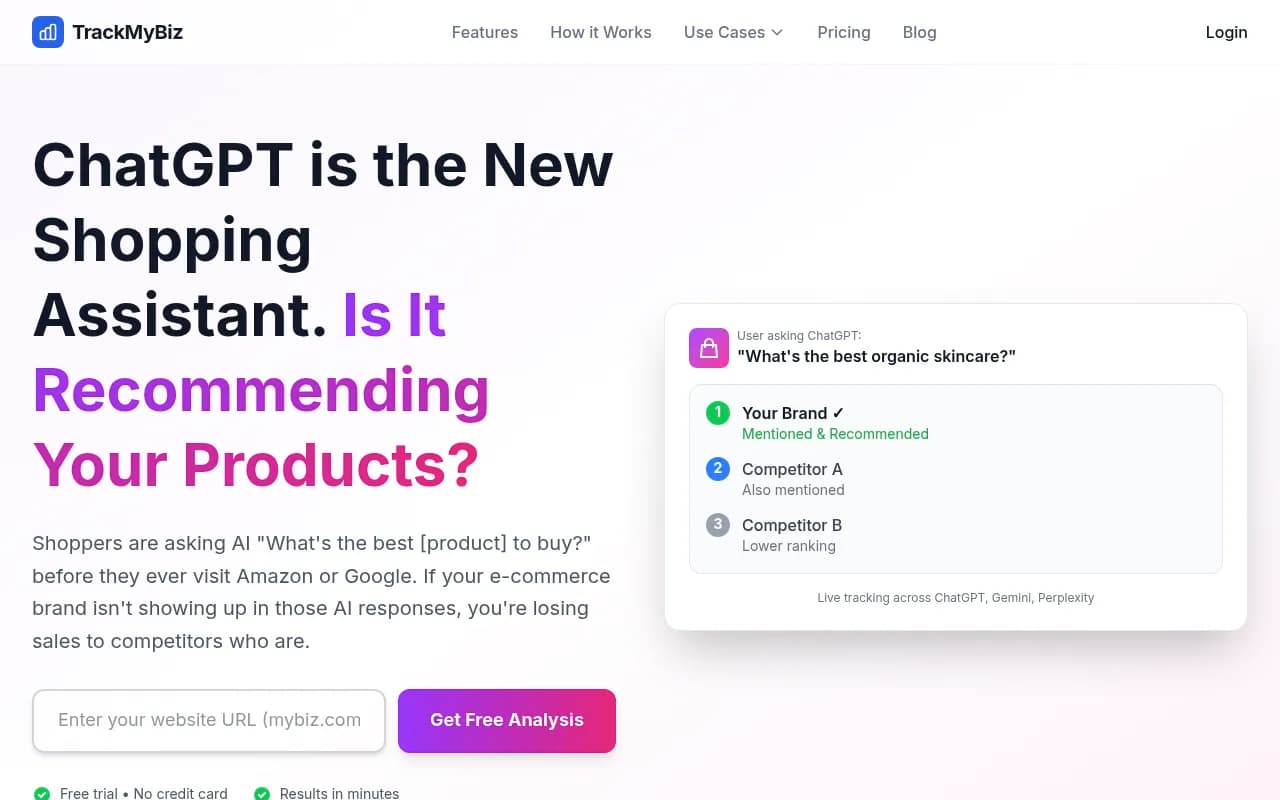
When someone asks ChatGPT "what's the best organic skincare brand," the model pulls from its training data and real-time web sources to generate a list. If your brand doesn't appear in the sources AI models trust -- your own site, review platforms, editorial coverage, Reddit discussions -- you won't make the list. Your competitor will.
This is the visibility gap problem, and it's the most common issue for e-commerce brands that haven't thought about AI search yet.
2. AI is hallucinating wrong information about your products
This one is more dangerous than being absent. AI models regularly generate product details that are simply wrong: outdated pricing, incorrect specifications, fake reviews, wrong availability status. A shopper who sees "currently unavailable in most regions" for a product you have in stock will buy from someone else. They won't double-check. Why would they?
TrackMyBusiness calls this the "Safety Engine" problem -- and it's real. Wrong AI-generated product info can quietly kill conversions without you ever knowing it happened.
3. You can't measure the impact
Even if you're doing well in AI recommendations, you can't prove it. Standard analytics tools don't attribute traffic from AI assistants. You can't tie a sale to a ChatGPT recommendation. This makes it nearly impossible to justify investment in AI visibility or demonstrate ROI to stakeholders.
What to look for in an AI brand monitoring tool
Before diving into specific tools, it's worth knowing what separates a useful platform from one that just looks impressive in a demo.
Platform coverage is the starting point. The major AI engines you need covered are ChatGPT, Perplexity, Google AI Overviews, Google AI Mode, Gemini, and Claude. Missing even one of these means blind spots. Some tools also cover Grok, DeepSeek, Copilot, and Meta AI -- useful if you're in markets where those models have traction.
Monitoring frequency matters more than people realize. AI responses are non-deterministic -- the same prompt can return different results depending on when it's asked, how it's phrased, and what model version is running. Daily or near-real-time monitoring catches changes that weekly scans miss entirely.
E-commerce-specific query tracking is what separates general brand monitoring from something actually useful for product businesses. You want to track queries like "best [product category] under $X," "top [product type] brands," and "[your brand] vs [competitor]" -- not just your brand name.
Hallucination detection is a feature most tools don't have. The ones that do will alert you when AI generates wrong pricing, incorrect availability, or fabricated product details.
Content gap analysis is what moves you from monitoring to actually improving. Knowing you're not mentioned is useful. Knowing exactly what content you need to create to get mentioned is what drives results.
The best tools for e-commerce AI brand monitoring in 2026
Promptwatch -- best for brands that want to act, not just watch
Promptwatch is the platform that goes furthest beyond pure monitoring. Most tools show you a dashboard of where you're visible and where you're not. Promptwatch shows you that, then helps you fix it.

The Answer Gap Analysis feature is particularly useful for e-commerce: it shows you the specific prompts where competitors are getting recommended but you're not, along with the content your site is missing that would help AI models cite you. The built-in content generation then creates articles, product comparisons, and category guides engineered to get cited -- not generic SEO filler.
For e-commerce specifically, Promptwatch covers 10 AI models (including ChatGPT Shopping tracking, which monitors when your products appear in ChatGPT's shopping carousels), tracks Reddit and YouTube discussions that influence AI recommendations, and provides AI crawler logs showing which pages AI bots are actually reading on your site. That last feature is rare -- most competitors don't have it at all.
Pricing starts at $99/month for the Essential plan (1 site, 50 prompts, 5 articles). The Professional plan at $249/month adds crawler logs, city/state tracking, and 150 prompts.
TrackMyBusiness -- best for straightforward e-commerce monitoring
TrackMyBusiness is built specifically for e-commerce brands and is the most accessible entry point in this space. The focus is on product recommendation tracking: you set up queries like "best [your category]" and it monitors whether your brand appears across ChatGPT, Gemini, Perplexity, and Claude.
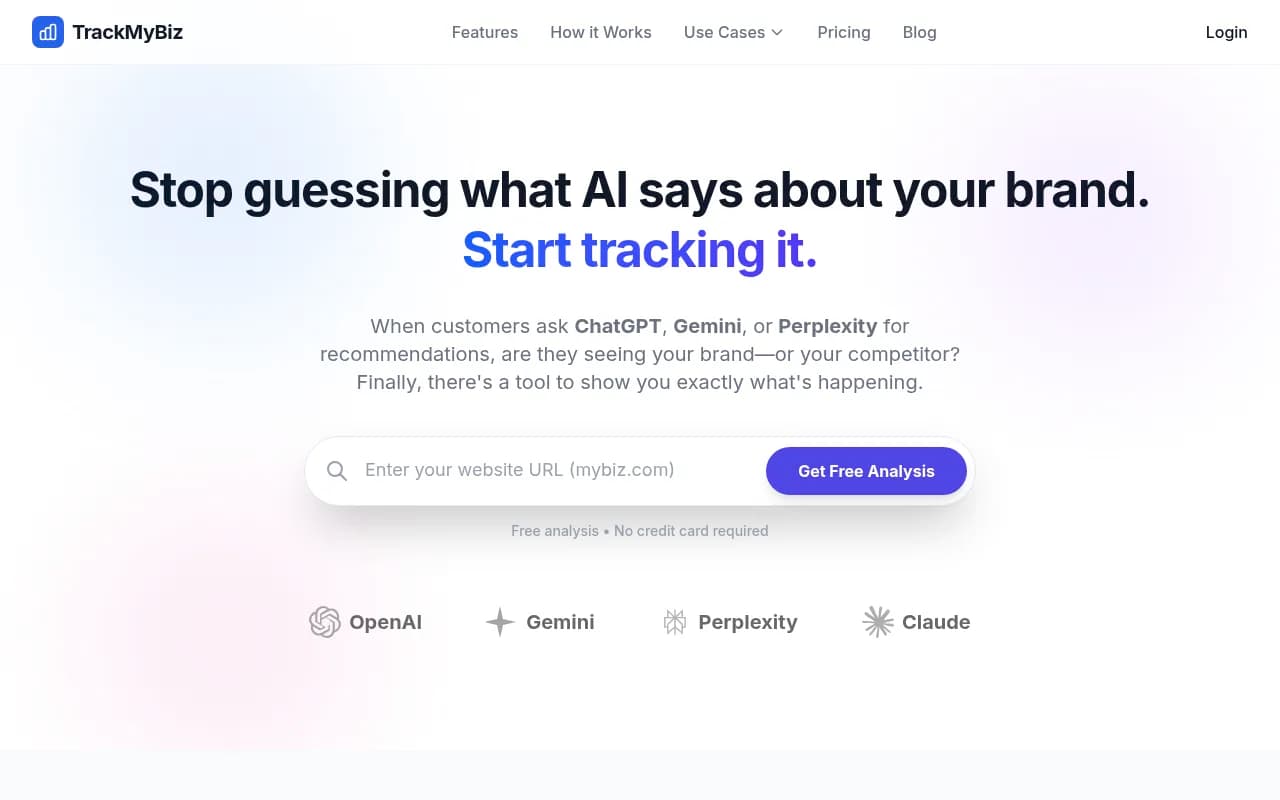
The Safety Engine feature -- which alerts you when AI generates wrong pricing or availability information -- is genuinely useful and not something many competitors offer. Pricing starts at $4.99/month, which makes it a reasonable starting point for smaller brands.
LLM Pulse -- solid mid-tier monitoring
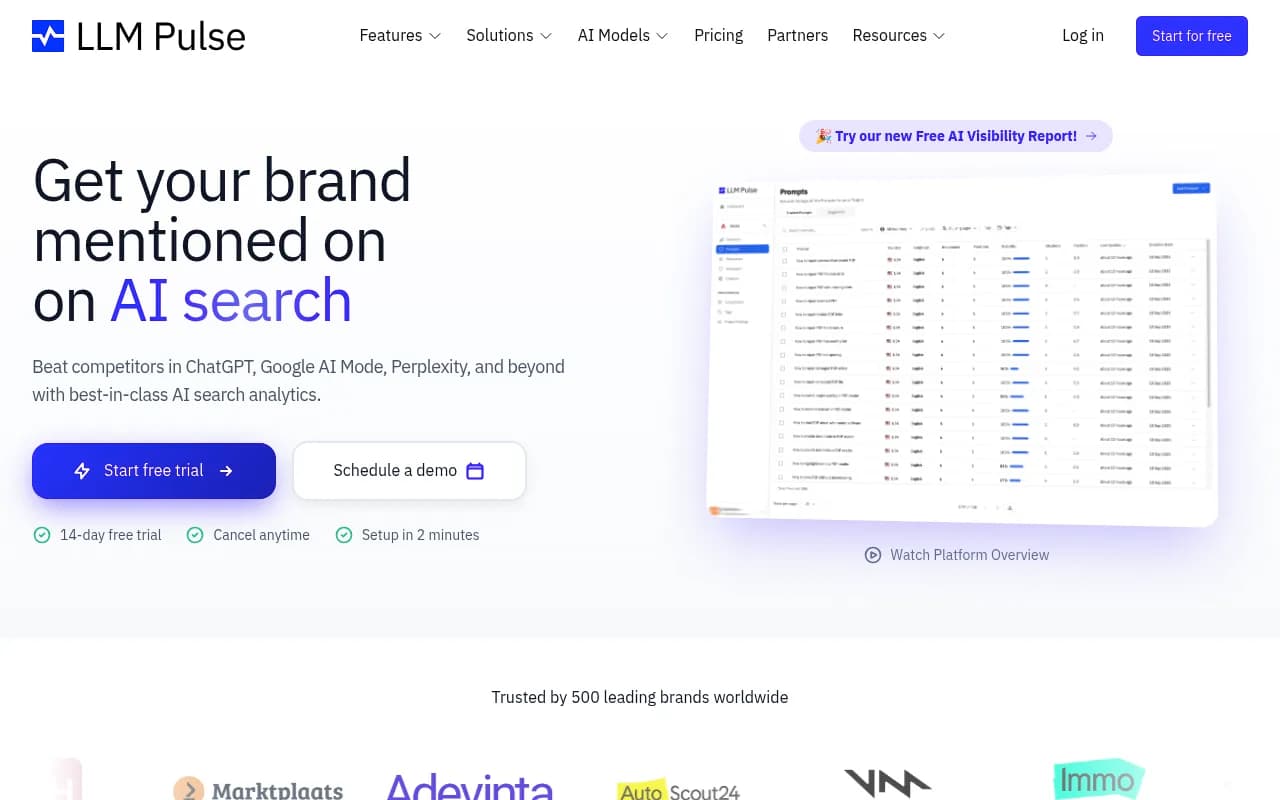
LLM Pulse covers the major AI platforms and provides visibility scoring, trend tracking, and competitor comparison. It's a cleaner interface than some of the enterprise-focused tools, and the prompt volume estimates help you prioritize which queries actually matter.
Rankshift -- good for tracking visibility trends over time
Rankshift focuses on visibility tracking across ChatGPT, Perplexity, and AI search broadly. It's useful for seeing how your brand's presence changes over time and comparing yourself against specific competitors.

Otterly.AI -- monitoring-focused, simpler setup
Otterly.AI is one of the more established names in this space. It covers ChatGPT, Perplexity, and Google AI Overviews, with clean reporting and reasonable alert configurations. The limitation is that it's primarily a monitoring tool -- it shows you the data but doesn't help you act on it.
Otterly.AI

Profound -- enterprise-grade tracking
Profound is positioned at larger brands and agencies. It covers 9+ AI search engines, has strong competitor analysis features, and handles multi-brand tracking well. The price point reflects the enterprise positioning.
Profound

Peec AI -- lightweight and accessible
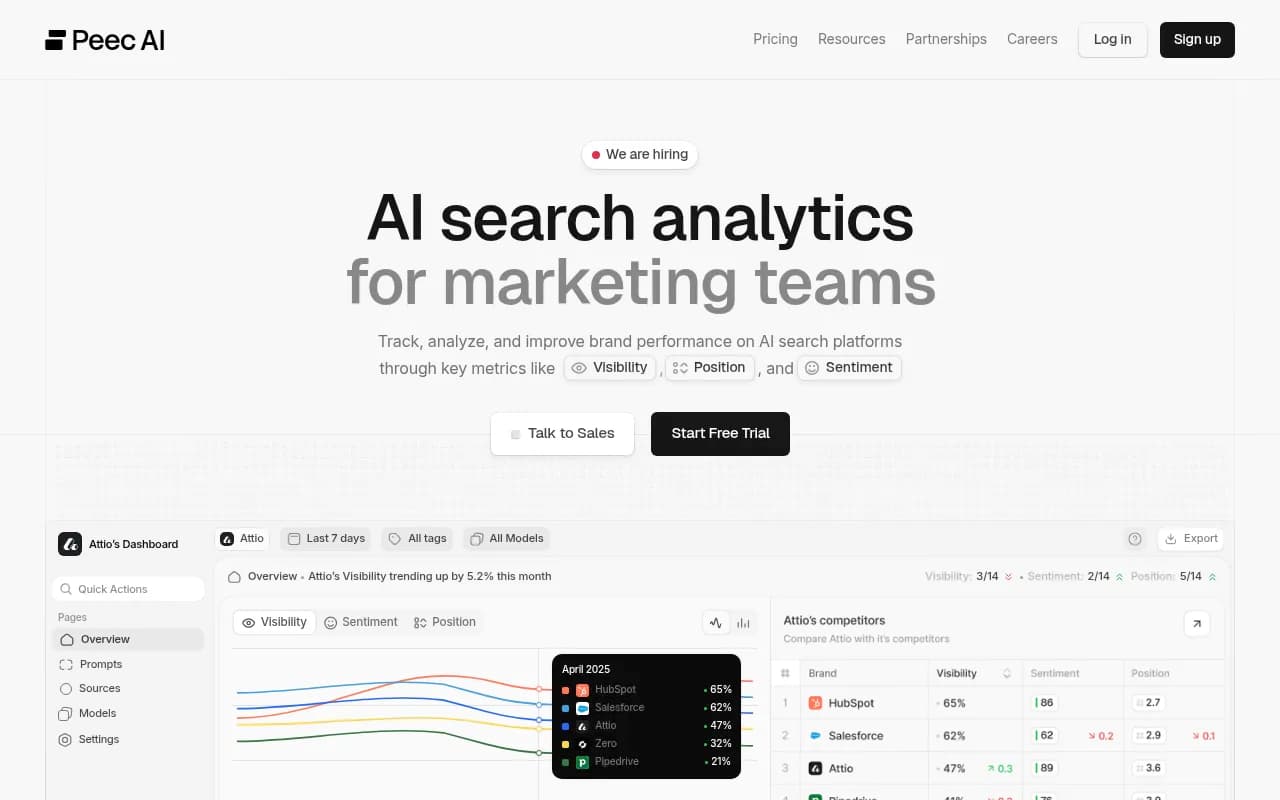
Peec AI tracks brand visibility across ChatGPT, Perplexity, and Claude. It's a simpler tool -- good for brands that want basic monitoring without a lot of configuration overhead.
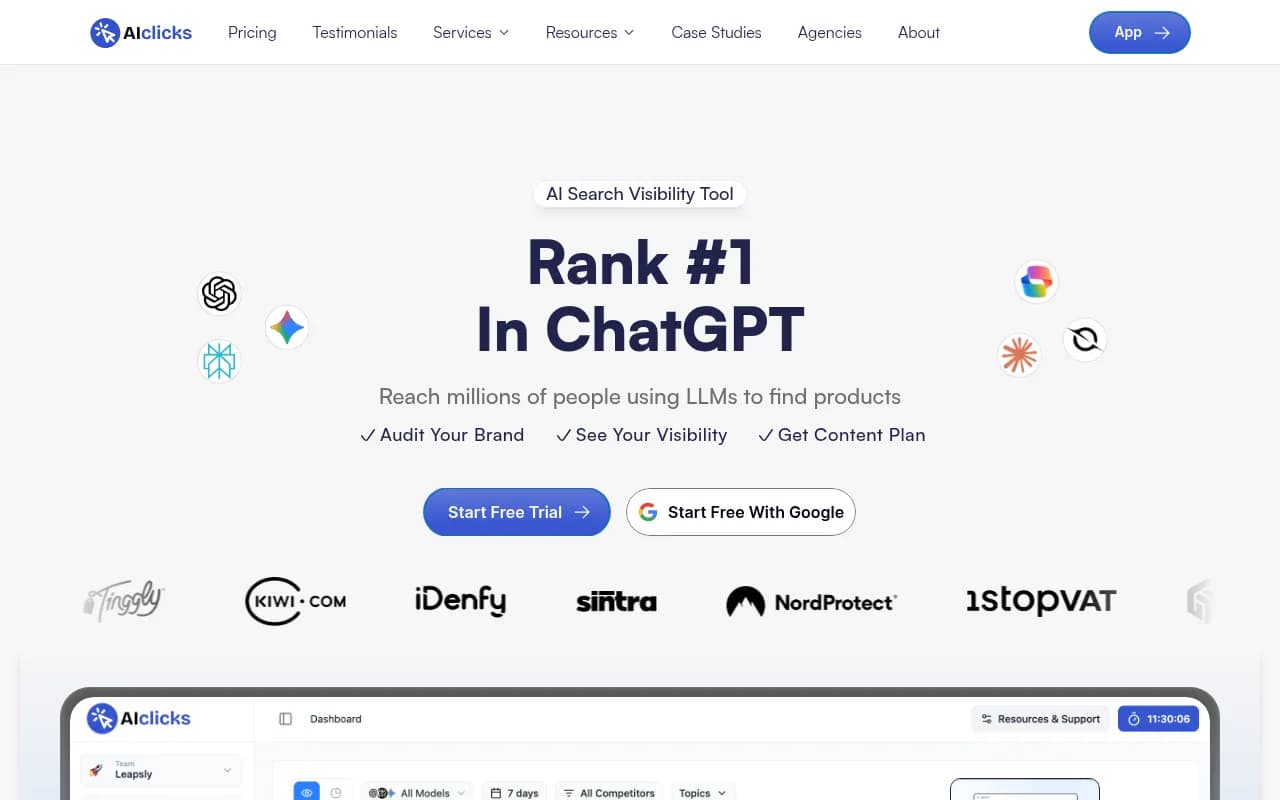
AIclicks -- broad platform coverage
AIclicks covers ChatGPT, Google AI Overviews, Gemini, and Perplexity, with a focus on visibility scoring and citation tracking. It's a reasonable mid-market option for brands that need coverage across multiple AI engines.
Tool comparison: what each platform covers
| Tool | AI engines covered | E-commerce focus | Hallucination alerts | Content generation | Starting price |
|---|---|---|---|---|---|
| Promptwatch | 10 (incl. ChatGPT Shopping) | Yes | No (gap analysis) | Yes | $99/mo |
| TrackMyBusiness | 4 (ChatGPT, Gemini, Perplexity, Claude) | Yes | Yes | No | $4.99/mo |
| LLM Pulse | 5+ | No | No | No | ~$49/mo |
| Rankshift | 3+ | No | No | No | ~$49/mo |
| Otterly.AI | 3 (ChatGPT, Perplexity, AI Overviews) | No | No | No | ~$99/mo |
| Profound | 9+ | No | No | No | $250+/mo |
| Peec AI | 3 (ChatGPT, Perplexity, Claude) | No | No | No | ~$49/mo |
| AIclicks | 4 | No | No | No | ~$79/mo |
How to set up AI brand monitoring for your e-commerce store
Step 1: Map your key product queries
Before you set up any tool, spend 30 minutes writing down the queries your customers actually ask. These fall into a few categories:
- Category queries: "best [product type]," "top [product category] brands," "most popular [product]"
- Comparison queries: "[your brand] vs [competitor]," "alternatives to [competitor]"
- Problem-solution queries: "what to use for [problem your product solves]"
- Budget queries: "best [product] under $50," "affordable [product category]"
These are the prompts you want to monitor. Don't just track your brand name -- that only catches mentions, not the recommendation scenarios where you're losing sales.
Step 2: Run a baseline audit
Before you start optimizing, you need to know where you stand. Run your key queries through ChatGPT, Perplexity, and Gemini manually, or use a monitoring tool to do it systematically. Document:
- Which queries mention your brand
- What position you appear in (first mention vs. fifth)
- What competitors appear that you don't
- Whether any product information is wrong
This baseline gives you something to measure against.
Step 3: Check what AI crawlers see on your site
AI models cite content they can actually read and understand. If your product pages are JavaScript-heavy, load slowly, or have thin content, AI crawlers may not be indexing them properly. Tools like Promptwatch's AI crawler logs show you exactly which pages AI bots are visiting and what errors they encounter.
At minimum, check that your product pages have:
- Clear, descriptive product names and specifications
- Accurate pricing and availability information
- Structured data markup (schema.org/Product)
- Substantive descriptions that answer real customer questions
Step 4: Identify content gaps
The reason most e-commerce brands don't appear in AI recommendations isn't that AI models dislike them -- it's that there's no content on their site (or anywhere that cites them) that answers the questions shoppers are asking.
If someone asks "what's the best sustainable activewear brand under $100," an AI model needs to find content that positions your brand as an answer to that specific question. A product page alone usually isn't enough. You need category guides, comparison articles, and editorial content that addresses the actual queries.
Step 5: Create content engineered for AI citation
This is where most brands stop short. They monitor, they see gaps, and then they... don't do much about it. Creating content that gets cited by AI models isn't the same as creating content that ranks on Google. The principles overlap, but AI models weight different signals.
Content that gets cited tends to be:
- Comprehensive and specific (not thin or vague)
- Factually accurate with verifiable claims
- Structured clearly with headers and lists
- Published on domains that AI models already trust
Tools like Promptwatch can generate this content based on actual citation data -- articles and comparisons built around what AI models are already citing in your category.
Step 6: Monitor for hallucinations and wrong information
Set up alerts for your brand name combined with your key product details. If an AI model starts saying your flagship product costs $79 when it actually costs $59, or lists it as out of stock when it's available, you want to know immediately.
When you find wrong information, the fix usually involves updating the source content AI models are pulling from -- your product pages, your structured data, and any third-party sites (review platforms, editorial coverage) that AI models trust in your category.
The attribution problem: connecting AI visibility to revenue
Here's the uncomfortable truth: even with good monitoring in place, connecting AI visibility to actual revenue is hard. Most AI assistants don't pass referral data the way a standard website link does. Traffic that arrives after a ChatGPT recommendation often looks like direct traffic in your analytics.
A few approaches help:
UTM parameters on your own AI-linked content. If you're publishing content designed to be cited, you can track how that content performs and infer AI-driven traffic from unusual direct traffic spikes.
Server log analysis. AI crawlers (GPTBot, ClaudeBot, PerplexityBot) leave traces in your server logs. Monitoring which pages they visit and how often gives you a proxy for AI interest in your content.
GSC integration. Google Search Console captures some AI Overview traffic as organic search. Tools that integrate with GSC can help separate AI Overview clicks from traditional organic.
Dedicated landing pages. Some brands create specific landing pages for AI-driven traffic -- pages optimized for the exact queries AI models answer -- and track those pages separately.
Promptwatch handles several of these through its traffic attribution features (GSC integration, server log analysis, and a code snippet option). It's not a perfect solution -- AI attribution is genuinely hard -- but it gets you closer than standard analytics alone.
What actually moves the needle in AI search visibility
Monitoring tells you where you stand. But the brands that are winning in AI search in 2026 are doing a few specific things:
They're publishing content that directly answers the questions AI models get asked. Not product pages -- actual editorial content that positions their products as solutions to specific problems.
They're managing their presence on the sources AI models trust. Reddit, YouTube, review platforms, and editorial sites all feed into what AI models recommend. A brand with strong presence on Wirecutter, Reddit's product communities, and YouTube review channels will appear in AI recommendations more reliably than one that only has a well-optimized website.
They're fixing factual errors fast. When AI generates wrong information about their products, they update the source content immediately rather than waiting.
And they're tracking the right queries -- not just their brand name, but the category and comparison queries where purchase decisions actually get made.
The monitoring tools in this guide give you the visibility to do all of this systematically. The ones that also help you act on what you find -- like Promptwatch -- close the loop between seeing the problem and fixing it.
Bottom line
AI product discovery is no longer a future trend -- it's happening now, and most e-commerce brands are invisible in it. The good news is that the tools to fix this are mature enough to be genuinely useful, and the content strategies that work aren't mysterious.
Start with a monitoring setup that covers at least ChatGPT, Perplexity, and Gemini. Track the queries your customers actually ask, not just your brand name. Fix any hallucinated product information immediately. And invest in content that gives AI models something to cite when they answer your customers' questions.
The brands that build this infrastructure now will have a meaningful advantage as AI search continues to grow as a purchase discovery channel.