Key takeaways
- Traditional SEO optimizes for ranked links in Google; AI SEO optimizes for citations and mentions in AI-generated answers across ChatGPT, Perplexity, Claude, Gemini, and others.
- The two approaches aren't mutually exclusive -- strong technical SEO foundations still matter for AI visibility, but they're no longer sufficient on their own.
- AI models evaluate content on meaning, authority, and entity clarity -- not keyword density or exact-match phrases.
- Measuring success looks completely different: you're tracking citation rates and brand mentions in AI responses, not just positions 1-10 in a SERP.
- According to Seomator's 2026 data, AI-driven SEO strategies achieve a 14.6% conversion rate vs 1.7% from traditional methods -- a gap that's hard to ignore.
Search didn't just evolve in 2026. For a lot of brands, it broke. The old playbook -- rank for keywords, get clicks, convert traffic -- still works, but it's no longer the whole game. A growing share of searches now end inside an AI response, with no click at all. ChatGPT, Perplexity, Google AI Overviews, Claude -- these systems are answering questions directly, and they're citing sources when they do it.
That citation is the new first-page ranking. And most marketers aren't optimizing for it yet.
This guide breaks down the 10 most important differences between traditional SEO and AI SEO in 2026 -- not to tell you to abandon one for the other, but to help you understand what's actually changed and where your effort needs to go.
1. What you're optimizing for
Traditional SEO has a clear goal: rank as high as possible in Google's blue-link results for target keywords. Success means position 1, 2, or 3 for queries that drive traffic.
AI SEO has a different goal entirely. You're not trying to rank -- you're trying to be cited. When someone asks ChatGPT "what's the best project management tool for remote teams?" you want your brand to appear in the answer. That's a citation, not a ranking, and the mechanics of earning it are completely different.
This isn't a small shift. It changes what content you create, how you structure it, and how you measure results.
2. Keywords vs. questions
Traditional SEO built its entire foundation on keyword research. You find terms people search, optimize pages around those terms, and track your position for each one.
AI SEO maps topics to natural-language questions instead. Instead of optimizing for "best marketing tools," you'd optimize for "What marketing tools work best for a small team with a limited budget?" AI models are trained on conversational language, and they retrieve content that answers questions clearly and completely -- not content that repeats a keyword phrase eight times.
This doesn't mean keywords are dead. It means the unit of optimization has shifted from a phrase to a question, and the content needs to actually answer that question rather than just contain the words.
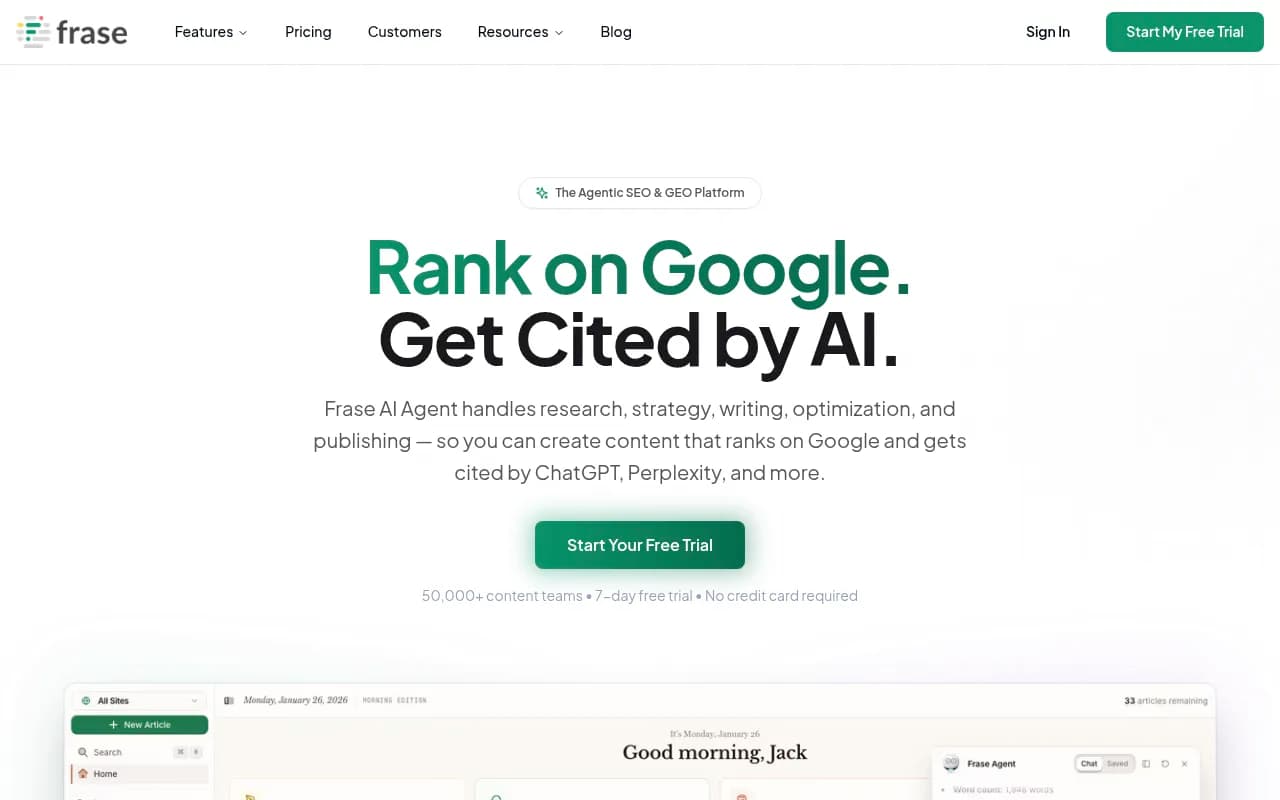
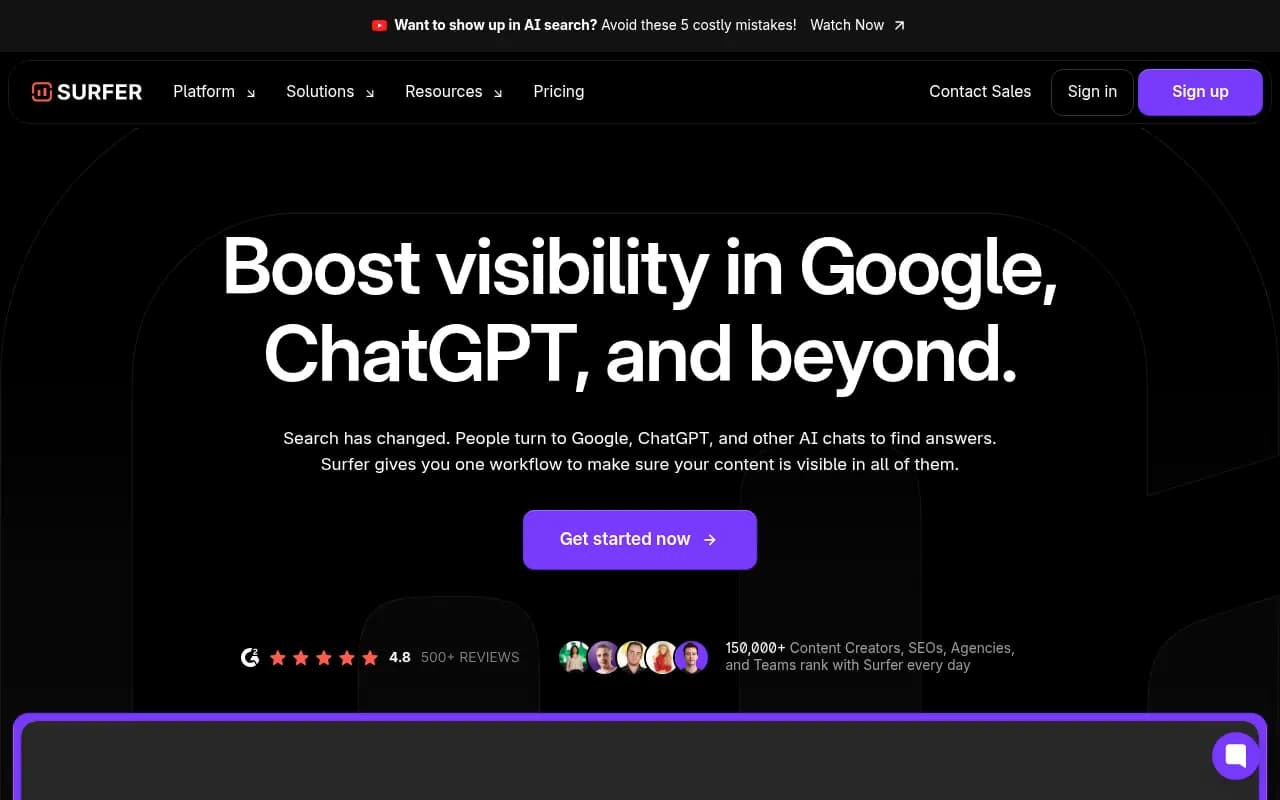
Tools like Frase and Surfer SEO help with content optimization for traditional search, while platforms built for AI visibility go further -- tracking which questions AI models are answering and whether your content appears in those responses.
3. How content is evaluated
Google's algorithm has always been a mix of signals: backlinks, on-page optimization, page speed, user behavior. Content quality matters, but so does a lot of other stuff.
AI models evaluate content differently. They're reading for meaning, not signals. A few things that matter more in AI SEO:
- Entity clarity: Is it obvious what your brand does, who it serves, and what category it belongs to?
- Factual accuracy: AI models cross-reference information. Content with errors or vague claims gets deprioritized.
- Comprehensiveness: Does the page actually answer the question, or does it gesture at an answer and then ask you to read more?
- Authoritativeness: Is the content written by someone with demonstrable expertise? E-E-A-T (Experience, Expertise, Authoritativeness, Trustworthiness) matters here more than ever.
Keyword density is essentially irrelevant to AI retrieval. A page that uses a keyword 15 times but doesn't clearly answer the question won't get cited.
4. The role of backlinks
Backlinks remain one of the most powerful signals in traditional SEO. A high-authority site linking to your page tells Google your content is trustworthy and worth surfacing.
In AI SEO, backlinks still matter -- but indirectly. AI models don't crawl the web in real time for most queries. They rely on training data and retrieval-augmented generation (RAG), which means they're pulling from sources they've already indexed and deemed credible. Being cited by authoritative sources, mentioned in high-quality publications, and referenced in forums like Reddit all feed into how AI models perceive your brand's authority.
So backlinks don't disappear -- they just work through a different mechanism. Building genuine authority across the web still helps. But a single backlink from a high-DA site matters less than consistent mentions across multiple credible sources.
5. Technical SEO vs. AI crawlability
Traditional technical SEO focuses on things like site speed, Core Web Vitals, proper canonicalization, XML sitemaps, and structured data. These signals help Google crawl and index your site efficiently.
AI SEO introduces a new layer: AI crawlability. ChatGPT's GPTBot, Perplexity's PerplexityBot, Anthropic's ClaudeBot -- these crawlers visit your site separately from Googlebot, and they behave differently. They may encounter JavaScript rendering issues, get blocked by robots.txt rules that were written for traditional crawlers, or fail to access content behind login walls.
If you want AI models to read and cite your content, you need to understand how these crawlers interact with your site. This is an area where most traditional SEO tools fall short -- they weren't built to monitor AI crawler behavior.
Promptwatch is one of the few platforms that logs AI crawler activity in real time, showing which pages ChatGPT, Claude, Perplexity, and others are reading, how often they return, and what errors they encounter.

6. Ranking vs. citation
This is the clearest structural difference between the two disciplines, and it's worth dwelling on.
In traditional SEO, success is a position. You're #1 for "project management software" -- that's measurable, trackable, and directly tied to traffic.
In AI SEO, success is a mention. When someone asks an AI assistant about project management software, does your brand appear in the response? Is it mentioned positively? Is it cited as a source? These are harder to track but increasingly important.
The "ranking vs. citation gap" is real. A brand can rank #1 on Google for a term and still be completely absent from AI responses about the same topic. The reverse is also true -- brands with modest Google rankings sometimes get cited frequently by AI models because their content is structured in a way that's easy for AI to extract and reference.
| Dimension | Traditional SEO | AI SEO |
|---|---|---|
| Success metric | SERP position | Citation/mention in AI response |
| Primary channel | Google (and Bing) | ChatGPT, Perplexity, Claude, Gemini, etc. |
| Content unit | Keyword-optimized page | Question-answering content |
| Link signals | Backlinks (direct ranking factor) | Brand mentions, citations (indirect) |
| Measurement tool | Rank tracker | AI visibility platform |
| Technical focus | Core Web Vitals, crawlability | AI crawler access, structured data |
| Content evaluation | Keyword relevance + authority signals | Meaning, entity clarity, factual accuracy |
| Traffic model | Click-through from SERP | Zero-click answers + direct brand recall |
7. Zero-click and the traffic model
Traditional SEO is fundamentally a traffic model. You rank, users click, they land on your site, and you convert them. The whole funnel depends on that click.
AI search breaks this model. A user asks Perplexity a question, gets a comprehensive answer, and never visits any website. This is called a zero-click interaction, and it's becoming the norm for informational queries.
This doesn't mean AI visibility has no value -- it has enormous value. When AI models consistently mention your brand in responses about your category, users develop brand familiarity and trust even without visiting your site. They're more likely to search for you directly, more likely to convert when they do visit, and more likely to already trust you when a sales conversation starts.
The traffic model shifts from "rank → click → convert" to "cite → recall → intent." That's a longer loop, but it's a real one.
8. Content strategy: depth vs. breadth
Traditional SEO often rewards breadth. More pages targeting more keywords means more opportunities to rank. Content calendars are built around keyword gaps, and the goal is coverage.
AI SEO rewards depth. AI models prefer comprehensive, authoritative content on a specific topic over a sprawling library of thin pages. A single 3,000-word guide that genuinely answers a complex question will get cited more than five 600-word posts that each cover a corner of the same topic.
This has real implications for content strategy. It means fewer, better pieces. It means investing in original research, expert perspectives, and structured answers. It means thinking about what questions your audience is actually asking AI assistants -- not just what they're typing into Google.
Tools like MarketMuse and Clearscope help with content depth and topical authority, which benefits both traditional and AI search.

9. Measuring success
Traditional SEO measurement is mature and well-understood. You track keyword rankings, organic traffic in Google Analytics, click-through rates from Search Console, and conversions. The data is abundant and relatively easy to interpret.
AI SEO measurement is still developing, but it's getting more sophisticated fast. The core metrics are:
- Citation rate: How often does your brand appear in AI responses for relevant prompts?
- Share of voice: Compared to competitors, how much of the AI answer space do you occupy?
- Sentiment: When AI models mention your brand, is the framing positive, neutral, or negative?
- Model coverage: Are you visible on ChatGPT but invisible on Perplexity? Or vice versa?
- Traffic attribution: Is AI visibility actually driving visits and conversions?
Platforms like Promptwatch, Profound, and Otterly.AI track these metrics, though they differ significantly in depth. Promptwatch goes further than most by connecting AI visibility to actual traffic through GSC integration, server log analysis, and a tracking snippet -- closing the loop between citation and revenue.
Profound

Otterly.AI

10. The optimization loop
Traditional SEO has a well-worn optimization loop: research keywords, create content, build links, track rankings, adjust. It's cyclical and relatively predictable.
AI SEO requires a different loop -- one that most marketers haven't built yet:
- Find the gaps: Which prompts are your competitors being cited for that you're not? What questions are AI models answering in your category where your brand is absent?
- Create content that gets cited: Not generic content, but content engineered around the specific questions AI models are trying to answer. This means structured answers, clear entities, factual depth, and genuine expertise.
- Track the results: Monitor whether your new content starts appearing in AI responses. Page-level tracking shows which specific pages are being cited and by which models.
- Attribute the impact: Connect AI citations to actual traffic and conversions so you can justify the investment.
This loop is harder to run than traditional SEO because the feedback signals are less immediate and the tooling is newer. But it's the loop that matters if you want to be visible where your customers are increasingly spending their search time.
Do you have to choose?
No -- and this is probably the most important thing to say clearly. Traditional SEO and AI SEO aren't competing strategies. They're complementary.
Strong technical foundations (fast site, clean structure, proper indexing) help both Google and AI crawlers access your content. High-quality, authoritative content ranks well in traditional search and gets cited in AI responses. E-E-A-T signals matter for both. Backlinks and brand mentions build authority that benefits both channels.
The mistake is treating them as either/or. Brands that abandon traditional SEO to chase AI visibility will lose organic traffic. Brands that ignore AI SEO entirely will find themselves invisible to a growing share of their audience.
The practical answer is to run both -- with a clear understanding of which tactics serve which channel, and measurement systems that can tell you what's working where.
Where to start
If you're just beginning to think about AI SEO alongside your existing strategy, here's a practical starting point:
- Audit your AI visibility: Ask ChatGPT, Perplexity, and Claude about your category. Does your brand appear? What do they say?
- Check your robots.txt: Make sure you're not accidentally blocking AI crawlers like GPTBot or ClaudeBot.
- Identify your answer gaps: What questions are AI models answering in your space where you're not present?
- Create one piece of genuinely comprehensive content: Pick a question your audience is asking AI assistants and write the best possible answer to it.
- Set up tracking: You can't improve what you can't measure. Tools like Promptwatch track your AI visibility across 10+ models and show you exactly which prompts you're winning and losing.
The brands that figure this out early will have a real advantage. The ones that wait until AI search is fully mainstream will be playing catch-up -- the same way brands that ignored mobile SEO in 2012 spent years trying to recover.