Key takeaways
- Authority signals (PR, third-party mentions, reviews) matter more than content formatting for AI citations
- AI models cite sources they "trust" — and trust is built through consensus across multiple independent sources, not just your own website
- Technical access is table stakes: if GPTBot or ClaudeBot can't crawl your pages, nothing else matters
- Structured, extraction-ready content (FAQs, tables, numbered steps) dramatically improves citation rates
- Tracking your AI visibility is the only way to know what's actually working — and tools like Promptwatch make that measurable
Getting cited by ChatGPT, Claude, or Perplexity isn't like ranking on Google. There's no keyword density to hit, no backlink count to chase. AI models pull from sources they've decided are trustworthy and authoritative — and they make that judgment based on signals most SEO checklists completely ignore.
I've pulled together 20 things your content actually needs in 2026, based on what's working across real sites. Some of these are technical. Some are about authority. Some are about how you write. All of them matter.
Let's get into it.
Section 1: Authority and trust signals
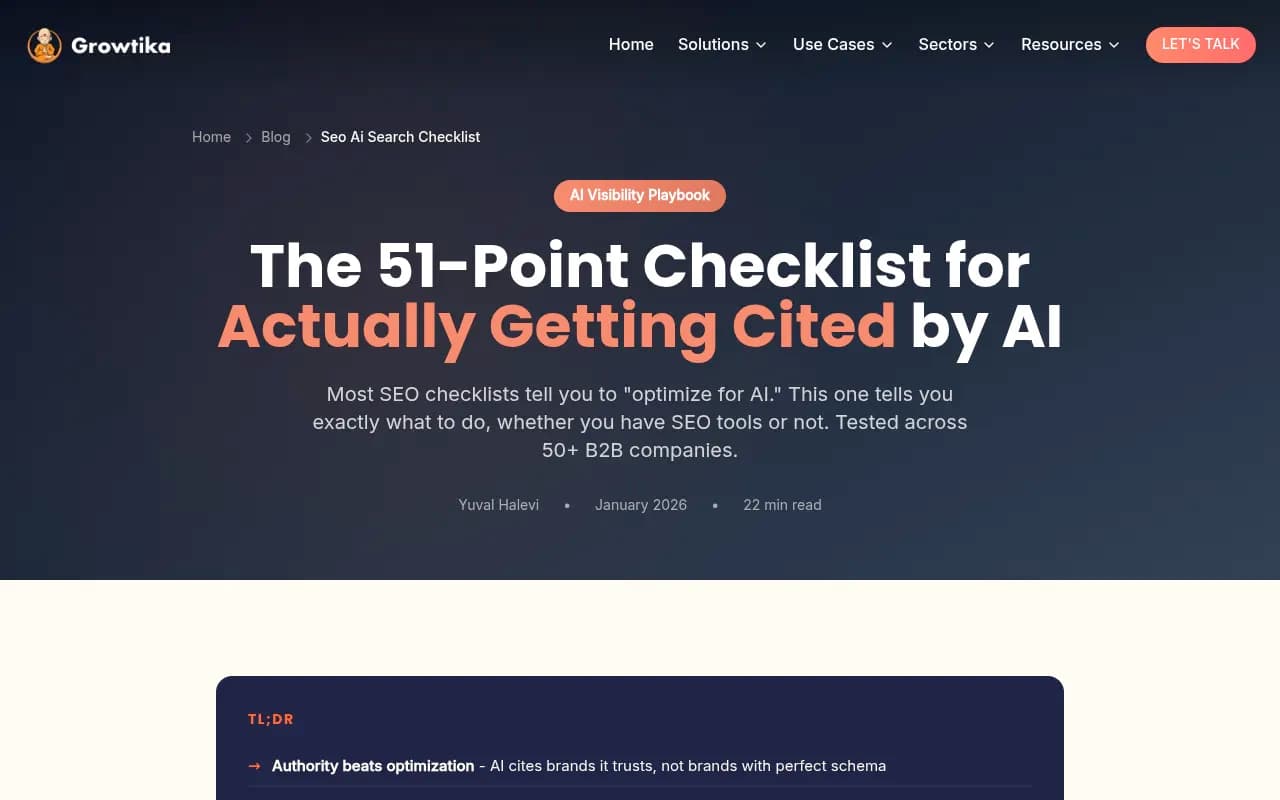
These come first because they're the hardest to fake and the most important. According to testing across 50+ B2B companies by Growtika, authority building matters more than content optimization. Most teams do it backwards — they polish their content structure before anyone outside their own website has ever mentioned them.
1. Get mentioned in independent publications
Your own blog doesn't count. AI models weight third-party mentions heavily — trade publications, industry newsletters, analyst reports, even niche forums. If your brand name only appears on your own domain, you're invisible to most LLMs regardless of how good your content is.
Start with one or two relevant publications. A guest post, a data study that earns a citation, a quote in an industry roundup. The goal is getting your brand name associated with your topic on domains the AI models already trust.
2. Build consensus across multiple sources
This is the "consensus is everything" principle. If your product reduces customer churn by 40%, that claim needs to appear on your website, in customer reviews, in case studies, and ideally in third-party coverage. When multiple independent sources say the same thing, LLMs treat it as established fact.
A single claim on your own site is just marketing copy. The same claim confirmed by five independent sources becomes something an AI model will confidently repeat.
3. Collect and publish customer reviews on trusted platforms
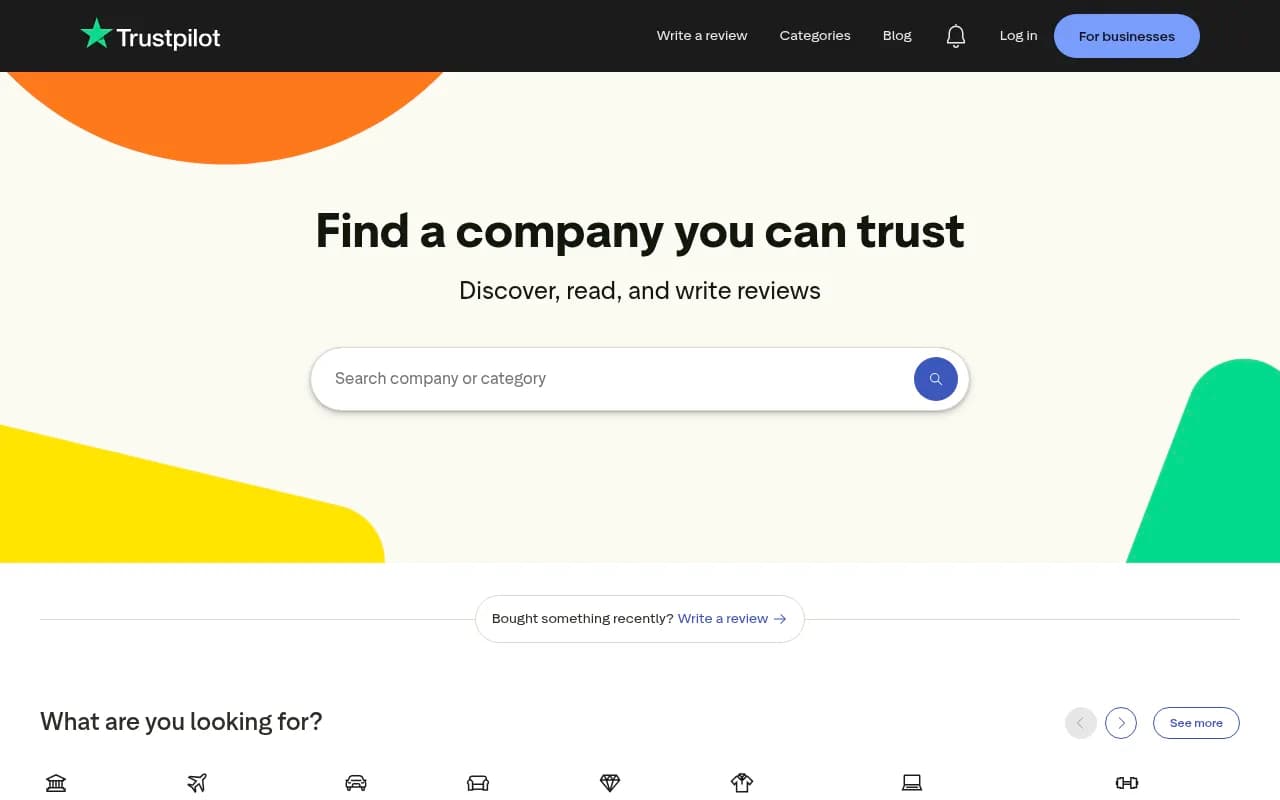
Reviews on G2, Trustpilot, Capterra, and similar platforms are crawled and cited by AI models. They're also one of the few places where real customers describe your product in their own words — which often matches how people prompt AI search engines.
Don't just collect reviews. Respond to them. The response signals that your brand is active and engaged, which matters for recency signals.
4. Keep your brand name consistent everywhere
This sounds trivial but it's not. If your company is "Acme Corp" on your website, "Acme Corporation" on LinkedIn, and "AcmeCorp" on Crunchbase, AI models may not connect these as the same entity. Entity recognition is how LLMs understand who you are — and inconsistency creates ambiguity.
Check every platform: LinkedIn, Crunchbase, Wikipedia (if you have a page), press mentions, review sites. Identical brand name, identical description of what you do.
Section 2: Technical crawlability
Before any content optimization matters, AI crawlers need to actually be able to read your pages. This is more commonly broken than people realize.
5. Allow AI crawlers in your robots.txt
Check your robots.txt file right now. If you see User-agent: GPTBot or User-agent: ClaudeBot followed by Disallow: /, you're blocking the crawlers that feed ChatGPT and Claude. Many sites accidentally block these through blanket rules meant for other bots.
The main crawlers to allow:
GPTBot(OpenAI/ChatGPT)ClaudeBot(Anthropic/Claude)PerplexityBot(Perplexity)GoogleOther(Google AI Overviews)Googlebot(standard Google, also feeds AI Overviews)
6. Fix JavaScript rendering issues
If your content is rendered client-side via JavaScript and you haven't set up pre-rendering, AI crawlers may see a blank page. Most LLM crawlers don't execute JavaScript the way a browser does. They fetch the raw HTML and move on.
Test this by fetching your key pages with curl or using Google Search Console's URL inspection tool. If the content doesn't appear in the raw HTML response, it's invisible to most AI crawlers.
7. Monitor what AI crawlers are actually doing on your site
This is underused. Server logs and crawler log analysis show you exactly which pages AI bots are visiting, how often, and whether they're hitting errors. If GPTBot is crawling your homepage but never your product pages, that's a problem worth fixing.

Promptwatch includes AI crawler log monitoring as part of its platform — you can see real-time logs of which AI engines are hitting which pages, and catch indexing issues before they affect your visibility.
8. Ensure fast page load times
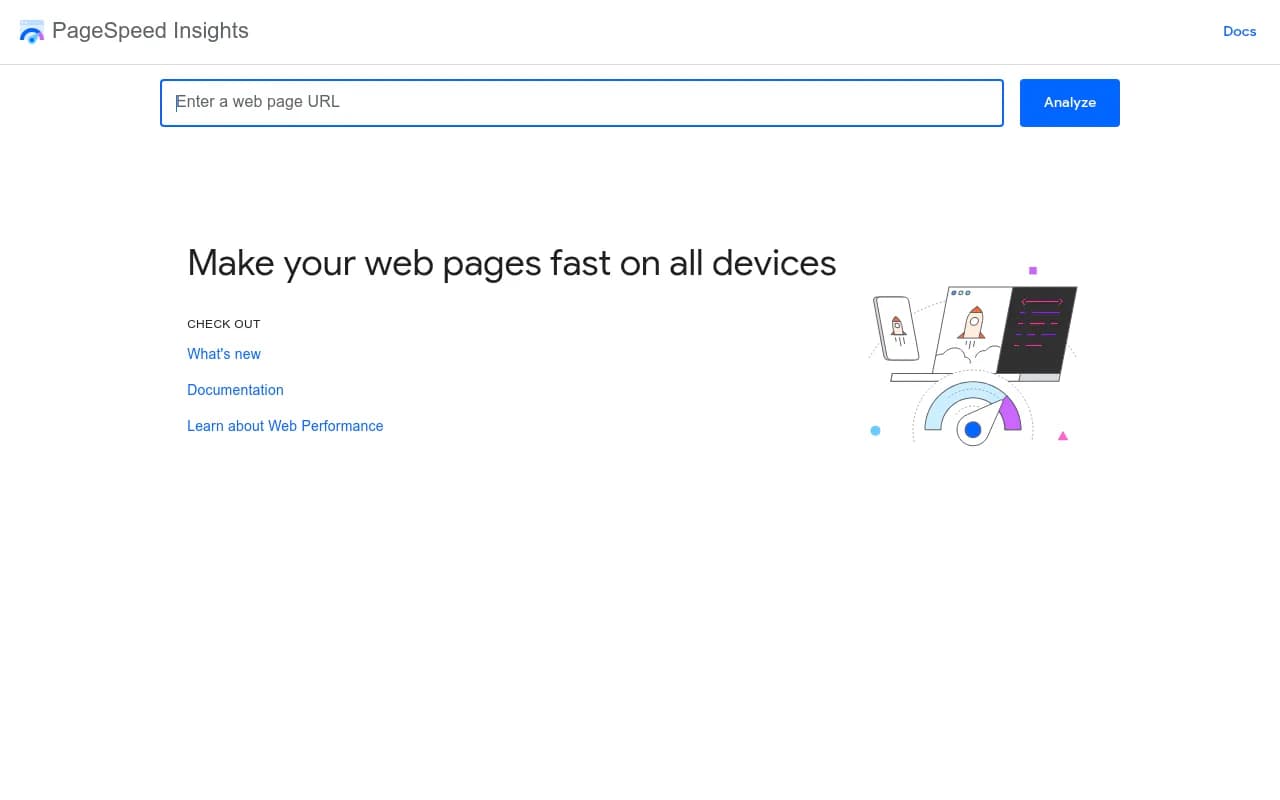
AI crawlers have timeout limits. Pages that load slowly may get abandoned mid-crawl, meaning the crawler never sees your full content. Core Web Vitals still matter here — not for the ranking signal they represent in traditional SEO, but because a fast page is a fully-crawled page.
Section 3: Content structure and format
Once crawlers can access your content and your brand has some authority signals, the way you structure your content determines whether it gets extracted and cited.
9. Use clear, direct answers at the top of each page
AI models look for the answer first, then the context. If your article buries the main point in paragraph seven after three paragraphs of introduction, the model may extract the wrong thing or skip your page entirely.
Write the answer in the first two sentences. Then explain it. This isn't just good for AI — it's good writing.
10. Include FAQ sections with question-and-answer format
FAQ sections are one of the most consistently cited content formats across LLMs. The question-answer structure maps directly to how AI models process and retrieve information. A question that matches a user's prompt, followed by a clear answer, is almost purpose-built for AI citation.
Write FAQs that address real questions your customers ask — not marketing questions. "What is [your product]?" is less useful than "How long does it take to see results from [your product]?"
11. Use comparison tables
Tables are extraction-friendly. When an AI model needs to compare options, a well-structured table gives it exactly what it needs to cite. This is especially true for product comparisons, feature lists, and "X vs Y" content.
| Content format | AI citation frequency | Why it works |
|---|---|---|
| FAQ sections | High | Matches question-answer structure of prompts |
| Comparison tables | High | Easy to extract structured data |
| Numbered steps | Medium-high | Clear sequence, easy to summarize |
| Long prose paragraphs | Low | Hard to extract specific claims |
| Bullet lists (no context) | Low | Missing the "why" that AI models need |
12. Write numbered step-by-step guides
"How to" content in numbered format is consistently cited across all major AI models. The structure signals a process, which AI models are good at summarizing and recommending. Each step should be self-contained enough to make sense if extracted on its own.
13. Add statistics and specific data points
Vague claims don't get cited. Specific numbers do. "Our customers see faster results" is forgettable. "Customers reduce onboarding time by 34% in the first 90 days" is citable.
If you have proprietary data, publish it. Original research is one of the highest-value content types for AI citations because it's a unique source — the AI can't find that number anywhere else.
Section 4: Content depth and topical authority
14. Cover topics comprehensively, not superficially
AI models favor sources that cover a topic in depth. A 400-word overview that touches on everything is less likely to be cited than a 2,000-word piece that actually answers the question. This doesn't mean padding — it means covering the angles a user actually cares about.
Think about what someone asking this question really needs to know. What's the context? What are the common mistakes? What does it depend on? Answer those questions.
15. Build topical clusters, not isolated pages
A single great article on a topic is less authoritative than ten interconnected articles that cover the topic from every angle. AI models recognize topical depth at the domain level — if your site has comprehensive coverage of a subject, you're more likely to be cited for questions in that space.
Internal linking between related pages helps AI crawlers understand the relationship between your content and reinforces your topical authority.
16. Target question-based prompts specifically
People don't type keywords into ChatGPT. They ask questions. "What's the best project management tool for a 10-person team?" is a prompt. "project management software" is a keyword.
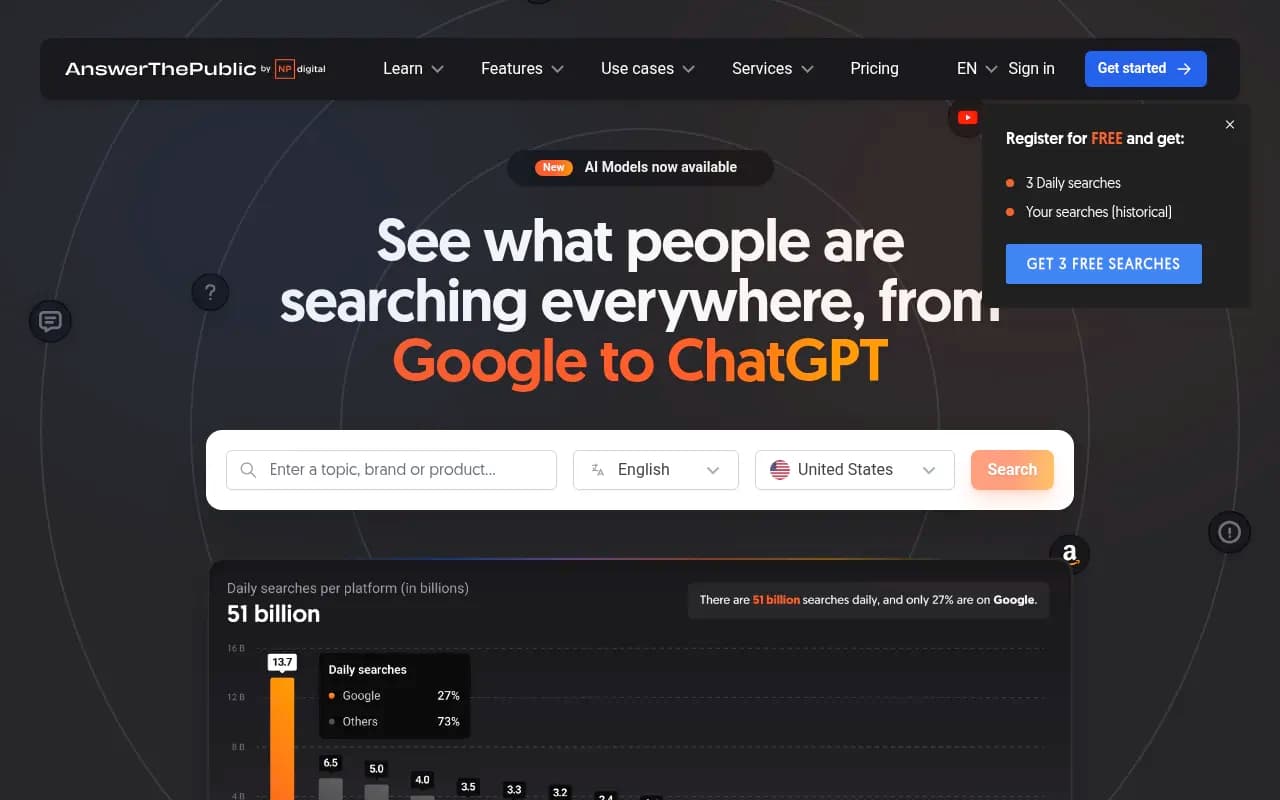
Research the actual questions your audience is asking in AI search. Tools like Promptwatch show you prompt volumes and the specific questions AI models are being asked in your category — which is a very different dataset from traditional keyword research.
Section 5: E-E-A-T and credibility signals
17. Make authorship visible and credible
AI models pay attention to who wrote something. Author pages with real credentials, LinkedIn profiles, published work elsewhere — these all contribute to the trustworthiness signal. Anonymous content or content attributed to a generic "staff writer" has less authority than content from a named expert with a verifiable background.
This is especially true in YMYL (Your Money or Your Life) categories: finance, health, legal, and anything where the stakes of bad advice are high.
18. Add structured data markup (Schema.org)
Schema markup doesn't directly make AI models cite you, but it helps them understand what your content is about. FAQPage, HowTo, Article, Organization, and Product schemas all give AI crawlers structured signals about your content type and context.
This is table stakes for Google AI Overviews specifically, which relies heavily on structured data to populate featured snippets and AI-generated summaries.
Section 6: Tracking and iteration
19. Monitor your AI visibility across models
You can't improve what you don't measure. Traditional SEO tools track Google rankings. They don't tell you whether ChatGPT is citing your competitors for the prompts your customers are using, or whether Perplexity is recommending a rival brand in your category.
AI visibility tracking is a separate discipline. You need to know which prompts you appear in, which models cite you, and how your visibility changes over time.
| Tool | What it tracks | Best for |
|---|---|---|
| Promptwatch | 10 AI models, crawler logs, content gaps, traffic attribution | Full-cycle optimization |
| Otterly.AI | ChatGPT, Perplexity, Google AI Overviews | Basic monitoring |
| Profound | 9+ AI engines, enterprise reporting | Enterprise teams |
| Peec AI | ChatGPT, Perplexity, Claude | Small teams, basic tracking |
Otterly.AI

Profound


20. Find and fill content gaps based on what competitors are getting cited for
The most actionable thing you can do right now: find out which prompts your competitors appear in that you don't. These are your content gaps — specific topics, questions, and angles where AI models have found a source to cite, just not you.
This is different from traditional keyword gap analysis. You're not looking for search volume. You're looking for prompts where AI models are actively recommending your competitors and ignoring you.
Promptwatch's Answer Gap Analysis does exactly this — it shows you the specific prompts where competitors are visible and you're not, then helps you create content to close those gaps. Most monitoring tools stop at showing you the data. The actual fix requires creating content that addresses those missing topics.
Putting it all together
Here's the honest reality of AI SEO in 2026: most of the advice floating around is traditional SEO with "AI" bolted on. The actual mechanics are different.
AI models don't crawl the web in real time for most queries. They've already formed opinions about which sources are trustworthy based on training data and, for some models, recent web access. Building authority is a slow game. Getting your brand mentioned consistently across independent sources, building consensus around your key claims, and making your content easy to extract — these compound over time.
The checklist above isn't something you complete in a week. But if you work through it systematically, you'll be building the kind of presence that AI models recognize and cite. Start with the technical foundation (items 5-8), then build authority (items 1-4), then optimize your content structure (items 9-16), and finally set up tracking so you know what's working (items 19-20).
The brands that figure this out in 2026 will have a significant head start. The ones that wait until AI search is fully mainstream will be playing catch-up.