Key takeaways
- Google AI Mode is a separate conversational search surface powered by Gemini -- ranking in it means getting cited in synthesized answers, not just appearing in the top 10 blue links.
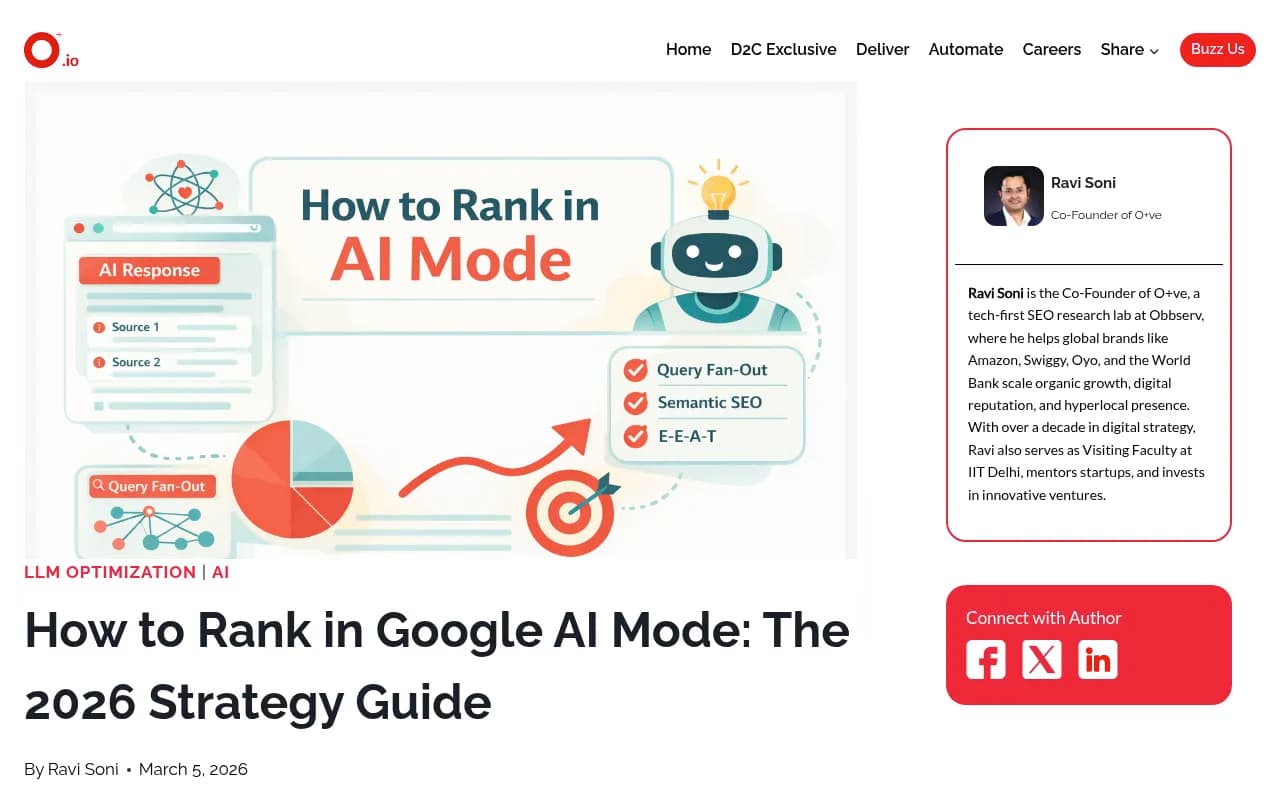
- The "query fan-out" mechanism breaks one prompt into multiple sub-queries, so your content needs to answer implied and adjacent questions, not just the literal keyword.
- Semantic completeness matters more than keyword density -- AI needs self-contained passages it can extract with confidence.
- Technical foundations (crawlability, Core Web Vitals, structured data) remain important, but the content strategy has shifted significantly.
- Tracking your AI visibility separately from traditional rankings is now a practical necessity, not a nice-to-have.
What Google AI Mode actually is (and why it's different from AI Overviews)
Google AI Mode is an opt-in conversational search experience built on Gemini. You access it through a dedicated tab in Google Search, and it behaves more like a chat interface than a traditional results page. You can ask follow-up questions, refine your query mid-conversation, and get synthesized responses that pull from multiple sources at once.
This is meaningfully different from AI Overviews, which most people are already familiar with. AI Overviews appear as a single-turn summary at the top of standard search results. AI Mode is a separate surface entirely -- richer, more interactive, and increasingly the experience Google is pushing for complex queries.
Under the hood, AI Mode synthesizes three main information sources: the live web, Knowledge Graph facts, and specialized graphs like Shopping. The responses include citations back to web sources, which is where the ranking opportunity lives. Your goal isn't to rank #1 for a keyword. It's to be one of the sources Gemini trusts enough to cite when composing an answer.
That's a different game. And it requires a different approach.
How query fan-out works (and why it changes everything)
The most important concept to understand about AI Mode is query fan-out. When someone types a complex prompt, Gemini doesn't just search for that exact phrase. It breaks the prompt into multiple sub-queries -- some explicit, some implied -- and runs them in parallel.
So if someone asks "what's the best CRM for a 10-person B2B sales team that does outbound," Gemini might internally generate sub-queries like:
- Best CRM for small sales teams
- CRM tools with outbound email features
- CRM pricing for small businesses
- CRM vs sales engagement platform comparison
Your page might be a perfect answer to one of those sub-queries but invisible to the others. If you only optimized for the surface-level keyword, you're missing most of the fan-out.
The practical implication: content needs to cover the topic with enough depth and breadth that it can answer several of those latent questions, not just the headline one. Think about what a genuinely thorough answer looks like -- the follow-up questions a smart reader would ask -- and make sure your page addresses them.
A useful exercise is what some practitioners call "Reverse Question Answering." Take your existing page, paste it into an AI tool, and ask: "What questions does this content answer?" Then compare that list to the questions a user would realistically ask about the topic. The gaps are your content gaps.
Semantic completeness: the ranking factor most people ignore
Traditional SEO rewarded keyword density and backlink counts. AI Mode rewards something different: semantic completeness. That means your content needs to be self-contained enough that Gemini can extract a passage and use it confidently without needing to cross-reference other sources.
Think about how AI models actually work. They're looking for passages that directly answer a specific question, with enough context that the answer makes sense on its own. A page that says "it depends on your use case" and then links to another article is not useful to an AI trying to compose a response. A page that says "for B2B teams under 20 people, the main tradeoff is between X and Y because..." is.
Practically, this means:
- Each major section of your page should answer a specific question completely, not partially.
- Don't bury the answer in the middle of a paragraph. Lead with it.
- Avoid vague hedging. Specific, direct statements get cited. Wishy-washy ones don't.
- Use concrete examples, numbers, and comparisons. "Approximately 15-20 reps in the first week" beats "a moderate amount."
The goal is to write passages that could stand alone as an answer. If you pulled a paragraph out of context, would it still make sense? If yes, you're on the right track.
Content strategy for AI Mode: what actually works
Answer the question before you explain it
Most content buries the answer. You get three paragraphs of context, a definition, some history, and then finally the actual answer on paragraph five. AI Mode doesn't have patience for that structure. Put the direct answer first, then provide the supporting context.
This isn't just about AI -- it's also better for human readers. But it's especially important for AI citation because the model often extracts the first clear, direct answer it finds.
Cover latent questions explicitly
Go beyond the primary keyword and think about what someone would ask next. If your page is about "how to set up Google Search Console," it should also address:
- How long before data appears
- What to do if verification fails
- How to interpret the coverage report
- How Search Console data differs from Google Analytics
These aren't separate articles. They're sections of a complete resource. A page that answers all of them is more likely to get cited for multiple sub-queries in a fan-out.
Use structured, scannable formatting
AI models parse structure. Headers signal topic boundaries. Lists signal enumerable facts. Tables signal comparisons. Using these elements well makes it easier for Gemini to identify which passage answers which question.
That said, don't over-structure to the point where the content feels like a bulleted list of fragments. Coherent prose within a well-structured document is the target.
First-hand experience and specificity
Google's own guidance on succeeding in AI search emphasizes content that visitors find genuinely helpful and satisfying -- not commodity content that could have been written by anyone about anything. First-hand insights, specific recommendations, and real examples are harder to replicate and more likely to be cited.
"We tested three approaches and found that X worked best for teams under 50 people" is more citable than "there are several approaches you could take."
Technical SEO still matters (just differently)
Crawlability is the baseline
If Googlebot can't crawl and index your pages, nothing else matters. Make sure your robots.txt isn't accidentally blocking important pages, your XML sitemap is up to date, and your internal linking structure makes it easy for crawlers to find your content.
One thing worth knowing: there's been some discussion about creating an llms.txt file for AI crawlers. Based on current guidance, this isn't necessary or recommended for appearing in AI Mode specifically. Standard crawlability practices cover it.
Core Web Vitals and page experience
Google has been pushing page experience signals for years, and they carry over into AI Mode. Pages that load slowly, shift around visually, or are hard to interact with on mobile are at a disadvantage. This is partly a direct signal and partly because poor experience correlates with lower overall authority.
Tools like Google PageSpeed Insights can give you a quick read on where you stand.
Structured data
Schema markup helps AI systems understand what your content is about and how to categorize it. For AI Mode specifically, FAQ schema, HowTo schema, and Article schema are worth implementing where relevant. They don't guarantee citation, but they make it easier for Gemini to parse your content's intent.
Entity authority
AI Mode draws heavily from Google's Knowledge Graph, which is built around entities -- brands, people, places, concepts -- and the relationships between them. If your brand is well-established as an entity (consistent NAP data, Wikipedia presence, mentions across authoritative sources), you're more likely to be recognized and cited.
This is a longer-term play, but it matters. Building entity authority means getting mentioned in contexts that reinforce what your brand is and what it's known for.
The role of brand mentions vs. citations
There's an important distinction worth making here. A citation is when AI Mode links to your page as a source. A mention is when your brand name appears in the AI's response without a link.
Both matter, but for different reasons. Citations drive direct traffic. Mentions build brand familiarity -- when someone sees your brand name in an AI response, they're more likely to search for you directly later.
Research from Surfer's AI Overviews analysis found that roughly 70% of AI Overview sources come from the top 10 traditional search results. That means traditional ranking still correlates with AI citation, but it's not the whole story. Plenty of pages outside the top 10 get cited because they answer a specific sub-query better than anything ranking above them.
The implication: optimize for citation by being the best answer to specific questions, not just by chasing overall domain authority.
Multimedia and content diversity
AI Mode can surface images, videos, and other media types alongside text. This creates opportunities beyond traditional written content:
- Video content that directly answers common questions can appear in AI Mode responses
- Images with descriptive alt text and surrounding context can be pulled in
- Infographics that summarize complex comparisons are useful for AI parsing
This doesn't mean you need to produce video for every topic. But for high-value queries where visual explanation genuinely helps, multimedia content can give you an additional citation surface.
How to track your AI Mode visibility
This is where a lot of teams fall short. They optimize for AI search but have no way to measure whether it's working. Traditional rank tracking tools don't cover AI Mode citations -- they track positions in the blue links, not appearances in synthesized responses.
You need visibility into:
- Which prompts your brand is being cited for in AI Mode
- Which pages are getting cited and how often
- How your visibility compares to competitors
- Whether your AI visibility is translating into actual traffic
Promptwatch tracks exactly this -- monitoring AI responses across Google AI Mode and nine other AI search engines, with page-level citation tracking and traffic attribution to connect visibility to revenue.

For teams that want to track traditional rankings alongside AI visibility, tools like Semrush and Ahrefs still provide strong keyword and backlink data that feeds into your overall strategy.
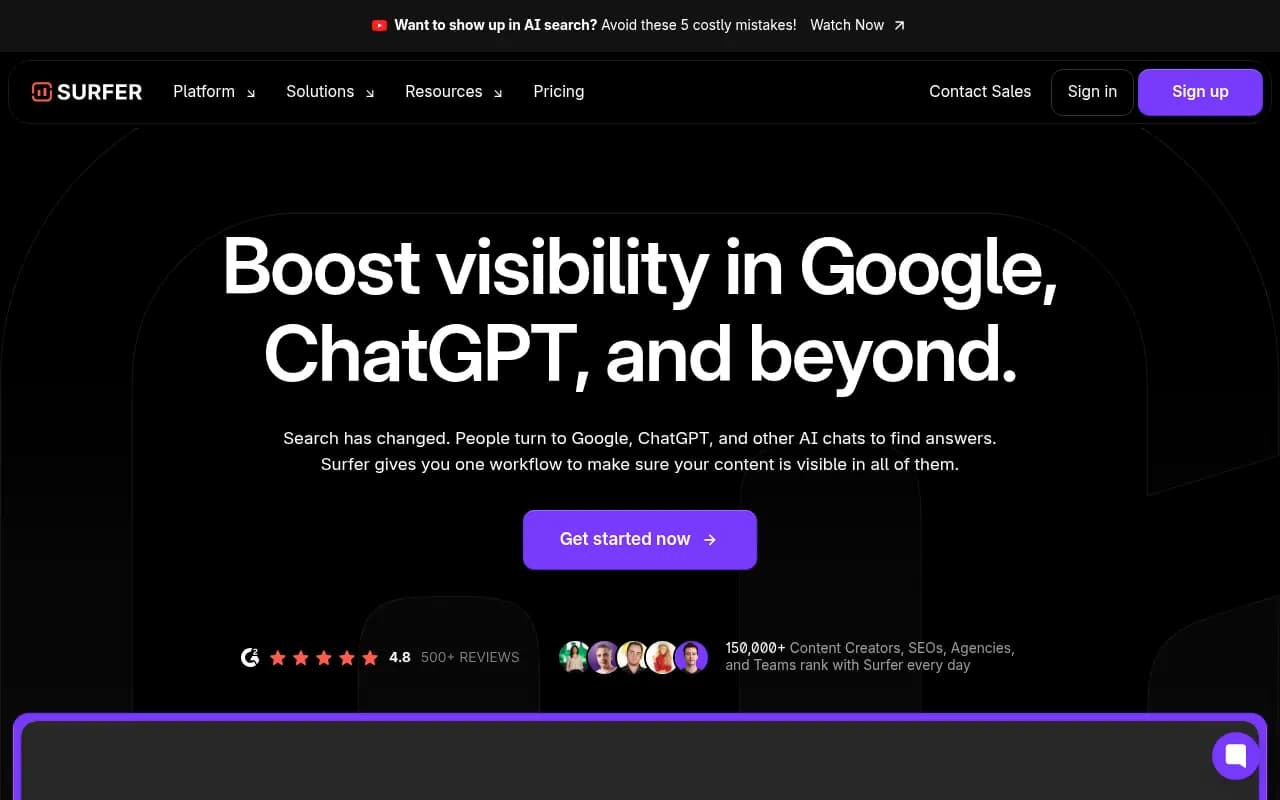
For content optimization specifically -- making sure your pages are semantically complete and cover the right topics -- tools like Surfer SEO and MarketMuse are useful for identifying gaps.
Comparison: traditional SEO vs. AI Mode optimization
| Factor | Traditional SEO | AI Mode optimization |
|---|---|---|
| Primary goal | Rank in top 10 blue links | Get cited in synthesized responses |
| Keyword strategy | Match exact search queries | Cover topic + latent sub-queries |
| Content structure | Keyword density, headings | Self-contained passages, direct answers |
| Success metric | Position 1-10 | Citation frequency, brand mentions |
| Backlinks | High importance | Still relevant, but entity authority matters more |
| Page experience | Important | Important (same signals) |
| Structured data | Helpful | More important for AI parsing |
| Tracking tools | Rank trackers | AI visibility platforms |
A practical workflow for optimizing existing pages
If you have existing content you want to optimize for AI Mode, here's a reasonable approach:
- Pick a page targeting a topic with clear question intent.
- Identify the primary question the page answers.
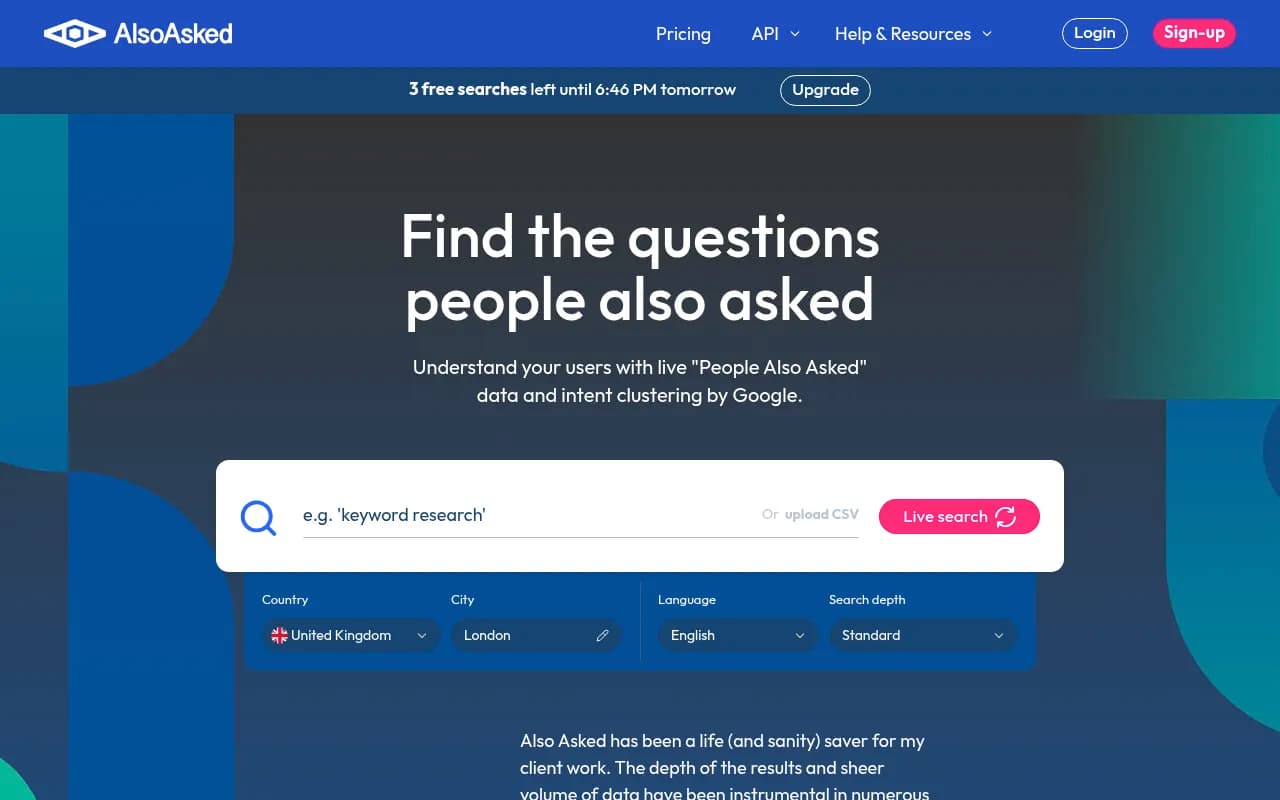
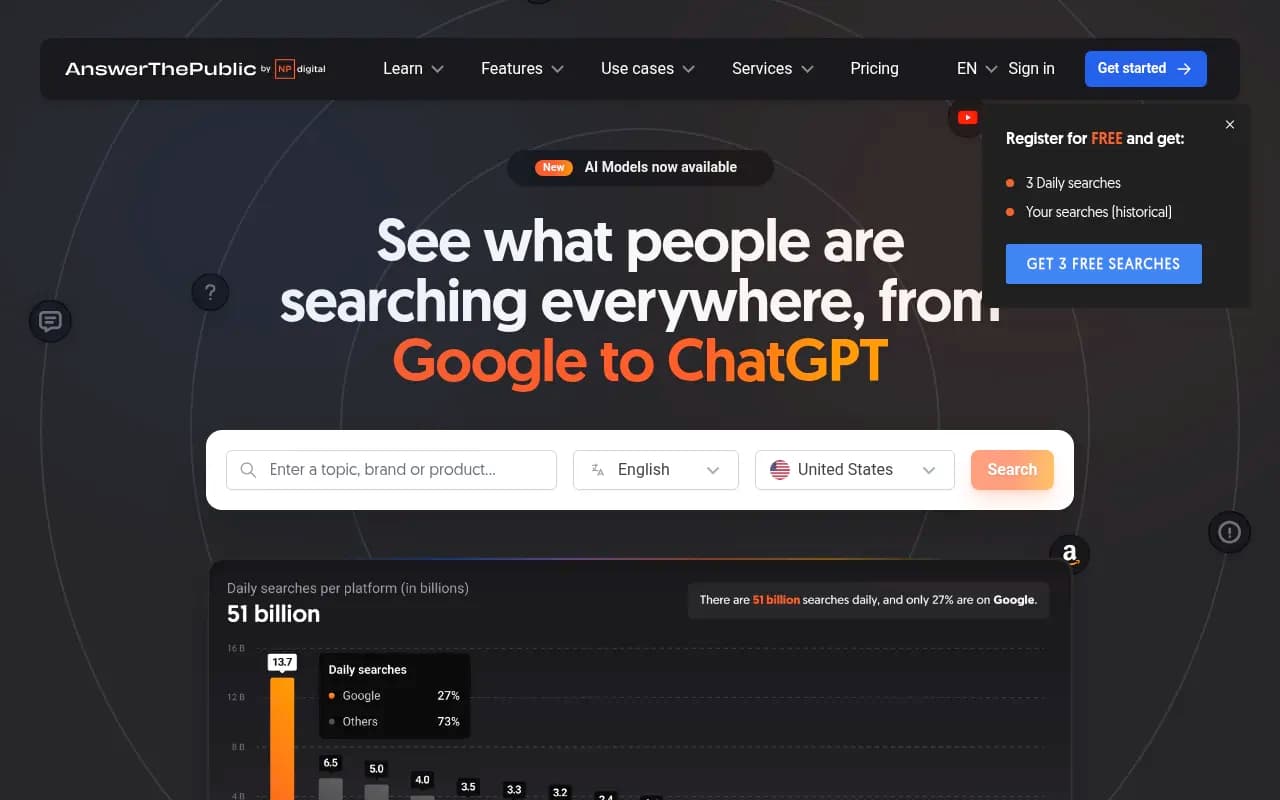
- Use a tool like AlsoAsked or AnswerThePublic to find related questions people ask about the topic.
- Check whether your page answers those related questions. If not, add sections that do.
- Review each major section: does it lead with a direct answer, or does it bury it? Restructure if needed.
- Check for vague hedging ("it depends," "there are many factors") and replace with specific, direct statements where possible.
- Add or improve structured data markup.
- Run the page through a content optimization tool to check semantic coverage.
- Track whether the page starts appearing in AI Mode responses after the update.
This isn't a one-time fix. AI Mode is evolving, and what gets cited today might shift as Google updates Gemini's behavior. Ongoing monitoring and iteration is the only sustainable approach.
What not to do
A few things that won't help and might hurt:
- Writing content specifically designed to "trick" AI into citing you. Gemini is good at identifying low-quality, manipulative content.
- Stuffing FAQ schema onto pages where it doesn't naturally fit. Structured data should reflect real content structure, not be bolted on.
- Ignoring traditional SEO fundamentals. AI Mode still pulls heavily from pages that rank well in traditional search. The two aren't separate games.
- Assuming one well-optimized page is enough. AI Mode citations are distributed across many pages. A strong content library covering a topic thoroughly beats one perfect article.
- Treating AI Mode optimization as a set-and-forget task. Monitor your citations, watch what competitors are getting cited for, and keep updating.
The bottom line
Ranking in Google AI Mode in 2026 comes down to one thing: being the most useful, specific, and trustworthy answer to the questions Gemini is trying to answer. That means understanding query fan-out, writing semantically complete content, maintaining strong technical foundations, and actually measuring whether your content is getting cited.
The brands that figure this out early will have a meaningful head start. The ones that keep optimizing only for blue-link positions will find themselves increasingly invisible as more searches resolve inside AI Mode without a single click.