Key takeaways
- AI search engines like ChatGPT, Perplexity, and Google AI Overviews now synthesize answers directly — being cited in those answers matters more than ranking #1 in blue links
- AI-referred traffic converts at roughly 14.2% vs 2.8% for traditional search, so even a small share of AI citations can move the needle
- You don't need an enterprise budget to compete — most high-impact GEO tactics are about content structure, authority signals, and consistency
- The biggest mistake small brands make is treating AI visibility like traditional SEO; the rules are different and the tools are different
- Tracking your progress matters: you can't improve what you can't measure, and there are affordable tools built specifically for this
The shift happened faster than most people expected. A year ago, "AI search" felt like something to watch. Now it's something to act on. ChatGPT has over 200 million weekly active users. Perplexity is growing fast. Google's AI Overviews appear on a huge share of commercial queries. And the brands showing up in those AI-generated answers are getting traffic that converts at rates traditional SEO can't touch.
The problem: most of the advice out there assumes you have a dedicated SEO team, a six-figure tool budget, and months to run experiments. That's not most businesses.
This guide is for the marketing manager at a 20-person SaaS company. The founder running a boutique e-commerce brand. The agency strategist managing five clients with lean retainers. You can absolutely compete in AI search — you just need to be smart about where you put your effort.
Here are eight tactics that actually work.
1. Understand what AI search engines actually want
Before you change a single piece of content, it helps to understand how AI search works differently from traditional search.
Google's traditional algorithm ranks pages based on signals like backlinks, keyword relevance, and technical factors. AI search engines do something different: they synthesize answers from multiple sources and cite the ones they trust most. The question isn't "does this page rank for this keyword?" It's "does this page contain a clear, trustworthy answer to this question?"
That changes your content strategy in a few important ways:
- Direct answers beat clever writing. If someone asks "what's the best CRM for a 10-person team?", an AI model wants a clear recommendation with reasoning — not a 2,000-word preamble before you get to the point.
- Entity clarity matters. AI models build knowledge graphs. If your brand, your products, and your expertise aren't clearly defined across your website and the web, you're harder to cite with confidence.
- Trust signals are citation signals. Reviews, mentions in authoritative publications, structured data, and consistent NAP (name, address, phone) information all feed into how confidently an AI model will recommend you.
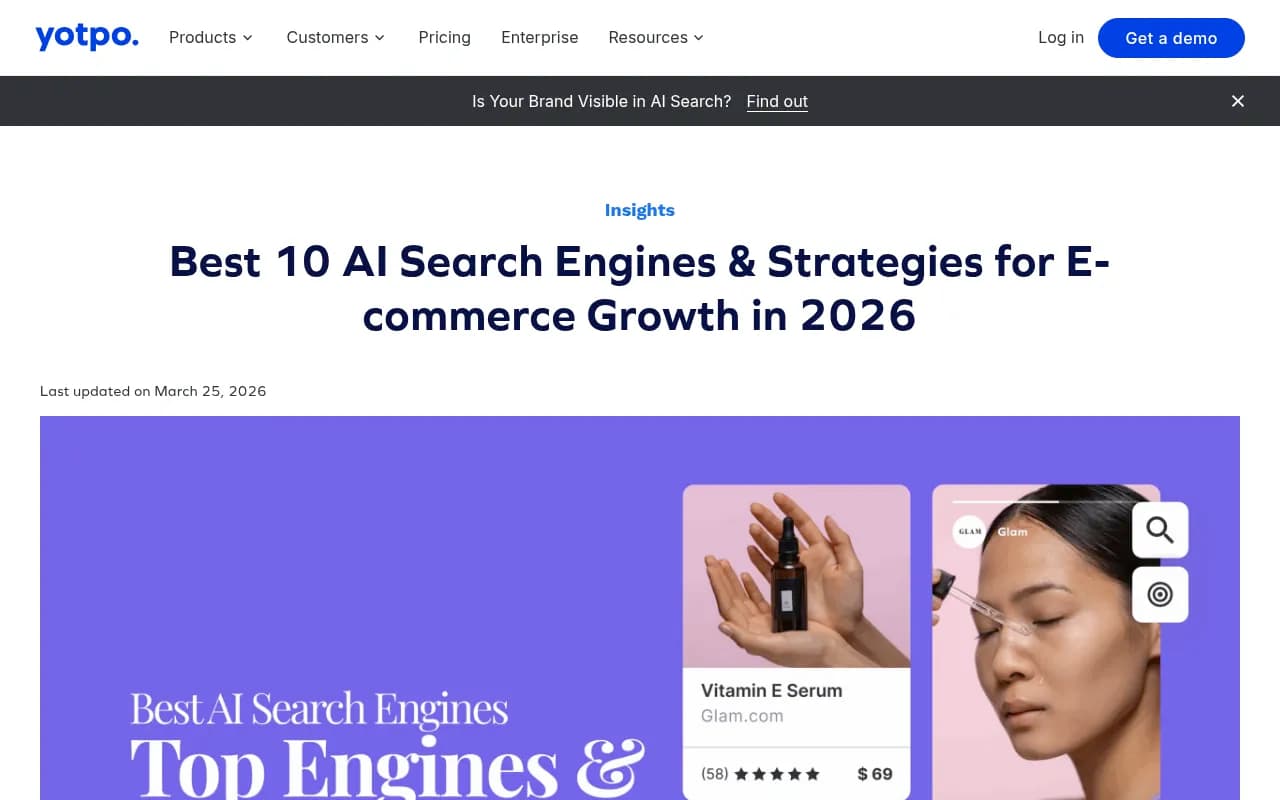
The shift from link economy to answer economy is real. Yotpo's research puts AI-referred conversion rates at around 14.2% compared to 2.8% for traditional search — a 5x difference. That's not a marginal improvement; it's a different category of traffic.
2. Run a manual AI visibility audit before spending anything
The most common mistake small brands make is jumping straight to content production without knowing where they actually stand. Spend an hour doing this first.
Open ChatGPT, Perplexity, and Google with AI Overviews enabled. Run 10-15 prompts that your ideal customer would realistically type. Things like:
- "Best [your category] for [your target customer]"
- "How do I [problem your product solves]"
- "[Your brand name] vs [competitor]"
- "Is [your brand] legit?"
For each prompt, note: does your brand appear? If not, who does? What sources are being cited? This gives you a baseline and tells you exactly which competitors are winning the prompts you care about.
This manual audit is free and takes less than an hour. It's also the most honest signal you'll get about your current AI visibility.
Once you've done it manually, you'll want a way to track it systematically over time. Tools like Promptwatch automate this — tracking your visibility across 10 AI models, showing you which prompts competitors are winning that you're not, and flagging the content gaps you need to fill.

For a lighter-weight option, tools like Otterly.AI or Peec AI offer basic monitoring at lower price points.
Otterly.AI


3. Restructure your content around questions, not keywords
Traditional SEO content is built around keywords. AI search content needs to be built around questions — specifically, the questions your customers are actually asking AI models.
This isn't just about adding FAQ sections (though those help). It's about restructuring how you write.
A keyword-optimized page might be titled "Project Management Software for Remote Teams" and spend the first 500 words on market context before getting to any recommendations. An AI-optimized page answers the implicit question immediately: "If you're managing a remote team of under 20 people, here's what to look for and what we'd recommend."
Some practical changes that make a real difference:
- Start sections with the answer, then provide the reasoning. Don't bury the lead.
- Use H2 and H3 headings that are phrased as questions or clear statements. "What does [product] cost?" beats "Pricing Overview."
- Include a dedicated FAQ section on every important page. Use real questions from customer support tickets, sales calls, and search data.
- Write comparison content. "X vs Y" and "Best X for [specific use case]" pages are heavily cited by AI models because they answer high-intent questions directly.
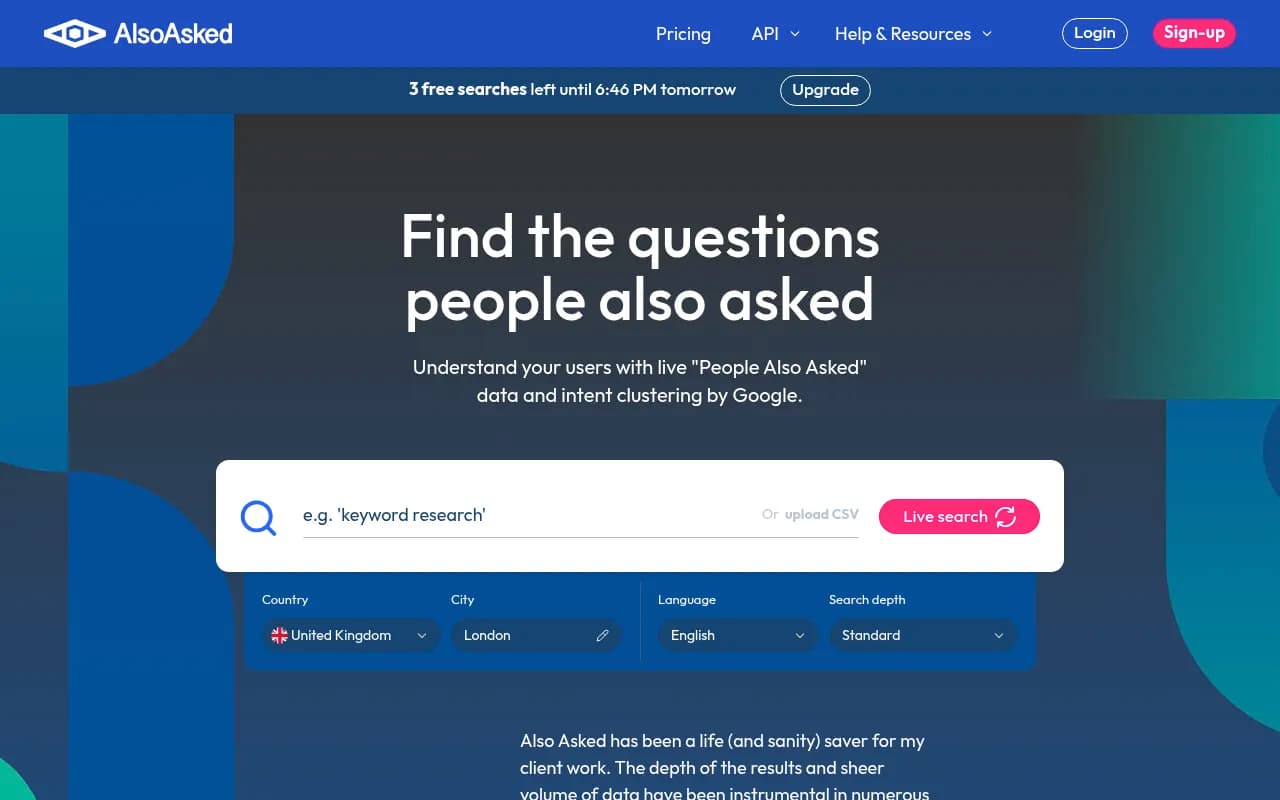
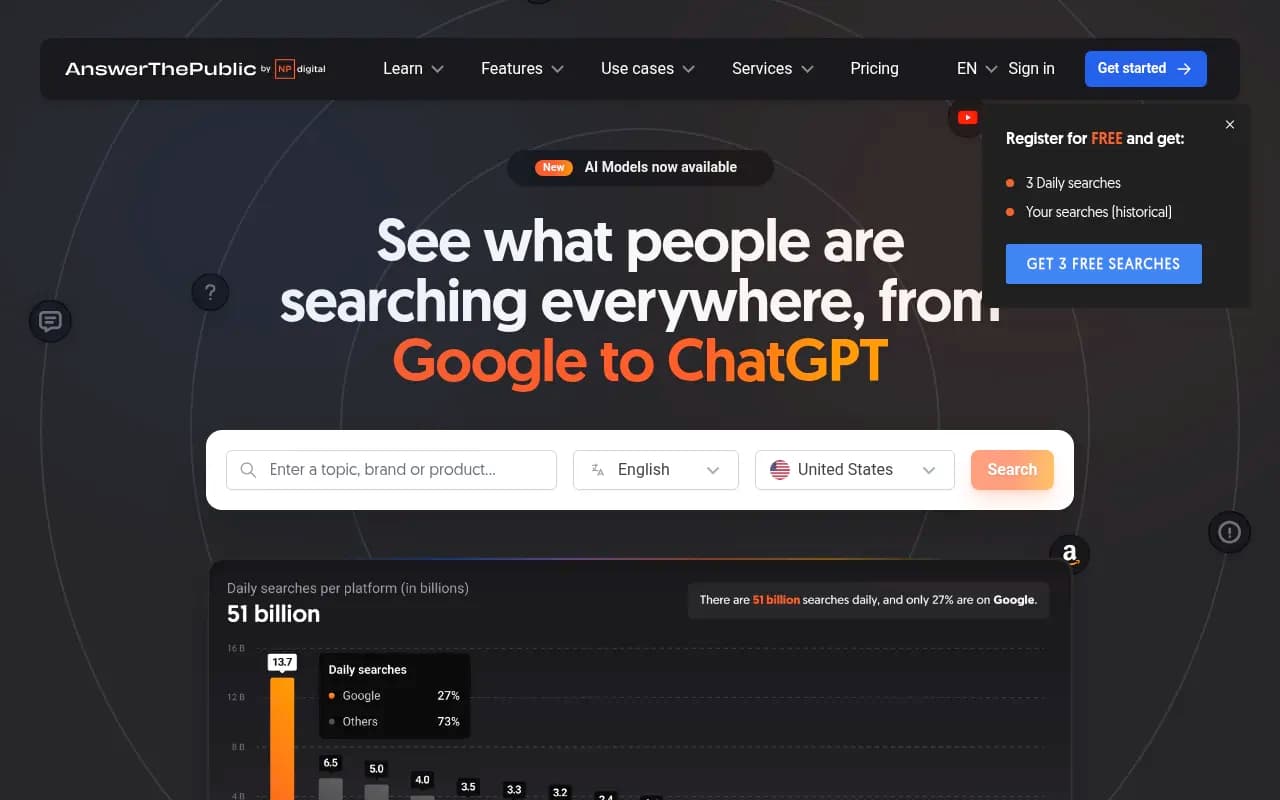
Tools like AlsoAsked and AnswerThePublic are useful for finding the actual questions people ask around your topic.
4. Build topical authority on a narrow focus
Enterprise brands can afford to cover everything. You probably can't — and that's actually fine. AI models tend to cite sources that demonstrate deep expertise on a specific topic rather than shallow coverage of many topics.
Pick the 3-5 topics where you genuinely have more to say than your competitors. Then build comprehensive coverage of those topics: foundational explainers, comparison guides, how-to content, case studies, and opinion pieces that take a real position.
The goal is to become the obvious source on your specific niche. If you sell project management software for construction companies, you want to own "project management for construction" — not "project management software" broadly.
This is sometimes called topical authority, and it's one of the highest-leverage investments a small brand can make. It takes time, but it compounds. Once AI models start associating your domain with a specific topic, they cite you consistently.
A tool like MarketMuse can help you identify content gaps and build out topic clusters systematically.
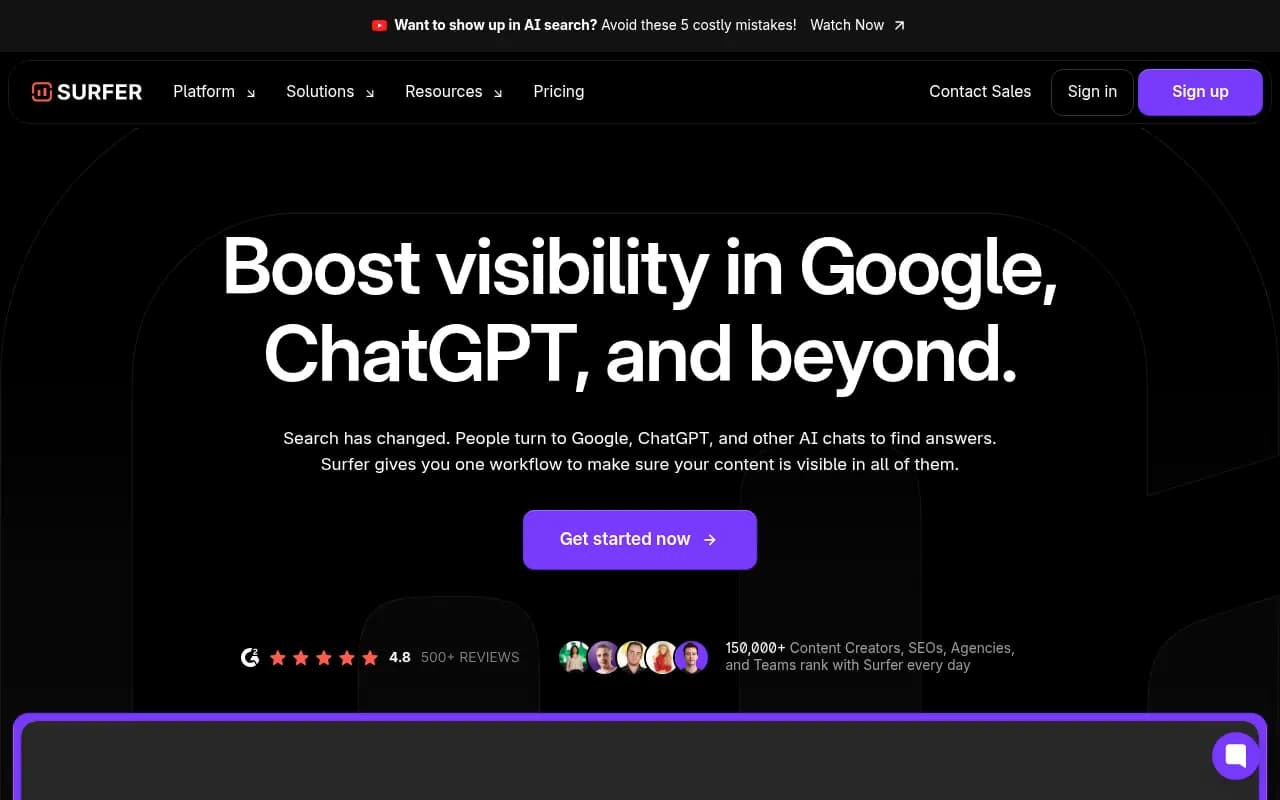
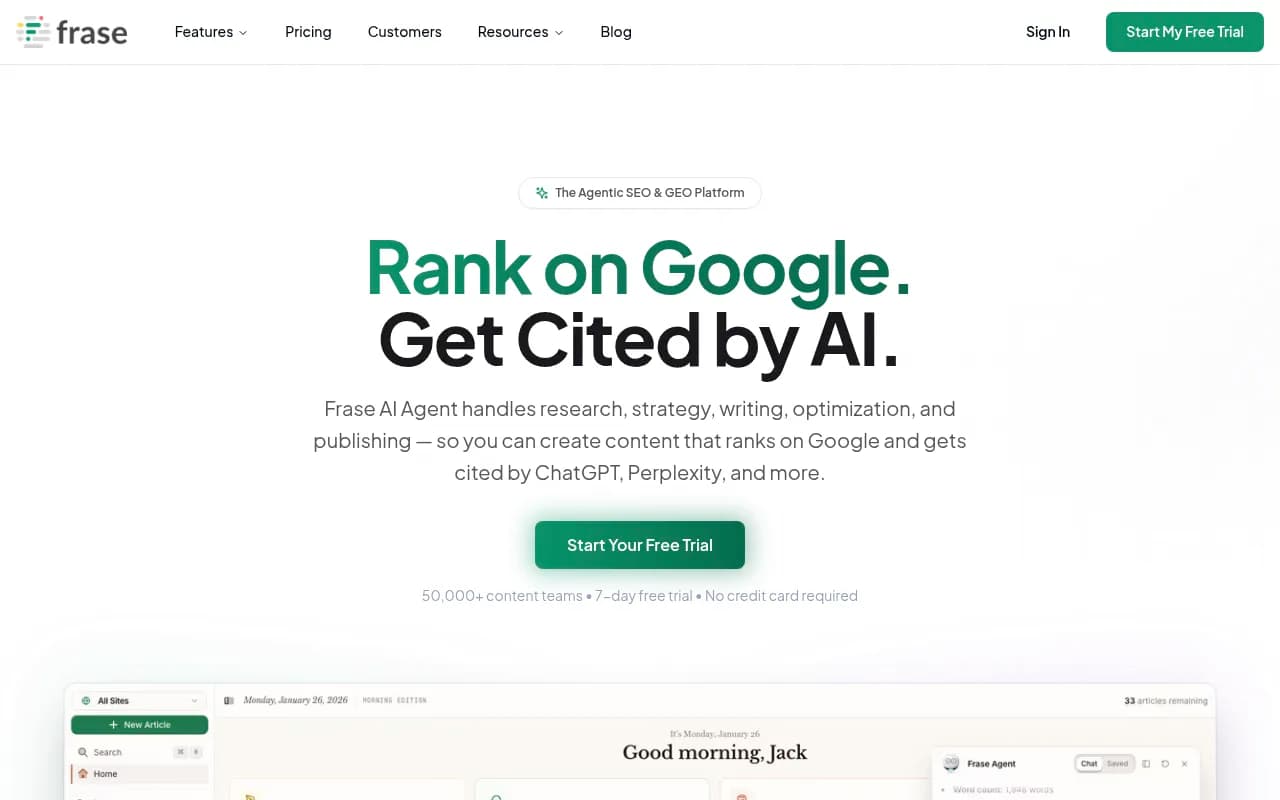
For content creation at scale, Surfer SEO and Frase both offer solid AI-assisted writing and optimization workflows that won't break a mid-size budget.
5. Get your structured data right
This one is often skipped because it sounds technical, but it's genuinely important and not as hard as it sounds.
Structured data (Schema markup) tells search engines and AI models exactly what your content is about. It's the difference between an AI model having to infer that your page is about a product review versus knowing it definitively.
For most small brands, the highest-priority schema types are:
Organization— your brand name, logo, contact info, social profilesFAQPage— for pages with question-and-answer contentProduct— if you sell products, include price, availability, and reviewsArticleorBlogPosting— for editorial content, with author and dateLocalBusiness— if you have a physical location or serve specific geographies
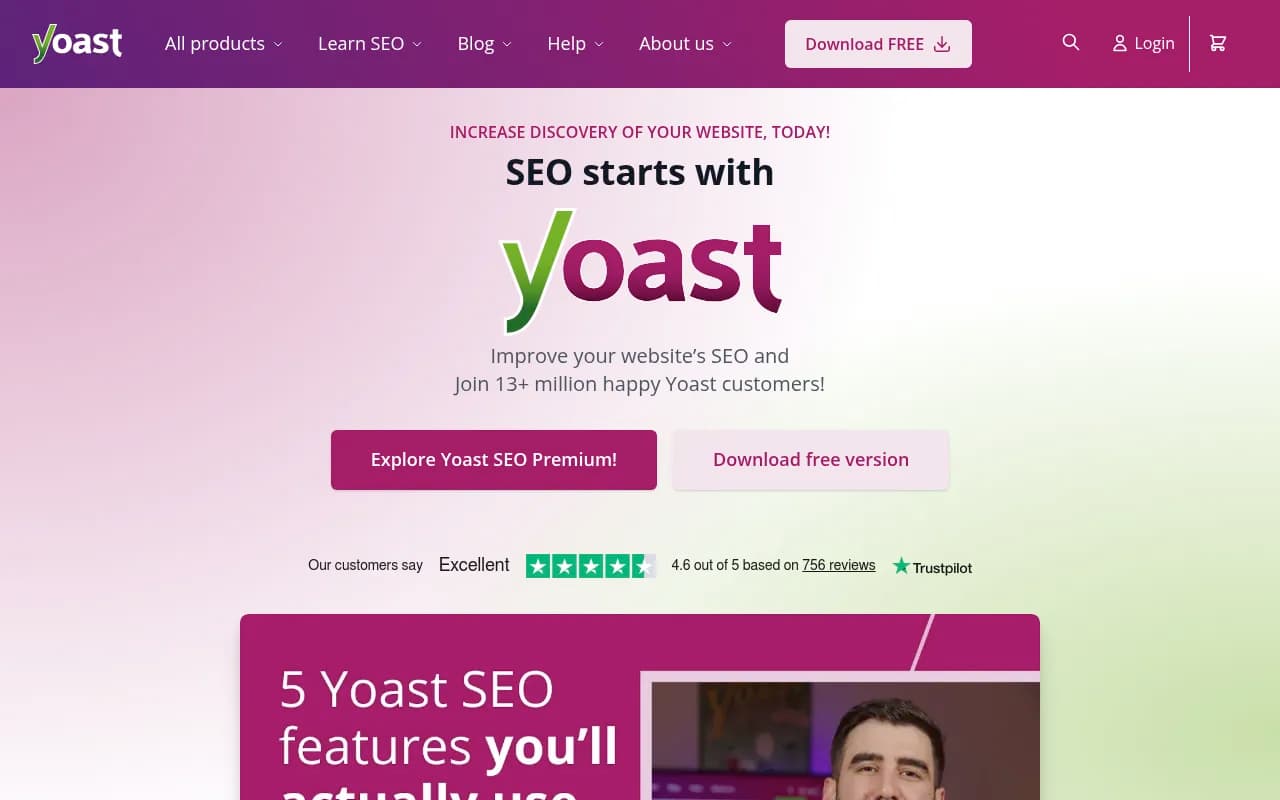
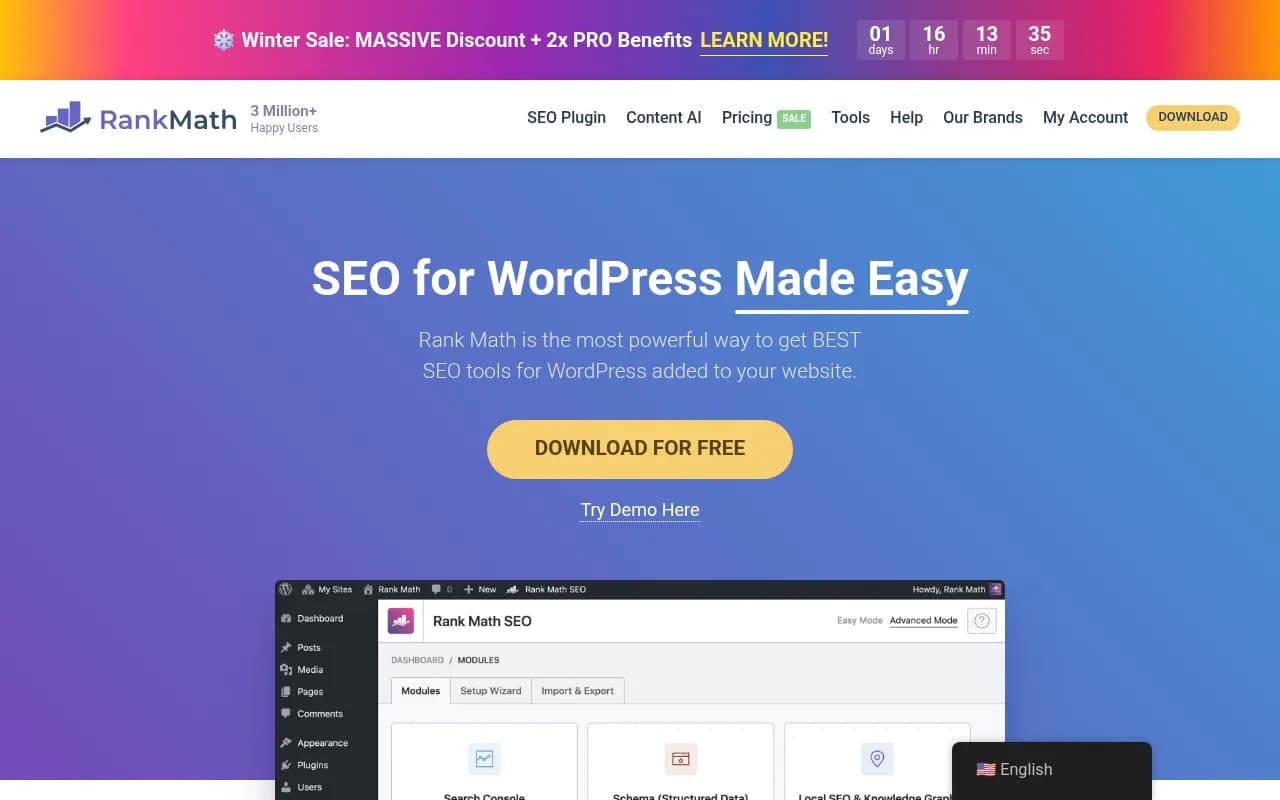
If you're on WordPress, plugins like Yoast SEO or Rank Math handle most of this without writing a line of code.
For more advanced structured data and entity optimization, WordLift is worth a look — it's specifically built to help AI models understand your content.
6. Earn citations from sources AI models trust
AI models don't just look at your website. They look at what the rest of the web says about you. Reddit threads, YouTube videos, review platforms, industry publications, and third-party directories all feed into how confidently an AI model will recommend your brand.
This is uncomfortable news for brands that have relied purely on their own content. But it's also an opportunity, because most small brands haven't thought about this systematically.
A few high-impact moves:
- Get listed and reviewed on the platforms that matter in your category. G2, Capterra, and Trustpilot for software. Google Business Profile and Yelp for local businesses. These are heavily cited by AI models.
- Participate genuinely in relevant Reddit communities and Quora threads. Not spam — actual helpful answers that mention your brand where relevant. AI models cite Reddit constantly.
- Pursue guest posts and mentions in industry publications. A single mention in a well-regarded industry blog can do more for your AI visibility than 10 pages of self-published content.
- Build a Wikipedia presence if your brand is large enough to qualify. Wikipedia is one of the most-cited sources across all AI models.
Trustpilot is worth prioritizing specifically because AI models treat verified review platforms as trust signals.
7. Fix your technical foundation for AI crawlers
AI search engines have their own crawlers — GPTBot (OpenAI), ClaudeBot (Anthropic), PerplexityBot, and others. If these crawlers can't read your content, you won't get cited regardless of how good that content is.
A few things to check:
- Make sure your
robots.txtisn't accidentally blocking AI crawlers. Many sites block all bots by default, which includes the AI crawlers you want to let in. - If your site is JavaScript-heavy (React, Vue, Next.js), make sure content is server-side rendered or pre-rendered. AI crawlers often struggle with client-side JavaScript.
- Check your page speed. Slow pages get crawled less frequently.
- Ensure your most important pages are internally linked and easy to discover.
You can use Screaming Frog SEO Spider to audit your site's crawlability.
If you want to see specifically which AI crawlers are hitting your site and which pages they're reading, Promptwatch's crawler log feature does this in real time — useful for diagnosing indexing issues before they become visibility problems.
8. Track your AI visibility and iterate
This is where most small brands fall short. They make changes, then have no idea whether those changes improved their AI visibility. Without measurement, you're flying blind.
At minimum, you should be running manual prompt checks monthly across ChatGPT, Perplexity, and Google AI Overviews. The levelupleads.co.uk guide on AI search tactics recommends testing at least 10-15 prompts per month across these three platforms — that's a reasonable baseline.
Beyond manual checks, there are now several tools built specifically for tracking AI visibility:
| Tool | AI models tracked | Content gap analysis | Price range |
|---|---|---|---|
| Promptwatch | 10 (ChatGPT, Claude, Perplexity, Gemini, Grok, DeepSeek, and more) | Yes, with built-in content generation | $99-$579/mo |
| Otterly.AI | ChatGPT, Perplexity, Google AI Overviews | No | Lower |
| Peec AI | ChatGPT, Perplexity, Claude | No | Lower |
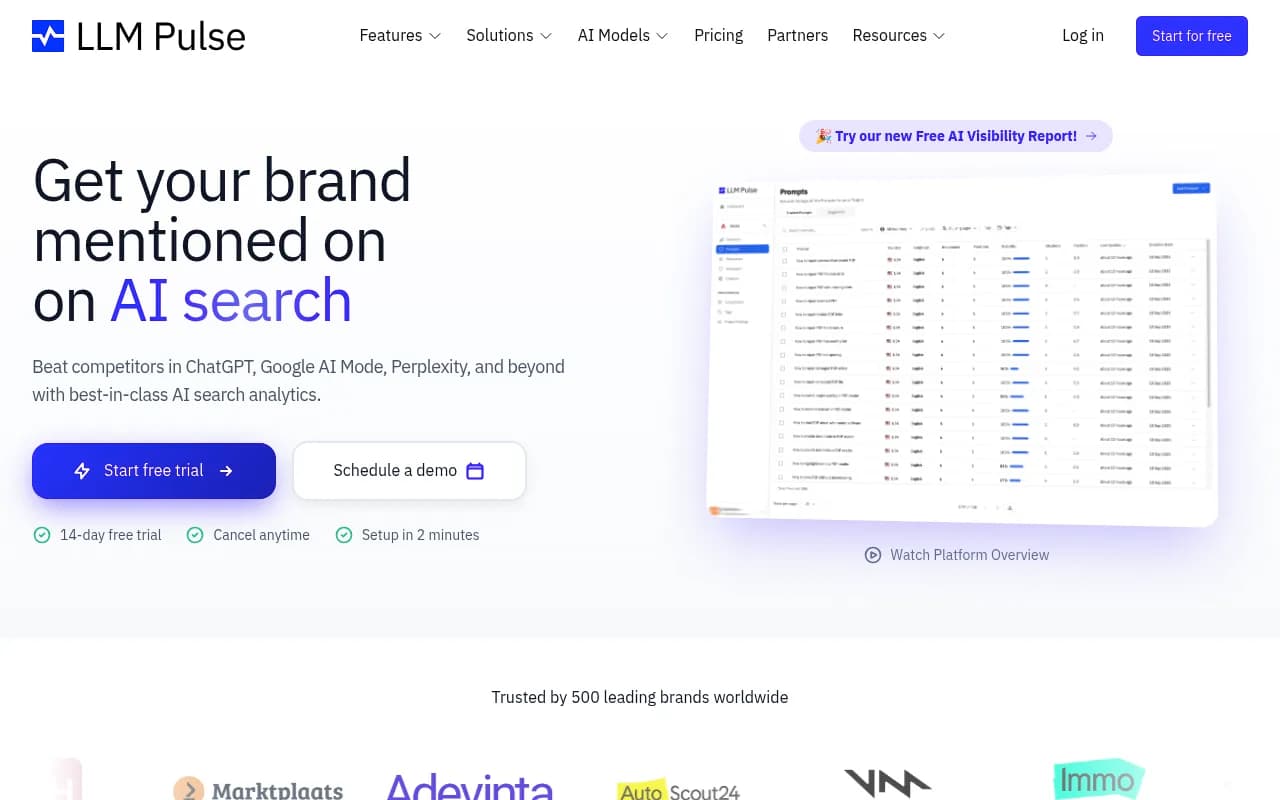
| LLM Pulse | ChatGPT, Perplexity, and others | No | Lower |
| Rankshift | ChatGPT, Perplexity, AI search | No | Lower |

The key difference between these tools: most of them show you data. Promptwatch goes further by telling you what to do about it — which prompts you're missing, what content to create, and whether your new content is getting cited. For a small team that can't afford to just monitor without acting, that matters.
What to track month over month:
- Your brand mention rate across key prompts (what % of the time does your brand appear?)
- Which competitors are appearing when you don't
- Which pages on your site are being cited by AI models
- Whether traffic from AI search is growing (you can see this in Google Analytics by filtering for referrals from perplexity.ai, chatgpt.com, etc.)
Putting it together: a realistic 90-day plan
If you're starting from scratch, here's a practical sequence:
In the first month, do the manual audit, fix your robots.txt and structured data, and identify your 3-5 core topics. These are foundational and mostly free.
In the second month, create or restructure 5-10 pieces of content around high-value questions in your niche. Focus on comparison content and direct-answer formats. Start building your review presence on 2-3 relevant platforms.
In the third month, set up systematic tracking so you can measure what's working. Start building external citations through Reddit participation, guest posts, or industry directory listings.
This isn't a 30-day fix. AI visibility compounds over time as AI models build more associations between your brand and your topic. But brands that start now will have a meaningful head start over those that wait.
The brands showing up in AI answers six months from now are the ones doing this work today.