Key takeaways
- MCP (Model Context Protocol) and REST APIs solve fundamentally different problems: APIs connect software to software, MCP connects AI models to tools and data
- MCP doesn't replace APIs -- most MCP servers call traditional APIs under the hood, adding a discovery and reasoning layer on top
- For AI visibility workflows (tracking brand mentions in ChatGPT, Perplexity, etc.), REST APIs remain the most practical choice for most teams in 2026
- MCP makes sense when you're building agentic workflows where an AI model needs to autonomously discover and use tools
- The practical advice from most engineers: build your stable foundation as APIs, then wrap them with MCP for agent consumption if needed
There's a lot of noise right now about MCP -- the Model Context Protocol that Anthropic introduced in late 2024 and that went from niche developer experiment to 97 million monthly SDK downloads in about twelve months. If you work in AI visibility, GEO, or anything adjacent to tracking how your brand appears in AI search engines, you've probably seen the question pop up: should we be using MCP instead of APIs?
The honest answer is: probably not instead of, but possibly alongside. Let me explain why.
What the two approaches actually do
Before getting into AI visibility specifically, it helps to be clear about what each integration method is designed for.
REST APIs: built for deterministic code
REST APIs are the backbone of modern software. When you check your brand's mention count in an AI visibility platform, when you pull citation data into a dashboard, when you trigger a content audit -- all of that runs through API calls. A developer writes code that sends an HTTP request to a specific endpoint, gets a structured response back, and does something with it.
The key word is deterministic. The developer knows exactly what they're asking for and exactly what format the response will come back in. The API doesn't need to explain itself or be discoverable -- the developer reads the documentation and writes the integration.
This has worked well for two decades because the consumer of the API is a human-written program. It knows what it wants.
MCP: built for AI models that need to reason about tools
MCP is a JSON-RPC 2.0 protocol that gives AI models a standardized way to discover and use external tools. Instead of a developer hardcoding "call this endpoint with these parameters," an AI agent can connect to an MCP server and ask: "What tools do you have, and what can I do with them?"
Each tool in an MCP server comes with a name, a description, typed input parameters, and expected output format. The AI model reads these descriptions and reasons about which tool to use for a given task -- without a human writing explicit integration code.
As one analysis put it: "APIs connect machines. MCP connects intelligence to machines."
The three primitives MCP exposes are tools (functions the AI can call), resources (data the AI can read), and prompts (pre-built instructions for common tasks). That self-describing nature is what makes it useful for agentic workflows.
The relationship between them
Here's the thing that trips people up: MCP servers typically call traditional APIs under the hood. When you connect Claude to a data source via MCP, the MCP server is usually making REST API calls to get that data. MCP adds a layer of runtime discovery, credential isolation, and semantic error handling -- but the underlying data transport is often still a conventional API.
So the question isn't really "MCP or API?" It's "do I need the agent-facing layer that MCP provides, or is a direct API integration sufficient?"
How this plays out for AI visibility workflows
Let's get concrete. If you're tracking your brand's visibility across ChatGPT, Perplexity, Claude, and Google AI Overviews, your workflow probably involves:
- Querying AI models with prompts relevant to your brand or category
- Parsing responses to detect mentions, citations, and sentiment
- Storing and aggregating that data over time
- Generating reports or alerts when visibility changes
- Identifying content gaps and opportunities
For steps 1-4, a REST API is almost certainly the right tool. You're running scheduled jobs, pulling structured data, and feeding it into dashboards. This is exactly what APIs are built for -- predictable, repeatable, scalable.
Promptwatch exposes this kind of data through its API, letting teams pull citation data, visibility scores, and prompt performance into their own reporting infrastructure or Looker Studio dashboards. That's a classic API use case.

Step 5 -- identifying gaps and deciding what to do about them -- is where things get more interesting. If you're building an agentic workflow where an AI model autonomously analyzes your visibility data, identifies content gaps, and drafts content recommendations, MCP starts to make sense. The AI model needs to discover what data is available, reason about what's missing, and take action. That's the MCP sweet spot.
A comparison of the two approaches
| Dimension | REST API | MCP |
|---|---|---|
| Consumer | Developer-written code | AI models / agents |
| Discovery | Static (read the docs) | Dynamic (runtime self-description) |
| Interaction pattern | Request-response | Bidirectional, context-aware |
| Setup complexity | Low to medium | Medium to high |
| Credential handling | Developer manages | Server-side isolation |
| Best for | Scheduled jobs, dashboards, integrations | Agentic workflows, autonomous AI tasks |
| Maturity | 20+ years | ~18 months |
| Ecosystem | Massive | Growing fast |
| Replaces the other? | No | No |
When to use each in practice
Stick with REST APIs when...
You're building integrations between software systems. Pulling data into a BI tool, triggering alerts in Slack, syncing visibility scores to your CRM -- all of this is API territory. The consumer is your code, not an AI model that needs to reason about options.
You need reliability and predictability. APIs have decades of tooling around them: rate limiting, retry logic, versioning, monitoring. If you're running production workflows that need to be auditable and debuggable, APIs give you more control.
Your team is primarily developers or analysts. If the people building and maintaining the integration understand HTTP and JSON, there's no reason to add the complexity of an MCP layer.
Consider MCP when...
You're building an AI agent that needs to autonomously use tools. If you want Claude or GPT-4 to independently decide to check your citation data, compare it against competitors, and draft a content brief -- without a human writing explicit code for each step -- MCP makes that workflow much cleaner.
You're connecting multiple AI models to the same data sources. MCP's standardized interface means you don't have to write custom integration code for each model. One MCP server, multiple AI consumers.
You want the AI to handle errors intelligently. MCP returns semantic errors that AI models can interpret and reason about, rather than HTTP status codes that require human interpretation.
The practical middle ground
Most teams working on AI visibility in 2026 will end up with a hybrid approach: REST APIs as the stable data layer, with MCP wrappers added selectively for agentic use cases. As one engineer put it: "Build APIs as your stable foundation and wrap them with MCPs for agent consumption."
This isn't a cop-out answer. It reflects the actual architecture of most production AI systems right now. The MCP ecosystem is growing fast, but it's still relatively young. Building everything on MCP today means betting on a standard that's still evolving.
What this means for AI visibility tools specifically
Most AI visibility platforms -- the ones tracking your brand across ChatGPT, Perplexity, Gemini, and similar engines -- currently offer REST APIs as their primary integration method. That's the right call for most use cases.
Where MCP is starting to appear is in agentic SEO and GEO workflows: tools that let an AI agent autonomously run visibility checks, identify gaps, and generate content recommendations without a human orchestrating each step. This is genuinely useful, but it requires the underlying data platform to expose an MCP server, which most tools haven't built yet.
A few platforms worth knowing about in this space:
Otterly.AI

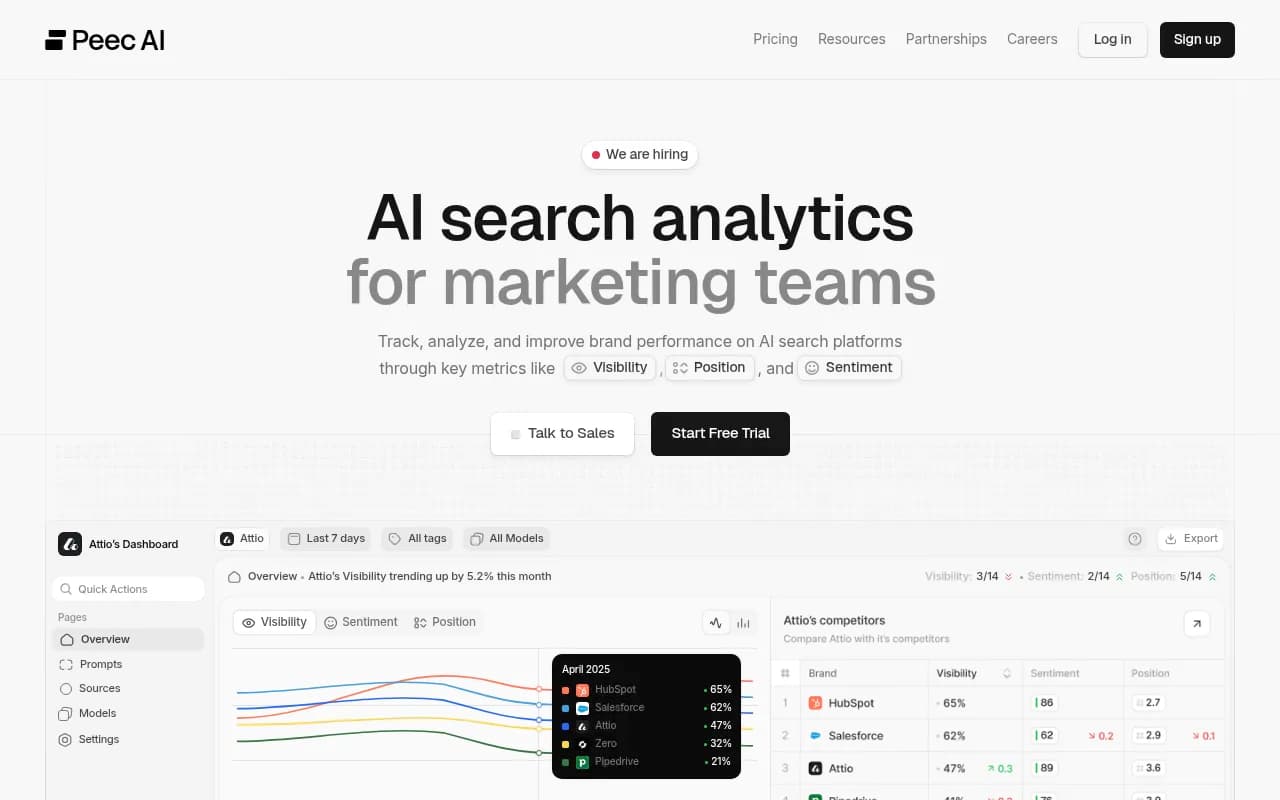
Profound


Most of these are monitoring-focused -- they show you data but leave the action steps to you. The more interesting question for 2026 is which platforms will close the loop: not just surfacing visibility gaps, but helping you act on them, whether through APIs, MCP-powered agents, or built-in content tools.
Promptwatch is one of the few platforms that's built around the full cycle -- finding gaps, generating content to fill them, and tracking whether that content actually improves your AI visibility. Whether you're integrating via API or building an agentic workflow on top, having a platform that goes beyond monitoring matters.
A note on workflow automation tools
If you're not a developer but want to connect AI visibility data to other tools without writing code, workflow automation platforms are worth considering.
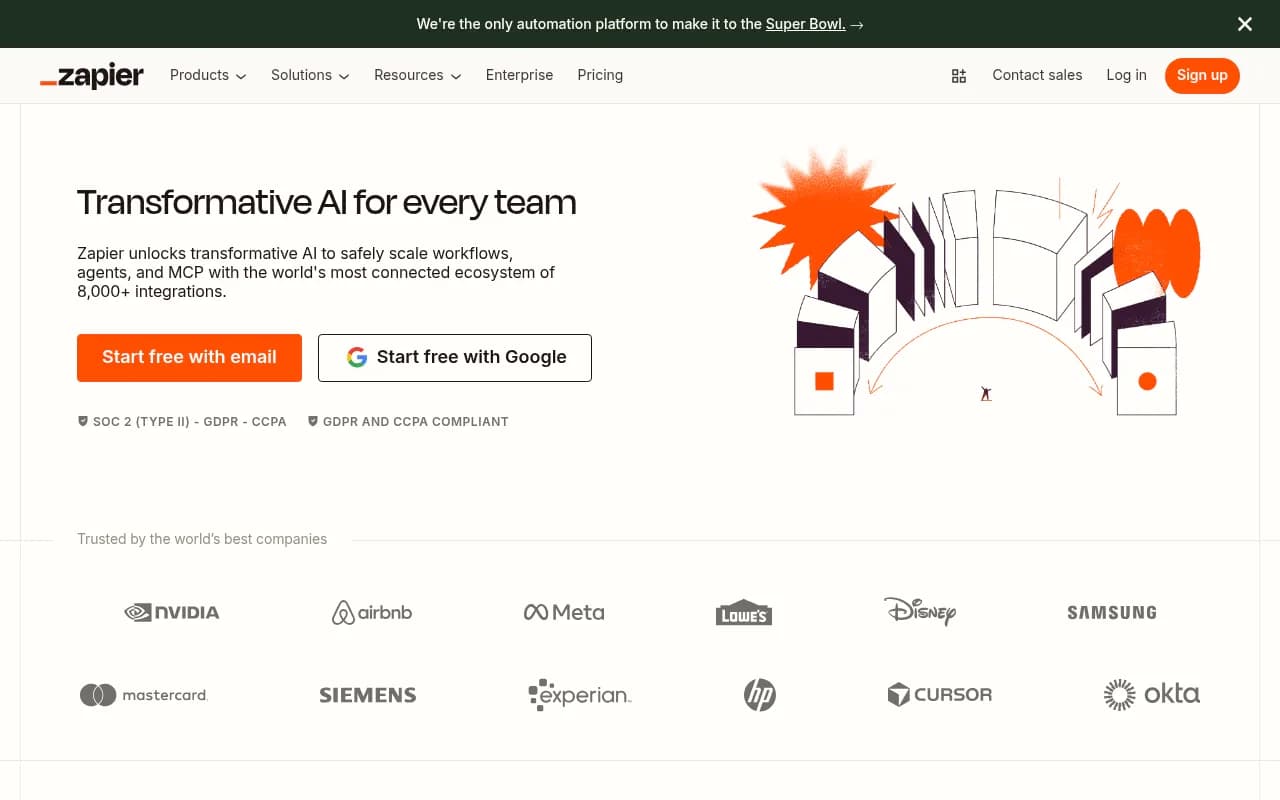
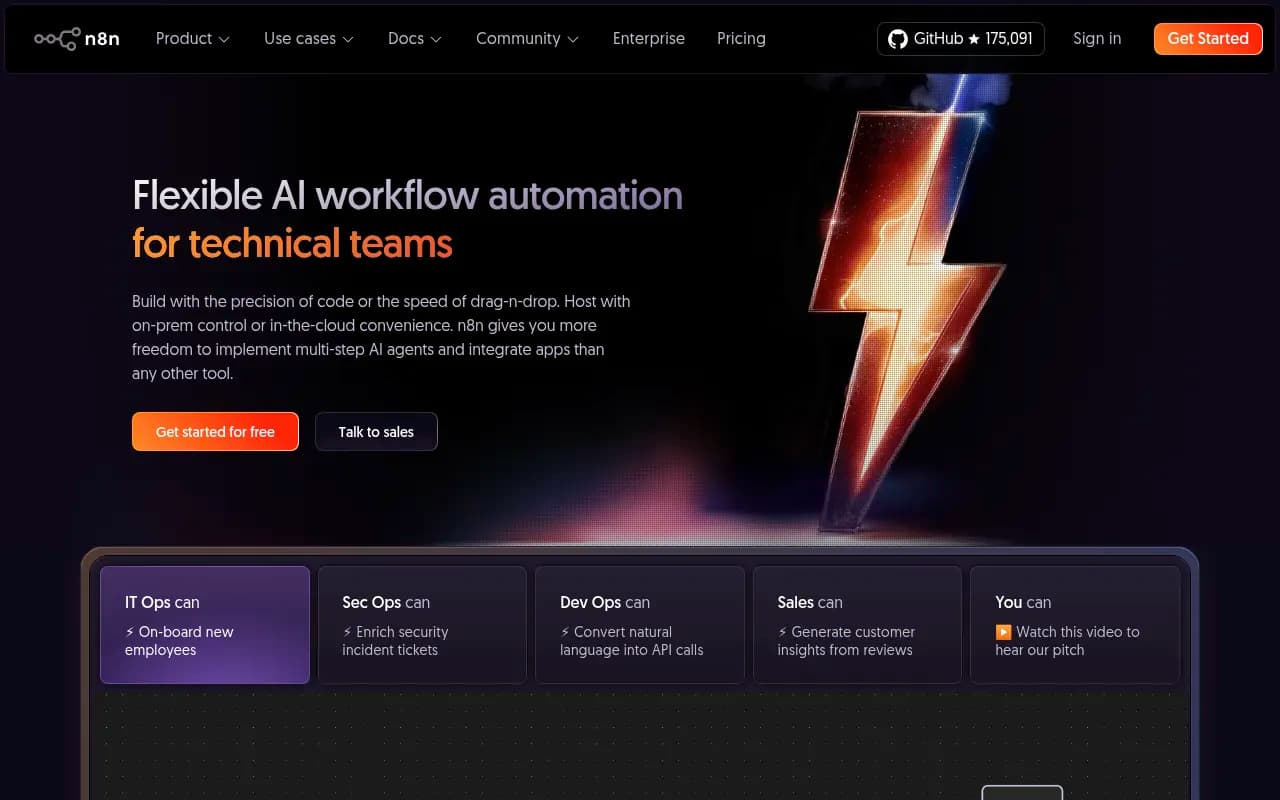
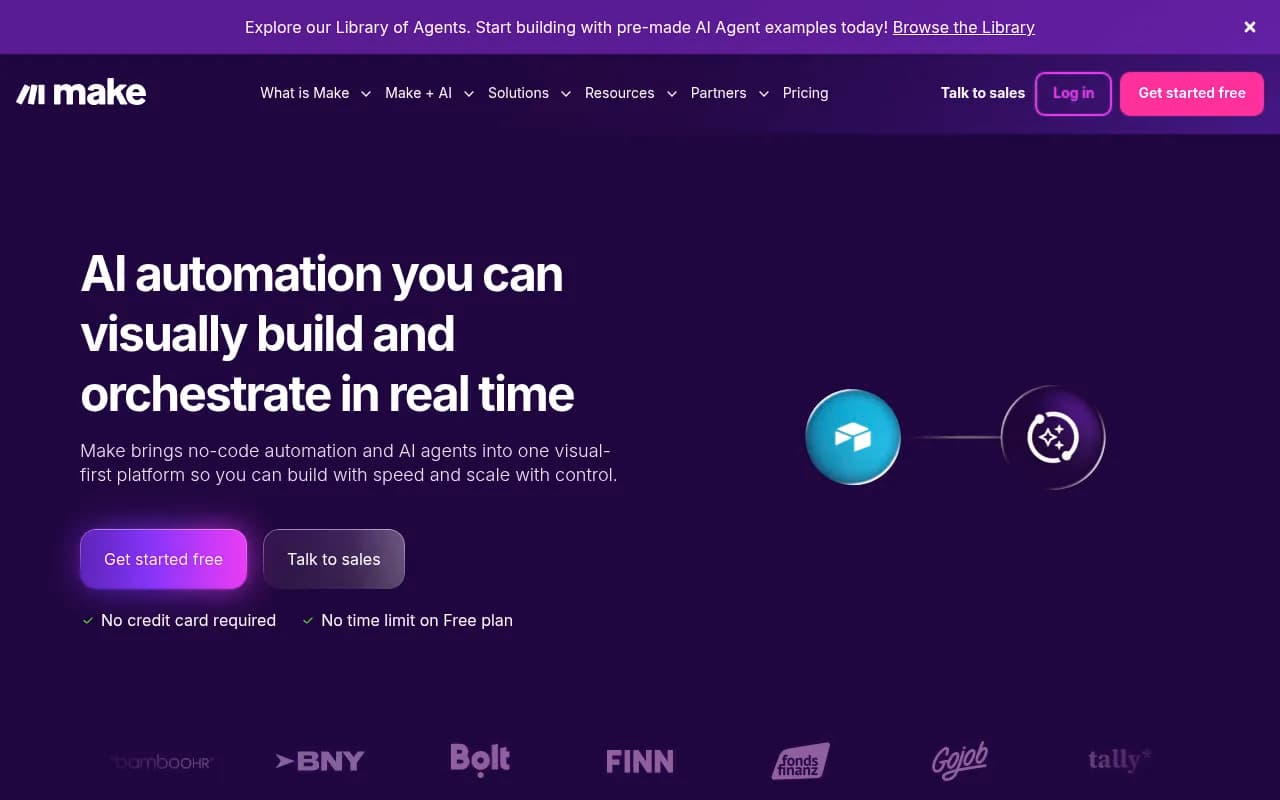
These tools let you build integrations between APIs without writing code -- connecting your AI visibility platform to Slack, Google Sheets, HubSpot, or wherever you need the data. They're not MCP, but they solve a similar problem for non-technical teams: making data from one system available in another without custom development.
The bigger picture
MCP is a genuinely useful protocol for a specific problem: giving AI models a standardized, discoverable interface to external tools. It's not hype. But it's also not a replacement for REST APIs, and it's not the right choice for most AI visibility integrations today.
The teams getting the most value from their AI visibility data in 2026 are the ones who've built clean API integrations into their existing reporting infrastructure, and who are selectively experimenting with agentic workflows for tasks that benefit from autonomous AI reasoning -- like gap analysis and content prioritization.
Build the API layer first. Add MCP when you have a specific agentic use case that justifies the complexity. And make sure the platform you're building on top of actually helps you act on what you find, not just track it.