Key takeaways
- MCP (Model Context Protocol) became a mainstream infrastructure standard in 2025-2026, adopted by Microsoft, OpenAI, Google, and Docker -- but most AI visibility platforms haven't built meaningful native support yet
- "MCP support" is being used loosely: some platforms mean they expose an MCP server endpoint, others mean they can consume MCP tools, and a few are just using the term for SEO purposes
- The platforms with genuine MCP integration tend to be developer-facing tools (LLM observability, agent frameworks) rather than brand monitoring dashboards
- For marketing and GEO teams, MCP matters mainly as a signal of platform architecture -- whether a tool can plug into agentic workflows or sits as a siloed dashboard
- When evaluating any platform's MCP claims, ask three specific questions: Does it expose an MCP server? Can it consume external MCP tools? Does it support auth, audit logs, and enterprise-grade gateway features?
What MCP actually is (and why it matters for AI visibility)
Model Context Protocol is an open standard that lets AI agents and LLMs connect to external tools, data sources, and services through a standardized interface. Think of it like USB-C for AI: instead of every tool building a custom integration with every model, MCP creates one common protocol.
Anthropic originally proposed MCP in late 2024. By early 2026, it had been adopted by Microsoft, OpenAI, Google, JetBrains, Docker, and hundreds of smaller platforms. The GitHub MCP server alone had millions of installs within months of launch.
For AI visibility platforms specifically, MCP matters for two reasons.
First, it changes how AI models access information. If your brand data, citation history, or content is exposed through an MCP server, AI agents can query it directly when generating responses. That's a meaningful shift from hoping your website gets crawled to actively serving structured data to AI systems.
Second, it signals platform architecture. A tool that supports MCP can plug into agentic workflows -- automated pipelines where AI agents monitor, analyze, and act without constant human intervention. A tool that doesn't support MCP is a dashboard you have to log into manually. Both have their place, but they're different products.
The problem is that "MCP support" has become a marketing phrase. Some platforms have genuinely built MCP servers or integrations. Others have added a checkbox to their feature page and moved on. The difference matters if you're building any kind of automated GEO workflow.
The MCP landscape in 2026: what actually got built
Before evaluating AI visibility platforms specifically, it's worth understanding what real MCP infrastructure looks like in 2026.
The most mature MCP implementations are in developer tooling. GitHub's MCP server lets agents read repositories, create issues, and run workflows. Brave Search MCP gives agents real-time web access. Filesystem MCP handles local file operations. These are production-grade, widely deployed, and battle-tested.
On the enterprise side, the 2026 MCP roadmap (per Prefect's enterprise deployment research) calls out specific gaps that still need solving: audit logs, SSO-integrated auth, gateway-level rate limiting, and multi-tenant isolation. Most MCP servers today are single-tenant, developer-friendly tools. Enterprise-grade MCP gateways -- the kind that a Fortune 500 marketing team could deploy safely -- are still maturing.
For AI R&D and agent infrastructure, platforms like PatSnap have built MCP servers that expose their patent and research databases to AI agents. That's a concrete, useful implementation: an agent can query PatSnap's data through a standardized interface rather than scraping HTML.
What's notably absent from most of this activity: marketing and AI visibility platforms. The GEO/AEO category has been slower to adopt MCP than developer tooling, which makes sense -- their primary users are marketers, not engineers. But it also means the "MCP support" claims in this space deserve extra scrutiny.
How to evaluate MCP claims from AI visibility platforms
When a platform says it "supports MCP," you need to ask what that actually means. There are at least four distinct things a platform could mean:
It exposes an MCP server. The platform has built an MCP server that external agents can connect to and query. This is the most useful form of MCP support for agentic workflows. It means an AI agent running in Claude, Cursor, or a custom pipeline can pull your brand's visibility data without you logging into a dashboard.
It can consume MCP tools. The platform's own AI features can call external MCP servers. This is useful if the platform has built-in AI agents that need to pull data from other sources (web search, your CMS, your analytics stack).
It has a documented API that could theoretically be wrapped in MCP. This is the weakest claim. Having a REST API doesn't mean you support MCP -- it means someone could build an MCP wrapper for your API. Some platforms conflate these.
It mentions MCP in blog posts. This is not MCP support. It's content marketing.
The honest answer for most AI visibility platforms in 2026 is that they fall into category three or four. That's not necessarily a dealbreaker -- if you're a marketer who just wants to track brand mentions and generate content, you don't need MCP. But if you're building automated GEO workflows or integrating AI visibility data into a broader agent stack, the distinction matters.
Which AI visibility platforms have genuine MCP integration
Let me be direct: the research available in 2026 doesn't show any major AI visibility platform with a fully documented, production-grade MCP server that's been independently verified. What exists is a spectrum.
Platforms with the strongest architectural foundations for MCP
Promptwatch is the platform most likely to have meaningful MCP infrastructure, given its API-first architecture and the fact that it already integrates with Looker Studio and supports server log analysis. Its crawler log data -- real-time feeds of AI bots hitting your site -- is exactly the kind of structured, queryable data that would be valuable to expose through an MCP server. Whether it has actually shipped a documented MCP server endpoint is something you'd need to verify directly with their team.

Platforms like AirOps sit at the intersection of content operations and AI visibility, which means they're more likely to have thought about agentic integrations. AirOps is built around workflow automation, so MCP compatibility would be a natural extension of its architecture.
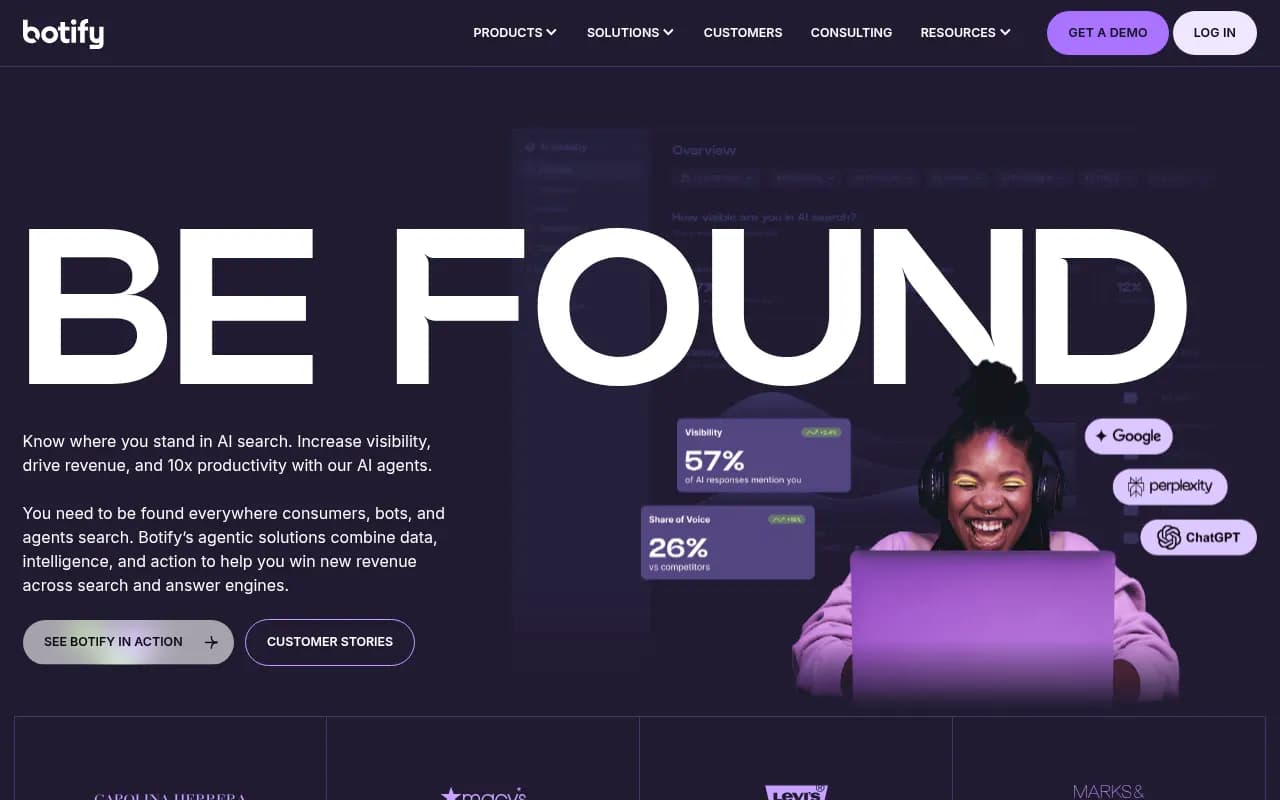
Botify is another platform worth checking. It's positioned as an enterprise AI search optimization platform and has historically been more technical than most competitors. Enterprise-grade tooling tends to adopt protocols like MCP earlier because their customers demand it.
Platforms that are monitoring-only dashboards (MCP unlikely to matter)
Most AI visibility tools in 2026 are fundamentally dashboards: you log in, you see charts, you export data. MCP support would be a nice-to-have for these platforms, but it's not core to their value proposition.
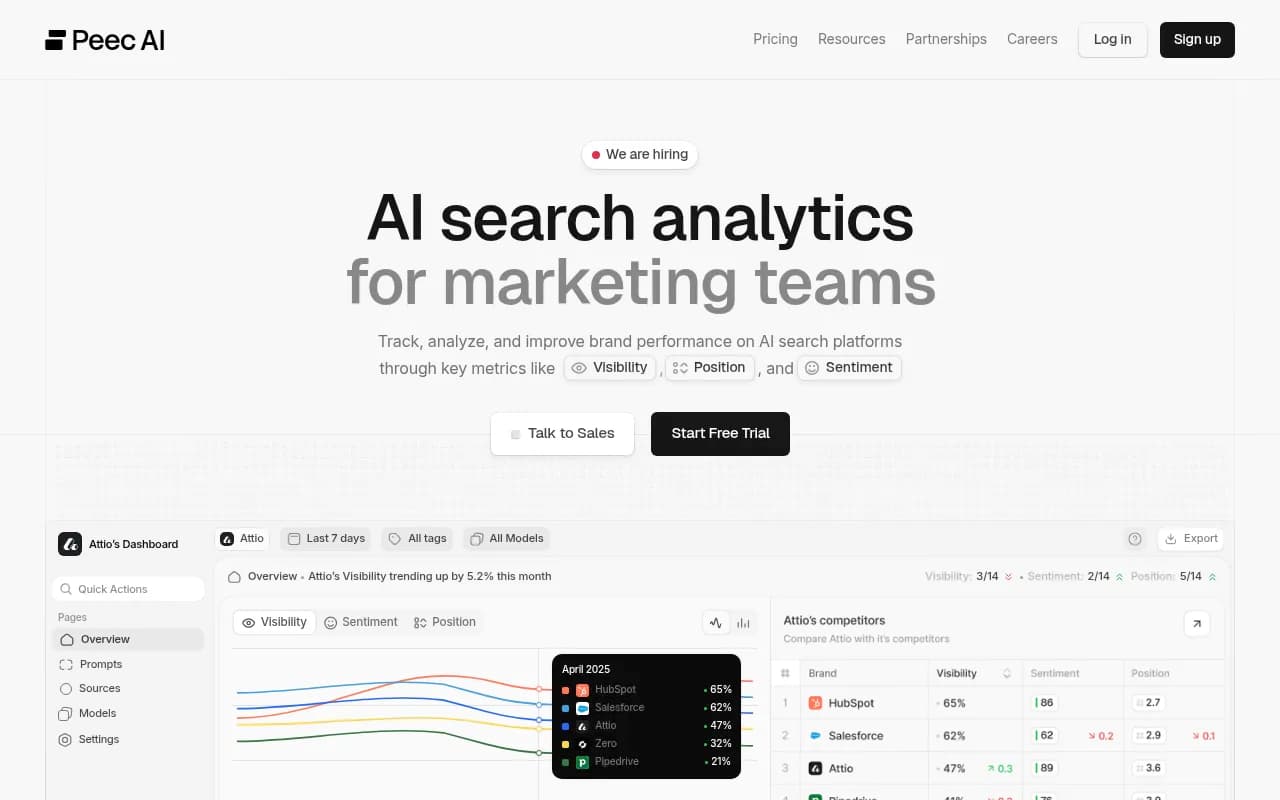
Otterly.AI, Peec AI, and similar monitoring-focused tools fall into this category. They're useful for tracking brand mentions across ChatGPT, Perplexity, and other models, but they're not built for programmatic integration into agent workflows.
Otterly.AI

Profound has a stronger research layer and more data depth, but its primary interface is still a dashboard. MCP integration would require deliberate engineering effort that isn't evident from public documentation.
Profound

The developer-adjacent platforms
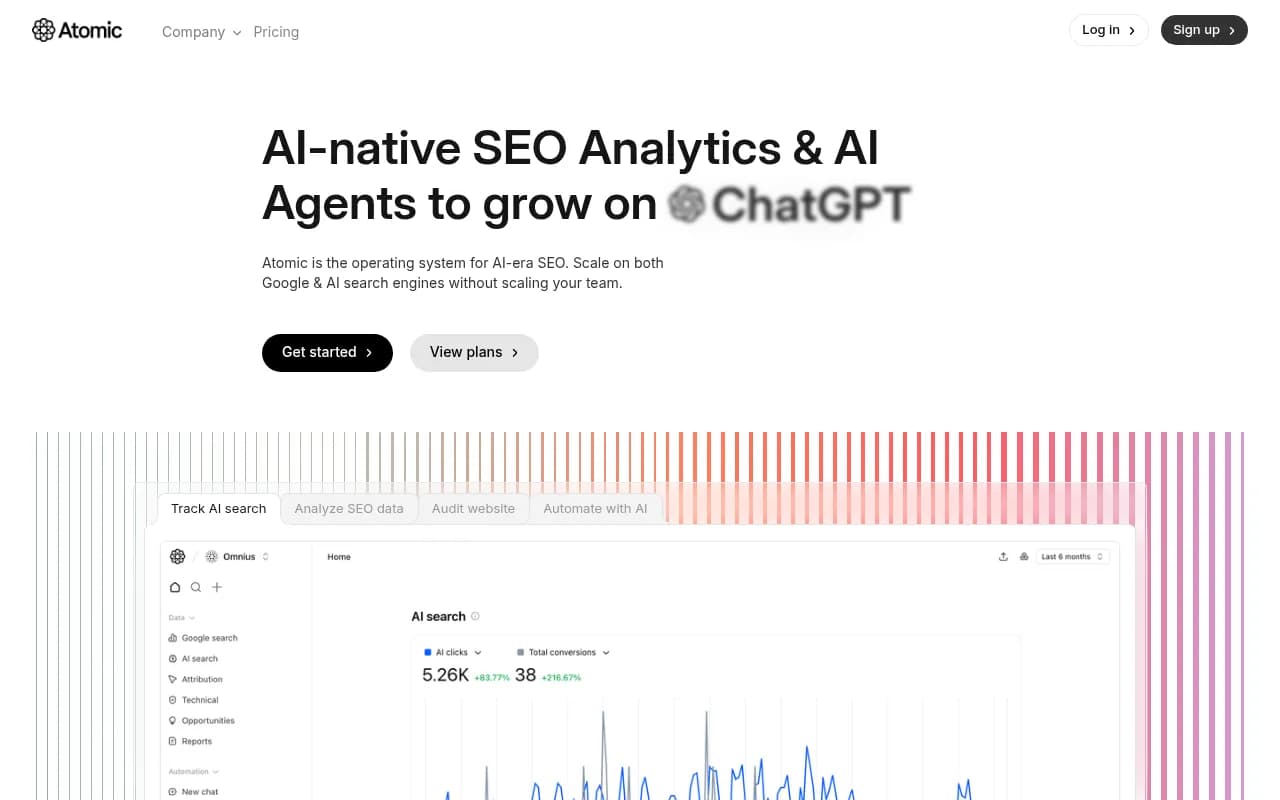
Some tools in the broader AI/SEO ecosystem are more naturally positioned for MCP. Search Atlas has been building toward AI-native automation. Atomic AGI explicitly positions itself as AI-native. These platforms are more likely to have MCP on their roadmap, even if they haven't shipped it yet.
A practical comparison: what to look for
Here's a framework for evaluating any AI visibility platform's MCP claims:
| Claim | What to ask | Red flag |
|---|---|---|
| "MCP support" | Does it expose a documented MCP server endpoint? | Can't point to a spec or GitHub repo |
| "API access" | Is there a REST/GraphQL API with auth? | API requires manual export/CSV |
| "Agent-ready" | Can an external agent query it programmatically? | Only works through their UI |
| "Integrations" | Does it connect to agent frameworks (LangChain, n8n, etc.)? | Only connects to Zapier/Slack |
| "Enterprise MCP" | Does it support SSO auth, audit logs, rate limiting? | Single-user API key only |
The platforms that score well on this framework tend to be the ones with genuine engineering investment in their data layer -- not just a pretty dashboard on top of LLM queries.
Why most AI visibility platforms haven't prioritized MCP
This is worth understanding, because it's not laziness. There are real reasons the GEO/AEO category has been slow to adopt MCP.
Their customers are marketers, not engineers. The average user of an AI visibility platform wants to know "is my brand appearing in ChatGPT responses?" -- not "how do I expose my visibility data through a standardized protocol for agent consumption." MCP is an infrastructure concern, and most marketing teams don't have the engineering capacity to use it even if it existed.
The data model is complex. AI visibility data involves LLM queries, citation analysis, share of voice calculations, and temporal trends. Exposing this through MCP in a way that's actually useful (not just raw JSON dumps) requires thoughtful schema design. That's non-trivial work.
The ROI isn't obvious yet. MCP-powered agentic workflows for GEO are still an emerging use case. Most brands aren't yet running automated agents that monitor AI visibility, identify gaps, generate content, and publish it -- all without human intervention. When that workflow becomes standard, MCP support will become table stakes. Right now, it's a forward-looking differentiator.
What "MCP-ready" actually looks like for GEO workflows
If you're thinking about building an automated GEO workflow in 2026, here's what genuine MCP integration would enable:
An AI agent could query your visibility platform's MCP server to get current brand mention rates across ChatGPT, Perplexity, and Gemini. It could then query a competitor analysis MCP endpoint to identify gaps. It could call a content generation tool via MCP to draft articles targeting those gaps. It could submit those articles to your CMS via MCP. And it could schedule a follow-up query to track whether visibility improved.
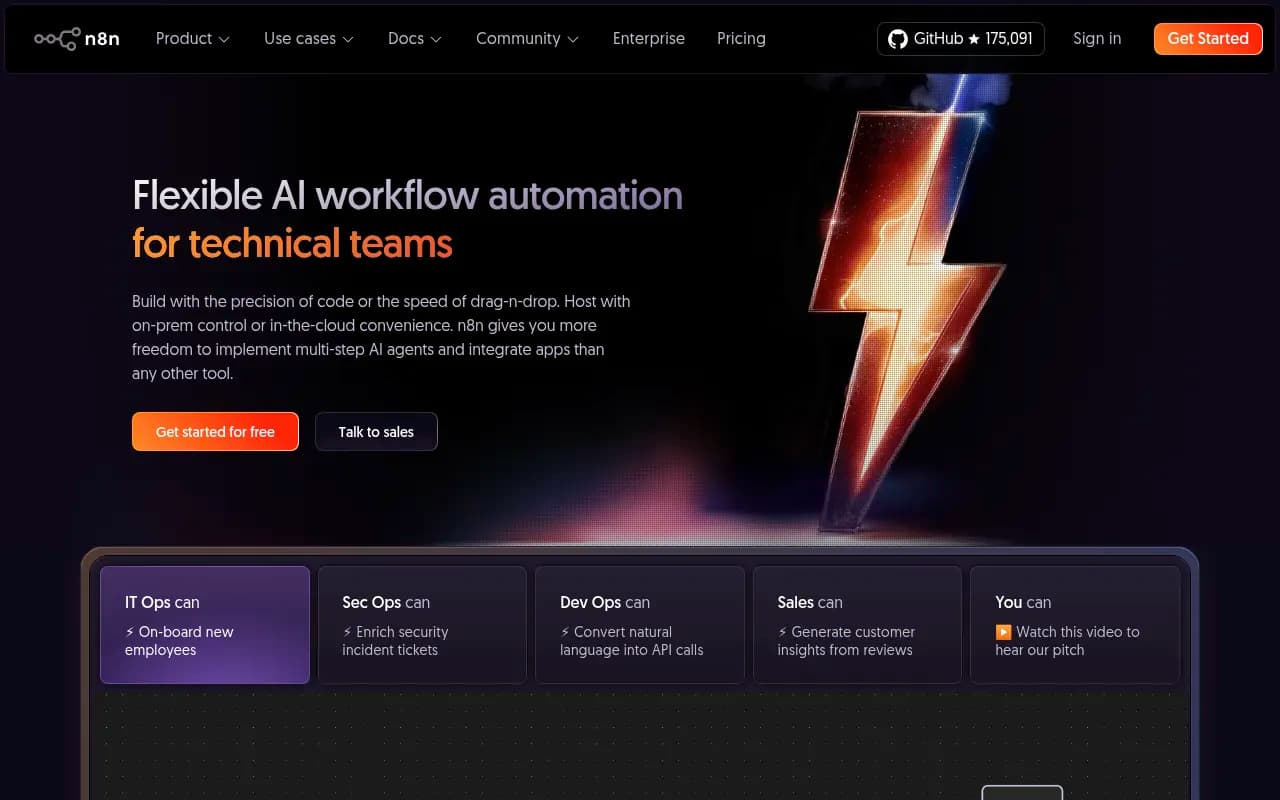
That's the vision. The reality in 2026 is that you'd need to stitch this together yourself using APIs, Zapier, or n8n -- because no single platform has shipped the full MCP-native version of this workflow.
The platforms closest to enabling this programmatically are the ones with robust APIs, webhook support, and documented data schemas. MCP is the next step, but API-first architecture is the prerequisite.
The honest verdict
Most AI visibility platforms claiming MCP support in 2026 are either using the term loosely or are in early stages of implementation. That's not a scandal -- MCP itself only became mainstream in 2025, and the enterprise-grade version of the protocol is still maturing.
What you should actually look for when evaluating platforms:
- Does it have a documented, versioned API (not just CSV exports)?
- Can you set up webhooks or programmatic alerts?
- Is there a public roadmap that mentions MCP or agent integrations?
- Does the team have engineering depth, or is it a thin dashboard on top of LLM queries?
The platforms that will have genuine MCP support in 12-18 months are the ones that already have strong API foundations and are building toward agentic workflows. Platforms that are purely monitoring dashboards will either add MCP support later or become less relevant as agentic GEO workflows become standard.
For now, if you're a marketing team focused on improving AI visibility, the more important question isn't "does this platform support MCP?" -- it's "does this platform help me find gaps, create content that fixes them, and track whether it worked?" That action loop is what drives results today.
Platforms like Promptwatch are built around exactly that cycle: find the gaps, generate content, track the results. Whether or not they've shipped an MCP server endpoint, that's the workflow that matters for most teams right now.
The MCP question will matter more as agentic GEO becomes standard practice. Keep it on your evaluation checklist, but don't let it distract from the fundamentals.
Questions to ask any AI visibility vendor about MCP
Before taking any platform's MCP claims at face value, run through these:
- Can you share the MCP server specification or GitHub repository?
- Which MCP tools or resources does your server expose?
- Does your MCP implementation support OAuth 2.0 or SSO-integrated auth?
- Are there audit logs for MCP queries (required for enterprise compliance)?
- What agent frameworks have you tested against your MCP server (Claude, Cursor, LangChain)?
- Is MCP support in GA, beta, or on the roadmap?
If a vendor can't answer questions 1 and 2 specifically, their MCP support is either very early or marketing copy. That's useful information.
The platforms that can answer all six questions with specifics are the ones actually building for the agentic future. In 2026, that list is shorter than the marketing claims suggest.