Key takeaways
- Most AI writing tools generate content without any feedback loop -- you publish and hope for the best
- The combinations that prove ROI pair a writing tool with an AI visibility platform that tracks whether ChatGPT, Perplexity, and other models actually cite your content
- The tightest integrations are native (built into one platform); looser ones require Zapier or manual workflows, but still beat flying blind
- Prompt volume data and answer gap analysis should inform what you write -- not just keyword research
- Attribution is the missing piece for most teams: connecting AI citations to actual traffic and revenue requires either a code snippet, GSC integration, or server log analysis
The problem with AI writing tools in 2026
There are hundreds of AI writing tools now. Most of them are genuinely good at generating text. You can brief Jasper, hit a button, and get a 2,000-word article in under a minute. Writesonic will auto-publish it. Surfer SEO will score it against competitors. The content pipeline is fast.
But here's the thing nobody talks about enough: fast content that doesn't get cited by AI search engines is just noise. And in 2026, a growing chunk of search happens inside ChatGPT, Perplexity, Claude, and Google's AI Mode -- not on a traditional SERP where you can track rankings.
The teams winning at content ROI right now aren't just writing faster. They're closing a loop:
- Find out which prompts and questions AI models answer without citing them
- Create content specifically designed to fill those gaps
- Track whether AI models start citing the new content
- Connect those citations to actual traffic and revenue
That loop requires two things working together: a writing tool and an AI visibility platform. Most teams have one or the other. Very few have both, and even fewer have them integrated.
This guide covers the combinations that actually work.
Why integration matters more than either tool alone
Think about what happens without integration. You write a great article. You publish it. Perplexity starts citing it three weeks later. You have no idea. Your traffic attribution shows "direct" or "referral" from a source you don't recognize. You can't replicate the win because you don't know what caused it.
Now think about what happens with integration. Your visibility platform flags that competitors rank for "best project management software for remote teams" in ChatGPT but you don't. It shows you the prompt volume, the difficulty score, and exactly what content is being cited. Your writing tool generates a brief grounded in that citation data. You publish. Two weeks later, your visibility dashboard shows your new article being cited in 12% of responses to that prompt. Traffic attribution confirms a 340-session spike from AI referrals that week.
That's the difference. One scenario gives you content. The other gives you evidence.
The four types of integration (from tightest to loosest)
Before getting into specific tool combinations, it helps to understand what "integration" actually means in this context. Not all connections are equal.
Native integration -- The writing tool and visibility platform are the same product, or one is built directly into the other. No data loss, no manual steps, no API keys. This is the gold standard.
Data-informed workflow -- The visibility platform exports prompt data, gap analysis, or citation insights that feed directly into your writing tool's brief or research phase. Usually involves a CSV export or a shared workspace.
Zapier/Make automation -- A trigger in one tool fires an action in another. For example: when a new answer gap is detected, automatically create a content brief in your project management tool. Useful but fragile.
Manual loop -- You check your visibility dashboard, note the gaps, and manually brief your writers. Slow, but still better than guessing.
Most teams start at manual and work toward native. The goal is to reduce the time between "we're invisible for this prompt" and "we published content to fix it."
The combinations that actually work
Promptwatch + built-in AI writing agent (native)
Promptwatch is the clearest example of a platform that closes the loop natively. The answer gap analysis shows exactly which prompts competitors rank for in ChatGPT, Perplexity, Claude, and other models -- but you don't. Then the built-in AI writing agent generates articles, listicles, and comparisons grounded in that citation data. You're not writing into a void; you're writing to fill a specific, documented gap.
What makes this combination work for ROI proof is the tracking layer. Page-level visibility scores show which of your published articles are being cited, by which models, and how often. The traffic attribution (via code snippet, GSC integration, or server log analysis) connects those citations to actual sessions and conversions. That's a complete chain from gap to content to citation to revenue.

The platform monitors 10 AI models including ChatGPT, Perplexity, Google AI Overviews, Claude, Gemini, Grok, and DeepSeek. Pricing starts at $99/month for the Essential plan (1 site, 50 prompts, 5 articles) up to $579/month for Business (5 sites, 350 prompts, 30 articles). The built-in writing agent is included -- you're not paying for a separate content tool on top of visibility tracking.
For teams that want one platform to handle the full loop, this is the most coherent option available right now.
Jasper + a dedicated AI visibility platform (data-informed)
Jasper has evolved well beyond a simple AI writer. In 2026, it functions more like a marketing platform with agents that can run content pipelines, maintain brand voice across campaigns, and integrate with your CMS. It's genuinely good at producing polished, on-brand content at scale.
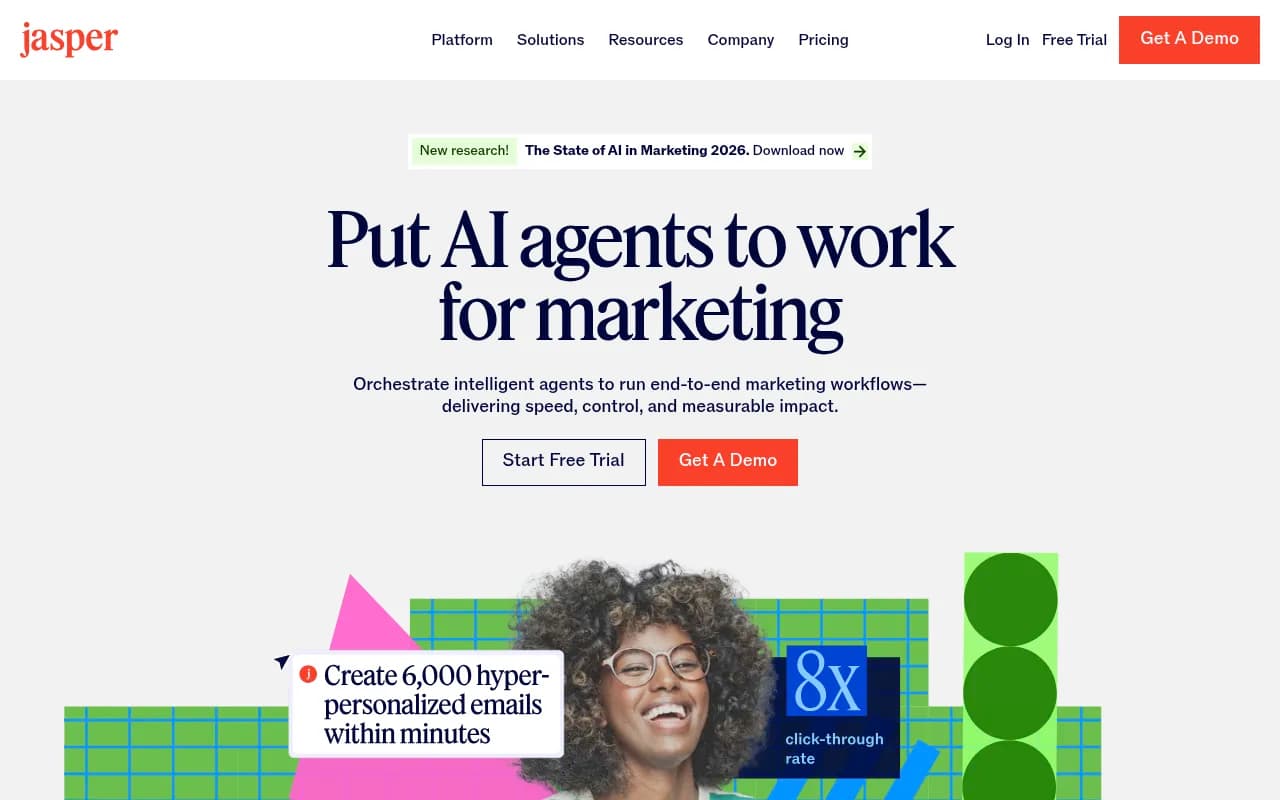
The gap is visibility. Jasper doesn't tell you which prompts to target, which AI models are citing your competitors, or whether your published content is getting picked up by ChatGPT. For that, you need to pair it with a visibility platform.
The workflow looks like this: run your answer gap analysis in your visibility platform, export the high-priority prompts (sorted by volume and difficulty), brief Jasper on those specific topics, publish, then track citations back in your visibility dashboard. It's a manual loop, but a structured one.
Jasper's API and CMS integrations make the publishing step reasonably smooth. The brief-to-publish cycle can be tight if your team has a clear process. The ROI proof still requires your visibility platform to close the loop on citations and traffic.
Surfer SEO + AI visibility tracking (parallel optimization)
Surfer SEO is one of the better-proven content optimization tools for traditional search. Its content editor scores articles against competitors in real time, and the data behind those scores is solid. Teams using Surfer consistently see organic traffic improvements -- the MarketBetter research cited a 3x traffic lift compared to tools that skip optimization.
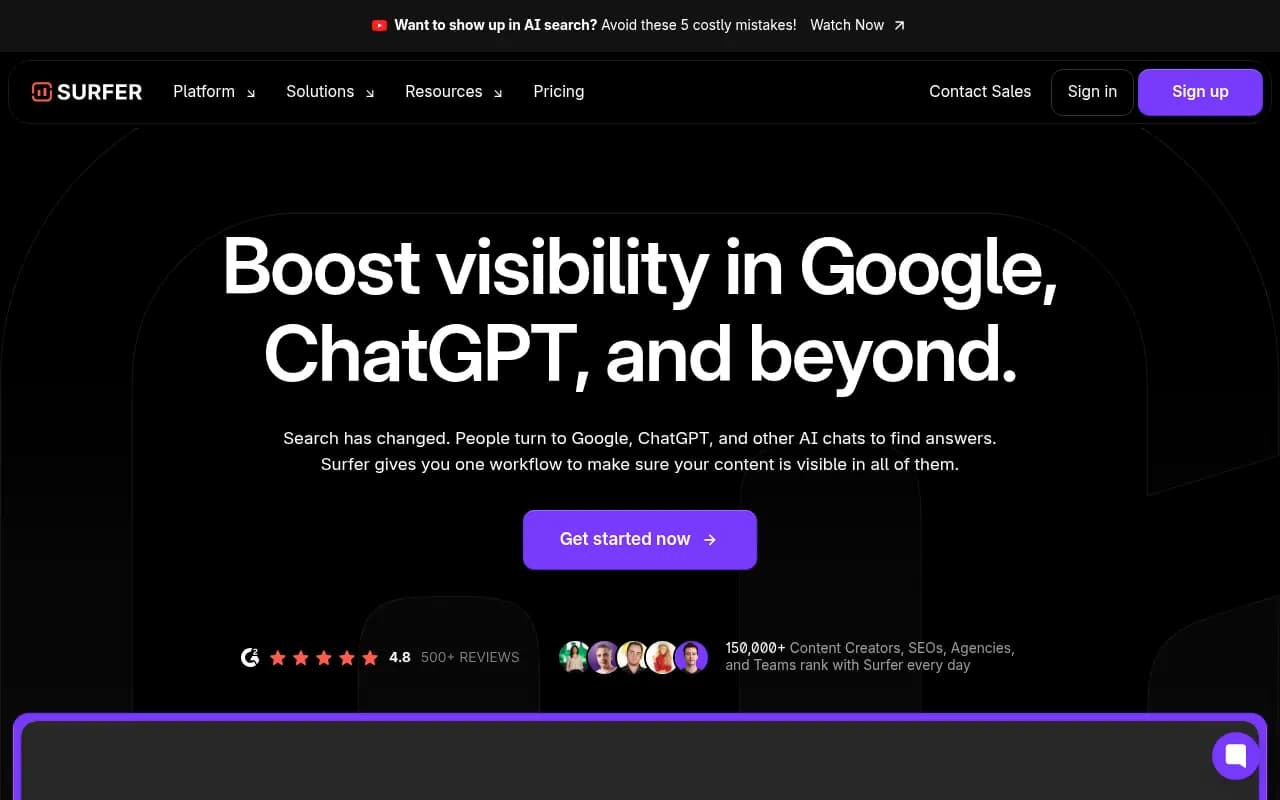
The limitation in 2026 is that Surfer optimizes for Google's traditional ranking signals. That's still valuable -- Google handles enormous search volume. But it doesn't tell you whether your content will get cited by Perplexity or appear in ChatGPT's responses. Those are different signals.
The combination that works: use Surfer to optimize content structure and keyword coverage for traditional SEO, then layer in an AI visibility platform to track how the same content performs in AI search. You're not choosing one or the other -- you're covering both surfaces. Teams that do this have a more defensible content strategy because they're not betting everything on one channel.
AirOps + visibility data (content engineering approach)
AirOps positions itself as a content engineering platform rather than a simple AI writer. The distinction matters: it's built around workflows that can ingest data sources, apply structured prompts, and produce content at scale. If you have a visibility platform generating structured gap data, AirOps can consume that data and turn it into content systematically.
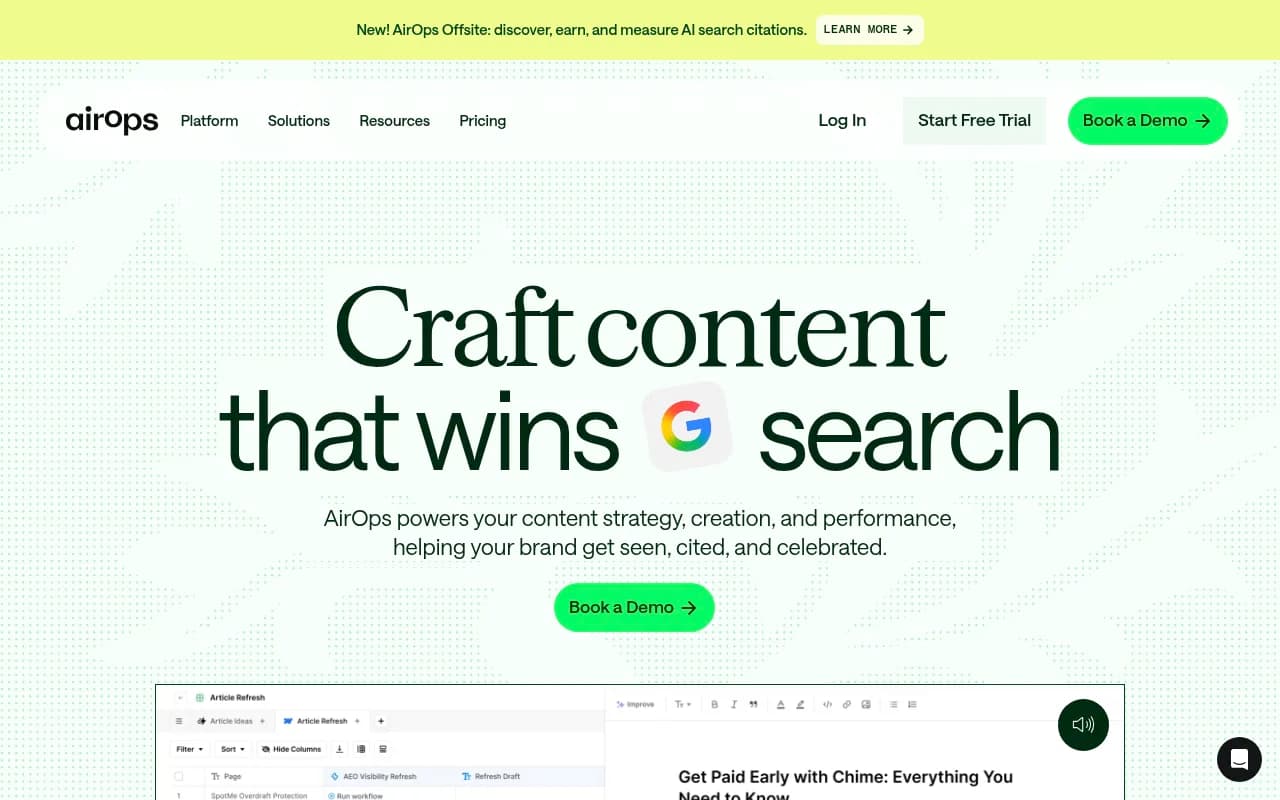
This combination suits teams with some technical capacity. You're essentially building a pipeline: visibility platform detects gaps, exports structured data, AirOps ingests it and generates content briefs or drafts, your editorial team reviews and publishes. The ROI proof still lives in your visibility platform -- AirOps doesn't track citations.
For agencies managing multiple clients, this kind of pipeline can be genuinely efficient. The setup cost is real, but once it's running, the gap-to-content cycle is fast.
Writesonic + AI visibility monitoring (auto-publishing workflow)
Writesonic has strong content generation and auto-publishing capabilities. It can connect directly to WordPress and other CMS platforms, which removes friction from the publish step. For teams that need volume, it's a reasonable choice.

The Reddit research from the DigitalMarketing community described Writesonic as "a very strong content generation engine" but noted it functions more as a content optimization tool than an AI visibility execution system. That's accurate. It generates and publishes well, but it doesn't know which prompts to target or whether its output gets cited.
Pair it with a visibility platform that provides prompt intelligence and citation tracking, and the auto-publishing capability becomes more valuable. You're not just publishing fast -- you're publishing content that was selected based on real gap data, and you can track whether it works.
Search Atlas (combined platform approach)
Search Atlas is worth mentioning as a platform that tries to combine traditional SEO content tools with some AI search tracking. It handles keyword research, content briefs, and publishing alongside rank tracking.

The integration is tighter than a manual workflow, but the AI visibility tracking is less deep than dedicated platforms. If your team is primarily focused on traditional SEO and wants some AI search coverage without managing two separate tools, it's a reasonable middle ground. If AI search visibility is a core priority, you'll likely want a more specialized visibility platform alongside it.
What to look for in a writing + visibility combination
Here's a comparison of the key dimensions to evaluate when choosing your stack:
| Capability | What to look for | Why it matters |
|---|---|---|
| Prompt intelligence | Volume estimates, difficulty scores, query fan-outs | Tells you which gaps are worth filling |
| Citation data | Which pages, domains, Reddit threads AI models cite | Informs content structure and placement |
| Native content generation | Writing agent built into the visibility platform | Eliminates manual data transfer |
| Page-level tracking | Which specific URLs are being cited, by which models | Proves individual content pieces are working |
| Traffic attribution | Code snippet, GSC, or server log integration | Connects AI citations to actual revenue |
| Competitor visibility | Heatmaps showing who ranks for each prompt | Identifies the gap before you write |
| CMS integration | Direct publish to WordPress, Webflow, etc. | Reduces time from draft to live |
No single combination scores perfectly on every dimension. The native platforms (where writing and visibility live in one tool) score highest on prompt intelligence, citation data, and page-level tracking. Standalone writing tools score higher on content quality controls, brand voice management, and publishing flexibility.
The attribution problem most teams ignore
Here's where most content ROI conversations fall apart: teams track AI citations but can't connect them to revenue. They know Perplexity cited their article 400 times last month. They don't know if any of those citations drove a conversion.
Solving this requires attribution infrastructure. The options are:
JavaScript snippet -- A small tracking script that captures referral traffic from AI engines. Straightforward to implement, works for most sites.
Google Search Console integration -- GSC now surfaces some AI referral data. Connecting your visibility platform to GSC lets you correlate citation data with actual click-through traffic.
Server log analysis -- The most complete picture. AI crawler logs show which pages ChatGPT, Claude, and Perplexity are reading, how often they return, and what errors they encounter. This is particularly useful for diagnosing why certain pages aren't getting cited despite good content.
Without at least one of these, you can show that AI models cite your content. You can't show that it drives business outcomes. That's the difference between a visibility report and a content ROI report.
Building the loop: a practical starting point
If you're starting from scratch, here's a sequence that works:
-
Audit your current AI visibility before writing anything new. Run your brand and key topics through a visibility platform to see where you're invisible. This is your baseline.
-
Identify high-value gaps using prompt volume and difficulty data. Not all gaps are worth filling -- prioritize prompts with meaningful volume where competitors are visible but you're not.
-
Create content grounded in citation data. Look at what's actually being cited for your target prompts. Structure your content to answer the same questions more completely, with better supporting evidence.
-
Publish and set up attribution. Get your tracking snippet or GSC integration live before you publish so you capture the data from day one.
-
Track citation velocity. Monitor how quickly new content gets picked up by AI models. Some articles get cited within days; others take weeks. Understanding your typical lag helps you set realistic expectations.
-
Close the loop with traffic data. Connect citation increases to traffic spikes and, where possible, to conversion events. This is your content ROI proof.
The tools that support this loop most completely are the ones worth investing in. Writing speed matters less than writing with direction.
A note on content quality
One thing the best visibility platforms make clear: AI models don't cite content because it was published frequently or optimized for a keyword density. They cite content because it actually answers the question well.
The citation data from platforms tracking 880M+ citations shows consistent patterns: cited content tends to be specific, well-structured, and genuinely informative. It answers follow-up questions before they're asked. It references concrete data points. It doesn't pad.
That means the writing tool you choose matters less than the brief you give it. A well-grounded brief -- built from real prompt data, competitor citation analysis, and answer gap research -- will produce better content from any AI writer than a vague brief will produce from the best one.
The integration between writing tools and visibility platforms is ultimately about making briefs better. Everything else follows from that.