Key takeaways
- AirOps is a content engineering platform built around AI workflows and its Quill agent — strong for teams that want to build scalable content pipelines with technical control.
- Pepper Content is a managed content marketplace with AI writing tools layered on top — best suited for teams that want human-reviewed content at scale without managing freelancers directly.
- Promptwatch is the only platform in this comparison built specifically for GEO (Generative Engine Optimization) — it tracks AI search visibility, identifies content gaps, generates content designed to get cited, and connects visibility to revenue.
- If your goal is to appear in ChatGPT, Perplexity, Google AI Overviews, or other AI search engines, neither AirOps nor Pepper Content gives you the tracking and optimization loop you need.
- These three tools are not direct competitors — they solve adjacent problems, and many teams will end up using more than one.
What problem are you actually trying to solve?
Before comparing these three platforms, it's worth being honest about what they're each designed to do — because the marketing copy around all three can make them sound more similar than they are.
AirOps helps you build AI-powered content workflows. Pepper Content helps you commission and manage content at scale. Promptwatch helps you get cited in AI search engines.
Those are three different jobs. The confusion happens because all three touch "content" and all three use AI. But the underlying logic is completely different.
Let's break each one down, then look at where they overlap and where they don't.
AirOps: content engineering for technical teams
AirOps started as a workflow automation tool and has evolved into what it calls a "content engineering platform." In May 2026, it launched its Quill agent — an AI agent that can research, draft, and publish content at scale based on templates and data inputs you configure.
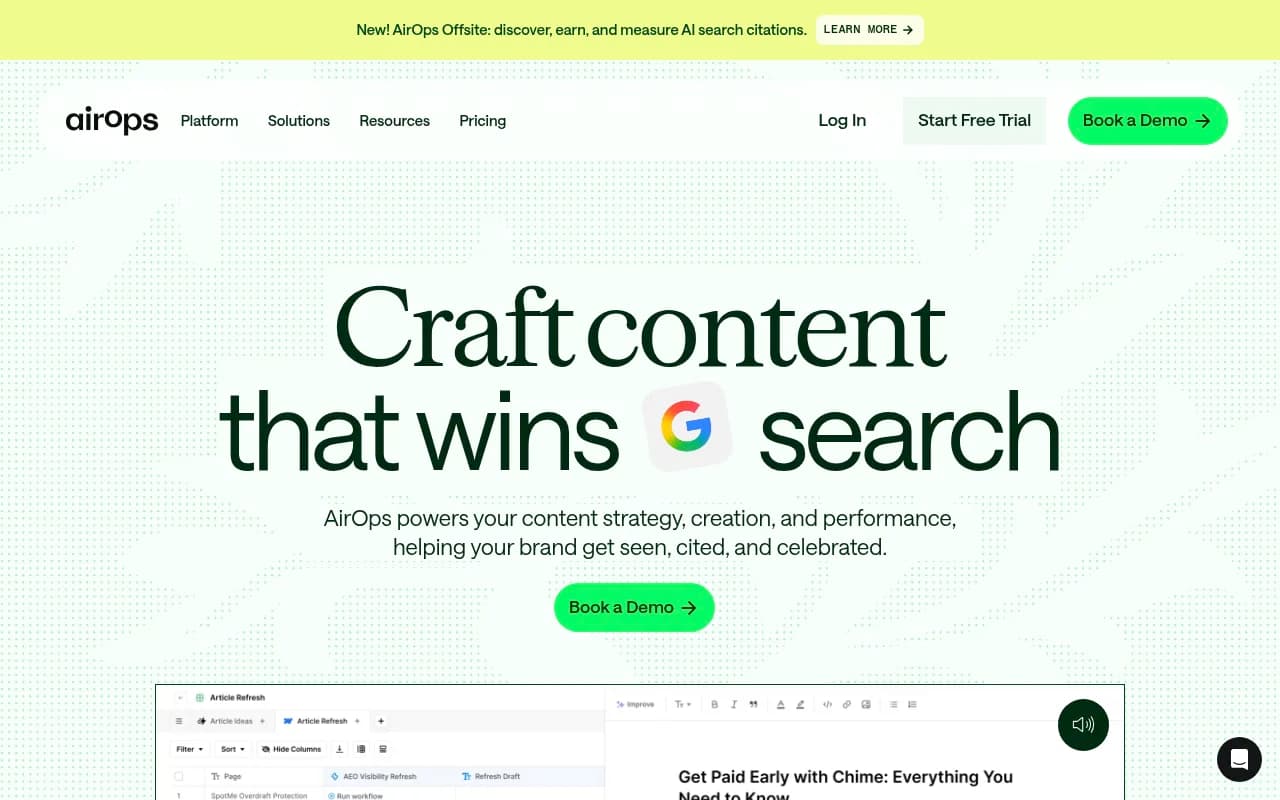
The core idea is that content production should work like software engineering: repeatable, testable, version-controlled. You define a workflow (say, "generate a product comparison page for every competitor pair"), and AirOps runs it at scale. It connects to your data sources, pulls in context, and outputs structured content.
This is genuinely useful for teams that have a clear content template problem — you know what you want to produce, you just need to produce a lot of it efficiently. Programmatic SEO, product description generation, and FAQ pages are natural fits.
Where AirOps gets complicated is on the GEO side. The platform can help you generate content, but it doesn't tell you which content to generate based on what AI search engines are actually citing. There's no prompt tracking, no citation analysis, no crawler log data. You're flying blind on whether the content you're producing is actually getting picked up by ChatGPT or Perplexity.
AirOps is a strong choice if you're a technical team that wants to build sophisticated content pipelines. It's not the right tool if your primary goal is AI search visibility.
Pepper Content: managed content at scale
Pepper Content takes a different approach. It's a content marketplace that connects brands with a network of vetted writers, editors, and strategists — with AI tools layered on top to speed up briefing, drafting, and review.

The value proposition is straightforward: you get human-quality content without the overhead of managing freelancers yourself. Pepper handles sourcing, quality control, and delivery. The AI tools help with brief generation and first drafts, but a human reviews everything before it goes out.
This works well for teams that need volume — blog posts, landing pages, social content — and don't have the internal bandwidth to produce it. The managed model means less operational overhead than running your own content team or freelancer network.
The limitation is similar to AirOps: Pepper Content doesn't tell you what to write based on AI search behavior. It can produce content efficiently, but the strategy of what to produce and why has to come from somewhere else. There's no visibility tracking, no gap analysis against what AI models are citing, no feedback loop from AI search performance back into your content calendar.
If you're using Pepper Content, you're essentially outsourcing production. That's valuable, but it's a different layer of the problem than GEO optimization.
Promptwatch: the GEO optimization loop
Promptwatch is built around a fundamentally different question: not "how do I produce content efficiently?" but "how do I get AI search engines to cite my brand?"

The platform tracks how 10+ AI models — ChatGPT, Perplexity, Google AI Overviews, Claude, Gemini, Grok, DeepSeek, Copilot, Meta AI, and Mistral — respond to prompts relevant to your category. It shows you which competitors are being cited, which prompts you're invisible for, and exactly what content gaps are causing that invisibility.
Then it helps you close those gaps. Content Agents generate articles, listicles, and comparisons grounded in real citation data and prompt volumes — not generic SEO filler, but content engineered to answer the specific questions AI models are already surfacing. After you publish, AI Crawler Logs show you when ChatGPT or Perplexity crawls your new pages, and page-level tracking shows when those pages start getting cited.
That full loop — find gaps, generate content, track results — is what separates Promptwatch from both AirOps and Pepper Content. Neither of those platforms closes the loop. They help you produce content; they don't help you understand whether that content is working in AI search.
Promptwatch also covers some capabilities that are genuinely hard to find elsewhere: Reddit and YouTube insights (which discussions are influencing AI recommendations), ChatGPT Shopping tracking, offsite citation analysis, and competitor heatmaps across LLMs. The 4.5 billion citations processed give the platform real signal on what's actually driving AI visibility, not just API-level approximations.
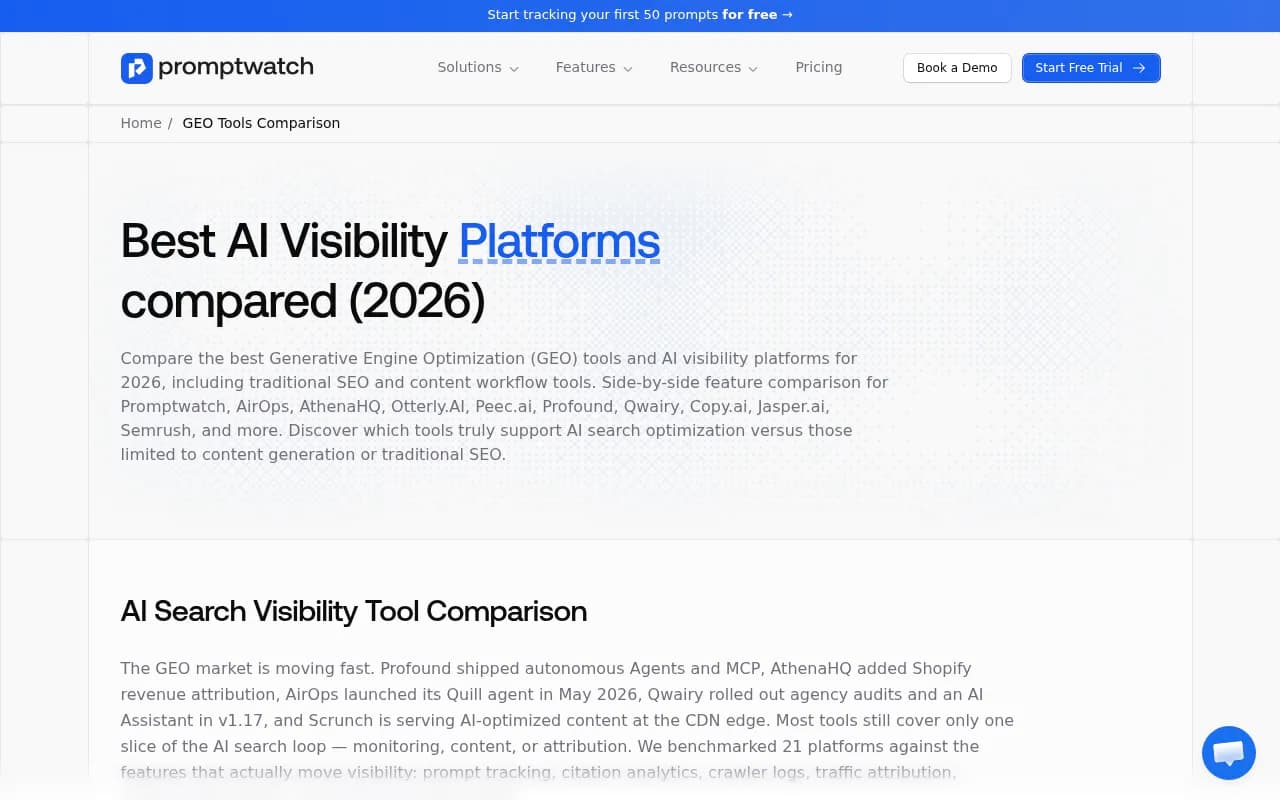
Head-to-head comparison
| AirOps | Pepper Content | Promptwatch | |
|---|---|---|---|
| Primary use case | AI content workflow automation | Managed content production | GEO / AI search visibility |
| Content generation | Yes (AI agents, templates) | Yes (human + AI hybrid) | Yes (AI agents grounded in citation data) |
| AI search tracking | No | No | Yes (10+ models) |
| Prompt gap analysis | No | No | Yes |
| Citation analytics | No | No | Yes |
| AI crawler logs | No | No | Yes |
| Reddit / YouTube insights | No | No | Yes |
| ChatGPT Shopping tracking | No | No | Yes |
| Traffic attribution | No | No | Yes |
| Human content review | No | Yes | No |
| Programmatic content at scale | Yes | Yes | Yes |
| Best for | Technical teams, programmatic SEO | Teams needing managed content volume | Brands wanting AI search visibility |
| Pricing model | Custom / enterprise | Per-word / subscription | $99–$579/mo self-serve |
| Free trial | Yes | Yes | Yes |
When to use AirOps
AirOps makes sense when your content problem is primarily one of scale and structure. If you have a clear template — product pages, location pages, comparison articles — and you need to produce hundreds or thousands of variations, AirOps gives you the workflow infrastructure to do that efficiently.
It's also a good fit for technical teams that want to build custom content pipelines. The platform is flexible enough to connect to external data sources and customize outputs in ways that simpler AI writing tools don't allow.
What it won't do is tell you whether any of that content is getting picked up by AI search engines, or help you prioritize which templates to build based on what AI models are actually citing.
When to use Pepper Content
Pepper Content is the right call when you need reliable content volume and don't want to manage the production process yourself. The managed model means you're not sourcing writers, reviewing drafts, or handling revisions — Pepper handles that layer.
It's particularly useful for teams that have a content strategy already figured out (or are getting it from a separate tool or agency) and just need execution capacity. The human review element is a genuine differentiator for brands where quality control matters and AI-only output isn't acceptable.
The trade-off is cost and speed. Managed content is more expensive per piece than self-serve AI generation, and turnaround times are longer. If you need to move fast on a content gap you've identified, Pepper's model may be too slow.
When to use Promptwatch
Promptwatch is the right tool when your goal is specifically to improve how your brand appears in AI search engines. If you've noticed that ChatGPT or Perplexity isn't recommending your brand in your category, or if you want to understand why competitors are getting cited and you're not, Promptwatch gives you the data and the tools to fix it.
The platform's Answer Gap Analysis is particularly useful here — it shows you the exact prompts where competitors are visible and you're not, along with the content your site is missing to close those gaps. That's a level of specificity that neither AirOps nor Pepper Content can provide, because neither platform tracks AI search behavior.
For marketing teams, SEO teams, and agencies that are starting to take GEO seriously, Promptwatch is the most complete self-serve option available. The Essential plan at $99/month covers one site with 50 prompts and 5 AI-generated articles — enough to run a real test before committing to a higher tier.
The real question: do you need all three?
It's worth considering that these tools aren't mutually exclusive. A realistic workflow for a growth-stage company might look like:
- Use Promptwatch to identify which content gaps are hurting AI search visibility
- Use AirOps or Pepper Content to produce that content at scale
- Use Promptwatch again to track whether the new content gets crawled and cited
In that setup, Promptwatch provides the intelligence layer — what to build and whether it's working — while AirOps or Pepper Content handles production volume. The strategy comes from the GEO data; the execution comes from the content platform.
That said, Promptwatch's own Content Agents are increasingly capable of handling the production step too, especially for teams that want to keep the loop tight. If you're generating content specifically to improve AI search visibility, having the generation and tracking in the same platform means the content is automatically grounded in citation data and prompt volumes — something you'd have to manually transfer if you're using a separate production tool.
What the broader market looks like
AirOps and Pepper Content sit in a crowded content production space. On the GEO side, the field is growing fast but most tools are still monitoring-only — they show you data but don't help you act on it.
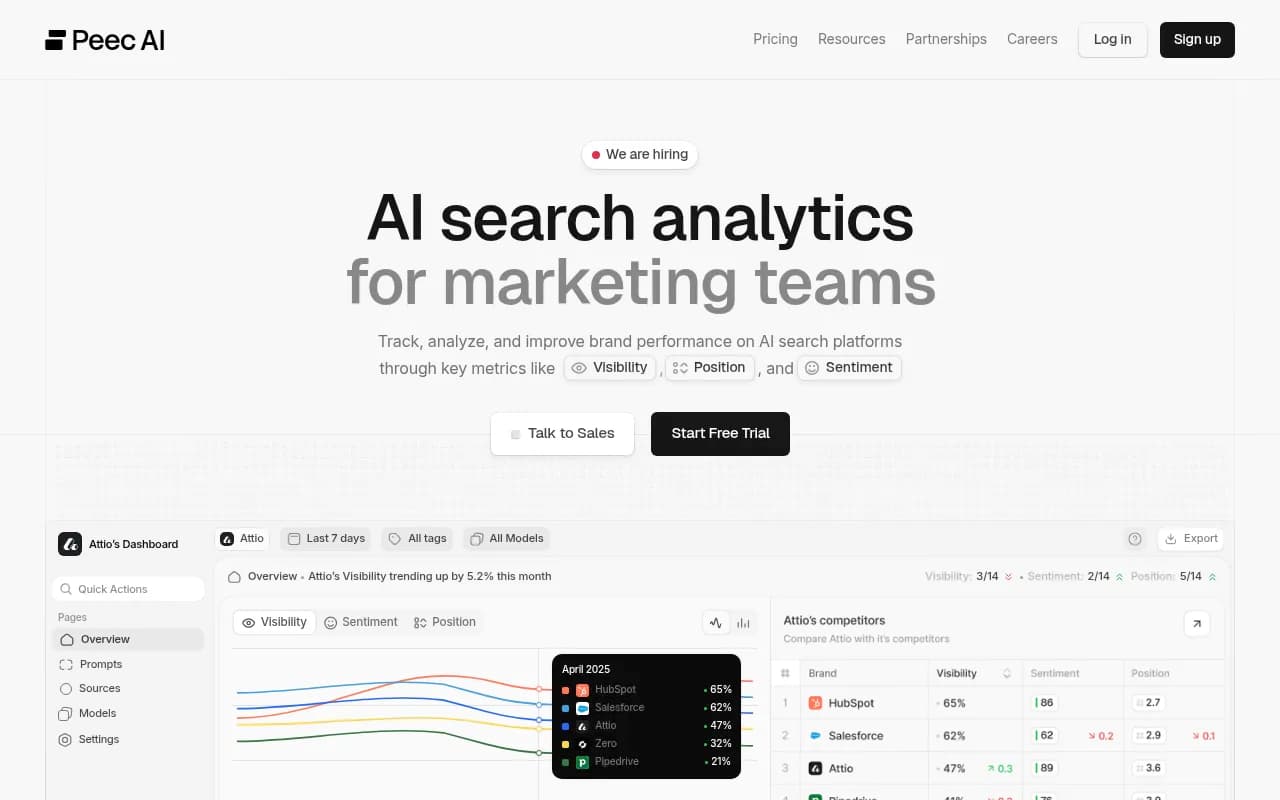
Tools like Otterly.AI and Peec AI track AI mentions but stop there. Profound and AthenaHQ have stronger feature sets but are priced for enterprise. Search Party takes a more agency-consultancy approach. Promptwatch is the platform that most consistently combines tracking, gap analysis, content generation, and attribution in one place at a price point accessible to mid-market teams.
Otterly.AI

Profound

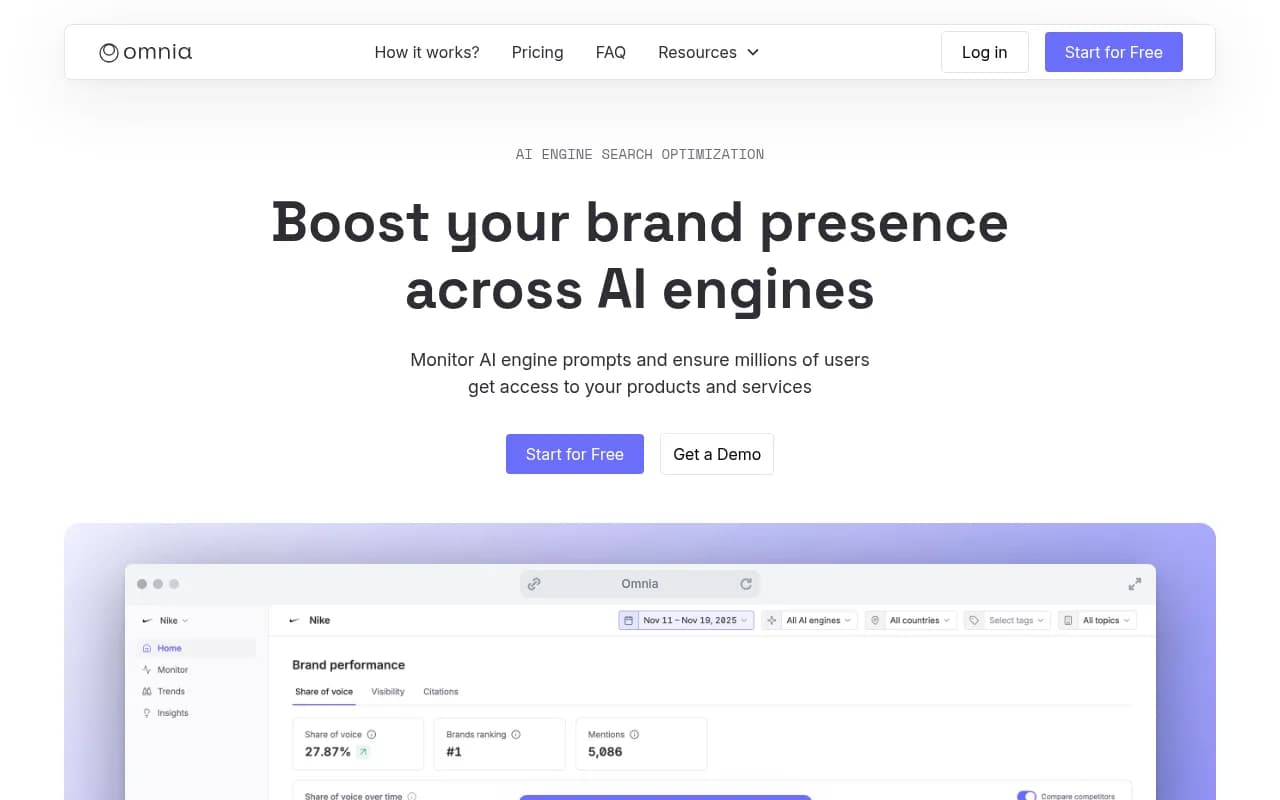
If you're evaluating the broader GEO landscape, it's also worth looking at tools like Omnia and Rankshift for monitoring, and AirOps for workflow automation — but keep in mind that none of them close the full loop the way Promptwatch does.

Bottom line
AirOps, Pepper Content, and Promptwatch are solving different problems. Choosing between them isn't really a comparison — it's a question of which problem you're trying to solve right now.
If you need to produce content at scale with technical control, AirOps is worth evaluating. If you need managed content production with human review, Pepper Content fits that need. If you want to understand and improve how AI search engines see your brand, Promptwatch is the tool built for that job — and it's the only one of the three that closes the loop from gap identification to content creation to citation tracking.
For most teams in 2026, AI search visibility is the problem that's growing fastest and has the fewest good solutions. That's where the investment makes the most sense.