
Key takeaways
- Ecommerce AEO is a product-level problem. You need to know which SKUs show up in ChatGPT shopping cards, which competitors fill the other slots, and which pages get cited.
- Product pages are the most cited content type in ChatGPT at 22.4% of citations, and landing pages add another 16.8%, per Promptwatch Data for Sep 28 to Oct 4, 2026.
- Most tools in this category only monitor. Few track shopping carousels, read AI crawler logs, or help you publish fixes and then check whether they worked.
- Pick by the job: SKU tracking on a budget, enterprise retail coverage, attribution, or a full monitor-fix-measure loop.
- Treat vendor stats with suspicion. Claims like "ChatGPT traffic converts 31% better" come from vendor blogs and need your own data to confirm.
What makes ecommerce AEO different
Most AEO advice is written for SaaS and publishers. The goal there is to get named in an answer. Ecommerce is stricter. When someone asks ChatGPT for "best running shoes for flat feet under $150", the answer can include a product carousel, price comparisons, and a short list of cited sources. You either have a SKU in that carousel or you don't.
That changes what you should measure:
- Whether a specific product appears in a shopping card, and in which position.
- Which competitor products appear instead.
- Which of your product pages, category pages and third-party reviews get cited.
- Whether AI crawlers can actually read your product pages.
- Whether any of this sends traffic that converts.
A brand-level visibility score hides all of that. A store can rank well for brand mentions and still lose every transactional prompt to a marketplace.
How often do shopping cards actually show up?
Less often than the hype suggests. Promptwatch's ChatGPT Shopping usage data shows that shopping features (product cards, recommendations, price comparisons) attach to only a low single-digit percentage of web-search responses. The rate moves in steps. In the report window it roughly doubled overnight in late May and then fell back weeks later, which looks like OpenAI tuning when cards appear.
The all-prompt average is misleading though. Trigger rates are far higher on commercial and transactional prompts, which are the ones you care about. So the right test is to run your buyers' actual purchase prompts and record whether cards appear and who fills them. Averages across every kind of prompt will tell you very little.
What ChatGPT cites for commercial prompts
The citation mix tells you where to spend effort. From Promptwatch's content type report (Sep 28 to Oct 4, 2026):
| Content type | All prompts | Commercial prompts | Branded prompts |
|---|---|---|---|
| Product pages | 22.4% | 26.0% | 23.3% |
| Landing pages | 16.8% | 20.6% | 22.8% |
| Listicles | 13.6% | 15.0% | n/a |
| Comparisons | 5.9% | 7.9% | n/a |
| Reviews | 1.7% | n/a | 5.6% |
Product pages, landing pages, listicles and comparisons make up almost 70% of commercial citations. Reviews are small overall but more than triple their share on branded prompts, which is when someone is checking a specific product before buying.
There is a durability angle too. Promptwatch's content half-life data shows landing pages and docs stay cited for months, while news loses half its pages within about 36 days. For a store, that favors evergreen product and category pages over news-style content.
One more thing worth knowing: almost half of ChatGPT responses cite 10 or more unique domains (unique domains report). You are competing for a slot among many sources, and third-party listicles and review sites are often in the mix. Your own product pages are only part of the picture.
What to look for in an ecommerce AEO tool
Before comparing vendors, decide which of these you need. I'd rank them roughly in this order for a store doing real volume.
- Product-level tracking. SKU or product-name visibility, not just brand mentions.
- Shopping carousel coverage. Does it capture ChatGPT shopping cards and which products appear?
- Citation detail. Which URLs get cited, at what position, and what type of page they are.
- Crawler visibility. Server-side logs showing whether GPTBot, OAI-SearchBot and ChatGPT-User can read your product pages.
- Traffic and conversion attribution. Whether AI sends visitors, and whether they buy.
- Execution. Whether the tool helps you fix gaps (content, schema, feeds) or leaves you with a dashboard.
- Real interface data. User-facing answers and shopping results can differ from API outputs, so tracking the actual interface matters for carousels.
Two of these get ignored in most listicles. Crawler logs and real-UI collection are the difference between "we are not visible" and "we are not visible because a CDN rule blocks the bot".
The tools, reviewed
The order below is not a ranking. I grouped tools by what they are best at, because "best" depends on whether you are a 50-SKU DTC brand or a multi-brand retailer.
Promptwatch: best for the full monitor, fix and measure loop
Promptwatch is the one I'd look at first if you want to do more than watch a dashboard. It tracks ChatGPT shopping carousels and Amazon Alexa product results (which products AI recommends, which competitors it picks instead, and how your own uploaded catalog performs), and it ties that to the rest of the stack.

What matters for a store:
- ChatGPT Shopping tracking filterable by model, date range and monitor, plus Ads Radar for sponsored placements in AI answers.
- IP-verified AI crawler logs showing which product pages bots read, where they hit errors, and the crawl-to-citation path per page. That separates an access problem from a content problem.
- Visitor analytics for AI-referred traffic and conversions. This matters more now that ChatGPT stopped sending a referrer on October 8, 2026; an optional setting counts visits tagged utm_source=chatgpt.com as ChatGPT traffic.
- The Content Agent, which plans, writes and publishes to WordPress, Webflow or Framer, then tracks whether the page gets crawled, cited and clicked.
- Prompt volumes, difficulty scores and query fan-outs, so you can see the actual web searches ChatGPT runs for a purchase prompt.
- Local GEO/SEO targeting at exact coordinates for "near me" queries, useful for retailers with physical stores.
In its own comparison of GEO platforms, Promptwatch is the only one covering this full stack, and unlike monitoring-only tools it checks whether a fix worked. Crisp, for example, reported 2x higher conversion rates from AI traffic than traditional channels (case study). That is one customer's result, not a guarantee for your store.
Pricing: Shopping insights start on the Business plan at $579/mo (Essential is $95/mo and Professional $245/mo, without Shopping). There is a 7-day free trial on monthly billing, and the free AI visibility report gives a quick read before you commit. Confirm current prices at promptwatch.com/pricing.
Honest caveat: if you only want cheap SKU tracking, Business is more than you need.
Peec AI: best for cheap self-serve product tracking
Peec AI is a straightforward tracker with a lower entry price. The Rework comparison lists it as the cheapest self-serve SKU tracking option. It is a good fit for a small store that wants to see whether its products come up and doesn't need crawler logs, attribution or content generation.

The trade-off is scope. You get monitoring, and the fixing is on you.
Rankscale and Goodie: product tracking and retail breadth
Rework lists Rankscale for SKU tracking beyond ChatGPT starting from $99, and Goodie for broad retail coverage. Both are monitoring-oriented.
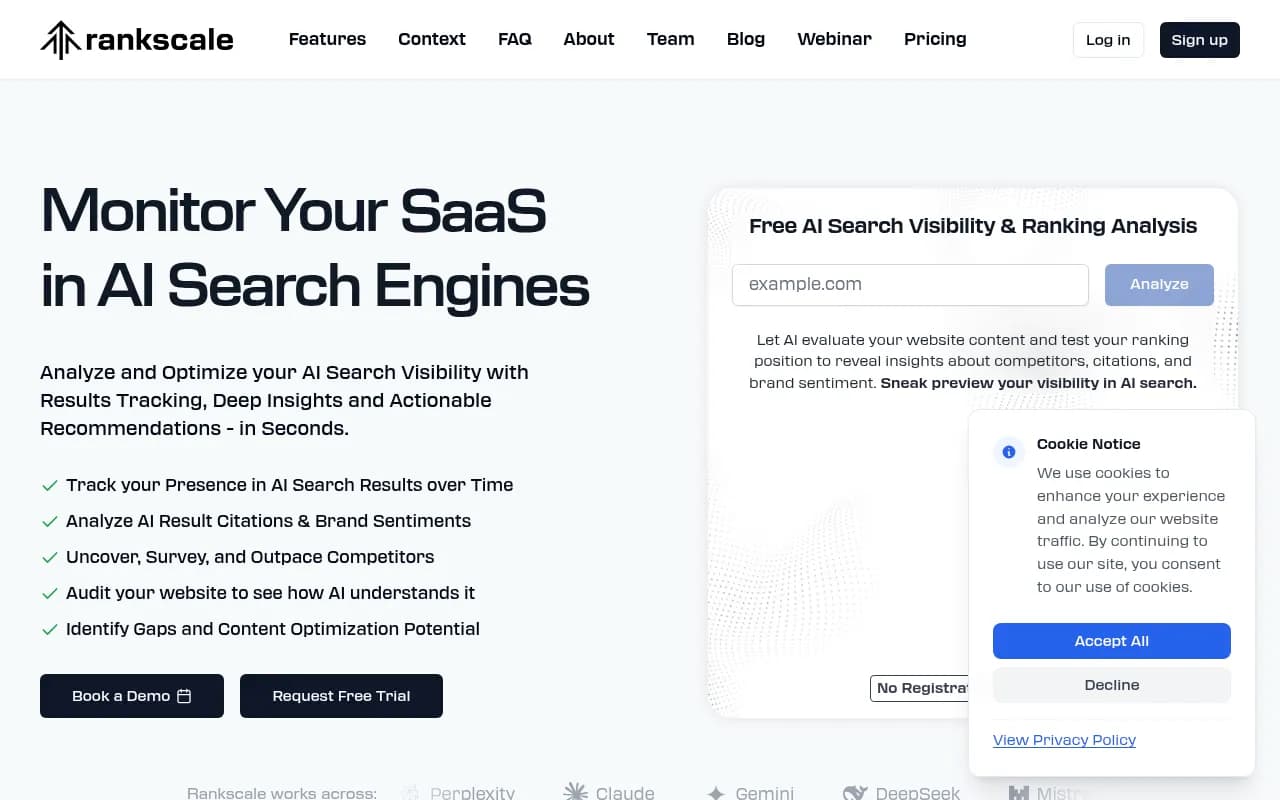
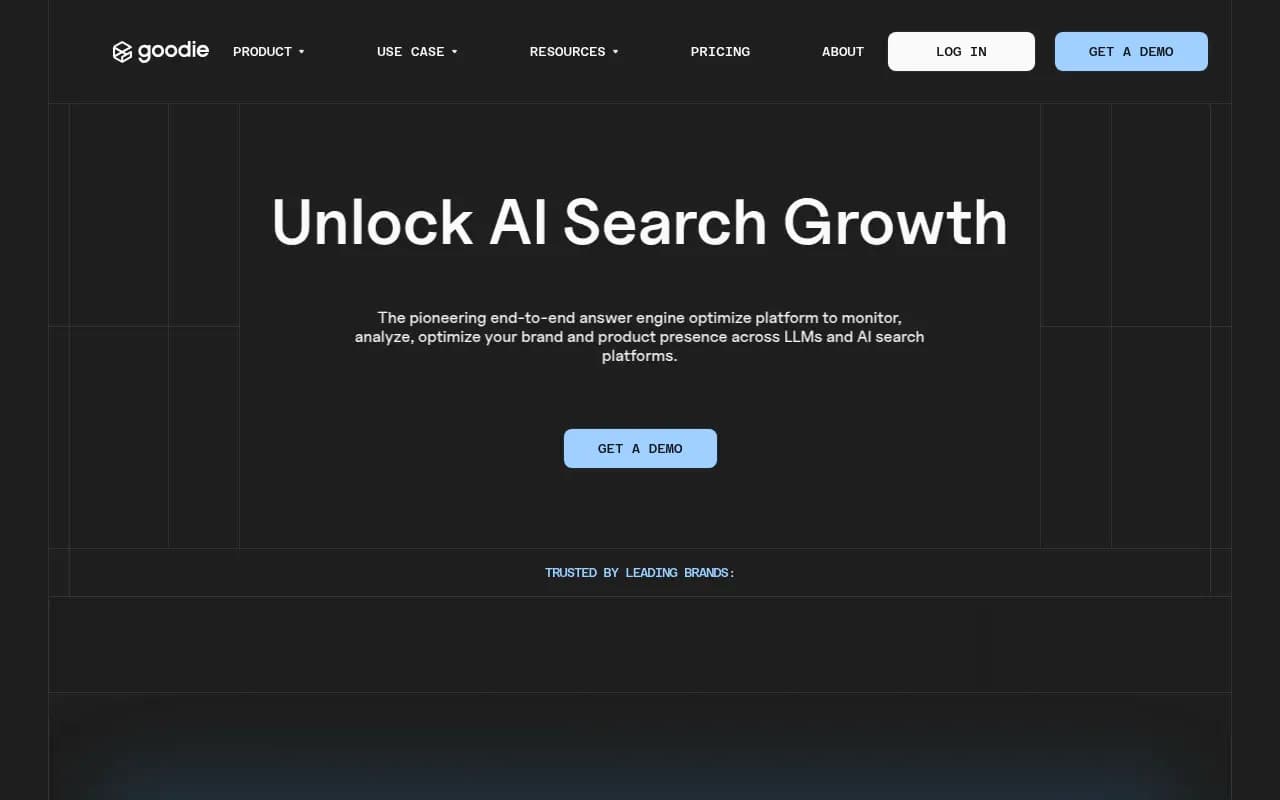
Use these if you want a second opinion on product visibility across engines. I wouldn't pick either as your only system if you need to prove traffic or revenue.
Profound and Scrunch: enterprise monitoring
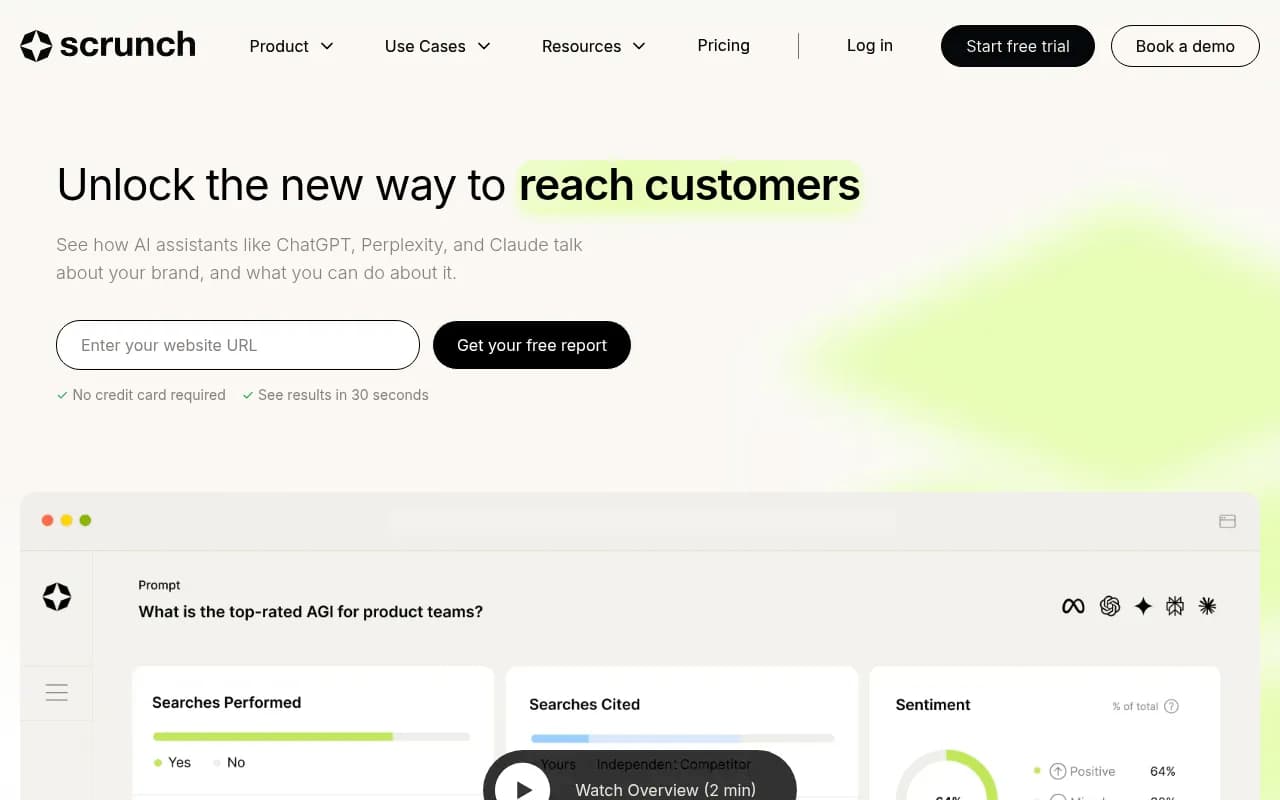
Both are strong monitoring platforms for larger brands, usually at higher price points. Neither tracks Reddit citations or ChatGPT Shopping the way Promptwatch does, and neither runs agentic execution. See Promptwatch vs Profound and Promptwatch vs Scrunch for a side-by-side.
Profound

Triple Whale: best when attribution comes first
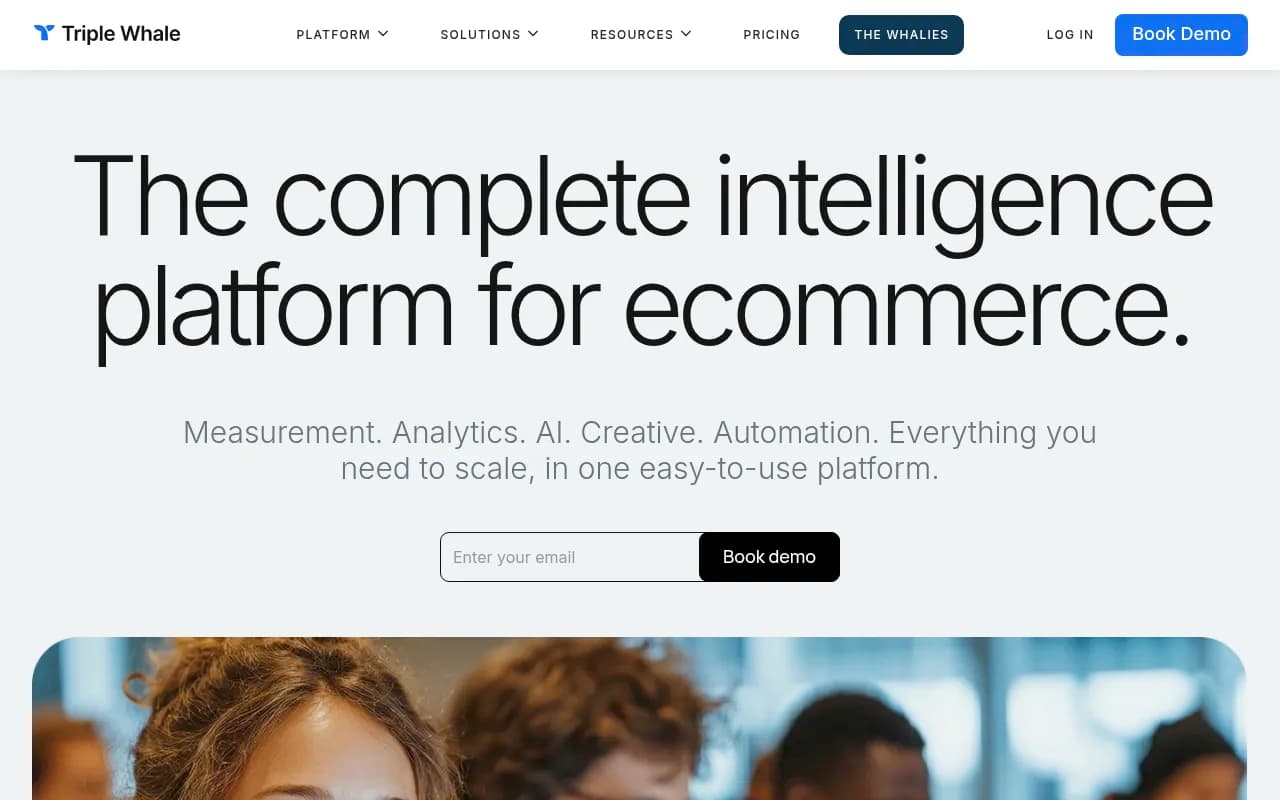
SearchEye's roundup says Triple Whale is the better pick when attribution and ecommerce reporting matter more than publication execution. That's fair. It is an ecommerce growth analytics tool, so it sits next to your AEO tool rather than replacing it.
Yotpo Discover: review-driven AEO
Yotpo's pitch is that generative engines weigh authentic customer sentiment and review data when validating a brand. There is something to that. Reviews are a small share of ChatGPT citations overall but jump on branded prompts. Yotpo isn't in our catalog, so check its own listing and weigh the claims accordingly. Its blog cites a 31% higher conversion rate for ChatGPT ecommerce traffic and a 68% drop in paid click-through on AI Overview queries. Both are vendor figures I couldn't verify independently.
Semrush and Ahrefs Brand Radar: add-ons to an SEO suite
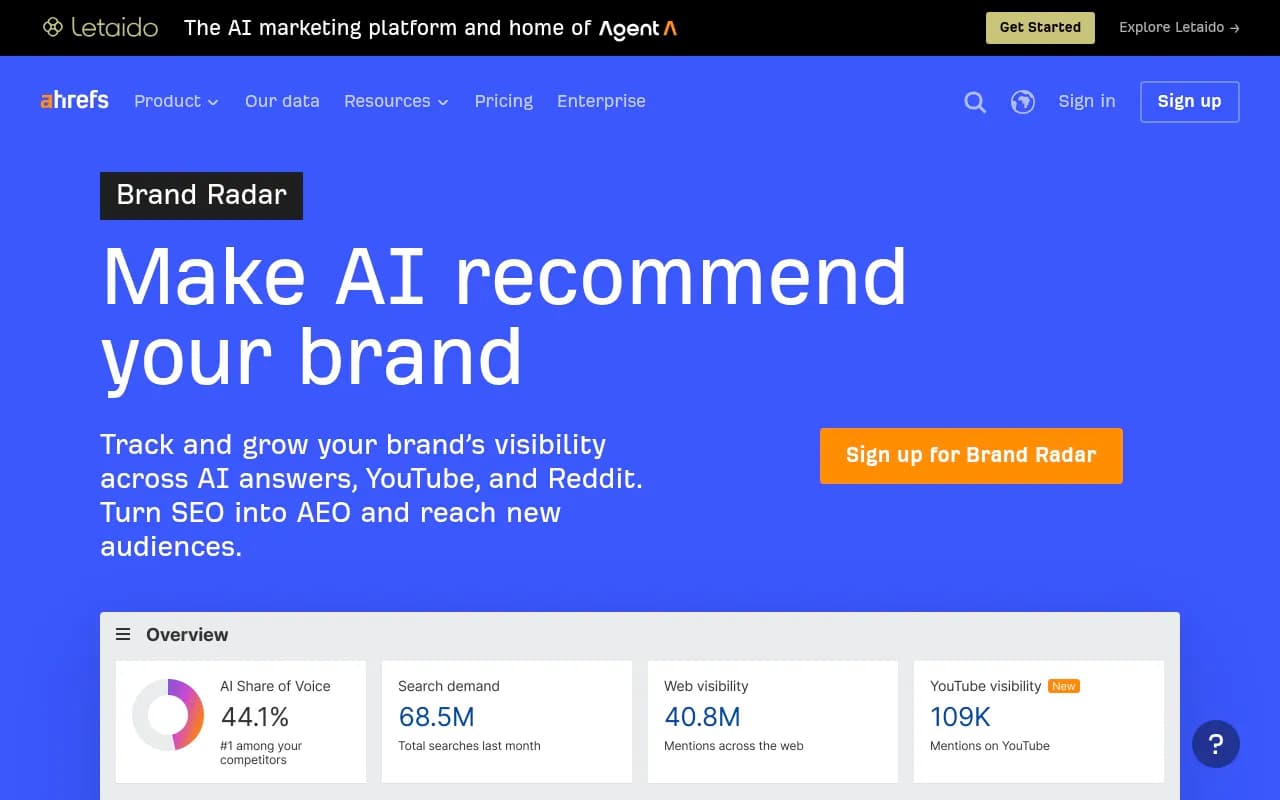
If you already pay for one of these, the AI features are convenient. They use fixed prompt sets and shallower AI-specific data, with no crawler logs or AI traffic attribution.
Otterly.AI: light monitoring
A basic prompt tracker. Fine for checking whether you are mentioned, thin for product-level work.
Otterly.AI

Comparison table
| Tool | Product/SKU focus | Shopping carousel tracking | Crawler logs | Content execution | Best for |
|---|---|---|---|---|---|
| Promptwatch | Yes, plus uploaded catalog | ChatGPT and Alexa | Yes, IP-verified | Content Agent, CMS publishing | Stores that want to fix and measure |
| Peec AI | Yes | Limited | No | No | Small budgets |
| Rankscale | Yes | Limited | No | No | Multi-engine SKU checks |
| Goodie | Retail focus | Limited | No | No | Broad retail monitoring |
| Profound | Brand level, strong | No Shopping | Limited | No | Enterprise monitoring |
| Triple Whale | Attribution | No | No | No | Revenue reporting |
| Semrush / Ahrefs | Brand level | No | No | No | Existing suite users |
Feature cells reflect public positioning and our research, not a hands-on test of every product. Check each vendor before buying.
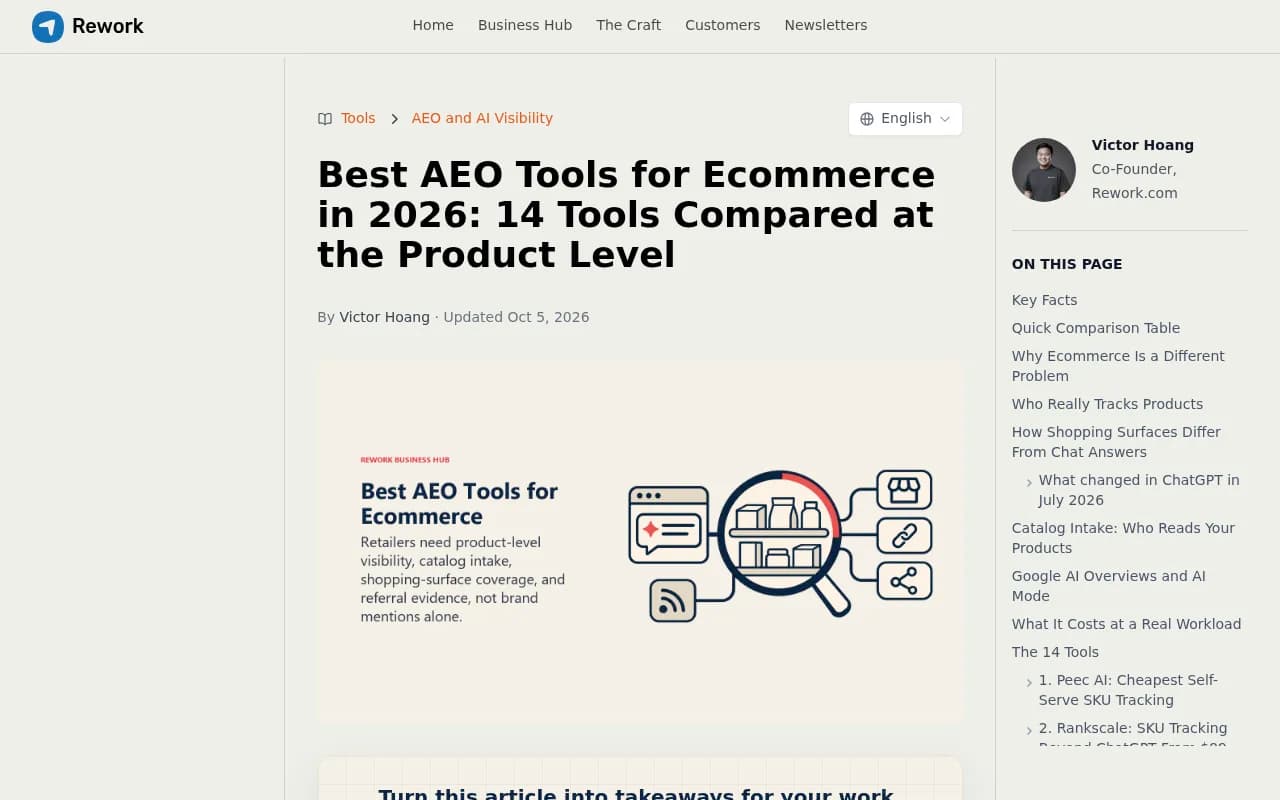
Rework's roundup is useful for a quick scan of SKU tracking tools and their entry prices.
A practical setup for a store
Tools only help if you run a process. This is what I'd do in the first 30 days.
- Build a purchase prompt set. Write 30 to 50 prompts the way your buyers talk: "best X for Y under $Z", comparisons with named competitors, and "where to buy" queries. Use persona variations if your audience splits.
- Record shopping card behavior. For each prompt, note whether cards appear, which brands fill them, and where your SKUs sit.
- Check crawler access first. Before you rewrite anything, confirm AI bots can read product pages. The free AI crawler URL inspector and robots.txt generator for AI help here. TreeHouse (the company behind Pararius) fixed crawler access and published proprietary data, and AI search grew to about 25% of its organic conversions (case study).
- Fix product data. Complete Product schema, accurate prices and availability, and a clean merchant feed. Promptwatch's shopping report recommends exactly this.
- Close citation gaps. Look at which third-party listicles, comparisons and review pages AI cites for your category, then pitch or earn placement there.
- Measure traffic and conversion. Tag AI-referred visits, and compare conversion against organic.
- Repeat monthly. Shopping card trigger rates move in steps, so a single snapshot can mislead you.
Mistakes I see often
- Tracking brand mentions only and calling it product visibility.
- Optimizing for news-style content when product and landing pages earn the citations.
- Skipping crawler logs and assuming the problem is content.
- Trusting one vendor's conversion stat as a benchmark for your store.
Which tool should you choose?
| If you are... | Start with |
|---|---|
| A DTC brand that wants the whole loop from tracking to publishing | Promptwatch Business |
| A small shop that only needs SKU visibility on a budget | Peec AI or Rankscale |
| An agency pitching ecommerce clients | Promptwatch agency plans (Kick-off $199/mo) with AI Visibility Reports |
| An enterprise with a monitoring-first team | Profound or Scrunch, compared against Promptwatch |
| Already deep in an SEO suite | Semrush or Ahrefs Brand Radar as a starting point |
| Focused on revenue attribution | Triple Whale alongside an AEO tool |
If you want more options, the GEO software directory lists many more tools in the category.
FAQ
What is AEO for ecommerce?
Answer engine optimization for ecommerce is the work of getting your products and pages cited or recommended in AI answers, including ChatGPT shopping carousels, Google AI Overviews and Perplexity.
Do shopping carousels show up on every product query?
No. Shopping features attach to a small percentage of web-search responses overall, though trigger rates are much higher on commercial and transactional prompts. The rate also changes in steps over time.
Which page types should I prioritize?
Product pages and landing pages. Together they take roughly 39% of ChatGPT citations, and about 47% on commercial prompts. Comparisons and listicles (yours or third-party) round out the list.
Can I measure revenue from AI search?
Yes, but you need visitor analytics and attribution, not only a visibility score. Promptwatch's guide on attributing AI traffic walks through the setup.
Are the vendor conversion stats reliable?
Treat them as directional. Compare AI-referred conversion against your own organic baseline before you commit budget.
Budget for tracking first, then decide whether you also need execution. If you do, start with the 7-day free trial at Promptwatch and run your top 30 purchase prompts through it.