Key takeaways
- B2B SaaS buyers increasingly use ChatGPT, Perplexity, and other LLMs to research and shortlist vendors -- if you're not visible there, you're losing deals before they start.
- Most AI brand monitoring tools only show you where you're invisible. The best ones also help you fix it through content gap analysis and AI-optimized content generation.
- Coverage matters: look for tools that track at least ChatGPT, Perplexity, Claude, Gemini, and Google AI Overviews -- the five models where B2B buyers spend the most research time.
- Prompt-level tracking (what specific questions buyers ask, how often, how hard they are to win) is more actionable than aggregate brand mention counts.
- Promptwatch is the only platform rated as a "Leader" across all categories in a 2026 comparison of 12 GEO platforms -- and the only one that closes the loop from gap discovery to content creation to traffic attribution.
Why AI brand monitoring suddenly matters for B2B SaaS
Here's a scenario that's playing out at thousands of B2B companies right now. A VP of Operations at a mid-market company opens ChatGPT and types: "What's the best project management software for a remote engineering team of 50?" ChatGPT gives a confident answer with three or four named tools. Your product isn't one of them.
That buyer never visits your website. They never see your ads. They build their shortlist from what an AI told them, and you weren't in the conversation.
This is the new dark funnel. Traditional SEO dashboards track your Google rankings -- but they have zero visibility into what AI models say about your brand, your category, or your competitors. And the gap is widening fast. According to data from multiple 2026 research reports, AI-assisted vendor discovery is now a standard part of the B2B buying process, particularly for software evaluation.
The good news: a new category of tools has emerged specifically to track and improve your brand's presence in AI-generated answers. The bad news: most of them are monitoring dashboards that show you the problem without helping you solve it.
This guide breaks down what to look for, which tools are worth your time, and how to think about building an AI visibility strategy for B2B SaaS.
What AI brand monitoring actually involves
Before comparing tools, it helps to understand what they're actually measuring. "AI brand monitoring" covers several distinct activities:
LLM answer tracking means running queries against ChatGPT, Claude, Perplexity, Gemini, and other models and recording when and how your brand appears. This is the core function -- without it, you're flying blind.
Citation and source analysis goes deeper: not just whether you're mentioned, but which of your pages (or competitor pages, or third-party sources like Reddit and G2) are being cited as evidence. This tells you where AI models are pulling their information from.
Prompt intelligence means understanding which buyer queries are driving AI responses in your category -- the actual questions people ask, how often, and how competitive they are. This is where monitoring becomes strategy.
Content gap analysis compares what AI models say about your competitors versus what they say about you, and identifies the specific topics and questions where you're absent. This is the bridge between monitoring and action.
AI crawler logs show you which AI crawlers (GPTBot, ClaudeBot, PerplexityBot) are visiting your site, which pages they're reading, and whether they're hitting errors. This is surprisingly rare among monitoring tools, but it's critical for diagnosing why you're not being cited.
Traffic attribution closes the loop by connecting AI visibility to actual website traffic and revenue -- so you can tell whether your optimization efforts are working.
Most tools on the market handle the first two reasonably well. Very few handle all six.
The tools worth knowing in 2026
Promptwatch -- the end-to-end option
Promptwatch is the platform that most directly addresses the full workflow: find gaps, create content, track results. It monitors 10 AI models (ChatGPT, Perplexity, Claude, Gemini, Google AI Overviews, Google AI Mode, Grok, DeepSeek, Copilot, and Mistral), which is broader coverage than most competitors.
What separates it from monitoring-only tools is the action layer. The Answer Gap Analysis shows you exactly which prompts competitors are visible for that you're not -- not just a generic "you have low visibility" score, but the specific questions and topics where your content is absent. From there, a built-in AI writing agent generates content grounded in real citation data (over 880 million citations analyzed), prompt volumes, and competitor analysis. Then page-level tracking shows whether that new content is getting cited, and by which models.
The AI Crawler Logs feature is particularly useful for B2B SaaS teams doing technical diagnosis -- you can see exactly which pages GPTBot and ClaudeBot are reading, how often they return, and whether they're encountering errors. Most competitors don't offer this at all.
Pricing starts at $99/month for the Essential plan (1 site, 50 prompts, 5 articles), with Professional at $249/month and Business at $579/month. A free trial is available.

Profound -- strong for enterprise
Profound is a well-regarded platform in the enterprise segment, with solid coverage across ChatGPT, Perplexity, and several other AI engines. It's particularly strong on reporting and stakeholder-facing dashboards. The main limitation is that it's primarily a monitoring platform -- it shows you visibility data but doesn't have content generation or gap analysis tools built in. For large teams that already have content resources and just need the data layer, it works well.
Profound

Otterly.AI -- good for getting started
Otterly.AI is one of the more accessible entry points into AI brand monitoring. It tracks brand mentions across ChatGPT, Perplexity, and Google AI Overviews, and the interface is clean and easy to navigate. It's a reasonable choice for teams that are new to this space and want to understand the basics without a steep learning curve. The limitation is that it stops at monitoring -- no content generation, no crawler logs, no traffic attribution.
Otterly.AI

Peec AI -- solid for established brands
Peec AI performs well for tracking brands that AI models already know about. In testing, it's reliable for established SaaS products with existing AI presence. For newer products or those with limited AI mentions, it can be less useful since there's less data to surface. Like most tools in this category, it's primarily a monitoring dashboard.

SE Visible (by SE Ranking) -- for teams already on SE Ranking
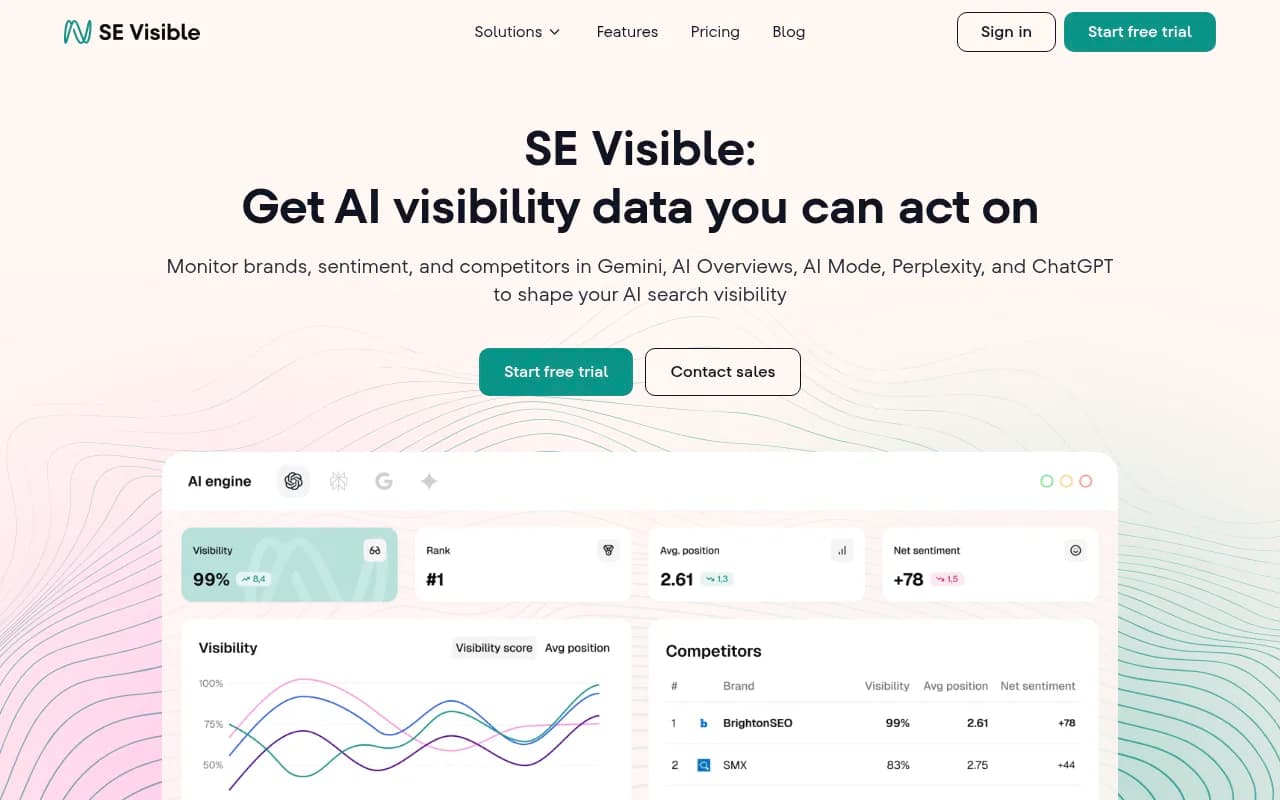
SE Ranking's AI visibility module is a natural add-on for teams already using SE Ranking for traditional SEO. It tracks brand mentions in AI search engines and integrates with SE Ranking's existing rank tracking and site audit tools. The integration is the main selling point -- if you're already paying for SE Ranking, this adds AI monitoring without a separate subscription. As a standalone AI visibility tool, it's functional but not best-in-class.
AthenaHQ -- monitoring-focused
AthenaHQ has a clean interface and decent coverage across major LLMs. It's positioned for marketing teams that want visibility data without a lot of complexity. The gap is on the optimization side -- there's no content generation or gap analysis, so you'll need to take the data elsewhere to act on it.

Scrunch AI -- for agencies and multi-brand tracking
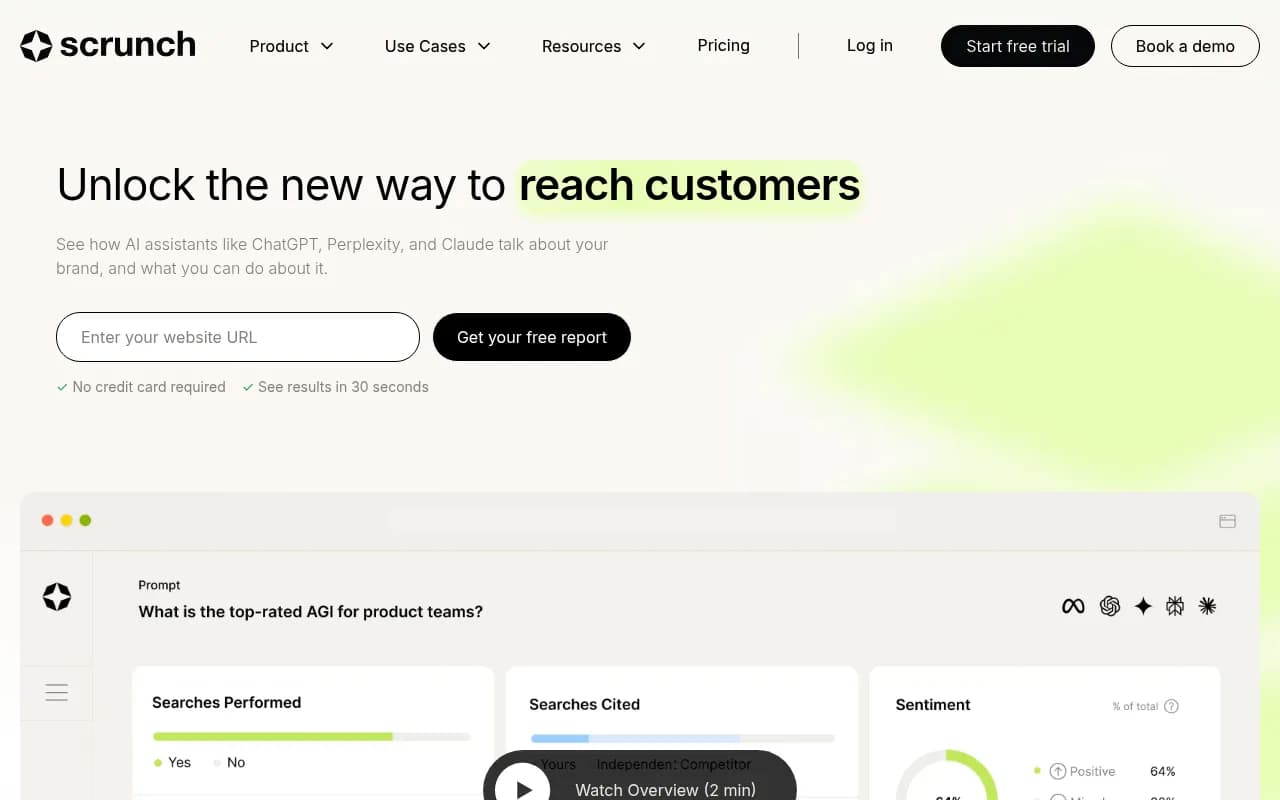
Scrunch AI is worth considering if you're managing multiple brands or clients. It handles multi-brand tracking reasonably well and has decent reporting features for agency use cases. Coverage and depth of prompt intelligence are more limited compared to the leading platforms.
LLM Pulse -- lightweight tracking
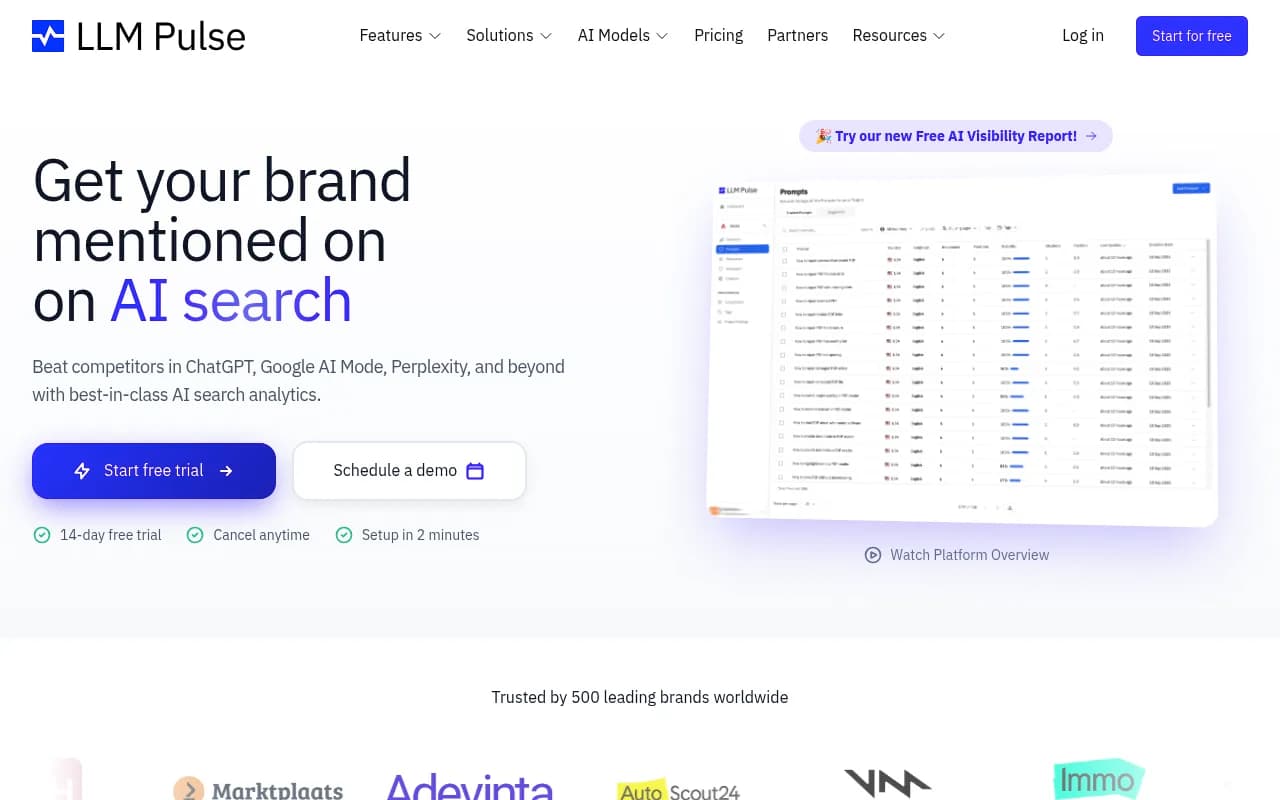
LLM Pulse is a lighter-weight option for teams that want basic brand visibility tracking across ChatGPT, Perplexity, and a few other models without the overhead of a full platform. It's a reasonable starting point for smaller SaaS companies that are just beginning to think about AI visibility.
Brandlight.ai -- niche but focused
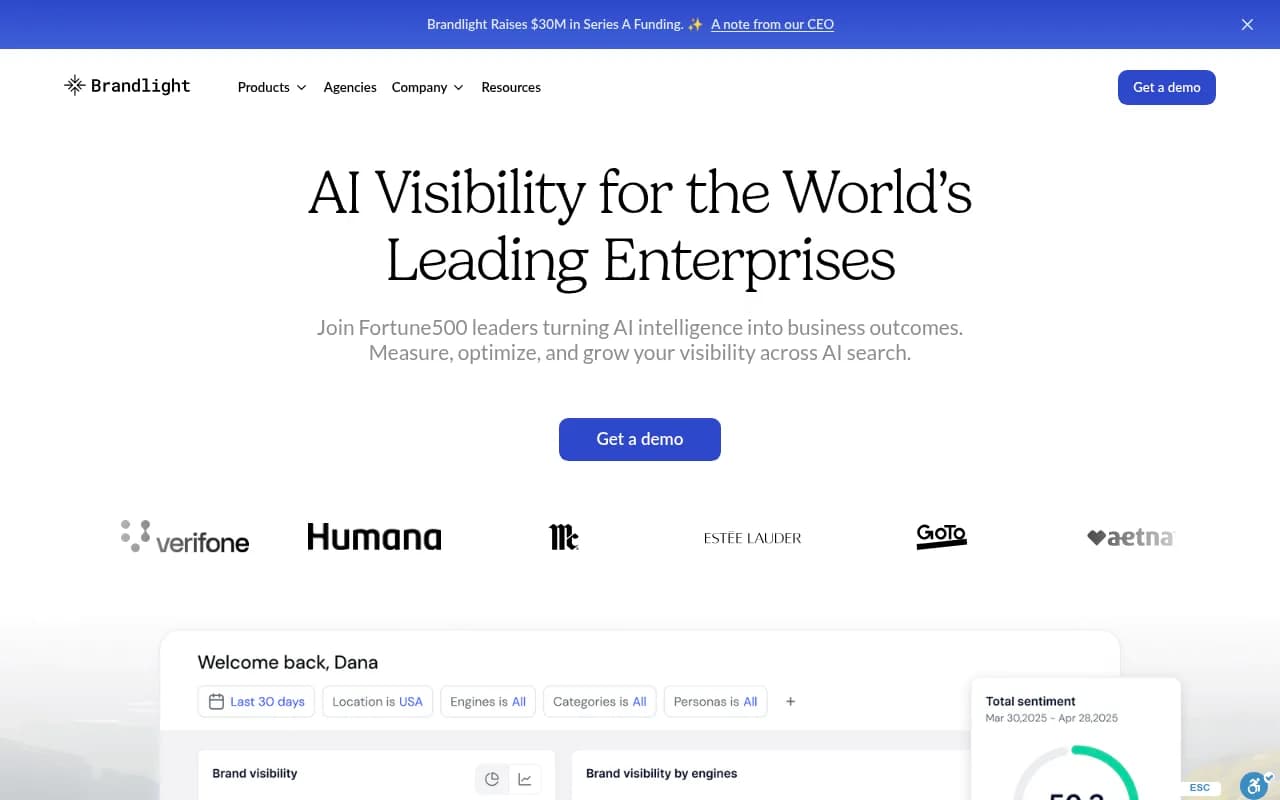
Brandlight.ai focuses specifically on how AI engines discover and recommend brands. It's narrower in scope than the full-featured platforms but has some useful features for understanding sentiment and context in AI responses. Worth evaluating if your primary concern is brand perception rather than content gap analysis.
Feature comparison
| Tool | LLMs monitored | Content gap analysis | AI content generation | Crawler logs | Traffic attribution | Starting price |
|---|---|---|---|---|---|---|
| Promptwatch | 10 (ChatGPT, Claude, Perplexity, Gemini, Grok, DeepSeek, Copilot, Mistral, GAI, GAI Mode) | Yes | Yes | Yes | Yes | $99/mo |
| Profound | 9+ | No | No | No | Limited | Higher |
| Otterly.AI | ChatGPT, Perplexity, GAI Overviews | No | No | No | No | Lower |
| Peec AI | ChatGPT, Perplexity, Claude | No | No | No | No | Lower |
| SE Visible | Multiple (SE Ranking integration) | No | No | No | No | Add-on |
| AthenaHQ | Multiple | No | No | No | No | Mid-range |
| Scrunch AI | Multiple | Limited | No | No | No | Mid-range |
| LLM Pulse | ChatGPT, Perplexity, others | No | No | No | No | Lower |
What to actually look for when evaluating these tools
Model coverage that matches where your buyers research
Not all AI models are equally relevant for B2B SaaS. ChatGPT and Perplexity are where most buyer research happens right now. Google AI Overviews matters because it appears in standard Google searches. Claude is growing in enterprise adoption. Gemini is relevant for Google Workspace users.
A tool that only monitors one or two of these is giving you a partial picture. Check which models a tool actually queries (not just which ones it claims to support) and how frequently it runs those queries.
Prompt-level data, not just brand mention counts
Aggregate "AI visibility scores" are almost useless for planning. What you actually need is: which specific prompts is my brand appearing for? Which prompts are competitors winning that I'm not? What's the query volume for each prompt? How hard is it to win?
This is the difference between knowing you have a problem and knowing what to do about it. Tools like Promptwatch surface this at the prompt level with volume estimates and difficulty scores. Most monitoring-only tools give you a score and leave you to figure out the rest.
Evidence logs and raw responses
When a tool tells you your brand appeared in a ChatGPT response, you want to see the actual response. Raw response logging lets you audit the context -- was the mention positive or negative? Was your brand cited as a recommendation or as a cautionary example? Was the citation accurate? This matters for brand management as much as for SEO.
The ability to act on what you find
This is the biggest gap in the market. Most tools are dashboards. They show you data. They don't help you do anything with it.
For B2B SaaS teams with limited resources, the most valuable tools are the ones that connect monitoring to action -- specifically, identifying which content to create and helping you create it. If a tool shows you that competitors are being cited for "best CRM for mid-market B2B" and you're not, the next question is: what content do I need to publish to change that? Tools that answer that question are worth significantly more than those that don't.
Multi-persona and multi-region support
B2B buyers don't all prompt the same way. A CFO asking about financial software uses different language than a developer evaluating APIs. Tools that let you configure different personas and run queries from different regions give you a more accurate picture of your actual buyer landscape.
How to build an AI visibility strategy for B2B SaaS
Getting set up with a monitoring tool is step one, but it's not a strategy. Here's a practical framework:
Start with your category prompts. Map out the 20-30 questions your ideal buyers are most likely to ask an AI assistant during the research phase. Think: "What's the best [category] software for [use case]?", "How does [your product] compare to [competitor]?", "What should I look for when evaluating [category] tools?" These are your target prompts.
Benchmark your current visibility. Run those prompts through your monitoring tool and record where you appear, where competitors appear, and where you're absent. This is your baseline.
Identify the highest-value gaps. Not all gaps are equal. Prioritize prompts with high query volume, where competitors are consistently cited and you're not, and where you have existing content that could be optimized. Tools with prompt difficulty scoring (like Promptwatch) make this prioritization much faster.
Create content specifically for AI citation. This is different from traditional SEO content. AI models cite content that directly and comprehensively answers specific questions. Long-form comparison pages, detailed use-case guides, and FAQ content structured around real buyer questions tend to perform well. Content that's vague, promotional, or thin gets ignored.
Monitor your crawler logs. If AI crawlers aren't visiting your new content, it won't get cited regardless of quality. Crawler logs tell you whether GPTBot and ClaudeBot are finding your pages and whether they're encountering technical issues.
Track changes in visibility over time. Set a cadence -- weekly or bi-weekly -- to check whether your target prompts are showing improvement. Page-level tracking shows which specific pages are being cited and by which models.
Connect visibility to traffic and pipeline. The ultimate test is whether AI visibility is driving real business outcomes. GSC integration, UTM tracking, or server log analysis can help you connect AI citations to actual website visits and conversions.
The monitoring-only trap
One thing worth being direct about: most tools in this category will show you a dashboard full of concerning data and then leave you to figure out what to do next. That's fine if you have a dedicated content team and a clear strategy. For most B2B SaaS marketing teams, it's a frustrating dead end.
The tools that are actually moving the needle for teams in 2026 are the ones that close the loop -- from identifying gaps to generating content to tracking whether that content is working. That's a harder product to build, which is why most competitors haven't built it. But it's the difference between paying for a report and paying for results.
If you're evaluating tools right now, the most important question to ask isn't "which models does this track?" It's "what happens after I see the data?"
Quick recommendations by use case
- Starting out and want to understand your AI visibility baseline: Otterly.AI or LLM Pulse are low-cost ways to get oriented.
- Established brand that needs enterprise reporting and stakeholder dashboards: Profound is worth evaluating.
- B2B SaaS team that wants to actively improve visibility, not just monitor it: Promptwatch is the most complete option -- it's the only platform that handles gap analysis, content generation, crawler monitoring, and traffic attribution in one place.
- Agency managing multiple client brands: Scrunch AI or Promptwatch's agency/enterprise tier.
- Already on SE Ranking and want to add AI monitoring: SE Visible is the obvious add-on.
The category is moving fast. Tools that were monitoring-only a year ago are adding optimization features. Tools that didn't exist 18 months ago are now used by thousands of brands. Whatever you pick, build the habit of checking your AI visibility data regularly -- because this is where your buyers are doing their research, whether you're tracking it or not.