Key takeaways
- Copilot and Bing AI are now significant citation channels, but coverage varies widely across tracking platforms
- Promptwatch is the only platform in this comparison that combines Copilot tracking with content gap analysis, AI crawler logs, and content generation -- it doesn't just show you the problem, it helps you fix it
- Profound offers strong enterprise-grade monitoring but comes at a higher price point with no Reddit tracking or ChatGPT Shopping visibility
- Peec AI is a lightweight entry point for teams that need basic multi-engine monitoring without the budget for a full GEO platform
- SE Ranking's AI visibility module is a useful add-on for teams already using it for traditional SEO, but it's not built for deep AI citation work
- If Copilot and Bing AI citations matter to your pipeline, you need a platform that tracks real user-facing responses -- not just API outputs
Microsoft's AI ecosystem is bigger than most marketers realize. Copilot is embedded in Windows, Edge, Microsoft 365, and Bing itself, reaching an estimated 1 billion+ devices. When someone asks Copilot a product question in Word or a research question in Edge, it cites sources -- and those citations drive real traffic. Yet most AI visibility platforms treat Copilot as an afterthought, lumping it in with a vague "Bing AI" label or skipping it entirely.
This guide compares four platforms -- Promptwatch, Profound, Peec AI, and SE Ranking -- specifically on how well they handle Copilot and Bing AI citation tracking in 2026. We'll look at coverage depth, what you can actually do with the data, and which tool makes sense for which team.
Why Copilot tracking is harder than it looks
Before comparing tools, it's worth understanding why Copilot is a genuinely tricky engine to monitor.
Copilot doesn't behave like a single product. There's Copilot in Bing (web search), Copilot in Microsoft 365 (enterprise productivity), Copilot in Edge (browser sidebar), and Copilot+ for Windows. Each context surfaces different responses and different citations. A brand that gets cited in Bing Copilot's web search results might not appear at all in the Edge sidebar for the same query.
There's also the API vs. real-UI problem. Several tracking tools query AI engines through their APIs to check for brand mentions. That's fast and cheap, but the responses you get through an API often differ from what a real user sees in the actual interface. Copilot in particular has different citation behavior depending on the surface. Tools that only use API polling will miss a meaningful portion of real-world citations.
Finally, Copilot's responses are grounded in Bing's web index, which means your traditional SEO health directly affects your Copilot visibility. A platform that can connect those dots -- showing you both your Bing indexing status and your Copilot citation rate -- is more useful than one that treats them as separate problems.
The four platforms compared
Promptwatch
Promptwatch is the most complete platform in this comparison. It monitors 10 AI models including Copilot, and it's one of the few tools that tracks real user-facing responses rather than relying purely on API queries. That distinction matters for Copilot specifically, where the interface context changes what gets cited.

What separates Promptwatch from the others isn't just coverage -- it's what happens after you see the data. Most platforms show you that a competitor is being cited in Copilot for a prompt you're not appearing in. Promptwatch's Answer Gap Analysis shows you exactly which prompts those are, what content is being cited, and what's missing from your own site. Then its Content Agents generate articles, comparisons, and briefs built specifically to close those gaps -- grounded in real prompt data, citation patterns, and competitor analysis.
The AI Crawler Logs feature is also relevant here. Promptwatch shows you in real time when Bing's crawler (which feeds Copilot's grounding index) hits your pages, which pages it reads, any errors it encounters, and how often it returns. If Copilot isn't citing you, this is often where you find out why -- a crawl error on a key page, or a section of your site that Bingbot hasn't indexed. Most competitors don't offer this at all.
Pricing starts at $99/month for the Essential plan (1 site, 50 prompts, 5 articles). The Professional plan at $249/month adds crawler logs, state/city tracking, and 150 prompts. For teams where Copilot visibility is a serious business concern, the Professional tier is where the relevant features live.
Profound
Profound is a strong dedicated AI monitoring platform, particularly for enterprise teams managing multiple brands across many AI engines. It covers Copilot alongside ChatGPT, Perplexity, Gemini, and others, and its reporting depth is genuinely impressive for large-scale monitoring.
Profound

Where Profound falls short for Copilot-specific work is on the action side. It's primarily a monitoring and reporting tool. You get detailed dashboards showing citation rates, share of voice, and sentiment across engines -- but the platform doesn't help you understand why Copilot isn't citing you or what content to create to fix it. There's no content generation, no crawler log analysis, and no Reddit or YouTube tracking to surface the third-party content that often influences AI citations.
Profound is also priced for enterprise. It's a meaningful investment for a team that needs deep reporting across 10+ brands, but it's harder to justify for a single brand or a mid-market marketing team that needs to act on the data, not just report it.
Peec AI
Peec AI is a lightweight monitoring platform built for marketing teams that want multi-engine AI visibility tracking without the complexity of a full GEO platform. It covers Copilot among its supported engines and offers prompt tracking, brand mention monitoring, and basic competitor benchmarking.

The honest assessment: Peec AI is a monitoring-only tool. It shows you where you're visible and where you're not. For teams that are just getting started with AI visibility tracking and want to understand the landscape before committing to a more expensive platform, it's a reasonable entry point. The interface is clean and the setup is fast.
But if your goal is to actually improve your Copilot citation rate, Peec AI doesn't give you much to work with. No content gap analysis, no crawler logs, no content generation. You'll see the gap; you'll need to figure out how to close it yourself.
SE Ranking
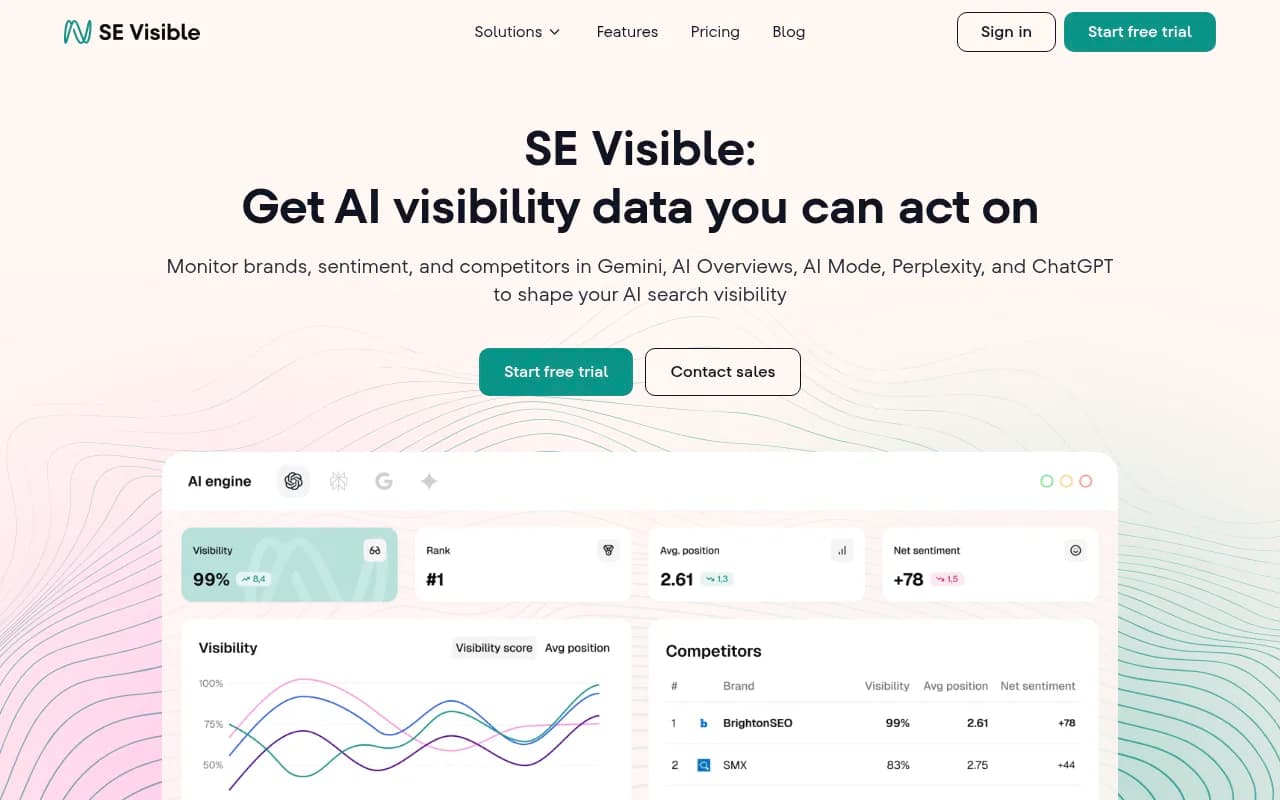
SE Ranking is primarily a traditional SEO platform -- rank tracking, site audits, keyword research, backlink analysis -- that added an AI visibility module. Its SE Visible product tracks brand mentions across AI engines including Copilot, and it integrates that data alongside your traditional search metrics.
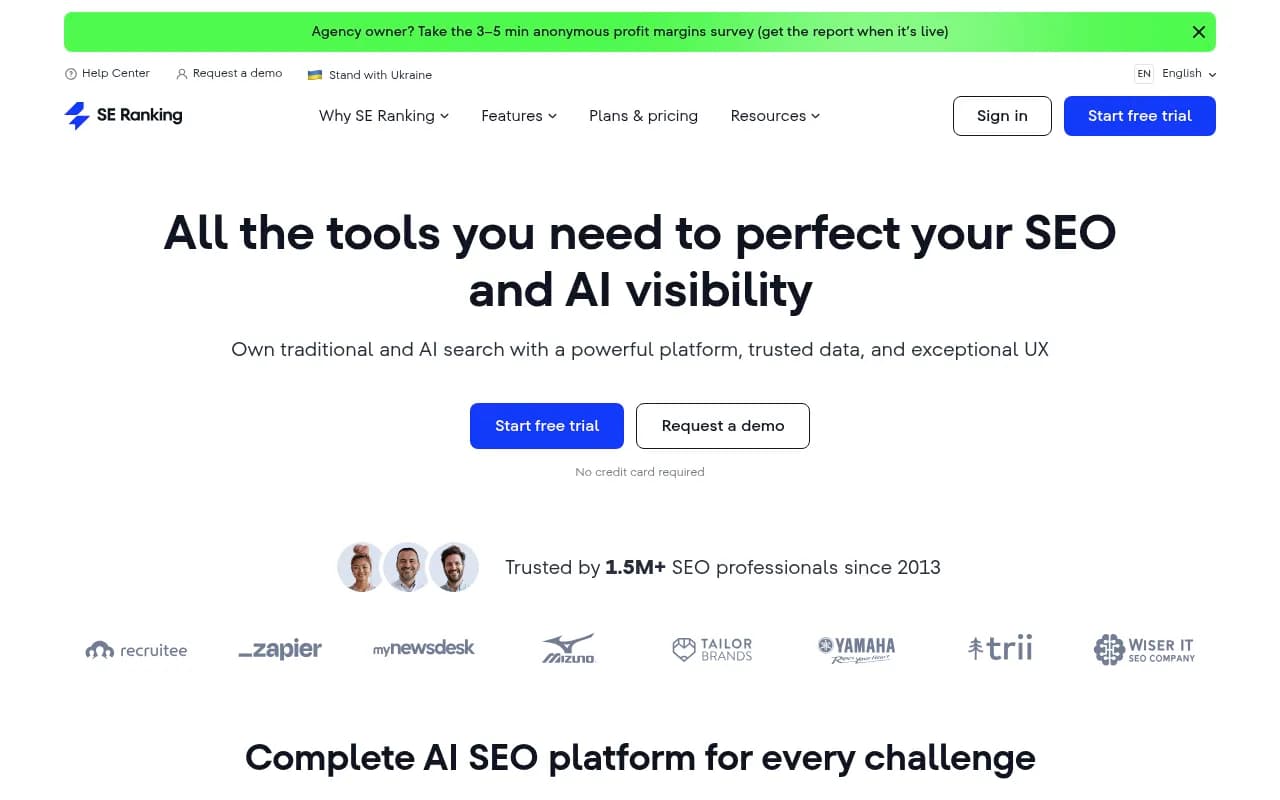
The integration angle is SE Ranking's main selling point here. If you're already using SE Ranking for your SEO work, having AI visibility data in the same dashboard alongside your Bing rankings and crawl health data is genuinely useful. The connection between your Bing SEO performance and your Copilot citation rate is real, and SE Ranking is the only platform in this comparison that makes it easy to see both in one place.
The limitation is depth. SE Ranking's AI visibility module is an add-on to an SEO platform, not a purpose-built GEO tool. Prompt coverage is narrower, there's no content generation for AI search, and the Copilot-specific tracking isn't as granular as what you'd get from Promptwatch or Profound. For teams where AI visibility is a primary concern rather than a secondary metric, SE Ranking's module will feel thin.
Feature comparison
| Feature | Promptwatch | Profound | Peec AI | SE Ranking |
|---|---|---|---|---|
| Copilot / Bing AI tracking | Yes | Yes | Yes | Yes (via SE Visible) |
| Real UI tracking (not just API) | Yes | Partial | No | No |
| AI crawler logs (Bingbot etc.) | Yes | No | No | No |
| Content gap analysis | Yes | No | No | No |
| AI content generation | Yes | No | No | No |
| Reddit / YouTube citation tracking | Yes | No | No | No |
| ChatGPT Shopping tracking | Yes | No | No | No |
| Competitor heatmaps | Yes | Yes | Yes | Partial |
| Prompt volume / difficulty scores | Yes | No | No | No |
| Traditional SEO integration | No | No | No | Yes |
| Entry-level pricing | $99/mo | High | Low | Low (add-on) |
| Free trial | Yes | Yes | Yes | Yes |
Which platform is right for you
The right choice depends on what you actually need to do with the data.
If your goal is to understand and improve your Copilot citation rate -- not just track it -- Promptwatch is the clear choice. The crawler logs alone are worth it for diagnosing why Copilot isn't citing you. Add the content gap analysis and content generation, and you have a complete workflow from "we're invisible in Copilot" to "we published content that closes the gap" to "we can see our citation rate improving." No other platform in this comparison offers that full loop.
If you're an enterprise team managing 10+ brands and your primary need is reporting and stakeholder dashboards, Profound is worth evaluating. It's expensive, but the monitoring depth is real. Just go in knowing you'll need separate tools for the optimization work.
If you're a small team or solo marketer who wants to start tracking AI visibility without a big commitment, Peec AI is a reasonable starting point. You'll outgrow it quickly if you want to act on the data, but it's a low-friction way to get visibility into where you stand.
If you're already on SE Ranking and want to add AI visibility tracking without switching platforms, the SE Visible module is worth turning on. It won't give you deep Copilot-specific insights, but it's better than flying blind, and the connection to your existing Bing SEO data is a genuine advantage.
What good Copilot tracking actually looks like
A few things to look for when evaluating any platform for Copilot tracking specifically:
Real-UI testing matters. Ask vendors whether they test responses in the actual Copilot interface or through the API. The answer will tell you a lot about the accuracy of their citation data.
Bing crawler visibility is underrated. Since Copilot's grounding index is Bing's web index, knowing when and how Bingbot crawls your site is directly relevant to your citation rate. Platforms that surface crawler log data give you a diagnostic layer that pure monitoring tools don't.
Prompt specificity matters more than prompt volume. A platform tracking 500 generic prompts is less useful than one tracking 50 prompts that match how your actual customers ask questions in Copilot. Look for tools that let you customize prompts and show you volume and difficulty data so you can prioritize.
Citation position isn't the whole story. Being mentioned in a Copilot response is good. Being cited as the primary source, with a link, in the first paragraph is better. Look for platforms that track citation position and source type, not just presence.
The Copilot opportunity most brands are missing
Here's the thing about Copilot that most AI visibility conversations miss: it's not just a search engine. It's embedded in the tools people use for work. When a procurement manager asks Copilot in Word to summarize vendor options, or a marketer asks Copilot in Edge to compare platforms, those are high-intent moments that happen outside of traditional search entirely.
The brands that get cited in those moments aren't the ones with the highest domain authority. They're the ones whose content directly answers the specific questions being asked -- in formats that AI models can parse and cite. That's a content strategy problem as much as a tracking problem.
Which is why the monitoring-only approach has a ceiling. Knowing you're invisible in Copilot is step one. Having a clear picture of what content to create, and a way to generate and track it, is what actually moves the number.
The platforms that will matter most in 2026 are the ones that close the loop between measurement and action. For Copilot tracking specifically, that means combining real-UI response testing, Bing crawler visibility, content gap analysis, and the ability to generate content that's actually engineered to get cited -- not just written to rank.
Promptwatch is currently the only platform in this comparison that does all of that. The others are useful for specific use cases, but if Copilot visibility is a serious business priority, the full-stack approach is worth the investment.