Key takeaways
- Sitecore acquired Scrunch on June 3, 2026 for a reported $225M, folding it into Sitecore's broader digital experience platform (DXP)
- Scrunch's standalone product roadmap is now uncertain -- Sitecore will integrate its capabilities into a much larger enterprise suite
- Most Scrunch alternatives only monitor AI visibility; few help you actually fix the gaps they find
- Promptwatch is the only platform rated "Leader" across all GEO categories in a 2026 comparison of 12 platforms -- and unlike most competitors, it goes beyond tracking to content gap analysis and AI content generation
- The right alternative depends on your team size, budget, and whether you need monitoring-only or a full optimization loop
What happened with Scrunch and Sitecore
On June 3, 2026, Sitecore announced it had acquired Scrunch, the AI search visibility platform, for a reported $225M. That's a significant price tag for a startup that was roughly 2.5 years old.

The strategic logic makes sense. Sitecore is a digital experience platform (DXP) -- it helps large enterprises manage and publish content across channels. Scrunch gave it the "answer engine" layer: visibility into how brands appear in ChatGPT, Gemini, Perplexity, and other AI search tools. Together, Sitecore is pitching an end-to-end system: understand where you're missing in AI answers, then use Sitecore's content infrastructure to fix it.
For Sitecore's existing enterprise customers, this could be genuinely useful. But if you were using Scrunch as a standalone tool, the acquisition creates real uncertainty. Scrunch's roadmap is now Sitecore's roadmap. Pricing will likely shift toward enterprise contracts. The lightweight, focused product you signed up for may look very different in 12 months.
That's the practical reality of acquisitions. The product gets absorbed, the team gets redirected, and independent users often end up looking for alternatives.
So let's talk about what those alternatives actually look like.
What Scrunch actually did (and what you need to replace)
Before picking an alternative, it's worth being clear about what Scrunch offered:
- Brand visibility tracking across LLMs (ChatGPT, Gemini, Perplexity, Claude, and others)
- Insight into where your brand appears, where it's missing, and where it's misrepresented
- Recommendations for improving how AI models describe and cite your brand
- An "Agent Experience Platform" (AXP) for managing brand presence in AI-driven discovery
The core use case: you want to know if ChatGPT recommends your product when someone asks a relevant question, and you want to do something about it when it doesn't.
That's the GEO (Generative Engine Optimization) problem. And there's now a growing market of tools trying to solve it -- with very different levels of depth.
The GEO tool landscape in 2026
The honest reality is that most AI visibility tools are monitoring dashboards. They show you a score, tell you which prompts you appear in, and leave you to figure out what to do next. That's useful data, but it's not optimization.
A smaller number of platforms have started building the "fix it" layer -- content gap analysis, content generation grounded in real prompt data, crawler logs, and attribution. That's where the real value is.
Here's how the main alternatives stack up:
| Platform | AI models tracked | Content generation | Crawler logs | Prompt volume data | Best for |
|---|---|---|---|---|---|
| Promptwatch | 10+ (ChatGPT, Perplexity, Gemini, Claude, Grok, DeepSeek, Copilot, Mistral, Meta AI, Google AI Overviews) | Yes (Content Agents) | Yes | Yes | Full GEO optimization loop |
| Profound | 9+ | No | No | Limited | Enterprise monitoring |
| AthenaHQ | Several | No | No | No | Monitoring-focused teams |
| Otterly.AI | ChatGPT, Perplexity, Google AI Overviews | No | No | No | Basic brand tracking |
| Peec AI | Several | No | No | No | Lightweight monitoring |
| Evertune | Several | No | No | No | Fortune 500 brand tracking |
| Brandlight.ai | Several | Limited | No | No | Brand discovery tracking |
| Search Party | Several | No | No | No | Agency workflows |
The best Scrunch alternatives in 2026
Promptwatch -- the most complete replacement
If Scrunch was your primary GEO tool and you want a like-for-like replacement that actually goes further, Promptwatch is the strongest option on the market right now.
Promptwatch tracks 10 AI models including ChatGPT, Perplexity, Google AI Overviews, Google AI Mode, Claude, Gemini, Meta/Llama, DeepSeek, Grok, Mistral, and Copilot. But the tracking is table stakes. What makes it different is the action loop built around that data.
The Answer Gap Analysis shows you exactly which prompts your competitors appear in but you don't -- not as a vague score, but as specific questions and topics your website isn't answering. From there, Content Agents generate articles, listicles, comparisons, and briefs grounded in real prompt data, citation patterns, prompt volumes, and competitor analysis. Then page-level tracking shows you when those new pages get crawled by AI agents and start generating citations.
The AI Crawler Logs feature is particularly useful for anyone who cared about Scrunch's visibility layer. You get real-time logs of when ChatGPT, Claude, Perplexity, and other AI crawlers hit your site -- which pages they read, errors they encounter, and how often they return. Most competitors don't have this at all.
Pricing starts at $99/month for the Essential plan (1 site, 50 prompts, 5 articles), with Professional at $249/month and Business at $579/month. There's a free trial.

Profound -- strong enterprise monitoring
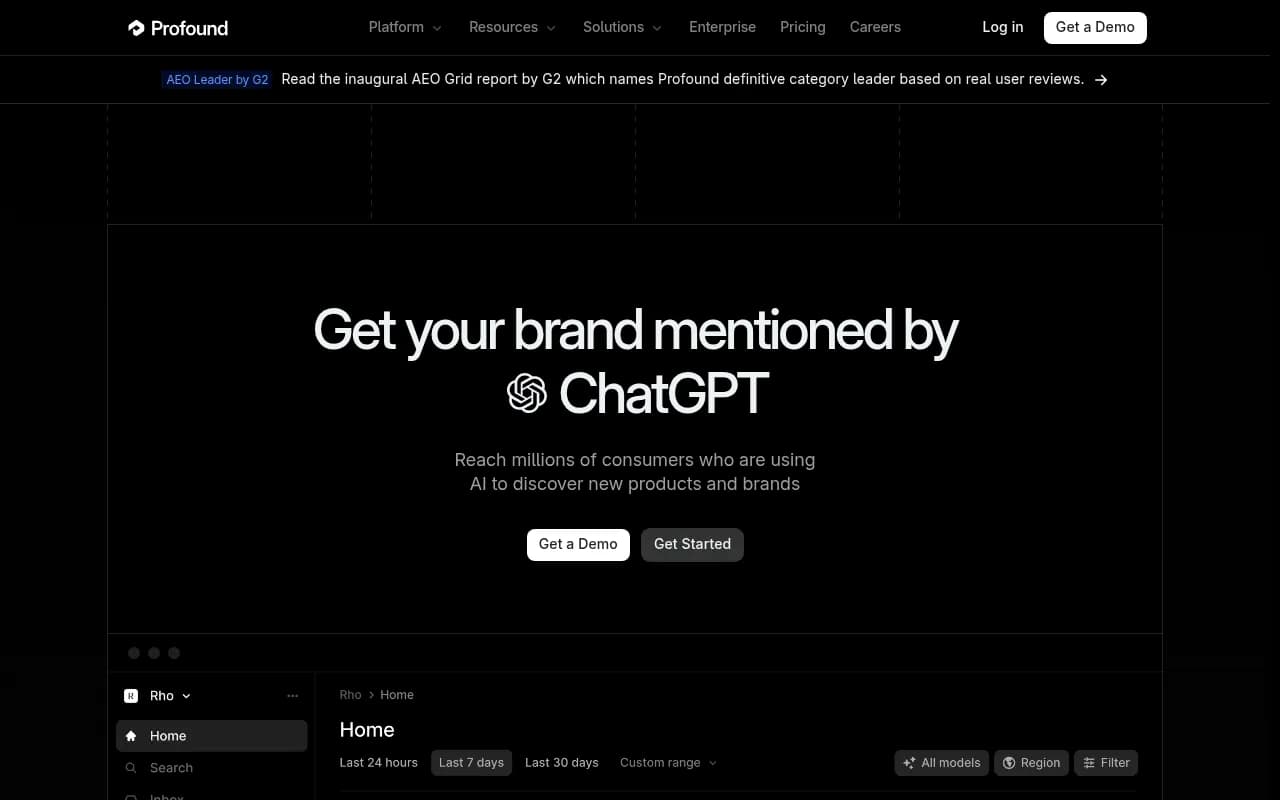
Profound is a well-built enterprise platform that tracks brand mentions across 9+ AI search engines. It's genuinely good at the monitoring side -- detailed sentiment analysis, share of voice tracking, and competitive benchmarking.
The gap is on the action side. Profound doesn't have content generation, and its content gap analysis is more limited than Promptwatch's. If your team already has strong content capabilities and just needs the data layer, Profound is a solid choice. If you need the full loop, you'll be supplementing it with other tools.
Profound
AthenaHQ -- clean monitoring interface
AthenaHQ has a clean, well-designed interface for tracking AI visibility across major LLMs. It's monitoring-focused, which means it's good at showing you where you stand but doesn't help you improve. Teams that want a straightforward dashboard without the complexity of a full platform will find it approachable.

Otterly.AI -- lightweight and accessible
Otterly.AI covers ChatGPT, Perplexity, and Google AI Overviews. It's one of the more accessible entry points into AI visibility tracking -- simpler setup, lower price point, and a clean enough interface. The trade-off is depth: no crawler logs, no content generation, no prompt volume data. It's a good starting point for smaller teams or those just beginning to think about GEO.
Otterly.AI

Peec AI -- straightforward brand tracking
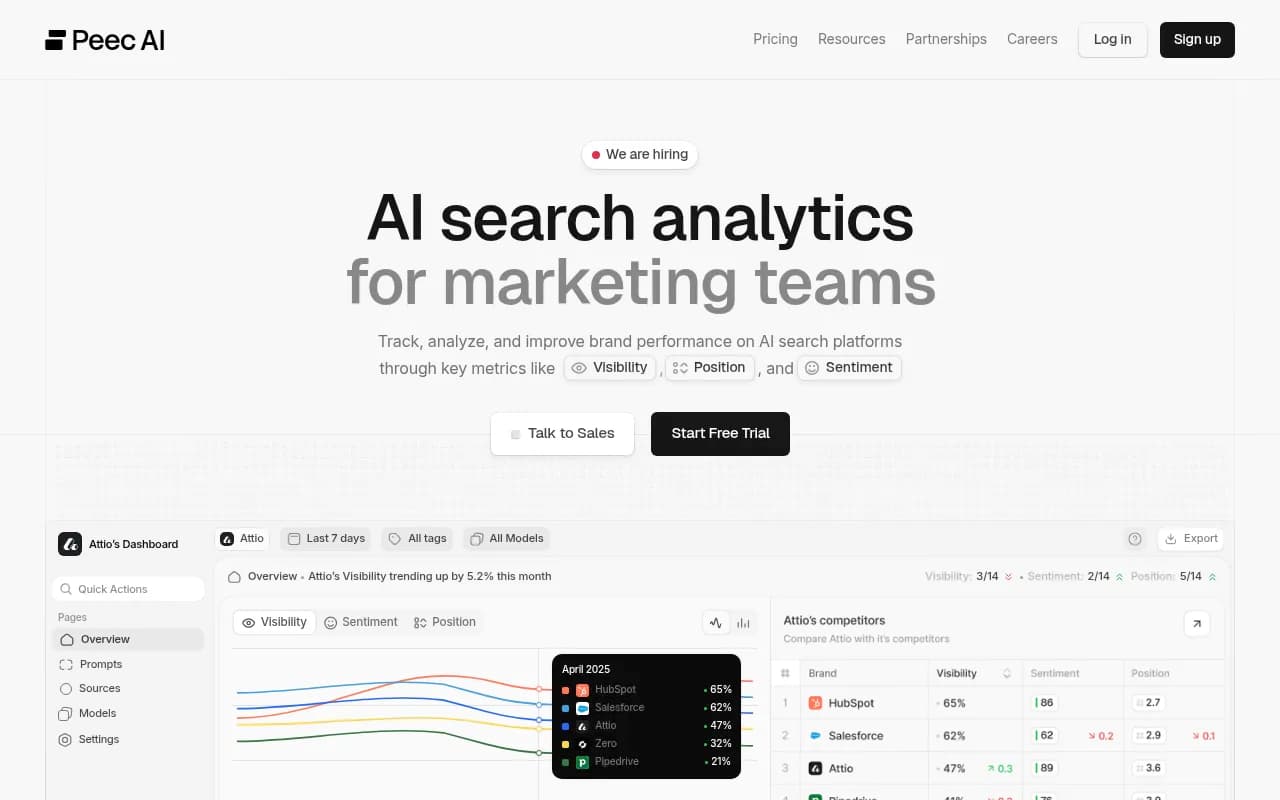
Peec AI is a monitoring tool that tracks brand mentions across several AI engines. It's straightforward and doesn't try to do too much. For teams that want a simple answer to "does ChatGPT mention us?", it works. For teams that want to know why and what to do about it, you'll hit its limits quickly.
Evertune -- built for large brands
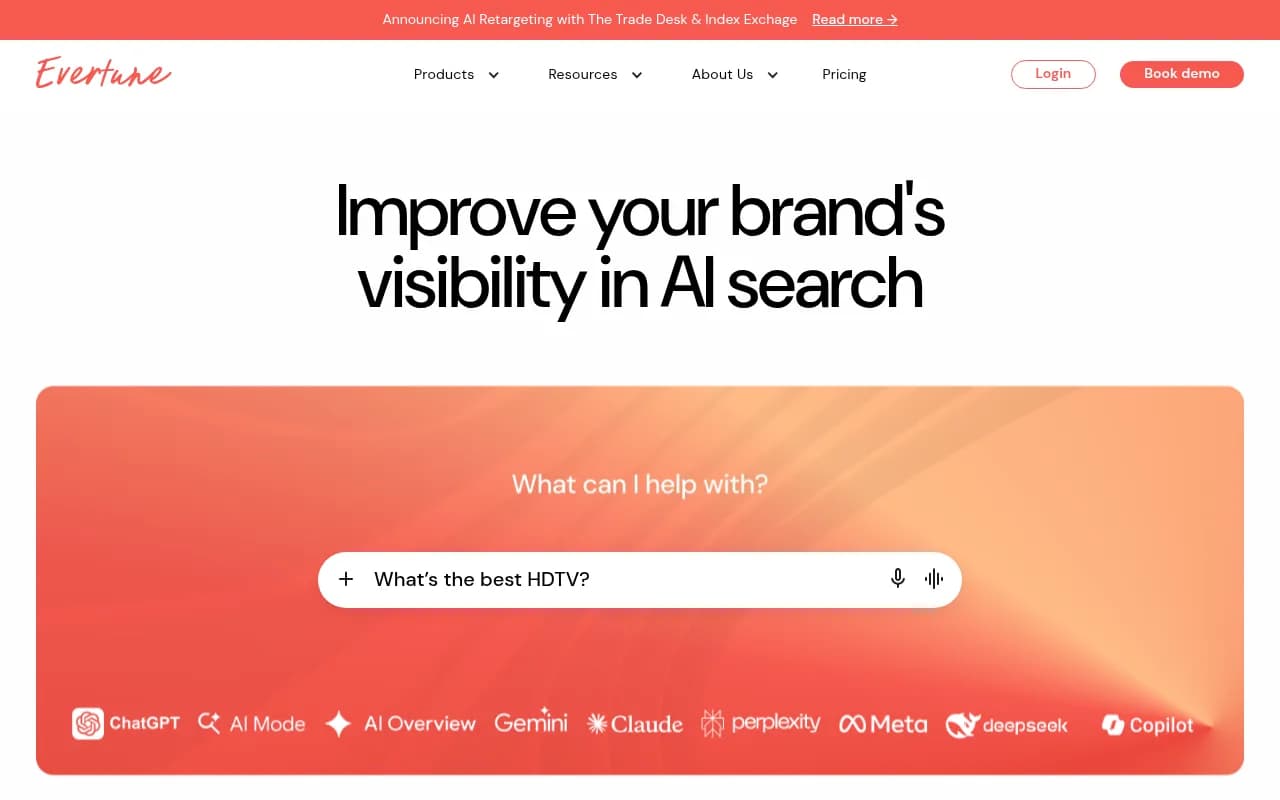
Evertune positions itself at the Fortune 500 end of the market. It has solid tracking capabilities and is designed for brands with complex multi-market needs. The focus is on understanding AI visibility at scale, not necessarily on generating content to improve it. If you're a large enterprise that already has a content team and just needs the intelligence layer, it's worth evaluating.
Brandlight.ai -- brand discovery focus
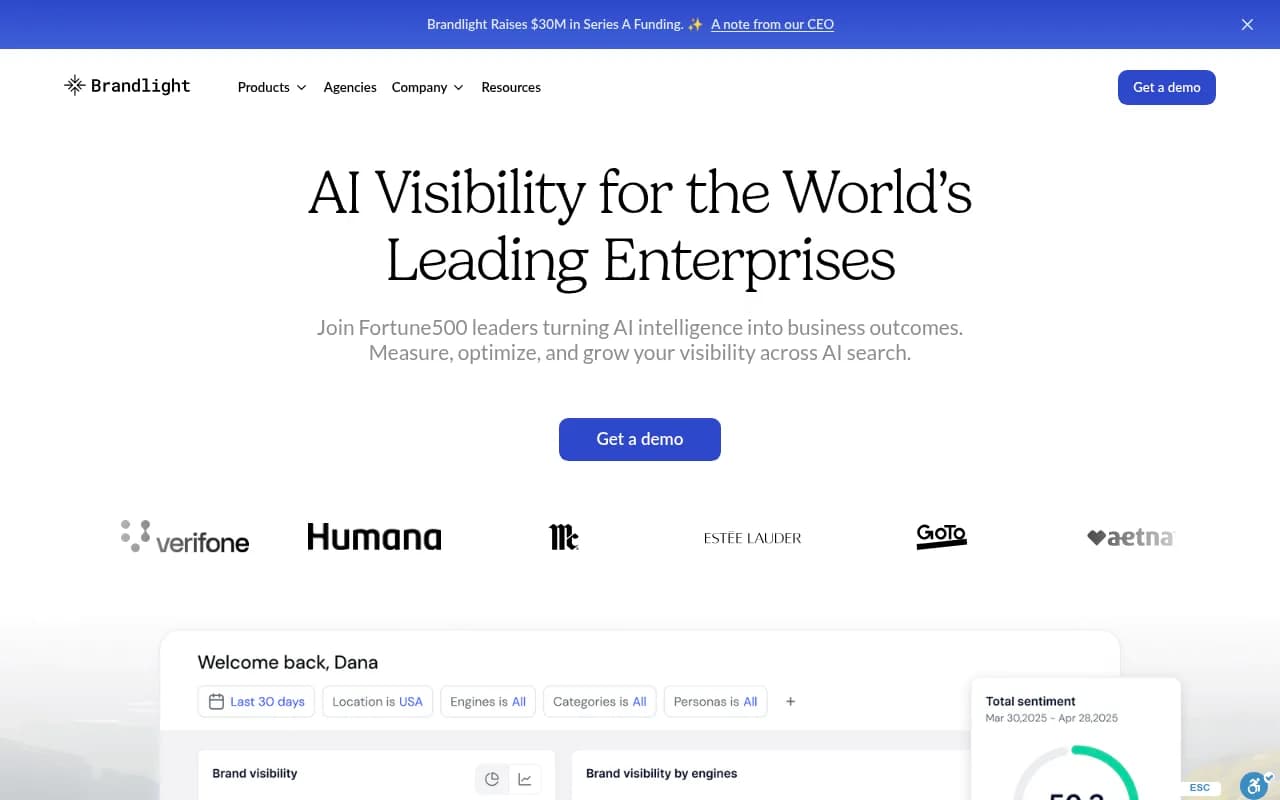
Brandlight.ai focuses specifically on how AI engines discover and recommend brands. It has some optimization features alongside its tracking, though the content generation capabilities are more limited compared to Promptwatch. It's a reasonable mid-tier option for teams that want more than pure monitoring but aren't ready for a full platform.
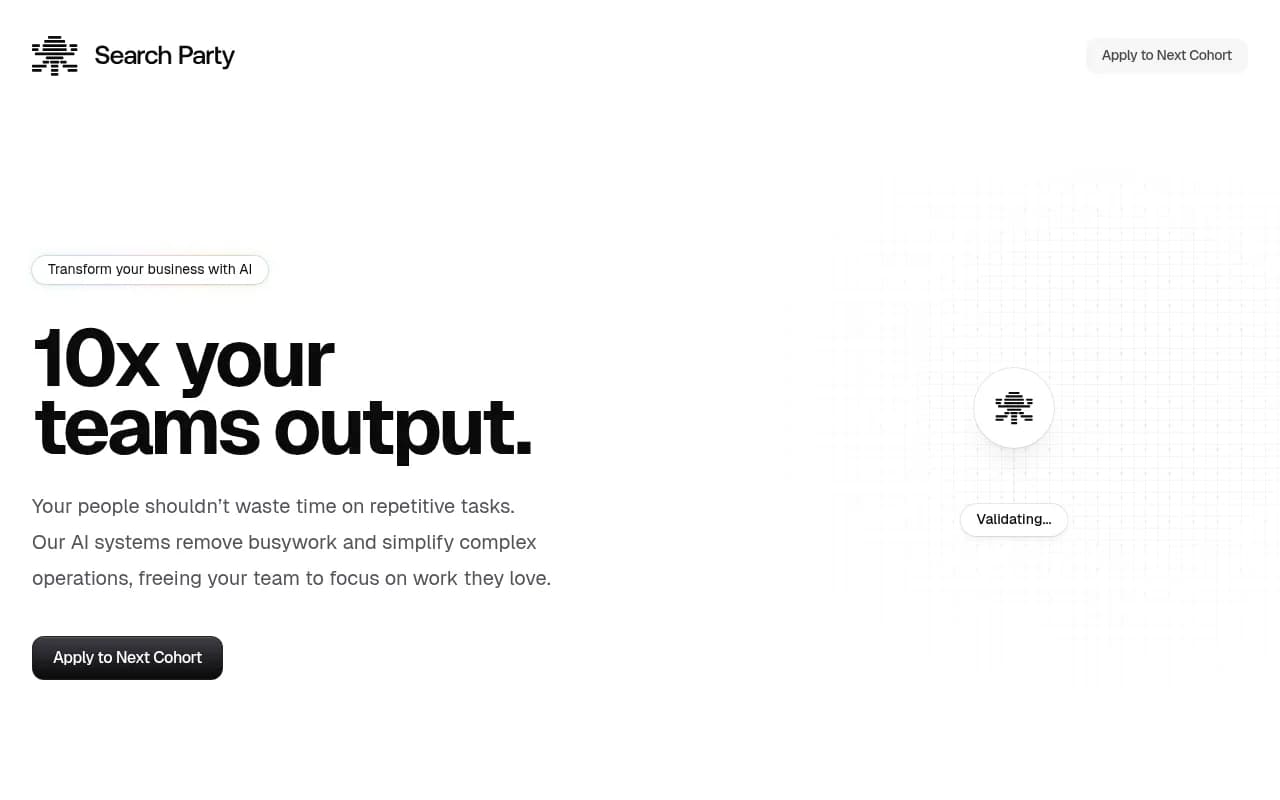
Search Party -- agency-oriented workflows
Search Party is oriented toward agencies managing AI visibility for multiple clients. It has decent workflow features for that use case, though prompt metrics and content gap analysis are more limited. If you're an agency that needs client reporting more than deep optimization, it's worth a look.
Search Party
Monitoring-only tools worth knowing about
There's a tier of lighter tools that are useful for specific situations -- early-stage teams, budget-constrained projects, or supplementing a primary platform.
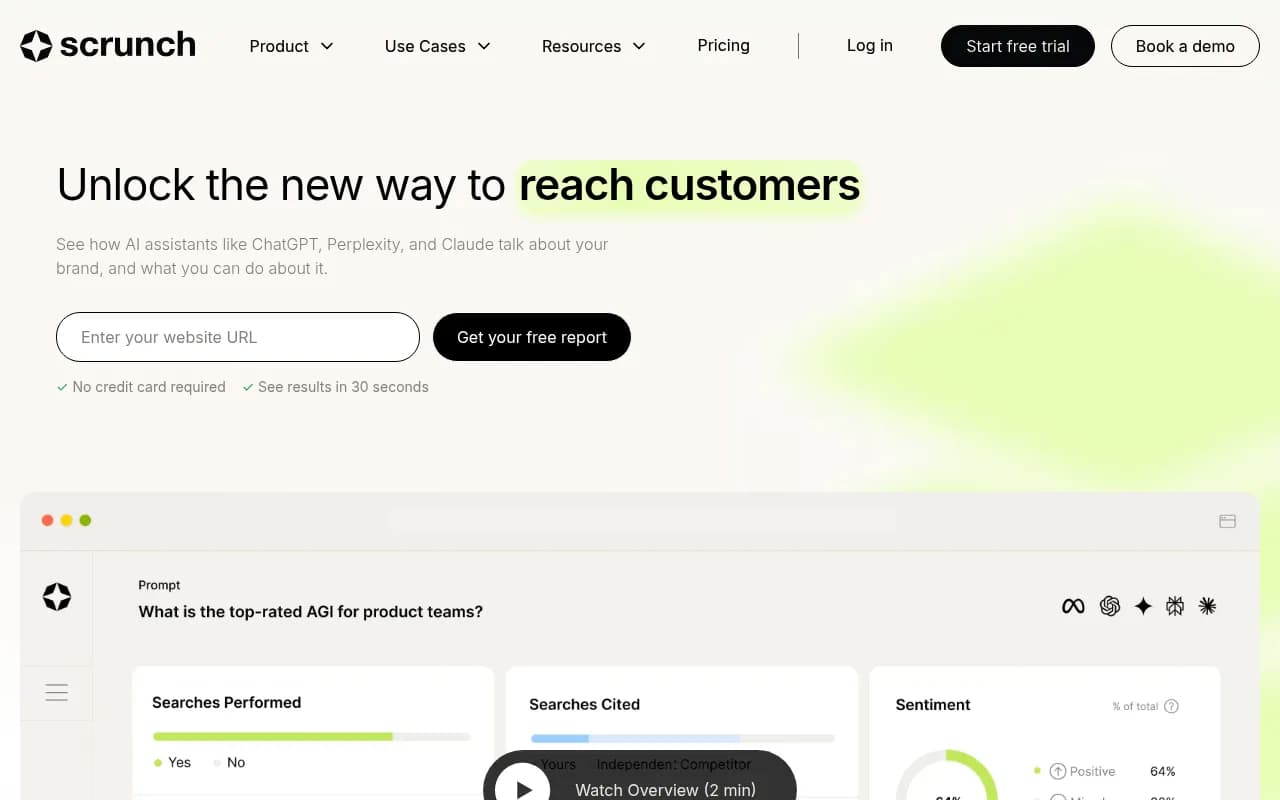
Scrunch AI (the product itself) is still available at scrunch.com for now, though its future as a standalone product is uncertain post-acquisition.
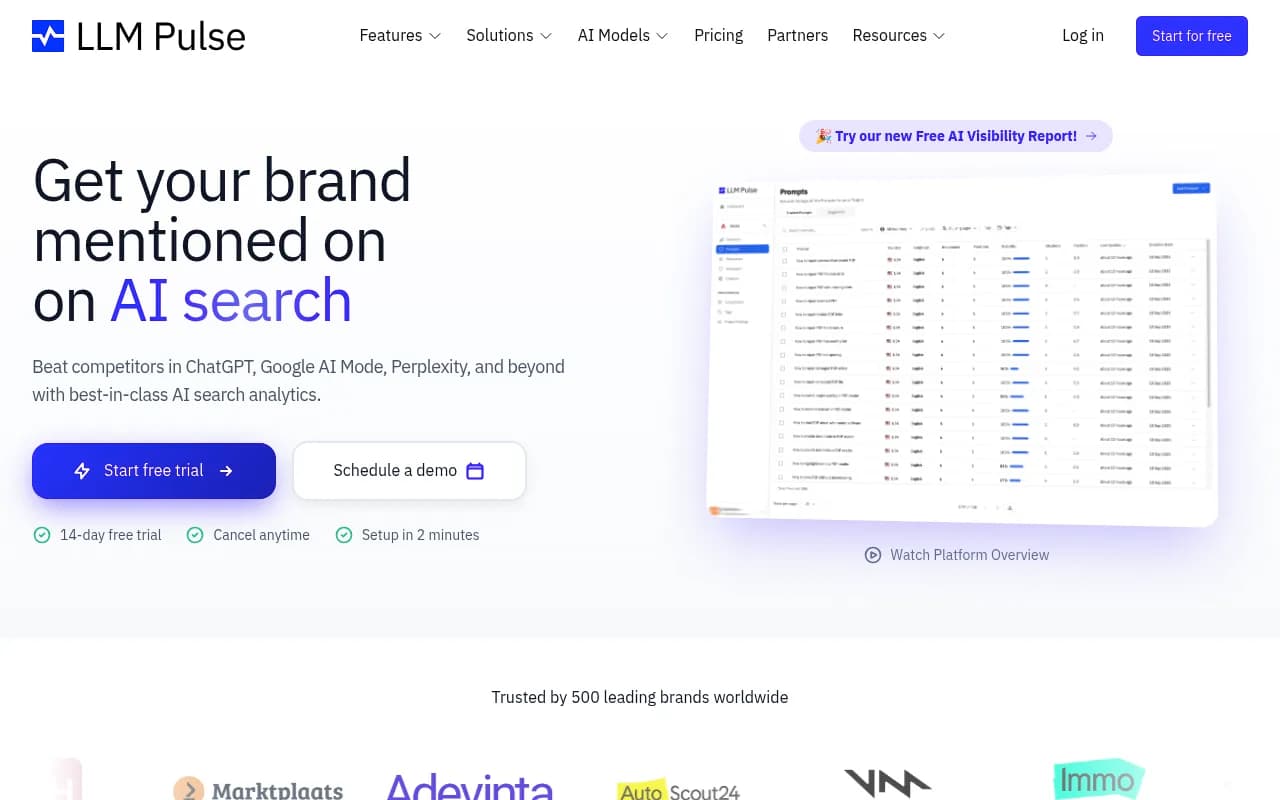
LLM Pulse tracks brand visibility across ChatGPT, Perplexity, and other models with a clean interface.
Rankshift focuses on ChatGPT and Perplexity tracking with a straightforward setup.

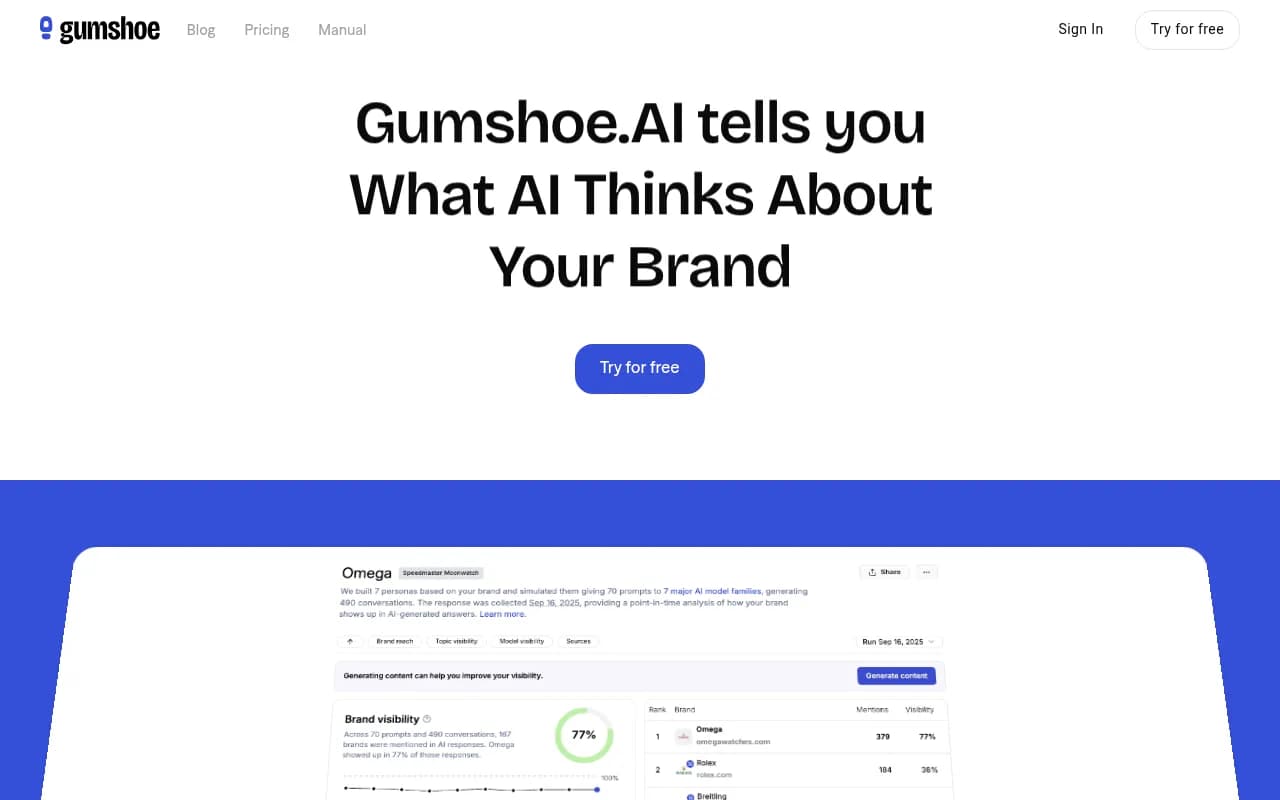
Gumshoe AI covers ChatGPT, Gemini, and Perplexity brand mentions.
Trackerly is a newer entrant with AI brand visibility and prompt tracking.

These tools are fine for basic monitoring. None of them have the content generation or crawler log capabilities that make the difference between knowing you have a problem and actually fixing it.
How to choose the right alternative
The right platform depends on what you were actually using Scrunch for and what your team looks like.
If you need a full GEO optimization platform -- tracking, gap analysis, content generation, and attribution in one place -- Promptwatch is the clearest choice. It's the only platform in this space that closes the loop from "we're invisible for this prompt" to "here's the content that fixes it" to "here's the traffic it generated."
If you're an enterprise team with existing content capabilities and just need the intelligence layer, Profound or Evertune are worth evaluating. They're monitoring-first but built for scale.
If you're just starting out with AI visibility and want something simple to get oriented, Otterly.AI or Peec AI are low-friction entry points. You'll likely outgrow them, but they're fine for initial exploration.
If you're an agency managing multiple brands, look at Search Party or Promptwatch's agency/enterprise tier, which supports multiple sites and custom reporting.
One thing to watch: several tools in this space are monitoring-only by design, and that's a real limitation. Knowing your AI visibility score without a path to improving it is like knowing your SEO rankings without being able to publish content. The tools that help you act on the data are meaningfully more valuable than the ones that just show it to you.
What the Sitecore acquisition tells us about the GEO market
The $225M price tag for a 2.5-year-old startup says something about where the market is heading. Enterprise software buyers are starting to treat AI search visibility as a core requirement, not a nice-to-have. Sitecore saw Scrunch as the missing piece in its DXP stack -- the layer that connects content publishing to AI discovery.
That's the right framing. The brands that figure out how to systematically appear in AI-generated answers are going to have a structural advantage over those that don't. The question is whether you want to be dependent on a tool that's now embedded in a large enterprise platform, or whether you want a dedicated GEO platform that's built specifically for this problem.
For most marketing and SEO teams, a dedicated platform will move faster, stay more focused, and be easier to work with than a feature inside a DXP that also does personalization, content management, and a dozen other things.
The Scrunch acquisition is good news for Sitecore customers. For everyone else, it's a signal to find a replacement before the product roadmap diverges too far from what you actually need.