Key takeaways
- Acquisitions of GEO and AI visibility tools are happening faster than most marketing teams expect, and the disruption to your stack can be severe
- Your first 48 hours after an acquisition announcement matter most -- export your data, document your workflows, and map your dependencies immediately
- A resilient GEO stack is never built around a single platform; redundancy across monitoring, content, and technical layers is non-negotiable
- Evaluating replacement tools requires looking beyond feature lists -- data portability, API access, and the vendor's financial stability are the real criteria
- Platforms that combine monitoring with content optimization (not just tracking) give you the most protection, because they reduce the number of single points of failure
Why acquisitions are a real threat to your GEO stack right now
The AI visibility tool market is young, crowded, and consolidating fast. In 2024 and early 2025, venture capital poured into GEO platforms. Now, in 2026, the inevitable is happening: larger players are buying smaller ones, some startups are running out of runway, and a few tools that teams relied on have quietly shut down or been folded into enterprise suites with different pricing models.
This isn't hypothetical. If you've been tracking the space, you've seen monitoring-only tools get absorbed into broader marketing platforms, sometimes with their core features deprioritized or paywalled behind enterprise tiers. Teams that built their entire AI visibility workflow around one platform woke up one morning to find their data locked, their integrations broken, and their rankings invisible.
The GEO space is also unusual in that the tools themselves are still figuring out what they are. Some started as brand monitoring dashboards. Others grew from traditional SEO rank trackers. A few were built from scratch for AI search. When a traditional SEO company acquires a GEO startup, the product roadmap rarely stays the same.
So the question isn't whether acquisitions will affect your stack. It's whether you're prepared when they do.
The three layers of your GEO stack (and where acquisitions hurt most)
Before you can protect your stack, you need to understand what's actually in it. Most teams have three distinct layers, even if they've never mapped them out explicitly.
Monitoring and tracking
This is where you track how often your brand appears in AI-generated answers across ChatGPT, Perplexity, Google AI Overviews, Gemini, and other models. Tools in this layer tell you your visibility score, which prompts you're winning, and how you compare to competitors.
This layer is the most acquisition-prone. Monitoring tools are relatively easy to build, which means the market is full of them, and many are underfunded. When they get acquired, the first thing to go is often the independent data pipeline -- your historical data gets migrated (or doesn't), and the prompt tracking you've been running for six months becomes unreliable or disappears entirely.
Content optimization and creation
This layer is where you actually do something about your visibility gaps. It includes tools that help you identify which topics AI models want to cite, generate content that fills those gaps, and optimize existing pages to be more citable.
Acquisitions here are less common but more disruptive when they happen. If your content workflow is built around a specific tool's brief format, AI agent, or integration with your CMS, losing that tool mid-campaign is painful.
Technical and infrastructure
This includes crawler logs, JavaScript rendering tools, schema markup validators, and anything that helps AI bots actually read and index your content. This layer tends to be more stable -- the underlying technology is less novel -- but it's often the most overlooked when teams are scrambling after an acquisition.
The 48-hour acquisition response checklist
When you see an acquisition announcement for a tool in your stack, you have a narrow window before things get complicated. Here's what to do immediately.
Export everything, right now
Don't wait to see how the acquisition plays out. Export:
- All historical prompt tracking data (CSV or JSON if available)
- Your prompt lists and keyword sets
- Competitor comparison reports
- Citation source lists
- Any content briefs or generated content stored in the platform
- API keys and integration credentials
Most platforms allow data export, but some lock it down after acquisitions -- especially if the acquiring company wants to migrate you to their own system. Get the data while you still can.
Document your workflows
Write down exactly how you use the tool, step by step. Which prompts do you track? How often? Who reviews the reports? How does the data flow into your content calendar or reporting dashboards? This documentation becomes your migration spec when you need to rebuild.
Map your dependencies
Which other tools does this platform connect to? If it integrates with your CMS, your analytics platform, or your reporting stack via API or Zapier, those connections will likely break during migration. List every dependency so you know what else needs to be rebuilt.
Identify your replacement criteria
Not all tools are interchangeable. Before you start evaluating alternatives, write down what actually matters to you: which AI models you need to track, whether you need content generation, whether you need crawler log access, how many prompts you're tracking, and what your budget ceiling is.
How to evaluate replacement GEO tools without getting burned again
The mistake most teams make when replacing a tool is optimizing for features. They find a tool with a similar dashboard, similar prompt tracking, and similar pricing, and they switch. Then six months later, they're in the same position -- either because the replacement gets acquired too, or because they discover the tool has a critical gap they didn't catch in the demo.
Here's what to actually evaluate.
Data portability and API access
Before you sign anything, ask: "Can I export all my data at any time, in a standard format?" If the answer is vague, that's a red flag. Also ask whether the tool has a public API. API access means you can pull your own data into your own systems, which gives you independence from whatever happens to the vendor.
Financial stability signals
This is uncomfortable to ask about, but it matters. Is the company venture-backed? If so, when was their last round, and how long does that runway likely last? Are they profitable? Do they have enterprise customers with multi-year contracts, which signals stability? You're not doing a full due diligence, but a quick check on Crunchbase or LinkedIn can tell you a lot.
Monitoring vs. optimization
There's a meaningful difference between tools that show you data and tools that help you act on it. Monitoring-only tools are cheaper and easier to build, which is why there are so many of them -- and why they're more likely to be acquired or shut down. Tools that combine tracking with content optimization and gap analysis have more defensible value and tend to attract more serious customers, which means more stable businesses.
Promptwatch is the clearest example of this distinction in the current market. Rather than just showing you where you're invisible, it runs the full loop: Answer Gap Analysis identifies which prompts competitors are winning that you're not, Content Agents generate articles and briefs to fill those gaps, and page-level tracking shows when new content starts getting cited. That end-to-end approach is harder to replicate and harder to deprecate after an acquisition.

Coverage across AI models
In 2026, tracking only ChatGPT is not enough. Your customers are using Perplexity, Google AI Overviews, Google AI Mode, Gemini, Claude, Grok, and others. A tool that covers only two or three models will leave you blind to a significant portion of your AI visibility. Check the model list carefully before committing.
Prompt volume and difficulty data
Basic monitoring tools tell you whether you appear in a response. Better tools tell you how often that prompt is actually asked, how hard it is to win, and how the prompt branches into sub-queries. This data is what lets you prioritize -- without it, you're optimizing blindly.
Building a resilient GEO stack: the redundancy principle
The single most important structural change you can make is to stop relying on one tool for everything. Here's how to think about redundancy across each layer.
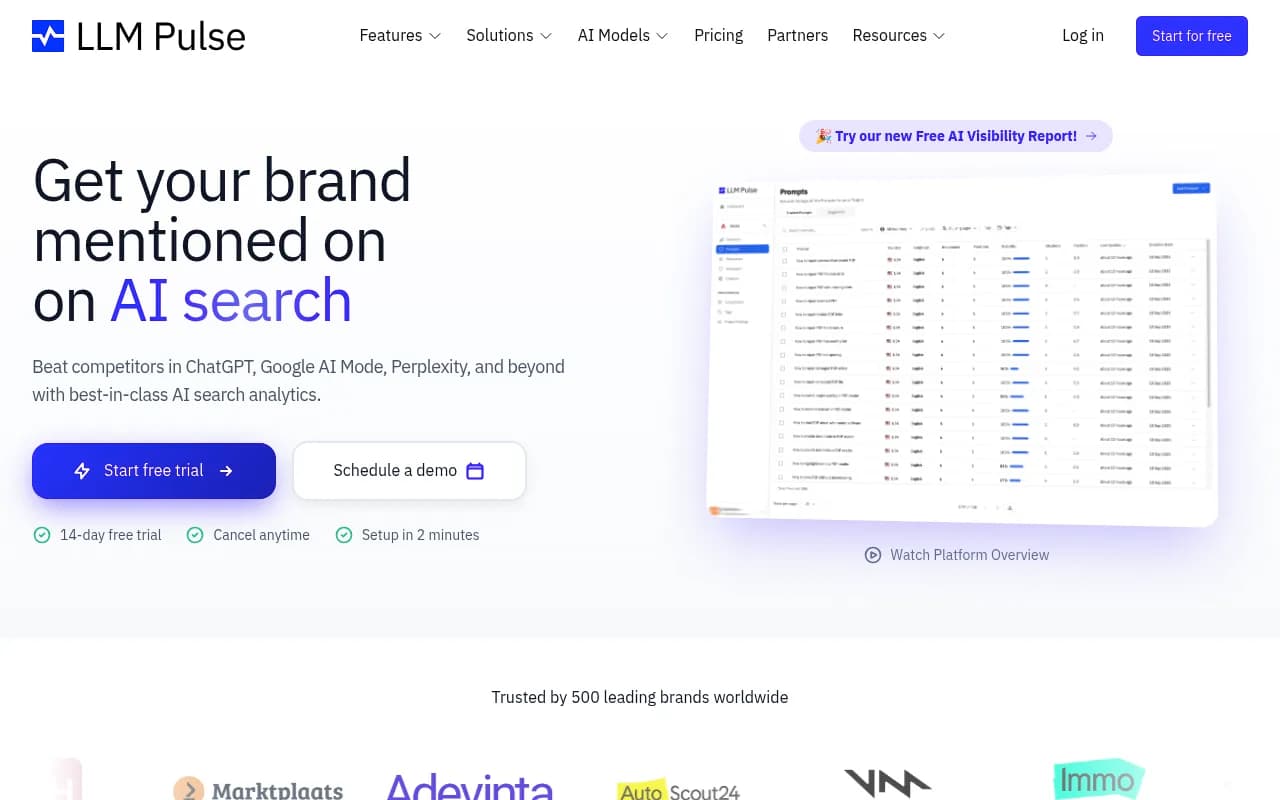
Monitoring redundancy
Run at least two monitoring tools simultaneously, even if one is a lightweight free tier. This gives you a baseline to compare against if one tool's data suddenly changes after an acquisition, and it means you're never completely blind if one tool goes down.
Tools worth considering for your monitoring layer:
Otterly.AI


Profound

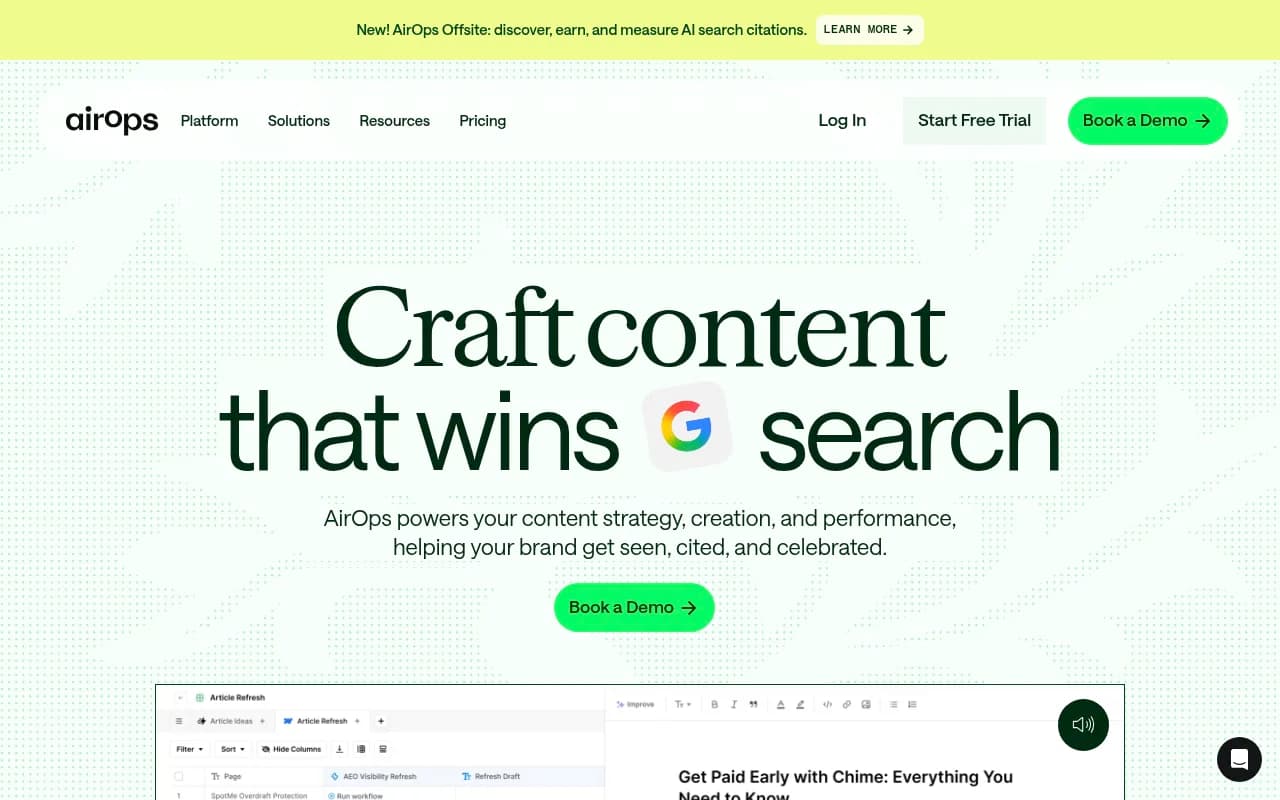
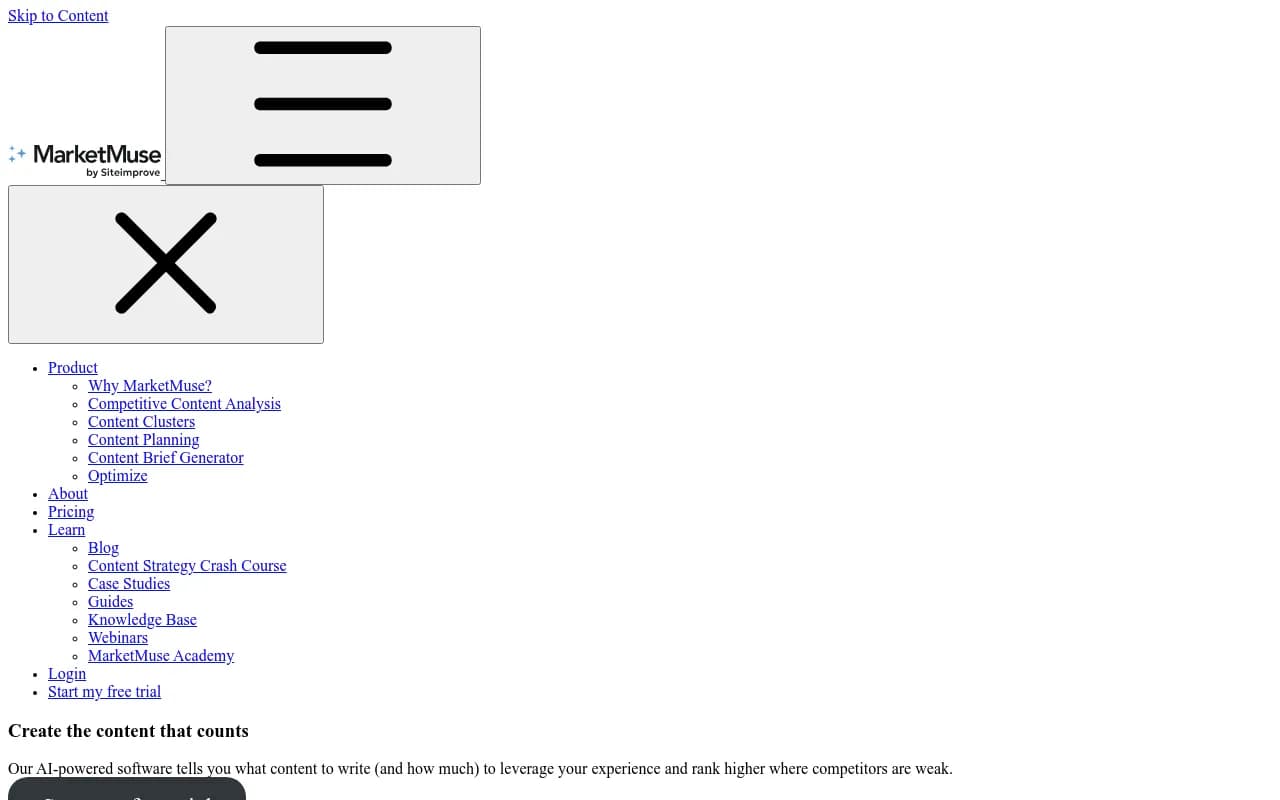
Content optimization redundancy
Your content workflow should not depend on a single tool's AI agent or brief format. Keep your prompt data and content briefs in a format you own (a shared doc, a Notion database, a spreadsheet) so you can port them to a new tool without starting from scratch.
Technical layer stability
For the technical layer, prefer open standards and tools with long track records. Schema markup, structured data, and clean HTML are not going anywhere regardless of what happens in the GEO tool market. Tools built on top of these foundations are more stable than those built on proprietary data formats.
The GEO stack comparison: what to look for in 2026
| Capability | Why it matters after an acquisition |
|---|---|
| Data export (CSV/JSON) | Lets you preserve historical data if the tool shuts down or changes |
| Public API | Lets you pull data into your own systems independently |
| Multi-model coverage (8+ AI engines) | Reduces risk of blind spots if one model's data disappears |
| Content generation | Reduces dependence on separate tools that could also be acquired |
| Crawler log access | Gives you direct insight into how AI bots see your site |
| Prompt volume data | Lets you prioritize without relying on the tool's own recommendations |
| Traffic attribution | Connects visibility to revenue, making the tool harder to cut |
| Offsite citation tracking | Covers Reddit, YouTube, and third-party sources that monitoring tools often miss |
What to do with your data between platforms
If you're mid-migration, you need a way to maintain continuity. Here's a practical approach.
Keep a master prompt list in a spreadsheet that you own. Every week, manually record your visibility scores from whatever tool you're using. This sounds tedious, but it takes about 15 minutes and gives you a historical record that no acquisition can take away.
For content, maintain a content brief template that isn't tied to any specific tool's format. Include: the target prompt, the AI models you're optimizing for, competitor citations you've observed, the content angle, and the target page. This brief can be executed with any writing tool or content agent.
For technical monitoring, set up Google Search Console alerts for crawl errors and use your server logs or a Cloudflare integration to watch for changes in bot traffic. These are platform-agnostic signals that will keep working regardless of what happens to your GEO tool.
The vendor due diligence questions you should be asking right now
If you're evaluating a new GEO platform, or reviewing your existing one, here are the questions that actually matter from an acquisition-risk perspective.
"What happens to my data if you're acquired or shut down?" A good vendor will have a clear answer. A bad one will be vague or redirect to their terms of service.
"Do you have a data export feature, and what format does it export in?" Test this before you commit. Export a sample dataset and make sure it's actually usable.
"How many enterprise customers do you have on annual contracts?" This is a proxy for financial stability. Vendors with large enterprise customers are less likely to disappear overnight.
"What's your API documentation?" If they don't have public API docs, your data is effectively trapped in their system.
"Which AI models do you track, and how do you handle new models as they launch?" The AI search landscape is still changing. A vendor that can't answer this clearly is likely to fall behind.
The longer game: why your content is your most durable asset
Tools come and go. The content you publish doesn't.
Every article, comparison page, FAQ, and case study that gets cited by an AI model is a durable asset that lives on your domain. Even if your entire GEO tool stack disappeared tomorrow, the citations you've already earned would continue driving AI visibility.
This is the strongest argument for investing in content optimization alongside monitoring. Monitoring tells you where you stand. Content is what actually moves the needle -- and it's the one part of your GEO strategy that no acquisition can take away.
The teams that will come out ahead in 2026 and beyond are the ones who treat GEO as a content discipline first and a tracking discipline second. Track your visibility, yes. But spend the majority of your effort creating content that answers the specific questions AI models are already looking for answers to.
Tools like Promptwatch, which combine gap analysis with content generation and then close the loop with citation tracking, are valuable precisely because they make this cycle faster and more systematic. But the underlying logic -- find gaps, create content, measure results -- works with any combination of tools, and it works even when your tools change.
That's the real acquisition playbook: build a process that's bigger than any single platform.
Quick reference: GEO stack health checklist
Before you finish reading, run through this checklist for your current stack:
- Can you export all your historical prompt tracking data right now?
- Do you have your prompt list saved somewhere you own, outside the tool?
- Are you tracking visibility across at least 5 AI models?
- Do you have a content brief template that isn't tied to a specific tool's format?
- Do you know which AI crawler logs you have access to?
- Have you checked the financial stability of your primary GEO platform in the last 90 days?
- Do you have at least one backup monitoring tool running, even on a free tier?
If you answered "no" to more than two of these, your stack is more fragile than it needs to be. The good news is that fixing it doesn't require a complete rebuild -- it requires documentation, redundancy, and a bias toward platforms that help you act, not just observe.