Key takeaways
- Most AI visibility platforms stop at monitoring -- they show you where you're invisible but don't help you fix it. For B2B SaaS teams that need to act on data, that's a real limitation.
- Promptwatch is the only platform in this comparison that covers the full loop: prompt tracking, citation analysis, AI crawler logs, content generation, and traffic attribution in one place.
- Profound and AthenaHQ are strong monitoring tools with enterprise depth, but neither generates content or connects visibility to revenue at the page level.
- Peec AI and Scrunch are better suited for teams that want quick setup and basic reporting -- not teams running serious GEO programs.
- Price is not the best proxy for value here. The right question is whether the tool helps you do something with what it finds.
If you're a B2B SaaS marketer in 2026, you've probably noticed that the way buyers research software has shifted. A growing share of that research now happens inside ChatGPT, Perplexity, Claude, and Gemini -- not Google. When someone asks "what's the best project management tool for remote engineering teams," the answer they get shapes their shortlist before they ever visit a website.
That's the problem AI visibility platforms are trying to solve. But the category has grown fast and unevenly. Some tools are genuinely useful. Others are dashboards dressed up as strategy. This guide compares five of the most-discussed platforms -- Promptwatch, Profound, AthenaHQ, Peec AI, and Scrunch -- specifically through the lens of what B2B SaaS teams actually need.

What B2B SaaS teams actually need from an AI visibility platform
Before getting into the tools, it's worth being specific about what "AI visibility" means in a B2B context, because the requirements are different from ecommerce or local business.
B2B SaaS buyers use AI search differently. They ask longer, more nuanced questions: "which CRM integrates with HubSpot and has strong pipeline forecasting?" or "what do people say about [your brand] vs [competitor]?" These are mid-to-bottom-funnel prompts where being cited -- or not -- has real pipeline implications.
That means a useful AI visibility platform for B2B SaaS needs to:
- Track the specific prompts your buyers are actually using, not just generic brand mentions
- Show which competitors are getting cited for those prompts and why
- Help you understand what content gaps are causing you to miss citations
- Give you a way to fix those gaps, not just observe them
- Connect visibility changes to traffic and, ideally, revenue
Most platforms handle the first two. Very few handle all five.
The platforms compared
Promptwatch

Promptwatch is the most complete platform in this comparison. It tracks brand visibility across 10 AI models (ChatGPT, Perplexity, Claude, Gemini, Google AI Overviews, Google AI Mode, Grok, DeepSeek, Copilot, and Meta/Llama), but what separates it from the others is what happens after the tracking.
The core workflow is built around three steps: find the gaps, create content to fill them, and track whether that content gets cited. The Answer Gap Analysis shows you exactly which prompts your competitors appear for that you don't -- with the specific content your site is missing spelled out. From there, Content Agents generate articles, comparisons, and briefs grounded in real prompt data and citation patterns. Then page-level tracking shows whether those pages are getting crawled and cited by AI models.
For B2B SaaS specifically, a few features stand out. AI Crawler Logs show in real time which pages ChatGPT, Claude, and Perplexity are reading on your site, how often they return, and whether they're hitting errors. This is genuinely useful for diagnosing why a page isn't getting cited despite ranking well in traditional search. Prompt Intelligence gives volume estimates and difficulty scores for each prompt, so you can prioritize the ones worth winning rather than chasing everything. And Reddit and YouTube Insights surface the discussions that are actually influencing AI recommendations -- a channel most B2B teams ignore but that matters more than they realize.
Traffic attribution connects AI visibility to actual website visits and revenue, which is the question every B2B marketing leader eventually asks: "Is this actually driving pipeline?"
Pricing starts at $99/month (Essential: 1 site, 50 prompts, 5 articles), $249/month (Professional: 2 sites, 150 prompts, 15 articles, crawler logs), and $579/month (Business: 5 sites, 350 prompts, 30 articles). A free trial is available.
Profound
Profound

Profound is a well-regarded enterprise platform with strong monitoring depth. It tracks 10+ AI engines and has processed 400M+ prompt insights, which gives it solid data coverage. The platform is particularly strong on competitive monitoring -- you can see share of voice across AI models, track how your brand is characterized in AI responses, and benchmark against specific competitors.
Where Profound falls short for B2B SaaS teams is the action side. It's a monitoring and analytics platform, not an optimization platform. It shows you what's happening but doesn't generate content to fix it, doesn't produce crawler logs showing how AI agents interact with your site, and doesn't connect visibility to revenue attribution at the page level. It also doesn't track Reddit or YouTube, which matters because AI models frequently cite community content when answering B2B software questions.
Profound has shipped autonomous Agents and MCP (Model Context Protocol) support in 2026, which is interesting for enterprise teams building custom workflows. But for most B2B SaaS marketing teams, the core need is simpler: find gaps, create content, see results.
Pricing is at the higher end of the market, typically requiring a custom quote for enterprise plans.
AthenaHQ

AthenaHQ has a clean interface and solid monitoring capabilities. It covers the major AI models, shows citation rates and share of voice, and recently added Shopify revenue attribution -- which is useful for ecommerce but less relevant for B2B SaaS.
The platform is monitoring-focused. Like Profound, it doesn't generate content or provide AI crawler logs. The content gap analysis is more basic than Promptwatch's Answer Gap Analysis -- it shows you where you're missing but doesn't produce the specific content briefs or articles to address those gaps.
AthenaHQ is a reasonable choice for teams that want clean dashboards and don't need the full optimization loop. But for B2B SaaS teams running active GEO programs, the lack of content generation and crawler-level data is a real constraint.
Peec AI

Peec AI is a lighter-weight monitoring tool aimed at marketing teams that want quick setup and basic visibility tracking. It covers the main AI models and provides share of voice metrics and competitor comparisons.
The honest assessment: Peec AI is a good starting point for teams that are new to AI visibility and want to understand the basics without a large investment. It's not built for teams running serious GEO programs. There's no content generation, no crawler logs, no Reddit or YouTube tracking, and no traffic attribution. The prompt tracking is functional but doesn't include volume or difficulty scoring, so you're tracking prompts without knowing which ones are worth prioritizing.
For a B2B SaaS team that's just starting to ask "are we showing up in AI search?" -- Peec AI can answer that question. For teams that want to do something about the answer, they'll outgrow it quickly.
Scrunch AI
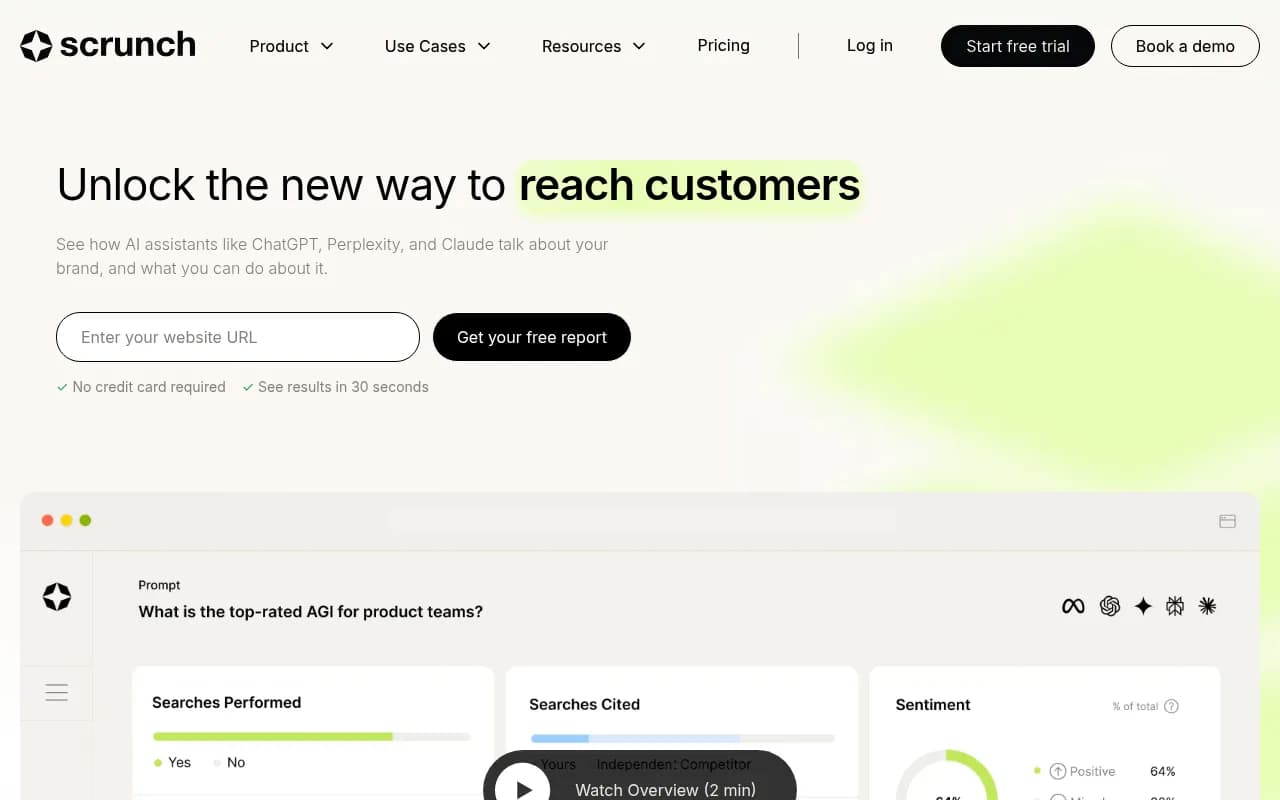
Scrunch takes a different technical approach -- it serves AI-optimized content at the CDN edge, which is an interesting architectural choice. The idea is that AI crawlers get a version of your content that's structured specifically for citation.
In practice, Scrunch is more of a technical optimization layer than a visibility analytics platform. It doesn't have the prompt tracking depth, competitive monitoring, or content generation capabilities of the other tools in this comparison. For B2B SaaS teams that want to understand their AI visibility and improve it systematically, Scrunch solves a narrower problem.
It's worth watching as the category evolves -- CDN-level AI optimization could become more important as AI crawlers become more sophisticated. But right now, it's a niche tool rather than a full-stack solution.
Feature comparison table
| Feature | Promptwatch | Profound | AthenaHQ | Peec AI | Scrunch AI |
|---|---|---|---|---|---|
| AI models tracked | 10 | 10+ | Major LLMs | Major LLMs | Major LLMs |
| Prompt volume & difficulty scoring | Yes | No | No | No | No |
| Answer gap analysis | Yes (detailed) | Basic | Basic | No | No |
| AI content generation | Yes | No | No | No | No |
| AI crawler logs | Yes | No | No | No | Partial (CDN) |
| Page-level citation tracking | Yes | No | No | No | No |
| Traffic & revenue attribution | Yes | No | Partial | No | No |
| Reddit & YouTube insights | Yes | No | No | No | No |
| ChatGPT Shopping tracking | Yes | No | No | No | No |
| Multi-language & multi-region | Yes | Yes | Yes | Limited | No |
| Starting price | $99/mo | Custom | Custom | ~$49/mo | Custom |
| Free trial | Yes | No | No | Yes | No |
How to choose
The right tool depends on where your team is in the AI visibility journey and what you plan to do with the data.
If you're just starting out and want to understand whether your brand appears in AI responses, Peec AI gives you a low-friction entry point. You'll get basic visibility data without a large commitment.
If you're at an enterprise with a dedicated analytics team and primarily need deep monitoring and competitive intelligence, Profound is worth evaluating. It has strong data coverage and enterprise integrations.
If you need to actually move your AI visibility numbers -- not just measure them -- Promptwatch is the clearest choice. The combination of Answer Gap Analysis, Content Agents, and AI Crawler Logs means you can go from "we're invisible for this prompt" to "we published content targeting this gap and here's how AI crawlers are responding" in a single workflow. That's the loop most B2B SaaS teams need.
One thing worth saying directly: the GEO category is full of tools that show you a problem without giving you the means to fix it. For a B2B SaaS marketing team with real pipeline targets, a monitoring-only dashboard is better than nothing but not by much. The tools that connect data to action are the ones worth paying for.
What the broader market looks like
The AI visibility tool space has expanded significantly in 2026. Beyond the five platforms above, there are several others worth knowing about depending on your specific needs.
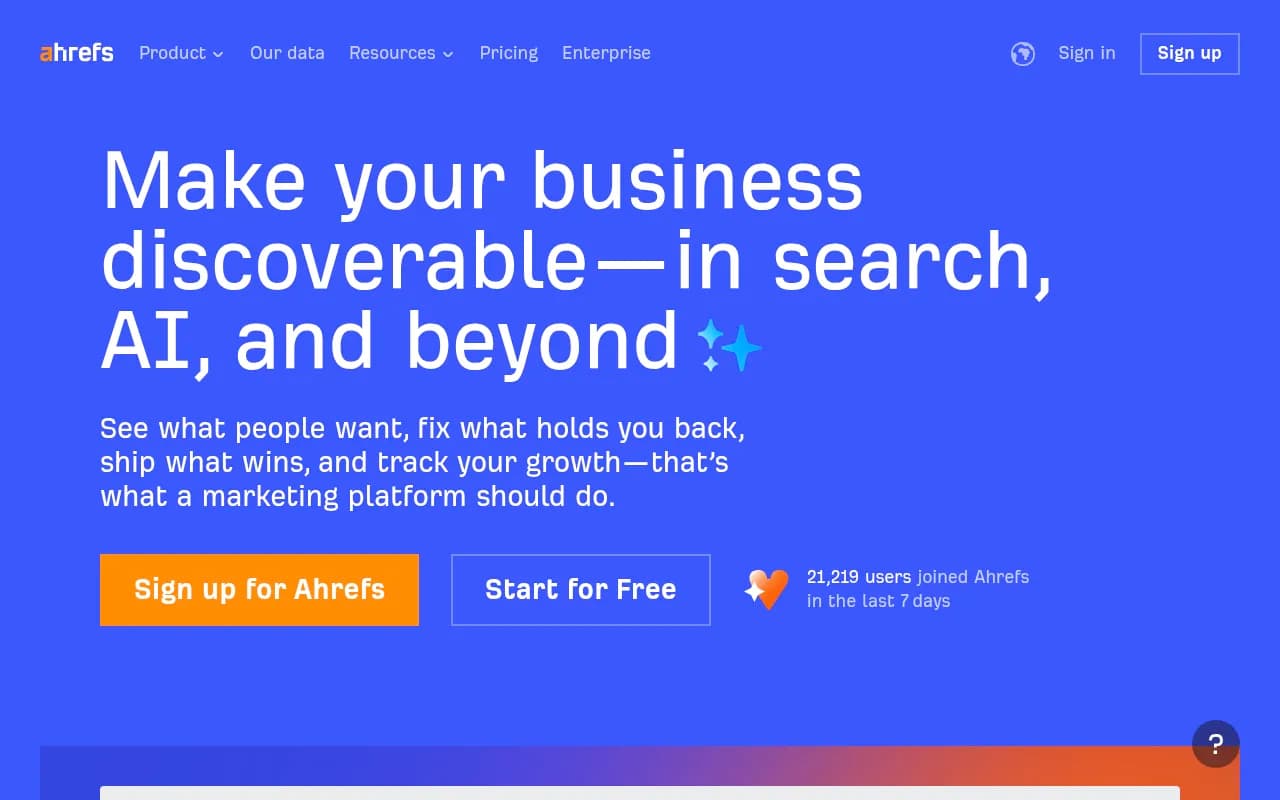
For teams that want to track AI visibility as part of a broader SEO workflow, tools like Semrush and Ahrefs have added AI search tracking features, though their implementations use fixed prompt sets and lack the depth of purpose-built platforms.
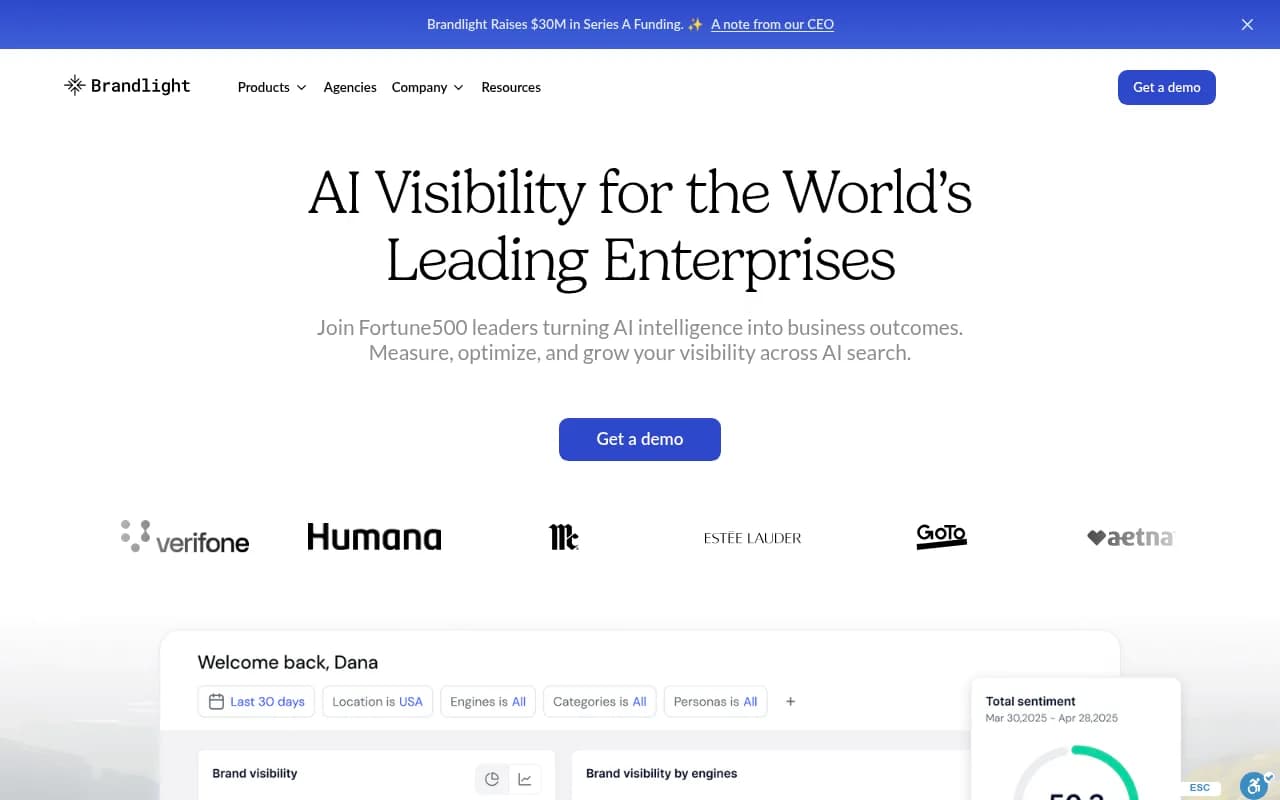
For teams focused specifically on tracking what AI engines say about their brand across a wide range of models, tools like Brandlight.ai and Otterly.AI offer lighter-weight monitoring.
Otterly.AI

For teams that want to understand AI crawler behavior specifically, Promptwatch's crawler logs are currently the most detailed implementation available. Most other platforms don't surface this data at all.
The bottom line
The AI visibility category in 2026 has a clear split: tools that monitor and tools that optimize. For B2B SaaS brands where AI search is increasingly influencing buyer research, monitoring alone doesn't move the needle.
Promptwatch is the only platform in this comparison that covers the full cycle -- from identifying which prompts you're losing to generating the content to win them to tracking whether that content gets cited. Profound and AthenaHQ are solid monitoring platforms for teams with enterprise analytics needs. Peec AI works as an entry point. Scrunch solves a specific technical problem at the CDN layer.
If your goal is to actually improve how your brand appears when a potential customer asks an AI about your category, the platform you choose needs to do more than show you the gap. It needs to help you close it.