Key takeaways
- Most AI visibility tools are monitoring dashboards only — they show you the problem but don't help you fix it.
- The platforms that drive real GEO results connect three steps: finding citation gaps, generating content to fill them, and tracking whether that content gets cited.
- Promptwatch is the only platform rated as a "Leader" across all categories in a 2026 comparison of 12 GEO platforms, specifically because it completes all three steps in one workflow.
- Monitoring-only tools (Otterly.AI, Peec AI, AthenaHQ) are useful for reporting but leave the actual optimization work to you.
- Choosing the right platform depends on whether your team needs a full optimization loop or just visibility data to feed into separate tools.
Why "tracking only" isn't enough anymore
There's a version of this problem that every marketing team hits eventually. You sign up for an AI visibility tool, run your first batch of prompts, and discover that ChatGPT recommends three competitors when someone asks about your category — and doesn't mention you once. The dashboard shows you the gap clearly. Then you close the tab and wonder: now what?
That's the monitoring trap. And in 2026, most GEO tools are still stuck in it.
The shift to AI search is real and accelerating. About 68% of Google searches ended without a click in early 2026, according to SparkToro's analysis of Similarweb clickstream data. ChatGPT reached roughly 900 million weekly active users in February 2026. Google's AI Overviews reach an estimated 2 billion people monthly. When the AI answer is the destination, being cited inside it is the new front page — and a monitoring dashboard that just shows you're not there doesn't get you there.
The platforms worth paying for in 2026 are the ones that complete the loop: find the gap, create content to fill it, track whether the content gets cited. This guide breaks down which tools actually do that versus which ones stop at step one.
The three-step GEO workflow every platform should support
Before comparing tools, it helps to be clear about what a complete GEO workflow actually looks like. There are three distinct steps, and most tools only cover one or two of them.
Step 1: Find the gaps. Which prompts are sending users to competitors? Which questions does your site fail to answer? Which topics do AI models want to cite sources for, but can't find a good source on your domain? This is where monitoring tools live.
Step 2: Create content to fill the gaps. Once you know what's missing, you need to produce content that AI models will actually cite. That means writing articles, comparisons, and listicles grounded in real prompt data — not generic SEO filler. This step requires either a separate content tool or a platform that has content generation built in.
Step 3: Track whether it worked. After publishing, you need to see whether AI crawlers found the new content, whether citation rates improved, and which pages are now being referenced. Without this feedback loop, you're optimizing blind.
The platforms below are evaluated on how well they cover all three steps — not just the first one.
Platform comparison: who covers what
| Platform | Gap analysis | Content generation | Citation tracking | Crawler logs | Prompt volume data | Best for |
|---|---|---|---|---|---|---|
| Promptwatch | Yes | Yes (Content Agents) | Yes (page-level) | Yes | Yes | Full end-to-end GEO loop |
| Profound | Partial | No | Yes | No | Limited | Enterprise monitoring + reporting |
| Frase | Partial | Yes | Limited | No | No | Content teams needing AI writing |
| Otterly.AI | No | No | Yes | No | No | Basic brand monitoring |
| Peec AI | No | No | Yes | No | No | Lightweight tracking |
| AthenaHQ | Partial | No | Yes | No | No | Monitoring-focused teams |
| Semrush AI Toolkit | No | Limited | Yes | No | No | Teams already on Semrush |
| Search Atlas | Partial | Yes | Yes | No | No | SEO teams wanting AI features |
| Writesonic GEO | No | Yes | Partial | No | No | Content-first teams |
| Ahrefs Brand Radar | No | No | Yes | No | No | Traditional SEO teams |
Platforms with a full end-to-end workflow
Promptwatch
Promptwatch is the clearest example of a platform built around the full optimization loop rather than just the monitoring piece. The core workflow runs like this: Answer Gap Analysis shows you exactly which prompts competitors are visible for but you're not — not just a score, but the specific content your site is missing. Content Agents then generate articles, listicles, and comparisons grounded in that real prompt data, citation behavior, and competitor analysis. After publishing, page-level tracking shows which pages AI models are citing, how often, and across which models. Agent Analytics logs show the timeline from crawl to citation.
What separates it from most competitors isn't any single feature — it's that all three steps live in one platform and feed each other. The gap analysis informs the content generation. The content generation informs the tracking. The tracking reveals new gaps.
A few specifics worth knowing: Promptwatch monitors 10 AI models (ChatGPT, Perplexity, Claude, Gemini, Google AI Overviews, Google AI Mode, Grok, DeepSeek, Copilot, Mistral), tracks real user-facing responses rather than just API outputs (which can differ), and includes Reddit and YouTube citation tracking — channels most competitors ignore entirely. It also has ChatGPT Shopping tracking for brands that appear in product recommendations.
Pricing starts at $99/month for one site and 50 prompts, with a Professional tier at $249/month that adds crawler logs, city-level tracking, and 15 content articles per month.

Search Atlas
Search Atlas takes a similar end-to-end approach, combining AI visibility tracking with content generation and technical SEO automation. It's a reasonable option for SEO teams that want AI features without switching entirely away from their existing workflow. The content generation is more template-driven than Promptwatch's prompt-data-grounded approach, and the gap analysis is less granular, but it covers more of the workflow than pure monitoring tools.
Frase
Frase pairs daily AI-engine tracking with research, writing, and optimization tools. It's stronger on the content side than the monitoring side — the tracking is relatively basic compared to dedicated GEO platforms, but the writing workflow is well-developed. Teams that already use Frase for SEO content and want to add AI visibility tracking without switching tools will find it a natural fit.
Strong monitoring platforms (step one only)
These tools do the first step well. They show you where you're invisible, which competitors are winning, and how citation rates change over time. What they don't do is help you fix it.
Profound
Profound is the strongest dedicated monitoring platform for enterprise teams. It covers all 10 major AI answer engines, has solid reporting features, and is built for teams that need to present AI visibility data to leadership. The gap is that it stops at the data — there's no content generation, no content briefs, and no crawler logs to tell you whether AI bots are actually reading your pages.
Profound

Otterly.AI
Otterly.AI tracks brand mentions across ChatGPT, Perplexity, and Google AI Overviews. It's a clean, lightweight tool that's easy to get started with. The monitoring is solid for the price, but there's no path from "you're not being cited" to "here's what to do about it." Good for teams that just need visibility data and have separate content workflows.
Otterly.AI

Peec AI
Peec AI is in a similar category — monitoring-focused, relatively affordable, and useful for tracking citation trends over time. It lacks crawler logs, content generation, and prompt volume data. Fine as a starting point, but you'll hit its ceiling quickly if you're trying to actively improve your AI visibility rather than just measure it.

AthenaHQ
AthenaHQ has a cleaner interface than some competitors and covers the monitoring basics well. It's monitoring-focused by design, which makes it a reasonable choice for teams that want a dedicated tracking tool and handle content optimization separately. No content generation, no crawler logs.

Scrunch AI
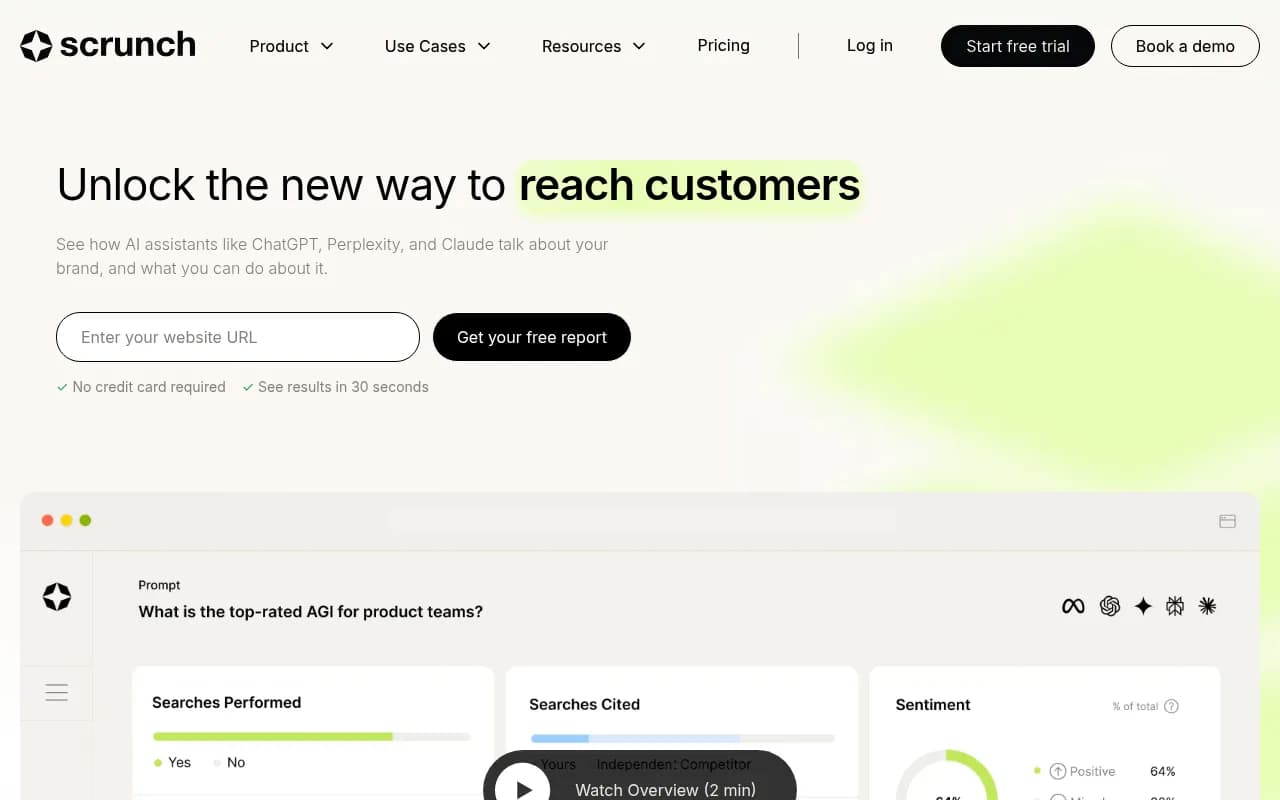
Scrunch AI covers AI search visibility tracking with decent model coverage. It sits in the monitoring tier — useful data, but no built-in path to optimization. Worth considering for teams that want a standalone tracker with a clean reporting interface.
Traditional SEO tools with AI features added
Semrush
Semrush added AI visibility features to its existing platform, which makes it attractive for teams already standardized on Semrush. The AI tracking uses fixed prompts rather than custom prompt sets, which limits how precisely you can track your specific category. There's no AI traffic attribution, and the content generation is generic rather than grounded in citation data. Still, if your team lives in Semrush and you want a basic read on AI visibility without adding another tool, it's a reasonable starting point.
Ahrefs
Ahrefs Brand Radar added AI citation tracking to the existing Ahrefs suite. Like Semrush, it uses fixed prompts and lacks AI traffic attribution. Good for teams already on Ahrefs who want a rough sense of AI visibility, but not a replacement for a dedicated GEO platform.
SE Ranking
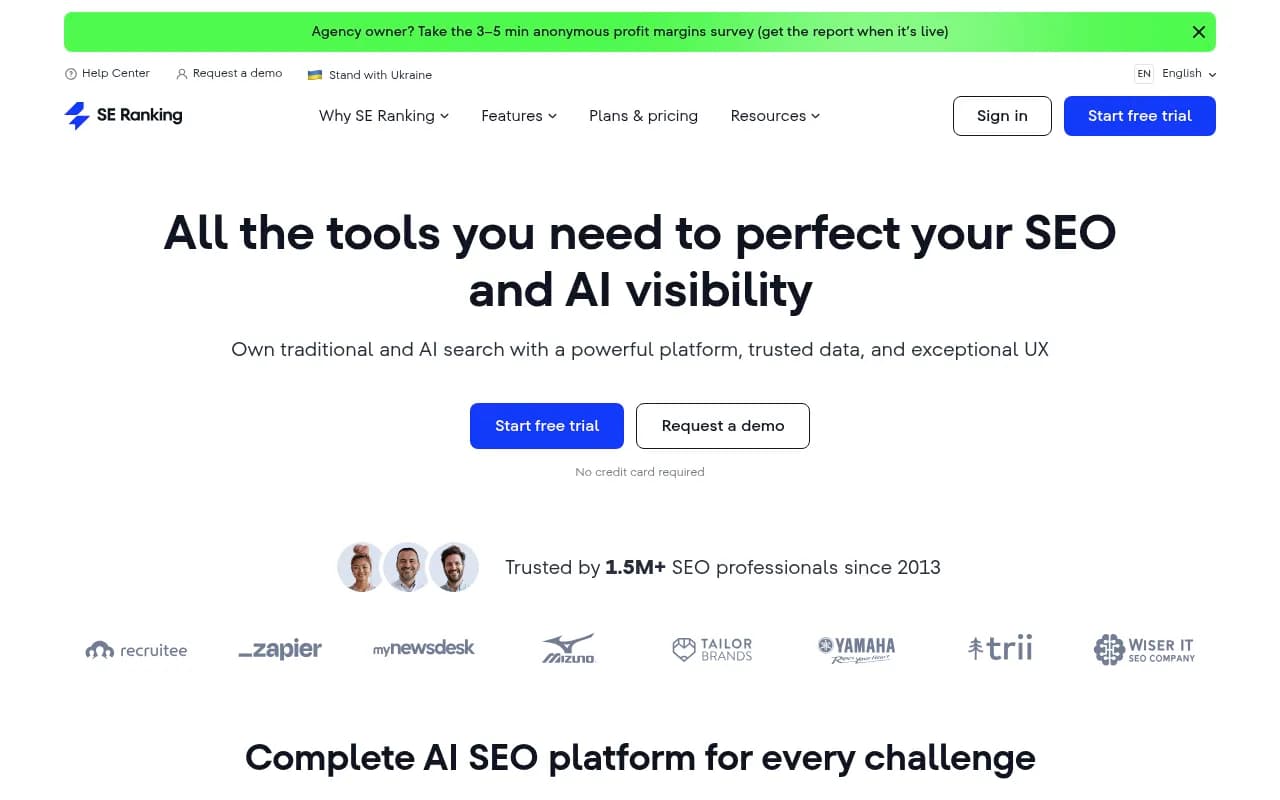
SE Ranking added AI visibility monitoring through its SE Visible product. It covers the basics and integrates with SE Ranking's existing rank tracking and content tools, which is useful for teams that want everything in one place. The AI monitoring depth is lighter than dedicated GEO platforms.
Content-generation tools with some GEO features
Writesonic
Writesonic added GEO tracking features to its existing AI writing platform. The content generation side is strong — it's one of the better AI writers for marketing content. The tracking side is more limited: it monitors AI visibility but doesn't have the gap analysis depth or crawler logs of a dedicated GEO platform. Worth considering for content-heavy teams that want to add AI visibility tracking without a separate tool.

Surfer SEO
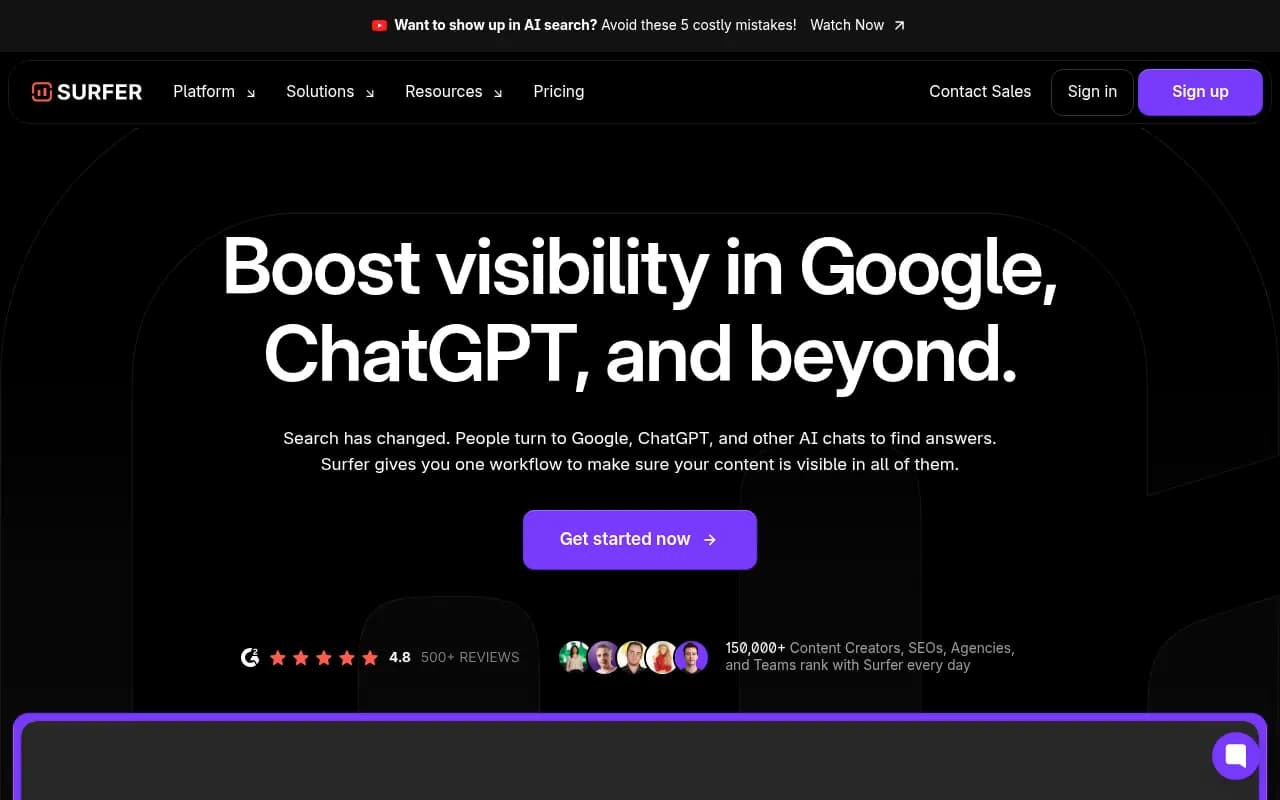
Surfer SEO is primarily a content optimization tool for traditional search, but it has added some AI visibility features. The content optimization workflow is well-developed and useful for writing pages that perform in both Google and AI search. It's not a GEO platform in the full sense — the monitoring is limited — but it's a solid complement to a dedicated tracking tool.
How to choose the right platform for your team
The honest answer is that the right tool depends on what your team will actually do with the data.
If you have a content team that can act on gap analysis and publish new articles, you need a platform that covers all three steps. Paying for monitoring-only when you have the capacity to optimize is leaving money on the table. Promptwatch is the clearest choice here — the gap analysis feeds directly into content generation, and the tracking closes the loop.
If you're in a reporting role and your job is to show leadership where the brand stands in AI search, a monitoring-focused tool like Profound or Otterly.AI might be sufficient. You're producing dashboards, not publishing content.
If your team is already deep in Semrush or Ahrefs and you just need a basic read on AI visibility, the built-in features of those platforms are a reasonable starting point — with the understanding that you'll hit their limits quickly if you want to actively improve rather than just measure.
If you're an agency managing multiple brands, you need multi-site support, white-label reporting, and ideally content generation at scale. Promptwatch's agency and enterprise tiers are built for this. Search Atlas is another option worth evaluating.
The manual testing problem
One thing worth addressing directly: a lot of teams are still trying to track AI visibility manually. They run prompts in ChatGPT, check whether the brand appears, and call it done.
The problem is that AI responses shift with small changes in phrasing, differ across models, vary by geography, and change over time. A citation that appears today might disappear tomorrow. Manual testing can't tell you whether a result is repeatable or accidental, and it definitely can't tell you whether your content improvements are working.
This is why automated tracking matters — not because manual checks are useless, but because they can't give you the trend data, the competitor benchmarks, or the before/after comparison you need to prove that your GEO work is actually moving the needle.
What to look for beyond the feature list
A few things that don't always show up in feature comparisons but matter in practice:
Real user-facing responses vs. API outputs. Some platforms query AI models through APIs, which can return different results than what users actually see. Platforms that track real user-facing responses give you more accurate data.
Prompt volume and difficulty data. Knowing that you're invisible for a prompt is useful. Knowing that the prompt gets high search volume and that competitors are already well-established there — versus a low-competition prompt you could win quickly — is what lets you prioritize.
Crawler logs. If you publish new content and AI crawlers never visit the page, you'll never get cited. Crawler logs tell you whether AI bots are reading your content and flag technical issues that might be blocking them. Most monitoring-only tools don't have this.
Reddit and YouTube tracking. AI models frequently cite Reddit threads and YouTube videos in their responses. If you're not tracking which external sources are driving AI citations, you're missing a significant part of the picture.
Traffic attribution. Ultimately, AI visibility should connect to revenue. Platforms that can show you which AI citations are driving actual traffic — and which traffic converts — let you make the case for GEO investment in business terms.
The bottom line
The GEO tool market in 2026 has a clear split: monitoring dashboards that show you the problem, and optimization platforms that help you fix it. Most tools are in the first category. The ones in the second category are worth the premium, because data without action is just a more expensive way to feel bad about your AI visibility.
If your team has the capacity to publish content and wants to build a systematic GEO program, the platform you choose should cover all three steps of the loop. Anything less means you're paying for a problem statement without a solution.