Key takeaways
- Otterly.AI is a solid entry-level monitoring tool, but its pricing jumps steeply ($29 → $189 → $989/mo) and it offers no actionable guidance on how to improve your AI visibility
- Most alternatives fall into the same trap: they show you data but leave you to figure out what to do with it
- A small number of platforms — including Promptwatch, AthenaHQ, and Profound — go meaningfully further with content optimization, gap analysis, or crawler-level insights
- The best choice depends on your team size, budget, and whether you need monitoring only or a full optimization loop
- If your goal is to actually rank in AI search (not just track it), prioritize platforms with content gap analysis and content generation built in
Otterly.AI helped a lot of teams wake up to the reality of AI search visibility. You could suddenly see whether ChatGPT mentioned your brand, which competitors were getting cited by Perplexity, and how your Google AI Overviews presence compared. That was genuinely useful in 2024.
But it's 2026, and the bar has moved.
The frustration most teams hit with Otterly is captured well by one Reddit user: "It tracks the source, but gives zero actionable strategy on how to restructure content to get cited." You can see you're appearing in 3 out of 10 ChatGPT responses for a target query. You still don't know why you're missing from the other 7, or what to publish to change that.
There's also the pricing problem. Otterly starts at $29/month for 10 prompts — barely enough to test the product. Getting to 100 prompts costs $189/month. That's a 550% jump for a tool that still won't tell you what to do differently.
This guide covers 10 alternatives worth considering in 2026, with honest assessments of what each one actually does well (and where it falls short).
What to look for in an Otterly.AI alternative
Before jumping into the list, it helps to be clear about what you're actually evaluating. Most GEO tools do some version of the same thing: run your target prompts through AI models, record whether your brand appears, and show you a dashboard. The differences that matter are:
Actionability. Does the tool tell you why you're missing from certain responses, and what to change? Or does it just show you a number?
Content optimization. Can it help you create or improve content that AI models are more likely to cite? This is the gap most tools ignore entirely.
Crawler visibility. Does it show you which AI crawlers are actually hitting your site, which pages they're reading, and whether those pages are being cited? This is rare and genuinely useful for diagnosing indexing problems.
Prompt depth. How many prompts can you track at a reasonable price? And does the tool give you volume estimates and difficulty scores so you can prioritize?
Model coverage. ChatGPT and Perplexity are table stakes. Claude, Gemini, Grok, DeepSeek, and Google AI Mode matter too — especially if your audience uses multiple AI tools.
With that in mind, here's the comparison.
Comparison table
| Platform | Monitoring | Content optimization | Crawler logs | Prompt volume data | Starting price |
|---|---|---|---|---|---|
| Promptwatch | Yes (10 models) | Yes (AI content agents) | Yes | Yes | $99/mo |
| Profound | Yes (9+ models) | Limited | No | No | ~$200/mo |
| AthenaHQ | Yes | Limited | No | No | Custom |
| Peec AI | Yes | No | No | No | ~$49/mo |
| SE Ranking (AI Visibility) | Yes | Via content tools | No | No | ~$65/mo |
| Semrush (AI Toolkit) | Yes | Via writing tools | No | No | ~$140/mo |
| Ahrefs (Brand Radar) | Yes | No | No | No | ~$129/mo |
| Scrunch AI | Yes | Limited | No | No | Custom |
| ZipTie | Yes | No | No | No | Free–$49/mo |
| Peec AI | Yes | No | No | No | ~$49/mo |
The 10 best Otterly.AI alternatives in 2026
1. Promptwatch — best for teams that want to actually improve their AI visibility
Promptwatch is the most complete option on this list, and the most honest comparison to Otterly's limitations. Where Otterly shows you data, Promptwatch closes the loop: find the gaps, create content to fill them, track the results.

The Answer Gap Analysis is the feature that makes the biggest practical difference. It shows you exactly which prompts competitors are visible for that you're not — not just as a list, but with context about what content those competitors have that you lack. From there, Content Agents generate articles, listicles, and briefs grounded in real prompt data, citation patterns, and competitor analysis. This isn't generic AI writing; it's content engineered around the specific gaps AI models are exposing in your site.
On the monitoring side, Promptwatch tracks 10 models (ChatGPT, Perplexity, Claude, Gemini, Grok, DeepSeek, Google AI Overviews, Google AI Mode, Copilot, Mistral) and includes something almost no competitor offers: real AI crawler logs. You can see which pages GPTBot, ClaudeBot, and PerplexityBot are actually reading, how often they return, and whether those visits are converting to citations. That's a completely different level of diagnostic insight.
Pricing starts at $99/month for 1 site and 50 prompts, with a Professional tier at $249/month that adds crawler logs, 150 prompts, and 15 AI-generated articles per month.
The main tradeoff: it's more complex than Otterly. If you just want a quick dashboard to check brand mentions, Promptwatch has more depth than you need. But if you're serious about GEO as a growth channel, that depth is the point.
2. Profound — best for enterprise teams with large prompt sets
Profound is one of the more established names in AI visibility tracking and covers 9+ AI models with solid data quality. It's built for larger organizations that need to track hundreds of prompts across multiple markets.
Profound

Where Profound does well: prompt volume at scale, multi-region support, and reasonably clean reporting. Where it falls short: there's no content optimization layer, no crawler logs, and no Reddit or YouTube tracking. You get good monitoring data and then you're on your own to figure out what to do with it.
Pricing is higher than most alternatives and not publicly listed, which makes it hard to evaluate without a sales call. Worth considering if you're at the enterprise end and need raw data depth, but not if you want the tool to help you act on what it finds.
3. AthenaHQ — best for teams focused on competitive benchmarking
AthenaHQ has built a clean product around competitive AI visibility analysis. The interface makes it easy to compare your brand against competitors across multiple models, and the reporting is polished enough for executive presentations.

The honest limitation: AthenaHQ is monitoring-focused. There's some guidance on content optimization, but it's not a platform that generates content or walks you through specific fixes. It's more useful as a benchmarking and reporting tool than as an optimization engine.
Pricing is custom, which typically means it's positioned at mid-market and above.
4. Peec AI — best for cross-engine reporting on a budget
Peec AI covers the major AI models and produces reasonably clean cross-engine reports. It's one of the more affordable options in the category and has a straightforward interface that doesn't require much onboarding.

The tradeoff is depth. Peec AI is a monitoring tool, full stop. There's no content optimization, no crawler visibility, no prompt volume data. It's a good fit for teams that need basic visibility tracking without a large budget, but it won't help you improve your rankings.
5. SE Ranking (AI Visibility Toolkit) — best for teams already using an SEO suite
SE Ranking added AI visibility tracking to its existing SEO platform, which makes it a convenient option if your team is already using it for rank tracking, site audits, or content tools.
The AI visibility module covers the main models and integrates with SE Ranking's content editor, so there's at least a path from "you're not appearing here" to "here's how to improve this page." It's not as deep as a dedicated GEO platform, but the integration with traditional SEO data is genuinely useful for teams that don't want to manage separate tools.
The limitation: SE Ranking's AI tracking is an add-on to an SEO suite, not a purpose-built GEO platform. If AI visibility is your primary concern, you'll hit the ceiling faster than with a dedicated tool.
6. Semrush (AI Toolkit) — best for large teams with existing Semrush subscriptions
Semrush added AI search tracking through its AI Toolkit, and for teams already paying for Semrush, it's worth exploring before adding another subscription.
The honest assessment: Semrush's AI tracking uses fixed prompts rather than custom ones, which limits how precisely you can track your specific competitive landscape. There's no AI traffic attribution connecting visibility to actual revenue. The content tools are solid but not built around AI citation optimization specifically.
Still, for a team that lives in Semrush and wants a basic read on AI visibility without another vendor, it's a reasonable starting point.
7. Ahrefs (Brand Radar) — best for SEO-first teams dipping into AI monitoring
Ahrefs launched Brand Radar as its entry into AI visibility tracking. Like Semrush, it benefits from being part of a broader SEO platform that many teams already use.
The limitations are similar: fixed prompts, no AI traffic attribution, and no content optimization layer built around AI citation patterns. Brand Radar is more of a "check in occasionally" feature than a core GEO workflow tool.
If you're an Ahrefs power user, it's worth turning on. If AI visibility is a serious priority, you'll want something more purpose-built.
8. Scrunch AI — best for mid-market teams wanting structured reporting
Scrunch AI has built a clean product with decent model coverage and reporting that works well for agency-style deliverables. The interface is polished and the data is presented in a way that's easy to share with clients or stakeholders.
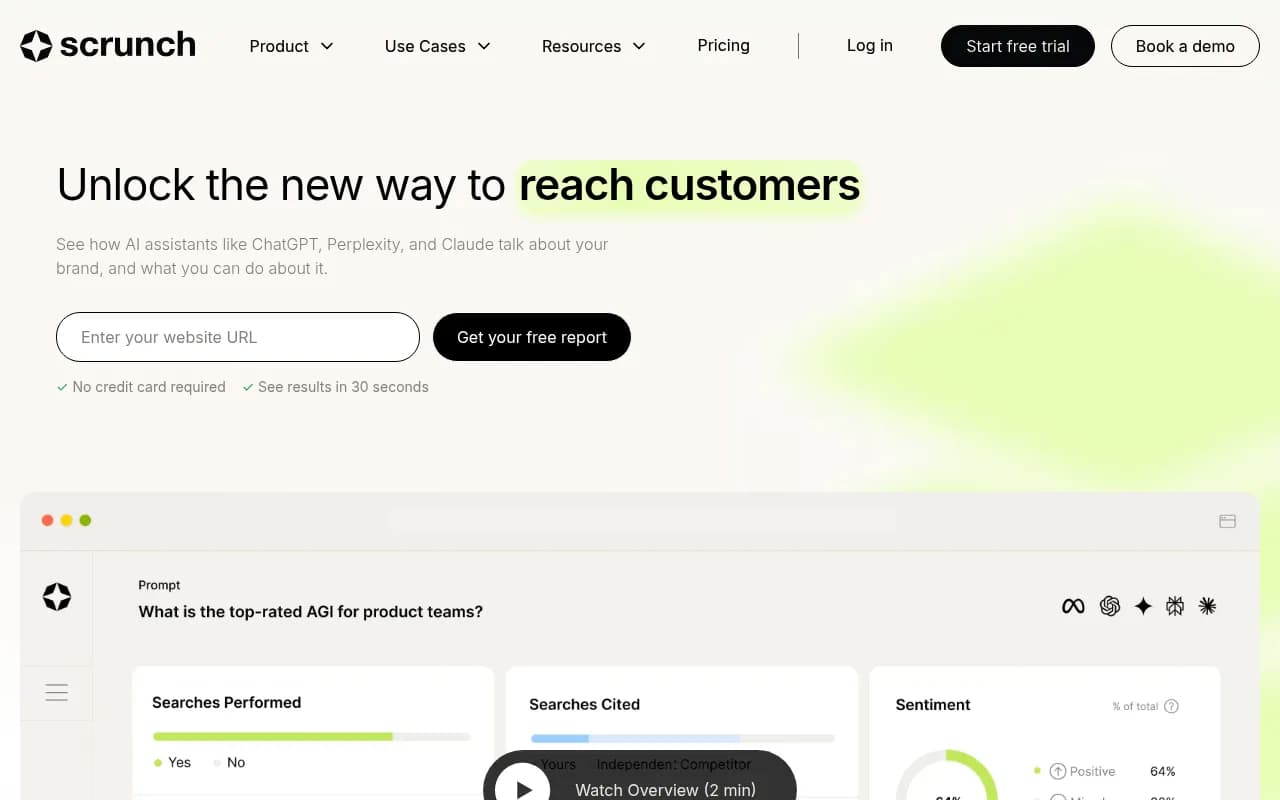
Like most tools in this category, Scrunch is primarily a monitoring platform. There's limited content optimization guidance and no crawler-level visibility. It's a solid choice for teams that prioritize clean reporting over deep optimization capabilities.
9. ZipTie — best free option for small teams or solo operators
ZipTie offers AI visibility tracking with a free tier that's actually usable, making it the most accessible entry point in the category. It covers ChatGPT and Perplexity monitoring and produces clean, shareable reports.
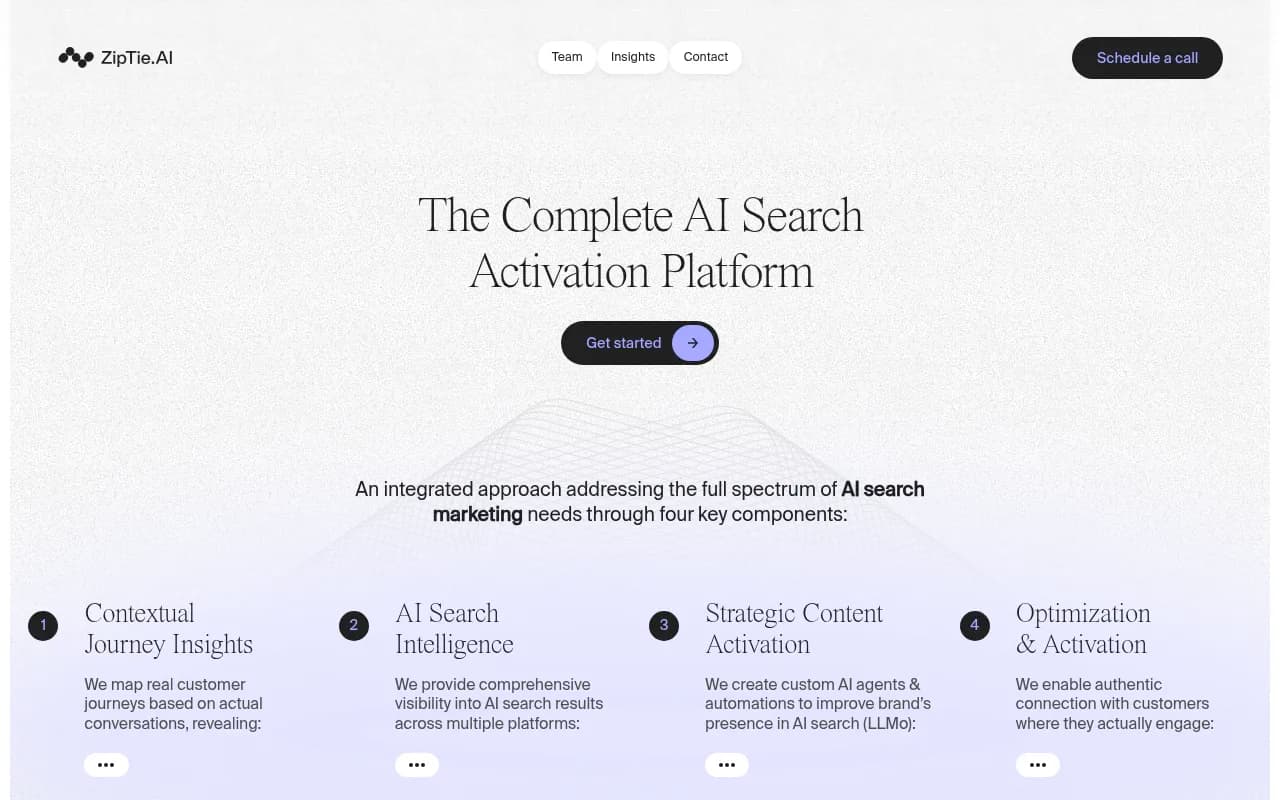
The ceiling is low: ZipTie is a monitoring tool with limited prompt depth and no content optimization. But for a solo operator or small team that wants to understand their AI visibility baseline without spending anything, it's a reasonable starting point.
10. AIclicks — best for teams wanting monitoring with some content guidance
AIclicks combines AI visibility tracking with some content recommendations, positioning itself as a step above pure monitoring tools.
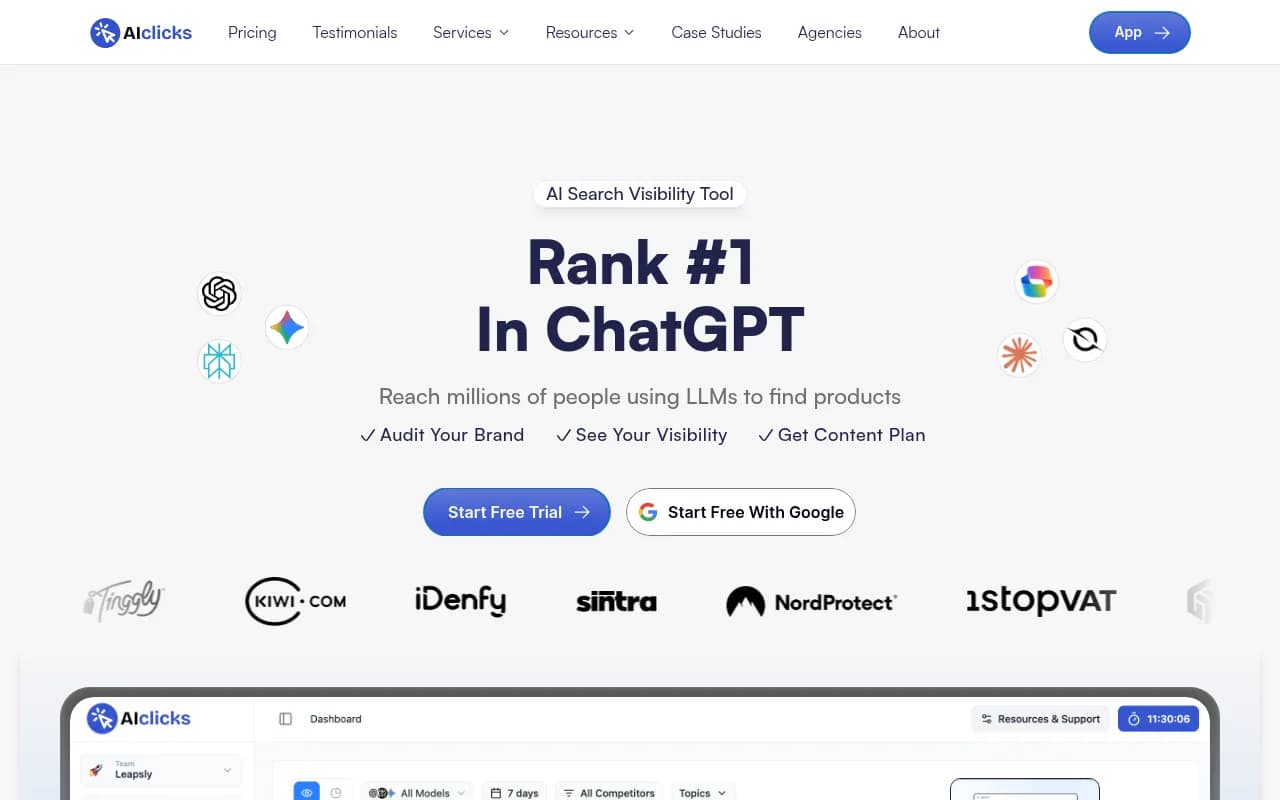
The content guidance is present but not as deep as a platform like Promptwatch. It's a reasonable middle-ground option for teams that want more than a dashboard but aren't ready to invest in a full optimization platform.
The real question: monitoring or optimization?
Most tools on this list are monitoring platforms. They'll show you where you appear, how often, and how you compare to competitors. That's genuinely useful information.
But there's a meaningful difference between knowing you're missing from 7 out of 10 ChatGPT responses and knowing what to publish to change that. The first is a dashboard. The second is a workflow.
As one Reddit commenter put it about the broader category: "Unless a tool gives clear recommendations or ties to revenue, it's hard to justify $100–$400/month just to know if ChatGPT mentioned your brand today."
That's the right frame. If you're evaluating Otterly alternatives, start by asking what you actually need the tool to do. If the answer is "help me understand my current visibility," most options on this list will serve you. If the answer is "help me improve my visibility," the list gets much shorter.
How to choose
A few practical filters:
You want monitoring only, on a budget: Peec AI or ZipTie. Both are affordable, cover the main models, and don't require a large commitment.
You're already in an SEO suite: SE Ranking's AI Visibility Toolkit or Semrush's AI Toolkit. Not the deepest GEO tools, but the integration with existing SEO data has real value.
You need enterprise-scale prompt tracking: Profound or AthenaHQ. Both handle large prompt sets and produce reporting that works for larger organizations.
You want to actually improve your AI visibility, not just track it: Promptwatch. The combination of Answer Gap Analysis, AI Content Agents, and crawler logs is the most complete optimization workflow available in 2026. It's also the only platform in this comparison rated as a "Leader" across all GEO platform categories in independent analysis.
The GEO category is maturing fast. A year ago, knowing whether ChatGPT mentioned your brand was novel. Now, the teams pulling ahead are the ones who've moved from tracking to optimizing — publishing content that AI models actually want to cite, fixing the technical issues that prevent crawling, and connecting visibility to revenue. The tool you choose should support that workflow, not just report on it.