Key takeaways
- Ask who will actually do the work, how many clients each person handles, and what is outsourced. Get the answers in writing.
- Treat GEO (generative engine optimization) as an extension of solid SEO, not a magic separate service. Any agency that promises AI citations is selling something it cannot deliver.
- Insist on ownership of your domain, Google Business Profile, analytics, content and reports, plus a clear exit process.
- Local SEO has its own checklist: Google Business Profile work, NAP consistency, reviews, local links and location pages.
- Compare proposals on written scope, not monthly price. Implementation, content and tools are where hidden costs live.
Why the vetting process matters more than it used to
Most businesses find out they hired the wrong agency months in. Rankings are flat, the monthly report is a wall of charts, and nobody can connect any of it to phone calls or booked appointments. Switching mid-stream burns time and momentum, so the evaluation before you sign is where the money is actually saved.
In 2026 there is an extra wrinkle. Every agency now claims to do "AI search," and the claims range from careful testing protocols to a single markup tweak sold as a strategy. Local businesses also face two discovery surfaces at once: the Google map pack and a growing set of AI answers that name specific businesses.
This guide walks through what to settle before signing: scope, people, local specifics, GEO claims, measurement, pricing, ownership and exit terms.
Decide what you need before you take a single call
Agencies sell whatever they are best at. If you walk in without a view of your own needs, you will buy their package. The US Chamber of Commerce's small business guide lists the common service buckets: strategy, audits, technical SEO, local SEO and citation management, link building, content, and keyword and competitor research.
Before any calls, write down:
- Which tasks your team can realistically do in-house (reviews, photos, posts, simple page edits)
- Which tasks need specialists (technical fixes, structured data, link outreach, content production)
- Your monthly budget and the internal hours you can commit to approvals and feedback
- The business outcome that matters: calls, direction requests, bookings, form fills, in-store visits
SEO is a two-way street. The agency needs approvals, access and information from you. If nobody on your side has time, no agency fixes that.
Local SEO is a different discipline from general SEO
Local, e-commerce and content SEO have different goals and different tactics. Local drives foot traffic and bookings. Ask any prospective agency how they handle these specifics:
- Google Business Profile: categories, services, products, photos, posts, Q&A, attributes, and who has admin rights
- NAP consistency: your name, address and phone number matching across your site, your profile and third-party directories
- Reviews: how they help you earn them ethically, respond to them, and avoid anything that looks like review gating or fake reviews
- Local links and mentions: nearby partnerships, sponsorships, local press and associations
- Location pages: how they avoid thin, near-duplicate city pages for service areas
- Local rank tracking: what they measure, from which locations, and how they handle the fact that map results vary block by block
If the agency answers all of this with generic keyword talk, they are a general SEO shop with a "local" label. Ask for a local client in a similar market, and ask what they did in the first 60 days.
Tools a good agency should be comfortable with
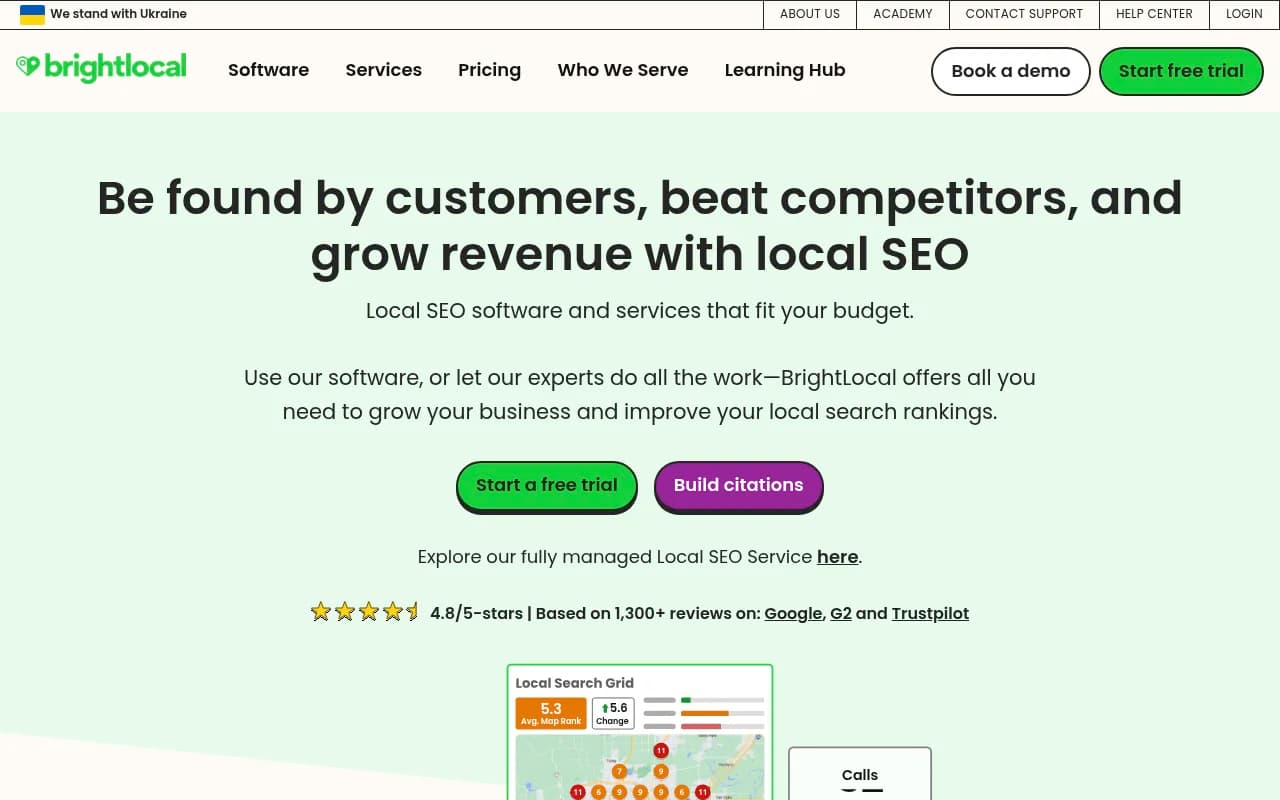
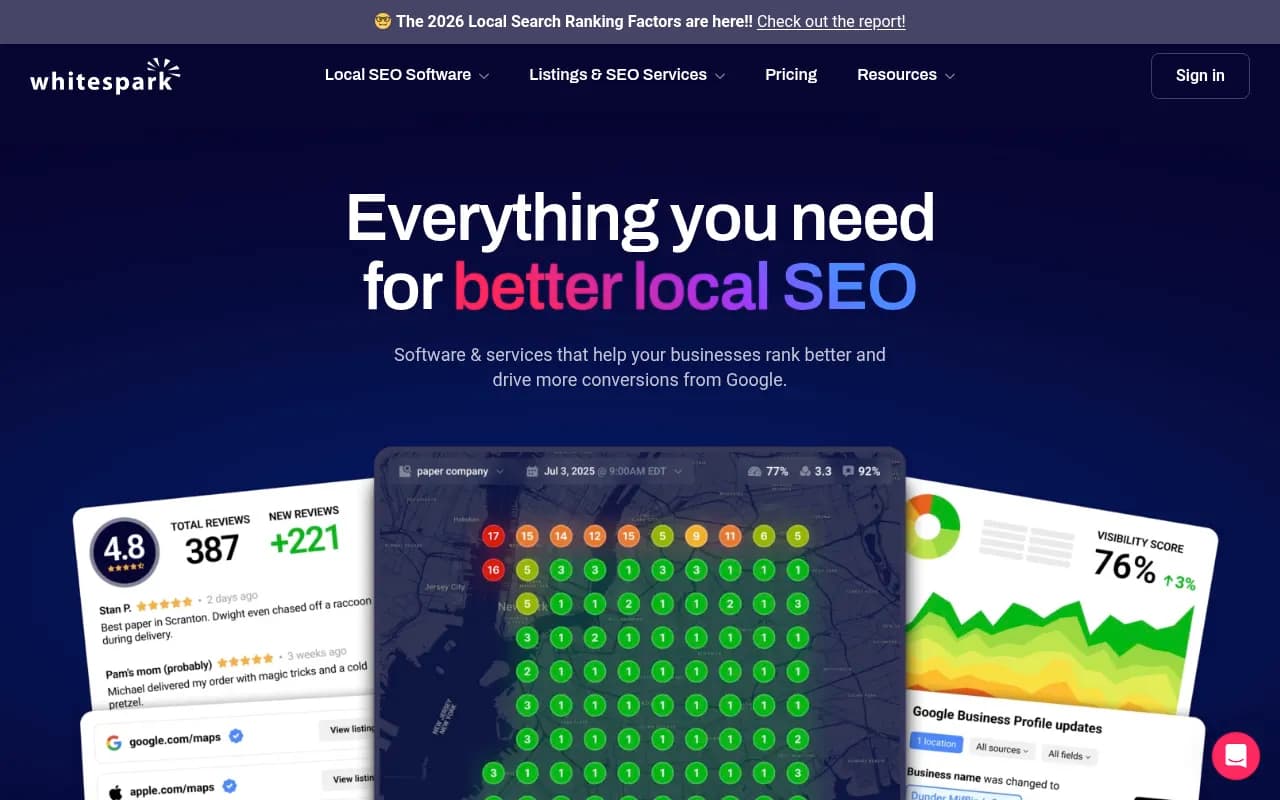
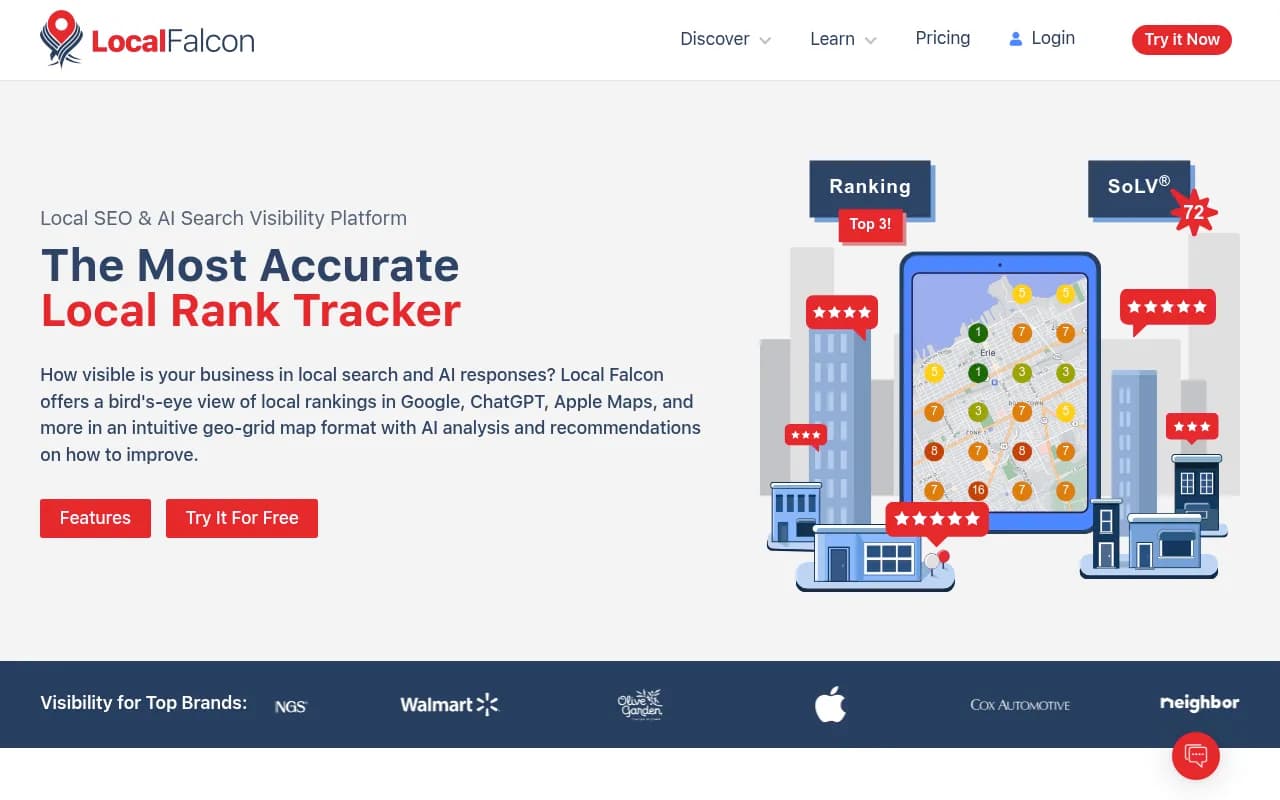
You do not need to run these yourself, but a competent local agency should be able to name what they use and show you the output. Examples include BrightLocal for citations and local rank tracking, Whitespark for citation building, and Local Falcon for geo-grid rank checks.
For multi-location brands, listing and reputation platforms such as Yext, Uberall or Synup come up. Ask whether the agency resells these, and whether you keep access if you leave.
Questions about people and process
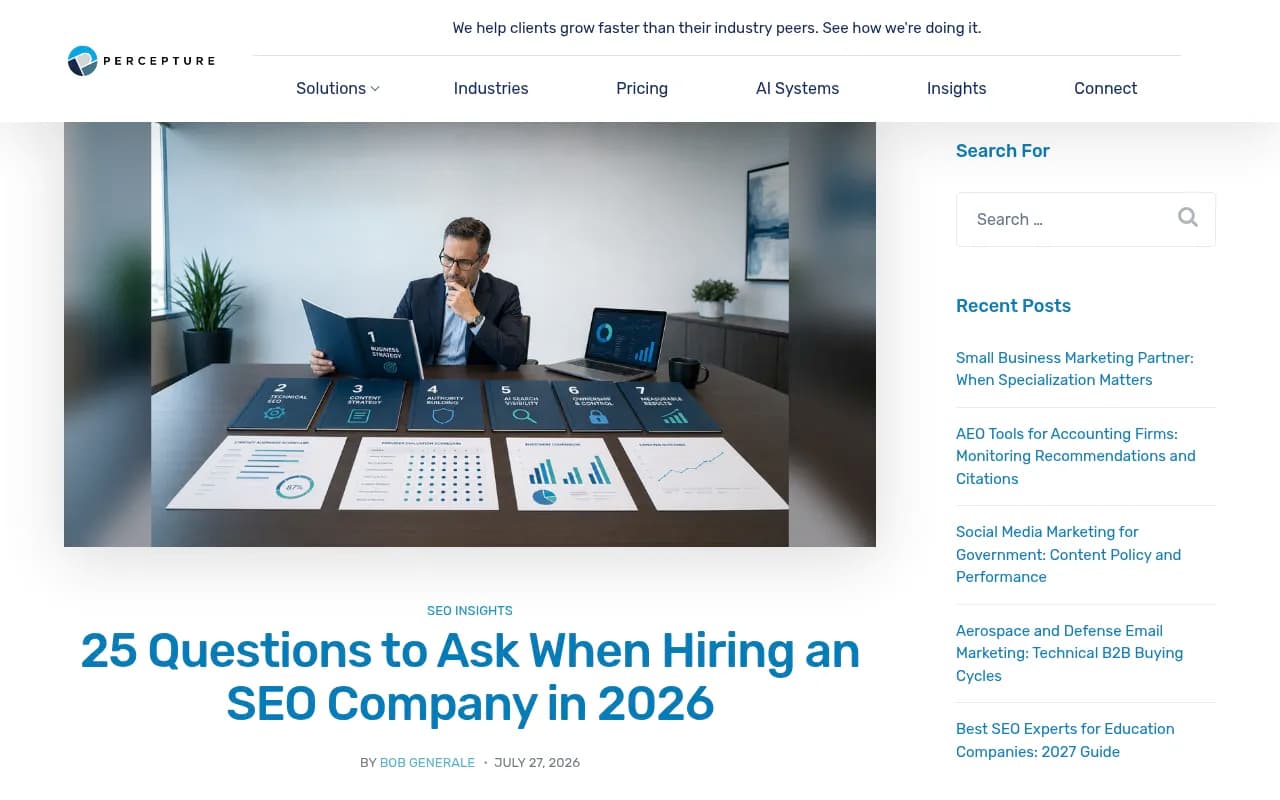
The best-written proposal means nothing if you do not know who executes it. Percepture's 2026 interview framework and several practitioner threads agree on the basics.
Who is on the account?
Ask for names. Ask what each person does, how much of their week your account gets, and how many clients each person manages. One LinkedIn practitioner puts 8 to 12 accounts per person as healthy and anything above 20 as a warning. That number is one person's rule of thumb, not an industry standard, but the logic holds: a strategist juggling 25 clients is not thinking about yours.
Then ask what is outsourced or subcontracted, and what access those subcontractors get. A polished sales lead backed by anonymous contractors is the classic bait and switch.
What happens before the proposal?
A credible agency runs a discovery call first. They should ask how you make money, which services carry the best margin, how long your sales cycle is, and who approves what. If the first deliverable is a keyword export and a price, walk.
Also ask for at least a high-level audit before you sign. You are not asking for free work. You are checking whether they can look at your site and your profile and tell you what is working and what is wasted.
Who implements the recommendations?
This is the question that gets skipped most. Many agencies deliver recommendations and then exclude implementation. Templates, schema, redirects, internal links, content publishing: someone has to do them. Ask for a responsibility map that says agency, you, or another vendor for each item.
Also ask how they handle staging, QA, change logs and rollbacks. Changes pushed straight to production with no record are how local sites lose rankings overnight.
What access do you need, and how is it protected?
A reasonable agency asks for the minimum permission level it needs, not shared admin credentials. Ask for an access matrix and an offboarding checklist.
Questions about GEO and AI search
GEO is the part of the pitch where vagueness hides best. Here is how I would test it.
Ask how GEO connects to SEO
Be careful with anyone selling "AI" or "GEO" as a wholly separate strategy. A practitioner answer circulating on Quora makes the same point: a weak agency hand-waves when asked how the two connect. A good one explains that crawlable pages, clear entity information, strong local signals, reviews and credible mentions help in both places, and then separates the durable foundations from experiments.
Ask what they actually test
Percepture's framework asks for a testing protocol and a sample citation log. That is the right instinct. Ask:
- Which platforms do you monitor (ChatGPT, Google AI Overviews, AI Mode, Perplexity, Gemini)?
- Which prompts, and how did you choose them for a business like mine?
- How do you record which pages and competing sources get cited?
- How often do you retest?
- What can you not guarantee?
The last answer should be "inclusion, ranking and citations." No provider controls how an answer engine crawls, ranks or cites a page. Anyone who guarantees an AI citation is lying or guessing.
Ask for current, per-engine data
AI engines behave differently from each other and they change quickly, so stale advice is a real risk. Promptwatch Data, for the week of Sep 28 to Oct 4, 2026, found that social platforms made up only 0.46% of ChatGPT's citations but 12.2% of Google AI Overviews' citations. Within AI Overviews, YouTube was 4.28%, Facebook 2.38% and Instagram 1.61% (social media citations by AI model, October 2026). Separately, reddit.com's share of ChatGPT citations fell from about 4% to 0.5% on August 14, 2026 (Reddit citations are dropping in ChatGPT).
So if an agency is pitching "Reddit seeding to win ChatGPT," they are working from old data. For Google-driven local discovery, video and Facebook or Instagram presence deserve more attention than they got a year ago.
Content type matters as well. In the same period, product pages made up 22.4% of ChatGPT citations and landing pages 16.8%, so roughly 39% of citations went to pages that describe what a company sells (ChatGPT citation share by content type). For a local business, that points to well-built service pages with clear details rather than a pile of blog posts. A good agency should be able to explain how that finding shapes your page plan.
Check how they track AI visibility
An agency doing real GEO work needs a way to measure it. Tools like Promptwatch track how a brand appears across ChatGPT, Google AI Overviews, Perplexity and other engines, and log AI crawler activity on your site. Ask your agency which platform they use and whether you get access to the data.

Other options in the same space include Profound, Peec AI and Otterly.AI, mostly monitoring-focused. The question is less about which brand and more about whether they can show you real output. For more options, the GEO software directory at bestgeosoftware.com lists the category.
Profound


Otterly.AI

Questions about content
AI content floods are the new keyword stuffing. Ask:
- Who writes, edits and fact-checks? Who is the subject expert?
- How do you prevent cannibalization, meaning many overlapping pages competing with each other?
- How do you create information a competitor cannot easily copy, such as real photos, local knowledge, pricing ranges, and staff expertise?
- Where does AI fit in your process, and where does a human sign off?
A red flag is an agency that promises unlimited content but cannot name its writers. A good sign is a completed content brief shown to you before you sign.
Questions about measurement and reporting
For a local business, the reporting should reach the phone and the door, not stop at rankings. Ask:
- Which conversion events will you track: calls, direction requests, form fills, bookings?
- How do you attribute leads, and what are the limits of that attribution?
- Do I get access to the data, or only your PDF?
- What does the monthly report say about what moved, why, and what happens next?
A report that is only a rankings table with no context is a warning sign. Call tracking tools such as WhatConverts or Ruler Analytics can tie calls and forms to their source, and Google Search Console and Google Analytics should be set up under your own account.
Comparison: what a strong answer looks like
| Topic | Strong answer | Red flag |
|---|---|---|
| Staffing | Named team, role and hours per person, disclosed subcontractors | Only sales leaders named until after signing |
| Local SEO | GBP, citations, reviews, local links, location page plan | Generic keyword talk, thin city pages |
| GEO | Testing protocol, citation log, retest cadence, stated limits | Guaranteed AI citations, one trick as the solution |
| Implementation | Responsibility map for who does each change | Recommendations only, no scope clarity |
| Reporting | Calls, bookings, CRM stages, plain-language commentary | Rankings table and impressions only |
| Ownership | You own domain, GBP, analytics, content, reports | Accounts created under the agency's login |
| Forecast | Ranges with assumptions and dependencies | One growth number, no scenarios |
| Exit | Written handoff and export list | Long commitment, no transfer process |
Pricing, contracts and what is billed separately
I cannot give you a reliable price benchmark here, and I would distrust anyone quoting one without knowing your market and scope. What you can compare is structure. Ask each agency for an itemized scope covering:
- Implementation, content production and design
- Tools and licenses, and who pays for them
- Link building or digital PR
- GEO monitoring: platforms, prompts, testing cadence and reporting limits
- Reporting, expenses, rush work and transition costs
Percepture's pricing checklist flags the main risk well: unclear GEO monitoring can turn into an unsupported AI visibility claim. A monthly price that looks simple often hides production and implementation as extras later.
On contract terms, ask what the minimum term is, whether there is a fixed number of hours per month, and what they actually provide for the price. The Reddit thread on vetting local SEO agencies lists these same basics. A sensible agreement defines an initial diagnostic period, implementation milestones, review points, cancellation terms and asset transfer.
Timelines
Ask the agency to break down how they will spend time each month and how that shifts across stages. Be wary of instant ranking promises. Local results can move faster than competitive national terms, but nobody can name a date for a guaranteed result.
Ownership and exit terms
You should own what they build. That means:
- Your domain, website and hosting
- Google Business Profile with you as primary owner
- Analytics, Search Console, tag manager and call tracking
- Approved content, creative files, reports and exports
- Any citations or listings created for you
If an agency sets up your profile under their own account or keeps ownership vague, you are renting. Ask what happens when the contract ends, how handoff works and whether they help during the transition. Ask for the ownership schedule and exit checklist now, while you still have leverage.
Red flags that should slow you down
- A guarantee of a number-one ranking or an AI citation
- Shared administrator credentials requested as the default
- No disclosure of who does the work or what is outsourced
- Every issue labeled high priority, or priorities based only on a tool score
- Refusal to show a sample report, brief or ticket
- Long lock-in with no review gates
- A portfolio made of logos and no walk-through of a real example
Questions the agency should ask you
Good agencies interview you too. Expect questions like what you sell and where, which services matter most economically, how long the sales cycle is, who approves content and claims, what has been tried before, and what internal conditions could make the engagement fail. If they never ask, they are not planning to learn your business.
What the first 90 days should look like
The first 90 days should cover business priorities, access, baselines, technical risks, page ownership, buyer questions, measurement setup and implementation owners, with review gates along the way. After that, the agency implements agreed priorities and reports what changed, what is blocked and what decision comes next.
Ask to see these before signing: a redacted audit, a roadmap, a page map, a sample implementation ticket, a content brief, a reporting example, assigned-team bios, a pricing schedule, ownership terms, a 90-day plan and an exit checklist. The proof should match the work being proposed.
A note on who is writing this
This guide is published by 1001 SEO Media, which is itself an SEO and GEO agency. Treat that as you would any vendor's advice: use the questions above on us too. We do not guarantee rankings or AI citations, we work without long-term contracts, and we are comfortable being asked for the ownership schedule and the exit terms. If you want to talk, reach out at [email protected], and put us through the same scorecard as everyone else.
A simple scoring approach
To compare finalists on one standard, score each of the questions above from 0 to 3, where 0 is a dodge and 3 is a specific answer backed by proof. Weight these four heavily: who does the work, how local SEO is handled, how GEO is tested, and who owns the assets. Anyone who scores 0 on ownership or on guarantees should be removed regardless of the total.
The shortest version of all of this: pick the agency that names its people, shows its proof, states its limits and hands you the keys when you leave.