Key takeaways
- Local GEO for restaurants and hotels has two halves: clean listings and reviews (the facts AI repeats) and AI visibility tracking (proof that it works).
- No single tool covers both well. Listing platforms like Yext, Uberall and BrightLocal handle the first half; AI visibility platforms handle the second.
- ChatGPT cites very few social posts now, but Google AI Overviews cites them heavily. Your channel mix should differ by engine.
- For travel prompts, booking and search sites earn more than half of charted ChatGPT citations, so Tripadvisor, Skyscanner, Kayak, Airbnb and Expedia listings matter.
- Start small: audit listings, track 20 to 50 real diner prompts, fix what is wrong, then measure again.
Why local GEO is different for hospitality
A SaaS company worries about whether ChatGPT mentions its brand. A restaurant has a more specific problem. Someone types "best brunch near me that takes walk-ins" or "romantic hotel in Lisbon with a rooftop bar", and the model has to pick three or four names. Those picks come from a stack of sources: your website, your Google Business Profile, Yelp, Tripadvisor, OpenTable, delivery apps, local press and review sites.
If your opening hours differ between those sources, or your menu is a PDF scan nobody can read, the model either skips you or states something wrong with confidence. That is the real local GEO job: make the facts consistent everywhere, then check what the models actually say.
One practical tip from restaurant SEO practitioners, shared on r/RestaurantTechSEO: prioritize the directories that already rank on page one of Google for your name and category (Yelp, Tripadvisor, OpenTable, Facebook, delivery apps). If they rank in Google, they tend to matter in AI answers too. It's a forum post, not a study, but it matches how retrieval-based answers work.
What the data says about where AI looks
Before choosing tools, it helps to know which channels are worth your time. Promptwatch Data has two reports that matter here.
For travel prompts, Promptwatch's ChatGPT travel citation report (Sep 28 to Oct 4, 2026) shows Skyscanner leading at 0.78%, followed by Going at 0.52% and Tripadvisor at 0.49%. Of the 17 charted domains, booking and search sites account for 2.42% of all travel citations, which is more than half of the charted total. Reviews and advice sites add 0.86%. The takeaway for hotels: keep Skyscanner, Kayak, Airbnb and Expedia listings accurate, collect reviews on Tripadvisor and Trustpilot, and get into guides like Lonely Planet and Time Out.
For social, Promptwatch's social media citations report (same week) shows a sharp split. ChatGPT drew just 0.46% of its citations from social platforms, while Google AI Overviews drew 12.2%. In AI Overviews, YouTube was 4.28%, Facebook 2.38% and Instagram 1.61%. So if Google AI Overviews matters for your market, a complete Facebook page, an active Instagram profile and some YouTube video are worth the effort. For ChatGPT, don't count on Reddit threads; put the effort into your own site and the listicles and guides it does cite. Reddit's collapse in ChatGPT is tracked in this report.
These are one-week snapshots, and the numbers move. Treat them as direction, not gospel.
The four tool categories you need
| Category | Job | Example tools | Needed by |
|---|---|---|---|
| Listing and data management | Keep name, address, hours, menu and attributes identical everywhere | Yext, Uberall, Synup, Moz Local, Partoo | Multi-location groups, hotels |
| Local rank tracking | See map-pack and geo-grid positions | BrightLocal, Local Falcon, Whitespark | Any local business |
| Review and reputation | Collect, respond and surface reviews | Birdeye, Reputation, Chatmeter, Podium, Trustpilot | Restaurants, hotels |
| AI visibility tracking and optimization | See what ChatGPT, Gemini and Perplexity say about you and fix gaps | Promptwatch, Profound, Otterly.AI, Peec AI | Anyone serious about AI search |
Most restaurants only need one tool from each of the first three rows, and many can skip the second. The fourth row is the one that is new in 2026.
Listing and data management tools
This is the foundation. AI models pull facts from many places, and conflicting data is the most common reason a venue gets skipped or misdescribed.
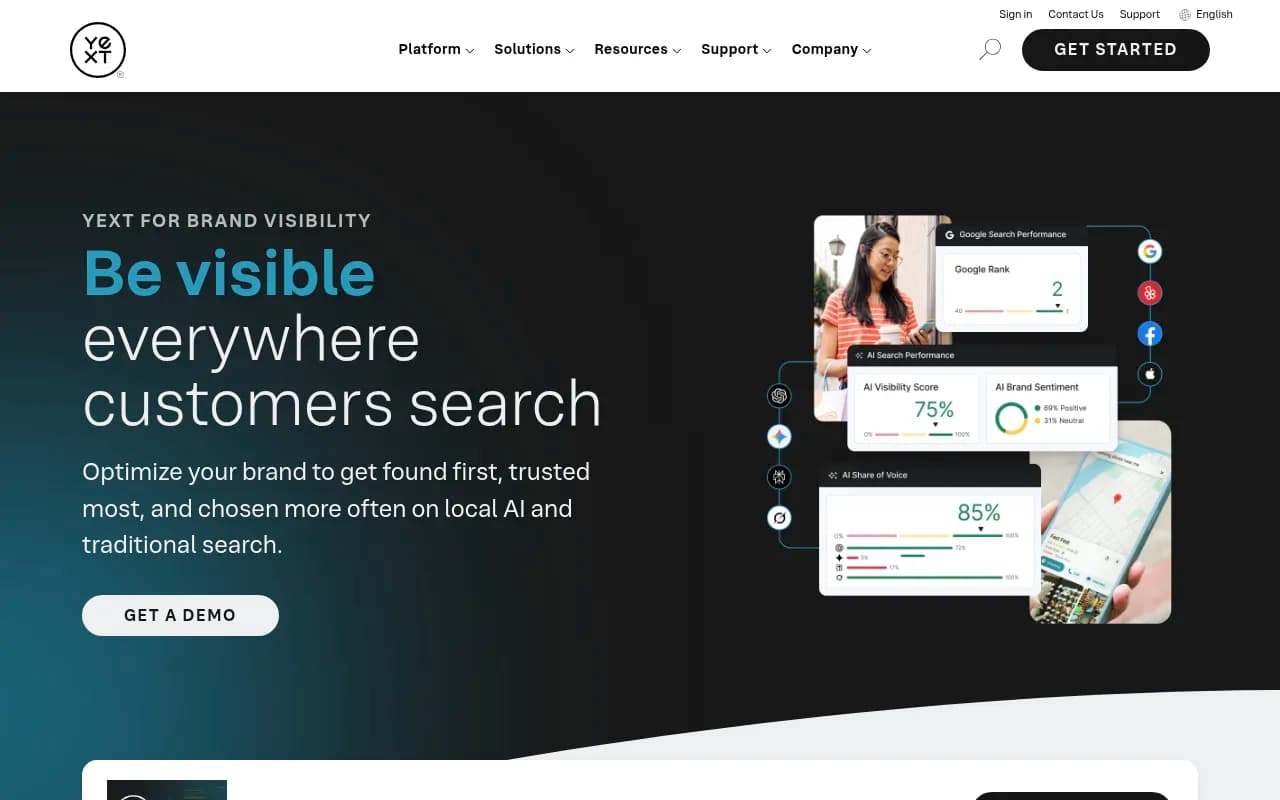
Yext
Yext is built for multi-location brands that want one source of truth pushed out to maps, directories and AI-facing surfaces. It suits restaurant groups and hotel chains with dozens of locations. It is overkill for a single café.
Uberall
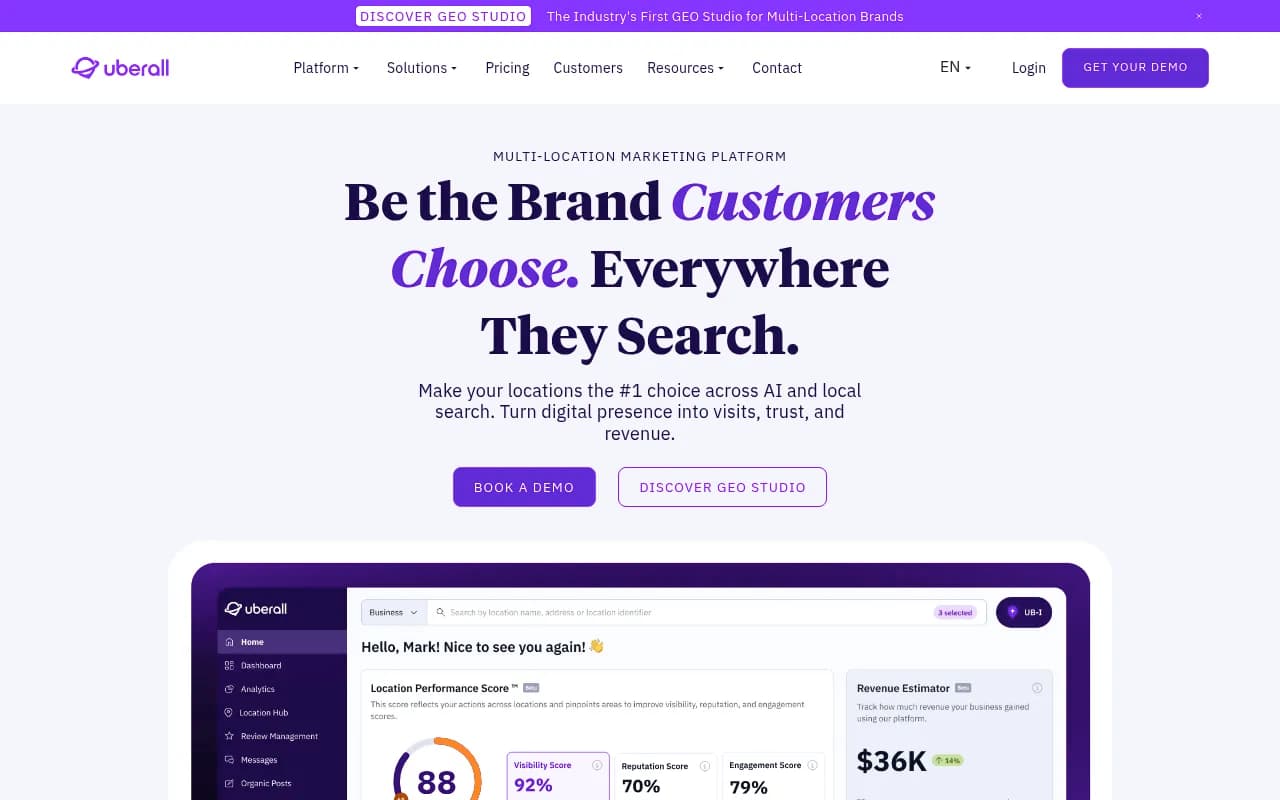
Uberall covers listings, reviews and local pages across many locations, and positions itself around both local search and AI visibility. Comparable in scope to Yext, so get quotes from both.
Synup, Moz Local and Partoo
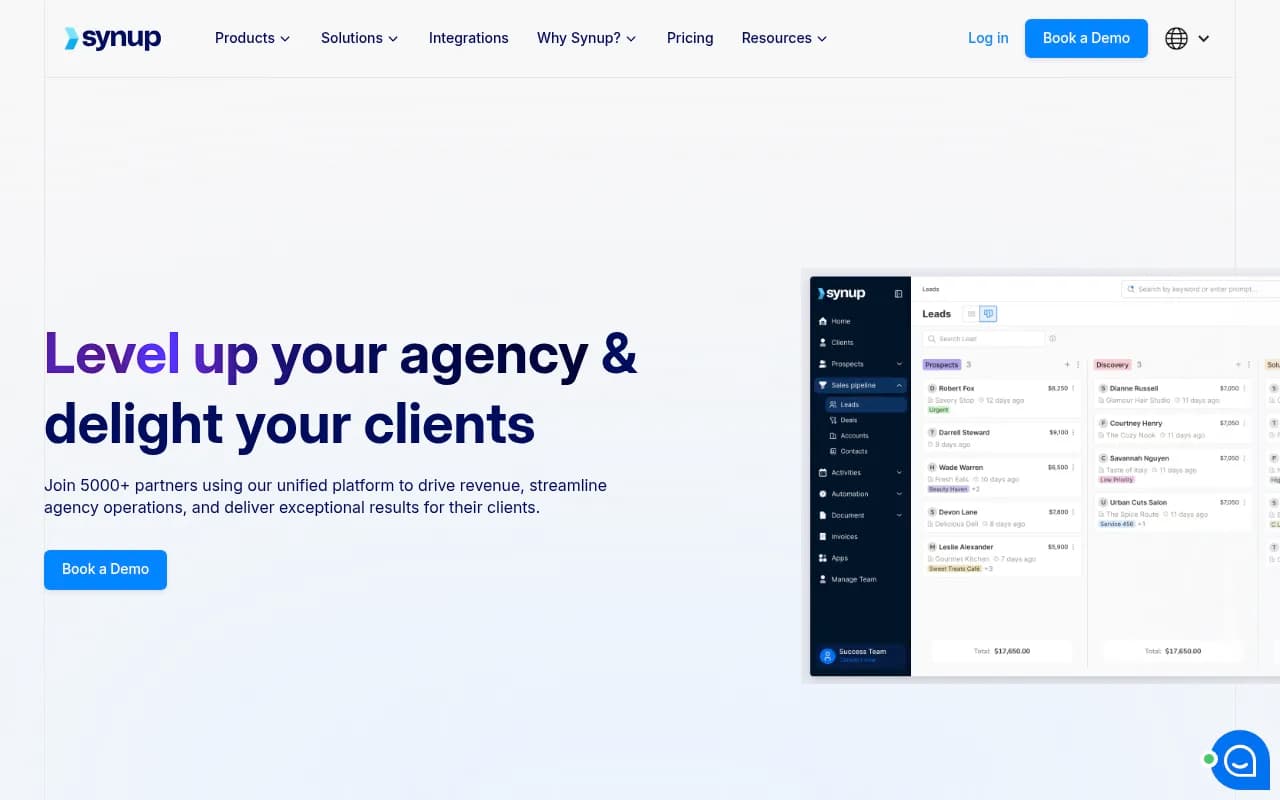
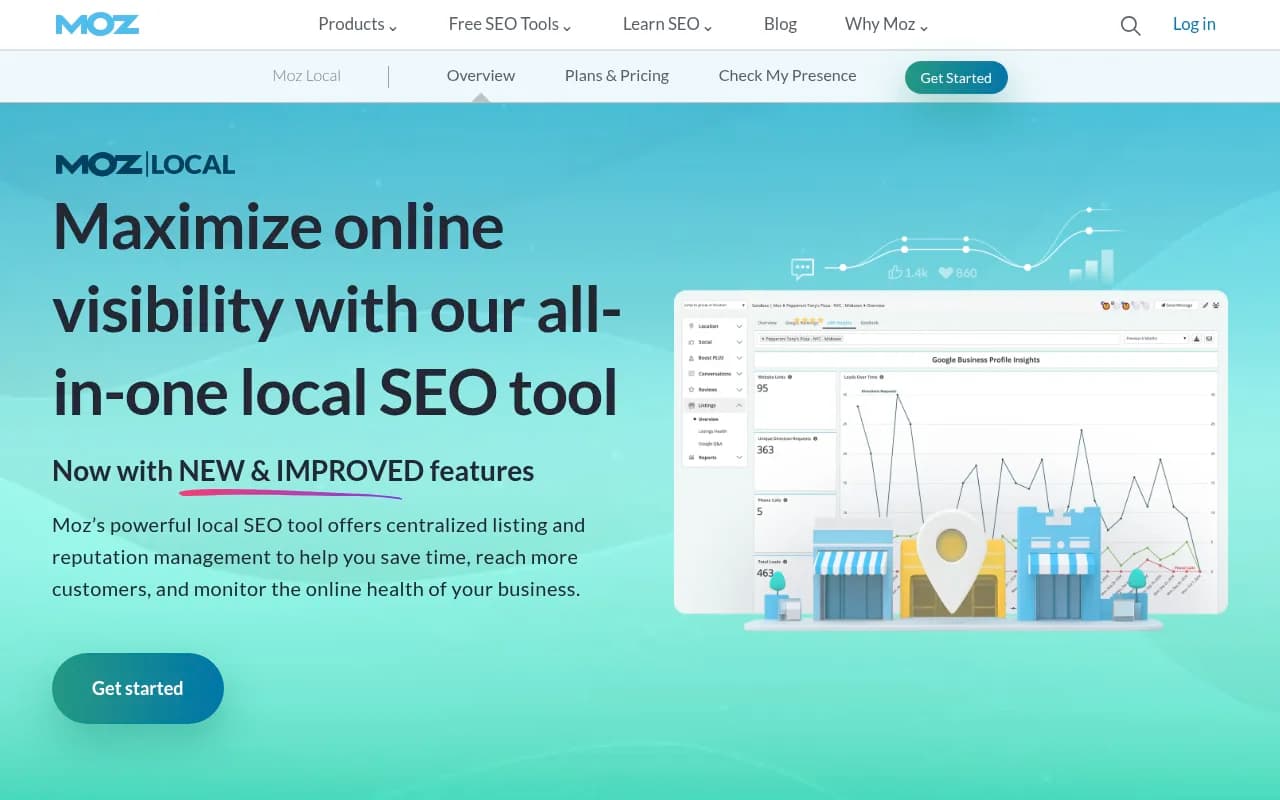
Synup is built for agencies managing many small clients. Moz Local is a simpler centralized listing manager. Partoo is strong in Europe, where it is widely used by multi-site brands.
SOCi and Rio SEO
Both aim at franchises and large multi-location brands with local marketing automation. Worth a look if you have a franchise structure with local owner-operators who need guardrails.
Local rank tracking
Map-pack rankings still feed a lot of what AI assistants recommend, so classic local tracking hasn't gone away.
BrightLocal handles citations, reviews and rank tracking for multi-location businesses and is a sensible default for agencies.
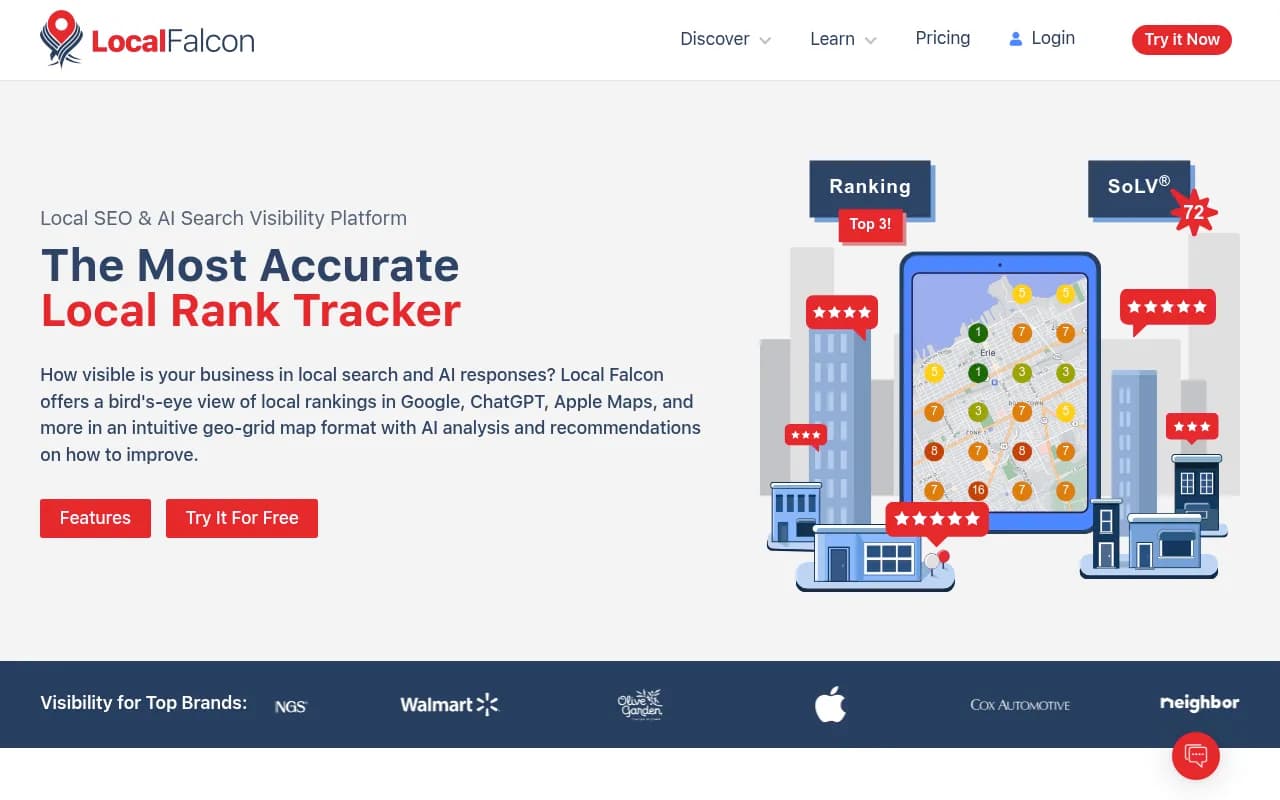
Local Falcon shows geo-grid rankings, which is useful for a restaurant that ranks well on its own street and nowhere ten blocks away.
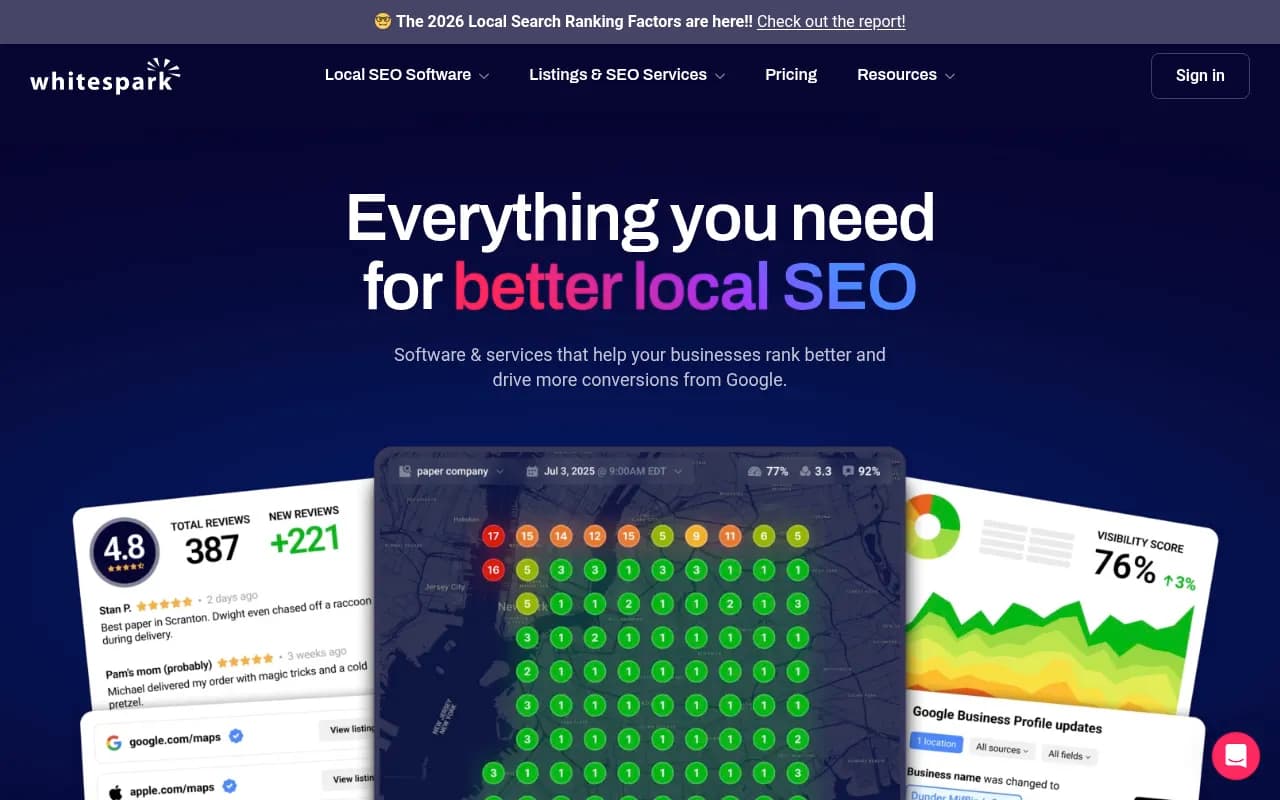
Whitespark is a respected toolkit for local citation building and audits.
Semrush Local is a reasonable pick if you already live in Semrush.
Reviews and reputation platforms
Reviews are part of the evidence AI uses to describe you, and the travel data above puts reviews and advice sites as the second-largest source type after booking and search sites. You want volume, recency and replies.
- Birdeye and Podium are common in restaurants and hospitality for review requests and messaging.
- Reputation and Chatmeter focus on multi-location brands and reporting.
- Trustpilot matters mainly for hotels and online ordering brands, where it surfaced in the travel citation data.
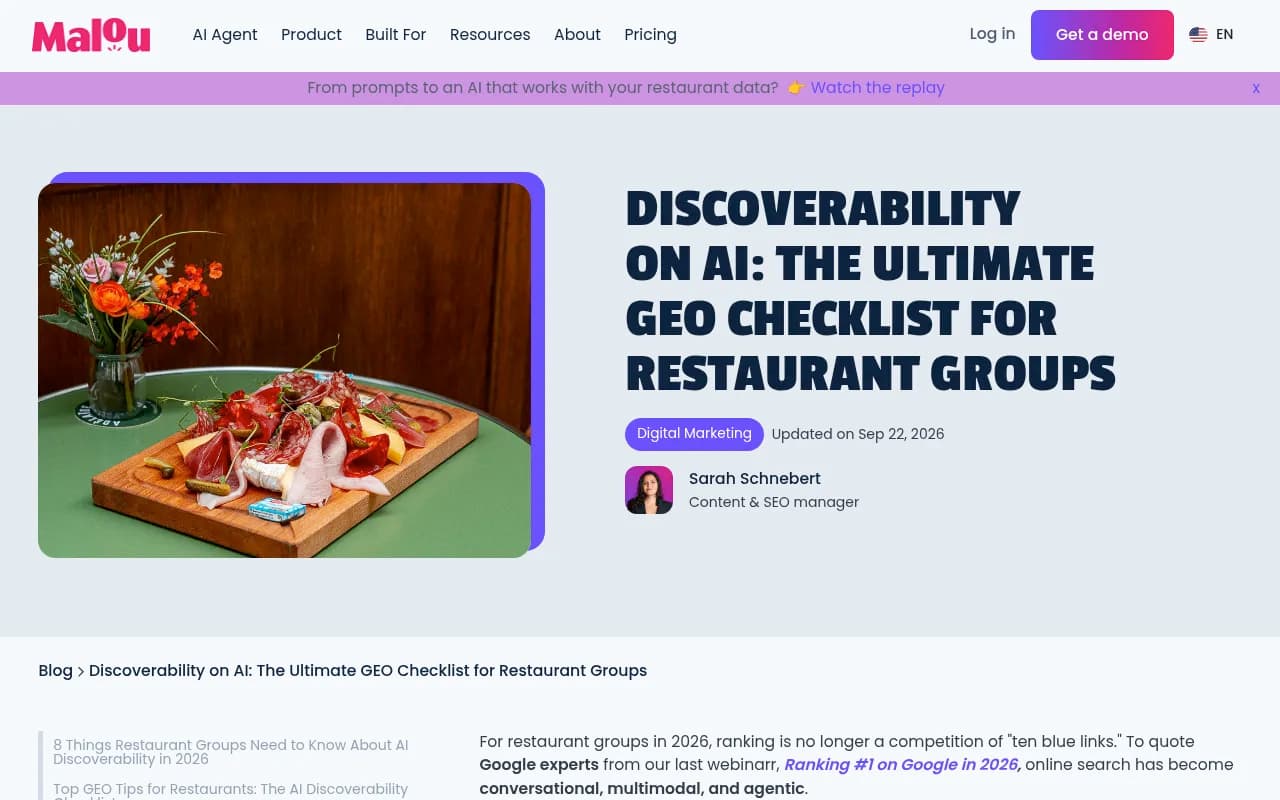
Malou is a hospitality-specific option that publishes a 2026 GEO checklist for restaurants and sells a restaurant-group platform for reviews, listings and social. It is a vendor guide, so read it as a useful checklist from a company with something to sell. I couldn't verify current Malou pricing, so ask for a demo.
AI visibility tools: measuring what AI actually says
Listing tools tell you your data is consistent. They don't tell you what ChatGPT answers when someone asks for a dinner spot. That needs an AI visibility platform that runs real prompts and records the answers.
Promptwatch
Promptwatch is the one I'd shortlist first if you want more than a dashboard. It tracks how brands appear in ChatGPT, Google AI Overviews, AI Mode, Gemini, Perplexity and others using the real user interfaces, with country tracking on every paid plan and state/city tracking from the Business plan. That city-level option matters for local venues, since "best ramen in Austin" and "best ramen in Seattle" return different answers.
The parts most useful to hospitality: citation analytics (which of your pages, and which third-party pages, get cited), Reddit, YouTube and LinkedIn citation reports, IP-verified AI crawler logs to check whether bots can read your menu and booking pages, and an Action Board that turns gaps into a prioritized to-do list. A Content Agent can draft and publish content to WordPress, Webflow or Framer. Pricing starts at a free Explore tier, then $95/month for Essential; confirm current plans at promptwatch.com/pricing.

For a hotel group or a multi-venue restaurant company, agencies get unlimited projects on the agency plans, which makes it workable to run many properties under one roof.
Other trackers worth knowing
These are mostly monitoring tools. They answer "were we mentioned?" more than "why not, and how do we fix it?"
- Otterly.AI and Peec AI are lighter prompt trackers, fine for a first look.
- Profound is an enterprise platform; expect enterprise pricing.
- Rankshift, LLM Pulse and Qwairy are monitoring-focused options.
- Birdeye also advertises tracking of brand appearances in AI answers, which is convenient if you already use it for reviews.
Otterly.AI


Profound


For a broader view, the GEO software directory at bestgeosoftware.com lists more options by category.
Hospitality-specific GEO tools
A couple of hotel-focused products exist. Listo's hospitality GEO guide describes Cendyn Wayfinder as a tool that runs simulated traveler prompts across ChatGPT, Gemini and Perplexity, scores "GEO health", checks facts for drift, and generates schema and text files for the property. It's useful as a description of what hotel-specific tooling does, but the guide ranks Listo first, so it is vendor-authored. I did not verify pricing for either product. If you run hotels on the Cendyn stack, ask for a demo; otherwise, a general platform plus a listing manager will cover most of the same ground.
Comparison: which tool for which business
| Business type | Listings | Reviews | AI visibility |
|---|---|---|---|
| Single restaurant or café | Manual updates, Google Business Profile, Moz Local | Birdeye or Podium | Promptwatch Essential or the free Explore tier |
| Restaurant group (5 to 50 sites) | Yext, Uberall or Partoo | Reputation, Chatmeter or Malou | Promptwatch Business, with city tracking |
| Hotel or resort | Yext, Uberall | Reputation, Trustpilot, Tripadvisor program | Promptwatch plus hotel-specific tools if on Cendyn |
| Agency serving many venues | Synup, BrightLocal | Birdeye, Vendasta | Promptwatch agency plans |
A note on honesty: this table reflects how I'd start, not a lab-tested ranking. Your stack, budget and number of locations should override it.
A practical workflow you can run in a week
1. Audit your facts
Pull your name, address, phone, hours, menu link and booking link from Google, Yelp, Tripadvisor, OpenTable, Facebook and each delivery app. Fix mismatches. A listing tool automates this; a spreadsheet works for one location.
2. Make the website readable
Put the menu in HTML text, not an image or PDF only. Add schema markup for Restaurant or Hotel, opening hours, and reservations. Keep each location on its own page with unique content. If you use a prerendering or JavaScript-heavy builder, check that AI crawlers can actually see the content; a crawler log feature in an AI visibility platform makes this checkable instead of guesswork.
3. Build a diner prompt list
Write 20 to 50 prompts the way guests really ask:
best vegan brunch in [neighborhood]
restaurants near [landmark] with outdoor seating
dog-friendly hotels in [city] under $200
where to eat after a concert at [venue]
best place for a group dinner of 10 in [city]
Track them weekly across ChatGPT, Gemini and Google AI Overviews. Note which competitors appear and which sources get cited.
4. Close the source gaps
If Tripadvisor or a local "best of" listicle keeps getting cited and you aren't on it, that is your to-do list. Pitch the publication, collect reviews, or update the listing. For Google AI Overviews, add video and keep Facebook and Instagram complete, per the social citation data above.
5. Measure and repeat
Re-check monthly. Changes in AI answers are noisy, so look at trends over several weeks rather than a single day.
Agencies versus tools
If you'd rather not do this yourself, agencies exist. Bluelinks Agency's top AEO and GEO agencies for restaurants list names itself among the winners, so treat it as marketing. First Page Sage's hospitality GEO agency ranking is more methodical, scoring 42 firms on seven weighted factors, but First Page Sage ranks itself first. Both are starting points for a shortlist, not verdicts.
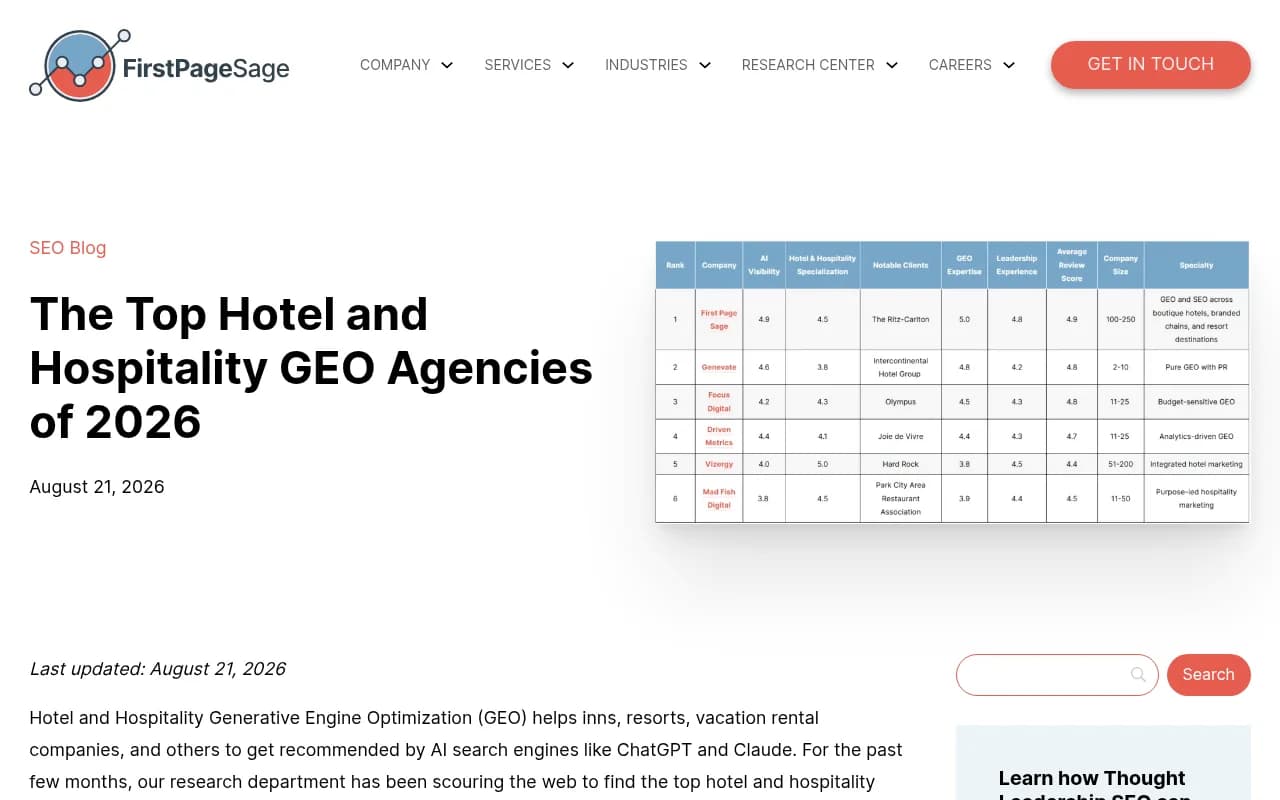
If you want a full-service partner for technical SEO, local SEO and AI search together, 1001 SEO Media is one option; it uses Promptwatch for AI visibility work. Whoever you pick, ask for named hospitality clients and before-and-after AI citation data, and avoid long lock-in contracts.
Common mistakes
- Chasing Reddit for ChatGPT visibility. The data shows ChatGPT's Reddit share collapsing in 2026.
- Buying an enterprise listing platform for one location.
- Tracking only brand name prompts. Diners search by cuisine, occasion and neighborhood, not your name.
- Ignoring delivery app and booking site profiles, which often rank above your own site.
- Publishing AI-written filler pages. Specific details (dishes, room types, neighborhood tips) get cited; generic copy doesn't.
Bottom line
For a single venue, fix your listings by hand, run a review tool and use a free or entry-level AI visibility plan to see what the models say. For groups and hotels, pair a listing manager like Yext, Uberall or Partoo with an AI visibility platform that can track by city and tell you what to fix. Of the visibility options, Promptwatch is the one that goes past monitoring into content and crawler diagnostics. Verify current pricing on each vendor's site before you commit, since I couldn't confirm it for most of these tools.