Key takeaways
- Local AI visibility is geographic. ChatGPT, Gemini and Google's AI surfaces answer differently depending on where the asker is and which place names appear in the prompt, so national averages hide what a local client sees.
- Agencies need multi-client workspaces, white-label reports, shared prompt templates and scheduled delivery more than they need any single clever feature.
- Tools fall into three buckets: dedicated AI visibility platforms, SEO suites with an AI module, and local listing and reputation platforms. Most agencies end up combining two of them.
- Third-party platforms (review sites, directories, booking sites) take most of the citations in local-style categories, so listing and review work is part of GEO.
- Pricing and geo-targeting claims change quickly. Check vendor pages before you commit a client budget to any of it.
Why local GEO is a different problem
A national AI visibility score tells a plumber in Leeds almost nothing. Localogy put it plainly in a July 2026 piece: local AI visibility is how AI search surfaces, describes and recommends a brand within specific areas, whether that is a country, region, city or neighborhood. Answer engines do not serve everyone the same response, and location shapes what gets surfaced, how the business is described and which sources get cited.
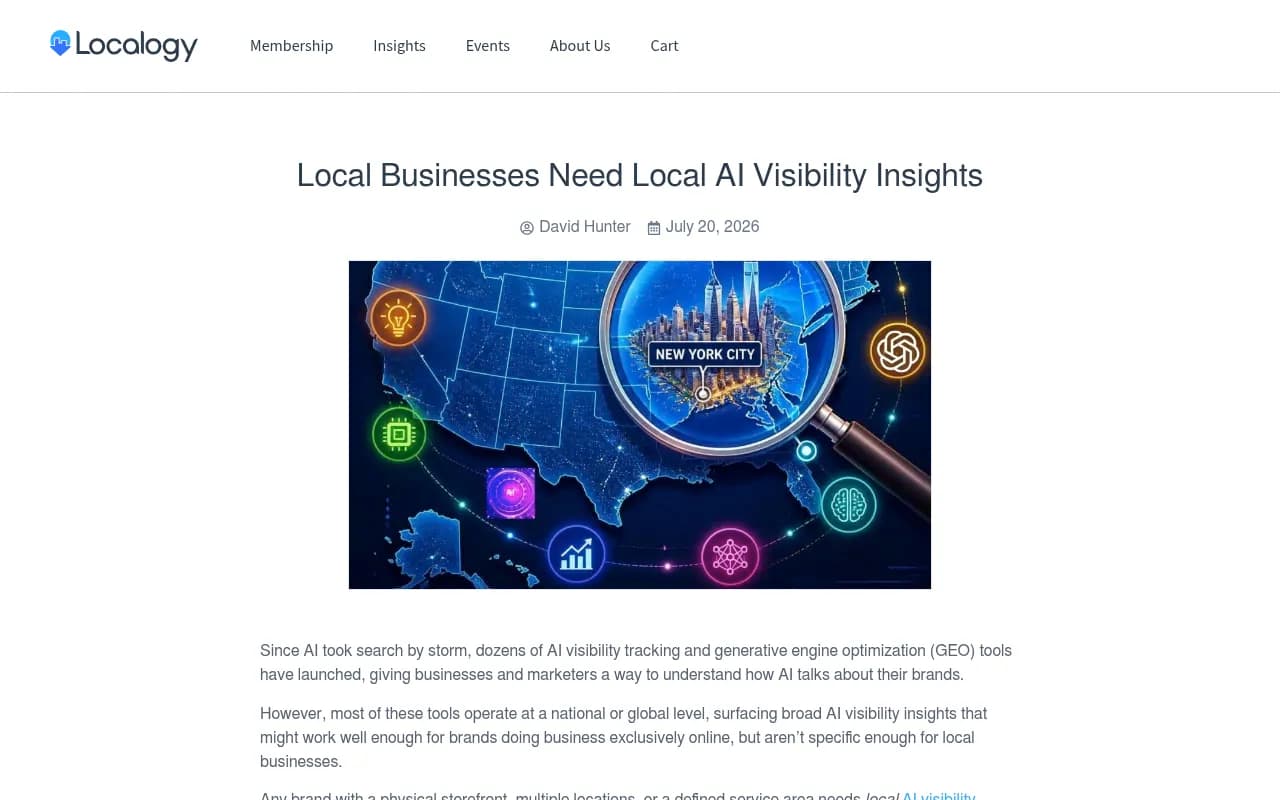
That has a practical consequence for agencies. If you manage thirty dental clinics, thirty sets of prompts with city names in them is the baseline. A single brand-level "visibility score" for the whole portfolio is mostly noise.
The same Localogy series makes a related point: strong Google rankings do not guarantee AI visibility for local businesses. So the rank tracker you already pay for answers a different question from the one your client will start asking.
What an agency actually needs from a tool
Presenc AI's buyer guide lists a checklist that matches what I see agencies argue about internally. Reworded and ordered by how often it bites:
- Multi-client structure. Dozens of brands in one workspace with permissions, team assignment and sensible billing.
- White-label or co-branded reporting.
- Bulk prompt management, so you apply a template across clients instead of building each one from scratch.
- Competitor tracking and share of voice.
- Scheduled reports that go out without a manual export.
- API or Looker Studio access for your own dashboards.
- A pricing model that matches how you bill clients.
Lighthouse Local's agency guide adds a sharper test: can the client see their own name in an actual answer, under your brand, at a link they can open without you? A business owner understands "the assistant named your competitor and not you" far faster than a chart legend. Keep that in mind when you judge reports.
One more local-specific item the checklists skip: can you set the location of the query? City-level prompt tracking is not something I could verify across vendors for this guide, so confirm it on each vendor's pricing and feature pages. Do not assume it.
The three tool categories
Dedicated AI visibility platforms
These track ChatGPT, Perplexity, Gemini, Google AI Overviews and others, record whether your client is named, and report on share of voice. They are the core delivery layer if GEO is a service you sell.
For agencies that want to go beyond tracking, Promptwatch is the one I would look at first. It has agency plans with unlimited projects and prompts, white-label reports and client portal, country tracking on every paid plan and state and city tracking on the higher tiers. It also reads AI crawler logs, so you can tell a client whether AI systems are even reaching their pages, and its Content Agent and Action Board turn findings into actual to-do items. Confirm current tiers at promptwatch.com/pricing.

Other dedicated options in our catalog include agency-oriented trackers. LLM Pulse pitches white-label reporting and API access and is named in agency guides as a delivery platform.
Rankscale and Cairrot position themselves for agencies as well.
Profound and Scrunch AI sit at the more enterprise end, and Otterly.AI and Peec AI are lighter monitoring tools. Good for a first look at a client, thinner once you need crawler data, content workflows or traffic attribution.
Profound


Otterly.AI


SEO suites with an AI module
If you already pay for Semrush, Ahrefs or SE Ranking, their AI add-ons are the cheapest way to start. Lighthouse Local notes that Semrush sells scheduling and PDF export as one add-on and branding as another, which can add up across many clients. The bigger caveat is conceptual: page-one rankings do not guarantee an AI mention, so lead client reports with the answer, not the position.

Local listing and reputation platforms
This is the category generic GEO roundups skip, and for local clients it matters. Platforms like BrightLocal, Yext, Synup, Uberall, Whitespark and Chatmeter manage listings, reviews and local data. They are not AI trackers in the strict sense, but the data they keep clean is what answer engines read.
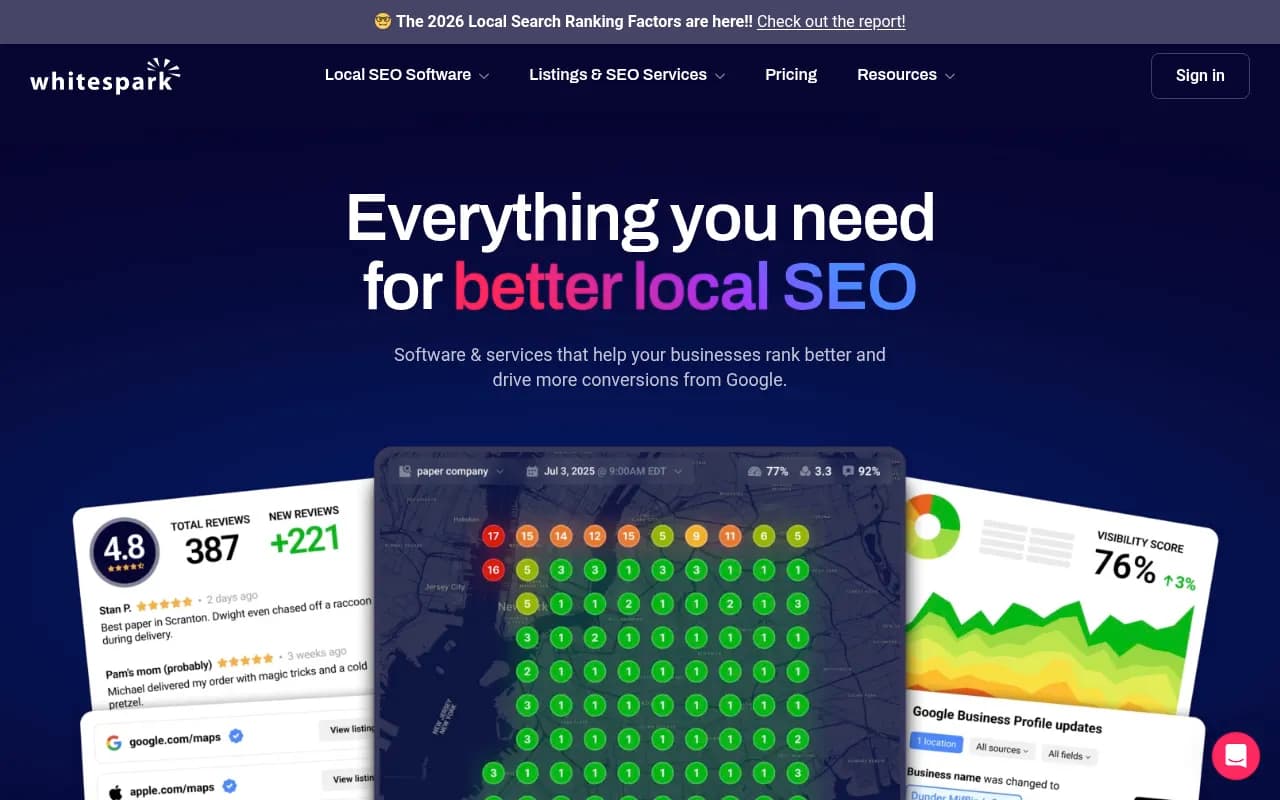
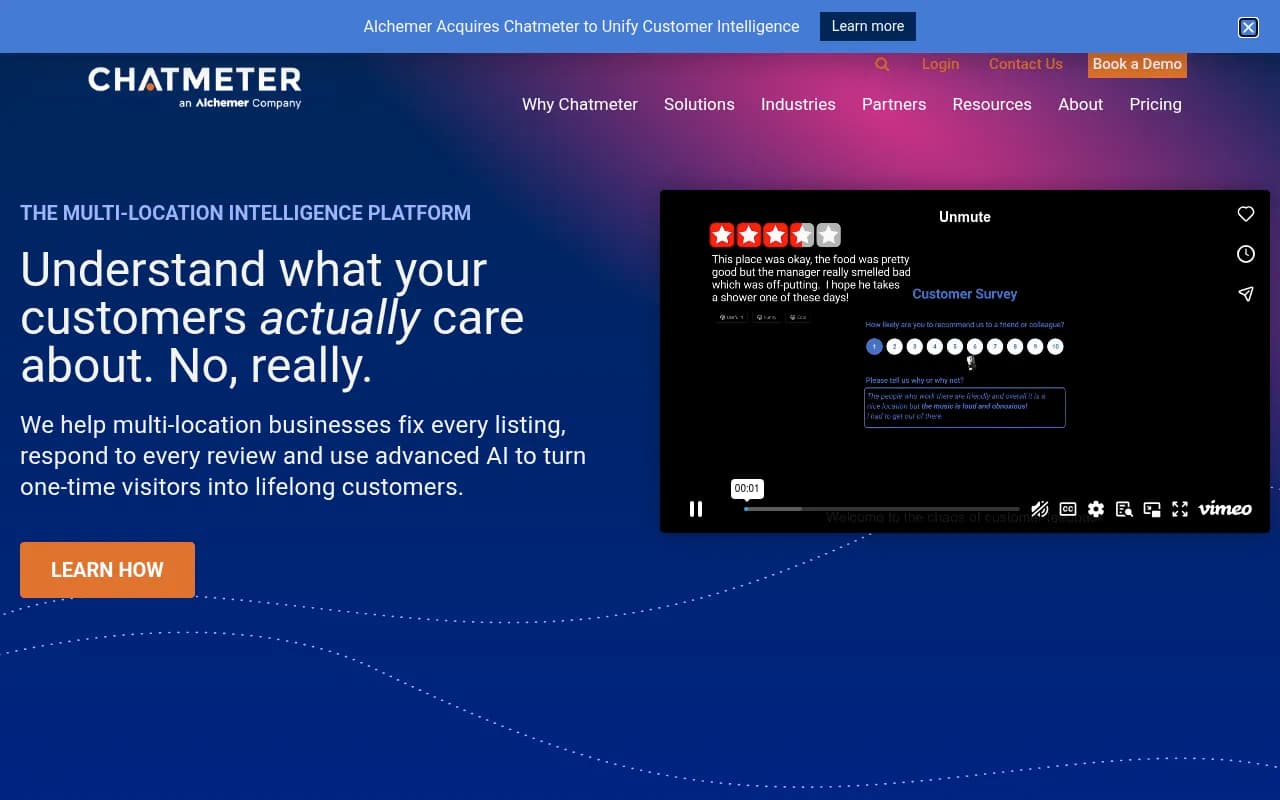
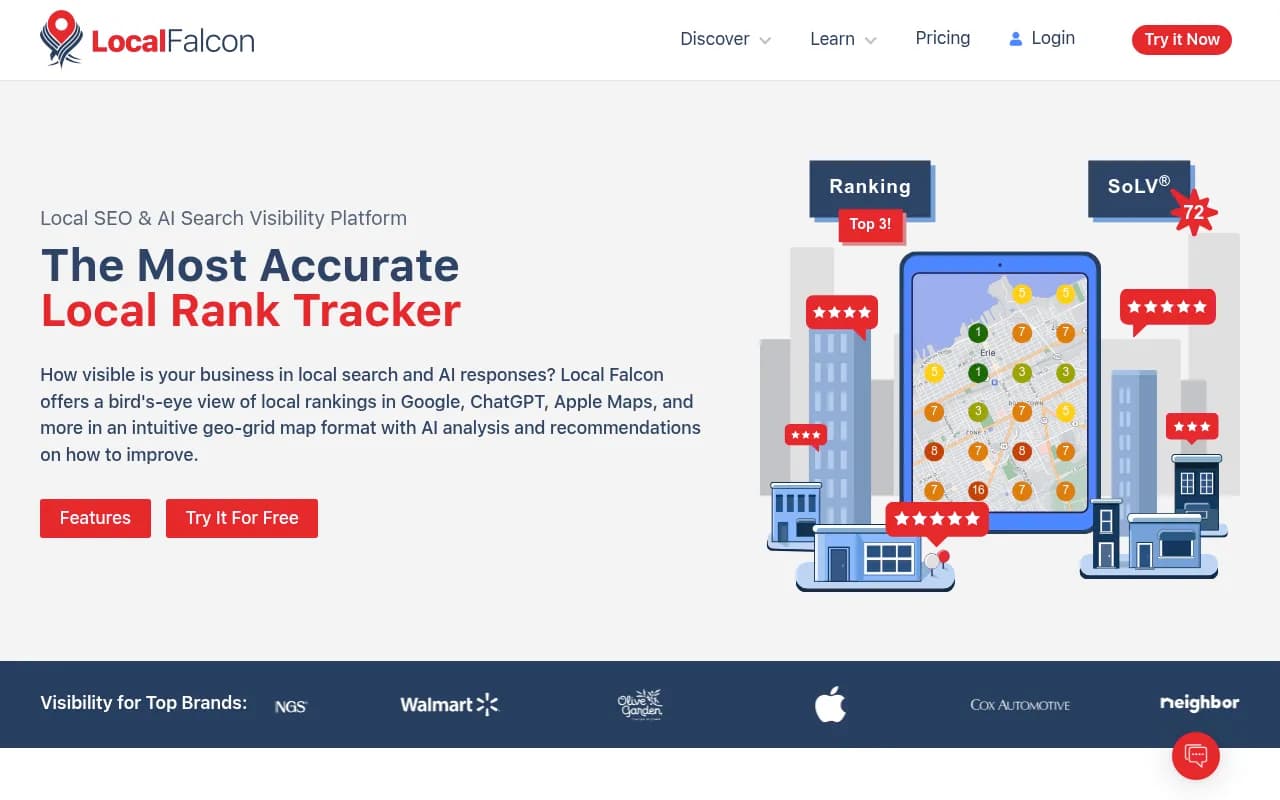
For geo-grid style visual rank tracking of the Google map pack, Local Falcon is the usual pick, and it pairs well with an AI tracker rather than replacing one.
Comparison at a glance
| Category | Examples | Strength for local agencies | Watch out for |
|---|---|---|---|
| Dedicated AI visibility platform | Promptwatch, LLM Pulse, Rankscale | Prompt-level tracking, share of voice, white-label reports | Verify city-level targeting per vendor |
| Full GEO stack with action layer | Promptwatch | Crawler logs, traffic attribution, content agents on top of tracking | More to learn than a simple tracker |
| SEO suite add-on | Semrush, Ahrefs Brand Radar, SE Ranking | Fits your existing workflow and billing | Add-on fees, shallower AI data |
| Listing and reputation | BrightLocal, Yext, Synup, Whitespark | Fixes the source data AI cites | Not an AI answer tracker |
| Map pack rank tracking | Local Falcon | Visual local ranking grids | Measures Google maps, not AI answers |
Why listings and reviews belong in your GEO scope
Promptwatch Data looked at which sites ChatGPT cites for organic travel prompts between Sep 28 and Oct 4, 2026. Skyscanner led at 0.78% of travel citations, followed by Going at 0.52% and Tripadvisor at 0.49%. Booking and search sites held 2.42% of citations across the domains shown, reviews and advice sites 0.86%. The domains shown together captured 4.18%, which tells you how fragmented the citation pool is.
Travel is not your plumber client, but it is the closest vertical report we have to local and tourism work, and the pattern is clear. Third-party platforms collect most of the citations. For a hotel, restaurant or clinic, getting accurate listings and strong review presence on the platforms AI actually cites can matter more than another blog post on the client's own site.
The same logic shows up in other verticals. For software prompts, GitHub, Microsoft's docs and G2 lead ChatGPT citations, and for automotive, marketplaces like Autotrader and Cars.com outrank every car brand. Find out which platform types matter in each client's category before you decide where to spend effort.
Each engine behaves differently, so measure them separately
Citation behavior varies by engine. In Promptwatch's average sources per response data (a 2025 dataset, so treat the exact numbers as historical), ChatGPT cited about 5 sources per answer when web search was triggered, while Google AI Overviews and Perplexity sat near 10. Copilot swung wildly. More recent Promptwatch Data shows almost half of ChatGPT responses citing 10 or more unique domains in a week in late September and early October 2026, so the numbers move. The lesson holds: report each engine on its own. Content that misses ChatGPT's shortlist can still land in Google's longer list.
Also keep an eye on volatility. Reddit's share of ChatGPT citations fell from roughly 4% to 0.5% on August 14, 2026, a change that would have silently changed any client's visibility overnight. Weekly tracking with history is what lets you explain a swing instead of guessing.
Setting up dozens of local clients without losing your mind
Build one prompt template, then localize
Write a template per vertical: "best [service] in [city]", "[service] near [neighborhood]", "who is the most trusted [service] in [city]", plus a few comparison and cost questions. Then fill in city and neighborhood per client. Keeping every client's prompt set the same shape is what makes reports comparable and onboarding fast.
Pick a sensible prompt count
Fifteen to thirty well-chosen prompts per client beats two hundred generic ones. Include branded prompts (does the AI describe the client accurately?) and unbranded ones (does it recommend them at all?). If a vendor charges by prompt or response, this is where costs creep, so do the math per client before quoting.
Track competitors per market
A local client's competitors are the three businesses down the road, not national brands. Add them explicitly so share of voice means something.
Report on the answer, not just the score
Screenshots or quoted answers where the client is named, or missing, do more for retention than a trend line. Lighthouse Local makes this point well in its agency guide: a tracker only you can read is a research tool, while one that produces a report the client opens each month is a service.
Check sentiment and accuracy
Local AI answers get hours, addresses and services wrong. Flag these as fixes against the listing platforms above. It is easy, visible work that clients appreciate.
What to charge, and a caution on numbers
Vendor blogs put AI visibility monitoring retainers at roughly $500 to $1,500 a month (LLM Pulse's agency guide), and entry-level single-brand tools at $20 to $100 a month with agency-grade white-label plans at $150 to $500 (Lighthouse Local). Both are vendor claims, not independent benchmarks, so use them as rough orientation only. Work out your own tool cost per client and set a margin on top.
On the tool side, Promptwatch's agency plans run from about $199 a month with unlimited projects, and annual billing is cheaper, but confirm current pricing yourself.
A practical stack by agency type
| Agency situation | Suggested stack |
|---|---|
| GEO is a core paid service for 20+ local clients | Promptwatch agency plan for tracking, crawler logs and content, plus BrightLocal or Whitespark for listings |
| You mainly sell local SEO and want to add AI reporting | Existing SEO suite AI add-on, plus Local Falcon for map grids, upgrade if clients ask for more |
| Franchise or multi-location brand clients | Listing platform such as Yext or Uberall, plus a dedicated AI tracker for answer-level data |
| Tight budget, testing demand | A lighter tracker like Otterly.AI or Peec AI, then move up once clients ask for crawler data or content help |
Common mistakes
- Reporting a national score to a single-city business.
- Treating a Google rank report as proof of AI visibility.
- Ignoring listings and reviews because they feel like old-school local SEO. They are what the engines cite.
- Buying per-client pricing that gets worse as you grow. Pooled or unlimited-project pricing saves real money past about ten clients.
- Skipping a trial on a real client. Demos make every tool look fine.
Where to look next
If you are still shortlisting, the GEO software directory at bestgeosoftware.com lists dozens of platforms side by side. If you would rather have a team run the program for you, 1001 SEO Media runs GEO and local SEO engagements. Promptwatch is also running a live session on October 22, 2026 called "Auditing & Scaling AI Search for Clients", which is directly on topic for agencies at this stage.
The short version: pick a tool that can hold dozens of clients, localize every prompt, report the actual answers, and spend as much effort on the listings AI reads as on the client's own site.