Key takeaways
- There is no Alexa-specific dashboard or public ranking API. You cannot track Alexa recommendations directly, so you track the inputs (listings, reviews, structured data) and the outputs of AI assistants around it.
- Alexa+ now integrates with Yelp, OpenTable, Expedia, Angi and Square. For local businesses, those partner profiles matter more than your own website.
- Amazon's new Alexa for Shopping (May 2026) is a product-shopping tool, not a local-business finder. Don't confuse the two.
- A practical tracking stack has three layers: listing accuracy, AI answer monitoring, and traffic or call attribution.
- Voice assistants give one answer, not ten blue links. Being second is often the same as being absent.
What actually changed with Alexa in 2026
For years, "voice search optimization" meant a vague checklist: write conversational copy, add FAQ schema, claim your listings. It was never very testable. You couldn't see whether Alexa recommended you, so nobody knew if the checklist worked.
Two things have shifted. First, Alexa+ is a generative assistant, and it is plugged into booking and local services partners. Amazon announced integrations with Expedia, Yelp, Angi and Square. Through Yelp, Alexa+ surfaces business reviews and local home services from Yelp's database. It can find local pros, request quotes and book jobs like lawn mowing, TV mounting and plumbing. You can read the details in Amazon's announcement on Alexa+ voice booking integrations.
Second, on May 13, 2026, Amazon merged Rufus and Alexa+ into Alexa for Shopping. It is available to US customers in the Amazon app and website without Prime or an Echo device, and the full Amazon store now runs on Echo Show. Rufus helped over 300 million customers in 2025, according to Amazon.
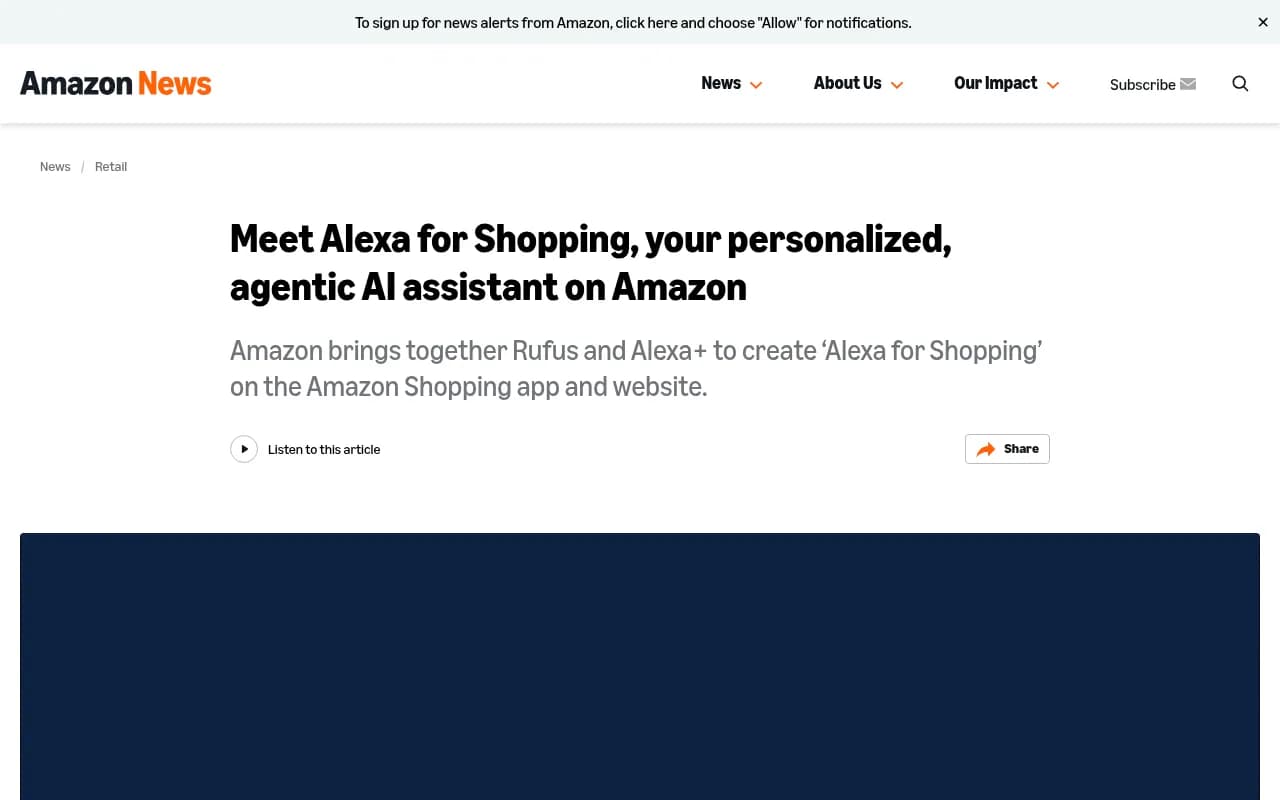
Here is the catch for local businesses. Alexa for Shopping is about products. If you run a plumbing company or a restaurant, it is not where your recommendations come from. If you sell physical products locally (a bike shop, a pet store), it matters a bit more, but only through Amazon's catalog.
So for most local businesses, the Alexa story is the Alexa+ partner story: Yelp, OpenTable, Angi, Square, and the map and directory data behind them.
Where assistants get local business data
Nobody outside Amazon publishes a definitive list, so treat this as a working model built from partner documentation and third-party reports. Some of it is vendor claims, and I've flagged those.
| Assistant | Likely data sources | Confidence |
|---|---|---|
| Alexa / Alexa+ | Yelp (reviews, hours, photos), OpenTable (restaurants), Angi and Square (services and booking), Bing Places | Partner integrations are documented by Amazon and OpenTable; the Bing Places and Yelp-as-primary claims come from third-party blogs |
| Siri | Apple Maps, Apple Business Connect | Widely reported, vendor-sourced |
| Google Assistant / Gemini | Google Business Profile, site content, structured data | Well established |
| ChatGPT, Perplexity, Copilot | Web search results, review sites, directories, your own pages | Observable through monitoring |
OpenTable is a clean example because it documents the behavior. Alexa uses OpenTable's restaurant directory and real-time availability to suggest and book tables, answers guest questions from OpenTable reviews, and pulls details from your OpenTable restaurant profile. I found no mention of a fee for being featured.
A third-party study from Foundation Inc and AirOps looked at citations from over 28 million AI responses to local queries. Yelp earned 512,680 citations across four AI platforms in Q4 2025, more than any other local platform they tracked, with a 49x multiplier in home services (Foundation Inc's Yelp study). That's agency data, not Promptwatch data, but it points the same direction as the Alexa+ partnerships: Yelp is hard to ignore.
One claim you'll see repeated is that assistants skip a business whose hours conflict across listings. It's plausible and it's good hygiene anyway, but I couldn't find evidence for it. Fix inconsistencies because customers get annoyed, not because a rumor says Alexa will punish you.
The honest truth about tracking Alexa
There is no tool I could verify that reads Alexa's local recommendations directly. Alexa has no public ranking API and no analytics console for businesses. Vendors who claim otherwise deserve a skeptical question: where does the data come from?
What you can do is track in three layers.
Layer 1: the inputs Alexa reads
Audit and monitor the profiles that feed assistants. This is the part you control and can measure precisely.
- Yelp: name, address, phone, hours, categories, photos, review response rate.
- Bing Places: often forgotten, and it feeds Microsoft's ecosystem and other assistants.
- Apple Business Connect: matters for Siri.
- Google Business Profile: still the backbone for Google surfaces.
- OpenTable, Angi, Square or whatever vertical platform applies to you.
Listing management tools help here, especially at scale. BrightLocal is a solid pick for audits and citation tracking.
For multi-location brands, Yext and Uberall push consistent data to many directories and assistants from one dashboard.
Smaller teams may prefer Moz Local or Synup, which are cheaper and simpler for a handful of locations. I haven't verified pricing for any of these, so check each vendor's site.
Don't skip free tools. Bing Webmaster Tools tells you whether Bing indexes your pages, which matters because Copilot and other assistants lean on Bing's index.
Layer 2: what AI assistants say about you
This is where monitoring tools come in. They don't read Alexa, but they do test how ChatGPT, Gemini, Perplexity, Copilot and Google's AI surfaces answer "best plumber in Leeds" style questions. That is the closest observable proxy for how a generative assistant, Alexa+ included, may describe local businesses.
Promptwatch tracks the real interfaces of ChatGPT, Google AI Overviews, AI Mode, Gemini, Perplexity, Copilot and Amazon Alexa, by country and language, and covers Alexa product results too. For a local business, the useful parts are tracking local prompts by country (state and city tracking comes with the Business plan), seeing which sources get cited, and checking crawler logs to confirm AI bots can reach your site. Confirm current plan details at promptwatch.com/pricing.

Promptwatch's data on source counts is a useful reality check on how many places you need to show up. Per Promptwatch's average sources per response data (page dated September 2025), ChatGPT cites about five sources per web-search answer, while Google AI Overviews and Perplexity cite about ten. Copilot swung widely, and Promptwatch advises making sure Bing indexes your key pages. So five or ten slots, shared across directories, review sites and your own pages. You need to be in the sources, not just on your own site.
Other monitoring tools worth a look if you want to compare: Otterly.AI, Peec AI, Profound and LLM Pulse. Most are prompt trackers that report mentions; check whether they handle local, city-level prompts before you commit. If you want a wider list, the GEO software directory at bestgeosoftware.com covers the category.
Otterly.AI


Profound

Layer 3: what it does for revenue
Voice recommendations are only worth tracking if they produce calls, bookings and visits. Wire up measurement you can trust:
- Call tracking with a distinct number per listing source. WhatConverts attributes leads to their source.
- Google Analytics with referral and landing page reports, to spot traffic from AI assistants.
- Booking platform reports (OpenTable, Square, Angi) that show where reservations originated.
AI referral traffic is small for most local businesses today, so don't expect a dramatic line on a chart. A handful of attributed bookings a month can still be worth more than a week of blog posts.
Step-by-step: a lean tracking setup for a local business
- Claim and complete the big profiles. Yelp, Bing Places, Apple Business Connect, Google Business Profile, plus your vertical platform (OpenTable for restaurants, Angi for home services).
- Lock down NAP consistency. Name, address, phone, hours, categories, identical everywhere. A spreadsheet is fine at first.
- Add structured data. LocalBusiness schema with PostalAddress, GeoCoordinates and AggregateRating, where the ratings are real and visible on the page.
- Answer questions the way people say them. Write short, direct FAQ answers ("Do you offer same-day plumbing repairs in Leeds?"). One or two sentences first, details after.
- Respond to reviews. Reviews are the content assistants quote back. Natural, specific replies beat templates.
- Build a prompt list. Fifteen to thirty real questions customers ask, written conversationally, with your city in them.
- Run them weekly in a monitoring tool and log which sources get cited and whether you appear.
- Check AI crawler access. Make sure robots.txt, your CDN and WAF aren't blocking AI bots you want reading you.
Step 8 deserves a note. Promptwatch's AI crawler traffic report covers IP-verified requests from June 8 to September 6, 2026. OpenAI made up 79.8% of requests in the week of August 31 to September 6, down from 94.8% in early June. The report's advice is to compare that mix against your own server logs: a provider that is large in the report but near zero in yours probably can't reach you. For a local business with a small site, a quick look at your logs once a quarter is enough.
Voice specifics: what is different about spoken queries
Spoken queries are longer and more conversational, and they are often location-driven. The assistant is usually trying to return a single answer or a short shortlist, not a page of results. That changes how you write.
- Lead with the answer, then the nuance.
- Name the neighborhood or town the way locals say it, not just the official city.
- State hours, prices or price ranges, and service area in plain text, not only inside images or PDFs.
- Keep booking links simple. If an assistant can book you through Square or OpenTable, make sure your availability there is current.
A caution on statistics. You'll still see the 2019 Microsoft voice report (72% of respondents used a digital assistant) quoted in many guides, including Uberall's. It's stale and it mentions Cortana. I wouldn't build a business case on it.
Comparing the approaches
| Approach | What it tells you | Weakness | Good for |
|---|---|---|---|
| Listing audit (BrightLocal, Moz Local, Synup) | Whether source data is accurate and consistent | Doesn't show what assistants actually say | Every local business |
| Multi-location platforms (Yext, Uberall) | Consistent data pushed at scale | Overkill for one location | Chains and franchises |
| AI visibility monitoring (Promptwatch and similar) | How AI assistants describe and cite you | Doesn't read Alexa directly | Businesses competing in crowded local categories |
| Call and booking attribution | Whether any of this earns money | Small sample sizes | Everyone, eventually |
| Manual spot checks on an Echo | Real Alexa answers | Not repeatable, not scalable | A monthly sanity check |
That last row is underrated. Ask your own Echo or the Alexa app the questions customers ask, once a month, and write down the answers. It's crude, but it's the only direct view of Alexa you have.
What the vendor guides get right and wrong
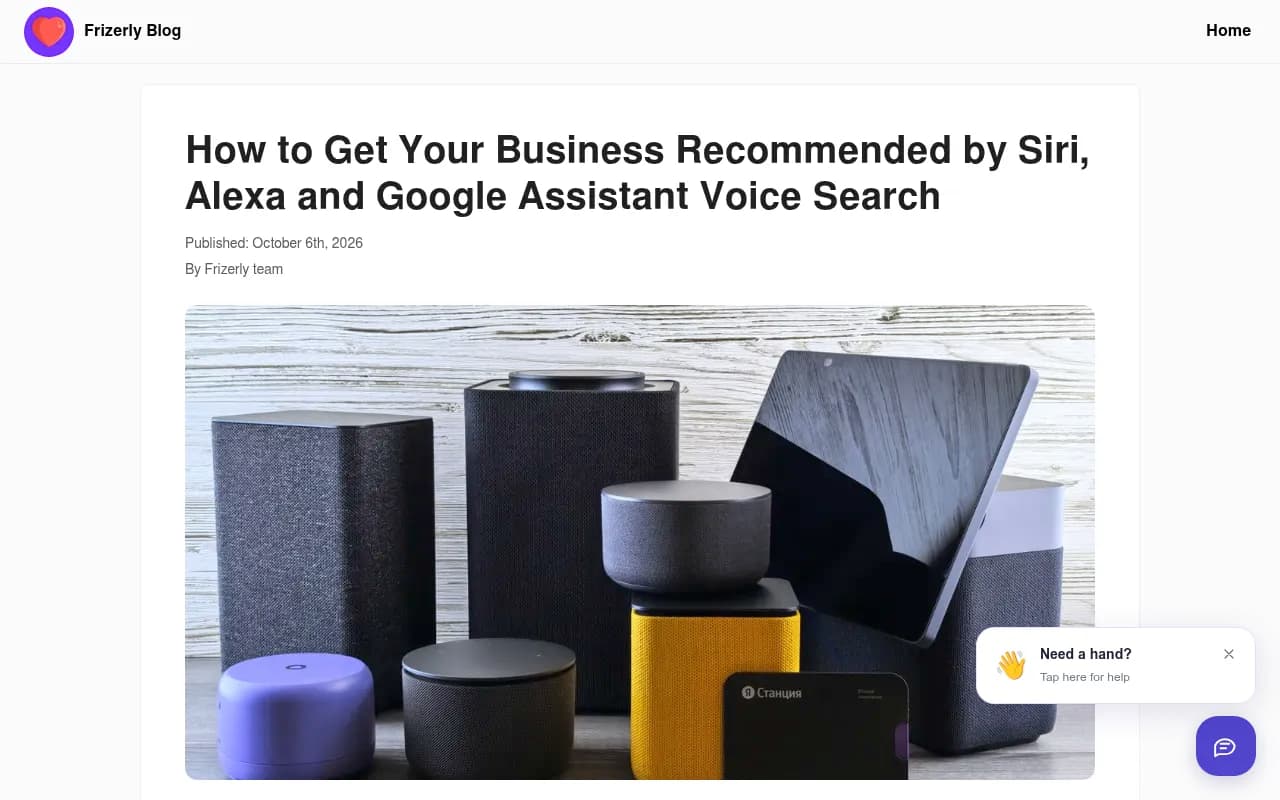
A lot of agency posts promise that you can "get on Alexa" through some special submission. Frizerly's guide, for example, correctly says voice assistants don't use a special registration form. They pick businesses based on verified listings, structured data, review activity and whether content answers the question. That matches what I found in the research.
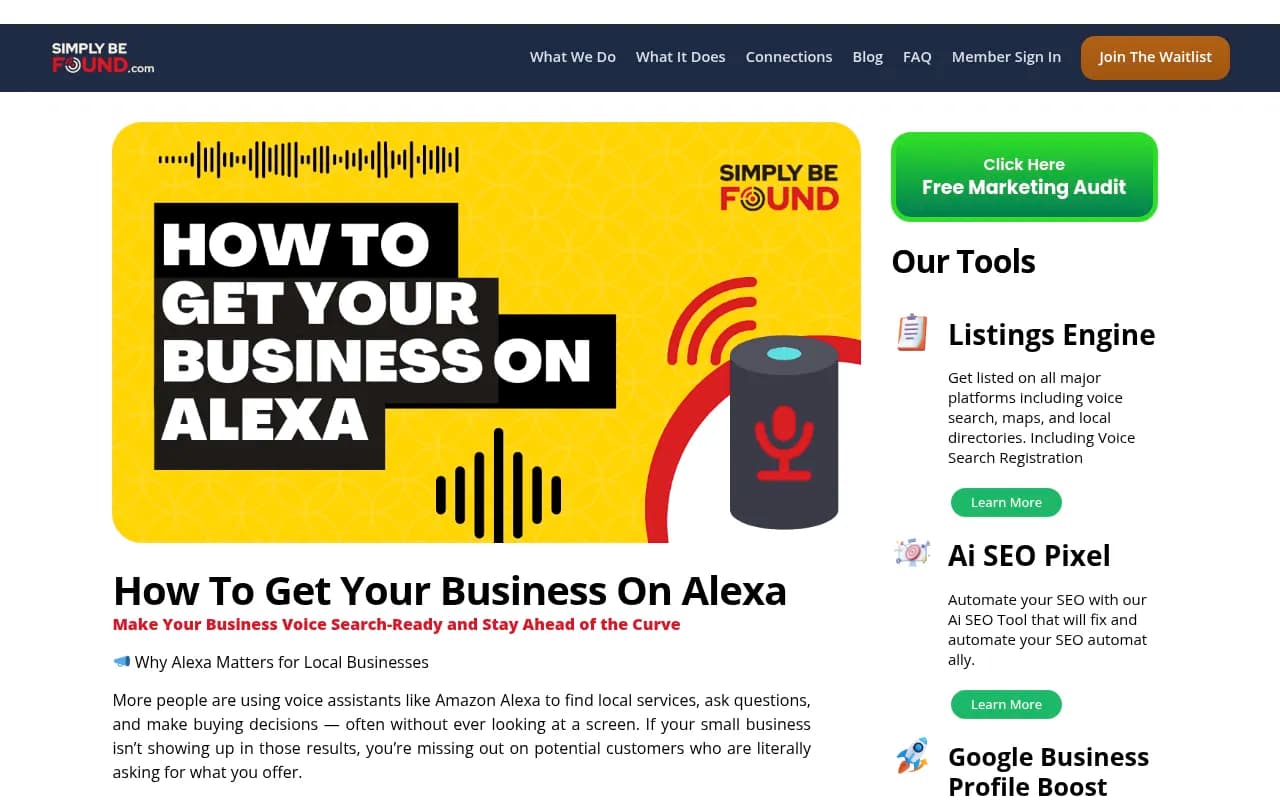
Where I'd be careful is the confident per-assistant source lists. Statements like "Alexa pulls from Bing Places and Yelp" come from vendors with something to sell. The Yelp link is backed by Amazon's own partner announcement. The rest is plausible, not proven. Simply Be Found's claim that Yelp became Alexa's primary local source, for instance, is a vendor claim.
Tools like Frizerly pitch automation for keeping listings consistent and tracking assistant mentions. Treat that kind of claim as something to trial, not assume.
A realistic monitoring cadence
| Frequency | Task |
|---|---|
| Weekly | Run your prompt list in an AI monitoring tool; note new competitors and cited sources |
| Monthly | Ask Alexa directly on a real device; review listing accuracy on Yelp, Bing Places, Apple Business Connect |
| Quarterly | Check server logs for AI crawlers; review schema; refresh FAQ answers and photos |
| Ongoing | Respond to every new review within a few days |
If this feels like a lot, it isn't. For a single-location business the weekly part is thirty minutes once the prompt list exists.
When to get help
If you manage dozens of locations, or you're in a category where AI assistants already recommend a shortlist and you're not on it, outside help can be worth it. An agency like 1001 SEO Media handles local SEO, technical SEO and GEO work, and it uses Promptwatch as its AI visibility platform. For a single shop, you can probably do the basics yourself with the checklist above.
For broader tool comparisons, surferstack.com lists local SEO and AI visibility software with reviews and alternatives.
The bottom line
You can't see Alexa's rankings, and anyone selling a precise "Alexa rank" is guessing. What you can do is keep the Yelp, Bing, Apple and vertical-platform profiles that Alexa+ and other assistants draw from accurate and well reviewed, then test how AI assistants answer your customers' questions every week. Start with one thing this week: log into Yelp and check that your hours, phone number and categories match your Google profile exactly.