Key takeaways
- Sitecore's acquisition of Scrunch AI in 2026 effectively pushed the platform upmarket, making it a poor fit for most non-enterprise teams on budget
- Profound has strong data quality but its pricing tiers create real gaps -- you need $399/mo just to track Perplexity alongside ChatGPT
- Otterly.AI is genuinely cheap and easy to start with, but it's monitoring-only with no content tools, no crawler logs, and no way to act on what you find
- Promptwatch is the only option in this group that closes the loop: it finds visibility gaps, generates content to fix them, and tracks whether that content gets cited
- For teams that want to do more than watch a dashboard, Promptwatch's $249/mo Professional plan is the most complete non-enterprise option available
If you were using Scrunch AI before Sitecore came along, you probably have a decision to make. The acquisition didn't kill the product, but it did push it firmly into enterprise territory -- which means the pricing, the sales process, and the roadmap are all now oriented around large organizations with dedicated digital experience teams. That's not most of us.
So where do you go? The GEO and AI visibility space has exploded in the last 18 months. There are now over 40 tools claiming to help you show up in ChatGPT, Perplexity, Claude, and Google AI Overviews. Most of them are dashboards that show you a score and leave you wondering what to do next.
This guide focuses on four platforms that actually come up in serious conversations: Scrunch AI (post-Sitecore), Profound, Otterly.AI, and Promptwatch. Here's what each one actually does, what it costs, and who it's realistically for.
What changed with the Sitecore-Scrunch deal
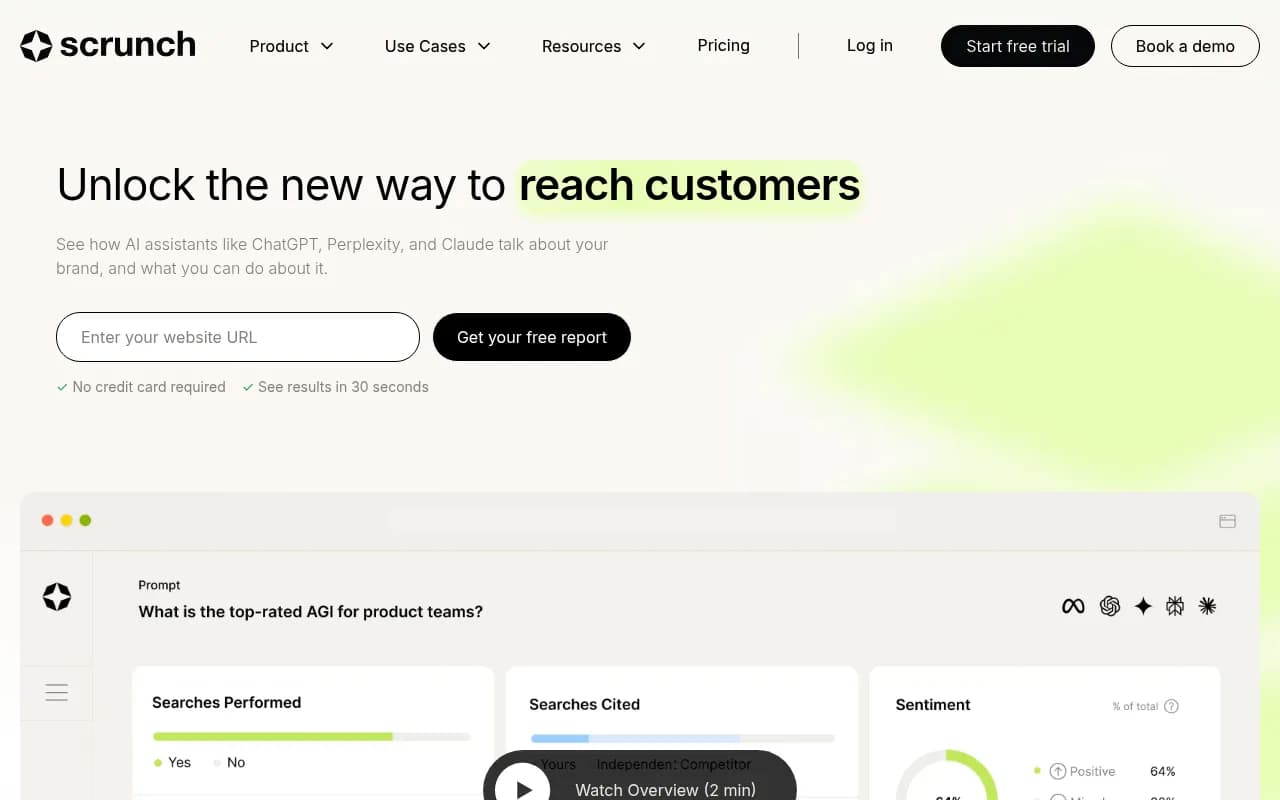
Scrunch AI built its reputation on a few things: solid brand monitoring across LLMs, a site auditing layer, and its Agent Experience Platform (AXP), which was designed to deliver AI-optimized content directly to AI user agents. It was a capable tool, particularly for teams getting started with AI visibility or working within tighter budget constraints.
Sitecore acquiring Scrunch changed the calculus. Sitecore is an enterprise digital experience platform -- its customers are large retailers, financial institutions, and global brands with complex content infrastructure. Scrunch's AXP fits neatly into that story. But for a 5-person marketing team at a B2B SaaS company? The integration path, the pricing, and the support model all tilt toward enterprise now.
That doesn't mean Scrunch is worthless for smaller teams. But it does mean you're no longer the primary customer, and that matters when it comes to product prioritization, pricing flexibility, and the kind of help you get when something breaks.
The four platforms, honestly assessed
Profound
Profound is one of the more serious platforms in the AEO space. It was an early mover, it has genuinely differentiated data (real user prompt volumes, front-end response capture rather than just API calls), and it covers features like Amazon Rufus shopping tracking that most competitors still don't touch.
The problem is the pricing structure. The Starter plan at $99/mo only covers ChatGPT. If you want Perplexity and Google AI Overviews -- which you almost certainly do -- you're looking at $399/mo. Claude, Gemini, Grok, and the rest? Enterprise pricing, not published. And even at the Growth tier, you're capped at 100 tracked prompts with 3 user seats.
For a team that wants comprehensive multi-model coverage without negotiating an enterprise contract, Profound creates real gaps. The data quality is there. The pricing architecture makes it hard to justify unless you're ready to commit at the Growth level or above.
Profound

Otterly.AI
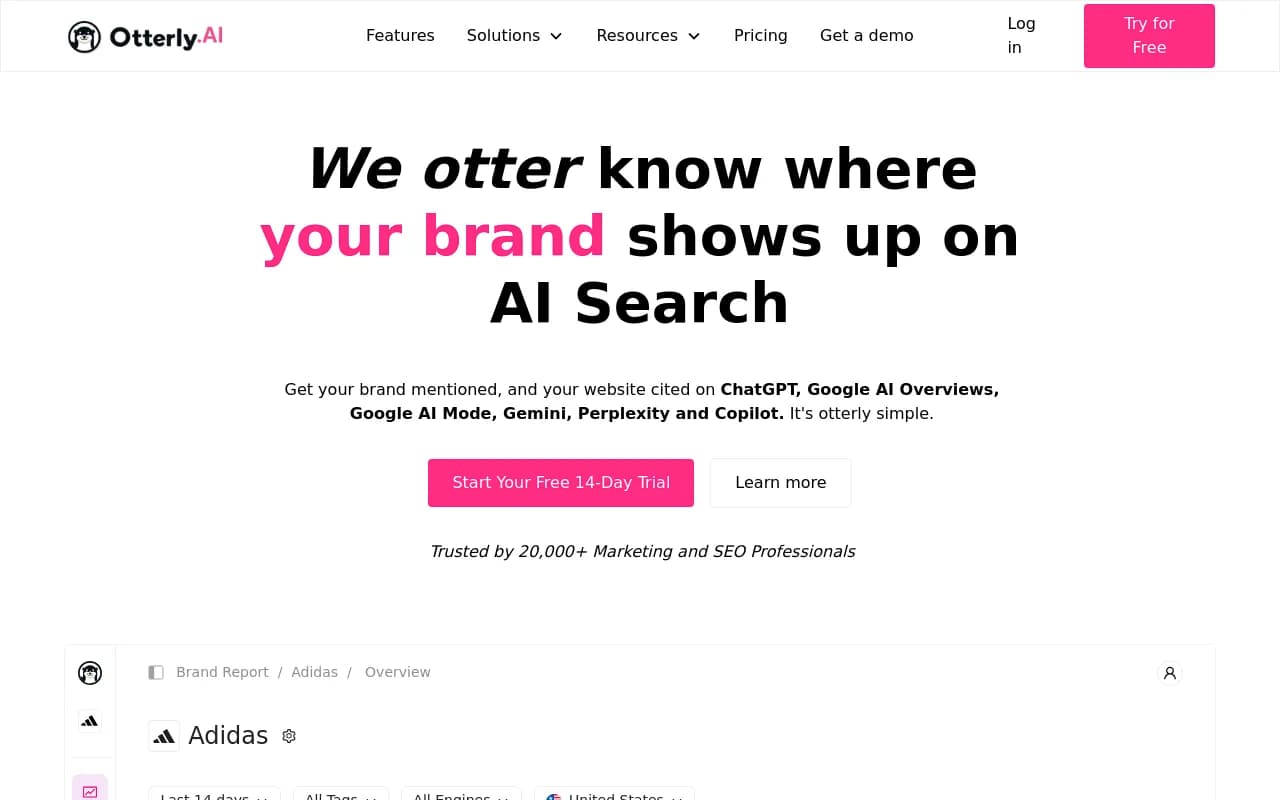
Otterly.AI is the budget entry point in this category. At $29/mo, it's the cheapest serious option, and it covers the basics: brand monitoring across ChatGPT, Perplexity, and Google AI Overviews, with some competitor tracking built in.
The honest limitation is that it stops there. No crawler logs. No content generation. No gap analysis that tells you what you're missing. No way to connect what you're seeing in the dashboard to actual traffic or revenue. It's a monitoring tool, and a decent one, but if you're trying to improve your AI visibility rather than just observe it, Otterly.AI doesn't give you the tools to do that.
For teams that are just starting out and want to understand the landscape before committing to a bigger platform, Otterly.AI makes sense as a starting point. Just know you'll likely outgrow it quickly.
Otterly.AI

Promptwatch
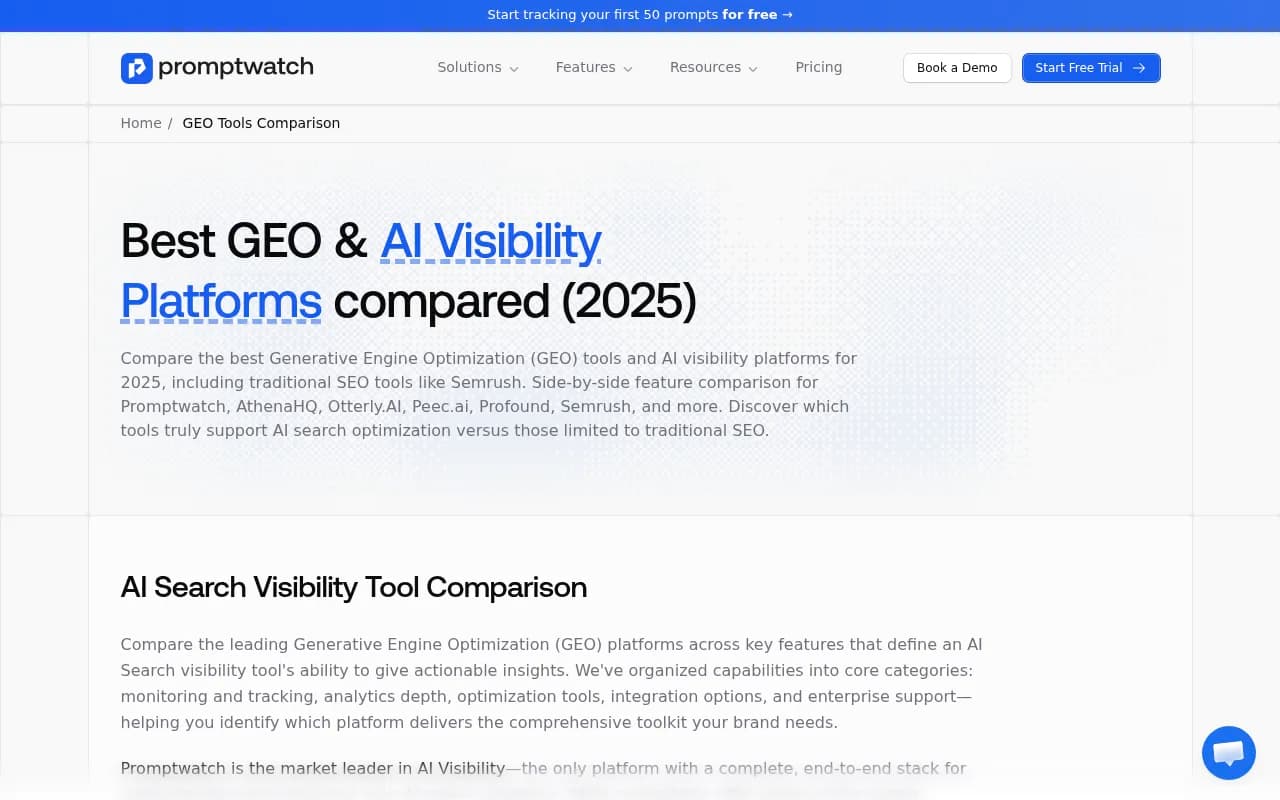
Promptwatch is built around a different premise than the other tools here. Most GEO platforms show you where you're invisible. Promptwatch shows you where you're invisible and then helps you fix it.
The core workflow is: find the gaps (Answer Gap Analysis shows exactly which prompts competitors rank for that you don't), create content to close those gaps (Content Agents generate articles, listicles, and briefs grounded in real prompt data), and track whether that content gets cited. Page-level tracking shows which pages AI models are citing, how often, and by which model. The AI Crawler Logs show you when ChatGPT, Claude, or Perplexity actually crawl your site, which pages they read, and what errors they hit.
That last piece -- the crawler logs -- is something most competitors don't have at all. It's the difference between knowing you're not being cited and knowing why you're not being cited.
Pricing starts at $99/mo (Essential: 1 site, 50 prompts, 5 articles), $249/mo for Professional (2 sites, 150 prompts, 15 articles, crawler logs, state/city tracking), and $579/mo for Business (5 sites, 350 prompts, 30 articles). There's a free trial, and annual billing brings the cost down further.

Side-by-side comparison
| Feature | Scrunch AI (post-Sitecore) | Profound | Otterly.AI | Promptwatch |
|---|---|---|---|---|
| Starting price | Enterprise (was $250/mo) | $99/mo (ChatGPT only) | $29/mo | $99/mo |
| Multi-model coverage at entry | Limited | ChatGPT only | ChatGPT, Perplexity, AIO | 10 models |
| Full model coverage price | Enterprise | $399/mo+ | ~$99/mo | $249/mo |
| Content generation | Via AXP (enterprise) | No | No | Yes (Content Agents) |
| Answer/content gap analysis | No | Limited | No | Yes |
| AI crawler logs | No | Yes (Agent Analytics) | No | Yes |
| Reddit/YouTube tracking | No | No | No | Yes |
| ChatGPT Shopping tracking | No | Yes | No | Yes |
| Traffic attribution | No | Limited | No | Yes |
| Prompt volume data | No | Yes (real-user data) | No | Yes |
| Free trial | No | Yes | Yes | Yes |
| Best for | Enterprise Sitecore customers | Data-focused teams with budget | Beginners/budget | Teams that want to act, not just watch |
The real question: monitoring vs. optimization
The distinction that matters most here isn't pricing or model coverage -- it's whether a tool helps you do something or just shows you data.
Profound and Otterly.AI are fundamentally monitoring tools. They tell you where you stand. That's useful, especially if you're reporting to stakeholders who want visibility scores. But knowing you're not being cited in Perplexity for "best project management software for agencies" doesn't tell you what content to write, what angle to take, or whether your existing pages are even being crawled.
Scrunch AI, pre-Sitecore, had some optimization features through its AXP. Post-acquisition, those capabilities are increasingly bundled into an enterprise package that most non-enterprise teams can't access.
Promptwatch is the platform in this group that's actually designed around the optimization loop. The Answer Gap Analysis doesn't just show you gaps -- it shows you the specific prompts, the prompt volumes, and the competitors winning those prompts. The Content Agents use that data to generate content that's engineered to answer what AI models are already looking for. And the crawler logs let you verify that AI engines are actually finding and reading what you publish.
Who should use what
Use Otterly.AI if...
You're just getting started with AI visibility tracking, have a tight budget, and want to understand the basics before committing to a more capable platform. It's a reasonable first step, not a long-term solution.
Use Profound if...
Data quality is your top priority and you're willing to pay for it. Profound's real-user prompt volume data and front-end response capture are genuinely differentiated. If you're at a company where the research rigor matters more than the content tooling, and you can justify $399/mo for full model coverage, Profound is a strong choice.
Use Scrunch AI if...
You're already in the Sitecore ecosystem and the AXP integration makes sense for your content infrastructure. Otherwise, the post-acquisition positioning makes it a hard sell for independent teams.
Use Promptwatch if...
You want to actually improve your AI visibility, not just track it. The combination of gap analysis, content generation, crawler logs, and traffic attribution makes it the most complete non-enterprise option. The $249/mo Professional plan covers 150 prompts across 10 AI models with crawler logs included -- that's a better deal than Profound's $399/mo plan for multi-model coverage, and it comes with tools to act on what you find.
A note on data quality
One thing worth flagging: not all AI visibility data is created equal. Most tools in this space -- including some of the ones listed here -- construct their own prompts, run them through AI APIs, and report the results. The prompts are hypothetical. They may not reflect what real users are actually asking.
Profound uses real-user prompt volume data, which is a genuine differentiator. Promptwatch tracks how AI search engines behave in real user interfaces (not just APIs), which matters because user-facing answers and citations can differ from what the API returns. Both approaches have merit. What you want to avoid is a tool that's essentially making up prompts and calling it "visibility data."
The bottom line
The Sitecore-Scrunch deal is a useful forcing function. It's pushed a lot of teams to actually evaluate what they need from a GEO platform -- and most of them are realizing they need more than a monitoring dashboard.
If you're a non-enterprise team that wants to understand and improve your AI search visibility, the honest ranking looks like this: Promptwatch for teams that want to optimize, Profound for teams that prioritize data depth and can absorb the cost, Otterly.AI as a starting point, and Scrunch AI only if you're already in the Sitecore world.
The market is moving fast. AI search is already driving meaningful traffic for brands that have figured out the content angle. The tools that help you close the loop from "we're not visible" to "we published content and now we're being cited" are the ones worth paying for.