Key takeaways
- Most AI visibility tools were built for English-first markets and bolt on language support as an afterthought — the data quality outside English varies wildly.
- True multi-language support means tracking AI model responses in the target language, not just translating prompts into English and querying from a US IP.
- A handful of platforms genuinely support non-English monitoring: Promptwatch, Peec AI, SE Visible, and Profound are the most credible options for non-English markets in 2026.
- For APAC markets specifically, Kai Footprint is cited as the only purpose-built option with no comparable alternative.
- Beyond monitoring, you need a platform that can help you act on gaps — creating content that AI models in your target language will actually cite.
Why non-English AI visibility is harder than it looks
If you're tracking AI visibility for a brand operating in Germany, Japan, Brazil, or the Netherlands, you've probably already noticed the problem: most tools give you a dashboard full of English-language data and call it "global coverage."
The reality is messier. When ChatGPT, Perplexity, or Google AI Overviews respond to a query in French, they're not just translating an English answer. They're drawing on different training data, different citation sources, and sometimes different model behaviors entirely. A brand that appears consistently in English-language AI responses might be invisible in German ones — and vice versa.
There are a few specific ways tools fail here:
Prompt translation isn't the same as native-language tracking. Some platforms take your English prompts, run them through a translation API, and query the AI model. But the AI model's response to a translated prompt from a US-based server often differs from what a real user in Munich or São Paulo would see. The geographic context, the language model's behavior, and the citation sources all shift.
Citation sources differ by language. AI models cite different domains depending on the language of the query. A German-language query might surface citations from Spiegel.de or Heise.de rather than TechCrunch. If your tool only tracks English-language citation sources, you're missing the actual competitive landscape.
Persona and region matter. A user in Japan asking about project management software gets a different AI response than a user in the UK asking the same question in English. Tools that don't simulate region-specific personas are giving you incomplete data.
This isn't a minor gap. For brands with meaningful revenue outside English-speaking markets, it's the difference between useful intelligence and noise.
How to evaluate multi-language claims
Before diving into specific tools, here's a quick framework for stress-testing any vendor's multi-language promises:
- Does the tool query AI models from servers in the target region, or just translate prompts?
- Can you set a language and country independently (e.g., French language, Belgium location)?
- Does it track citation sources in the target language, not just English-language domains?
- Can you configure personas that match how real users in that market actually prompt?
- Does it support content optimization recommendations in the target language?
Most tools will answer "yes" to all of these in a sales call. Ask for a demo with a specific non-English prompt and see what the actual output looks like.
The platforms that actually deliver
Promptwatch
Promptwatch is one of the few platforms that treats multi-language and multi-region tracking as a first-class feature rather than a checkbox. You can monitor AI responses in any language, from any country, with customizable personas that match how your actual customers prompt — not just a generic "European user."
What sets it apart for non-English markets is the combination of real prompt data and actionable output. It doesn't just show you where you're invisible in French or Dutch AI responses — it helps you figure out what content to create to fix that. The Answer Gap Analysis identifies which prompts competitors are visible for in your target language that you're not. Content Agents then generate articles and briefs grounded in that specific prompt data, in the right language, targeting the right audience.
For brands operating in multiple European markets, or any market where English isn't the primary search language, this matters a lot. The AI Crawler Logs also show you which pages AI crawlers are visiting in each region, so you can see whether your localized content is actually being discovered.

Peec AI
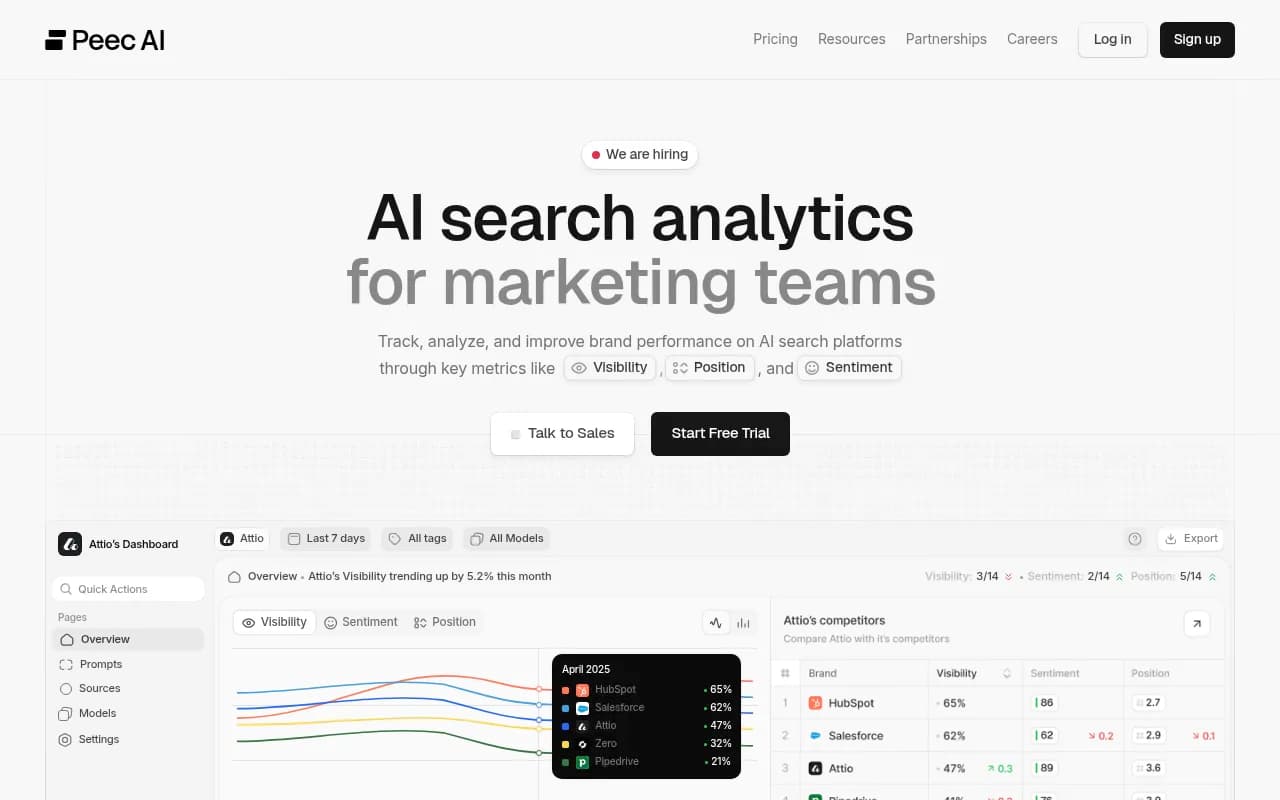
Peec AI is a European platform with genuine multi-language credentials. According to That's Noble's 2026 roundup, it supports 115+ languages and has strong global coverage with clean dashboards. It's built by a European team, which means non-English markets aren't an afterthought — they're the primary use case.
The platform covers up to 10 AI models and starts at €85/month, which is competitive for the feature set. It's monitoring-focused rather than optimization-focused, so you'll get solid data on where you stand but less help on what to do about it. For teams that already have content production workflows and just need reliable non-English tracking data, Peec AI is worth a serious look.
SE Visible
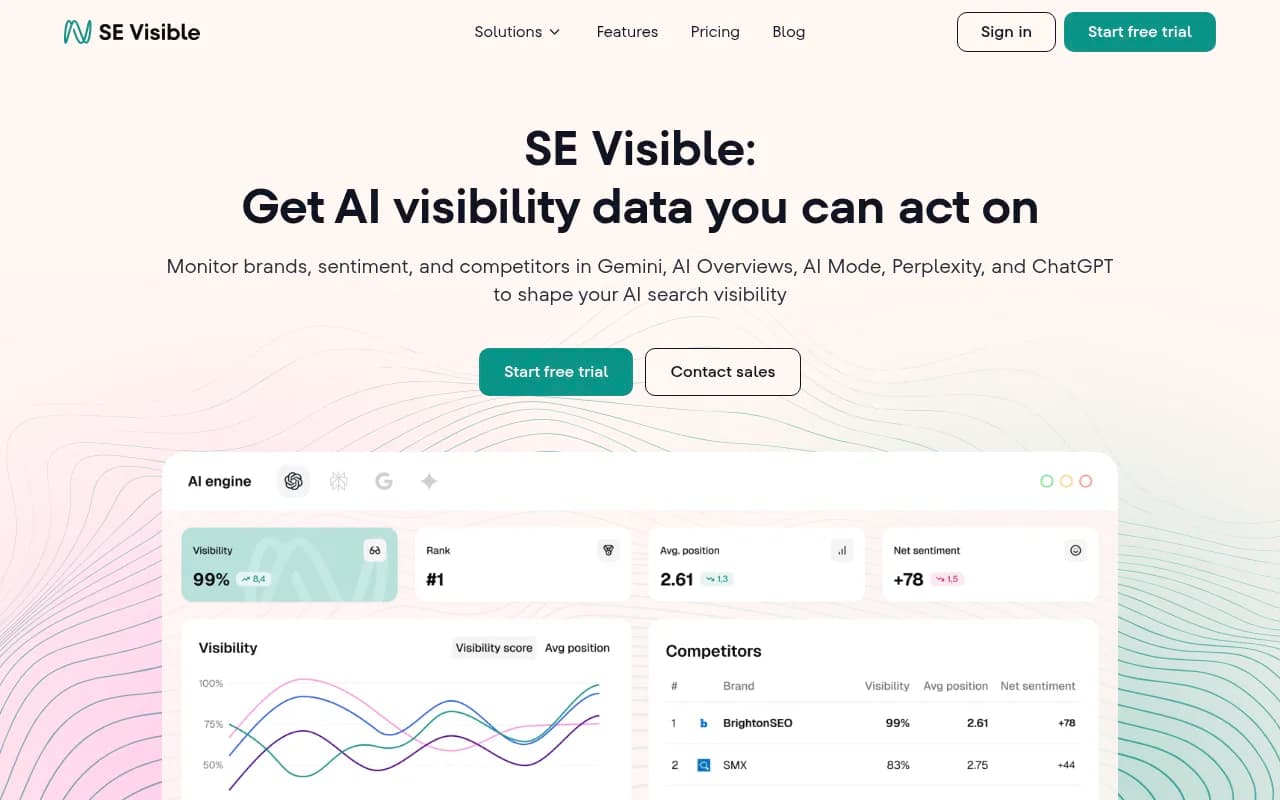
SE Visible (from SE Ranking) supports multi-brand and multi-country tracking across 5 AI models, starting at $99/month. It's a reasonable option for teams already in the SE Ranking ecosystem who want to add AI visibility tracking without switching platforms.
The multi-country support is genuine, though the depth of non-English citation analysis is less comprehensive than Promptwatch or Peec AI. It works well for European markets and handles common languages like Spanish, French, German, and Portuguese. Less clear on APAC coverage.
Profound
Profound is primarily positioned as an enterprise tool for prompt research, with up to 10 AI models tracked at higher tiers. It has solid multi-language capabilities and is used by larger brands with global footprints. The starting price is $99/month, but meaningful multi-language coverage tends to require higher tiers.
The platform is strong on data depth and enterprise features. Like Peec AI, it's more monitoring-oriented than optimization-oriented — you get good intelligence but need to bring your own content strategy.
Profound

Otterly.AI
Otterly.AI is the budget entry point at $29/month. It covers 4 AI models at the base tier and has some multi-language support, but it's primarily built for English-language markets. If you're tracking a brand in the UK, Australia, or Canada, it works fine. For non-English European or APAC markets, the coverage gets thin quickly.
It's worth mentioning because of its price point — for small teams doing initial exploration of AI visibility, it's a low-risk starting point. Just don't expect deep German or Japanese tracking.
Otterly.AI

Nightwatch
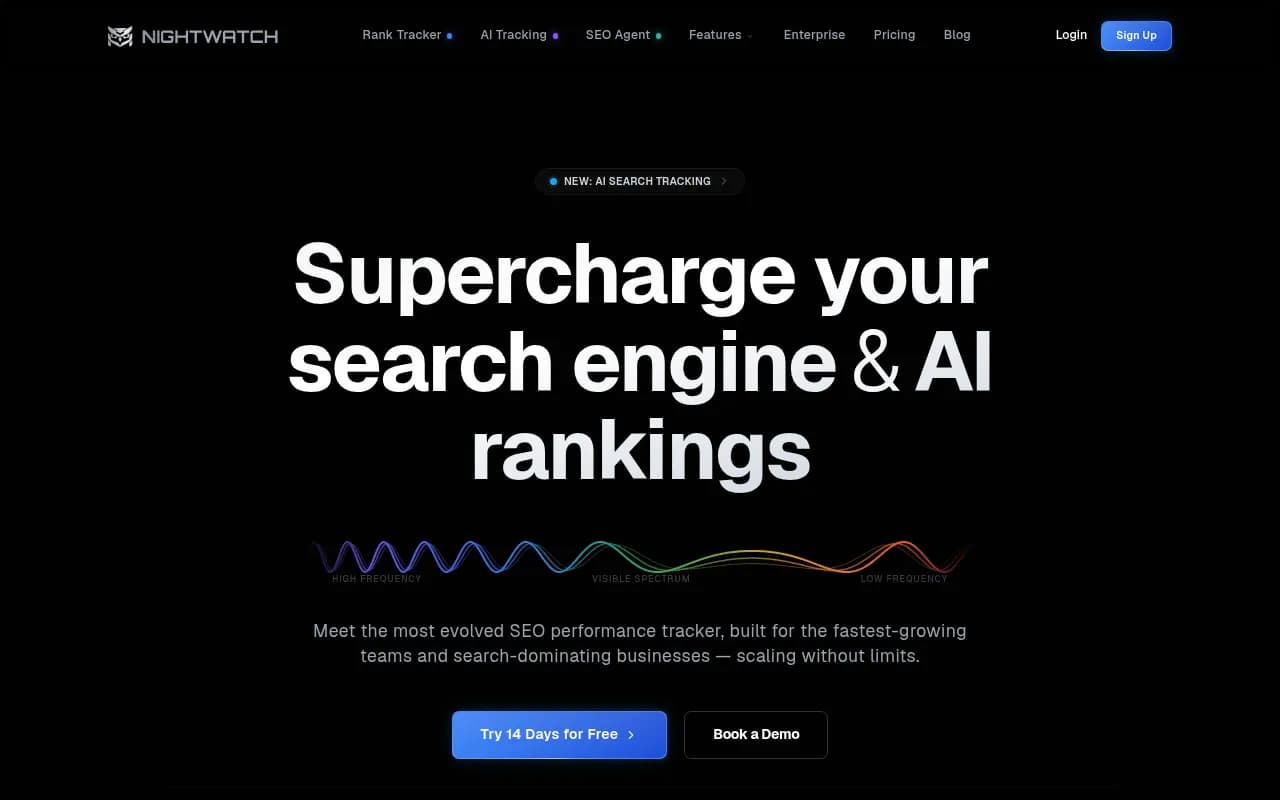
Nightwatch combines traditional SEO rank tracking with an AI monitoring add-on ($32/month base + $99 for the AI module). The multi-language support is decent for European markets given its SEO heritage, but the AI-specific tracking is less mature than dedicated platforms.
If your team is already using Nightwatch for SEO and you want to layer in basic AI visibility monitoring for non-English markets, the add-on is a reasonable incremental investment. For serious multi-language AI visibility work, it's not the primary tool.
A note on APAC markets
For brands operating in Japan, South Korea, China, or Southeast Asia, the landscape is genuinely different. The AI models used in these markets often differ from the Western ones (ChatGPT, Perplexity, Gemini), and the citation sources are entirely different ecosystems.
The research from ZipTie.dev's 2026 comparison specifically calls out Kai Footprint as "the clear choice for brands that need non-English AI visibility tracking" in APAC, noting "there is simply no comparable alternative for APAC markets." None of the mainstream Western platforms have meaningfully cracked this yet. If APAC is your primary market, a regional specialist is likely a better fit than trying to force a Western platform to cover it.
Comparison table
| Platform | Multi-language depth | AI models tracked | Starting price | Optimization features | Best for |
|---|---|---|---|---|---|
| Promptwatch | Any language + region + persona | 10 | $99/mo | Yes (content agents, gap analysis) | Multi-market brands wanting to act on data |
| Peec AI | 115+ languages | Up to 10 | €85/mo | No | European brands needing solid monitoring |
| SE Visible | Multi-country | 5 | $99/mo | No | SE Ranking users adding AI tracking |
| Profound | Multi-language (enterprise) | Up to 10 | $99/mo | Limited | Enterprise prompt research |
| Otterly.AI | Limited (English-first) | 4 | $29/mo | No | Budget entry point, English markets |
| Nightwatch | Decent for Europe | 4 | $32 + $99/mo | No | Teams already using Nightwatch for SEO |
| Kai Footprint | APAC-native | APAC models | Custom | Limited | APAC-focused brands |
What "multi-language" actually requires under the hood
It's worth being specific about what good non-English tracking actually involves, because the technical requirements are non-trivial.
Regional IP routing. To get accurate results, the tool needs to query AI models from IP addresses in the target region. A query to ChatGPT from a US server asking in German will often produce different results than the same query from a German IP. Good platforms handle this transparently.
Language-native prompt libraries. The prompts used to track your brand should be written natively in the target language, not machine-translated. "What is the best CRM software?" translates differently in German business culture than in English — the phrasing, the implied context, and the AI's response all shift.
Citation source tracking in the target language. If you're tracking visibility in Spanish AI responses, you need to know whether AI models are citing Spanish-language sources. A tool that only tracks English-language citation domains is giving you an incomplete picture of your competitive position.
Persona customization. Real users in different markets prompt differently. A French B2B buyer asking about software uses different vocabulary and framing than a US buyer. Platforms that let you define custom personas for each market produce more accurate data.
The action gap: monitoring vs. doing something about it
Here's the thing most of these comparison guides don't address directly: knowing you're invisible in Dutch AI responses doesn't help you unless you can do something about it.
Most monitoring-only platforms stop at the data. They show you a visibility score, maybe a competitor heatmap, and leave you to figure out the rest. That's fine if you have a content team that can take a gap analysis and run with it. But for most marketing teams, the bottleneck isn't knowing what's missing — it's having the capacity to create the right content to fill the gap, in the right language, optimized for how AI models in that market actually cite sources.
This is where Promptwatch's approach is meaningfully different. The Answer Gap Analysis shows exactly which prompts competitors are visible for in your target language that you're not. The Content Agents then generate content grounded in that specific data — not generic SEO filler, but articles and briefs engineered to answer the exact gaps AI models are exposing in your target market. And the page-level tracking shows you when that content gets crawled and cited, so you can see the loop closing.
For teams operating in multiple non-English markets, that end-to-end workflow is worth a lot more than a better dashboard.
Practical recommendations
If you're just starting to track AI visibility in non-English markets:
- Start with Peec AI if you're primarily European and want clean, reliable monitoring data at a reasonable price.
- Start with Promptwatch if you want to both track and improve your visibility — especially if you're managing multiple markets or need to produce localized content at scale.
- Use Profound if you're an enterprise team with dedicated analysts who can work with raw prompt research data.
- Look at regional specialists for APAC rather than forcing a Western platform to cover markets it wasn't built for.
If you're already tracking AI visibility in English and want to expand to other languages:
- Audit your current tool's actual non-English capabilities with a live demo, not a feature checklist.
- Check whether it queries from regional IPs or just translates prompts.
- Verify that citation tracking covers local-language domains, not just English ones.
- Make sure you have a plan for acting on the data, not just collecting it.
The brands that will win in non-English AI search over the next two years are the ones that treat localized AI visibility as a first-class priority now, while most competitors are still focused on English-language optimization. The tools to do it properly exist — the question is whether you're using them.