Key Takeaways
- Brevo leads for growing businesses with powerful automation and generous free tier (300 emails/day)
- ActiveCampaign dominates advanced automation with 900+ pre-built workflows and deep CRM integration
- Klaviyo is the ecommerce standard with $45B+ in attributed revenue and predictive analytics
- Mailchimp remains best for beginners with intuitive design but higher pricing at scale
- HubSpot suits enterprises needing full CRM + marketing automation in one platform
- Pricing ranges from free (limited) to $1,500+/month for enterprise features
- Key decision factors: list size, automation needs, ecommerce integrations, and budget
Why Email Marketing Still Dominates in 2026
Despite the rise of AI chatbots and social media, email marketing remains the highest-ROI channel for most businesses. The numbers tell the story: for every $1 spent on email marketing, the average return is $36-42. Unlike social platforms where organic reach continues to decline, email gives you direct access to your audience without algorithm interference.
In 2026, the landscape has evolved significantly. Modern email platforms now integrate AI-powered personalization, predictive sending times, and sophisticated automation that rivals enterprise marketing clouds -- but at a fraction of the cost. The challenge isn't whether to use email marketing, but which platform fits your specific needs.
How We Evaluated These Platforms
This comparison is based on hands-on testing, feature analysis, and real-world usage across 15+ email marketing platforms. We evaluated each tool across seven critical dimensions:
- Automation capabilities: Workflow builders, triggers, conditional logic, and pre-built sequences
- Deliverability: Inbox placement rates, authentication support, and sender reputation tools
- Integrations: Native connections to ecommerce platforms, CRMs, and marketing tools
- Ease of use: Interface design, learning curve, and template quality
- Segmentation: List management, behavioral targeting, and personalization options
- Analytics: Reporting depth, attribution tracking, and revenue metrics
- Pricing structure: Free tiers, scalability, and value at different list sizes
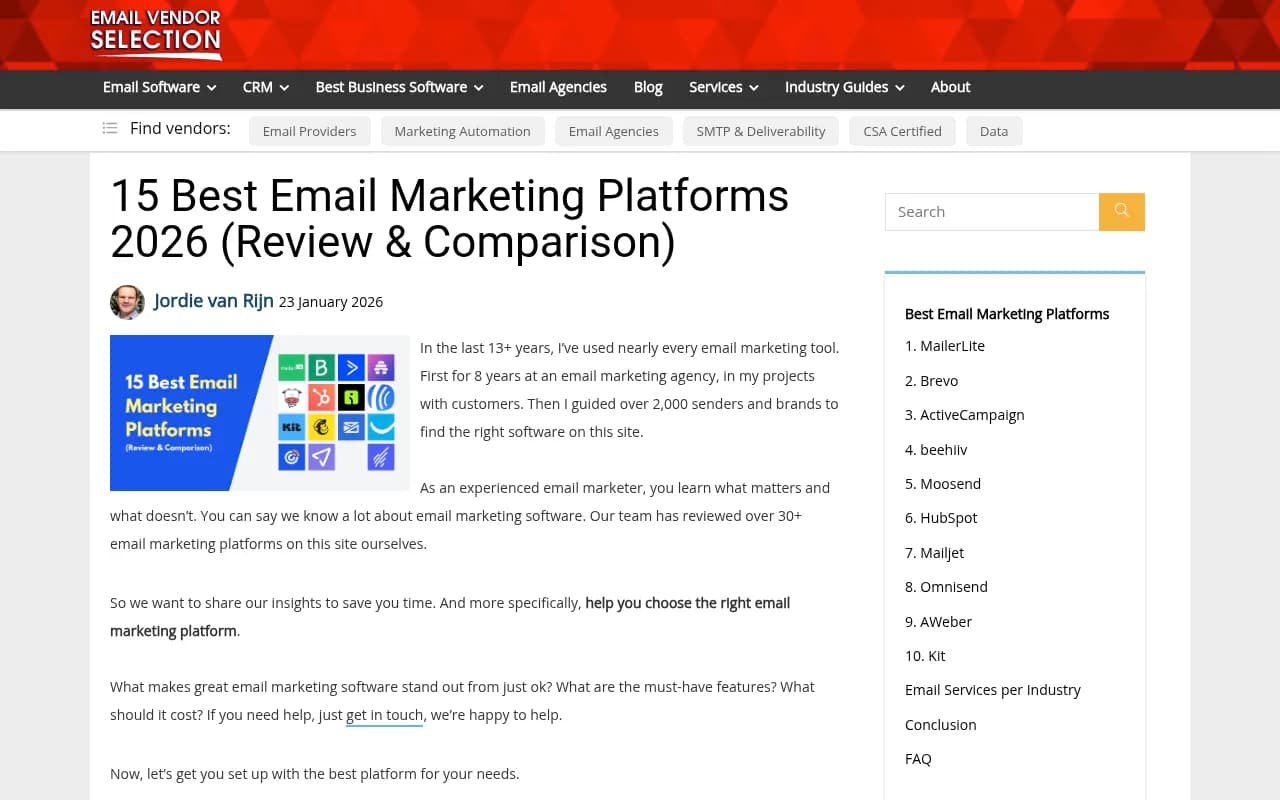
The 15 Best Email Marketing Platforms in 2026
1. Brevo (Formerly Sendinblue)
Best for: Growing businesses and startups
Brevo has emerged as the top choice for businesses scaling from startup to mid-market. The platform combines email marketing, SMS, chat, CRM, and marketing automation in one interface.
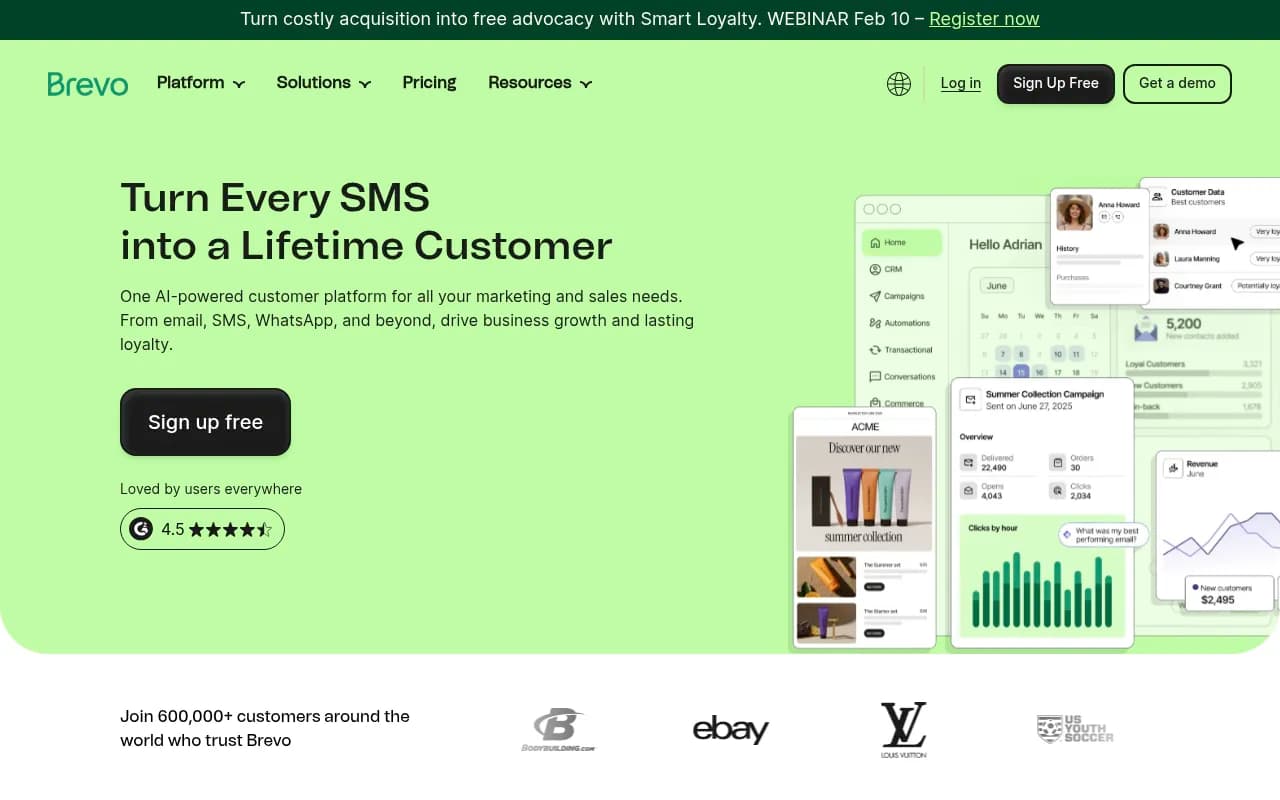
Key strengths:
- Free plan includes 300 emails per day (unlimited contacts)
- Built-in CRM and sales pipeline management
- Transactional email API included at all tiers
- SMS marketing integrated natively
- Advanced automation with conditional splits and A/B testing
- Strong deliverability rates (average 95%+ inbox placement)
Pricing:
- Free: 300 emails/day, unlimited contacts
- Starter: $25/month for 20,000 emails
- Business: $65/month for 20,000 emails (adds automation, A/B testing, landing pages)
- Enterprise: Custom pricing
Best for: SaaS companies, B2B businesses, and anyone needing email + SMS + CRM in one platform without paying HubSpot prices.
Limitations: Template library is smaller than Mailchimp; advanced automation requires Business tier.
2. ActiveCampaign
Best for: Advanced automation and customer experience
ActiveCampaign is the automation powerhouse. If you need sophisticated workflows, behavioral triggers, and deep customer journey mapping, this is your platform.
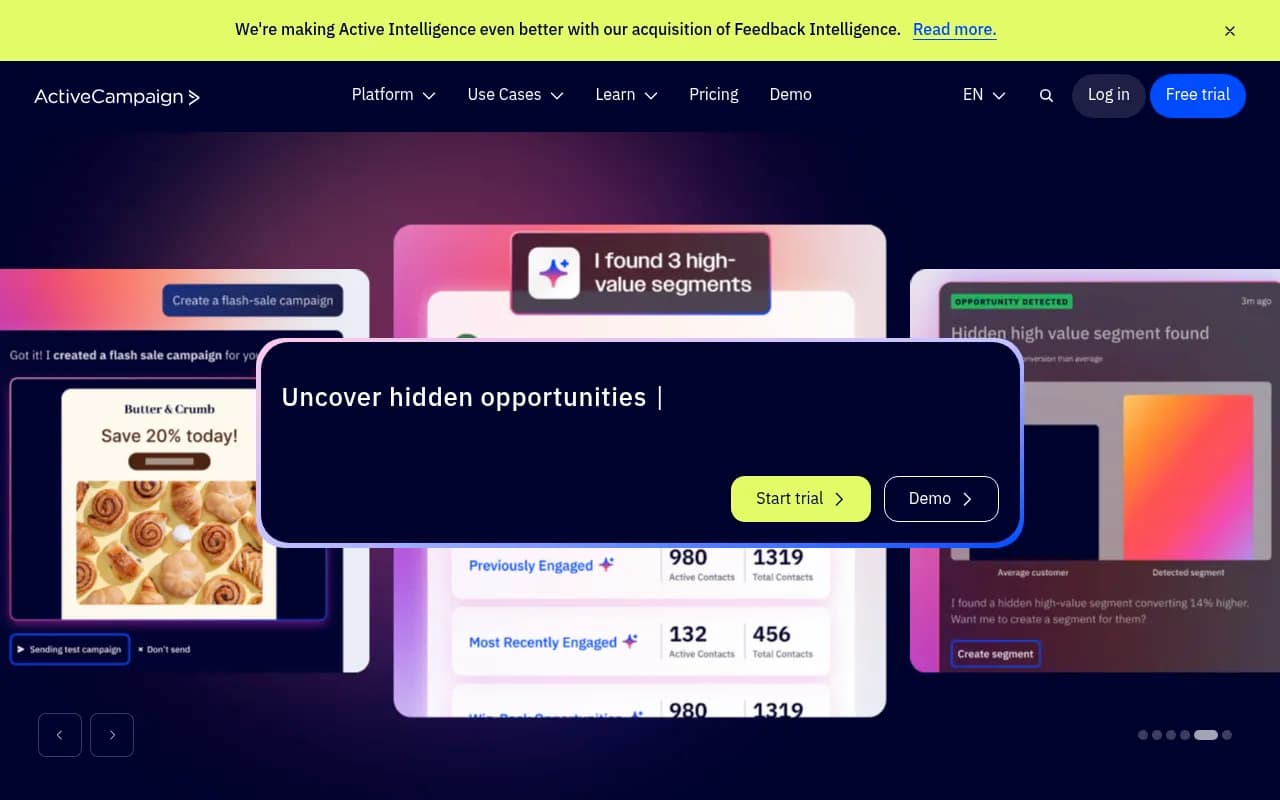
Key strengths:
- 900+ pre-built automation workflows ("recipes")
- Predictive sending optimizes delivery time per contact
- Built-in CRM with deal tracking and sales automation
- Site tracking and event-based triggers
- Conditional content blocks for hyper-personalization
- Lead scoring with machine learning
Pricing:
- Lite: $29/month for 1,000 contacts (email marketing only)
- Plus: $49/month (adds CRM, landing pages, Facebook audiences)
- Professional: $149/month (adds predictive sending, attribution, split automation)
- Enterprise: $259/month (custom reporting, custom mailserver domain)
Best for: B2B companies, agencies, and businesses with complex customer journeys requiring multi-touch nurture sequences.
Limitations: Steeper learning curve; reporting can be overwhelming for beginners; pricing jumps significantly as list grows.
3. Klaviyo
Best for: Ecommerce brands and Shopify stores
Klaviyo is the undisputed leader in ecommerce email marketing, powering brands that have generated over $45 billion in attributed revenue through the platform.
Key strengths:
- Deep Shopify, WooCommerce, BigCommerce, and Magento integrations
- Predictive analytics for customer lifetime value and churn risk
- Product recommendation engine based on browsing and purchase behavior
- Pre-built flows for abandoned cart, browse abandonment, post-purchase, win-back
- Revenue attribution tracking down to individual email and SMS
- Segment customers by RFM (recency, frequency, monetary value)
Pricing:
- Free: Up to 250 contacts and 500 email sends
- Email: $20/month for 500 contacts, scales to $700/month for 50,000 contacts
- Email + SMS: $35/month for 500 contacts
Best for: Online stores doing $100K+ in annual revenue that need sophisticated segmentation and revenue tracking.
Limitations: Expensive at scale; overkill for non-ecommerce businesses; SMS costs add up quickly.
4. Mailchimp
Best for: Beginners and small businesses
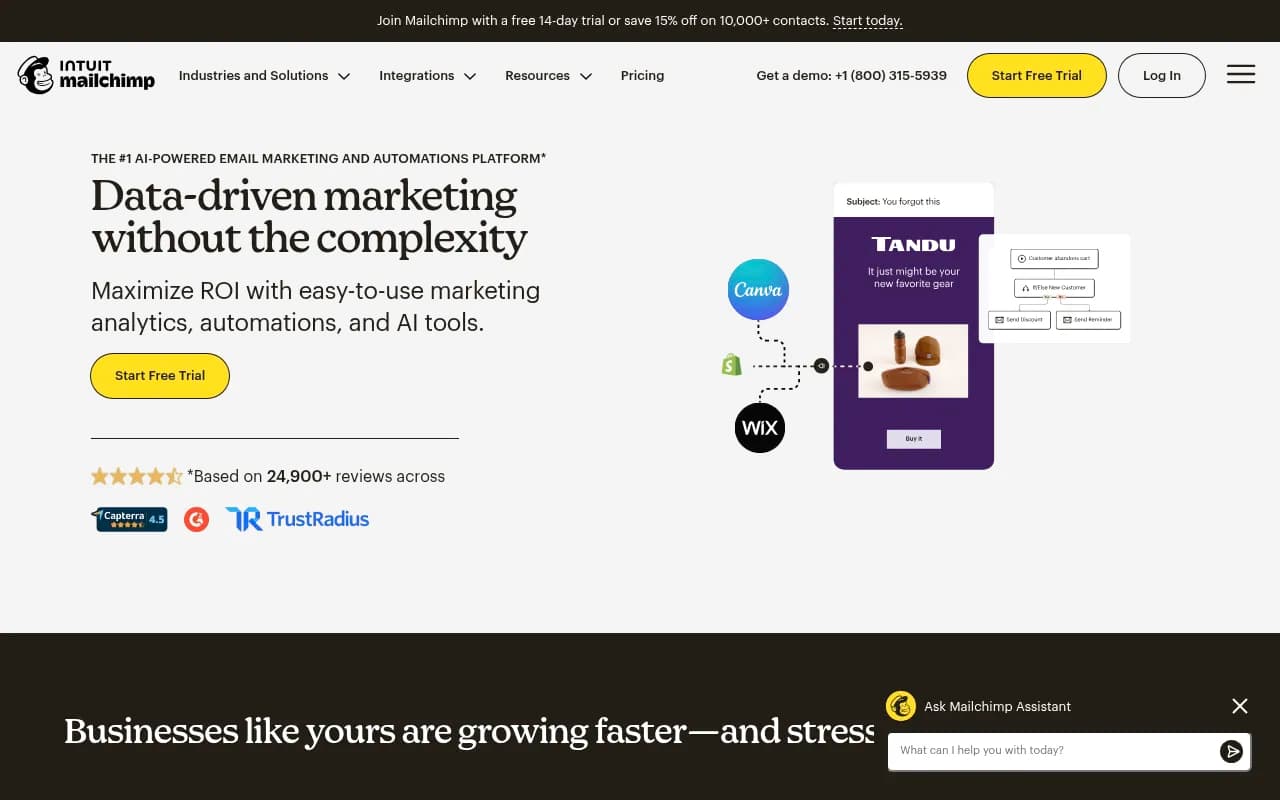
Mailchimp remains the most recognizable name in email marketing, known for its user-friendly interface and extensive template library.
Key strengths:
- Intuitive drag-and-drop builder with 100+ templates
- Creative Assistant uses AI to generate branded content
- Extensive app marketplace (300+ integrations)
- Built-in website and landing page builder
- Strong brand recognition and community resources
- Predictive demographics and behavioral targeting
Pricing:
- Free: Up to 500 contacts, 1,000 sends/month (Mailchimp branding)
- Essentials: $13/month for 500 contacts (removes branding, adds A/B testing)
- Standard: $20/month for 500 contacts (adds automation, custom templates)
- Premium: $350/month for 10,000 contacts (adds advanced segmentation, multivariate testing)
Best for: Solo entrepreneurs, bloggers, and small businesses prioritizing ease of use over advanced features.
Limitations: Pricing becomes expensive as list grows; automation capabilities lag behind ActiveCampaign; customer support quality has declined in recent years.
5. HubSpot Marketing Hub
Best for: Enterprise businesses and full-stack marketing
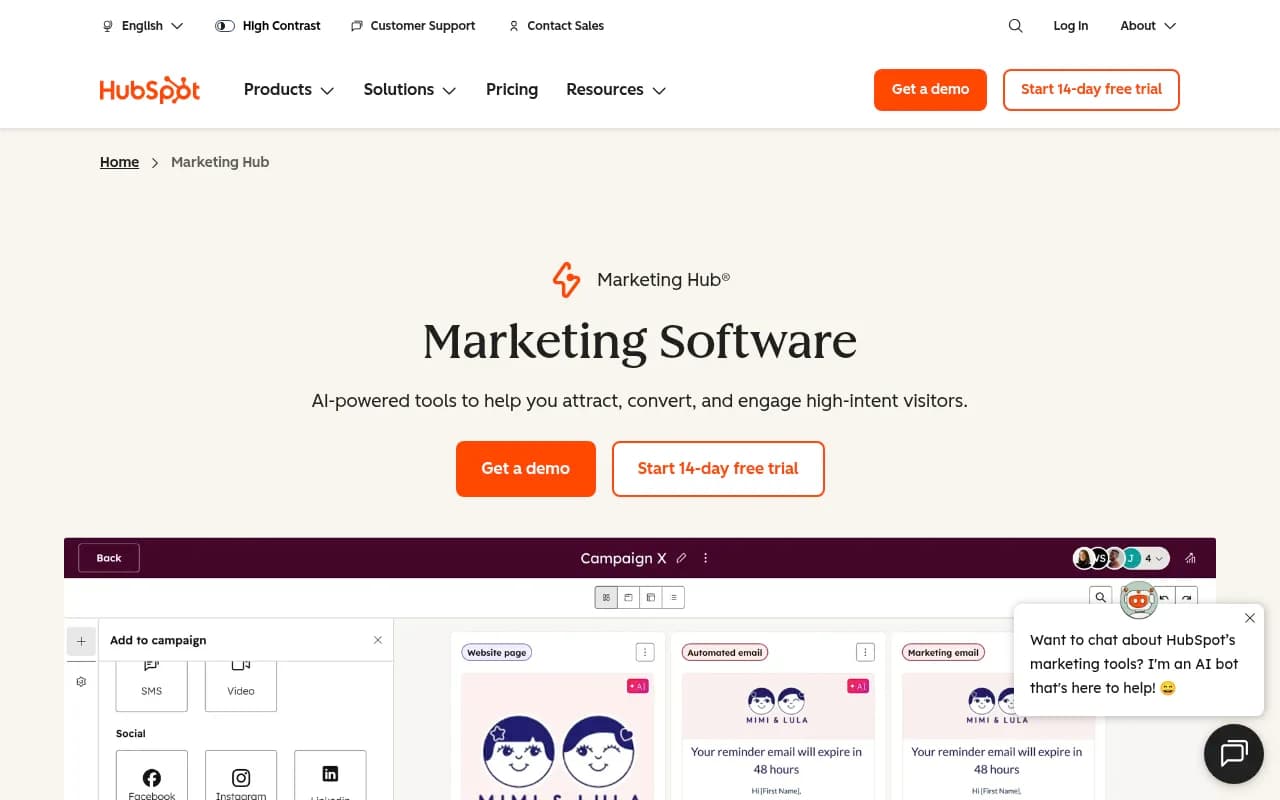
HubSpot offers email marketing as part of a complete CRM and marketing automation platform. If you need email, landing pages, forms, social media, ads, and CRM in one ecosystem, HubSpot delivers.
Key strengths:
- Free CRM with unlimited users and contacts
- Complete marketing automation with visual workflow builder
- Content optimization tools with SEO recommendations
- Attribution reporting across all marketing channels
- Sales and service hubs integrate seamlessly
- AI-powered content assistant for email and landing page copy
Pricing:
- Free: Basic email marketing, forms, live chat (HubSpot branding)
- Starter: $20/month for 1,000 contacts (removes branding, adds automation)
- Professional: $890/month for 2,000 contacts (adds A/B testing, smart content, attribution)
- Enterprise: $3,600/month for 10,000 contacts (adds predictive lead scoring, custom objects)
Best for: B2B companies with sales teams that need marketing and CRM tightly integrated; businesses planning to scale to enterprise.
Limitations: Expensive at scale; overwhelming feature set for small businesses; requires significant setup time.
6. MailerLite
Best for: Budget-conscious creators and small businesses
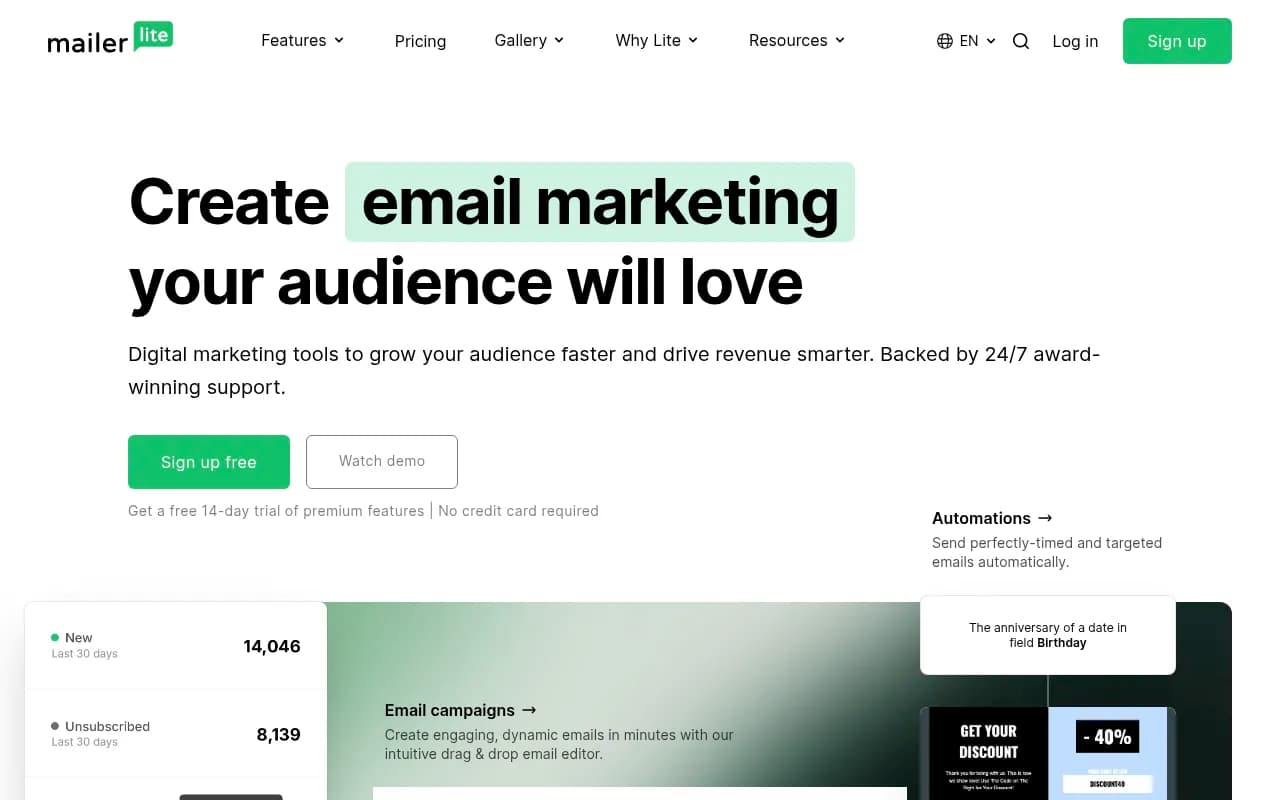
MailerLite delivers surprising power at an affordable price point, making it ideal for newsletters, content creators, and small businesses.
Key strengths:
- Clean, modern interface with minimal learning curve
- Generous free tier (1,000 subscribers, 12,000 emails/month)
- Built-in landing page and website builder
- Digital product sales (sell ebooks, courses directly)
- Auto-resend to non-openers feature
- Excellent customer support (24/7 live chat)
Pricing:
- Free: 1,000 subscribers, 12,000 emails/month
- Growing Business: $10/month for 1,000 subscribers (adds automation, dynamic emails, unlimited templates)
- Advanced: $21/month for 1,000 subscribers (adds preference center, promotion pop-ups, Facebook integration)
Best for: Newsletter creators, bloggers, course creators, and small businesses needing reliable email marketing without complexity.
Limitations: Automation capabilities are basic compared to ActiveCampaign; ecommerce features are limited.
7. ConvertKit (now Kit)
Best for: Content creators, bloggers, and course creators
Kit (formerly ConvertKit) is purpose-built for creators who monetize through content, courses, and digital products.
Key strengths:
- Subscriber-based pricing (pay once even if someone is on multiple lists)
- Visual automation builder designed for creator workflows
- Built-in landing pages and forms with high-converting templates
- Commerce features for selling digital products and subscriptions
- Sponsor network connects creators with brands
- Tagging system instead of traditional list management
Pricing:
- Free: Up to 10,000 subscribers (limited features)
- Creator: $25/month for 1,000 subscribers (full automation, unlimited landing pages)
- Creator Pro: $50/month for 1,000 subscribers (adds subscriber scoring, advanced reporting, newsletter referral system)
Best for: Bloggers, YouTubers, podcasters, and online course creators building audience-based businesses.
Limitations: Limited ecommerce integrations; not ideal for traditional businesses; reporting is basic.
8. GetResponse
Best for: Webinar marketing and course creators
GetResponse differentiates itself by including webinar hosting and course creation tools alongside email marketing.
Key strengths:
- Built-in webinar platform (up to 1,000 attendees)
- Course creator tool for building and selling online courses
- Conversion funnel builder with pre-made templates
- AI-powered email generator and subject line optimizer
- Autofunnel creates complete sales funnels automatically
- Website builder included at all paid tiers
Pricing:
- Free: 500 contacts, 2,500 emails/month (basic features only)
- Email Marketing: $19/month for 1,000 contacts
- Marketing Automation: $59/month (adds automation, webinars up to 100 attendees)
- Ecommerce Marketing: $119/month (adds ecommerce tools, webinars up to 300 attendees)
Best for: Coaches, consultants, and educators who use webinars as a primary marketing channel.
Limitations: Interface feels dated compared to newer platforms; automation is less intuitive than ActiveCampaign.
9. Constant Contact
Best for: Nonprofits and local businesses
Constant Contact has been around since 1995 and remains popular with nonprofits, local businesses, and organizations needing reliable, straightforward email marketing.
Key strengths:
- Exceptional customer support (phone, chat, email)
- Event marketing tools with registration and ticketing
- Donation forms and fundraising features for nonprofits
- Social media posting and ad management
- Extensive template library (100+ mobile-optimized templates)
- List growth tools (Facebook ads integration, pop-up forms)
Pricing:
- Lite: $12/month for 500 contacts (email marketing only)
- Standard: $35/month for 500 contacts (adds automation, polls, surveys)
- Premium: $80/month for 500 contacts (adds SEO tools, dynamic content, revenue reporting)
Best for: Nonprofits, chambers of commerce, local retailers, and organizations prioritizing support and reliability over cutting-edge features.
Limitations: Automation capabilities are basic; pricing is higher than competitors with similar features.
10. AWeber
Best for: Bloggers and small businesses
AWeber is one of the original email marketing platforms (founded 1998) and remains a solid choice for straightforward email marketing.
Key strengths:
- Simple interface with minimal learning curve
- 700+ integrations including WordPress, Shopify, PayPal
- Extensive template library (6,000+ stock photos included)
- Tag-based subscriber management
- AMP emails for interactive content
- Strong deliverability rates
Pricing:
- Free: Up to 500 subscribers, 3,000 emails/month
- Lite: $15/month for 500 subscribers (removes AWeber branding)
- Plus: $30/month for 500 subscribers (adds behavioral automation, sales tracking)
- Unlimited: $899/month (unlimited subscribers, priority support)
Best for: Bloggers, small online businesses, and solopreneurs needing reliable email marketing without complexity.
Limitations: Automation features are basic; interface feels dated; limited ecommerce capabilities.
11. Moosend
Best for: Affordable automation for SMBs
Moosend delivers powerful automation and ecommerce features at a price point that undercuts most competitors.
Key strengths:
- Aggressive pricing (starts at $9/month)
- Visual automation workflow builder
- Product recommendations and ecommerce tracking
- Website tracking and behavioral triggers
- AI-powered subject line optimizer
- SMTP server included for transactional emails
Pricing:
- Free: Up to 1,000 subscribers (limited features)
- Pro: $9/month for 500 subscribers (full automation, unlimited emails)
- Enterprise: Custom pricing (adds dedicated IP, custom reporting)
Best for: Small to medium ecommerce businesses and agencies managing multiple clients on a budget.
Limitations: Smaller template library; fewer integrations than established platforms; less brand recognition.
12. Omnisend
Best for: Ecommerce businesses needing omnichannel marketing
Omnisend focuses exclusively on ecommerce and combines email, SMS, push notifications, and more in one platform.
Key strengths:
- Pre-built automation workflows for ecommerce (cart abandonment, welcome series, product recommendations)
- SMS marketing integrated with email campaigns
- Web push notifications and Facebook Messenger
- Product picker for easy product insertion in emails
- Shoppable emails with add-to-cart buttons
- Revenue attribution across all channels
Pricing:
- Free: 250 contacts, 500 emails/month
- Standard: $16/month for 500 contacts (adds automation, 24/7 support)
- Pro: $59/month for 500 contacts (adds advanced reporting, priority support, customer success manager)
Best for: Shopify, WooCommerce, and BigCommerce stores needing coordinated email + SMS campaigns.
Limitations: Overkill for non-ecommerce businesses; SMS costs add up quickly at scale.
13. Campaign Monitor
Best for: Agencies and businesses prioritizing design
Campaign Monitor is known for its beautiful templates and design-focused email builder.
Key strengths:
- Stunning template library (100+ professionally designed templates)
- Intuitive drag-and-drop builder with design flexibility
- Time zone sending optimizes delivery time globally
- Client management features for agencies
- Link review catches broken links before sending
- Journey builder for visual automation workflows
Pricing:
- Lite: $11/month for 500 contacts (basic features, 2,500 emails/month)
- Essentials: $19/month for 500 contacts (unlimited emails, automation)
- Premier: $149/month for 500 contacts (adds advanced segmentation, premier support)
Best for: Design-focused brands, creative agencies, and businesses where email aesthetics matter.
Limitations: Pricing increases significantly with list size; automation is less powerful than ActiveCampaign.
14. Drip
Best for: Ecommerce brands focused on customer data
Drip positions itself as an "ECRM" (Ecommerce CRM) rather than just an email platform, emphasizing customer data and personalization.
Key strengths:
- Deep ecommerce platform integrations (Shopify, WooCommerce, Magento)
- Visual workflow builder with complex conditional logic
- Customer lifetime value tracking and segmentation
- Onsite personalization (pop-ups, forms based on behavior)
- Revenue attribution per email and automation
- Tag-based contact management
Pricing:
- Starts at $39/month for 2,500 contacts
- Scales to $1,899/month for 170,000 contacts
- No free tier
Best for: Established ecommerce brands ($500K+ annual revenue) needing sophisticated segmentation and personalization.
Limitations: Expensive; steep learning curve; overkill for small stores or non-ecommerce businesses.
15. Sender
Best for: Ultra-budget-conscious small businesses
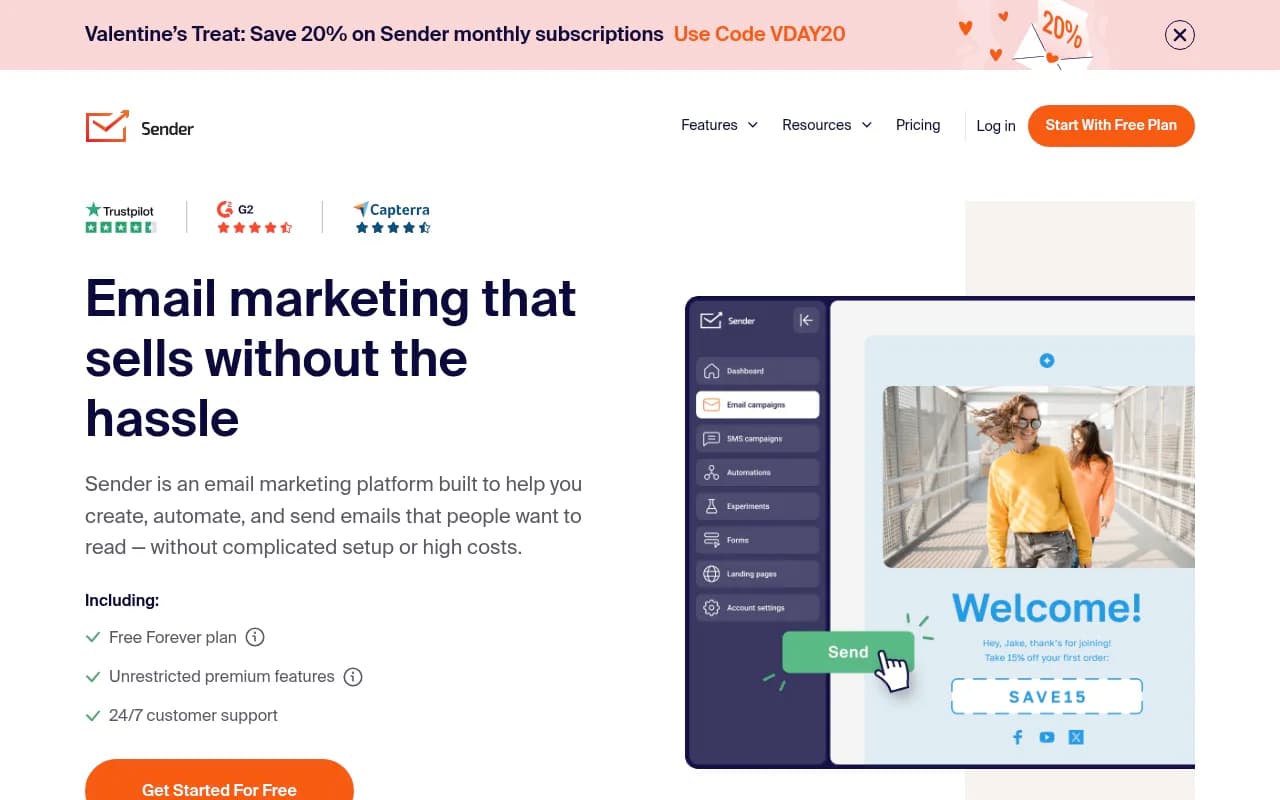
Sender offers one of the most generous free tiers in the industry, making it ideal for startups and very small businesses.
Key strengths:
- Free plan includes 2,500 subscribers and 15,000 emails/month
- Simple, clean interface
- SMS marketing available
- Basic automation workflows
- Popup and form builder
- Shopify and WooCommerce integrations
Pricing:
- Free: 2,500 subscribers, 15,000 emails/month
- Standard: $15/month for 2,500 subscribers (removes Sender branding, adds priority support)
- Professional: $29/month for 2,500 subscribers (adds advanced automation, dedicated IP)
Best for: Startups, side projects, and very small businesses needing basic email marketing at minimal cost.
Limitations: Limited advanced features; smaller template library; less robust than established platforms.
Feature Comparison: What Matters Most
Automation Capabilities
Winner: ActiveCampaign
ActiveCampaign offers the most sophisticated automation with 900+ pre-built workflows, conditional splits, goals, and machine learning-powered predictive sending. Klaviyo comes close for ecommerce-specific automation.
Budget alternative: Brevo offers solid automation at a fraction of ActiveCampaign's price.
Ecommerce Integration
Winner: Klaviyo
Klaviyo's deep integration with Shopify, WooCommerce, and other platforms, combined with predictive analytics and revenue attribution, makes it the clear ecommerce leader. Omnisend is a strong alternative at a lower price point.
Ease of Use
Winner: Mailchimp
Mailchimp's interface remains the most intuitive for beginners, with helpful tooltips, a logical layout, and minimal learning curve. MailerLite is a close second with a cleaner, more modern design.
Deliverability
Winner: Tie between Brevo and ActiveCampaign
Both platforms maintain strong sender reputations and offer dedicated IPs, authentication setup assistance, and deliverability monitoring. Brevo includes transactional email infrastructure, giving it a slight edge.
Value for Money
Winner: Brevo
Brevo's free tier (300 emails/day, unlimited contacts) and affordable paid plans offer the best feature-to-price ratio. Moosend and Sender also deliver strong value at the budget end.
Customer Support
Winner: Constant Contact
Constant Contact provides phone support at all tiers, plus extensive educational resources and personalized onboarding. MailerLite also excels with 24/7 live chat support.
Pricing Comparison by List Size
For 1,000 Contacts:
- Sender: Free (15,000 emails/month)
- MailerLite: $10/month
- Moosend: $9/month
- Mailchimp: $13/month (Essentials)
- AWeber: $15/month
- Brevo: $25/month (20,000 emails)
- Kit: $25/month
- ActiveCampaign: $29/month
For 5,000 Contacts:
- Moosend: $24/month
- MailerLite: $30/month
- Brevo: $51/month (40,000 emails)
- Mailchimp: $75/month (Standard)
- ActiveCampaign: $99/month
- Klaviyo: $150/month
- HubSpot: $890/month (Professional)
For 25,000 Contacts:
- Moosend: $80/month
- Brevo: $173/month (200,000 emails)
- MailerLite: $130/month
- ActiveCampaign: $349/month
- Klaviyo: $500/month
- Mailchimp: $350/month (Premium)
- HubSpot: $3,200/month (Professional)
How to Choose: Decision Framework
Choose Brevo if:
- You're a growing business needing email + SMS + CRM in one platform
- You want powerful features without enterprise pricing
- You need transactional email capabilities
- Budget is a primary concern but you won't sacrifice features
Choose ActiveCampaign if:
- You need sophisticated automation with complex customer journeys
- You want a built-in CRM with sales automation
- You're willing to invest time learning a powerful platform
- You're a B2B company with long sales cycles
Choose Klaviyo if:
- You run an ecommerce store doing $100K+ in annual revenue
- You need predictive analytics and customer lifetime value tracking
- Revenue attribution is critical to your marketing strategy
- You're on Shopify, WooCommerce, or BigCommerce
Choose Mailchimp if:
- You're a complete beginner prioritizing ease of use
- You want a recognizable brand with extensive resources
- You need a website builder alongside email marketing
- Your list is under 5,000 contacts
Choose HubSpot if:
- You need a complete marketing + sales + service platform
- You're a B2B company with a sales team
- You want everything in one ecosystem
- Budget isn't a primary constraint
Choose MailerLite if:
- You're a content creator or newsletter publisher
- You want a clean, modern interface
- You need to sell digital products directly
- You're budget-conscious but want quality features
Common Mistakes to Avoid
1. Choosing Based on Price Alone
The cheapest platform often costs more in the long run due to poor deliverability, limited features, or the need to migrate later. Consider total cost of ownership, including time spent working around limitations.
2. Ignoring Deliverability
A platform with 80% inbox placement at $20/month is more expensive than one with 95% placement at $50/month. Always research deliverability rates and sender reputation.
3. Overbuying Features
You don't need enterprise automation if you're sending a monthly newsletter. Start with what you need now and upgrade as requirements grow.
4. Underestimating List Growth
Check pricing at 2x and 5x your current list size. Some platforms scale affordably while others become prohibitively expensive.
5. Neglecting Integration Requirements
Verify that your email platform integrates with your ecommerce platform, CRM, analytics tools, and other critical systems before committing.
Advanced Considerations
Deliverability Infrastructure
Top-tier platforms offer:
- Dedicated IP addresses for high-volume senders
- DKIM, SPF, and DMARC authentication setup assistance
- Deliverability monitoring with inbox placement tracking
- List cleaning tools to remove invalid addresses
- Engagement-based sending that prioritizes active subscribers
Compliance and Data Privacy
Ensure your platform supports:
- GDPR compliance with data processing agreements
- CAN-SPAM compliance with automatic unsubscribe handling
- CCPA compliance for California contacts
- Data residency options if you need data stored in specific regions
Scalability Factors
As your business grows, you'll need:
- API access for custom integrations
- Webhook support for real-time data syncing
- Multiple user accounts with role-based permissions
- Sub-account management for agencies
- White-label options for client-facing work
Migration Tips: Switching Platforms
If you're moving from one platform to another:
- Export your lists with all custom fields and tags
- Document your automation workflows with screenshots
- Test deliverability on the new platform with a small segment first
- Warm up your sending reputation gradually (don't send to your full list immediately)
- Run platforms in parallel for 2-4 weeks to ensure nothing breaks
- Update all forms and integrations to point to the new platform
Most platforms offer free migration assistance for annual plans or larger lists.
The Future of Email Marketing in 2026
Several trends are reshaping email marketing:
AI-Powered Personalization
Platforms now use machine learning to:
- Predict optimal send times per subscriber
- Generate subject lines and email copy
- Recommend products based on browsing behavior
- Score leads and predict churn risk
Interactive Email Content
AMP for Email enables:
- In-email purchases without leaving the inbox
- Real-time content updates (pricing, inventory)
- Interactive surveys and polls
- Appointment booking directly in email
Privacy-First Marketing
With iOS Mail Privacy Protection and similar features:
- Open rates are becoming less reliable
- Platforms are shifting to click-based engagement metrics
- First-party data collection is more critical than ever
- Consent management is table stakes
Omnichannel Integration
Email is no longer standalone:
- SMS and email campaigns coordinate automatically
- Web push notifications trigger based on email engagement
- Social media ads retarget email subscribers
- In-app messaging syncs with email sequences
Final Recommendations
Best Overall: Brevo offers the best balance of features, pricing, and scalability for most businesses.
Best for Beginners: Mailchimp's interface and resources make it easiest to get started, though MailerLite offers better value.
Best for Ecommerce: Klaviyo is the gold standard for online stores, with Omnisend as a more affordable alternative.
Best for Automation: ActiveCampaign delivers the most sophisticated workflows and customer journey mapping.
Best for Enterprise: HubSpot provides a complete marketing ecosystem with CRM integration.
Best Value: Brevo and Moosend deliver premium features at budget-friendly prices.
The right platform depends on your specific needs, budget, and growth trajectory. Most platforms offer free trials -- test 2-3 options with real campaigns before committing. Pay attention to deliverability, ease of use, and how well the platform integrates with your existing tools.
Email marketing remains one of the highest-ROI channels available. Choosing the right platform is an investment that pays dividends through better engagement, higher conversion rates, and stronger customer relationships. Take the time to evaluate your options carefully, and don't hesitate to switch if your current platform isn't meeting your needs.