Key takeaways
- Cloud and DevOps vendors fight for AI citations against hyperscaler docs and GitHub. In Promptwatch Data's software report (Sep 28 to Oct 4, 2026), github.com took 1.2% of ChatGPT software citations, learn.microsoft.com 0.98%, and docs.aws.amazon.com 0.41%.
- Docs and help centers earned the biggest share of software citations (2.64%), so a GEO tool that only counts brand mentions will miss your best lever.
- Developer buyers use ChatGPT, Perplexity, Google AI Overviews and coding agents. Check whether a tool tracks real interfaces and coding agents, not just APIs.
- AI crawler logs matter more for technical sites than for most. If GPTBot or ClaudeBot cannot read your docs, no dashboard will fix that.
- Pick by job: monitoring only, monitoring plus content execution, or an enterprise suite. Verify pricing on vendor pages, since most roundups are written by the vendors they rank.
Why cloud and DevOps companies need a different GEO shortlist
Most "best GEO tools" lists are written for ecommerce brands or small local businesses. Cloud and DevOps companies have a different problem. Your buyers ask questions like "best Kubernetes cost tool" or "Terraform alternative for multi-cloud", and the answer is assembled from documentation, GitHub repos, review sites and a handful of hyperscaler pages you do not control.
Promptwatch Data tracked this directly. In its most cited sites in ChatGPT for software prompts report (Sep 28 to Oct 4, 2026), the leaders were:
| Domain | Share of software citations |
|---|---|
| github.com | 1.2% |
| learn.microsoft.com | 0.98% |
| g2.com | 0.73% |
| docs.aws.amazon.com | 0.41% |
| Google Cloud docs | 0.35% |
| gartner.com | 0.34% |
| capterra.com | 0.32% |
A few things stand out. Microsoft's three domains together hold 1.35%, Google's four hold 0.98%, and AWS's two hold 0.69%. Docs and help centers are the largest source type at 2.64%, vendor sites follow at 2.01%, and review sites and analysts (G2, Gartner, Capterra, Software Advice) together earn 1.57%. That last group beats any single vendor, Microsoft included.
For a DevOps startup, the practical read is blunt. You will not outrank docs.aws.amazon.com on a generic cloud prompt. You can win on specific, comparison and how-to prompts where your docs, GitHub presence and G2 profile are the best available answer. A GEO tool earns its fee if it shows you which of those prompts you are losing and why.
What to look for in a GEO tool as a cloud or DevOps team
The generic checklist (mention tracking, citation tracking, sentiment, share of voice) is table stakes. Four things matter more for technical vendors.
Real interface data and coding agent coverage
Developers increasingly ask Claude Code, Codex and similar agents which SDK or tool to use. A tool that only queries a model API will miss what a user actually sees in ChatGPT Search or AI Overviews. Ask each vendor whether it collects from the real UI and whether it covers coding agents at all. Few do.
AI crawler logs
Docs sites are often JavaScript-heavy, gated, versioned across many URLs, or blocked by an overzealous robots.txt. Server-side crawler data tells you whether GPTBot, ClaudeBot or PerplexityBot reach those pages and where they hit errors. This separates an access problem from a content problem, and it is the first thing I would check on a docs subdomain.
Content-type awareness
Promptwatch's content type report found product pages were 22.4% of ChatGPT citations, landing pages 16.8%, listicles 13.6%, how-tos 8.7% and documentation 7.5%. For commercial prompts, product pages, landing pages, listicles and comparisons added up to almost 70%. If your product pages are thin and your comparison pages do not exist, a tracker will report the symptom while you still have to write the fix.
Execution, not just reporting
Most tools stop at a dashboard. Engineering-led marketing teams are usually small, so a tool that suggests, drafts and publishes fixes saves real time. Weigh this against price: execution features usually start at mid-tier plans.
Best GEO tools for cloud and DevOps companies in 2026
I have grouped these by what they are good at. Pricing from vendor-written roundups is noted as unverified where I could not confirm it, so check each vendor's pricing page.
Promptwatch
Promptwatch is the option I would shortlist first for technical vendors, mainly because it covers the parts of the problem that matter here. It monitors the real interfaces of ChatGPT, Google AI Overviews, Google AI Mode, Gemini, Perplexity, Copilot and Meta AI, and also tracks how coding agents (Codex, Claude Code, OpenCode) recommend tools, SDKs and docs. That last one is rare and directly relevant if developers discover you through an agent.

Beyond tracking, it has IP-verified AI crawler logs (so you can see whether GPTBot or ClaudeBot actually read your docs), a content gap analysis, a Content Agent that writes and publishes to WordPress, Webflow or Framer, and an Action Board that prioritizes fixes. Page Tracker lets you watch a specific docs URL or a competitor's and see which prompts cite it. Visitor analytics then show whether AI traffic converts.
Pricing, from the vendor: Essential $95/mo, Professional $245/mo, Business $579/mo, with agency plans from $199/mo. The Content Agent starts at Business. Crawler logs start at Professional. Confirm at promptwatch.com/pricing. The 7-day free trial and the free AI visibility report are the low-risk way to start. For head-to-heads, see Promptwatch vs Profound and Promptwatch vs Peec.
Profound
Profound is an enterprise AI visibility platform tracking ChatGPT, Perplexity and several other engines. It is strong on citation benchmarking and competitor comparison, and it fits larger cloud vendors with budget and dedicated analysts. Pricing is custom. It is monitoring-heavy, so plan on doing the content work elsewhere.
Profound

Scrunch AI
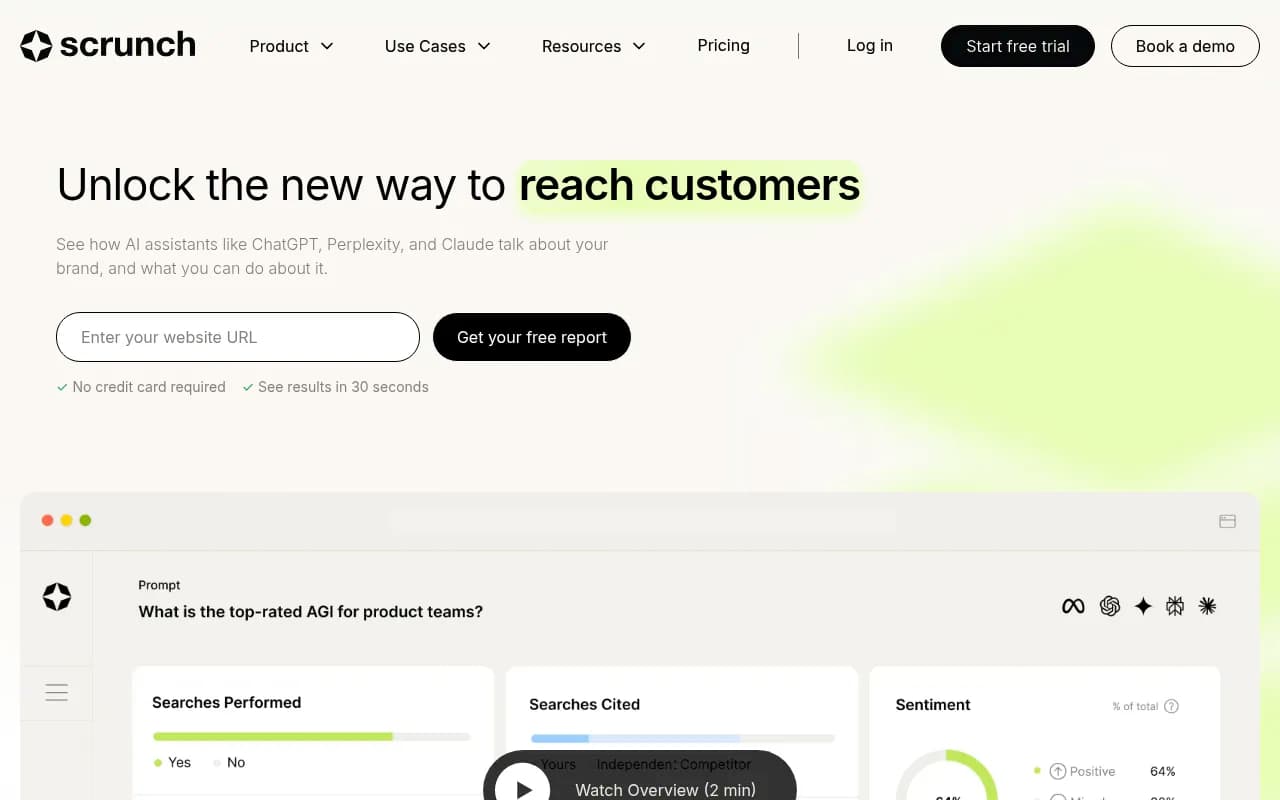
Scrunch focuses on prompt-level visibility and citation analysis across the major engines. Like Profound, it is more of an enterprise buy with custom pricing.
Peec AI
Peec AI is a clean analytics tool for marketing teams: visibility, position and sentiment dashboards without much clutter. Good if you want a clear view and will handle execution yourself. It lacks crawler logs and content generation.

Otterly.AI
Otterly is the cheap, simple starting point. A vendor roundup lists it from about $29/month (unverified, check otterly.ai). It tracks mentions, citations and share of voice across several AI platforms. A sensible first tool for a small DevOps startup that just wants to see where it stands before spending more.
Otterly.AI

Semrush and Ahrefs Brand Radar
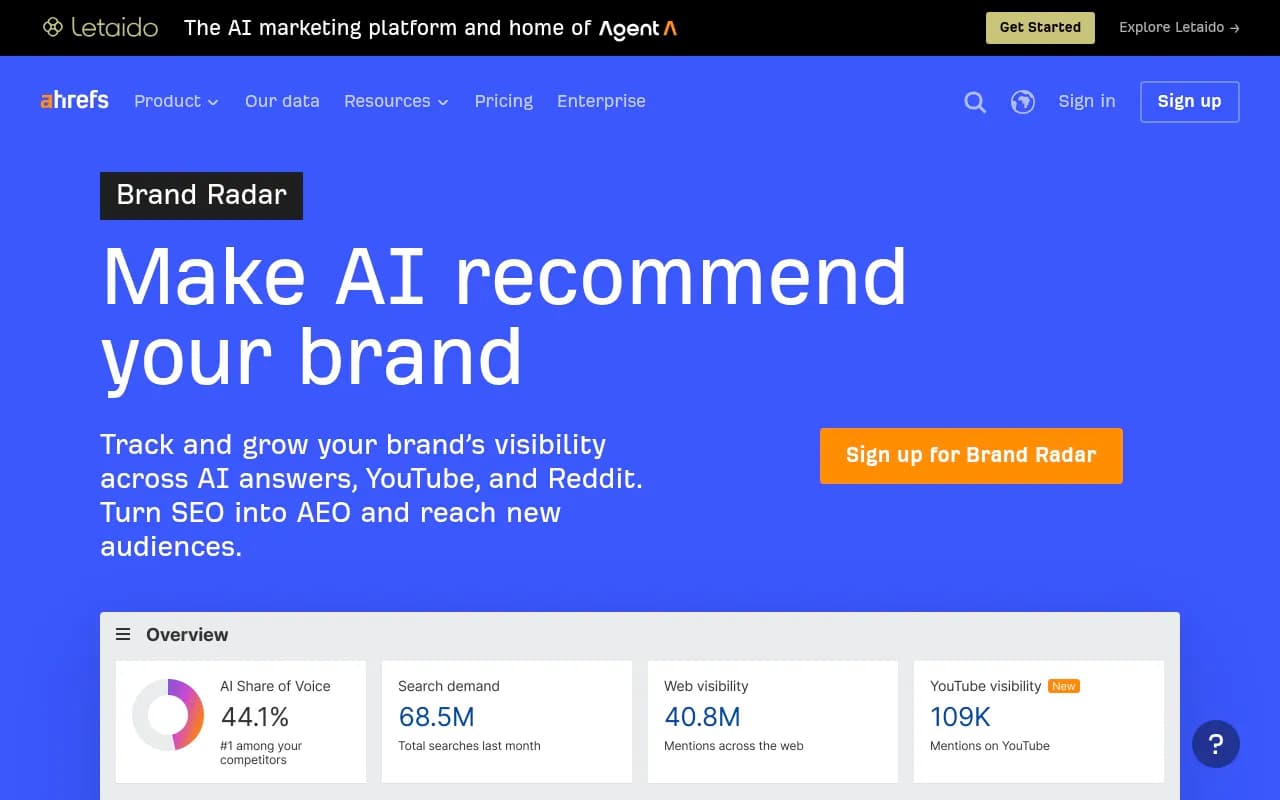
If you already live in Semrush or Ahrefs, their AI visibility add-ons are convenient because the data sits next to your keyword and backlink work. The tradeoff is shallower AI-specific depth and no crawler logs or AI traffic attribution.
AthenaHQ and Evertune
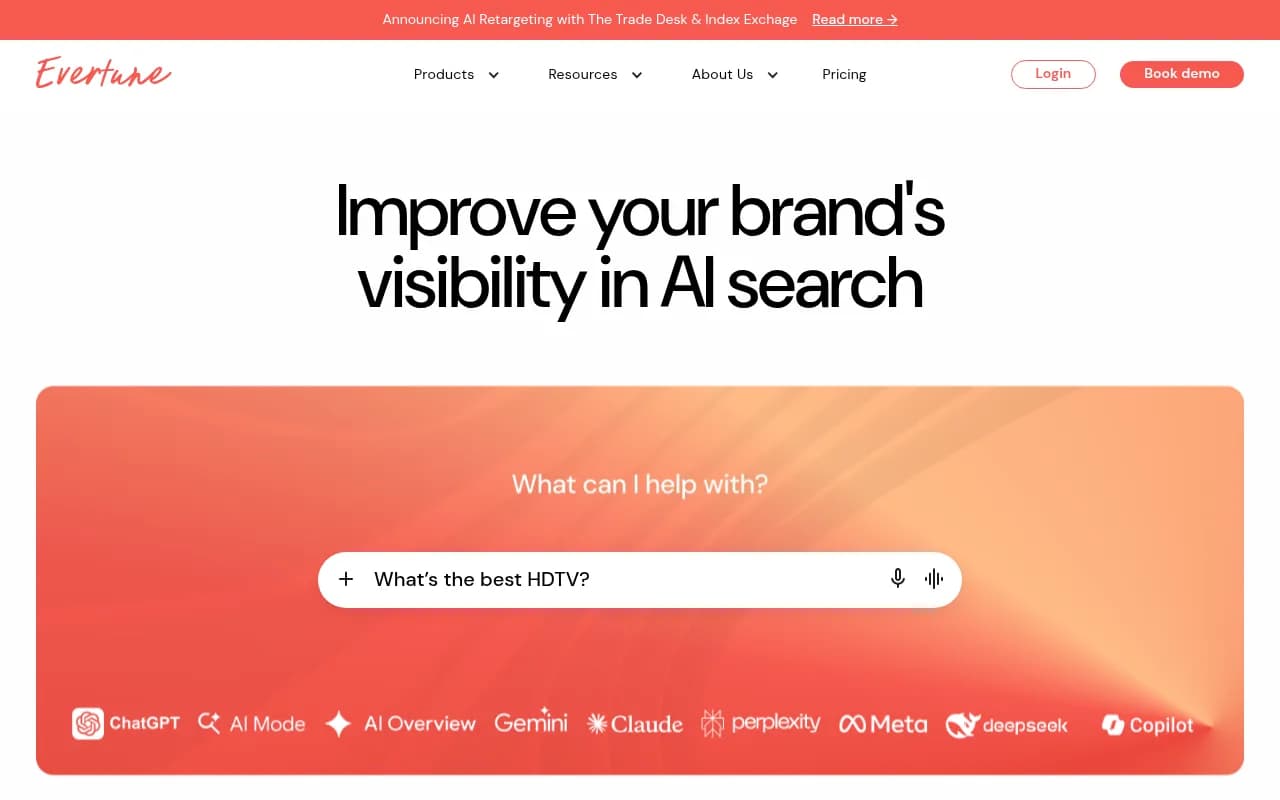
AthenaHQ focuses on why content gets cited, which is useful for diagnosing docs and comparison pages. Evertune targets large enterprise brands. Both are reasonable if you are already in that tier.

Conductor and Botify
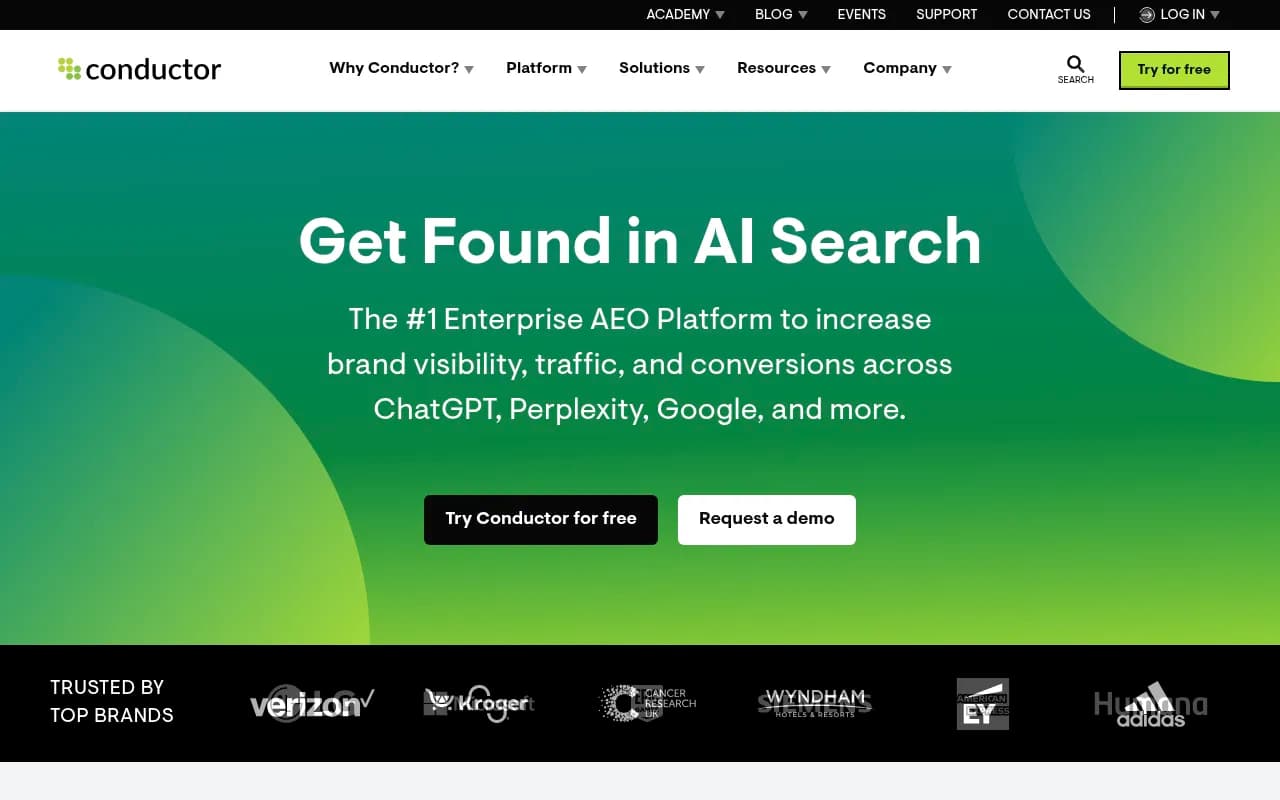
If you run a big site and need AI visibility inside an enterprise SEO workflow, Conductor and Botify combine technical SEO with AI search tracking. They are heavier and pricier than point tools.
Comparison table
| Tool | Best for | Crawler logs | Content execution | Coding agent tracking | Pricing signal |
|---|---|---|---|---|---|
| Promptwatch | End-to-end monitoring and fixing | Yes (Professional and up) | Yes (Business and up) | Yes | $95 to $579/mo, plus agency and Enterprise |
| Profound | Enterprise citation benchmarking | Not a core feature | Limited | No | Custom |
| Scrunch AI | Enterprise prompt-level analysis | Not a core feature | Limited | No | Custom |
| Peec AI | Clean marketing dashboards | No | No | No | Check vendor |
| Otterly.AI | Cheap monitoring start | No | No | No | From ~$29/mo (unverified) |
| Semrush / Ahrefs Brand Radar | Teams already in those suites | No | Partial | No | Bundled |
| Conductor / Botify | Enterprise SEO plus AEO | Varies | Workflow tools | No | Custom |
The capability cells for competitors reflect each vendor's main positioning, so confirm specifics in a demo.
What the data says you should do with these tools
Buying software is the easy part. These are the moves that Promptwatch Data suggests actually shift citations for technical vendors.
Make your docs crawlable and keep them current
Documentation is the biggest source type in software citations. Check robots.txt rules for AI bots, render docs server-side or prerender them, and make sure versioned pages do not fragment into duplicates. Free tools like the AI crawler URL inspector and robots.txt generator for AI help with a first pass. Promptwatch's half-life report found landing pages and docs stay cited longest while news loses half its pages within 36 days, so evergreen docs beat release-note blog posts for durability.
Keep GitHub and review profiles clean
GitHub alone takes 1.2% of software citations. A well-documented README, clear descriptions and active repos matter. So do complete G2 and Capterra profiles, since review sites and analysts together out-earn any one vendor.
Do not build a Reddit plan around ChatGPT
In Promptwatch's social citations report (Sep 28 to Oct 4, 2026), all social platforms together made up just 0.46% of ChatGPT citations, and Reddit fell from 5.19% to 0.09%. Google AI Overviews, by contrast, drew 12.2% of citations from social platforms, with YouTube at 4.28%. If your developer audience skews to AI Overviews, video tutorials may earn more than forum threads. For Perplexity, LinkedIn and Reddit tied at 0.86%.
Write the pages ChatGPT actually cites
Product pages, landing pages, comparisons and listicles carry commercial prompts. Build explicit "X vs Y" and "best tools for Z" pages for your category, with real numbers, and keep them updated.
How to choose
Start with the job rather than the logo.
- You just want to see where you stand: Otterly.AI or Peec AI, then upgrade if you outgrow them.
- You are a lean team that needs to fix gaps, not just chart them: Promptwatch, because crawler logs, content gap analysis and publishing sit in one place.
- You are a large vendor with analysts to spare: Profound or Scrunch AI for deep benchmarking, possibly alongside an execution tool.
- You already pay for an SEO suite: try its AI add-on first, but expect shallower data.
More options are listed in the GEO software directory at bestgeosoftware.com, and AI rank tracking directory covers pure trackers.
A note on vendor-written roundups
Many "best GEO tools" posts, including several I read while researching this, are published by tools that rank themselves first. Treat their pricing and feature claims as starting points. Verify on the vendor's own pricing page and run a trial against your own prompts before signing anything.
If you would rather hand the work to people, a specialist agency can run the tooling and the content for you. 1001 SEO Media does this for AI search and uses Promptwatch as its GEO platform.
A simple 30-day starting plan
- Week 1: run the free AI visibility report and list 30 to 50 prompts your buyers actually ask, split into commercial, comparison and how-to.
- Week 2: check crawler access to docs and fix robots.txt, rendering and sitemap gaps.
- Week 3: publish or refresh two comparison pages and one how-to per core product area.
- Week 4: review which prompts moved, which pages got cited, and which still lose to hyperscaler docs. Repeat.
The prompts you cannot win against AWS or Microsoft docs are worth dropping early. Spend the effort where a specific, well-structured answer from your own site is the best available source.