Key takeaways
- Fintech GEO is different from generic GEO. AI answers about fees, licences, rates and eligibility can be wrong, and the reader may act on them. Accuracy tracking matters as much as visibility.
- Pick a tool that shows which prompt produced which claim, and that can also trace the source page. Dashboards that only report a score leave you guessing at the fix.
- Most "best GEO tool for fintech" lists are written by vendors ranking themselves first. Treat them as starting points, not verdicts.
- ChatGPT answers are crowded. According to Promptwatch Data (Sep 28 to Oct 4, 2026), 47.6% of ChatGPT responses with citations cite 10 or more domains, so third-party reviews and comparison pages decide a lot.
- A small startup can begin with a cheap monitor. Once you need crawler data, content creation and publishing, move to a platform that closes the loop.
Why fintech GEO is a different job
A SaaS company that gets described badly by ChatGPT loses a lead. A payments company that gets described badly can lose a lead and create a compliance headache. If an AI answer says you are licensed in a market where you are not, or quotes a fee you dropped last spring, that is the first impression a buyer gets.
Onely's research on fintech GEO agencies makes a point I think is underrated. Three of the four AI engines it asked said an AI answer can get a fintech's facts wrong, yet only one of ten agency lists that explain their ranking counts accuracy. Five count visibility. So the industry is mostly measuring whether you are mentioned, not whether what is said is true.
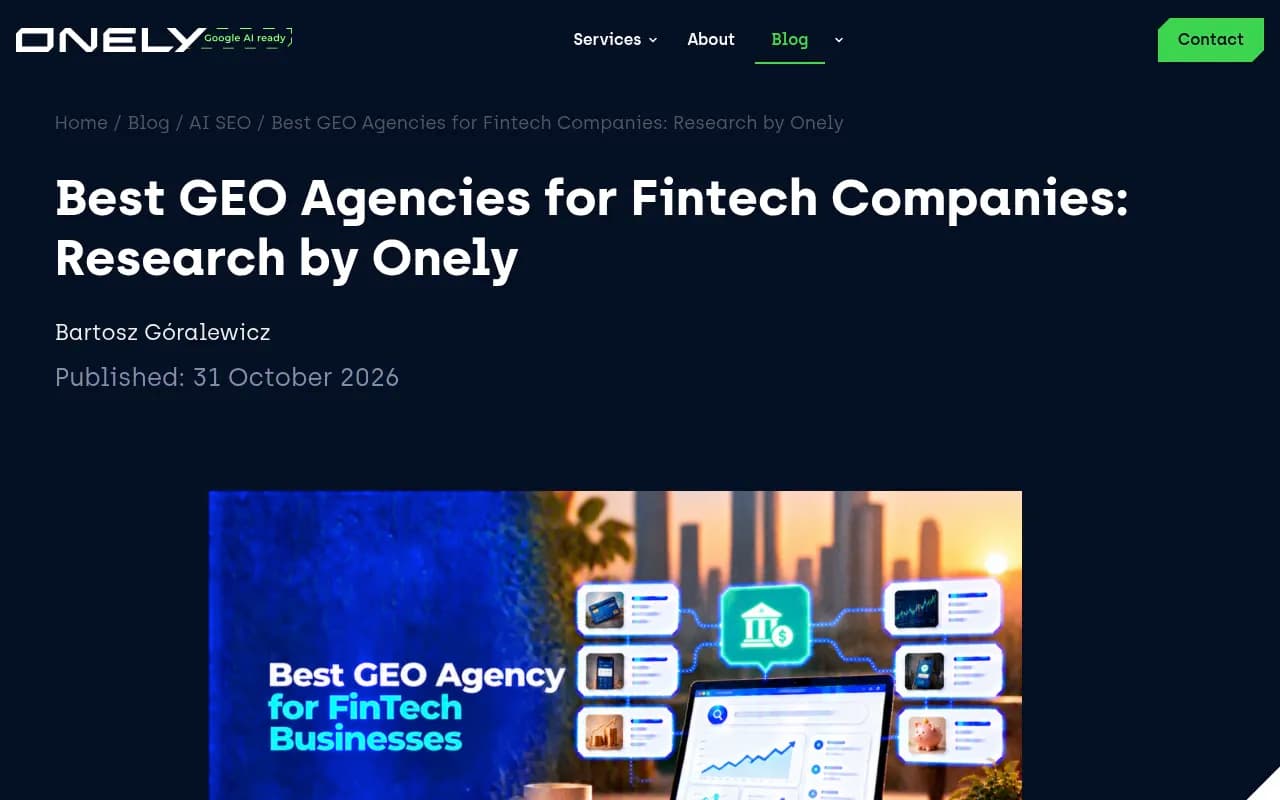
The same research notes that visibility software only finds a wrong answer if someone wrote a prompt that tests for it. That shapes how you should use any tool below. Your prompt set is part of your compliance process, not an afterthought.
What to look for in a fintech GEO tool
Five things separate a useful tool from a vanity dashboard.
- Prompt-level traceability. You need to see which query produced which claim, so compliance can flag an inaccurate licence or fee statement.
- Claim-level analysis. Tracking a brand mention is easy. Pulling out the individual statements AI makes about pricing, security or coverage is harder and far more useful.
- Source tracing. Is the model citing your compliance page, a stale comparison article, or a forum thread from 2023?
- Market and language coverage. Cross-border payments companies need tracking per country, and sometimes per language.
- A path to fixing things. Finding a wrong answer is half the job. Someone has to update the page, publish the correction, and check that it worked.
There is also a sixth point that is easy to forget: AI crawler access. Fintech sites often sit behind aggressive bot protection, WAF rules and geo-blocking. If GPTBot or OAI-SearchBot gets a 403, no amount of content work helps.
The shortlist at a glance
| Tool | Best for | Fintech-relevant strength | Watch out for |
|---|---|---|---|
| Promptwatch | Startups that want monitoring plus fixing | Brand Narrative and Fact Check, crawler logs, Content Agent, local and multi-country tracking | Fact Check and Content Agent start on the Business plan |
| Profound | Enterprise governance | Deep monitoring across many engines | Higher price point, no agentic execution |
| Peec AI | Agencies and lean marketing teams | Simple prompt tracking | Basic tracker, no crawler logs or content generation |
| Otterly.AI | Budget monitoring | Low entry price | Monitoring only |
| AthenaHQ | Brand-answer monitoring | Tracks how AI describes the brand | Light on content optimization |
| Scrunch AI | Crawl-level diagnostics | Looks at how AI agents see your site | Narrower fit for content teams |
| Finseo.ai | Financial brands | Built around AI visibility for finance | Smaller, newer player, check depth before committing |
| Semrush / Ahrefs Brand Radar | Teams already in those suites | AI tracking next to SEO data | Fixed prompt sets, shallower AI data |
Prices change often, so confirm everything on each vendor's site. Anagram's own comparison lists Otterly.ai from $29/mo and Anagram from $99/mo, but those come from a vendor ranking itself first, so verify them.
Promptwatch: the one I would start with for a funded startup
Promptwatch is the AI visibility and GEO platform that covers the whole loop: monitor, trace, act, measure. For fintech, three pieces matter most.
Brand Narrative pulls the individual claims AI makes about you out of every tracked response (for example "low fees for small businesses" or "limited coverage in Asia"), groups repeated ones and files them under themes like Pricing, Features and Reputation. It is on every plan. Fact Check then lets you mark a claim Accurate or Inaccurate and finds the pages on your site that state it or its opposite, so you know which page the model is learning from. Fact Check starts on the Business plan.
AI crawler logs are the second piece. IP-verified logs of GPTBot, ClaudeBot, PerplexityBot and others show whether the bots actually read your pricing and compliance pages, and what errors they hit. For a fintech with strict bot rules this is often the fastest win. See Promptwatch's AI crawler logs for how it works.
Third, the Content Agent writes and publishes pages against your visibility gaps to WordPress, Webflow or Framer, with a review inbox so legal or compliance can approve before anything goes live. Then page tracking and visitor analytics show whether the page got crawled, cited and clicked.

Pricing as published: Essential $95/mo, Professional $245/mo, Business $579/mo, with a 7-day free trial on monthly billing. Confirm at promptwatch.com/pricing. You can also run the free AI visibility report first to see how ChatGPT, Gemini and Perplexity currently describe you.
If you are comparing it with a specific rival, there are head-to-head pages such as Promptwatch vs Profound and Promptwatch vs Peec.
Other tools worth a look
Profound
Profound is the usual enterprise pick for governance-heavy teams. Monitoring is strong. The trade-offs are price and the fact that it stops at reporting, so you still need another way to ship fixes.
Profound

Peec AI and Otterly.AI
Both are good if you want a clean, cheap read on whether you are mentioned across a set of prompts. Neither will tell you whether crawlers can read your pages or write the corrective content. For a seed-stage payments startup with one marketer, that can be fine for the first quarter.

Otterly.AI

AthenaHQ and Scrunch AI
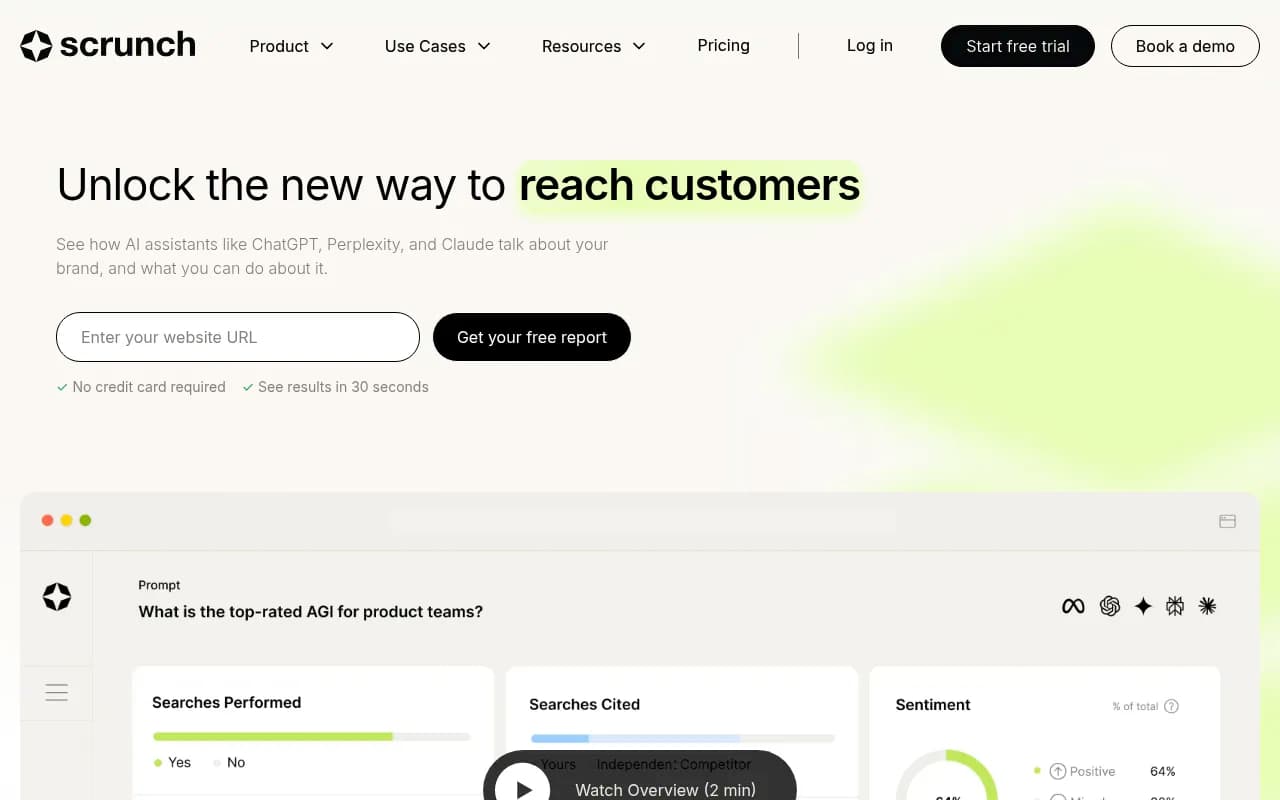
AthenaHQ focuses on how AI describes your brand. Scrunch leans toward how AI agents see and crawl your site. Both are credible, and both lean more toward diagnosis than execution.

Finseo.ai
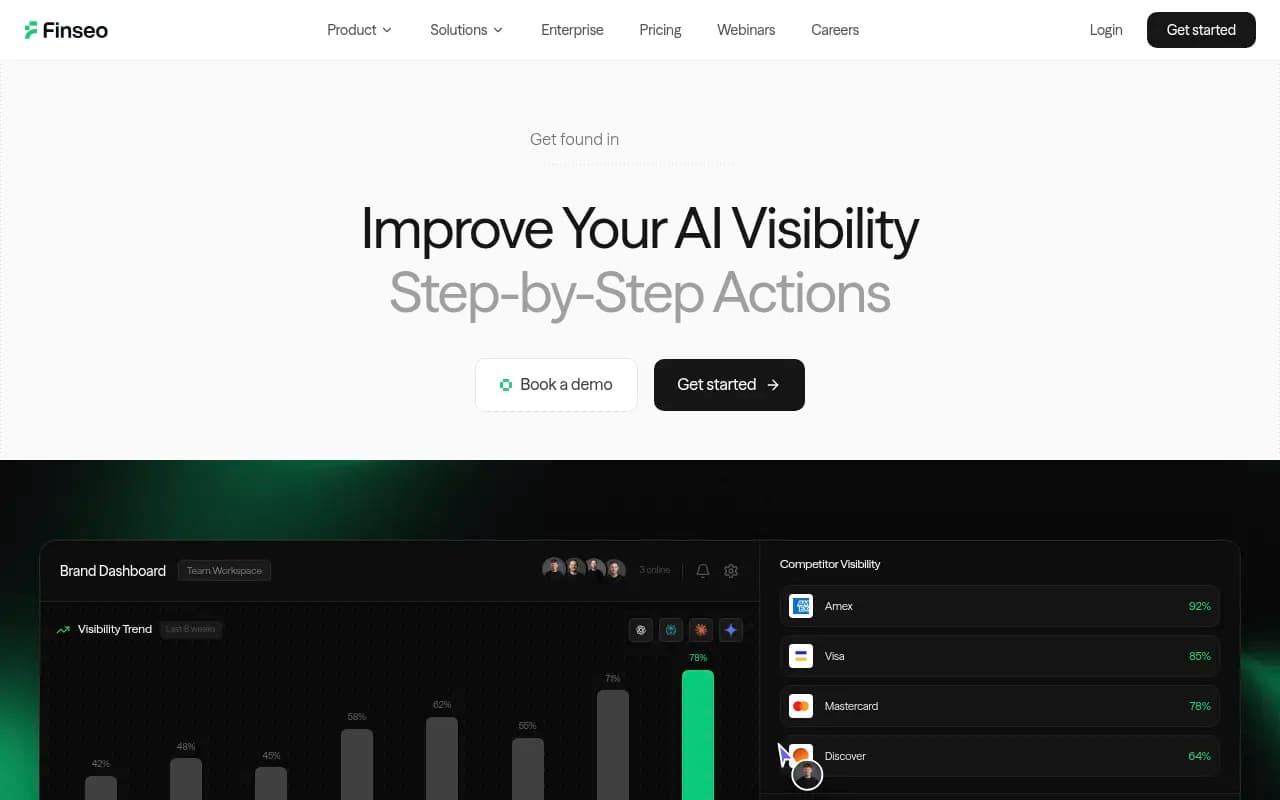
Finseo.ai positions itself around AI visibility tracking for financial brands. A vertical focus is appealing, but check how many engines it covers, how often it runs prompts and whether it can trace sources before you sign anything.
Semrush and Ahrefs Brand Radar
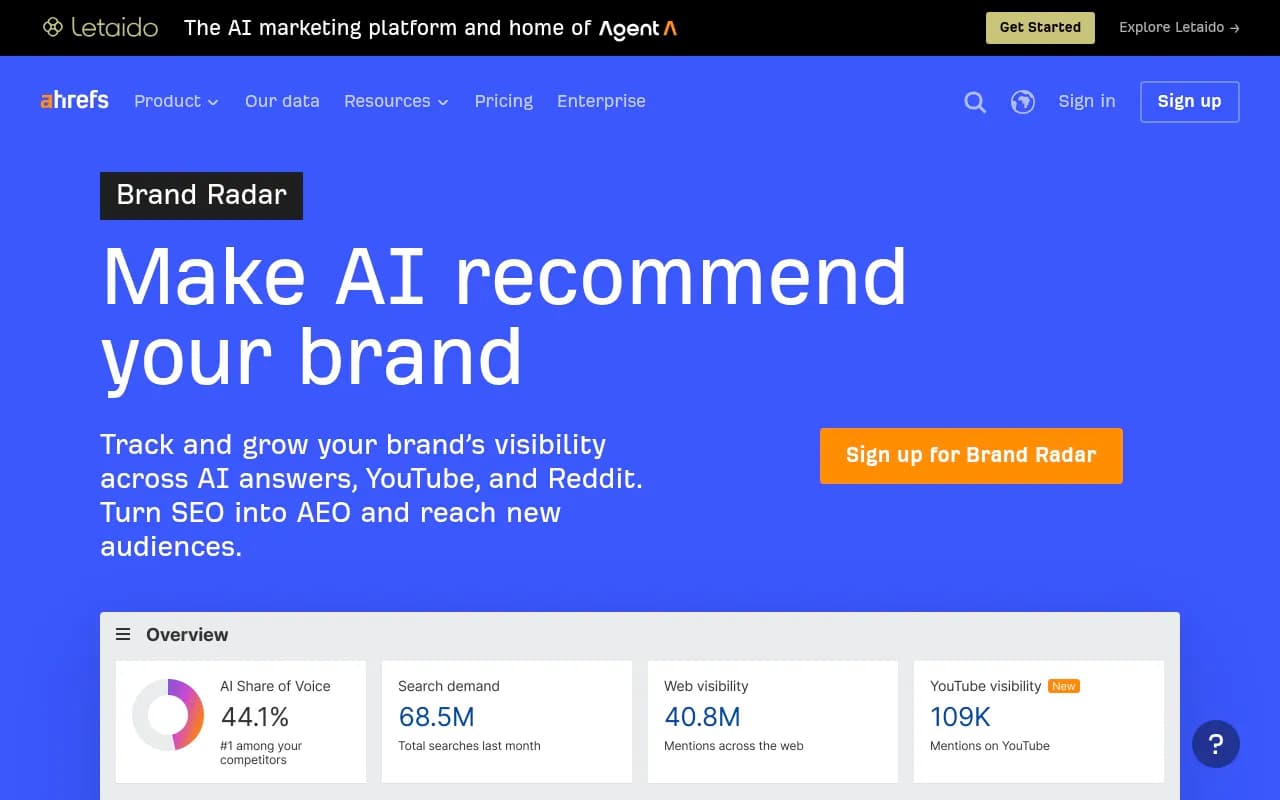
If your SEO team already lives in these suites, the AI add-ons are convenient. They are not built for regulated-claim monitoring, and prompt sets tend to be fixed rather than custom.
A note on vendor-written "best of" lists
Some of the top search results for this topic are written by companies that rank themselves first. Geolix.ai names itself best overall for cross-border fintech and says so openly in its disclosure. ScaleTheory ranks its own agency first in its list of fintech GEO agencies. That is not a reason to dismiss them. Geolix's point about Chinese engines like DeepSeek, Qwen and Doubao is valid if you sell into Greater China and your tool of choice does not cover them.

But run your own trial. Ask each vendor to track the same 30 prompts for two weeks and compare what each found.
Build a prompt set that actually tests accuracy
This is the part most teams skip. A tracker that only runs "best payment processor for startups" will tell you about visibility and nothing about truth. Build at least four groups.
- Category prompts, such as "best payment gateway for SaaS startups" and "cheapest international transfer service for freelancers".
- Brand fact prompts, such as "is [brand] licensed in the UK" and "what are [brand] transaction fees".
- Competitor prompts, such as "[brand] vs [competitor] fees" and "[competitor] alternatives".
- Risk prompts: "is [brand] safe", "is [brand] a scam", "[brand] account frozen".
Then tag each by country. A prompt asked from Singapore can return a very different answer than the same one from Germany, especially for licensing.
Promptwatch Data helps set expectations here. In the same period (Sep 28 to Oct 4, 2026), brand-specific prompts show a shorter source list than organic ones: five domains is the most common count, and only 21.3% cite 10 or more. So on branded fact prompts, a handful of sites shape the answer. Check which review sites and forums they are. The unique domains per response report has the breakdown.
Which pages earn citations
Promptwatch's ChatGPT content type data (Sep 28 to Oct 4, 2026) shows product pages take 22.4% of classified citations and landing pages 16.8%. For commercial prompts like "best X for...", product pages get 26.0%, landing pages 20.6%, listicles 15.0% and comparisons 7.9%.
For a payments startup, that means your pricing, product and coverage pages are what ChatGPT quotes directly. Keep fees, supported countries, limits and licence details complete and current on those pages. Add FAQ pages, publish comparison pages, and get into the roundups that ChatGPT already cites. Reviews rise to 5.6% of citations on branded prompts, about three times their overall share, so a healthy presence on review sites matters.
Freshness matters too. In the content half-life report, landing pages and docs stayed cited longest while news lost half its pages within 36 days. Your docs and fee pages are durable assets. Press coverage is not.
Picking by stage
| Stage | Suggested approach |
|---|---|
| Pre-seed, one marketer | Run the free AI visibility report, then a low-cost tracker or Promptwatch Essential. Hand-check fee and licence prompts weekly. |
| Seed to Series A | Platform with crawler logs, visitor analytics and content creation. Professional or Business tier on Promptwatch fits here. |
| Multi-market scale-up | Business plan or higher for Fact Check, state and city tracking, faster tracking and the audit log. Add compliance review to the content workflow. |
| Enterprise or regulated bank partner | Enterprise tier, SSO, ISO/IEC 27001 certification and GDPR posture checked in procurement. |
Promptwatch is ISO/IEC 27001 certified and GDPR compliant with data handled by an EU-based company, which tends to matter in security reviews for financial companies.
Should you hire an agency instead?
Onely lists three kinds of provider a fintech can hire: AI visibility software, a fintech marketing agency, and a PR firm. Each has a blind spot. Software finds a wrong answer only if you wrote the prompt, and nobody is paid to change the answer. An agency splits its attention across channels. PR coverage can keep an old fee in print long after you change it.
If you want hands-on execution, an agency that runs a proper GEO platform underneath can work. 1001 SEO Media is one example, combining technical SEO, content, digital PR and GEO, and it uses Promptwatch as its AI visibility platform. Whoever you pick, ask five things: which problem they solve for your customers, how they check AI answers at decision-point questions, how they handle each country, how they measure results, and what past work you can verify yourself.
For a wider list of options, the GEO software directory at bestgeosoftware.com is a good place to browse by category.
A 30-day starter plan
- Week 1: write 40 prompts across the four groups above, tagged by country. Run the free AI visibility report for a baseline.
- Week 1: check crawler access. Make sure GPTBot, OAI-SearchBot, ClaudeBot and PerplexityBot are not blocked by your WAF. The free Agentic Readiness Check is a quick way to see who can read you.
- Week 2: log every inaccurate claim with the prompt, model, country and source page. Hand the list to compliance.
- Week 3: fix the pages that state the wrong thing, then publish comparison and FAQ content. Get corrections on third-party pages where you can.
- Week 4: re-run the same prompts. Did the claims change? Did citations move to your own domain?
The last step is the one that separates optimization from reporting. If your tool cannot show you before and after on a specific claim, you are paying for a mirror.
Bottom line
For fintech, pick on accuracy and traceability first, visibility second. A cheap monitor is a fine first step. When you need to prove that a fix worked, or you have licensing claims in several markets, you want a platform that links prompts, claims, source pages, crawler activity and traffic in one place. That is where Promptwatch fits best on this list, and the free report plus the 7-day trial make it easy to test against your own prompts before you commit.