Key takeaways
- PR clients now ask a new question: when ChatGPT or Gemini answers a buyer question, does our coverage show up? Your reporting stack needs to answer it with evidence, not screenshots.
- Look for per-client workspaces, pitch environments, branded exports, a Looker Studio or API path, and some link between a placement and an AI answer.
- Monitoring-only tools are fine for a small client roster. Agencies that also write content or fix technical issues need a platform that closes the loop.
- Report on position, sentiment and the sources AI cites, not a single mention count. Promptwatch Data shows nearly half of ChatGPT responses cite 10 or more domains, so third-party coverage is often how a brand gets in.
- News coverage decays fast in AI citations. Build re-measurement into every monthly report.
Why PR agencies need a GEO reporting stack
PR has always had a measurement problem. Clippings, impressions and share of voice are all proxies. AI search adds a new proxy that clients actually care about: what ChatGPT, Gemini, Claude, Perplexity and Google AI Overviews say when a buyer asks about their category.
The good news for PR is that AI tools answer from sources they already trust, such as news coverage, expert commentary, rankings and research. Earned media feeds those answers. The bad news is that you now have to show it.
Promptwatch's own data shows why this matters. In Promptwatch Data on unique domains per ChatGPT response (Sep 28 to Oct 4, 2026), 47.6% of ChatGPT responses with citations cited 10 or more domains, and only 6% cited three or fewer. For brand-specific prompts the number is lower, with 21.3% citing 10 or more. The takeaway for PR: a brand usually gets into the answer through third-party pages like listicles, reviews and articles, which is exactly the territory a PR team works in.
So the client report can't just say "we got 40 placements." It needs to say which placements are being cited, for which prompts, and how the brand is described.
What to look for in a GEO tool for agencies
Profound's agency buying guide lists client and prospect management, data sources, content capability, reporting and partner programs as the main criteria. I'd adjust that list for PR specifically.
Client workspaces and pitch environments
Per-client workspaces are the baseline. The ones worth paying for add pitch projects, so you can show a prospect's AI visibility on a sales call and promote it into a live account when they sign. If a tool charges per project, do the math on your roster before you commit.
Branded, schedulable reporting
Clients don't log into dashboards. They open a PDF or a Looker Studio report. Check for white-label exports, scheduled delivery and CSV or API access for your own BI stack.
Source attribution
This is the PR-specific one. A visibility score alone doesn't tell a client whether the Forbes placement you landed worked. You want to see which URLs AI cites, how those sources rank in the answer, and whether coverage stays cited over time.
Real interface data
User-facing answers and citations can differ from API outputs. Ask each vendor whether it collects from the real interfaces of ChatGPT, AI Overviews and others, or only from the API.
Coverage across the markets you serve
If you run international accounts, check country and language tracking. Locked monitors per market keep data from mixing.
Comparison table
Pricing changes often. Treat the figures below as starting points and confirm on each vendor's pricing page. The Otterly figure comes from a third-party roundup and I haven't verified it.
| Tool | Best for | Agency features | Content and fixes | Watch out for |
|---|---|---|---|---|
| Promptwatch | Agencies that want monitoring plus execution | Unlimited projects and seats, pitch projects, white-label PDFs, Looker Studio, API and MCP | Content gap analysis, crawler logs, visitor analytics. Content Agent is on Enterprise for agencies | Agency plans exclude the Content Agent and Knowledge Base |
| Profound | Large agencies running AEO as a scaled service | Agency Mode with client workspaces and pitch environments | Content creation and crawler-to-conversion attribution | Higher price, more than a lightweight client needs |
| Cision AI Visibility | PR teams already in the Cision ecosystem | Branded coverage reports from campaign URLs | AI visibility score per story, source attribution | Tied to the Cision workflow |
| Onclusive GEO Analytics | Enterprise comms teams | Executive reports, alerts | Source, share of voice and sentiment tracking | Enterprise buying process |
| Otterly.AI | Small agencies and tight budgets | Branded PDF and CSV, Looker Studio connector, partner program | Recommendations, no content generation | Fixed prompt lists, no crawler logs |
| Peec AI | Clean client dashboards | Daily tracking, screenshot audit trails | None | Monitoring only |
| BrightEdge | Agencies combining SEO and GEO | Enterprise SEO suite | Prompt intelligence plus content recommendations | Enterprise scale and cost |
The tools, one by one
Promptwatch
Promptwatch is the one I'd shortlist first for agencies that want to go past a dashboard. It tracks ChatGPT, Gemini, Claude, Perplexity, Google AI Overviews, AI Mode, Copilot and more from the real interfaces, then traces which of your client's pages, Reddit threads, YouTube videos and third-party pages AI actually cites. Offsite Mentions is especially useful for PR: it finds third-party pages that name your client without linking, ranked as opportunities.

For reporting, the agency plans give you unlimited projects, pitch projects, prompts and team seats, plus custom reports and Looker Studio. Kick-off is $199/mo (10,000 responses), Growth is $399/mo (25,000 responses) and Scale is $799/mo (65,000 responses, tracking every 12, 6 or 1 hours, local targeting and Fact Check). Confirm current pricing at promptwatch.com/pricing.
Two features matter for PR in particular. Brand Narrative pulls the individual claims AI makes about a client, like "affordable for small teams," and groups them by theme with a 0-100 score, so you can show whether a campaign shifted the story. And IP-verified AI crawler logs show whether bots can even read the pages you earned links to. White-label dashboards and the client portal sit on Enterprise. See the agency solution page and the Promptwatch vs Profound comparison if you're weighing the two. The 7-day free trial and the free AI visibility report are good ways to test it on a real client.
Monks is a public example. It uses the Answer Gap Report and Visibility Score to build content roadmaps for enterprise clients, as described in the Monks case study.
Profound
Profound is the heavyweight option and runs its own agency guide. Agency Mode gives you client workspaces and pitch environments, with daily tracking across the main engines and content creation in the same platform. The tradeoff is cost and scope: if a client only wants a monthly visibility number, it's overkill.
Profound

Cision AI Visibility and Onclusive
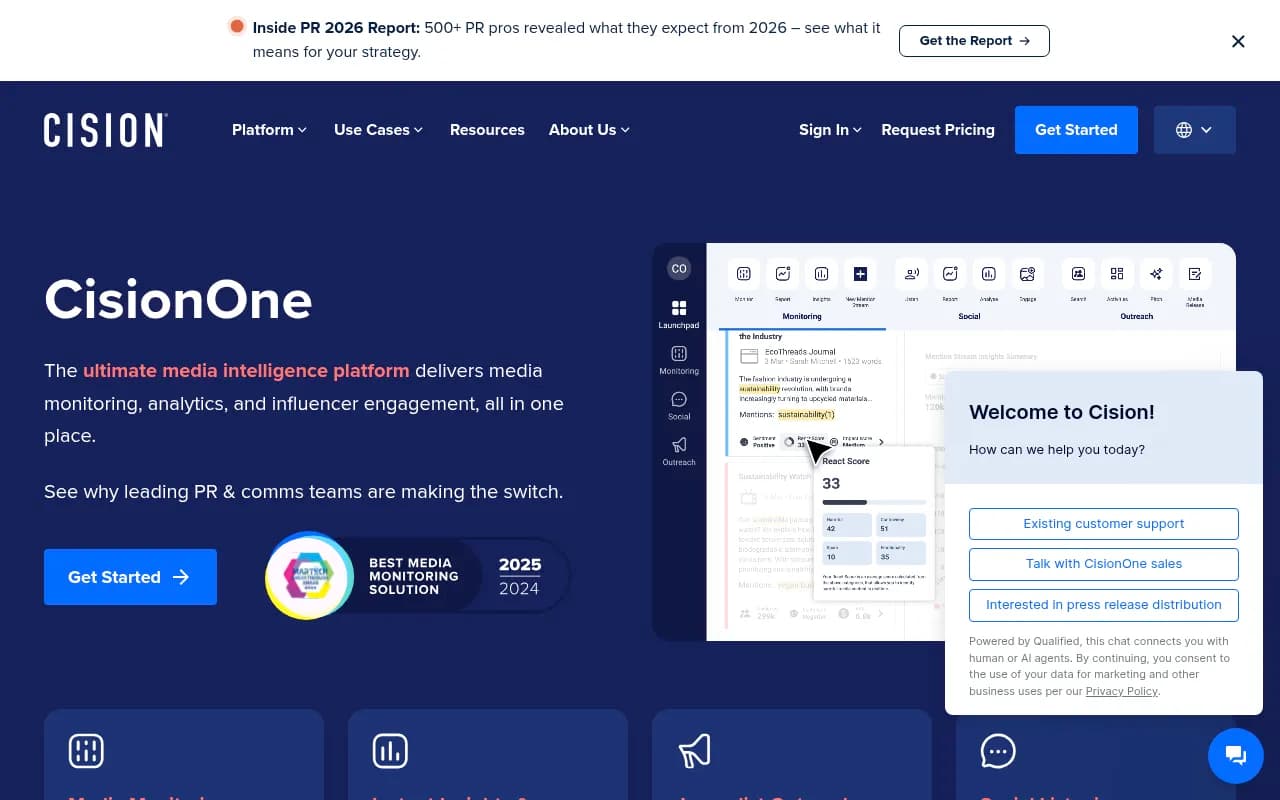
These come from the media monitoring side, and that's their strength. Per the medialyst roundup, Cision turns campaign URLs into a branded coverage report, then on the Premium plan checks how that earned media shapes answers in ChatGPT, Gemini and Claude, with a visibility score per story and source attribution. Onclusive GEO Analytics tracks cited sources, share of voice and sentiment, with alerts and executive reports. If your team already lives in these suites, the line from placement to AI answer is easy to draw. I'd verify both on a demo before committing, since I couldn't confirm pricing.
Otterly.AI
Otterly has the lowest entry price in most roundups. Reports export to PDF or CSV and can be branded. Per the medialyst snippet, the Standard plan is $189/month with 100 prompts, plus unlimited workspaces, API, MCP and a Looker Studio connector. It suits a small client set on a fixed prompt list. It doesn't have crawler logs or content generation.
Otterly.AI

Peec AI
Peec AI is built around clean dashboards and competitive benchmarking, with daily tracking and screenshot audit trails. Screenshots matter when a skeptical CMO says "I asked ChatGPT and got something different." It is monitoring only.

BrightEdge, Semrush and Ahrefs Brand Radar
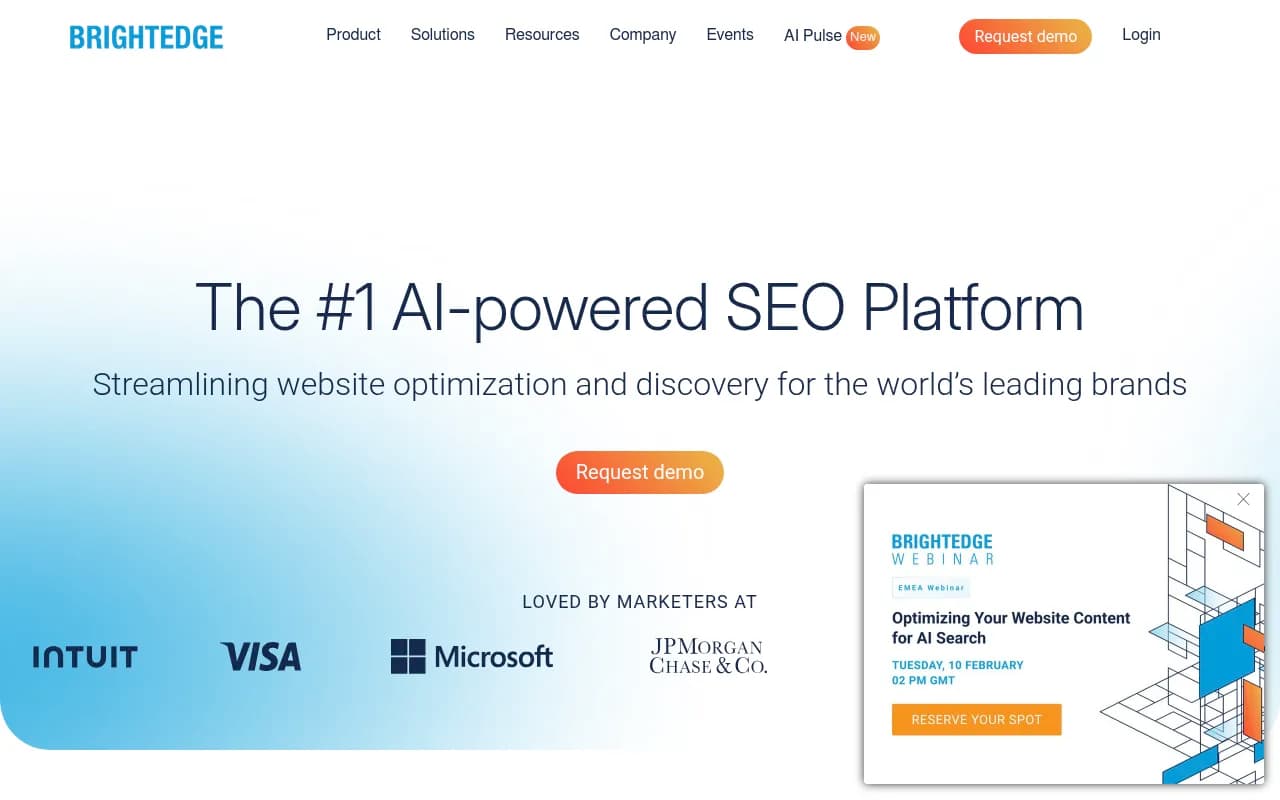
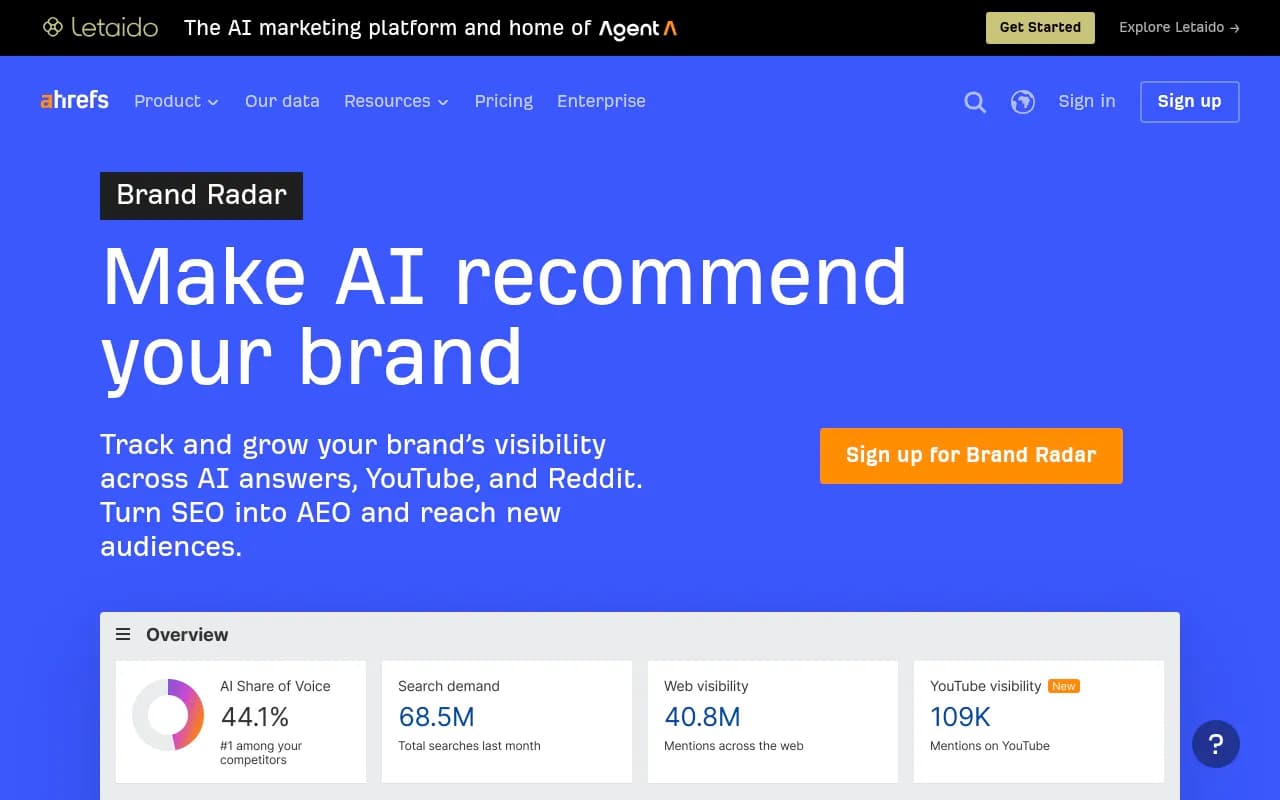
If the agency already sells SEO, the suites are a natural add-on. BrightEdge connects findings to prompt intelligence and content opportunities. Semrush and Ahrefs Brand Radar add AI tracking to existing workflows, though with narrower AI-specific data than a dedicated platform.
For a wider view of the category, the GEO software directory lists dozens more tools.
Which tool fits which agency
| Agency type | Roster size | Likely fit |
|---|---|---|
| Boutique PR, 3 to 8 clients | Small | Otterly or Peec for budget; Promptwatch Kick-off if you want crawler logs and visitor analytics |
| Mid-size PR with SEO or content arm | 10 to 40 clients | Promptwatch Growth or Scale, or Profound Agency Mode |
| Enterprise comms with media monitoring already | Large | Cision or Onclusive, plus a dedicated GEO platform for optimization |
| Full-service with white-label needs | Any | Promptwatch Enterprise for white-label dashboard, portal and SSO |
What to put in the client report
Tools give you data. Here is how I'd structure the monthly report so it earns its place in the retainer.
Position and sentiment, not just mentions
Promptwatch's advice from its unique-domains research is to track where you appear in the answer and how ChatGPT describes you, not just whether you're cited. Measure across many prompts, because one prompt tells you very little. Also check which competitors appear in the same responses.
Source attribution for each placement
List the placements that got cited, the prompt they answered, and where they landed in the source list. This is the chart that justifies a Forbes or trade-press campaign.
Content type mix
In Promptwatch Data on ChatGPT citation share by content type (Sep 28 to Oct 4, 2026), product pages were 22.4% of citations, landing pages 16.8% and listicles 13.6%, while news was 5.7%. Branded prompts over-index on press releases (2.1%) and reviews (5.6%). So PR coverage matters, but a client's own landing pages and product pages carry more weight than most PR teams assume. Say that in the report, and recommend page fixes alongside coverage.
Decay
Per the content half-life report, news pages cited by ChatGPT on July 6, 2026 lost half their number within 36 days, while landing pages and docs held on much longer. A monthly report that only counts new placements will overstate durability. Show which earlier placements are still cited, and plan refreshes.
Social and community sources
Citation behavior differs by engine. In Promptwatch Data on social media citations by AI model (Oct 11 to Nov 9, 2026), social platforms made up 13.16% of Google AI Overviews citations, with YouTube at 6.71%, but only 0.64% of ChatGPT's. The Oct 11 to Nov 9 window is 30 days against 7 days in the earlier October report, so don't read the change as like for like. The practical point: a video or community strategy may matter for AI Overviews and barely at all for ChatGPT.
Setting up your first client dashboard
- Build a prompt set from real buyer and reporter questions, split into organic, brand-specific and competitor comparison prompts.
- Add the client's top three to five competitors and brand aliases so mentions are counted correctly.
- Pick the engines and countries that match where the client's buyers are.
- Capture a baseline before the campaign starts. Without it, you can't show lift.
- Check that AI crawlers can reach the client's site. Free tools like the Agentic Readiness Check show which bots are allowed.
- Schedule the PDF or Looker Studio report to land in the client's inbox monthly.
Questions to ask vendors
- Is data collected from the real interfaces or from APIs?
- How many prompts and responses are included per client, and what happens when you go over?
- Can I white-label exports, and on which plan?
- Can I connect placements to cited URLs?
- What does tracking frequency look like for launches?
- Do you offer pitch workspaces that convert to live accounts?
Where the agency fits
If your team would rather hand the whole AI search workstream to specialists, agencies like 1001 SEO Media run GEO and digital PR together for brands, and use Promptwatch as their AI visibility platform. For PR firms, the more common move is to keep the relationship and licence a platform yourself.
The short version
Pick the tool that matches your roster and what you promise clients. For pure reporting on a few accounts, Otterly or Peec will do. For agencies that want to show a line from placement to citation to traffic, and then act on the gaps, Promptwatch or Profound are the serious options. Start with a trial on one real client, build the baseline, and let the first monthly report tell you whether the data is good enough to sell.