Key takeaways
- Most GEO monitoring tools still don't cover DeepSeek or Mistral, despite both models seeing rapid adoption in 2026 — leaving brands with significant blind spots.
- Platform-level coverage varies wildly: some tools track 10+ AI models, others cap out at 4-5 and skip the newer entrants entirely.
- Tracking visibility is only half the battle. The tools that help you act on gaps — through content generation, citation analysis, and crawler monitoring — deliver far more value than pure monitoring dashboards.
- If DeepSeek and Mistral coverage is a hard requirement, verify it directly with each vendor before committing, since model lists change frequently and marketing pages don't always reflect current reality.
Here's a problem that doesn't get talked about enough: most GEO tools were built when ChatGPT and Google AI Overviews were the only AI search engines anyone cared about. Then DeepSeek arrived, Mistral kept growing, and suddenly brands are getting cited (or not cited) in models their monitoring stack doesn't even know exist.
If you're serious about AI visibility in 2026, tracking only the "big four" isn't enough. DeepSeek's R1 and V3 models have been adopted widely across Asia and Europe, and Mistral's models power a growing number of enterprise copilots and European AI products. Your brand could be invisible in both — and you'd never know.
This guide covers which GEO tools actually track DeepSeek and Mistral visibility, how they differ, and what to look for when choosing one.
Why DeepSeek and Mistral visibility actually matters
DeepSeek crossed 100 million users faster than almost any AI product before it, and its usage is concentrated in markets where Western brands are trying to grow. Mistral, the French AI company, has become the default model for many European enterprise deployments — partly because of data sovereignty concerns, partly because the models are genuinely competitive.
Neither model is a niche curiosity. If you're a B2B SaaS company selling into European enterprises, Mistral is probably being used by your prospects' internal tools. If you're in e-commerce or consumer brands with any Asia-Pacific presence, DeepSeek is a real discovery channel.
The practical implication: a competitor who publishes content that DeepSeek cites will appear in those answers. You won't. That's a visibility gap that traditional SEO monitoring won't catch, and most GEO tools won't either.
What to look for in a GEO tool for DeepSeek and Mistral
Before jumping to specific tools, it's worth being clear about what "tracking" actually means in this context. There are a few distinct things a tool might do:
Model coverage: Does the tool query DeepSeek and Mistral at all? Some tools list 10 models on their pricing page but only actively monitor 4-5 in practice. Always check the specific model list, not just the headline number.
Response-level data: Does the tool show you what DeepSeek or Mistral actually said about your brand, or just whether you were mentioned? The full response text matters — sentiment, positioning, and competitor mentions all live there.
Citation tracking: When DeepSeek cites a source, which URL does it point to? This is different from just tracking brand mentions. Citation-level data tells you which of your pages (or competitors' pages) are being pulled into AI answers.
Prompt coverage: Are you tracking the right prompts? A tool might technically support DeepSeek but only run queries for a handful of generic prompts. Prompt volume and variety matter as much as model coverage.
Action capabilities: Can the tool help you fix the gaps it finds? This is where most monitoring-only tools fall short.
The tools that actually cover DeepSeek and Mistral
Promptwatch
Promptwatch is one of the few platforms that monitors all 10 major AI models including DeepSeek and Mistral, alongside ChatGPT, Claude, Gemini, Perplexity, Grok, Copilot, Meta AI, and Google AI Overviews. What separates it from most competitors isn't just coverage breadth — it's what happens after you see the data.
The Answer Gap Analysis shows you exactly which prompts competitors are visible for in DeepSeek or Mistral that you're not. From there, Content Agents generate articles and briefs grounded in real prompt data to close those gaps. AI Crawler Logs show when DeepSeek's and Mistral's crawlers hit your site, which pages they read, and when those pages move from crawl to citation. That full loop — find the gap, create the content, watch it get cited — is something most monitoring tools don't offer.

Profound
Profound covers up to 10 AI models at the enterprise tier, making it one of the more comprehensive options for teams that need broad model coverage. It's strong on prompt research and competitive benchmarking. The pricing starts at $99/month but the full model coverage (including newer models like DeepSeek) tends to require higher tiers or custom enterprise plans. It's a solid choice for large teams that prioritize research depth, though it doesn't have the same content generation capabilities as some alternatives.
Profound

Peec AI
Peec AI offers flexible model selection across up to 10 models, which means you can configure it to include DeepSeek and Mistral rather than being locked into a fixed set. Starting at €85/month, it's reasonably priced for what it offers. The flexibility is genuinely useful — if your priority is tracking a specific combination of models, Peec lets you choose rather than forcing you into a preset bundle.

Otterly.AI
Otterly starts at $29/month and is one of the cheapest credible entries in the category. The base plan covers 4 models, and broader coverage including newer models requires upgrading. If DeepSeek and Mistral are priorities, verify current model availability before signing up — the tool's strength is its low entry price and simplicity, not its model breadth.
Otterly.AI

SE Visible
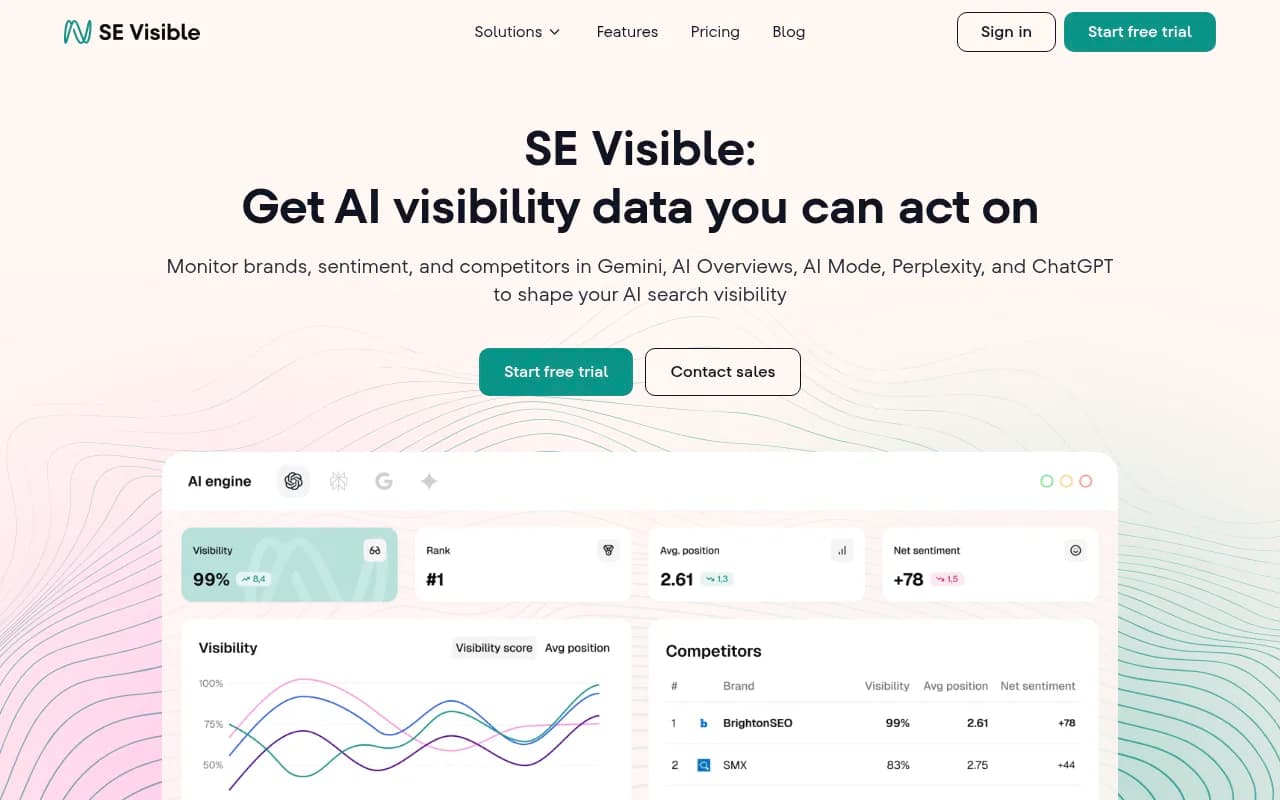
SE Visible (from SE Ranking) covers 5 AI models and is positioned for multi-brand, multi-country monitoring. It's a reasonable option if you're already in the SE Ranking ecosystem. Model coverage is more limited than dedicated GEO platforms, and it's primarily a monitoring tool without content optimization features.
AthenaHQ
AthenaHQ is monitoring-focused and covers a solid range of AI models. It's worth checking their current model list directly, as coverage has expanded over 2026. The platform lacks content generation and optimization capabilities, so it's best suited for teams that just need visibility data and handle content creation separately.

Scrunch AI
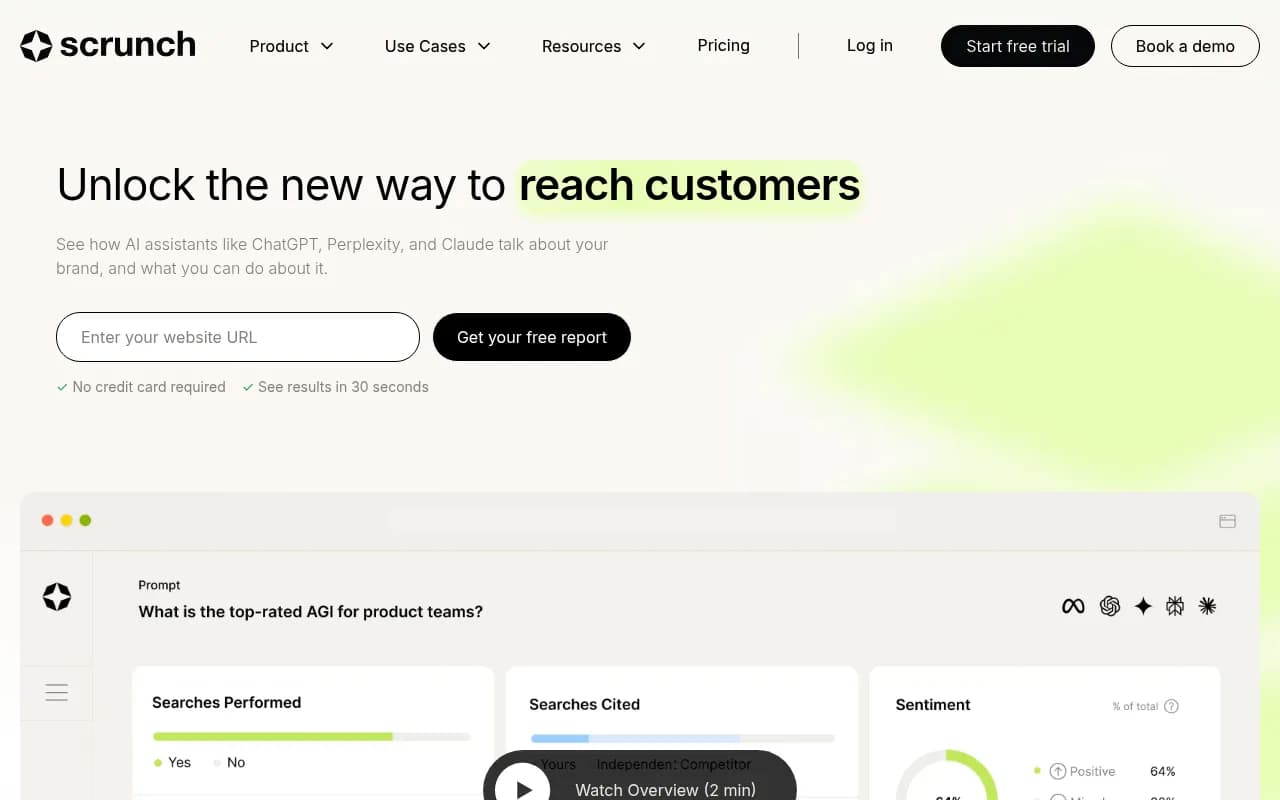
Scrunch AI tracks brand mentions across LLMs and has been expanding its model coverage. It's positioned as an AI search visibility platform with decent monitoring capabilities. Like several others in this category, it's primarily a tracking tool rather than an optimization platform.
LLMrefs
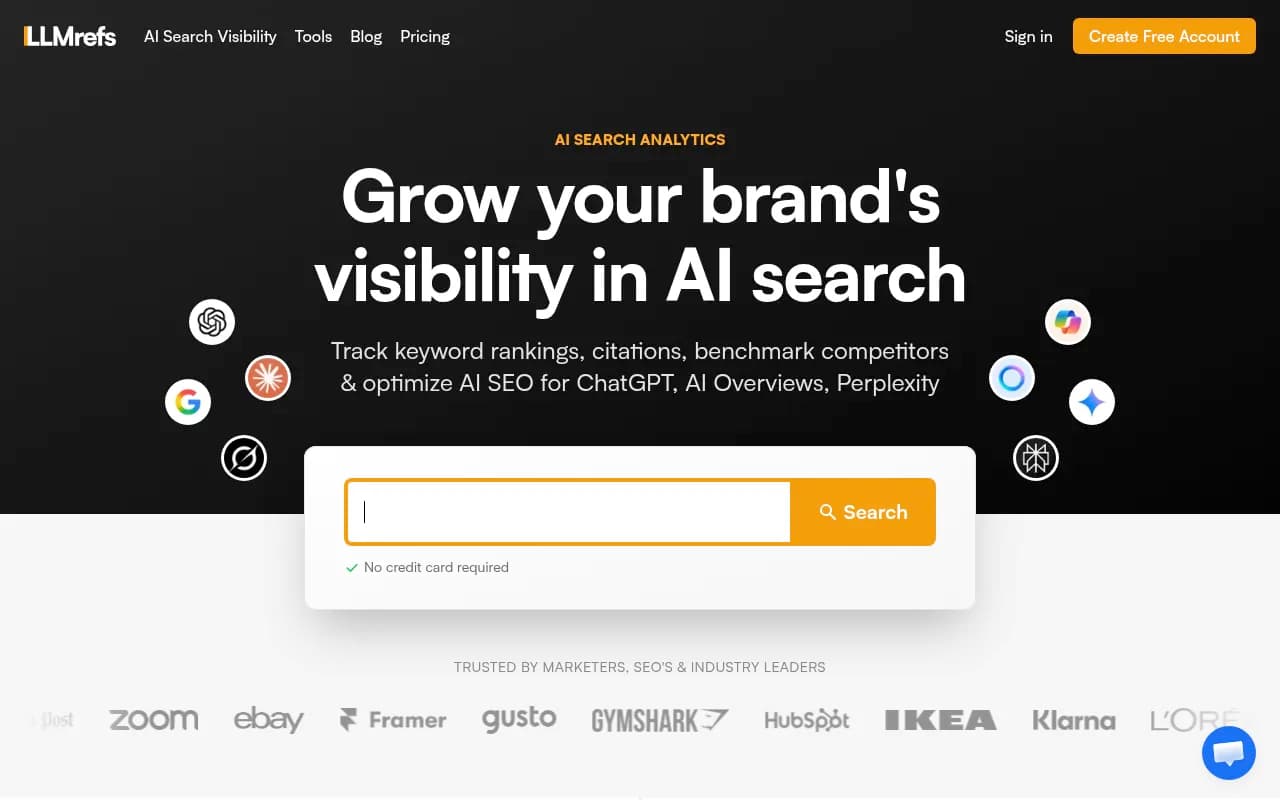
LLMrefs tracks visibility across ChatGPT, Perplexity, and up to 9 other AI search engines. Their model list has been expanding, so it's worth verifying current DeepSeek and Mistral support. The platform focuses on citation tracking and brand mention monitoring.
LLMrefs
Comparison table: GEO tools for DeepSeek and Mistral coverage
| Tool | DeepSeek/Mistral coverage | Max AI models | Content generation | Crawler logs | Starting price |
|---|---|---|---|---|---|
| Promptwatch | Yes (10 models) | 10 | Yes | Yes | $99/mo |
| Profound | Enterprise tier | Up to 10 | No | No | $99/mo |
| Peec AI | Configurable | Up to 10 | No | No | €85/mo |
| Otterly.AI | Higher tiers | 4 (base) | No | No | $29/mo |
| SE Visible | Limited | 5 | No | No | $99/mo |
| AthenaHQ | Verify directly | Varies | No | No | Custom |
| Scrunch AI | Expanding | Varies | No | No | Custom |
| LLMrefs | Verify directly | Up to 9 | No | No | Varies |
Model coverage changes frequently. Always verify current DeepSeek and Mistral support with each vendor before purchasing.
The monitoring-only problem
Something worth being direct about: most of the tools in this category show you data and stop there. You can see that DeepSeek isn't citing your brand for a particular query. You can see that a competitor is. Then what?
That's where the category splits. Monitoring-only tools leave you to figure out the "so what" yourself. You have to diagnose why you're not being cited, decide what content to create, write it, publish it, and then wait to see if it moves the needle — all without any connection back to the data you started with.
A smaller number of platforms — Promptwatch being the clearest example — close that loop. The gap analysis points to specific content you're missing. The content generation tools create that content grounded in real prompt data. The crawler logs show when AI models discover the new pages. The citation tracking shows when those pages start appearing in answers. That's a materially different product than a dashboard that shows you a visibility score.
For teams that are serious about improving their DeepSeek and Mistral visibility (not just measuring it), the distinction matters.
How to verify DeepSeek and Mistral coverage before buying
The GEO tool market moves fast. Model lists on pricing pages are often out of date, and "up to 10 models" doesn't always mean all 10 are actively monitored with the same depth. A few things worth doing before committing:
Ask specifically about DeepSeek R1/V3 and Mistral Large. Don't just ask "do you cover DeepSeek" — ask which version, how frequently queries are run, and whether citation-level data is available for those models.
Request a trial with your actual prompts. Run the queries you care about and check whether DeepSeek and Mistral results actually populate. Some tools have model coverage on paper but sparse data in practice.
Check update frequency. Daily monitoring is the minimum for meaningful trend data. Some tools run queries weekly or on-demand only, which makes it hard to track changes over time.
Ask about new model onboarding. The AI model landscape will keep changing. A tool that took 6 months to add DeepSeek will probably be slow to add whatever comes next.
Which tool is right for your situation
If you need the broadest model coverage with the ability to actually fix what you find, Promptwatch covers all 10 major models including DeepSeek and Mistral, and it's the only platform in this comparison that combines monitoring with content generation and AI crawler logs. For teams that want to move from "we see the gap" to "we closed the gap," that matters.
If you're primarily a researcher or analyst who just needs data and will handle optimization separately, Profound is worth evaluating at the enterprise tier. Peec AI is a reasonable mid-market option if you want flexibility in which models you track.
If budget is the primary constraint, Otterly.AI gets you started cheaply, but verify that DeepSeek and Mistral are included at your price point before signing up.
The honest answer is that no tool in this category is perfect, and the market is still maturing. DeepSeek and Mistral coverage specifically is a differentiator right now because most tools haven't caught up. That gap will close over the next 12 months, but for now it's worth treating model coverage as a first-order filter when evaluating platforms.
A note on the broader GEO tool landscape
The research data for this guide surfaced comparisons from Evertune, KIME, AIclicks, and several other platforms that didn't make this list — either because their DeepSeek/Mistral coverage is unclear, or because they're primarily monitoring tools without meaningful optimization capabilities.
The broader category has fragmented in 2026. Enterprise platforms have moved upmarket, self-serve tools have gotten cheaper, and a lot of new entrants have launched with thin feature sets. The tools worth paying attention to are the ones that have invested in model breadth (including newer models like DeepSeek and Mistral) and in moving beyond pure monitoring toward actual optimization.
For most marketing teams, the right starting point is to audit which AI models your target audience actually uses, then find a tool that covers those models with sufficient depth. DeepSeek and Mistral belong on that list for most brands in 2026 — the question is just which platform tracks them well enough to act on.