Key takeaways
- Hall AI shut down, and most direct replacements are either too expensive for small businesses or too limited to be useful on their own
- AI visibility (showing up in ChatGPT, Perplexity, Gemini, and Google AI Overviews) is now a real traffic and revenue channel — not just a vanity metric
- The best alternatives fall into two categories: monitoring-only tools that show you data, and full optimization platforms that help you act on it
- Small businesses on tight budgets should prioritize tools that combine tracking with content guidance, rather than paying for monitoring alone
- Free and low-cost options exist, but they come with meaningful trade-offs around data depth, model coverage, and actionability
What happened to Hall AI — and why it matters
Hall AI was one of the early tools that helped small businesses understand how they appeared in AI-generated answers. It was affordable, relatively simple to use, and filled a real gap at a time when most AI visibility platforms were priced for enterprise teams.
When it shut down, it left a specific type of user without a home: small business owners and lean marketing teams who needed basic AI search monitoring without a $500+/month commitment.
The problem is that the AI visibility space has matured quickly. The tools that replaced Hall AI are mostly built for agencies and mid-market brands. That's not necessarily bad — the features are better — but the pricing and complexity don't always fit a 5-person team trying to figure out why their local competitor keeps showing up in ChatGPT recommendations and they don't.
This guide is specifically for that situation. We'll cover what actually matters for small business AI visibility, which tools are worth considering, and how to think about the trade-offs.
Why AI visibility matters for small businesses in 2026
A growing share of purchase decisions now start with an AI query rather than a Google search. Someone asks ChatGPT "what's the best accounting software for a 10-person company" or "which local plumber in Austin has good reviews" — and the answer they get shapes where they go next.
If your business isn't being cited in those answers, you're invisible to a chunk of your potential customers. And unlike traditional SEO, where you can at least check your Google ranking, AI visibility has historically been a black box.
That's changing. A new category of tools now tracks which brands AI models mention, how often, and in response to what kinds of prompts. Some go further and help you figure out what content to create to start appearing in those answers.
For small businesses, the question isn't whether to care about this. It's which tools are worth the money.
The two types of tools you'll encounter
Before diving into specific recommendations, it helps to understand the split in this market:
Monitoring-only tools show you your current AI visibility — which prompts you appear in, how often you're cited, which models mention you. They're useful for awareness but leave you stuck if your visibility is low. You see the problem; you don't get help fixing it.
Optimization platforms go further. They analyze gaps between your content and what AI models are actually looking for, then help you create content that fills those gaps. They're more expensive but more useful if you're actively trying to improve.
Most Hall AI users were using it for monitoring. But monitoring without action is just a dashboard you eventually stop checking.
| Tool | Type | Starting price | Best for |
|---|---|---|---|
| Promptwatch | Full optimization platform | $99/mo | Small teams wanting tracking + content guidance |
| Otterly.AI | Monitoring | ~$49/mo | Basic brand tracking on a budget |
| LLM Pulse | Monitoring | Freemium | Getting started with zero commitment |
| TrackMyBusiness | Monitoring | Low-cost | Simple brand mention tracking |
| Rankshift | Monitoring | Varies | ChatGPT + Perplexity focused tracking |
| GetMint | Monitoring + some optimization | Mid-range | Growing teams needing more than basic tracking |
| Peec AI | Monitoring | Low-cost | Marketing teams wanting clean dashboards |
| ProductRank | Free | Free | Zero-budget starting point |
The best Hall AI alternatives for small businesses
Promptwatch — best overall for small teams that want to actually improve
Promptwatch is the most complete option here, and the one most worth considering if you're serious about AI visibility rather than just curious about it.

The core difference from monitoring-only tools: Promptwatch shows you where you're invisible, then helps you do something about it. Its Answer Gap Analysis identifies which prompts your competitors are showing up for that you're not — and what content your site is missing that would help AI models start citing you.
For small businesses, the Essential plan at $99/month covers one site, 50 prompts, and 5 AI-generated articles per month. That's enough to track your core brand queries, identify a handful of high-value gaps, and start publishing content that's actually engineered to rank in AI search rather than just hoping for the best.
It tracks 10 AI models including ChatGPT, Perplexity, Google AI Overviews, Gemini, Claude, and Grok — which matters because different models cite different sources. A tool that only checks one or two gives you an incomplete picture.
The crawler log feature (available from the Professional plan at $249/month) is genuinely useful: you can see when AI crawlers like GPTBot visit your site, which pages they read, and when those pages start generating citations. Most small businesses have no idea this data exists.
Is it the cheapest option? No. But it's the only one in this list that closes the loop from "I'm not visible" to "here's what to publish and here's how visibility changed after I did."
Otterly.AI — solid monitoring for budget-conscious teams
Otterly.AI is a monitoring-focused platform that tracks brand mentions across ChatGPT, Perplexity, and Google AI Overviews. It's simpler than Promptwatch and priced lower, which makes it a reasonable starting point if you mainly want to know whether you're showing up.
Otterly.AI

The trade-off is that it stops at monitoring. You'll see your visibility scores and how they change over time, but there's no content gap analysis or generation to help you improve. If your scores are low, you're on your own figuring out why.
For a small business that just wants a sanity check — "are we appearing in AI answers at all?" — Otterly.AI does that job cleanly.
LLM Pulse — good free starting point
LLM Pulse offers a freemium model that lets you start tracking AI visibility without any upfront cost. It covers ChatGPT, Perplexity, and a few other models.
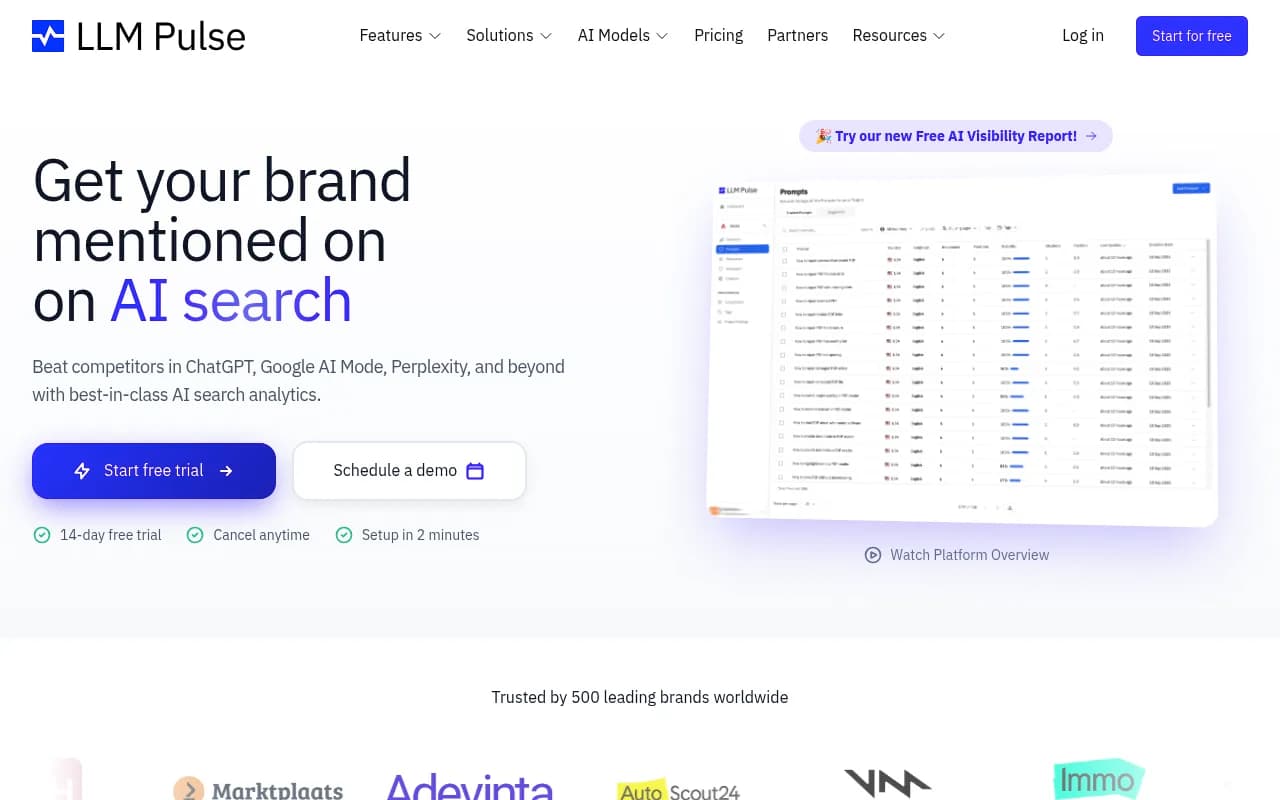
The free tier is limited in terms of prompt volume and model coverage, but it's a legitimate way to get a feel for what AI visibility tracking looks like before committing to a paid tool. For very small businesses or solo operators who are just starting to think about this, it's worth trying before spending anything.
TrackMyBusiness — simple and affordable
TrackMyBusiness focuses on the basics: what does ChatGPT, Gemini, and Perplexity say about your brand? It's built for small business owners who don't want to learn a complex platform.
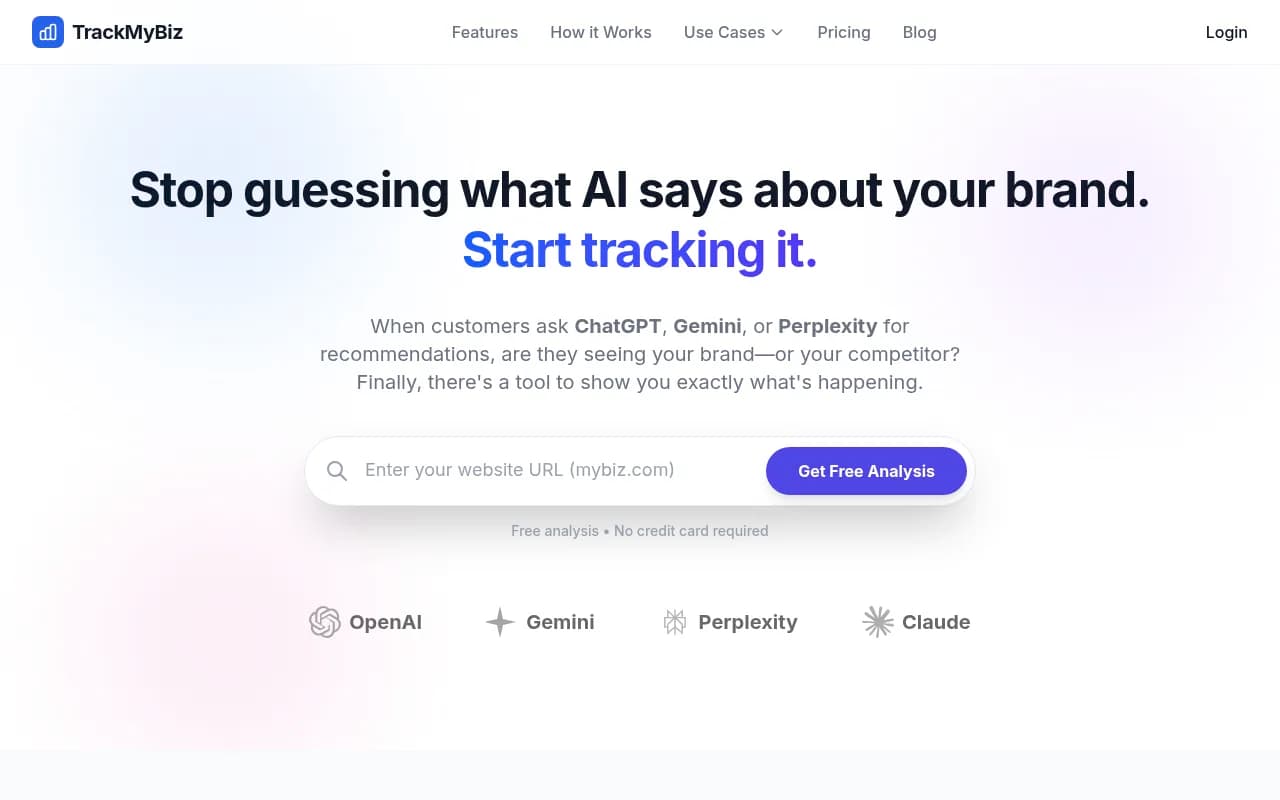
The interface is straightforward, the setup is quick, and the pricing is accessible. It won't give you the depth of data that Promptwatch or even Otterly.AI provides, but if you just want to check in on your brand's AI presence periodically, it works.
Rankshift — focused on ChatGPT and Perplexity
Rankshift tracks brand visibility specifically across ChatGPT and Perplexity, which are currently the two most commercially significant AI search engines for most small businesses.

It's a narrower tool than some others here, but that focus means it tends to do those two channels well. If your customers are primarily using ChatGPT or Perplexity to find businesses like yours, Rankshift is worth a look.
GetMint — monitoring with some optimization features
GetMint sits between pure monitoring and full optimization. It tracks your AI visibility and offers some guidance on improving it, without the full content generation capabilities of a platform like Promptwatch.
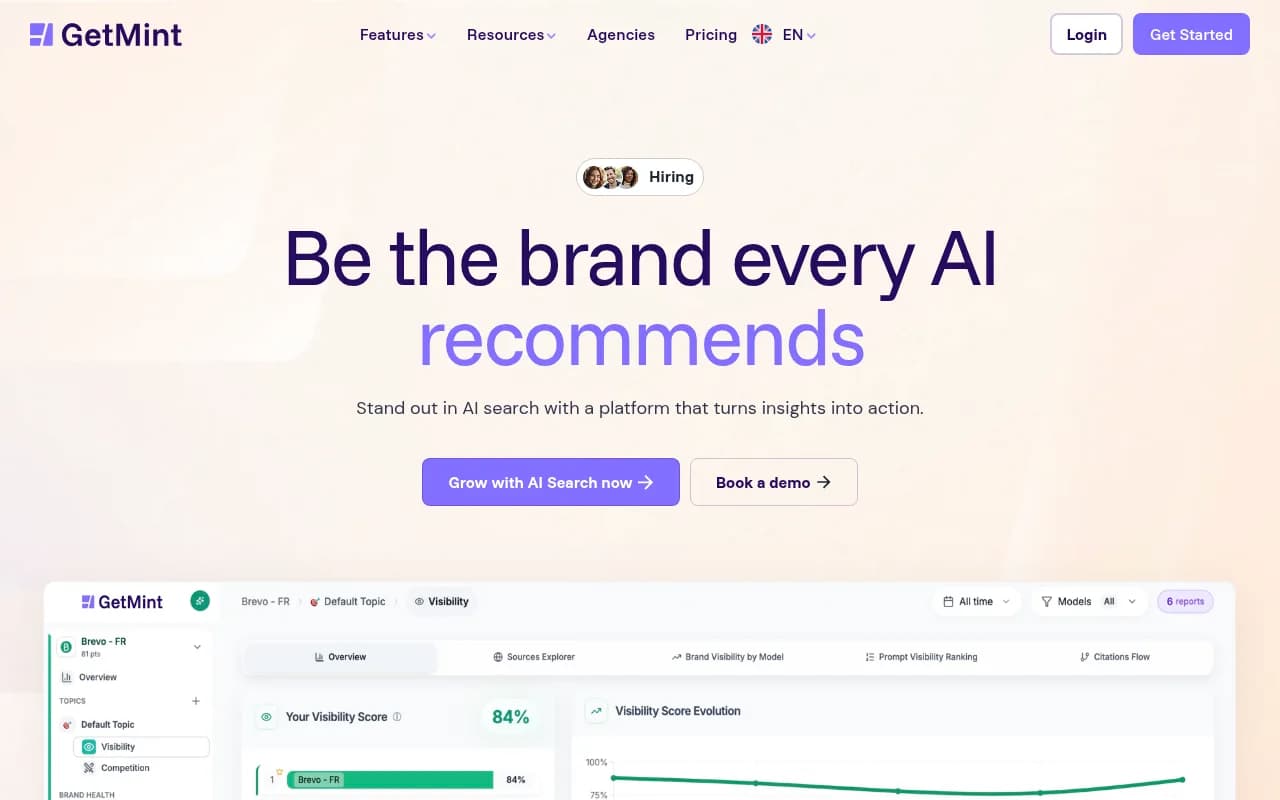
For small businesses that want more than a dashboard but aren't ready to invest in a complete optimization platform, GetMint occupies a useful middle ground.
Peec AI — clean dashboard for marketing teams
Peec AI is a monitoring tool with a clean interface that marketing teams tend to find intuitive. It tracks brand visibility across several AI models and presents the data in a way that's easy to share with stakeholders.

It's monitoring-only, so the same caveat applies: you'll know where you stand, but you won't get help improving. That said, for a small marketing team that just needs to report on AI visibility alongside other metrics, Peec AI is a reasonable choice.
ProductRank — free option for zero-budget situations
ProductRank is a free AI search discovery and monitoring tool. Free means limited — you won't get the depth of data or model coverage that paid tools offer — but if budget is genuinely the constraint, it's better than nothing.
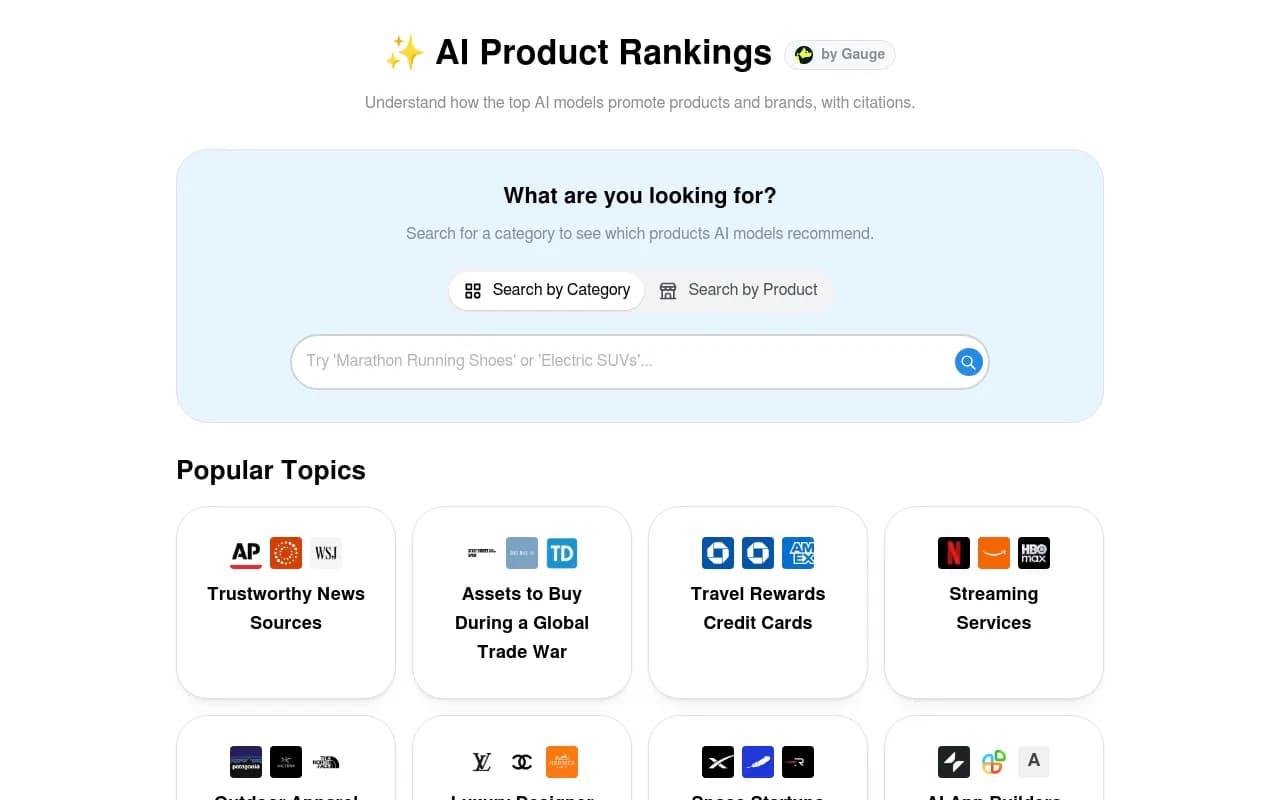
Use it to get a baseline understanding of your AI visibility, then upgrade to a paid tool once you've validated that this channel matters for your specific business.
What to look for when choosing a replacement
A few things worth checking before you commit to any tool:
Model coverage. Some tools only check one or two AI engines. If your customers use Google AI Overviews or Claude, a tool that only tracks ChatGPT is giving you a partial picture. Aim for at least 4-5 models covered.
Prompt customization. Generic prompts like "best [category] company" won't tell you much. You want to track the specific questions your customers actually ask — "best HVAC company in Denver" or "affordable bookkeeping software for freelancers." Check whether the tool lets you define your own prompts.
What happens when visibility is low. This is the big one. If the tool just shows you a red score with no guidance, you're paying for anxiety. Look for tools that at least tell you what's missing, even if they don't generate content for you.
Pricing transparency. Some tools in this space have opaque pricing or charge per query in ways that add up fast. Make sure you understand what you're actually paying for before you sign up.
Free trial. Most reputable tools in this space offer a trial period. Use it. AI visibility data looks very different for different businesses, and you want to see real data for your brand before committing.
A practical approach for small businesses
If you're coming from Hall AI and trying to figure out what to do next, here's a reasonable path:
Start with a free tool like ProductRank or LLM Pulse to get a baseline. Spend a week or two understanding where you currently stand across the main AI engines.
If your visibility is low (which it probably is — most small businesses are), that's actually useful information. It means there's room to improve, and the question becomes whether you want to invest in doing something about it.
If yes, Promptwatch's Essential plan at $99/month is the most direct route from "I know I'm not visible" to "I'm publishing content that's starting to change that." The combination of gap analysis and content generation means you're not just watching a number — you're working to move it.
If $99/month is too much right now, Otterly.AI or GetMint give you monitoring at a lower price point. You'll need to figure out the content side yourself, but at least you'll know which gaps to focus on.
The worst outcome is paying for a monitoring tool, seeing low scores, and doing nothing with that information. Visibility data is only useful if it drives action.
The bigger picture
AI search isn't replacing traditional SEO overnight, but it's already a meaningful channel for many small businesses — especially in local services, professional services, and software. The businesses that start building AI visibility now will have a real advantage over those that wait.
Hall AI's shutdown is frustrating, but the tools that replaced it are genuinely better. The monitoring is more accurate, the model coverage is broader, and the best platforms now help you improve rather than just measure.
Pick a starting point, track your baseline, and start creating content that answers the questions AI models are already being asked about your category. That's the whole game.