Key takeaways
- If Hall AI is shutting down, you need a replacement that does more than just monitor — you need one that helps you act on the data
- The rebuild has four stages: audit your current setup, restore tracking, fix technical foundations, and close content gaps
- Most monitoring-only tools will leave you in the same position Hall AI did — watching numbers without knowing how to move them
- A full stack rebuild can realistically be done in 5-7 days if you prioritize the right things first
- Tools like Promptwatch go beyond tracking to show you exactly which content gaps are costing you citations — and help you fix them
When a tool you depend on shuts down, the instinct is to panic-search for a direct replacement. That's understandable. But it's also how teams end up in the same position six months later — locked into another monitoring dashboard that shows them data without helping them do anything with it.
This guide is about rebuilding smarter. Not just restoring what you had, but using the disruption as a reason to build a stack that actually moves the needle on your AI visibility.
Here's how to do it in under a week.
Day 1: Audit what you actually had (and what you were missing)
Before you install anything new, spend a few hours being honest about what Hall AI was actually giving you.
Most AI visibility tools in this category track brand mentions across ChatGPT, Perplexity, Google AI Overviews, and similar engines. They show you a visibility score, maybe a list of prompts where you appear or don't appear, and some kind of competitor comparison. That's useful baseline data.
But here's the question worth asking: did you know what to do with that data? Did Hall AI tell you which specific pages were being cited? Did it show you which prompts your competitors were winning that you weren't? Did it help you understand why AI crawlers might be skipping your content?
If the answer to most of those is "not really," then the goal isn't to find a Hall AI clone. It's to find something that closes those gaps.
Write down:
- Which AI models you were tracking (ChatGPT, Perplexity, Gemini, etc.)
- How many prompts you were monitoring
- Whether you had any content gap data
- Whether you had any crawler or traffic data tied to AI referrals
- What you were actually doing with the reports
That list tells you what your new stack needs to cover.
Day 2: Restore basic tracking before anything else
You can't optimize what you can't see. Before worrying about content or technical fixes, get monitoring back up.
The good news is there are solid options available right now. The bad news is most of them are monitoring-only — they'll show you where you appear in AI answers, but they won't tell you why or how to change it.
Here's a quick comparison of the main options:
| Tool | Models tracked | Content gap analysis | Crawler logs | AI traffic attribution | Content generation |
|---|---|---|---|---|---|
| Promptwatch | 10+ | Yes | Yes | Yes | Yes |
| Profound | 9+ | Partial | No | No | No |
| Otterly.AI | 5 | No | No | No | No |
| Peec AI | 4 | No | No | No | No |
| LLM Pulse | 5 | No | No | No | No |
| Rankshift | 3 | No | No | No | No |
If you just need something running today while you evaluate properly, Otterly.AI or Peec AI can get you basic coverage quickly.
Otterly.AI


For something more complete — especially if you want to understand why your visibility looks the way it does — Promptwatch covers 10+ models, includes crawler logs, and connects AI visibility to actual traffic and revenue.

Set up whichever tool you choose, add your brand name and 20-30 core prompts relevant to your category, and let it run for 24-48 hours before drawing conclusions. Fresh data always looks worse than established baseline data, so don't make decisions on day-one numbers.
Day 3: Fix the technical foundations
This is the step most teams skip when rebuilding after a tool shutdown, and it's usually the most impactful one.
AI search engines don't just read your content — they crawl it, parse it, and decide whether it's trustworthy enough to cite. If there are technical barriers in the way, no amount of content optimization will fix your visibility.
Work through this checklist:
Check your robots.txt
Open your robots.txt file and look for any rules that might be blocking AI crawlers. The main ones to check for are GPTBot (OpenAI), PerplexityBot, ClaudeBot (Anthropic), and Bingbot. If any of these are blocked — even accidentally, from an old rule — you're invisible to those models regardless of how good your content is.
Create or update your llms.txt file
This is a relatively new convention, but it's gaining traction. Place a plain text file at yourdomain.com/llms.txt that includes a short company description, your key products or services, and links to your most important pages. Think of it as a sitemap specifically written for AI models to read.
Implement Schema.org markup
At minimum, you want Organization schema on your homepage, Article schema on blog posts, and FAQPage schema anywhere you have Q&A content. This structured data helps AI models understand what your content is about and who produced it.
Set up AI referral tracking in GA4
Create a custom channel grouping called "AI Search" and add referral sources including chat.openai.com, chatgpt.com, perplexity.ai, and claude.ai. Without this, you'll have no way to connect your AI visibility improvements to actual traffic.
Tools like Screaming Frog can help you audit your site for crawlability issues quickly.
If your site is JavaScript-heavy, AI crawlers may be seeing a blank page. Services like Prerender.io handle dynamic rendering so bots see your actual content.
Day 4: Map your content gaps
This is where most teams leave significant visibility on the table. You can have perfect technical setup and still be invisible in AI answers if your content doesn't address the specific questions AI models are trying to answer.
Content gap analysis for AI search works differently from traditional SEO keyword research. You're not just looking for search volume — you're looking for prompts where AI models are actively giving answers, and where your competitors are being cited but you aren't.
The manual version of this looks like:
- List 30-50 prompts relevant to your product or category
- Run each one through ChatGPT, Perplexity, and Google AI Overviews
- Note which competitors appear in the responses
- Note which questions your site has no good answer for
- Prioritize gaps where competitors are consistently cited and you're absent
This process takes time but it's genuinely revealing. You'll often find that AI models are citing a competitor's blog post from 2022 because it's the only thing that directly answers a specific question — and writing a better version of that content is a straightforward win.
Promptwatch automates this with its Answer Gap Analysis, which shows you the specific prompts competitors are winning and maps them against your existing content. That's the kind of data that turns a monitoring dashboard into an actual optimization workflow.
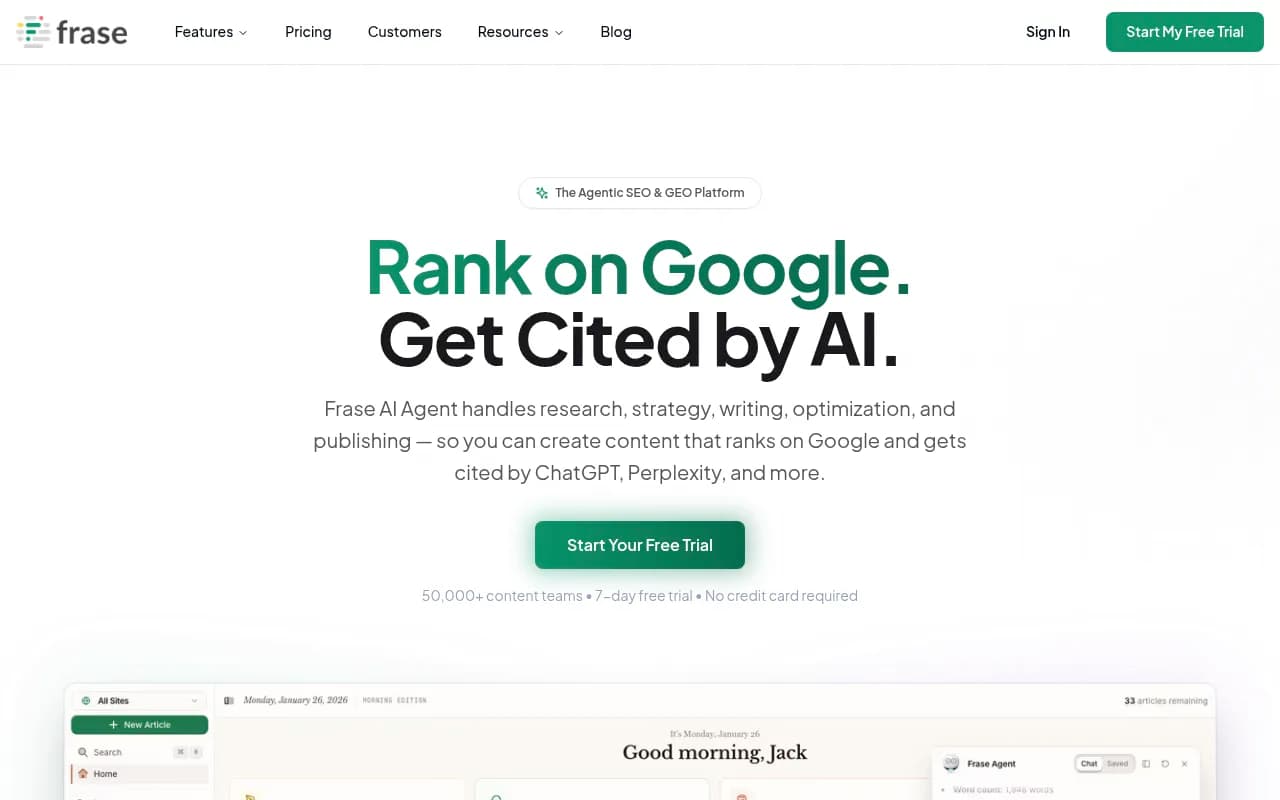
For content brief creation once you've identified the gaps, tools like MarketMuse and Frase are solid options for building out research-backed briefs.
Day 5: Create content that AI models actually want to cite
Once you know the gaps, you need to fill them. And this is where the work gets concrete.
AI models tend to cite content that:
- Directly and specifically answers a question (not content that mentions the topic in passing)
- Has clear authorship and entity signals
- Is structured in a way that's easy to parse (headers, lists, definitions)
- Comes from a domain with existing citation history
A few practical guidelines for writing content that gets cited:
Answer the question in the first paragraph. AI models don't read for narrative arc. They scan for the answer. Put it up front, then provide supporting detail.
Use question-based headers. "What is X?" and "How does Y work?" as H2s or H3s make it easy for AI models to match your content to specific prompts.
Be specific. Vague content ("X is an important consideration for businesses") gets skipped. Specific content ("X reduces average response time by 40% in B2B SaaS environments") gets cited.
Update existing content. Sometimes the gap isn't a missing article — it's an existing article that's outdated or too thin. A content refresh can move you from invisible to cited faster than writing something new.
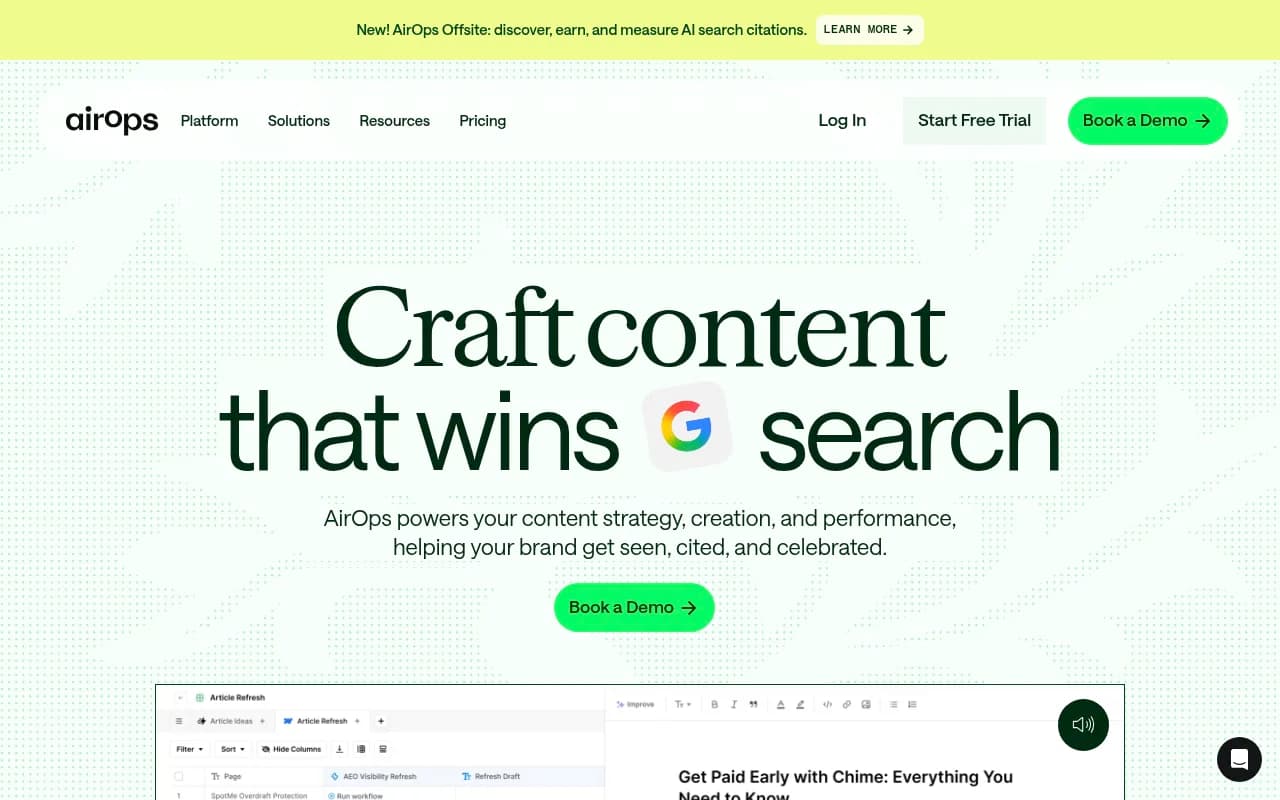
For content creation at scale, tools like AirOps are built specifically for AI search content workflows.
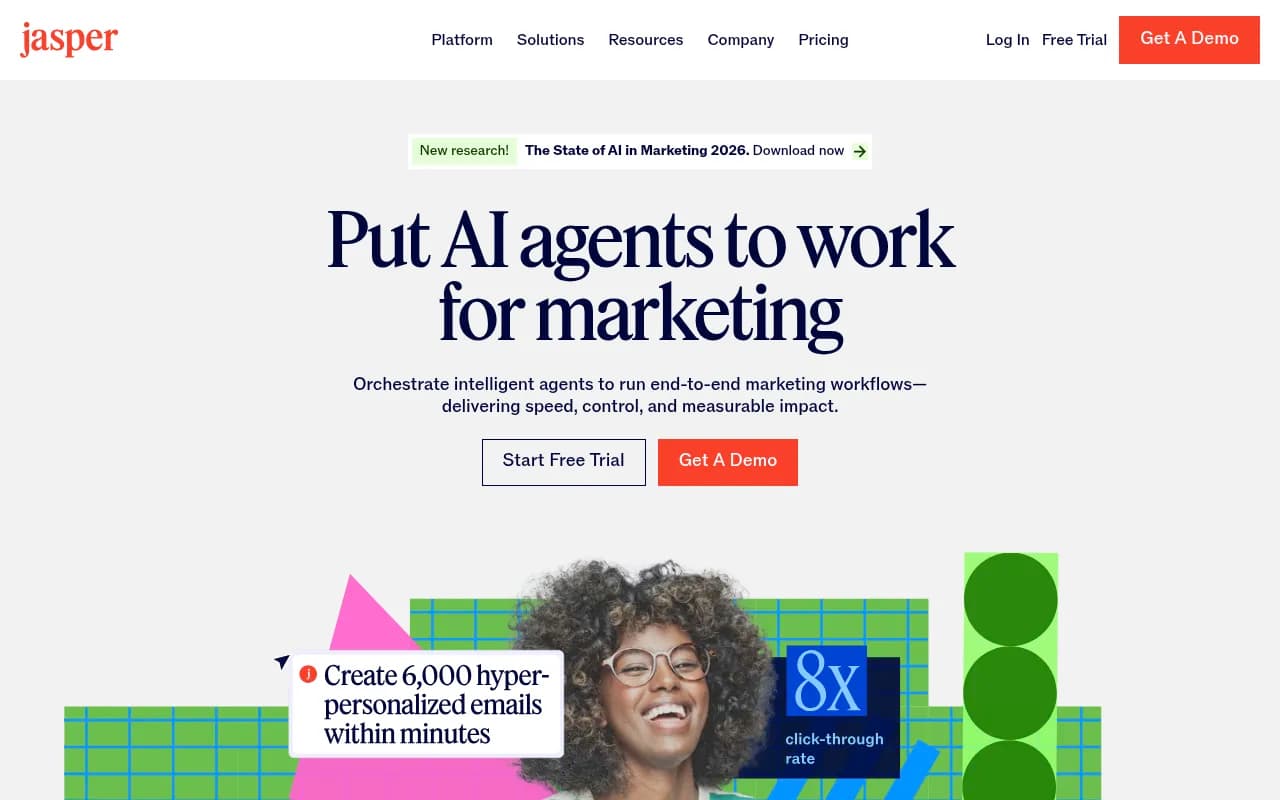
If you need to produce a high volume of content quickly, Jasper has solid content pipeline features for marketing teams.
Day 6: Set up offsite citation tracking
Your AI visibility isn't just about your own website. AI models pull from Reddit threads, YouTube videos, industry publications, review sites, and third-party listicles. If you're not tracking what's being cited about you offsite, you're missing a big part of the picture.
Check which external sources are currently driving AI citations for your category. Look at:
- Reddit discussions mentioning your brand or category
- YouTube videos that explain problems your product solves
- Review platforms (G2, Capterra, Trustpilot) where your brand appears
- Industry publications and listicles that cover your space
If competitors are being cited from a Reddit thread you're not part of, or from a listicle that doesn't include you, those are fixable problems. Getting mentioned in the right places offsite can move your AI visibility faster than any on-site optimization.
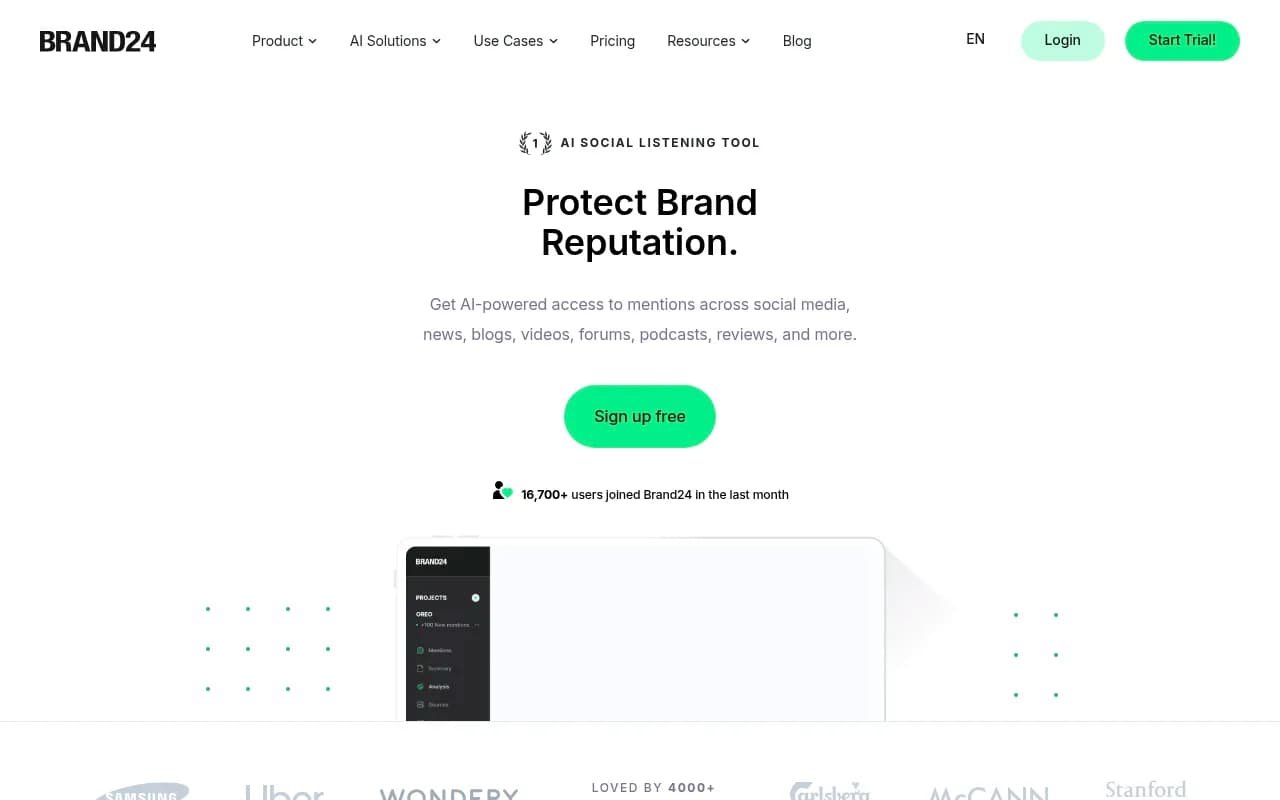
Brand24 is useful for tracking brand mentions across the web, including Reddit and forums.
Day 7: Build a monitoring routine you'll actually maintain
The biggest mistake teams make after a tool shutdown is rebuilding in a rush, then letting the new setup go unmonitored for months. AI search is moving fast enough that a quarterly check-in isn't enough.
A realistic weekly routine looks like:
- 15 minutes: Review visibility scores across your tracked prompts
- 15 minutes: Check for new competitor citations in your category
- 30 minutes: Review AI crawler logs for errors or crawl gaps (if your tool supports this)
- 30 minutes: Identify one content gap to address that week
Monthly, do a deeper review: look at which pages are being cited, whether new prompts have emerged in your category, and whether your AI referral traffic in GA4 is trending in the right direction.
The teams that win in AI search aren't the ones with the most sophisticated tools. They're the ones that check their data regularly and act on it consistently.
Choosing your long-term stack
After the dust settles, you want a stack that covers three things: tracking, technical health, and content optimization. Here's a practical breakdown:
| Layer | What you need | Tool options |
|---|---|---|
| AI visibility tracking | Monitor citations across ChatGPT, Perplexity, Gemini, etc. | Promptwatch, Profound, Otterly.AI |
| Content gap analysis | Find prompts where competitors appear and you don't | Promptwatch, AthenaHQ |
| Content creation | Write content engineered for AI citations | AirOps, Jasper, MarketMuse |
| Technical crawlability | Ensure AI bots can access and parse your content | Screaming Frog, Prerender.io |
| Offsite monitoring | Track external citations and brand mentions | Promptwatch, Brand24 |
| Traffic attribution | Connect AI visibility to actual site traffic | Promptwatch, GA4 |
Most teams end up with 2-3 tools covering these layers. The important thing is making sure you're not just monitoring — you're using the data to make decisions.
If you want a single platform that covers most of these layers without stitching together five different tools, Promptwatch is the most complete option available right now. It tracks 10+ AI models, shows you crawler logs, identifies content gaps, and connects visibility to traffic. It's also the only platform in the 2026 GEO landscape rated as a leader across all categories in independent comparisons.
The one thing worth remembering
Tool shutdowns are disruptive, but they're also a forcing function. They make you think about what you actually needed versus what you were just used to having.
Hall AI's shutdown is a chance to rebuild with more intention. Don't just restore the monitoring. Build the system that helps you act on what the monitoring tells you. That's the difference between knowing you're invisible in AI search and actually doing something about it.
The week-long rebuild outlined here isn't just about getting back to baseline. It's about getting to a position where your AI visibility is measurable, improvable, and connected to real business outcomes. That's worth the effort.