Key takeaways
- Hall AI's shutdown is a forcing function to audit your entire AI visibility stack, not just find a replacement
- GEO (Generative Engine Optimization) in 2026 means more than monitoring -- it means closing content gaps, fixing technical AI readiness, and tracking citations across 10+ AI models
- Most monitoring-only tools leave you stuck with data but no path to action; the best GEO platforms combine tracking with content generation and crawler analytics
- A solid replacement stack covers four layers: technical readiness, prompt tracking, content gap analysis, and offsite citation monitoring
- Tools like Promptwatch go beyond tracking to help you find gaps and generate content that AI models actually cite
When a tool you rely on shuts down, the instinct is to find the nearest equivalent and move on. That's understandable. But if Hall AI was part of your AI visibility workflow, there's a better move: treat this as a chance to audit what you actually need in 2026 and build something more complete.
Because the honest truth is that AI search has changed faster than most tools have kept up. What passed for "GEO" a year ago -- running a few prompts through ChatGPT and checking if your brand showed up -- is nowhere near enough now. The brands winning in AI search are doing something more systematic, and the gap between them and everyone else is widening.
Here's how to use this transition moment well.
Why this moment matters more than it seems
AI search is no longer a fringe channel. Perplexity crossed 100 million monthly active users. Google's AI Overviews now appear on the majority of informational queries. ChatGPT's search feature has become a default research tool for a significant slice of the professional internet. And Google's AI Mode -- a full generative search experience -- is rolling out broadly in 2026.
The implication: if your brand isn't being cited in AI-generated answers, you're invisible to a growing portion of your potential audience. Not buried on page two -- invisible.
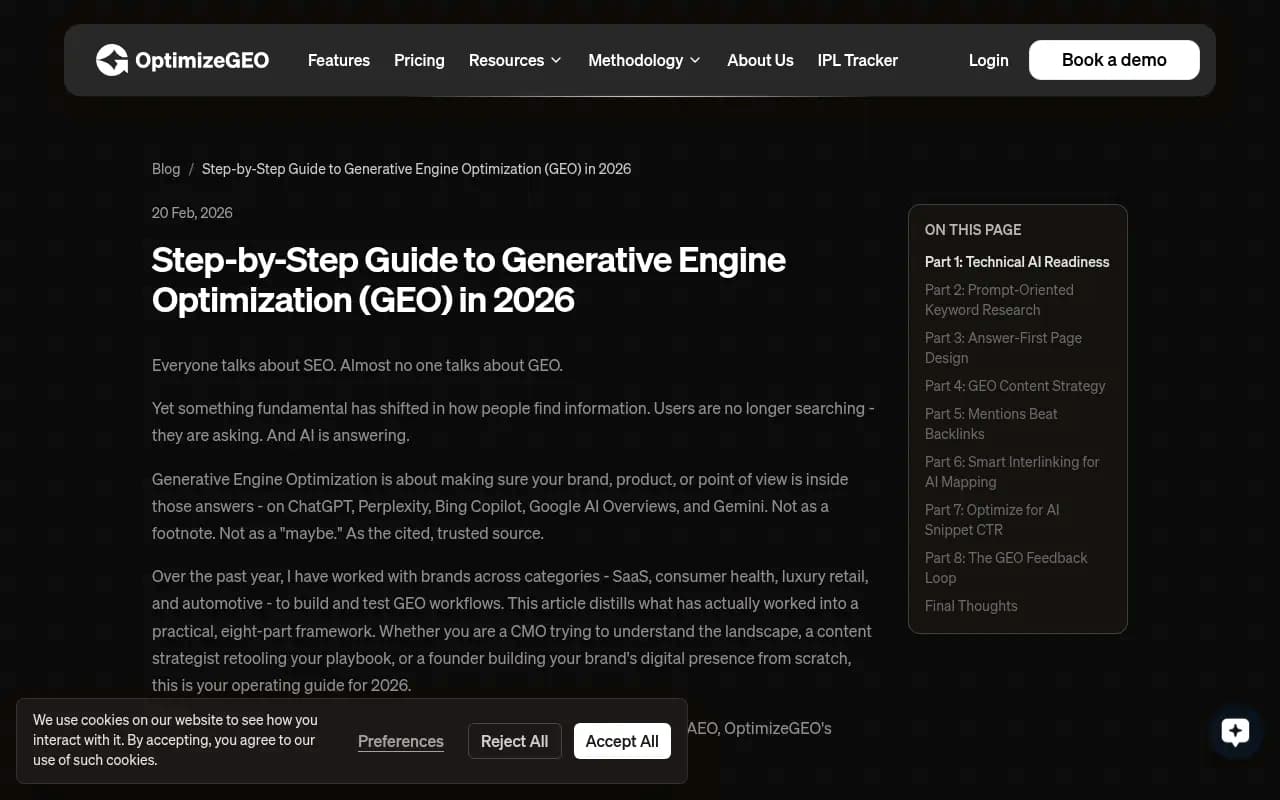
GEO (Generative Engine Optimization) is the discipline of making sure AI models cite, quote, and recommend your content. It's related to SEO but operates on different logic. Search engines rank pages. AI models synthesize answers from sources they trust -- and the signals that build that trust are different from traditional ranking factors.
What Hall AI users actually need to replace
Before jumping to alternatives, it's worth being precise about what you're replacing. Hall AI served different users in different ways, but most GEO workflows depend on some combination of:
- Prompt monitoring (does my brand appear when users ask relevant questions?)
- Citation tracking (which of my pages are being cited, and by which models?)
- Competitor visibility (who's winning the prompts I should be winning?)
- Content gap identification (what topics am I missing that AI models want to answer?)
- Content creation (can I produce content that fills those gaps efficiently?)
If your old setup only covered the first two, this is your chance to build something that covers all five.
Layer 1: Technical AI readiness (the foundation most teams skip)
Before any monitoring or content work makes sense, your site needs to be readable by AI crawlers. This is the step that gets skipped most often, and it quietly undermines everything else.
AI crawlers behave differently from Googlebot. They're less forgiving of client-side JavaScript rendering. If your site loads content dynamically, there's a real chance that crawlers from ChatGPT, Perplexity, or Claude are seeing a near-empty page.
A few things to check:
- Server-side rendering or static HTML for your core content pages
- Schema markup for your key content types (FAQs, products, articles, organization info)
- Clean heading hierarchy (H1 through H4 used consistently) so AI models can extract structured answers
- A well-maintained
llms.txtfile, which is becoming a standard signal for AI crawlers
For JavaScript-heavy sites, tools like Prerender.io or DataJelly handle pre-rendering so bots see your actual content.
For technical crawl audits, Screaming Frog remains the most thorough option for finding rendering issues, broken internal links, and schema gaps.
Layer 2: Prompt tracking and AI visibility monitoring
This is the most direct replacement for what Hall AI provided. You need to know: when someone asks an AI model a question relevant to your business, does your brand appear?
The challenge is that AI models don't behave consistently. The answer ChatGPT gives in its user interface can differ from what you'd get through the API. Perplexity cites differently from Gemini. Google AI Overviews have their own citation logic. A monitoring tool that only queries one model through an API is giving you an incomplete picture.
Here's a comparison of the main options:
| Tool | Models tracked | Content generation | Crawler logs | Prompt volume data | Free tier |
|---|---|---|---|---|---|
| Promptwatch | 10+ (ChatGPT, Perplexity, Gemini, Claude, Grok, DeepSeek, Copilot, Meta AI, and more) | Yes (Content Agents) | Yes | Yes | Trial available |
| Profound | 9+ | No | No | Limited | No |
| Otterly.AI | 3-4 | No | No | No | Limited |
| AthenaHQ | 5+ | No | No | No | No |
| Rankshift | 3 | No | No | No | Yes |
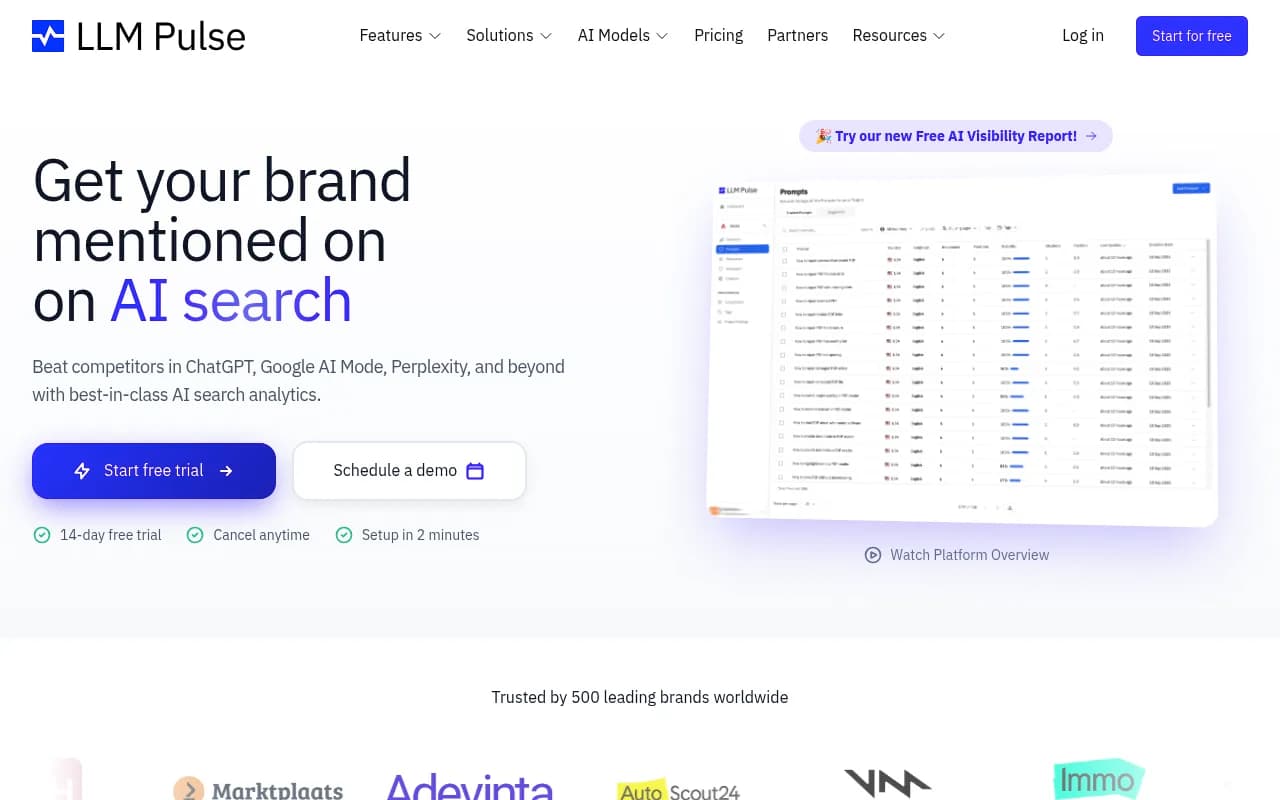
| LLM Pulse | 4 | No | No | No | Yes |
| Scrunch AI | 5+ | No | No | No | No |
Most monitoring-only tools are fine for awareness but leave you without a path to improvement. You can see you're invisible -- you just can't do much about it from inside the tool.
Promptwatch is worth calling out here because it's one of the few platforms that tracks real user-interface behavior across 10+ models, not just API outputs. That distinction matters because the citations and shopping recommendations users actually see can differ from what you'd observe through an API call.

For teams that want a lighter-weight starting point, Rankshift and LLM Pulse are reasonable options to track a handful of prompts across a few models.

Layer 3: Content gap analysis and creation (where most tools stop short)
Monitoring tells you where you're invisible. Content gap analysis tells you why -- and what to do about it.
The core question is: which prompts are AI models answering by citing your competitors, but not you? Those are the gaps. And each gap points to a piece of content your site is missing -- a topic, angle, or question that AI models want answered but can't find on your pages.
This is where the difference between monitoring tools and optimization platforms becomes concrete. A monitoring tool shows you the gap. An optimization platform helps you close it.
The practical workflow looks like this:
- Run your core prompts (the questions your customers ask AI models) through a tracking tool
- Identify which prompts your competitors appear in but you don't
- Analyze what content those competitors have that you're missing
- Create content that directly answers those prompts, with the specificity and structure AI models prefer
- Track whether your new content gets crawled and cited
For content creation, a few tools are worth knowing:
For AI-native content briefs and generation:
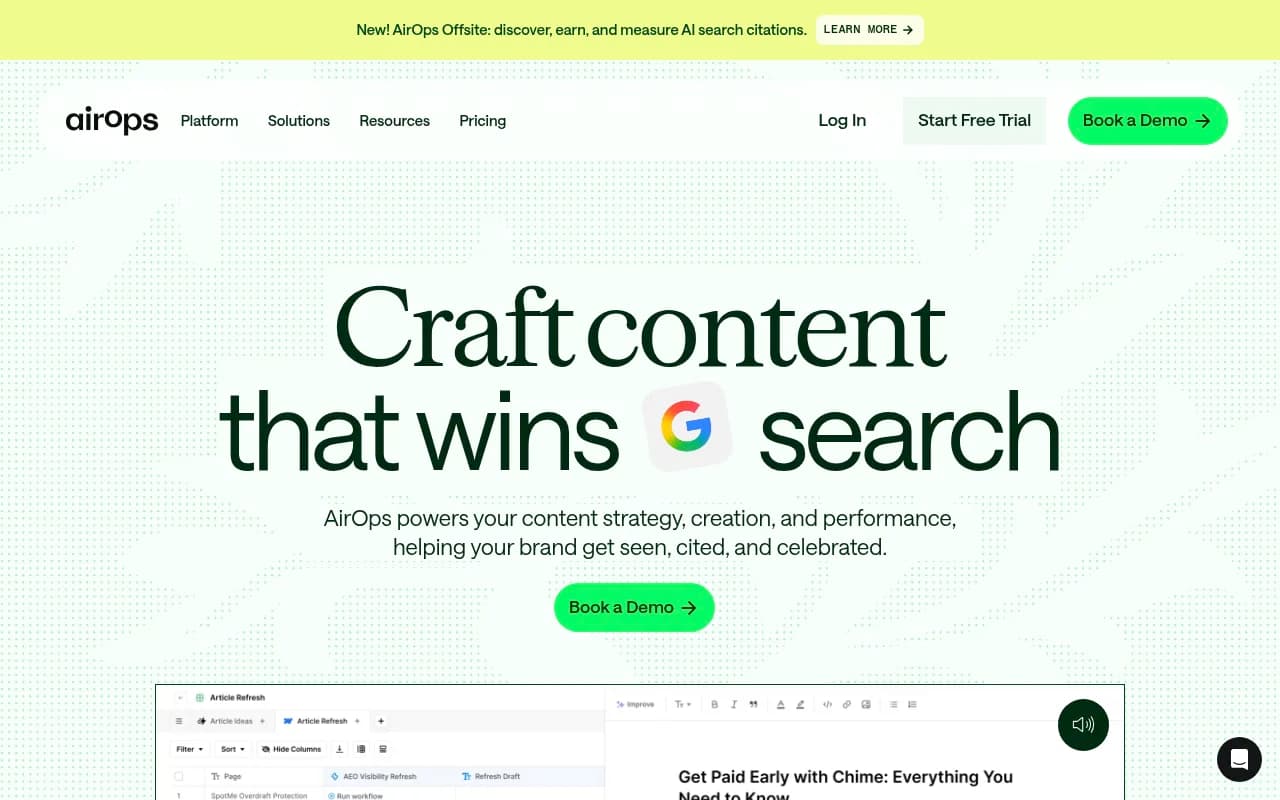
AirOps is built specifically for AI search content -- it generates briefs grounded in citation data and prompt analysis, not just keyword volume.
MarketMuse is strong for content strategy and topical authority mapping, which matters because AI models tend to cite sources that demonstrate depth across a topic, not just individual pages.
For SEO-grounded content optimization:
Surfer SEO remains one of the better tools for optimizing content structure and coverage, though it's more traditional SEO than GEO-native.

Clearscope is similarly strong for content grading and ensuring topical completeness.
Layer 4: Offsite citation and entity monitoring
Here's a layer that most teams ignore entirely: AI models don't only cite your website. They cite Reddit threads, YouTube videos, third-party review sites, industry publications, and listicles. If you're not tracking where AI models are sourcing information about your brand from external sources, you're missing a significant part of the picture.
This matters practically. If a Reddit thread from two years ago contains inaccurate information about your product, and Perplexity keeps citing it, fixing your website won't help. You need to know about the thread.
A few tools that help here:
Brand24 tracks brand mentions across the web and social platforms, which gives you visibility into the external content that might be influencing AI responses.
BuzzSumo surfaces high-authority content about your topics, which helps you understand what third-party sources AI models are likely pulling from.
For Reddit specifically -- which has become a surprisingly significant source for AI citations -- manual monitoring or a tool with Reddit integration is worth adding to your workflow.
Layer 5: Connecting visibility to revenue
The final piece that most GEO stacks are missing is attribution. AI visibility is only valuable if you can connect it to actual traffic and revenue. Without that connection, it's hard to justify the investment or prioritize which gaps to close first.
A few things to set up:
- UTM parameters on any links in AI-cited content, so you can track traffic from AI referrals in Google Analytics
- Integration between your GEO tracking tool and your analytics platform, so you can correlate citation volume with traffic changes
- Page-level tracking that shows which specific pages are being cited, by which models, and how often
Google Search Console now surfaces some AI Overview data, which is useful for understanding Google-side AI visibility. For the broader picture across ChatGPT, Perplexity, and others, you need a dedicated GEO platform.
A practical upgrade path
If you're coming from Hall AI and want to build a more complete stack without overwhelming your team, here's a reasonable sequence:
Week 1-2: Technical audit Run a crawl audit to find rendering issues, schema gaps, and content hierarchy problems. Fix the most critical issues before investing in monitoring.
Week 3-4: Set up prompt tracking Define the 20-50 prompts most relevant to your business. These should be the actual questions your customers ask AI models, not keyword-style queries. Set up tracking across at least ChatGPT, Perplexity, and Google AI Overviews.
Month 2: Gap analysis Once you have baseline data, identify your top 10 content gaps -- the prompts where competitors appear and you don't. Prioritize by prompt volume and commercial relevance.
Month 2-3: Content creation Create content specifically designed to answer those prompts. This isn't generic blog content -- it needs to be specific, structured, and authoritative. Use AI content tools to accelerate production, but make sure the output is genuinely useful.
Ongoing: Track and iterate Monitor whether new content gets crawled and cited. Adjust based on what's working. Add more prompts as your baseline grows.
The broader shift worth understanding
One thing that's become clear in 2026 is that GEO forces a different kind of content discipline. As one practitioner put it in a Reddit thread on GEO best practices: "GEO forces you to be more honest and more precise: less cosmetic optimization, more real clarity. We're moving from 'how do I rank?' to 'how do I actually answer this?'"
That's a useful frame. AI models are, at their core, answer machines. They cite sources that answer questions clearly, specifically, and credibly. The content that wins in AI search tends to be the content that would also be genuinely useful to a human reader -- detailed, well-structured, and written by someone who actually knows the topic.
The tools in your stack should support that goal, not substitute for it. Monitoring tells you where you stand. Gap analysis tells you what to build. Content tools help you build it faster. But the underlying quality still has to be there.
Hall AI's shutdown is an inconvenience. It's also a useful prompt to ask whether your current approach to AI visibility is actually working -- and if not, to build something better.