Key takeaways
- AI models behave differently when accessed via API versus their actual user-facing interfaces -- citations, answers, and shopping recommendations can vary significantly between the two.
- Peec.ai primarily uses API polling to simulate queries, which means its data may not reflect what your prospects actually see when they open ChatGPT or Perplexity.
- This discrepancy is real enough that agencies have reported clients questioning their data because it doesn't match what they see on their own phones.
- A small number of platforms -- including Promptwatch -- track AI responses as they appear in real user interfaces, not just through API calls.
- The gap matters most for brands making content and optimization decisions based on visibility data. If the data is off, so are the decisions.
There's a Reddit thread from early 2026 that sums up the problem pretty well. An agency marketer posted in r/AISearchLab: "The client thinks I'm making up numbers because Peec AI's reports don't match what's on his phone."
That's not a one-off complaint. It's a symptom of a structural issue with how most AI visibility tools collect their data -- and it's worth understanding before you build a strategy around any of these platforms.
How most AI visibility tools actually collect data
When a tool like Peec.ai wants to know whether your brand appears in ChatGPT's response to "best project management software for agencies," it has two options:
- Call the OpenAI API with that prompt and record the response
- Simulate an actual user session in the ChatGPT interface and record what appears there
Most tools, including Peec.ai, rely heavily on option one. It's faster, cheaper, and easier to scale. You can run thousands of prompts through an API at a fraction of the cost of browser-based simulation.
The problem is that option one and option two don't always produce the same result.

Why API responses differ from user-facing answers
This isn't speculation -- it's a known characteristic of how these AI systems work. A few reasons the gap exists:
System prompts and interface configuration. When you use ChatGPT through the web app or mobile app, OpenAI applies system-level instructions that shape how the model responds. These aren't exposed through the standard API. The model you interact with as a user is configured differently than the raw API endpoint.
Search-augmented responses. Perplexity, ChatGPT with web browsing enabled, and Google AI Overviews all pull live web results into their answers. The citations you see in a user-facing response depend on what the search layer retrieves at that moment. API calls often bypass this layer entirely, or access a different version of it.
Model versions and rollouts. OpenAI, Google, and Anthropic regularly roll out model updates to user interfaces before (or instead of) updating the API endpoints. The model a user interacts with on a Tuesday afternoon may be a different version than what an API call hits.
Personalization and session context. Some AI interfaces adapt based on prior conversation history, location, or account type. API calls are stateless by default.
Shopping and product recommendations. ChatGPT's shopping carousels and product recommendations -- increasingly important for e-commerce brands -- are almost entirely absent from API responses. They're a user-interface feature.
The result: a tool that polls APIs can tell you something about your brand's visibility in the model's training data and general tendencies. But it can't reliably tell you what a real prospect sees when they ask that same question in their browser.
The real-world consequences
The Reddit thread mentioned above isn't an isolated case. When clients open ChatGPT on their phones and search for their own category, they're seeing user-facing results -- complete with web search integration, citations, and interface-specific formatting. When the agency shows them an API-polled report that says they're mentioned in 40% of responses, but the client can't find themselves in a single real query, trust breaks down fast.
This matters beyond client relationships. If you're using visibility data to decide which content to create, which prompts to target, or whether your GEO efforts are working, you need data that reflects reality. Decisions made on API-polled data that doesn't match user-facing behavior are decisions made on a flawed map.
Research cited in a 2026 analysis of AI search platforms found that 40-60% of cited domains change monthly across major AI engines. That kind of volatility makes data accuracy even more critical -- you can't afford to be measuring the wrong thing.
What Peec.ai does well (and where it stops)
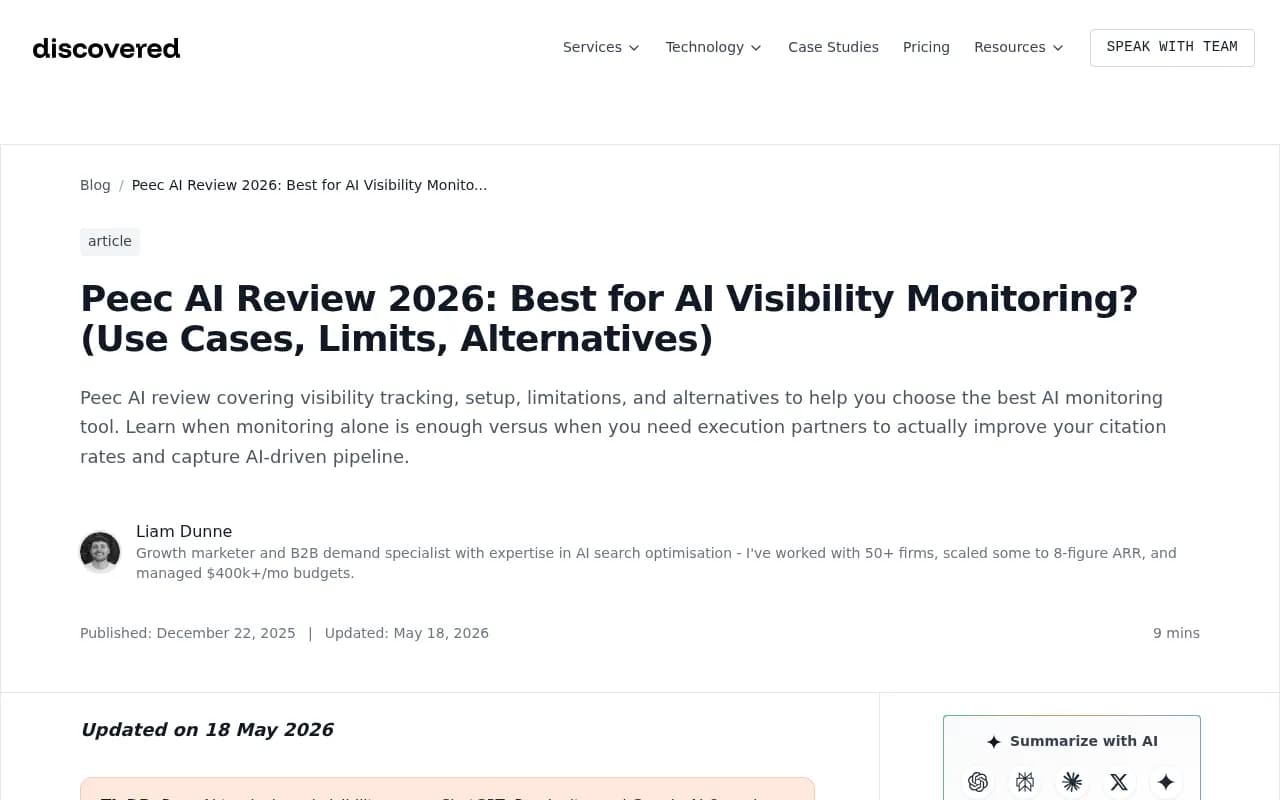
To be fair, Peec.ai has built a genuinely useful monitoring product. It tracks brand visibility across ChatGPT, Perplexity, and Google AI Overviews, shows citation frequency and source URLs, and gives marketing teams a share-of-voice view across AI engines. The pricing starts at $100/month, which is accessible for most teams.
The documentation notes that Peec.ai uses "UI scraping technology to simulate real user interactions" -- so it's not purely API-based. But the degree to which this captures the full user-facing experience, across all models and interface states, is limited compared to platforms built specifically around real-interface monitoring.
The bigger limitation isn't just data collection method -- it's what happens after the data is collected. Peec.ai, like most monitoring tools, stops at diagnosis. It shows you where you're visible and where you're not. It doesn't help you fix the gaps. There's no content generation, no answer gap analysis, no crawler log data showing which pages AI bots are actually reading on your site.
For teams that just want a dashboard to track mentions, that might be fine. For teams that want to actually improve their AI visibility, monitoring alone isn't enough.
Which tools track real user-facing results in 2026
The honest answer is that very few platforms have invested in the infrastructure required to track AI responses as they actually appear to users. Here's how the main options break down:
| Tool | Data collection method | Content optimization | Crawler logs | Prompt volumes |
|---|---|---|---|---|
| Peec.ai | API + some UI simulation | No | No | No |
| Otterly.AI | API polling | No | No | No |
| Promptwatch | Real user-interface monitoring | Yes (Content Agents) | Yes | Yes |
| Profound | Mix of API and UI | Limited | No | Some |
| AthenaHQ | API-based | No | No | No |
| Semrush Brand Radar | Fixed prompts, API | No | No | No |

Promptwatch is one of the few platforms that explicitly tracks how AI search engines behave in real user interfaces -- not just through API calls. This matters because user-facing answers, citations, and shopping recommendations can differ from API outputs in exactly the ways described above. It monitors 10 AI models including ChatGPT, Perplexity, Google AI Overviews, Claude, Gemini, Grok, and DeepSeek.
But the more meaningful difference isn't just data collection. Promptwatch is built around an action loop: find gaps, create content, track results. Its Answer Gap Analysis shows which prompts competitors appear in but you don't. Content Agents then generate articles and briefs grounded in that real prompt data. Then page-level tracking shows whether the new content is getting cited.
That's a different category of tool than a monitoring dashboard.
Otterly.AI

Profound


How to evaluate any AI visibility tool's data quality
Before committing to any platform, ask these questions:
Does it track user-interface responses or API responses? Ask the vendor directly. If they can't give a clear answer, assume it's API-based.
Does it include web-search-augmented responses? For Perplexity and ChatGPT with browsing, the citations in user-facing answers come from live web searches. A tool that doesn't capture this is missing a major part of the picture.
Can you verify the data yourself? Run a few prompts manually in the actual AI interfaces and compare what you see to what the tool reports. If there's a consistent gap, you've found your answer.
Does it track ChatGPT Shopping and product carousels? For e-commerce or product brands, these interface-specific features are increasingly important and almost entirely invisible to API-based monitoring.
Does it show you which pages AI crawlers are actually visiting? Crawler log data -- showing which of your pages GPTBot, ClaudeBot, and PerplexityBot are reading -- is a ground-truth signal that API polling can't replicate.
Other tools worth knowing about
A few other platforms in this space are worth mentioning, depending on your needs:
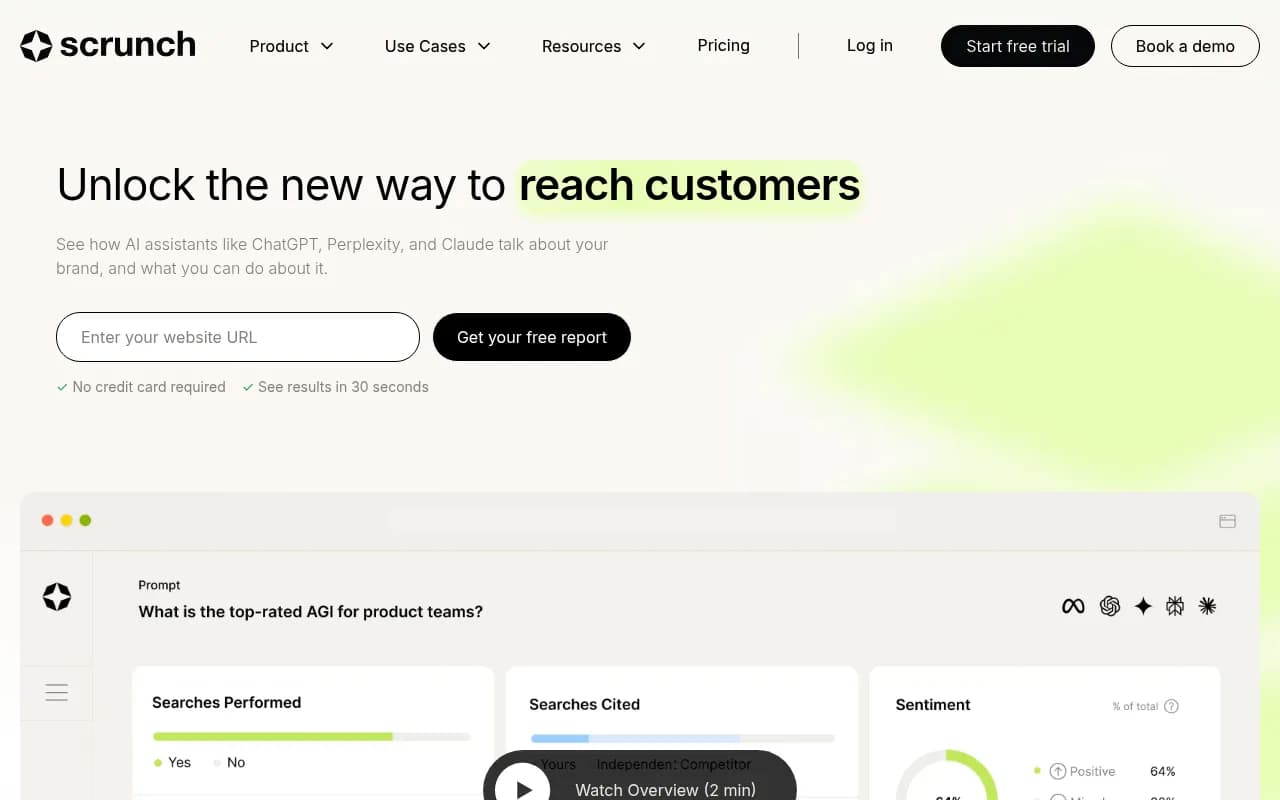
Scrunch AI has a reasonable feature set for tracking brand mentions across LLMs, though it lacks the content generation and crawler log capabilities of more complete platforms.
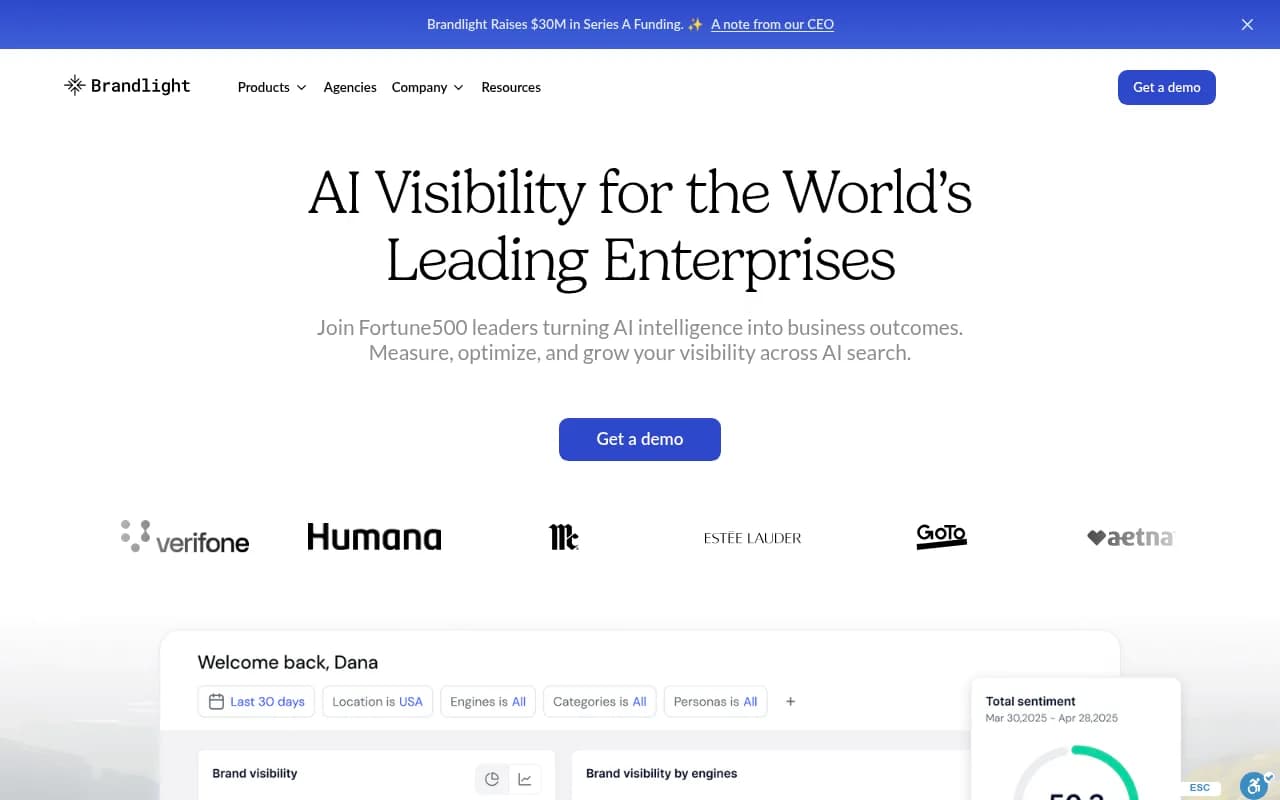
Brandlight.ai focuses on tracking and optimizing how AI engines discover and recommend your brand, with some offsite citation analysis included.
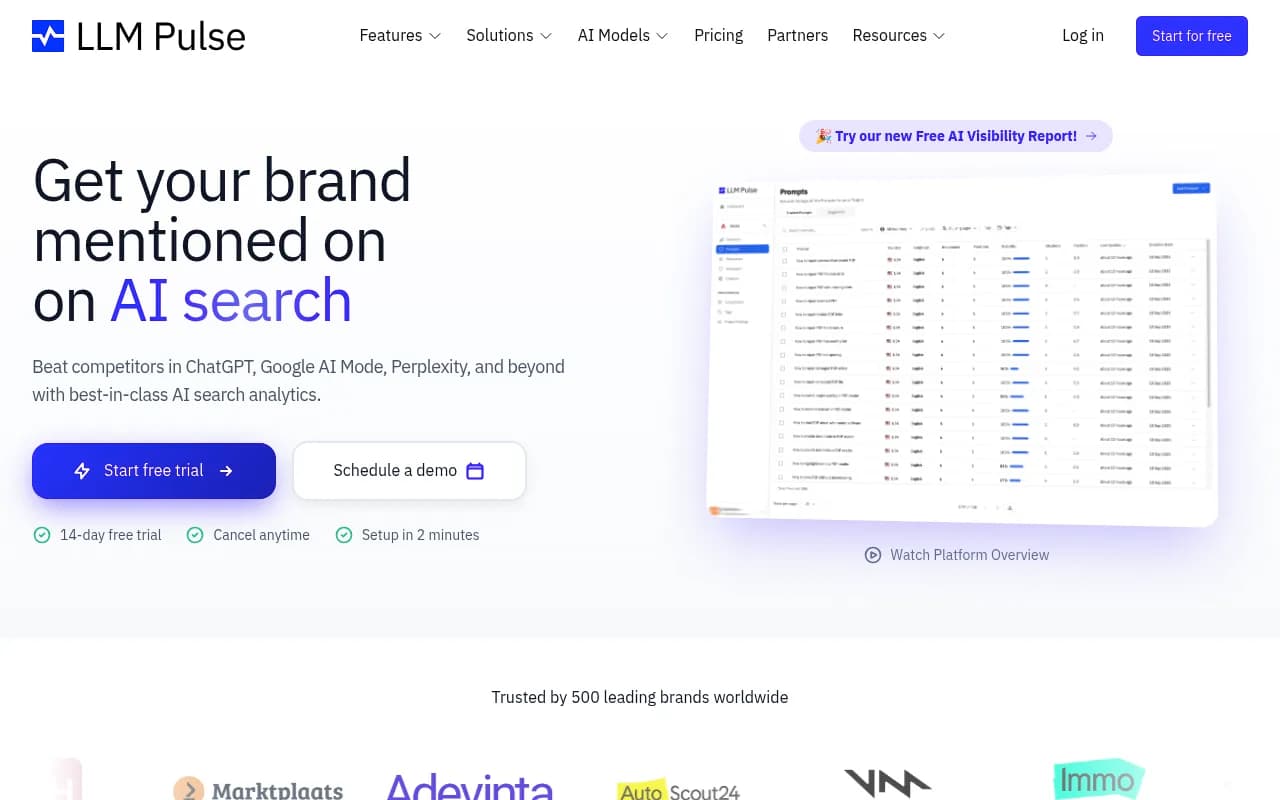
LLM Pulse offers basic brand visibility tracking across ChatGPT, Perplexity, and other models -- useful for teams that want a lightweight starting point.

Rankshift tracks brand visibility across ChatGPT, Perplexity, and AI search with a clean interface, though it's primarily a monitoring tool without optimization features.
The bottom line
The API-versus-user-interface gap is real, and it matters. When your client opens ChatGPT on their phone and doesn't see what your report says they should see, the problem isn't the client's phone. It's the data source.
Most AI visibility tools -- Peec.ai included -- were built when the primary goal was simply proving that AI search visibility was worth tracking. That was a reasonable starting point in 2024. In 2026, the bar is higher. You need data that reflects what users actually see, and you need tools that help you act on that data, not just observe it.
If you're evaluating platforms, prioritize ones that can show you how they collect data, let you verify results against real user-interface queries, and give you a path from "here's where you're invisible" to "here's the content that fixes it."
Monitoring is the beginning of the work, not the end of it.