Key takeaways
- Most teams that cancel Peec AI aren't unhappy with the data -- they're frustrated that the tool stops at showing them the problem without helping them fix it
- The most common trigger for cancellation is realizing the platform is a monitoring dashboard, not an optimization tool
- Teams with active content programs tend to leave first; teams that just want brand tracking sometimes stay
- The alternatives they land on vary by need: some want deeper analytics, others want built-in content generation, and a few just want something cheaper
- Before cancelling, it's worth being honest about what you actually need -- a tracker vs. a full GEO workflow platform
Peec AI is a genuinely useful tool. That's worth saying upfront, because this isn't a hit piece. It tracks AI search visibility across ChatGPT, Gemini, Perplexity, and a handful of other models. It has a clean interface, a reasonably active changelog, and a team that clearly cares about the product.
But in 2026, a pattern has emerged: teams sign up, get value from the initial data, and then hit a ceiling. The data is there. The insights are real. And then... nothing happens. Because Peec doesn't help you do anything with what it shows you.
That ceiling is where most cancellation stories begin.
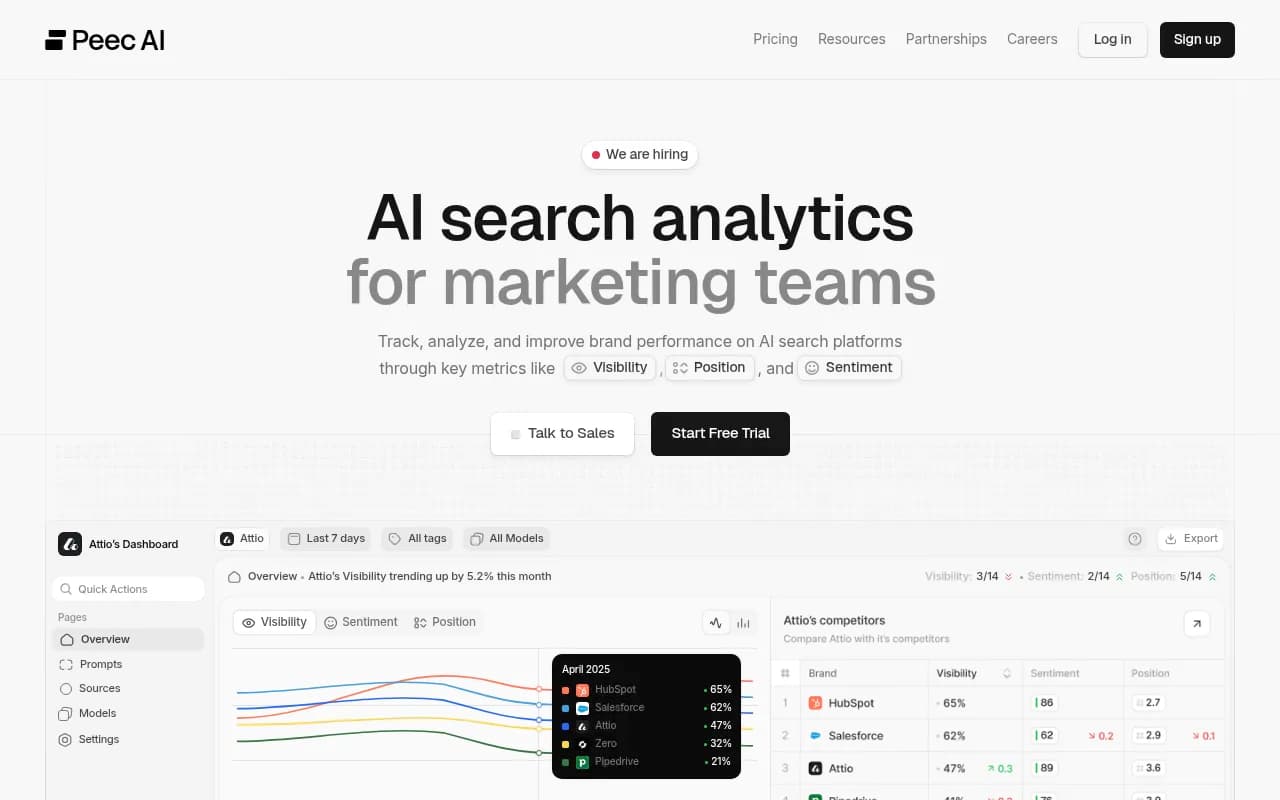
The monitoring-only problem
Here's the scenario that plays out over and over. A marketing team or SEO lead signs up for Peec AI because they want to understand how their brand appears in AI search results. They set up their prompts, connect their competitors, and start seeing data. Some of it is alarming -- competitors are getting cited constantly, and their brand barely appears.
So now what?
Peec shows you the gap. It doesn't close it. There's no content brief generator, no AI writing tools, no guidance on which pages to update or what topics to create. You're looking at a visibility deficit with no clear path to fixing it.
For teams that already have a strong content operation -- a dedicated SEO writer, a content strategist, a clear brief-to-publish workflow -- this isn't necessarily a dealbreaker. They can take the data and run with it. But for most marketing teams, especially lean ones, "here's the problem" without "here's how to fix it" is frustrating enough to trigger a cancellation conversation.
This is the single most common reason teams leave. Not bugs. Not pricing (though that comes up). Not missing features on the tracking side. It's the realization that they've been paying for a dashboard that tells them they're losing without giving them any tools to start winning.
The prompt limit friction
The second most common complaint is prompt limits.
Peec AI's pricing tiers restrict how many prompts you can track. For a small brand with a narrow focus, that's fine. But for agencies managing multiple clients, or for brands operating across several product categories, the limits feel arbitrary fast.
You might want to track 40 prompts for a single client -- covering different buyer personas, different product lines, different competitor comparisons. On lower tiers, that's not possible without upgrading. And when the upgrade cost lands in front of a marketing director who's already questioning the ROI of a monitoring-only tool, the math often doesn't work out.
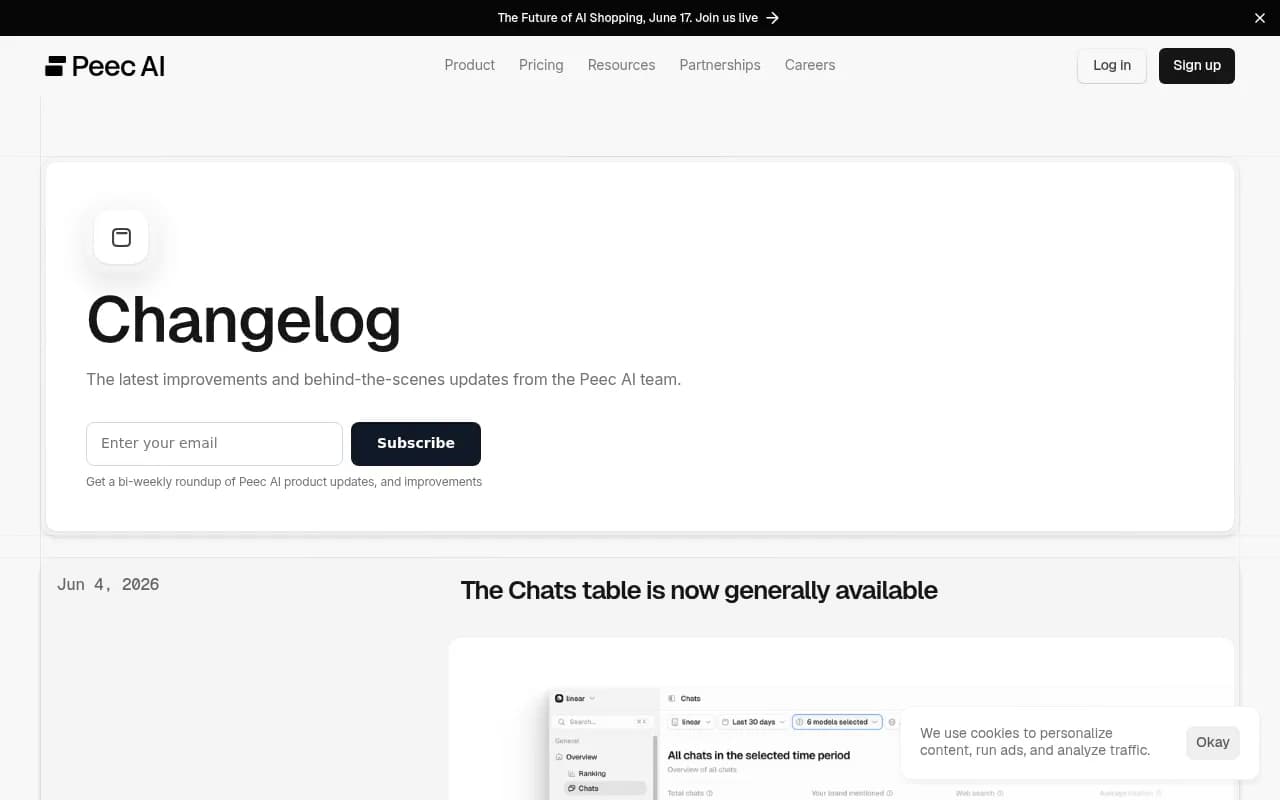
To be fair, Peec has been shipping improvements. The June 2026 changelog shows real progress: the Chats table is now generally available, crawl insights got three new integration options (WordPress, AWS CloudFront, Google Cloud), and bulk tag editing finally landed. These are meaningful quality-of-life improvements. But they don't change the fundamental positioning -- Peec is still a tracking and monitoring tool, not an optimization platform.
What teams actually say when they leave
Pulling from Reddit discussions and community threads, a few themes come up consistently:
"We knew we were invisible in AI search. Peec confirmed it. But we needed to know what to write, not just that we were missing."
"The data was good but we couldn't justify the cost when we couldn't point to anything we'd actually changed because of it."
"We're an agency. The per-client pricing got expensive fast and we still had to do all the content work manually."
"Honestly, we just needed something that covered more of the workflow. Tracking is step one. We needed steps two and three."
The common thread: these teams weren't dissatisfied with Peec's core data quality. They outgrew the use case.
Where they went instead
Teams leaving Peec AI in 2026 tend to split into a few different camps depending on what they're looking for.
Teams that want the full optimization loop
The most common destination for teams that want more than monitoring is Promptwatch. The core difference is that Promptwatch is built around an action loop: find the gaps, generate content to fill them, track the results. It has Answer Gap Analysis that shows exactly which prompts competitors rank for that you don't, Content Agents that generate briefs and articles grounded in real prompt data, and page-level tracking that connects published content to actual citation improvements.
For teams that were frustrated by Peec's monitoring ceiling, this is usually the right move. It's more expensive, but it's doing more work.

Teams that want deeper analytics without content tools
Some teams don't need content generation -- they have writers. They just want richer data than Peec provides. A few tools worth looking at here:
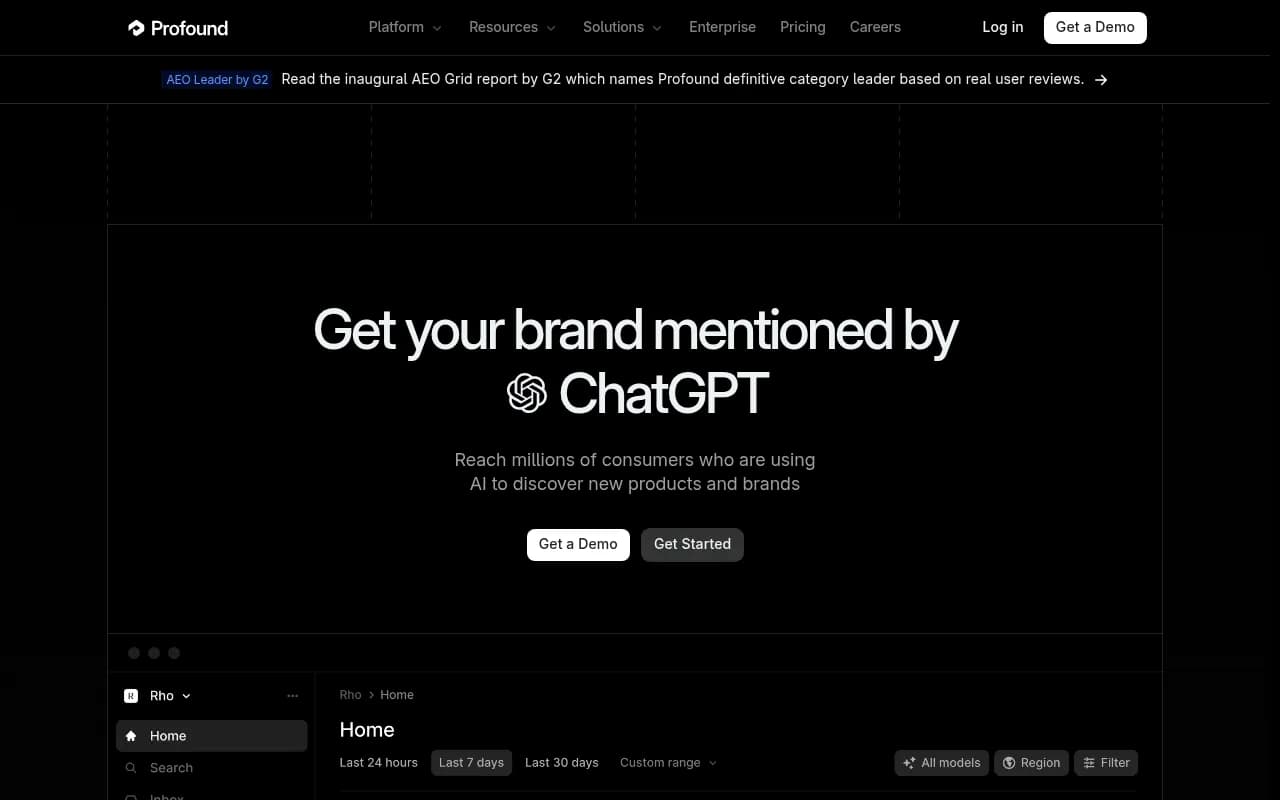
Profound covers enterprise-level AI visibility tracking with strong prompt analytics and competitor benchmarking. It's priced for larger organizations.
Profound
AthenaHQ is another monitoring-focused platform that goes deeper on some analytics dimensions, though it's still primarily a tracking tool.

Otterly.AI is a lighter option that covers the basics across ChatGPT, Perplexity, and Google AI Overviews. Good for teams that want simple monitoring without complexity.
Otterly.AI

Teams that want something cheaper
Not every cancellation is about missing features. Some teams just decide the ROI isn't there for their current stage. For them, there are lower-cost options:
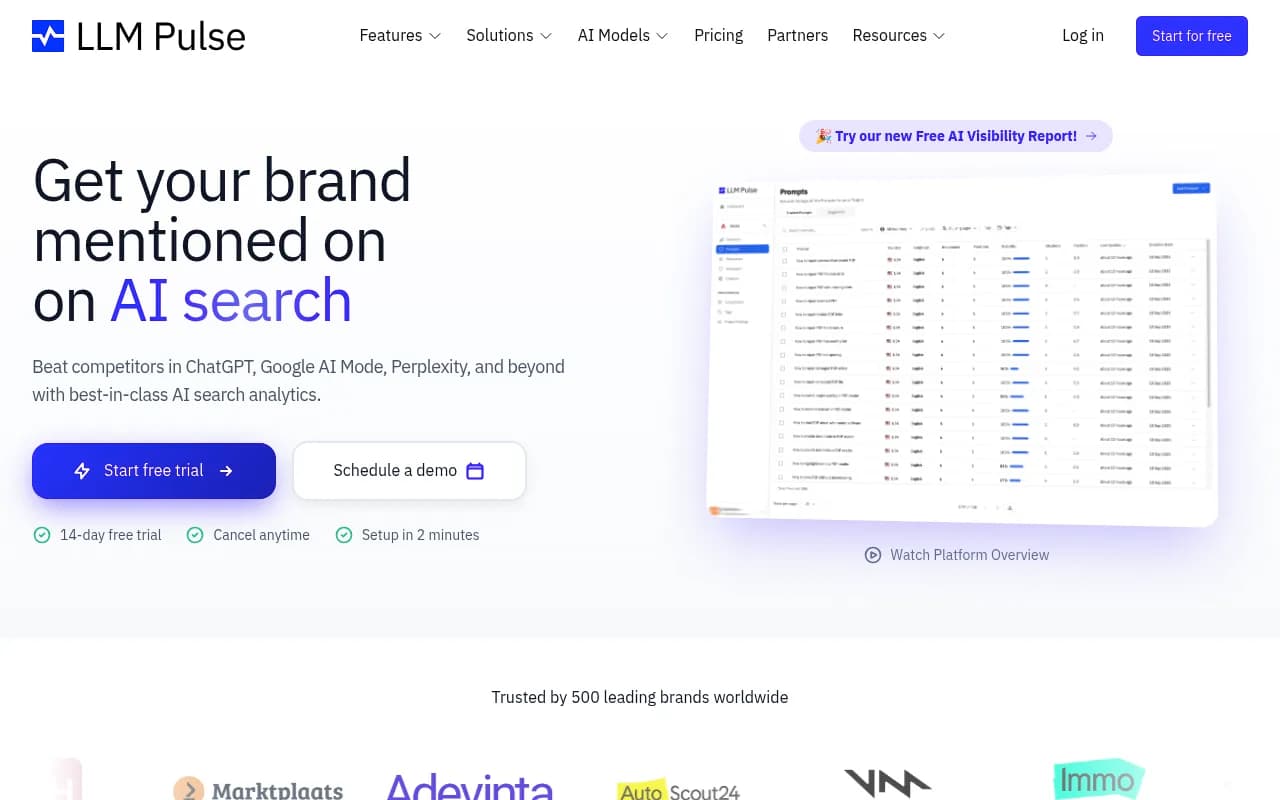
LLM Pulse and Rankshift both offer basic AI visibility tracking at lower price points. They're not as polished as Peec, but they cover the fundamentals.

Goodie AI and AI Rank Checker are on the free/freemium end. Useful for early-stage teams that want to dip a toe in without committing budget.
A quick comparison
Here's how Peec AI stacks up against the tools teams most commonly switch to:
| Tool | Monitoring | Content generation | Crawler logs | Prompt volume data | Price (entry) |
|---|---|---|---|---|---|
| Peec AI | Yes | No | Yes (limited) | No | ~$49/mo |
| Promptwatch | Yes | Yes | Yes | Yes | $99/mo |
| Profound | Yes | No | No | Limited | $200+/mo |
| AthenaHQ | Yes | No | No | No | ~$99/mo |
| Otterly.AI | Yes | No | No | No | ~$49/mo |
| LLM Pulse | Basic | No | No | No | ~$29/mo |
The table tells the story pretty clearly. If you want monitoring only, Peec is competitive. If you want to actually move the needle on AI visibility, you need a platform that goes further.
What Peec AI is actually good at
Before you cancel, it's worth being honest about whether the problem is the tool or the workflow.
Peec AI does some things well. The Chats table -- now generally available -- gives you raw evidence of how AI engines answer on your topics, with filtering by brand and sortable mention counts. That's genuinely useful for understanding what's happening in AI responses, not just whether you appear.
The crawl insights feature, which tracks how AI crawlers like GPTBot and ClaudeBot move through your site, is a real differentiator at Peec's price point. Most cheaper tools don't have this at all. If you're debugging why your content isn't getting cited even though you've published it, crawler logs are essential.
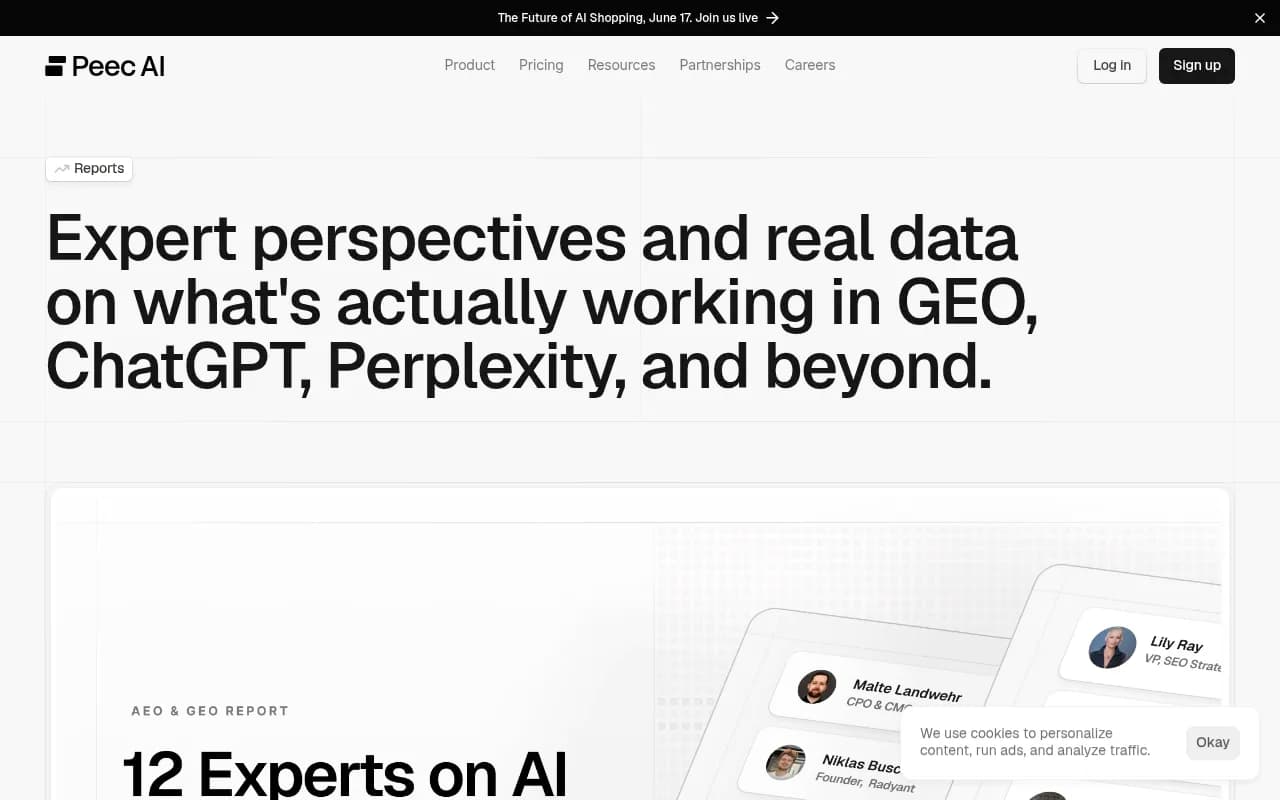
Peec also publishes solid research. Their "12 Experts on AI Search Strategy in 2026" report is worth reading regardless of whether you use the tool. They're clearly engaged with the space intellectually, not just building a dashboard.
So: if your team's workflow is "track visibility, identify gaps, hand off to content team," Peec might actually be the right fit. The cancellations happen when teams expect the tool to carry them through the whole workflow and it doesn't.
The honest checklist before you cancel
Ask yourself these questions before pulling the plug:
- Do we have a content team that can act on visibility gaps independently? If yes, Peec's data might be enough.
- Are we actually using the crawler logs? If not, we're leaving one of Peec's better features on the table.
- Have we hit the prompt limit, or do we just feel like we might? Check the actual usage before assuming you need to upgrade or leave.
- What would we do differently if we had content generation built in? If the answer is "nothing, we'd still need to review and edit everything anyway," then a monitoring tool might be all you need.
- Is the ROI question about the tool or about AI visibility as a channel? Sometimes teams cancel GEO tools not because the tool is bad but because they haven't committed to the channel.
The bottom line
Peec AI is a solid monitoring tool that's being held to a standard it wasn't designed to meet. Teams that cancel are usually teams that needed an optimization platform and bought a tracker.
If that's you, the move is to find something that closes the loop -- tracking, content creation, and result measurement in one place. If you genuinely just need to know what's happening in AI search without needing the tool to fix it, Peec might be worth keeping.
The GEO space is moving fast. The tools that will win long-term are the ones that don't just show you the problem -- they help you solve it.