Key takeaways
- Peec AI is consistently praised for its clean UX, fast setup (under 3 minutes), and reliable citation tracking across AI models.
- The platform's biggest limitation: it covers only 3 AI models on all paid plans, and there's no path to more without a custom enterprise deal.
- It's monitoring-only. No content creation, no traffic attribution, no crawler logs, no SEO features. You'll need to stack other tools to act on what you find.
- Pricing starts at $95/month for 50 prompts. At $495/month (Advanced), you get 350 prompts and multi-country support, but still no content optimization.
- Teams that outgrow basic monitoring are mostly moving to platforms that close the loop between tracking and fixing -- tools like Promptwatch that combine visibility data with content generation and crawler analytics.
Peec AI launched in 2022 with a clear pitch: make it easy for marketing teams to see how their brand appears in AI-generated answers. The founding team brought ex-Google and DeepMind engineering experience, and it shows in the product. The interface is genuinely clean. Setup takes minutes. Citation tracking works.
But "works well for what it does" and "does everything you need" are different things. After 6+ months with the platform, a growing number of users are asking whether Peec AI is enough -- or whether they've been paying for a dashboard when they needed a strategy tool.
Here's an honest look at what real users say, where the platform holds up, and where it doesn't.

What users actually like about Peec AI
Start with the positives, because there are real ones.
The UX is consistently the first thing people mention. Across Reddit threads, comparison blogs, and user interviews, "clean interface" and "easy to get into" come up repeatedly. One r/Agentic_SEO post from April 2026 put it simply: "Peec AI is a solid tool. It is really intuitive and easy to use. Probably one of the easiest to get into."
That's not nothing. A lot of AI visibility tools have interfaces that feel like they were designed by engineers for engineers. Peec AI doesn't have that problem. The onboarding is fast, the prompt setup is straightforward, and you can be looking at real data within a few minutes of signing up.
The 7-day free trial with no credit card required is also a genuine differentiator. Most competitors either require payment upfront or give you a watered-down demo environment. Peec AI lets you run real prompts against real AI models before you commit.
Source and citation tracking is the other standout. When an AI model cites a source in response to one of your tracked prompts, Peec AI captures it. You can see which domains are being cited, how often, and for which queries. For teams trying to understand the citation landscape in their category, this is useful data.
Unlimited seats across all plans is also worth noting. If you're a team of 10 and you want everyone to have access to the dashboard, you're not paying per user. That's a meaningful advantage over some competitors that charge by seat.
Where Peec AI falls short
This is where the reviews get more complicated.
The 3-model ceiling
Every Peec AI plan -- Starter, Pro, and Advanced -- covers only 3 AI models. If you want more, you need to talk to sales for a custom enterprise plan. In 2026, when AI search is fragmented across ChatGPT, Perplexity, Google AI Overviews, Gemini, Claude, Grok, DeepSeek, Copilot, and more, tracking only 3 models is a significant constraint.
The problem isn't just coverage. It's that different AI models behave differently. A brand that's well-cited in ChatGPT might be invisible in Perplexity. A competitor might dominate Google AI Overviews while barely appearing in Claude. If you're only watching 3 channels, you're missing most of the picture.
It only monitors -- it doesn't help you fix anything
This is the criticism that comes up most consistently from users who've been on the platform for 6+ months.
Peec AI shows you where you're invisible. It does not help you become visible. There's no content creation, no gap analysis that tells you what topics to write about, no content briefs, no SEO integration, no traffic attribution. You get the data, and then you're on your own.
For teams just starting to understand AI search, that's fine. But for teams that have been tracking for months and now want to actually improve their visibility, it creates a frustrating situation. You know you're not being cited for certain prompts. You don't know why, and the tool doesn't help you figure it out.
As one comparison review put it: "Peec AI only monitors. It shows you where you're invisible. It doesn't help you fix it. No content creation, no rank tracking, no SEO features, no traffic attribution. If you need to act on AI visibility data, you'll end up stacking it with other tools."
No crawler logs or traffic attribution
If you want to know whether AI crawlers are actually visiting your site, which pages they're reading, and whether your AI visibility is translating into actual traffic, Peec AI can't tell you. There are no crawler logs, no bot traffic analysis, and no revenue attribution.
This matters more than it sounds. You can have high visibility scores in a dashboard and still see zero AI-driven traffic, because the AI models are citing old cached versions of your pages, or because they're citing you without linking, or because the prompts you're tracking don't match what real users are actually asking. Without crawler data and traffic attribution, you're flying blind on the ROI question.
Prompt limits feel tight at the price points
At $95/month, you get 50 prompts. At $245/month, you get 150. At $495/month, you get 350. For a brand in a competitive category trying to track all the relevant queries across buyer stages, 350 prompts can fill up faster than you'd expect. And at $495/month, you're still limited to 3 AI models.
Peec AI pricing breakdown
| Plan | Monthly price | Prompts | AI models | Projects | Notable limits |
|---|---|---|---|---|---|
| Starter | $95/mo | 50 | 3 | 1 | Chat support only |
| Pro | $245/mo | 150 | 3 | 2 | Email + chat support |
| Advanced | $495/mo | 350 | 3 | 5 | Multi-country, GSC/GA/Looker integrations |
| Enterprise | Custom | Custom | All | Unlimited | API access, SSO |
The pricing is reasonable for what you get on the Starter plan. The Advanced plan is where the value proposition gets harder to justify -- $495/month for 3 models and no content tools is a tough sell when competitors at similar price points offer more.
Who Peec AI is actually right for
To be fair: Peec AI is a good fit for specific situations.
If you're a small marketing team that wants a simple, clean way to start tracking AI visibility without a steep learning curve, Peec AI delivers. The setup is fast, the interface is approachable, and the citation data is reliable.
If you're in a category where the 3 main AI models (presumably ChatGPT, Perplexity, and Google AI Overviews) cover most of your audience's search behavior, the model limitation matters less.
If you're in an early discovery phase -- just trying to understand whether AI search is relevant to your business before investing in a more comprehensive platform -- the free trial and low entry price make Peec AI a reasonable starting point.
Notable customers include Wix, Glide, and Graphite, which suggests the platform works well for tech-forward brands with relatively focused tracking needs.
Why users start looking for alternatives after 6+ months
The pattern that shows up in user reviews is consistent: teams start with Peec AI, get value from the initial data, and then hit a wall.
The wall usually looks like one of these:
- "We can see we're not being cited for X, but we don't know what to do about it."
- "We need to track more than 3 models to understand our full AI search presence."
- "We can't connect our visibility scores to actual traffic or revenue."
- "We need to show stakeholders that our AI search investment is working, and we don't have the data to do that."
At that point, teams start evaluating whether to add tools on top of Peec AI or switch to a platform that handles more of the workflow.
How Peec AI compares to the main alternatives
| Tool | Models tracked | Content generation | Crawler logs | Traffic attribution | Starting price |
|---|---|---|---|---|---|
| Peec AI | 3 (custom for more) | No | No | No | $95/mo |
| Promptwatch | 10+ | Yes | Yes | Yes | $99/mo |
| Otterly.AI | Multiple | No | No | No | Lower entry |
| Profound | Multiple | No | No | Limited | Higher entry |
| AthenaHQ | Multiple | No | No | No | Mid-range |
| Semrush | Multiple | Limited | No | Limited | $139/mo+ |
| Ahrefs | Multiple | No | No | No | $129/mo+ |
The table makes the core tradeoff clear. Peec AI is competitive on price and UX, but it's the most limited on the "what do I do with this data" side. Most alternatives either offer more models, more actionability, or both.
Otterly.AI

Profound


The alternative that closes the loop
The most common reason teams switch from Peec AI is that they want a platform that doesn't just show them the problem but helps them solve it.
Promptwatch is built around exactly that workflow. It tracks visibility across 10+ AI models (ChatGPT, Perplexity, Google AI Overviews, Claude, Gemini, Grok, DeepSeek, Copilot, Meta AI, Mistral), but the tracking is the starting point, not the end point.
The Answer Gap Analysis shows you exactly which prompts competitors are appearing for that you're not -- and what content your site is missing that would let AI models cite you. Content Agents then generate articles, listicles, and briefs grounded in that prompt data. And AI Crawler Logs show you in real time which pages AI bots are visiting, which errors they're hitting, and when a page moves from crawled to cited.
That's a meaningfully different product from a monitoring dashboard. It's closer to an optimization workflow.

For teams that are still in the "let's understand the landscape" phase, Peec AI is fine. For teams that have been tracking for 6+ months and want to actually move the needle, the monitoring-only model starts to feel like a bottleneck.
Other alternatives worth knowing about
If Promptwatch's full platform is more than you need, there are lighter options worth considering.
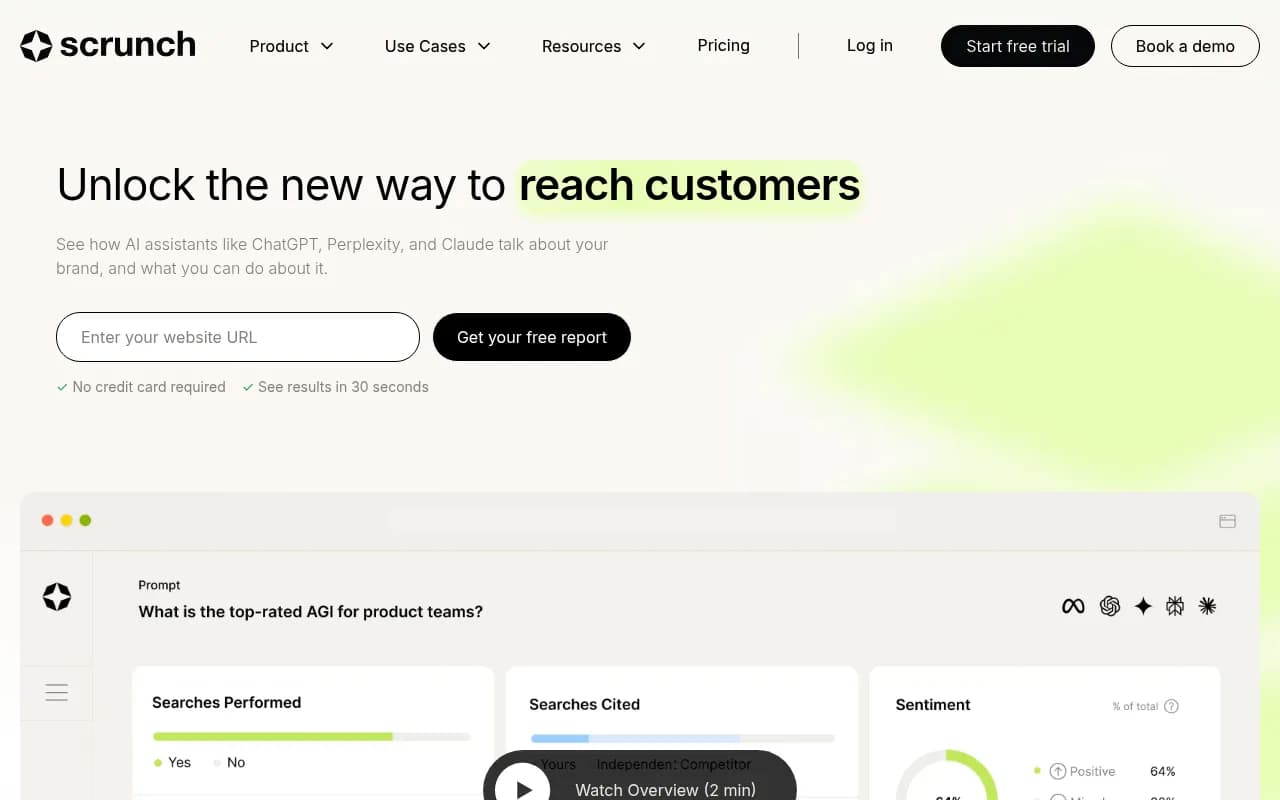
Scrunch AI focuses on crawler and traffic insights -- useful if your main gap is understanding how AI bots interact with your site rather than generating new content.
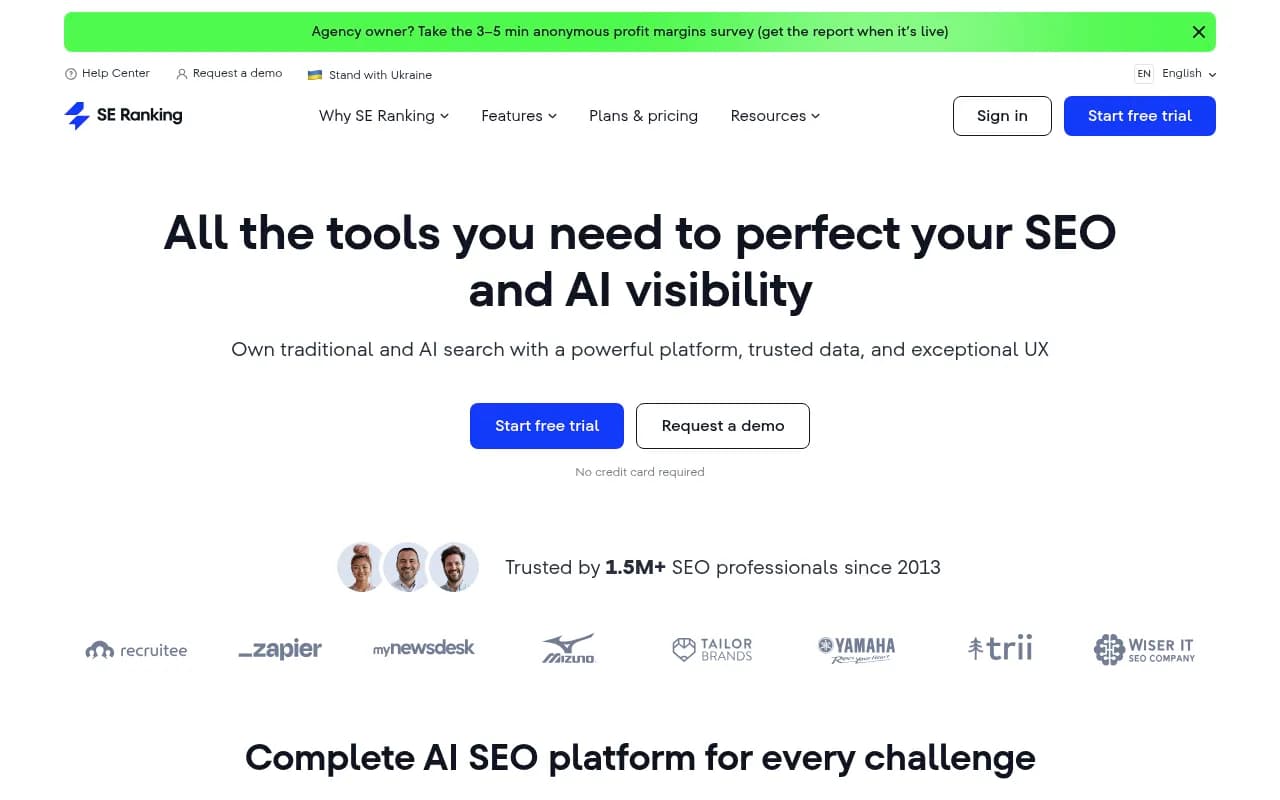
SE Ranking has added AI visibility features to its traditional SEO platform, which makes sense if you want AI monitoring inside a broader SEO workflow rather than as a standalone tool.
Semrush has AI search tracking built into its platform now. The limitation is that it uses fixed prompts rather than letting you define your own, which reduces its usefulness for brands in niche categories.
The bottom line
Peec AI is a well-built tool with a clear use case. If you want clean, reliable AI visibility monitoring with minimal setup friction, it delivers. The citation tracking works, the UX is genuinely good, and the free trial is one of the more generous in the category.
The ceiling is real, though. Three models, no content tools, no crawler data, no traffic attribution. After 6+ months of tracking, most teams want to do something with what they've learned -- and Peec AI doesn't give them the tools to do that.
Whether that's a dealbreaker depends on your team's maturity and what you're trying to accomplish. For teams just getting started with AI search, it's a reasonable entry point. For teams that are ready to move from "understanding" to "optimizing," the monitoring-only model will feel limiting, and the alternatives are worth a serious look.