Key takeaways
- Hall AI is a solid monitoring tool for tracking brand mentions across ChatGPT, Perplexity, and Gemini, but it lacks built-in content generation and optimization features.
- Most Hall AI alternatives fall into the same trap: they show you data but leave you to figure out what to do with it.
- The platforms worth switching to combine tracking with answer gap analysis, AI-native content generation, and crawler log access.
- If you're an agency or marketing team that needs to move from "we see the problem" to "we fixed the problem," the tools in this guide are built for that workflow.
- Pricing ranges from free tiers to enterprise contracts -- there's a viable option at most budget levels.
Why people look for Hall AI alternatives
Hall AI does what it says on the tin. You set up your brand, define some prompts, and it monitors how AI engines like ChatGPT, Perplexity, and Gemini respond to those prompts. You get mention tracking, sentiment analysis, and a reasonable view of how your brand compares to competitors in AI-generated answers.
That's genuinely useful. But it's also where Hall AI stops.
The problem most teams run into isn't that they can't see their AI visibility gap -- it's that seeing the gap doesn't close it. You can watch your competitors get cited in ChatGPT responses all day long without knowing which specific content to create, which prompts to target, or whether your new article actually got crawled by AI agents. Hall AI doesn't help with any of that.
The alternatives in this guide were selected because they go at least one step further. Some add content generation. Some add crawler log analysis. Some do all of it in a single workflow. A few are monitoring-only but cover more AI engines or offer better prompt intelligence than Hall.
Here's what we looked at when evaluating each one:
- Does it monitor across multiple AI engines (not just ChatGPT)?
- Does it show you why you're missing from AI responses, not just that you are?
- Does it help you create content that addresses those gaps?
- Does it track whether that content actually gets cited?
- What does it cost, and who is it realistically built for?
The best Hall AI alternatives in 2026
Promptwatch -- best for the full optimization loop
Promptwatch is the platform that comes up most often when teams outgrow monitoring-only tools. The core difference is structural: it's built around a three-step cycle of finding gaps, creating content to fill them, and tracking whether that content gets cited.

The Answer Gap Analysis feature shows you exactly which prompts your competitors appear in that you don't. Not in aggregate -- you see the specific questions, the specific AI responses, and the specific content your site is missing. From there, Content Agents generate articles, listicles, and briefs grounded in that prompt data. These aren't generic AI articles; they're built around the actual gaps AI models are exposing.
What sets it apart from Hall AI specifically is the crawler log access. Promptwatch tracks when AI agents like GPTBot and ClaudeBot hit your pages, what errors they encounter, and when a crawled page moves to an actual citation. That feedback loop -- publish, crawl, cite -- is something Hall AI doesn't offer at all.
It monitors 10 AI models including ChatGPT, Perplexity, Google AI Overviews, Claude, Gemini, DeepSeek, Grok, and Copilot. Pricing starts at $99/month for the Essential plan (1 site, 50 prompts, 5 articles), with the Professional plan at $249/month adding crawler logs and multi-location tracking.
Used by 1,480+ brands including Booking.com and Center Parcs, and its data has been cited in the Wall Street Journal and Axios.
AirOps -- best for content engineering at scale
AirOps takes a different angle. It's less of a visibility tracker and more of a content engineering platform that's been rebuilt around AI search. If your main bottleneck is producing enough content to compete across hundreds of prompts, AirOps is worth a serious look.
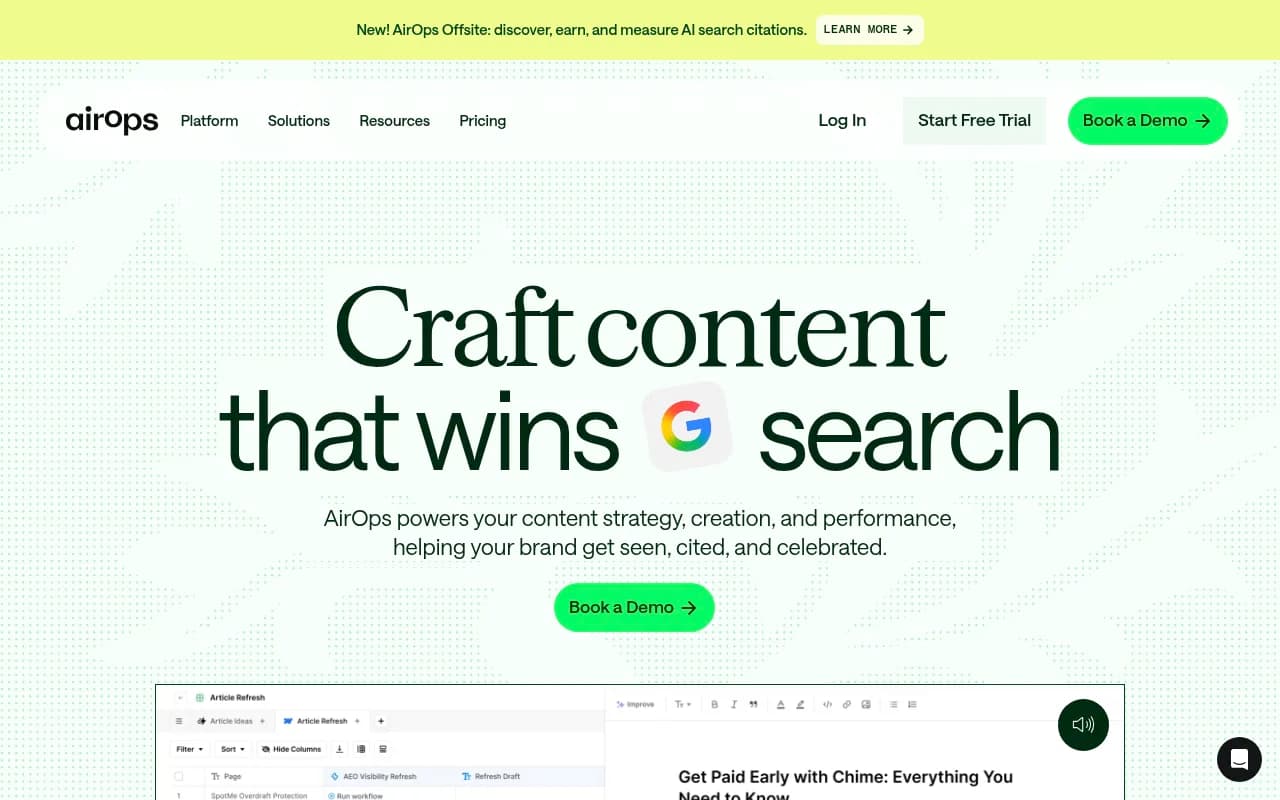
It connects to your existing data sources, lets you build structured workflows for content production, and outputs articles and pages designed to rank in AI-generated answers. The monitoring side is less developed than dedicated trackers, but the content output quality and volume are hard to match.
Best for: content teams that already have visibility data and need a production engine to act on it.
Profound -- best for enterprise analytics
Profound is one of the more mature platforms in the space. It tracks brand mentions across 9+ AI engines, gives you share-of-voice comparisons, and has strong reporting features that enterprise marketing teams tend to appreciate.
Profound

Where it falls short relative to Promptwatch is on the action side -- Profound is primarily an analytics and monitoring platform. It doesn't generate content or provide crawler logs. But the depth of its analytics, particularly for large brands tracking dozens of competitors, is genuinely impressive.
Pricing is on the higher end, which makes it a harder sell for smaller teams.
AthenaHQ -- best for GEO strategy
AthenaHQ positions itself as a GEO strategy platform, and that framing is accurate. It goes deeper on prompt intelligence than most tools -- you get difficulty scores, volume estimates, and competitive analysis for each prompt you're targeting.

The gap is content generation. AthenaHQ will tell you what to create and why, but it doesn't create it for you. For teams with strong in-house writers, that's fine. For teams that need to move fast, it means adding another tool to the stack.
Scrunch AI -- best for brand narrative monitoring
Scrunch AI focuses on how AI models actually describe your brand -- the language, the associations, the sentiment. It's particularly useful for brands that have had reputation issues or that operate in categories where AI models have strong pre-existing associations.
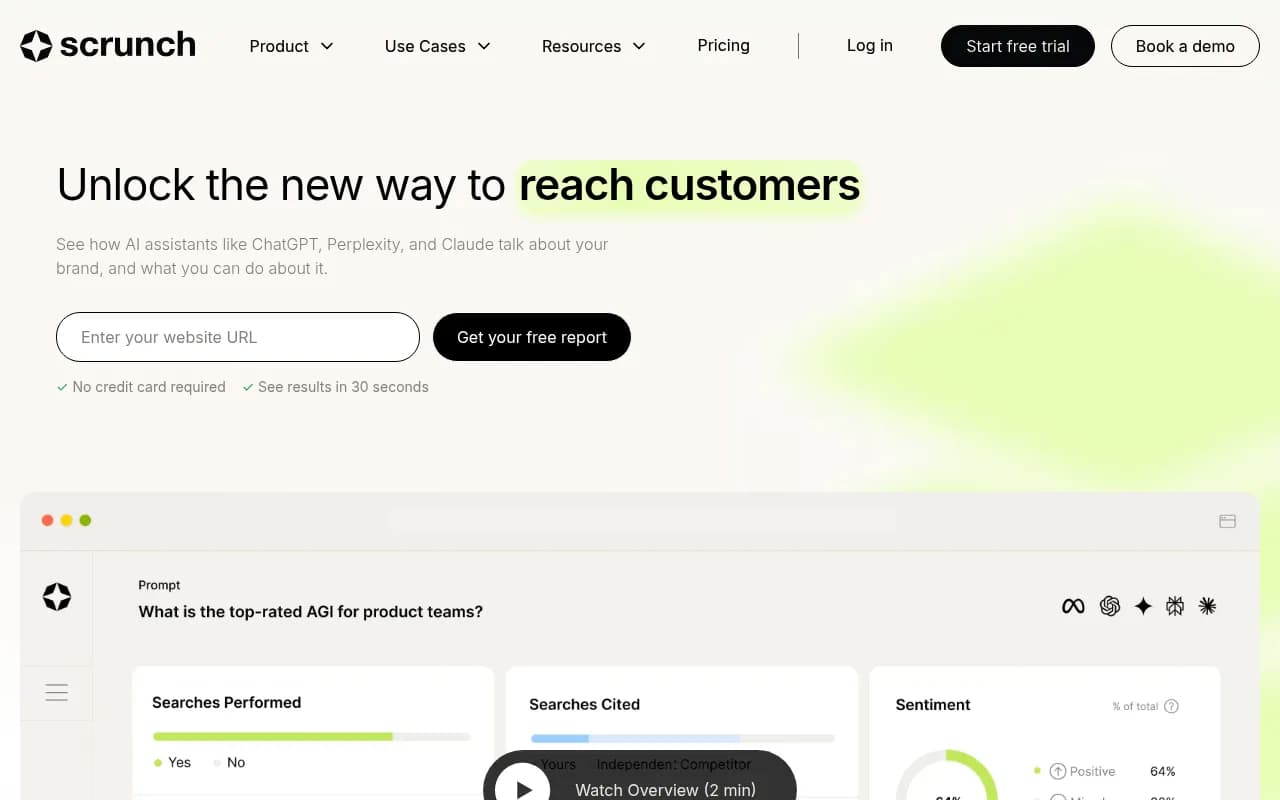
It's not a content generation tool, but its narrative analysis is more granular than Hall AI's sentiment tracking. If understanding how AI talks about you matters as much as whether it mentions you, Scrunch is worth evaluating.
Otterly.AI -- best budget entry point
Otterly.AI is the most accessible option on this list. It covers ChatGPT, Perplexity, and Google AI Overviews, gives you brand mention tracking and basic competitor comparisons, and costs significantly less than most alternatives.
Otterly.AI

The trade-off is depth. There's no content generation, no crawler logs, no prompt volume data. But if you're a small team that just needs to know whether you're showing up in AI responses and how that compares to two or three competitors, Otterly gets the job done without a big budget commitment.
SE Ranking -- best for teams already in the SE Ranking ecosystem
SE Ranking added AI visibility tracking to its existing SEO platform, which means if you're already using it for rank tracking and site audits, the AI monitoring layer is a natural add-on rather than a new tool to manage.
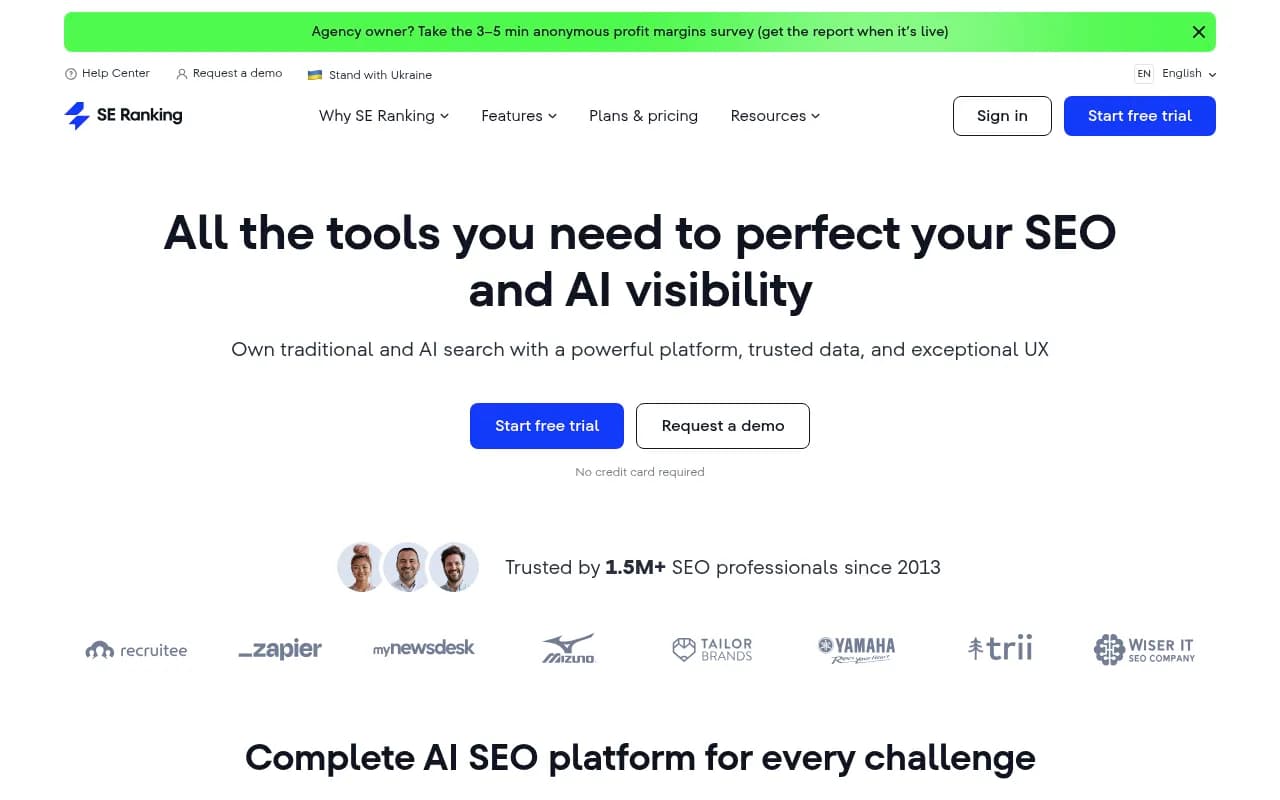
The AI visibility features are solid but not as deep as dedicated GEO platforms. You get mention tracking across major AI engines and some competitor comparison, but the prompt intelligence and content optimization features are limited compared to purpose-built tools.
Peec AI -- best for cross-engine reporting
Peec AI does one thing particularly well: clean, exportable reporting across multiple AI engines. If you're an agency that needs to show clients their AI visibility data in a format that's easy to understand and present, Peec's reporting interface is among the best in the category.

Like most monitoring-focused tools, it doesn't help you fix what it finds. But for reporting purposes, it's hard to beat.
Search Atlas -- best for combining SEO and GEO in one platform
Search Atlas is interesting because it genuinely tries to bridge traditional SEO and AI search optimization. It has keyword research, site auditing, rank tracking, and AI visibility monitoring in one platform, plus content generation features.
The AI visibility features aren't as deep as dedicated GEO platforms, but if you're looking to consolidate tools and don't want to run a separate SEO platform alongside a GEO platform, Search Atlas is one of the few options that handles both reasonably well.
LLMrefs -- best for keyword-first GEO workflows
LLMrefs takes a keyword-centric approach to AI visibility that will feel familiar to anyone coming from traditional SEO. You track prompts the way you'd track keywords, get visibility scores, and see which AI engines are citing you for which queries.
LLMrefs
It's a good fit for SEO teams that are extending their workflows into GEO rather than building a separate GEO practice. The content generation features are limited, but the prompt tracking and competitive analysis are solid.
ZipTie -- best for AI Overviews and traffic impact
ZipTie focuses specifically on the connection between AI visibility and actual traffic. It's particularly strong on Google AI Overviews, which is the AI search format most directly connected to organic traffic for most brands.
If your primary concern is how AI Overviews are affecting your click-through rates and organic traffic, ZipTie's traffic impact analysis is more developed than most alternatives. Less useful if you're primarily focused on ChatGPT or Perplexity.
Feature comparison
| Platform | AI engines covered | Content generation | Crawler logs | Prompt intelligence | Best for |
|---|---|---|---|---|---|
| Promptwatch | 10 | Yes (Content Agents) | Yes | Yes (volume + difficulty) | Full optimization loop |
| AirOps | Limited | Yes (advanced) | No | No | Content production at scale |
| Profound | 9+ | No | No | Basic | Enterprise analytics |
| AthenaHQ | Multiple | No | No | Yes | GEO strategy |
| Scrunch AI | Multiple | No | No | Basic | Brand narrative |
| Otterly.AI | 3 | No | No | No | Budget monitoring |
| SE Ranking | Multiple | Basic | No | No | Existing SE Ranking users |
| Peec AI | Multiple | No | No | No | Agency reporting |
| Search Atlas | Multiple | Yes | No | Basic | SEO + GEO combined |
| LLMrefs | 9+ | No | No | Basic | SEO-style GEO workflows |
| ZipTie | Multiple | No | No | No | AI Overviews + traffic |
What "built-in content generation" actually means
It's worth being specific here, because "content generation" gets used loosely in this space.
Some tools generate generic AI articles that happen to mention your target keywords. That's not the same as content engineered to fill specific AI visibility gaps. The distinction matters because AI models cite content based on how well it answers the specific questions users are asking -- not based on keyword density.
The tools that do this well (Promptwatch's Content Agents, AirOps's workflow engine) ground their content generation in actual prompt data: what questions are being asked, what AI models are currently saying in response, which competitors are being cited and why, and what's missing from existing answers. That's a fundamentally different output than a standard AI content writer.
If a platform says it has "content generation," it's worth asking: is the content based on your specific visibility gaps, or is it just an AI writer bolted onto a monitoring dashboard?
How to choose
The right tool depends on where your biggest bottleneck is.
If you're still figuring out whether you have an AI visibility problem, start with a monitoring-only tool like Otterly.AI or LLMrefs. They're cheap, fast to set up, and will give you a clear picture of your current state.
If you know you have a visibility problem and need to fix it, you need a platform with content generation and crawler log access. Promptwatch is the most complete option here. AirOps is worth considering if content production volume is your primary constraint.
If you're an enterprise team that needs deep analytics and executive reporting, Profound or AthenaHQ are worth the higher price points -- just know you'll need a separate content workflow.
If you're an agency managing multiple clients, Promptwatch's agency pricing, Peec AI's reporting, and Rankscale's agency-focused features are all worth evaluating based on what your clients actually need.
The monitoring-only trap
One thing worth naming directly: most platforms in this category -- including Hall AI -- are built around the assumption that showing you data is enough. It isn't.
The brands that are winning in AI search right now aren't just monitoring their visibility. They're running a continuous cycle: find the prompts where competitors appear and they don't, create content that addresses those specific gaps, track whether AI crawlers pick up that content, and measure whether citations increase. Then repeat.
That cycle requires more than a dashboard. It requires a platform that connects the monitoring data to the content creation workflow to the crawler analytics. Right now, very few platforms do all three. That gap is why teams keep outgrowing monitoring-only tools and looking for alternatives.
The good news is that the category is maturing fast. In 2024, almost everything was monitoring-only. In 2026, there are real options for teams that want to close the loop.