Key takeaways
- Brandlight.ai is a legitimate tool for teams focused on brand sentiment and narrative inside AI-generated answers, but it lacks content optimization, crawler logs, and traffic attribution.
- Most GEO platforms in 2026 fall into two camps: monitoring-only dashboards and full optimization platforms. Brandlight sits firmly in the first camp.
- If your goal is to actually improve AI visibility (not just observe it), you need a platform that closes the loop from gap detection to content creation to traffic attribution.
- Promptwatch is the only platform in this comparison rated as a "Leader" across all evaluation categories in 2026, covering monitoring, content generation, crawler diagnostics, and revenue attribution.
- Profound and Scrunch are strong enterprise alternatives but come at higher price points and lack some features (Reddit tracking, ChatGPT Shopping) that matter for certain use cases.
The GEO tools market has exploded. In early 2025 there were maybe a dozen platforms worth considering. By mid-2026, there are well over 50. Most of them track brand mentions across ChatGPT, Perplexity, and Google AI Overviews. A handful go further. Very few help you actually do something about what you find.
Brandlight.ai sits somewhere in the middle of this spectrum. It has a clear positioning: brand narrative and sentiment inside AI answers. That's a real problem worth solving. But depending on what you actually need, it may be the right tool or the wrong one entirely.
This guide breaks down where Brandlight fits, what it does well, where it falls short, and how it compares to the strongest alternatives in 2026.
What Brandlight.ai actually does
Brandlight is built around the idea that AI models don't just mention brands -- they frame them. The tone, context, and narrative around a brand mention matters as much as whether the mention happened at all. Brandlight tracks this: how AI engines describe your brand, what sentiment they attach to it, and whether the narrative matches what you want to project.
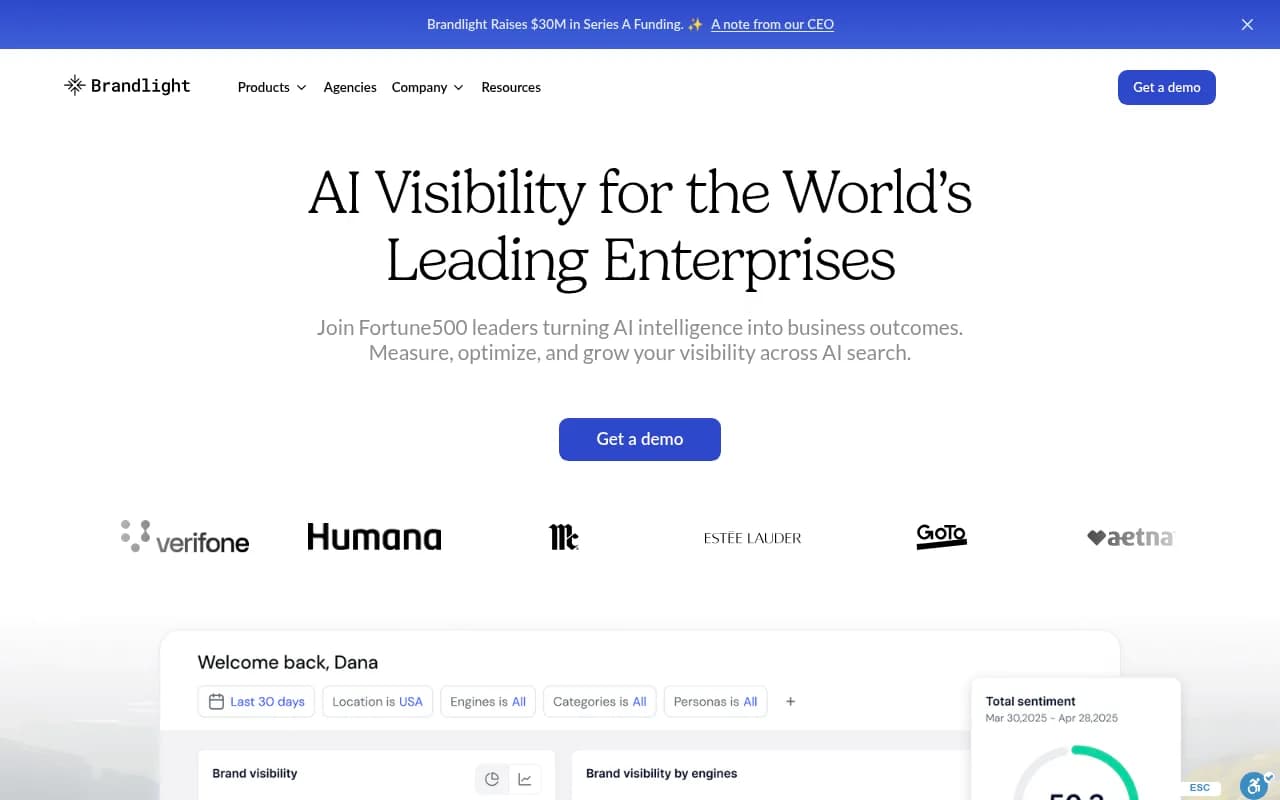
That's a genuinely useful angle. A brand could be mentioned in ChatGPT responses constantly but always in a negative context ("some users report issues with...") or as a second-tier option ("if you can't afford X, there's also Y"). Brandlight surfaces this kind of qualitative signal.
Where it gets limited: Brandlight is primarily a monitoring and sentiment tool. It tells you what's happening. It doesn't have built-in tools to help you change it. There's no content gap analysis, no AI writing agent, no crawler log diagnostics, and no traffic attribution. You get the picture, but not the paintbrush.
A Reddit thread in r/DigitalMarketing described it well: "Best for teams focused on brand narrative and sentiment inside AI answers. Not great if you only care about content optimization."
That's a fair summary.
The 2026 GEO platform landscape
Before getting into comparisons, it helps to understand how the market is structured. There are roughly four tiers of GEO tools right now:
Tier 1: Full optimization platforms -- These cover the complete workflow: monitoring, gap analysis, content generation, crawler diagnostics, and traffic attribution. Very few tools reach this level.
Tier 2: Strong monitoring with some optimization -- These track AI visibility well and offer some guidance on what to fix, but content generation and attribution are limited or absent.
Tier 3: Monitoring-only dashboards -- These show you data. Brand mentions, share of voice, sentiment. But they leave you to figure out what to do with it.
Tier 4: Lightweight trackers -- Basic prompt monitoring, often with limited model coverage and no analytics depth.
Brandlight sits in Tier 3, leaning toward Tier 2 for sentiment analysis specifically. Here's where the major platforms land:
| Platform | Tier | Content generation | Crawler logs | Traffic attribution | Reddit/YouTube tracking | ChatGPT Shopping |
|---|---|---|---|---|---|---|
| Promptwatch | 1 | Yes | Yes | Yes | Yes | Yes |
| Profound | 2 | Limited | No | Partial | No | Yes |
| Scrunch AI | 2 | No | No | No | No | No |
| AthenaHQ | 3 | No | No | No | No | No |
| Otterly.AI | 3 | No | No | No | No | No |
| Peec AI | 3 | No | No | No | No | No |
| Brandlight.ai | 3 | No | No | No | No | No |
| Semrush | 2 | Yes (general) | No | Partial | No | No |
| Ahrefs | 2 | No | No | No | No | No |
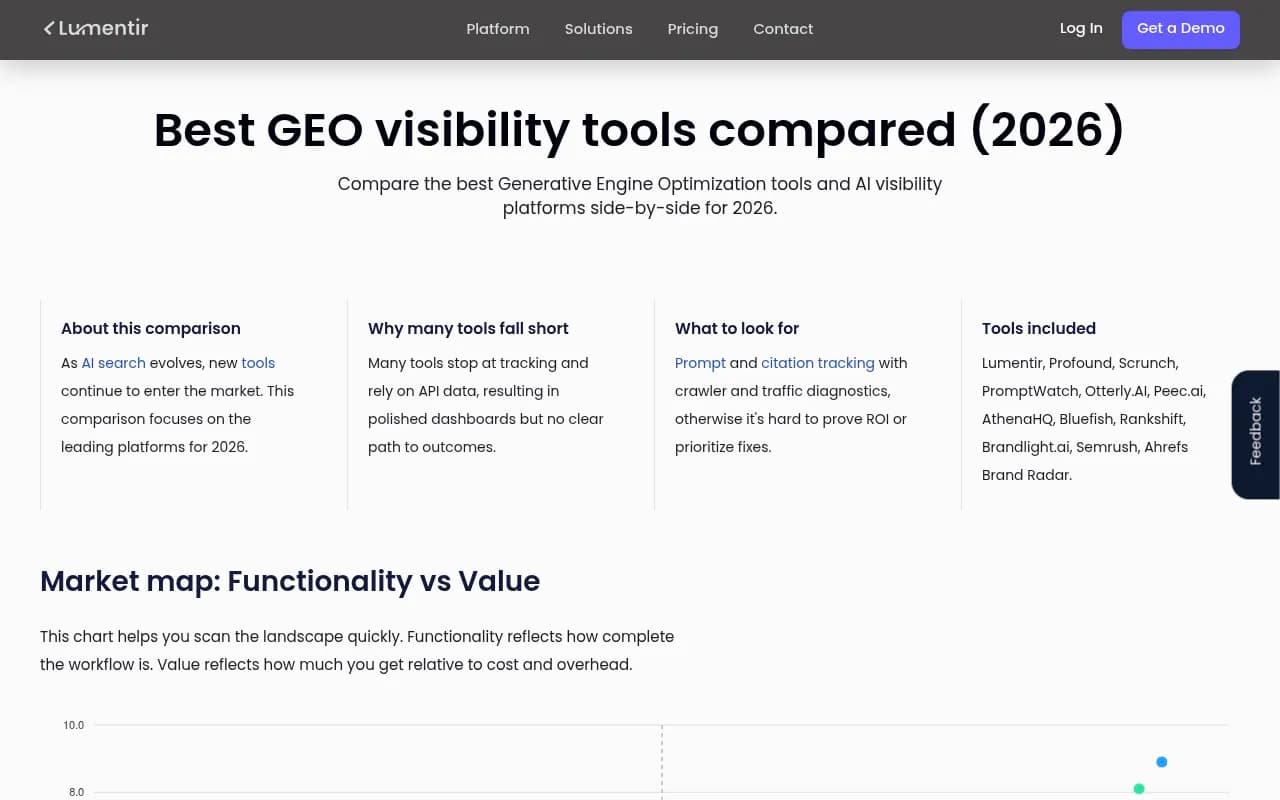
Head-to-head: Brandlight vs the main alternatives
Brandlight.ai vs Promptwatch
This is the most significant gap in the comparison. Brandlight monitors how AI engines describe your brand. Promptwatch monitors that too -- but it also tells you which prompts you're missing, generates content to fill those gaps, shows you which AI crawlers are hitting your site and what errors they encounter, and ties everything back to actual traffic and revenue.

The core difference is what happens after you see the data. With Brandlight, you export a report and figure out next steps yourself. With Promptwatch, the platform walks you through what to do: here are the prompts your competitors rank for that you don't, here's the content you need to create, here's how to track whether it worked.
Promptwatch also covers 10 AI models (ChatGPT, Perplexity, Claude, Gemini, Grok, DeepSeek, Copilot, Meta AI, Mistral, Google AI Overviews) and has processed over 1.1 billion citations. That citation database is what powers the content generation -- the AI writing agent doesn't produce generic articles, it produces content grounded in what AI models actually cite.
For teams that want to move fast and prove ROI, Promptwatch is the stronger choice. For teams that specifically need deep brand narrative analysis and are comfortable doing their own content strategy, Brandlight has a more focused offering.
Pricing comparison: Promptwatch starts at $99/month (Essential plan, 1 site, 50 prompts). Brandlight's pricing isn't publicly listed, which makes direct comparison harder.
Brandlight.ai vs Profound
Profound is a well-regarded enterprise platform with strong model coverage and a clean interface. It has an agency mode with client management features, which makes it popular with larger marketing teams.
Profound

Compared to Brandlight, Profound has broader prompt tracking and better competitive benchmarking. It also tracks ChatGPT Shopping, which Brandlight doesn't. Where Profound falls short: no Reddit or YouTube tracking, no crawler logs, and content generation is limited. It's a stronger monitoring tool than Brandlight, but it's still primarily a monitoring tool.
Profound is also priced at the enterprise end of the market. If you're a mid-size brand or agency without a large budget, the value equation gets harder to justify.
Brandlight.ai vs Otterly.AI
Otterly.AI is one of the more popular entry-level GEO tools. It tracks brand mentions across ChatGPT, Perplexity, and Google AI Overviews with a clean, accessible interface.
Otterly.AI

Compared to Brandlight, Otterly is simpler and more affordable. It doesn't have Brandlight's sentiment depth, but it's easier to get started with and covers the basics well. Neither platform offers content generation or crawler diagnostics. If you're choosing between the two, it comes down to whether sentiment analysis is a priority for your team.
Brandlight.ai vs Peec AI
Peec AI is another monitoring-focused platform with reasonable model coverage and a straightforward interface.

The comparison with Brandlight is similar to Otterly: Peec is simpler and more affordable, Brandlight has more depth on the sentiment side. Neither helps you take action on what you find.
Brandlight.ai vs Scrunch AI
Scrunch AI has a stronger feature set than Brandlight in some areas -- particularly around competitive analysis and share of voice tracking. It's positioned more toward enterprise teams.
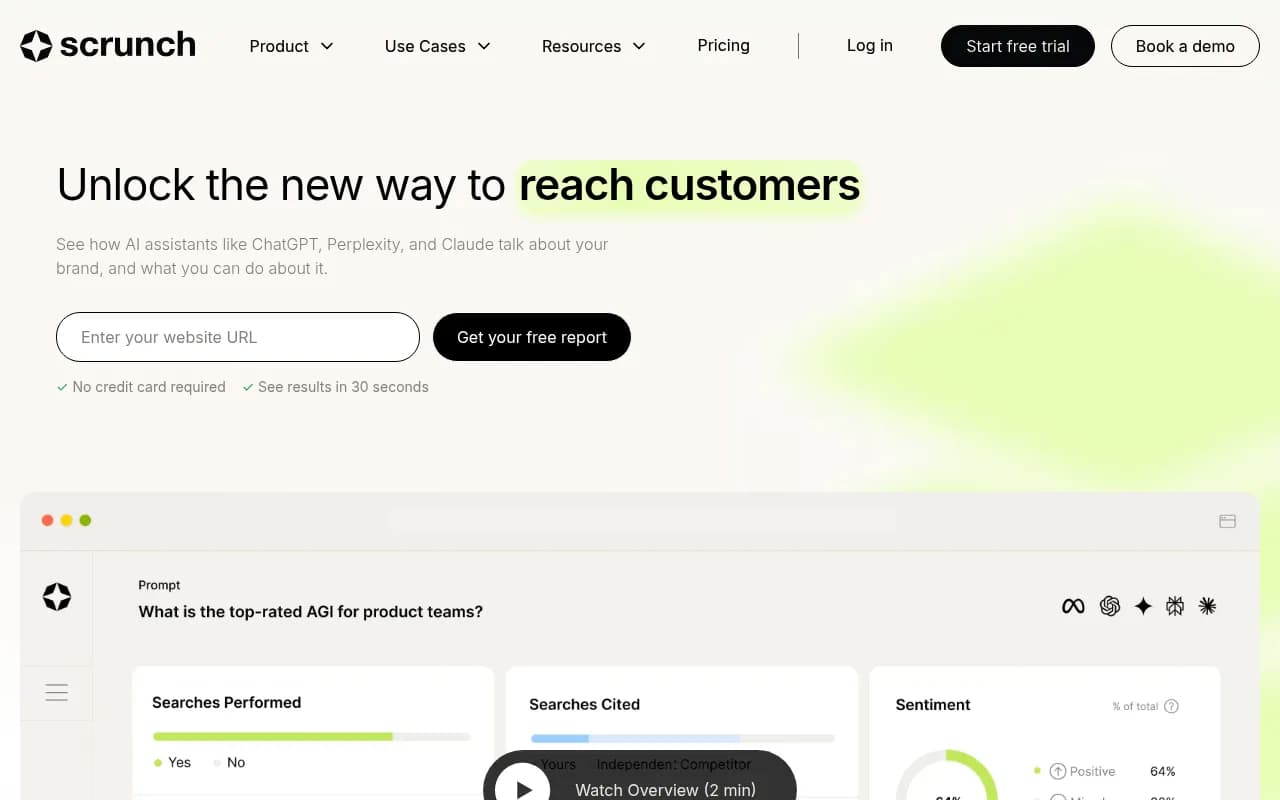
Where Scrunch falls short relative to Brandlight: less focus on narrative and sentiment. Where Scrunch is stronger: more robust competitive benchmarking and broader prompt coverage. Neither has content generation or crawler logs.
Brandlight.ai vs AthenaHQ
AthenaHQ is monitoring-focused with a clean interface and decent model coverage. It doesn't have the sentiment depth of Brandlight.

If your primary concern is brand narrative inside AI answers, Brandlight is the better choice between these two. If you want broader prompt tracking and competitive visibility, AthenaHQ is comparable.
Feature comparison: What each platform actually covers
Here's a more detailed breakdown of the specific capabilities that matter for GEO work in 2026:
| Feature | Brandlight.ai | Promptwatch | Profound | Otterly.AI | Peec AI | Scrunch AI |
|---|---|---|---|---|---|---|
| Brand mention tracking | Yes | Yes | Yes | Yes | Yes | Yes |
| Sentiment / narrative analysis | Yes | Partial | No | No | No | No |
| Prompt volume data | No | Yes | Yes | No | No | No |
| Answer gap analysis | No | Yes | Partial | No | No | No |
| AI content generation | No | Yes | No | No | No | No |
| AI crawler logs | No | Yes | No | No | No | No |
| Traffic attribution | No | Yes | Partial | No | No | No |
| Reddit/YouTube tracking | No | Yes | No | No | No | No |
| ChatGPT Shopping tracking | No | Yes | Yes | No | No | No |
| Competitor heatmaps | Partial | Yes | Yes | No | Partial | Yes |
| Multi-language/region | Unknown | Yes | Yes | Limited | Limited | Yes |
| API access | Unknown | Yes | Yes | No | No | Yes |
| Free trial | Unknown | Yes | Yes | Yes | Yes | Yes |
Who should use Brandlight.ai
Brandlight makes sense for a specific type of team: one that cares deeply about brand narrative and is already running a separate content or SEO operation. If your PR team wants to understand how AI engines are framing your brand -- what language they use, what associations they make, whether the story matches your positioning -- Brandlight gives you that signal.
It's also potentially useful as a complement to a more complete GEO platform. Use Brandlight for narrative monitoring, use something like Promptwatch or Profound for the optimization work.
Where Brandlight doesn't make sense: if you're starting from scratch with GEO and need to understand what content to create, which prompts to target, and whether your efforts are driving traffic, you'll hit the ceiling quickly. The platform shows you the problem but doesn't help you solve it.
Who should use the alternatives
Use Promptwatch if: You want a complete GEO workflow -- from finding gaps to creating content to tracking results. Especially strong for marketing and SEO teams that need to prove ROI, agencies managing multiple clients, and brands that want to move fast without stitching together multiple tools.
Use Profound if: You're an enterprise team with a larger budget and need strong model coverage with an agency-friendly interface. Good for teams that have dedicated content resources and just need the monitoring and competitive intelligence layer.
Use Otterly.AI or Peec AI if: You're early in your GEO journey and want to start monitoring AI visibility without a large investment. Both are accessible entry points.
Use Scrunch AI if: You're an enterprise team focused on share of voice and competitive benchmarking across AI models.
The action gap: Why monitoring alone isn't enough in 2026
Here's the honest reality of where the GEO market is in 2026: most platforms are still solving the monitoring problem. They show you data. They tell you where you're visible and where you're not. That was genuinely valuable in 2024 when brands were just waking up to the fact that AI search existed.
Now the question has shifted. Brands know they have an AI visibility problem. What they need is a way to fix it.
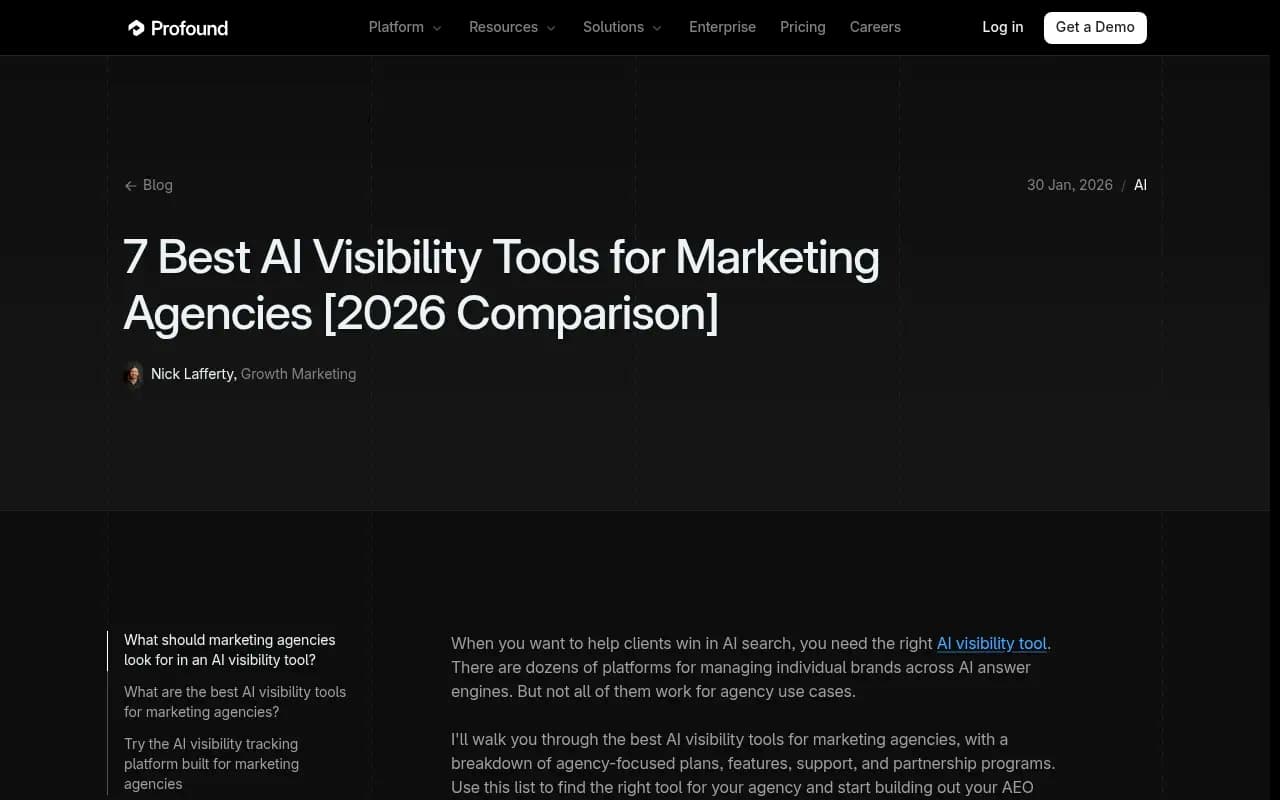
The platforms that are pulling ahead are the ones that close the loop: find the gaps, create the content, track the results. That cycle -- which Promptwatch calls the Action Loop -- is what separates an optimization platform from a monitoring dashboard.
Brandlight is a monitoring dashboard with a sentiment layer. That's useful. But if you're trying to move your AI visibility scores, you need more than a dashboard.
The tools that get you there:
- Gap analysis that shows exactly which prompts competitors rank for that you don't
- Content generation grounded in real citation data, not generic SEO templates
- Crawler diagnostics that show you what AI bots see when they hit your site
- Traffic attribution that connects AI visibility to actual revenue
Very few platforms cover all four. Promptwatch does. Most others cover one or two.
Pricing overview
Where pricing is publicly available:
| Platform | Starting price | Notes |
|---|---|---|
| Promptwatch | $99/month | Essential: 1 site, 50 prompts, 5 articles. Annual discount available. |
| Profound | Not public | Enterprise pricing, demo required |
| Scrunch AI | Not public | Enterprise pricing |
| Otterly.AI | ~$49/month | Entry-level plan available |
| Peec AI | ~$49/month | Entry-level plan available |
| AthenaHQ | Not public | Demo required |
| Brandlight.ai | Not public | Contact for pricing |
| Semrush | $139/month | Broad SEO platform; AI features are add-ons |
| Ahrefs | $129/month | Broad SEO platform; Brand Radar is limited |
Bottom line
Brandlight.ai does one thing well: it tells you how AI engines are framing your brand narratively. If that specific signal is what you need, it's worth evaluating. But it's a narrow tool in a market that's increasingly demanding end-to-end solutions.
For most marketing and SEO teams in 2026, the better question isn't "which monitoring tool should I use?" It's "which platform will actually help me improve my AI visibility?" That's a different question, and it points toward a different set of tools.
If you want to start with the most complete option, Promptwatch covers the full workflow -- monitoring, gap analysis, content generation, crawler logs, and traffic attribution -- at a price point that works for teams of most sizes. The other platforms in this comparison each have their strengths, but none covers the same ground end-to-end.