Key takeaways
- BrightEdge suits analyst-led technical SEO programs that want on-site automation. Conductor suits content-led teams that want SEO guidance inside writing workflows and agent infrastructure.
- Conductor launched AgentStack on April 20, 2026 (native apps in ChatGPT, Claude and Copilot, an MCP server, turnkey agents). BrightEdge answered with AI Hyper Cube, AI Agent Insights and Agent Edge beside its Autopilot product.
- Neither vendor publishes list prices. Third-party estimates put BrightEdge around $36K to $120K+ per year and Conductor around $24K to $60K per year.
- Both are intelligence layers first. If your team can't ship the recommendations they produce, the license fee isn't your real problem.
- If AI search is the main goal, compare both against dedicated AI visibility platforms before you sign a six-figure contract.
Why this comparison got harder in 2026
A few years ago, BrightEdge vs Conductor was a fairly clean decision. BrightEdge was the data-heavy incumbent with big keyword universes and technical monitoring. Conductor was the friendlier platform that content teams actually opened every day.
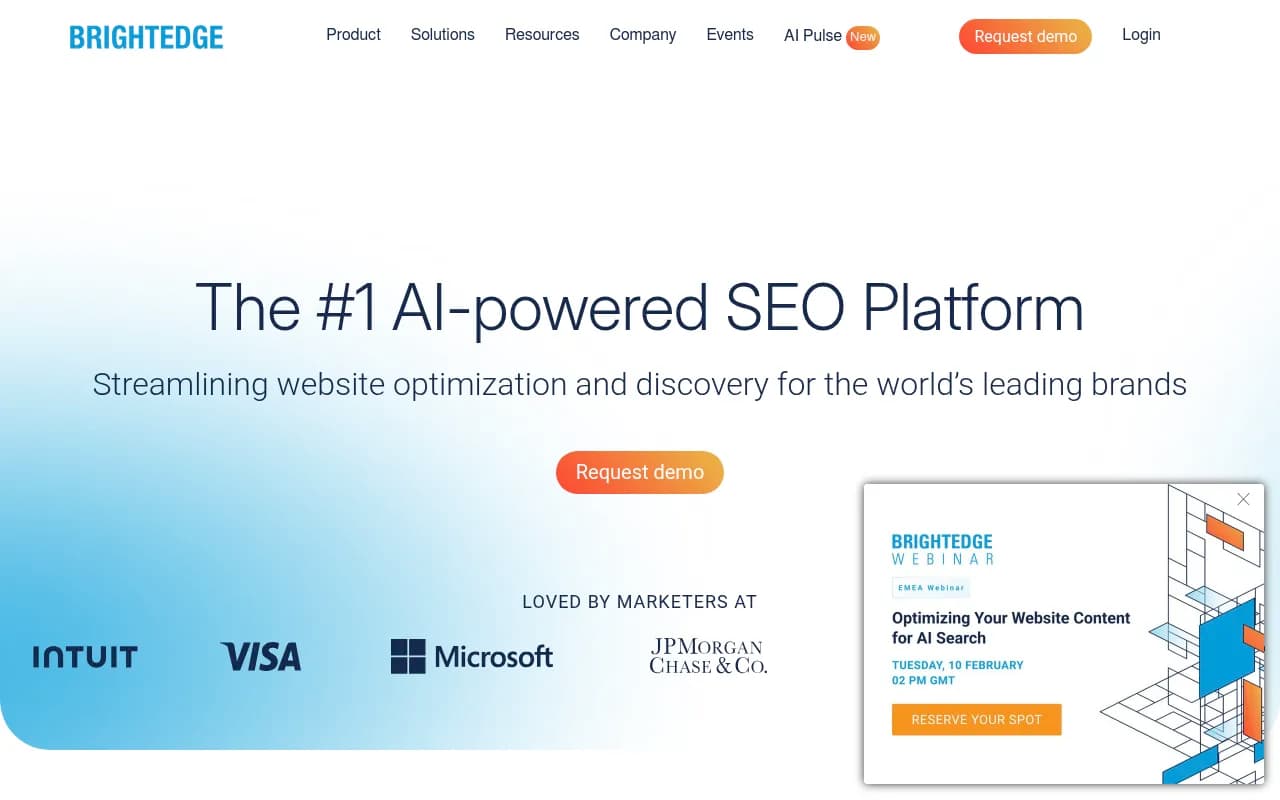
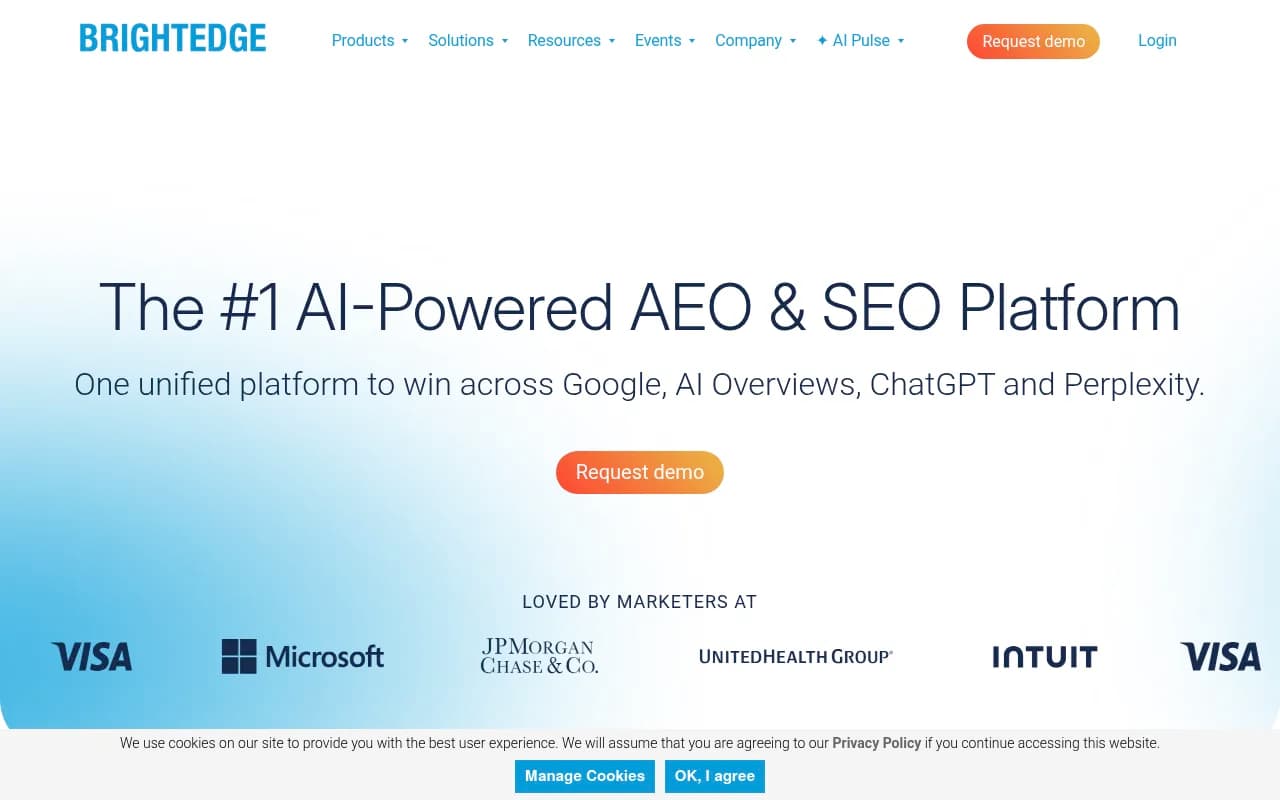
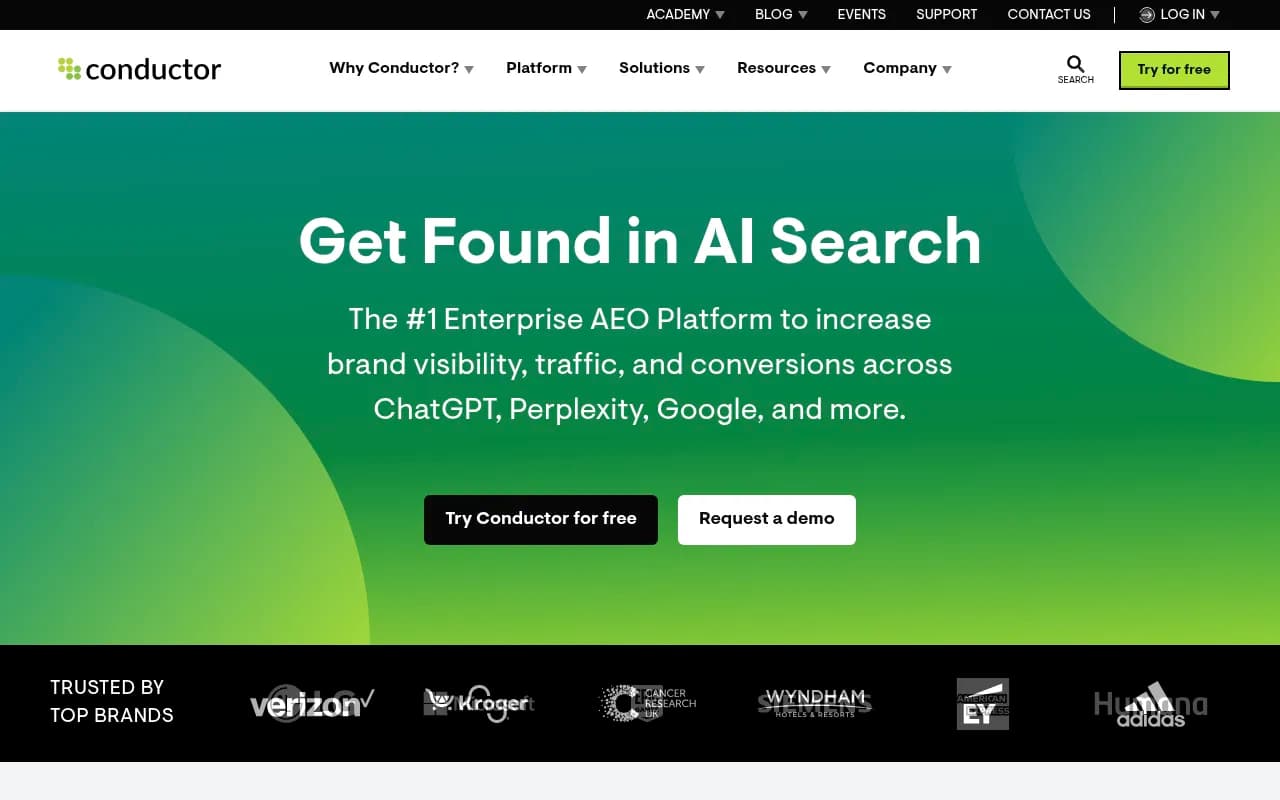
Then AI search arrived and both vendors rewrote their homepages. BrightEdge now calls itself "The #1 AI-Powered AEO & SEO Platform." Conductor calls itself "the #1 Enterprise AEO Platform." They can't both be right, and each claim is self-reported.
So the useful question isn't who has the louder tagline. It's which suite fits how your team works, and how much of the AI search problem either one really solves. That's what this guide covers.
The short verdict
The most consistent theme across third-party comparisons: BrightEdge is the stronger command center for technical SEO teams, and Conductor is the easier platform for content teams to adopt. That's a generalization, but it matches how both products are positioned.
| Dimension | BrightEdge | Conductor |
|---|---|---|
| Best fit | Analyst-led technical SEO programs | Content-led teams and governance |
| Reported annual cost | ~$36K to $120K+ (third-party estimate) | ~$24K to $60K (third-party estimate) |
| Published pricing | No | No, usage-based plans |
| 2026 AI headline | AI Hyper Cube, AI Agent Insights, Agent Edge | AgentStack |
| Automation angle | Autopilot for on-site optimization | Turnkey agents, MCP server, LLM apps |
| Reputation | Deep data, bigger learning curve | Cleaner interface, easier adoption |
Treat the pricing rows carefully. Both vendors keep list prices private, and the figures above are outside estimates. I couldn't confirm either from a primary source, so use them as ballpark numbers for budgeting a conversation, not a quote.
What BrightEdge does well
BrightEdge is built for teams that treat organic search as a data discipline. Think dedicated analysts, large keyword universes, SERP feature monitoring, competitive share of voice and technical audits across big sites.
BrightEdge has layered several AI-specific pieces onto that base:
- AI Hyper Cube, its AI search visibility measurement layer.
- AI Agent Insights, which per BrightEdge shows which AI systems visit your site, what they do, and where they hit friction such as blocked pages or broken paths.
- Agent Edge, sitting beside Autopilot, which BrightEdge says "handles fully automated optimizations on your website."
The interesting piece is Autopilot. Most enterprise suites stop at recommendations. BrightEdge is one of the few that pushes changes to the site itself, which matters if your bottleneck is engineering time. One caveat: independent roundups note that BrightEdge hasn't published an engine list or pricing for ArcAI, its AI-search layer, so you'll need a demo to see which AI engines are actually covered.
Where BrightEdge creates friction
The common complaint is weight. It's a powerful system that expects analysts to run it. Smaller content teams can end up paying for depth they never touch. And the price is on the high side of the category.
What Conductor does well
Conductor's pitch is that insight should land where content gets made. Reddit threads and review sites keep returning to the same praise: the cleanest interface among enterprise suites, and easy bulk updates for keywords.
In April 2026, Conductor launched AgentStack. According to the press release, it combines:
- Native LLM apps inside ChatGPT, Claude and Microsoft Copilot.
- Developer infrastructure, including APIs and an MCP server.
- Turnkey agents aimed at content teams.
The named use cases are practical: board-ready presentations grounded in AI visibility data, brand sentiment tracking across AI platforms, finding topics where competitors win AI answers, and checking whether AI crawlers can reach key pages. Optimizely, Razorfish, Havas and IBM are listed as partners building on it.
The release also contains some big numbers. Reporting time cut by 90%. "100x" content output. Insight to published content in under three minutes. These are all vendor claims, and CEO Seth Besmertnik's line that you can build a custom app "in a day" belongs in the same bucket. Ask for customer references before you believe any of them.
Conductor's own guide to enterprise SEO platforms also says it offers the most comprehensive native AI search tracking, covering citations, share of voice and sentiment across ChatGPT, Perplexity, Gemini, Google AI Mode and Copilot. Of course it says that. Verify coverage in a trial.
Head-to-head on AI search
Here's how the AI features line up, based on what each vendor says publicly.
| AI search capability | BrightEdge | Conductor |
|---|---|---|
| AI visibility measurement | AI Hyper Cube | Native tracking across ChatGPT, Perplexity, Gemini, AI Mode, Copilot |
| AI crawler insight | AI Agent Insights | Crawler access monitoring (named AgentStack use case) |
| Automated on-site changes | Autopilot / Agent Edge | Not its focus |
| Agent and LLM integrations | Less emphasis | Apps in ChatGPT, Claude, Copilot; MCP server; APIs |
| Content workflow | Present, analyst-oriented | Core strength |
| Engine list published | Not for ArcAI | Yes, per Conductor |
My read: BrightEdge is stronger when the fix lives on the website and you want it applied automatically. Conductor is stronger when the fix is content, and when you want your team to query data from inside tools like ChatGPT or Claude through connectors.
One thing I'd push on in any demo is citation granularity. Different engines behave differently. Promptwatch Data's average sources per response report shows ChatGPT citing about 5 sources per web-search answer, Google AI Overviews and Perplexity about 10, and Copilot swinging from under 2 to nearly 17 within a few weeks. A suite that rolls everything into one "AI visibility" number hides that. Ask each vendor how they report per engine, and judge Copilot on monthly trends, not weekly snapshots.
The real cost of an enterprise suite
The license is rarely the whole bill. Spike AI's comparison argues the true total cost of ownership, including ramp-up time, supplementary tools, integrations and managed services, can add 30% to 50% to first-year spend. That's their estimate, but it matches what most procurement teams discover.
When you model the cost, include:
- Analyst or strategist hours to operate the platform.
- Engineering time to implement what it recommends (unless you use something like Autopilot).
- Supplementary tools for things the suite does poorly, such as crawling or log analysis.
- Training and onboarding.
- Reporting hours, which Conductor claims to cut sharply and which you should test yourself.
Two hundred recommendations a quarter means nothing if the team can ship thirty. The bottleneck is throughput, not intelligence.
Which should you choose?
Choose BrightEdge if
- You have dedicated SEO analysts who want granular data and SERP monitoring at scale.
- Engineering bandwidth is your limiting factor and you want automated on-site optimization.
- You run a very large site where technical monitoring matters more than content workflow.
- You can justify a budget at the upper end of the range.
Choose Conductor if
- Your main bottleneck is turning data into briefs, articles and executive-ready reporting.
- Your writers and editors need guidance inside their workflow.
- You want agent infrastructure (APIs, MCP, native LLM apps) under one contract.
- You want a lower-cost entry point and a gentler learning curve.
Consider neither if
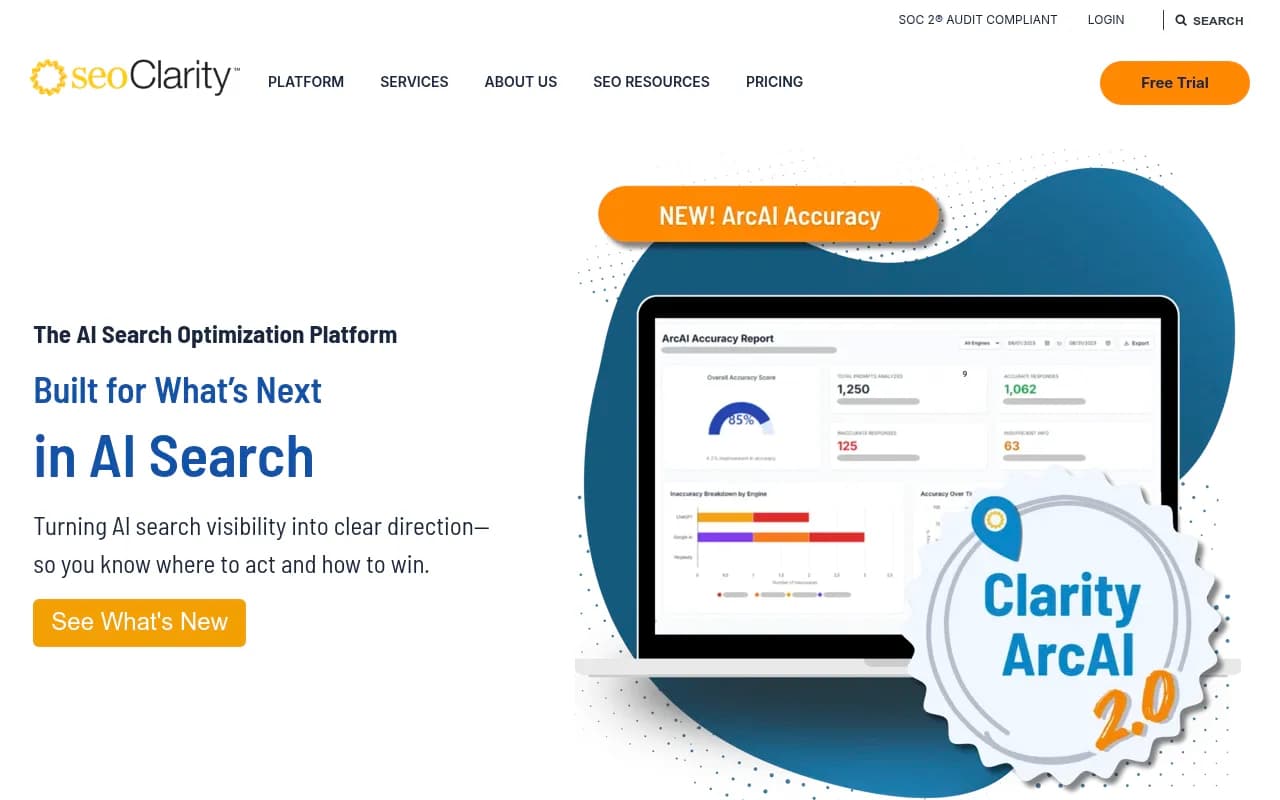
Some teams don't need a full suite. If your goal is mostly AI visibility, you may be paying for a lot of traditional SEO you already get from elsewhere. The suite market is crowded: Semrush, seoClarity, Ahrefs with Brand Radar, Botify and Searchmetrics all compete on different strengths. For the broader field of platforms, the GEO software directory at bestgeosoftware.com is a decent place to browse.
The gap both suites leave open
Both platforms are measurement and recommendation layers. Even with Autopilot or turnkey agents, they were built in the SEO era and extended into AI search. Several things deserve a direct question in your evaluation:
- Can the tool show which specific pages AI engines cite, and where your domain lands in the source list?
- Does it use real user-interface answers, or only API outputs? These can differ.
- Can you see verified AI crawler logs, not just a summary of crawler access?
- Does it tie AI visibility to actual visits and conversions?
- Does it close the loop by publishing content and then checking whether the content got cited?
This is where dedicated AI visibility platforms earn their place. Promptwatch tracks brands across ChatGPT, Google AI Overviews, AI Mode, Gemini, Perplexity, Copilot and others using real UI data. It adds IP-verified crawler logs, visitor analytics, and a content agent that writes and publishes against visibility gaps, then tracks whether those pages get crawled and cited. Its pricing starts at $95/month for Essential and $579/month for Business, so it can run alongside a suite, or replace the AI portion of one, at a fraction of the cost. Confirm current pricing at promptwatch.com/pricing.

Other AI visibility tools worth a look if you want a monitoring-only comparison include Profound, Peec AI and Otterly.AI. For rank trackers specifically, the directory at ai-rank-tools.com lists more.
Profound


| Approach | Best for | Weakness |
|---|---|---|
| BrightEdge | Technical SEO plus automation | Cost, learning curve |
| Conductor | Content workflows plus agent infrastructure | No published pricing, vendor-heavy claims |
| Suite plus AI visibility platform | Teams needing depth in both worlds | Two vendors to manage |
| AI visibility platform only | Teams whose main goal is AI search | Less traditional SEO depth |
How to run a fair evaluation
Vendor demos are rehearsed. Make them work for it.
- Give both vendors the same 25 to 50 prompts and the same competitor set, then compare what each reports.
- Check the results manually in ChatGPT and Google AI Overviews. Do the numbers match what you see?
- Ask each vendor to show one recommendation that has already been shipped and measure the outcome.
- Request references from a company your size, not a Fortune 100 logo slide.
- Get a written scope for what's included in the quote, including seats, prompts, engines and API access.
- Ask what happens to your data and reporting if you leave.
No long-term lock-in is a good principle here. If a vendor insists on a multi-year term before you've validated AI coverage, that tells you something.
Do you need an agency instead?
Tools only help if someone runs them. If you lack the in-house capacity, an agency can operate the platform and handle execution. 1001 SEO Media is one example, working across technical SEO, content and AI search with Promptwatch as its AI visibility platform. That's worth considering when your problem is throughput rather than software.
Bottom line
Pick BrightEdge when the work is technical and you want changes applied to the site for you. Pick Conductor when the work is content and you want agents and connectors inside the LLM tools your team already uses. In both cases, treat the AI claims as unverified until you've tested them on your own prompts, and decide early whether a dedicated AI visibility platform should sit next to the suite.