Key takeaways
- Financial services brands face a dual challenge in AI search: getting cited by ChatGPT while staying compliant with regulations like SEC, FCA, MiFID II, and FINRA guidelines.
- ChatGPT and other AI engines heavily favor authoritative, well-sourced, factual content — which actually aligns well with what compliance teams want to publish.
- The biggest mistake financial brands make is treating AI visibility as a pure SEO problem. It's not. You need to track which prompts trigger citations, what claims AI models are attributing to you, and whether those attributions are accurate.
- A practical compliance-first content strategy can coexist with strong AI citation performance — the two goals reinforce each other more than most marketing teams realize.
- Tracking tools like Promptwatch can show you exactly which prompts are driving citations, which pages are being cited, and where competitors are appearing instead of you.
Why financial brands are behind on AI search visibility
Most financial services firms are still treating AI search as a future problem. It isn't. When someone asks ChatGPT "what's the best high-yield savings account right now" or "which robo-advisors are worth using," the model is already generating answers — and citing specific brands. If your brand isn't being cited, a competitor is.
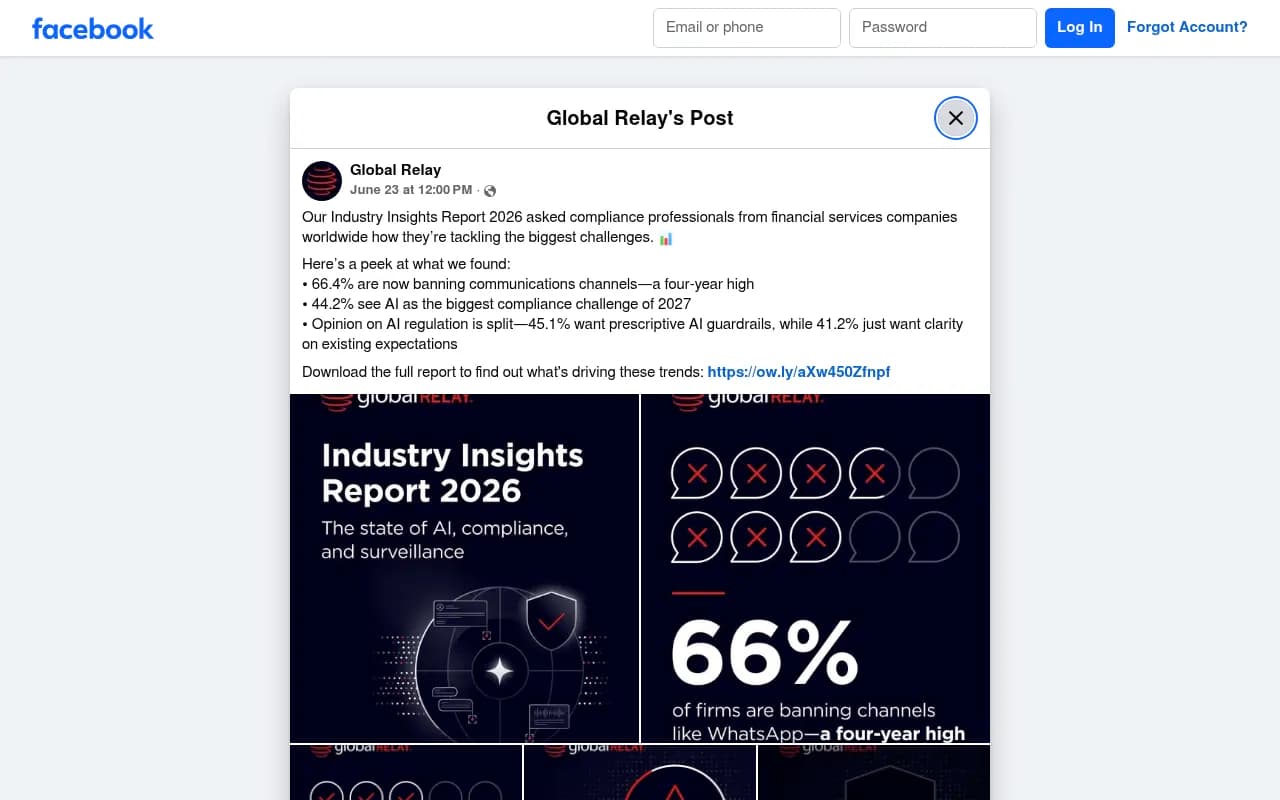
The challenge is real: financial services is one of the most heavily regulated industries for AI, and with good reason. A Global Relay industry insights report from 2026 found that 44.2% of compliance professionals see AI as the biggest compliance challenge of 2027. Opinion on regulation is split — 45.1% want prescriptive AI guardrails, while 41.2% prefer a more principles-based approach. That tension is playing out inside marketing teams right now.
The result is that many financial brands have essentially frozen their AI content strategy while waiting for regulatory clarity. That's a mistake. The brands getting cited by ChatGPT today are building a compounding advantage — AI models learn citation patterns over time, and early visibility tends to reinforce itself.
The good news: compliance-friendly content is often exactly what AI models want to cite. Factual, well-sourced, authoritative, non-sensational. The challenge is structuring it so AI engines can actually find and use it.
How ChatGPT decides what to cite in financial queries
Before you can optimize for AI citation, you need to understand how these models select sources. ChatGPT (and Perplexity, Gemini, and others) don't rank pages the way Google does. They're not running a traditional relevance algorithm. They're generating answers and then pulling in citations that support those answers.
A few things drive citation selection:
Topical authority signals. AI models favor sources that have demonstrated expertise on a topic over time. A bank that publishes one article about mortgage rates is less likely to get cited than one that has a deep, consistent library of mortgage content covering rates, qualification criteria, refinancing, and market trends.
Factual density. Thin content gets ignored. Pages that contain specific data points, named sources, dates, and verifiable claims are far more likely to be pulled into AI responses. For financial content, this means including things like actual rate comparisons, regulatory references, and named research.
Structured answers. AI models are essentially looking for content that already reads like an answer. FAQ sections, numbered lists, definition blocks, and comparison tables all make it easier for a model to extract and cite your content.
Domain trust. This is where financial brands have a natural advantage. A major bank or established asset manager carries inherent domain authority that AI models recognize. The problem is that many of these institutions publish content that's too cautious, too vague, or too buried in legal disclaimers to be useful as a citation.
Freshness. Financial information goes stale fast. AI models are increasingly aware of this. Content that references current rates, recent regulatory changes, or 2026 market conditions is more likely to be cited than content that hasn't been updated in two years.
The compliance challenge: what you can and can't say
Here's where financial services diverges sharply from other industries. A SaaS company can publish aggressive claims about their product and the worst outcome is a skeptical reader. A financial services firm that publishes inaccurate or misleading content faces regulatory action, fines, and reputational damage.
The regulatory landscape in 2026 is complex. Depending on your jurisdiction and product type, you may be subject to:
- SEC marketing rules (particularly the 2021 Marketing Rule, now fully in effect)
- FINRA guidelines on digital communications and advertising
- FCA consumer duty requirements in the UK
- MiFID II disclosure requirements in the EU
- CFPB guidance on digital financial marketing in the US
What this means practically for AI citation strategy:
Performance claims need disclaimers. If your content mentions historical returns, yield rates, or performance data, it needs appropriate disclosures. The problem is that AI models often strip or ignore disclaimers when generating citations. This creates a real risk: ChatGPT might cite your content and present a performance claim without the accompanying disclaimer.
Personalized advice is off-limits. Content that reads like personalized investment advice is both a compliance risk and a poor citation target. AI models are trained to be cautious about financial advice, so they're less likely to cite content that sounds like it's telling a specific person what to do with their money.
Comparative claims require care. Saying "our savings account has the highest rate in the market" is both a compliance risk and a claim that AI models will often fact-check or hedge. Factual comparisons with named sources and dates are safer and more citable.
Testimonials are heavily regulated. The SEC's marketing rule has specific requirements for testimonials and endorsements. AI-generated content that surfaces your testimonials without the required disclosures is a compliance exposure.
The practical solution is a content framework that's designed to be both compliant and citable. These goals aren't in conflict — they just require deliberate structure.
Building a compliance-first content strategy for AI citation
The Saifr research on 2026 AI compliance trends makes a useful point: institutions that approach AI "thoughtfully and deliberately, yet with urgency" are the ones building durable advantages. That applies directly to content strategy.
Here's a practical framework:
Define your citable content categories
Not all financial content is equally citable or equally risky. Start by mapping your content into three buckets:
High-citation, low-risk: Educational content (how mortgages work, what an ETF is, how to read a credit report), market commentary with clear sourcing, regulatory explainers, product feature descriptions without performance claims.
Medium-citation, medium-risk: Rate comparisons, product comparisons, fee breakdowns. These are highly citable but require careful handling of disclaimers and date-stamping.
Low-citation, high-risk: Personalized advice, performance projections, testimonials without required disclosures, comparative claims without sourcing. Keep this content on your site for conversion purposes, but don't build your AI citation strategy around it.
Structure content for AI extraction
AI models are better at citing content that's structured for extraction. For financial content, this means:
- Use clear H2 and H3 headings that state the topic directly ("How to compare savings account rates" rather than "Finding the right account for you")
- Include definition blocks for financial terms — AI models love citing these
- Use comparison tables with specific, dated data points
- Add FAQ sections that answer the exact questions users are prompting AI with
- Include "as of [date]" markers on any rate or performance data so AI models can assess freshness
Build topical authority clusters
Pick three to five core topics where you want to be cited. For a retail bank, this might be: savings accounts, mortgages, personal loans, credit cards, and retirement accounts. For an asset manager, it might be: ETFs, portfolio construction, tax-loss harvesting, ESG investing, and market outlook.
For each topic, build a cluster of content: a comprehensive pillar page, supporting articles covering sub-topics, FAQ pages, and comparison content. The goal is to become the most thorough, most authoritative source on that topic — which is what AI models look for when selecting citations.
Get compliance review into the content workflow early
The biggest bottleneck for financial brands is compliance review. Content that sits in review for six weeks is content that isn't getting cited. The solution is to involve compliance earlier in the process, not later.
Build compliance-friendly templates for your most common content types. If every savings account comparison article follows the same structure with the same disclaimer placement, compliance review becomes faster and more predictable. Tools like Writer can help enforce brand and compliance guidelines at the content generation stage.
Citation strategies that actually work for financial brands
Beyond content structure, there are specific tactics that improve citation rates for financial services brands.
Claim and optimize your entity presence
AI models build knowledge about brands through entity recognition. Your brand name, products, leadership, and key facts should be consistent across your website, Wikipedia (if applicable), press releases, and third-party coverage. Inconsistencies confuse AI models and reduce citation confidence.
For financial brands, this means making sure your regulatory registrations, AUM figures, founding date, and product names are consistent everywhere they appear online.
Publish data that others cite
One of the most reliable ways to get cited by AI is to be the original source of data that others reference. Financial brands have a natural advantage here: you have proprietary data on customer behavior, market trends, and product performance.
Publishing original research — a quarterly survey on consumer savings behavior, an annual report on mortgage application trends, a monthly rate index — creates citation opportunities that compound over time. When other sites cite your data, AI models learn that you're an authoritative source.
Optimize for the specific prompts your customers use
This is where most financial brands leave citations on the table. They optimize for broad keywords but don't think about the specific prompts users type into ChatGPT. "What's a good interest rate for a savings account in 2026?" is a different prompt than "best high-yield savings accounts." The content that gets cited for each is different.
Tools like Promptwatch can show you exactly which prompts are triggering citations in your category, which competitors are appearing for those prompts, and where your content gaps are. That kind of prompt-level intelligence is what separates brands that are systematically building AI visibility from those that are guessing.

Build citations through third-party placements
AI models don't only cite your own website. They cite Reddit threads, YouTube videos, news articles, and third-party review sites. For financial brands, this means:
- Getting featured in financial media (NerdWallet, Bankrate, The Balance, Forbes Advisor) — these are heavily cited by AI models
- Participating in relevant Reddit communities (r/personalfinance, r/investing) with genuinely helpful, compliant content
- Publishing on LinkedIn and having your executives quoted in financial press
- Getting listed and reviewed on comparison sites that AI models trust
The goal is to build a citation ecosystem, not just optimize your own pages.
Tracking AI citations: what to measure and how
You can't improve what you don't measure. For financial brands, AI citation tracking has two dimensions: visibility (are you being cited?) and accuracy (is what's being attributed to you actually correct and compliant?).
Visibility metrics
- Citation frequency: how often does your brand appear in AI responses for target prompts?
- Citation share: what percentage of relevant responses include your brand vs. competitors?
- Prompt coverage: which of your target prompts are you appearing for, and which are you missing?
- Model distribution: are you appearing in ChatGPT but not Perplexity? In Google AI Overviews but not Gemini?
Accuracy and compliance monitoring
This is specific to financial services and often overlooked. When AI models cite your content, they sometimes paraphrase, summarize, or combine it with other sources in ways that change the meaning. A rate that was accurate when you published it might be cited months later when it's no longer current. A product description might be cited in a context that implies a recommendation you didn't make.
Regular audits of how AI models are representing your brand are essential for compliance teams. This means actually running your target prompts across multiple AI models and reviewing the outputs — not just checking whether your brand appears, but checking what's being said.
Tools like Rankshift and Profound can help with systematic monitoring across AI models.

Profound

Comparison: AI visibility tools for financial services brands
Different tools serve different needs. Here's how the main options stack up for financial services use cases:
| Tool | Prompt tracking | Content gap analysis | Compliance-relevant features | Best for |
|---|---|---|---|---|
| Promptwatch | Yes (10 AI models) | Yes, with content generation | Citation accuracy monitoring, page-level tracking | Full-cycle visibility and optimization |
| Profound | Yes (9+ models) | Limited | Strong monitoring dashboard | Enterprise monitoring |
| Rankshift | Yes | No | Basic brand mention tracking | Quick visibility checks |
| Otterly.AI | Yes | No | Basic monitoring | Small teams, monitoring only |
| Semrush | Partial (fixed prompts) | Partial | Traditional SEO focus | Teams already on Semrush |
| Ahrefs Brand Radar | Partial (fixed prompts) | No | No AI traffic attribution | Backlink-focused teams |
For financial brands specifically, the combination of prompt-level tracking and citation accuracy monitoring is what matters most. Knowing you're being cited is only half the picture — knowing what's being said and whether it's accurate is the compliance-critical half.
Otterly.AI

Common mistakes financial brands make with AI citation
Publishing content that's too hedged to be useful. Legal review sometimes strips content of all specificity. "Rates may vary" and "past performance is not indicative of future results" are necessary disclaimers, but if your entire article is written at that level of vagueness, AI models won't cite it. Find the balance between compliance and utility.
Ignoring the prompts users actually use. Financial marketing teams often optimize for search keywords that reflect how they think about their products, not how customers think about their problems. "High-yield savings account" is a product term. "Where should I keep my emergency fund?" is a user prompt. Both need to be addressed.
Treating AI visibility as a one-time project. Financial information changes constantly. Rates change, regulations change, products change. AI citation is an ongoing program, not a campaign. Brands that publish a batch of optimized content and then move on will see their citation rates decay as content becomes stale.
Not monitoring for hallucinations. AI models sometimes generate inaccurate information about financial products — wrong rates, incorrect fee structures, outdated product names. For financial brands, this isn't just an SEO problem. It's a compliance and reputational risk. Regular monitoring for what AI models are saying about your brand is essential.
Siloing marketing and compliance. The brands winning at AI citation in financial services are the ones where marketing and compliance work together on content strategy. Compliance teams understand what can and can't be said. Marketing teams understand what gets cited. Neither can succeed without the other.
A practical 90-day plan for financial brands
Days 1-30: Audit and baseline
- Run your 20-30 most important customer prompts across ChatGPT, Perplexity, and Google AI Overviews
- Document which competitors are appearing and what's being said
- Audit your existing content for AI-readiness: structure, freshness, factual density
- Set up systematic tracking with a tool like Promptwatch
Days 31-60: Content gaps and quick wins
- Identify the prompts where you're close to appearing but not quite
- Update existing content to improve structure and freshness
- Publish two to three new pieces targeting specific prompt gaps
- Reach out to financial media for coverage opportunities
Days 61-90: Build the system
- Establish a content calendar built around prompt data, not just keywords
- Create compliance-approved templates for your highest-priority content types
- Set up monthly citation audits to check accuracy and compliance
- Review results and adjust based on what's working
The financial brands that will dominate AI search in 2026 and beyond are the ones treating this as a systematic program. The window to build early advantage is still open — but it won't be for long.