Key takeaways
- Writesonic has the most developed GEO-adjacent features of the four, with AI visibility tracking and SEO tooling built into the platform.
- AirOps is the most content-engineering-focused option, designed specifically for AI search visibility rather than general copywriting.
- Jasper excels at brand voice and team workflows but treats GEO as a secondary concern.
- Copy.ai is strong for marketing automation and copy at scale, but GEO is not a core capability.
- None of the four platforms offer true end-to-end GEO: prompt tracking, citation monitoring, content gap analysis, and AI crawler logs in one place.
Generative engine optimization (GEO) is the practice of getting your brand cited in AI-generated answers — ChatGPT, Perplexity, Google AI Overviews, Gemini, and the rest. It's a real discipline now, and it's different enough from traditional SEO that the tools you use for one don't automatically serve the other.
The problem is that a lot of AI writing platforms have started slapping "GEO" onto their marketing pages without the substance to back it up. So when someone asks whether Copy.ai, Writesonic, AirOps, or Jasper AI can handle GEO, the honest answer requires actually unpacking what each tool does.
This guide does that. No hype, no vague feature lists — just a clear-eyed look at what each platform genuinely offers for GEO in 2026, where the gaps are, and what you'd need to fill them.
What "GEO capability" actually means
Before scoring anything, it's worth being precise about what GEO requires. There are roughly four layers:
- Monitoring: Can you see when and where your brand appears in AI-generated answers?
- Gap analysis: Can you identify which prompts competitors rank for that you don't?
- Content creation: Can you generate content specifically designed to get cited by AI models?
- Attribution: Can you connect AI citations to actual traffic and revenue?
Most AI writing tools touch layer three — content creation — and claim that's enough. It isn't. Writing good content is necessary but not sufficient for GEO. You also need to know which content to write, whether it's working, and why certain pages get cited while others don't.
With that framework in mind, here's how the four platforms stack up.
Writesonic

Writesonic is the most GEO-aware of the four platforms. It started as an AI article writer and has since expanded into a broader content and SEO platform, with features that at least gesture toward AI search visibility.
The headline GEO-relevant feature is its AI article writer, which is designed to produce long-form content optimized for both traditional search and AI-generated answers. Writesonic also includes Chatsonic (a web-connected AI assistant), SEO checker functionality, and integrations with search data.
According to a 2026 comparison by Slate, Writesonic is the stronger fit for teams that "prioritize SEO, GEO, and AI-search visibility tracking alongside article production." That's a fair characterization — but it's worth noting that "GEO tracking" in Writesonic's context means tracking how your content performs in traditional SEO, with some awareness of AI search patterns. It's not the same as a dedicated GEO platform that monitors your brand across ChatGPT, Perplexity, and Gemini in real time.
Where Writesonic genuinely shines is volume and value. It has over 80 pre-built templates, competitive pricing (starting around $39/month billed annually), and a free tier. For teams that need to produce a lot of SEO-adjacent content quickly, it's hard to beat on cost-per-output.
The gap: Writesonic doesn't give you prompt-level visibility data, AI crawler logs, or citation tracking. You can write content that should rank in AI search, but you can't verify whether it actually does from within the platform.
GEO scorecard for Writesonic:
- Monitoring: Partial (SEO-focused, not AI-citation-focused)
- Gap analysis: Limited
- Content creation for AI search: Strong
- Attribution: Weak
Jasper AI
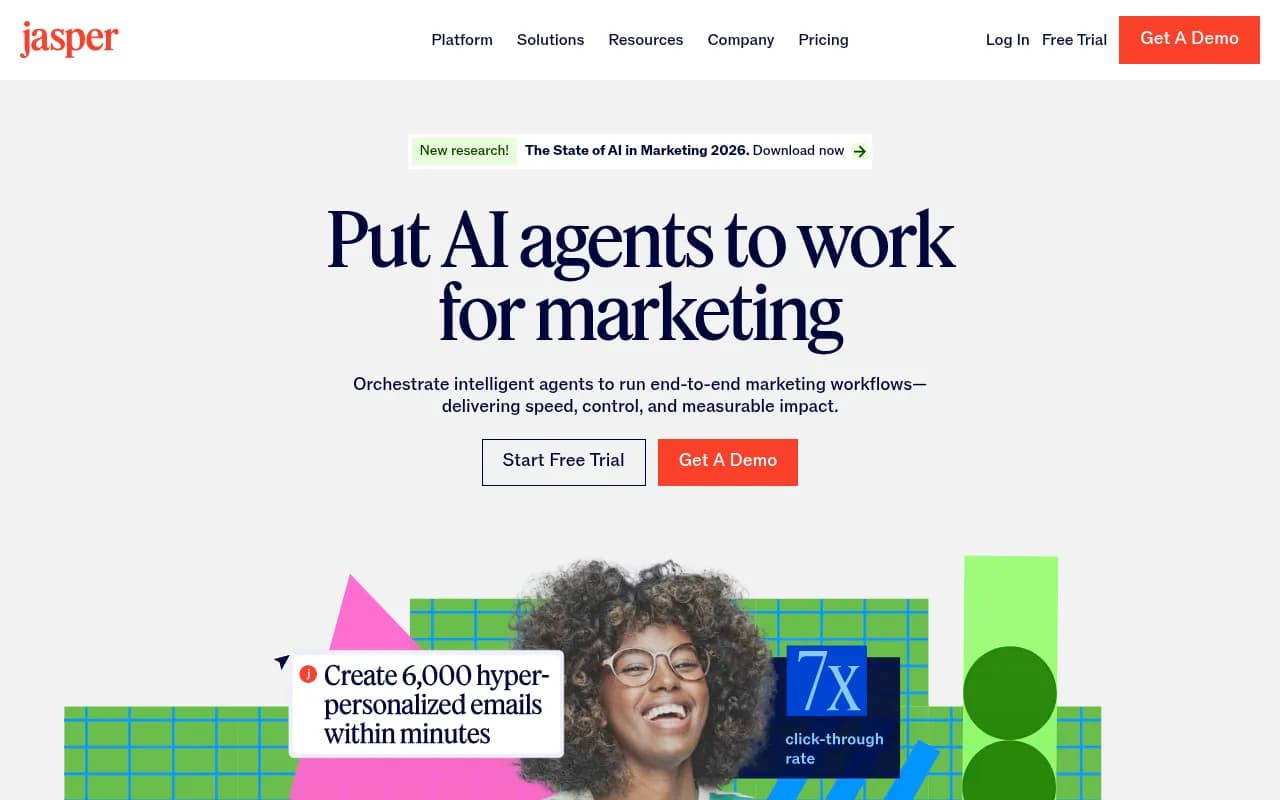
Jasper is the brand voice and enterprise marketing platform of this group. It's built for teams that need consistent, on-brand content across campaigns — think large marketing departments with style guides, approval workflows, and multiple contributors.
On GEO specifically, Jasper is honest about its positioning: it's a content creation and marketing execution tool, not an AI search visibility platform. Its Creator plan starts at $49/month per seat, Pro at $69/month, with Business at custom pricing. There's no free plan, though a 7-day trial is available.
Jasper's strengths are real. Brand voice customization is genuinely deep — you can train it on your existing content and it maintains consistency across outputs in a way that cheaper tools don't. Its campaign management features and team collaboration tools are also well-developed. For large marketing teams running coordinated campaigns, that matters.
But for GEO? Jasper doesn't track AI citations. It doesn't show you which prompts your competitors are winning. It doesn't analyze why AI models cite certain sources over others. It generates content, and that content might get cited in AI answers if it's good enough — but Jasper gives you no feedback loop to know whether that's happening.
The Slate comparison puts it plainly: "Choose Jasper if brand voice, collaboration, and governance matter most to your marketing team." GEO is not in that sentence, and that's accurate.
GEO scorecard for Jasper:
- Monitoring: None
- Gap analysis: None
- Content creation for AI search: Good (high quality, brand-consistent)
- Attribution: None
Copy.ai

Copy.ai has evolved from a simple copywriting tool into something it calls an "AI Marketing & Sales OS" — a platform for automating marketing workflows at scale. It's genuinely useful for teams that need to produce high volumes of marketing copy: ads, emails, landing pages, social posts, and similar short-form content.
On templates, Copy.ai sits between Writesonic (80+) and Jasper (50) with a workflow-first approach that's more about automation than template selection. Its brand voice feature lets you define tone and style, and its workflow automation is one of the more sophisticated in this category.
For GEO, though, Copy.ai's positioning is honest: it's a content generation and marketing automation tool. It doesn't track AI search visibility, doesn't identify prompt gaps, and doesn't monitor citations. The Copy.ai blog even published a comparison of Writesonic vs Jasper that positions Copy.ai as the workflow automation alternative — not the GEO alternative.
Where Copy.ai could indirectly support GEO is in content production speed. If you've identified gaps through another tool and need to produce content quickly to fill them, Copy.ai's workflow automation can help. But it's a downstream tool in that process, not a GEO platform.
GEO scorecard for Copy.ai:
- Monitoring: None
- Gap analysis: None
- Content creation for AI search: Moderate (optimized for marketing copy, not AI citation)
- Attribution: None
AirOps
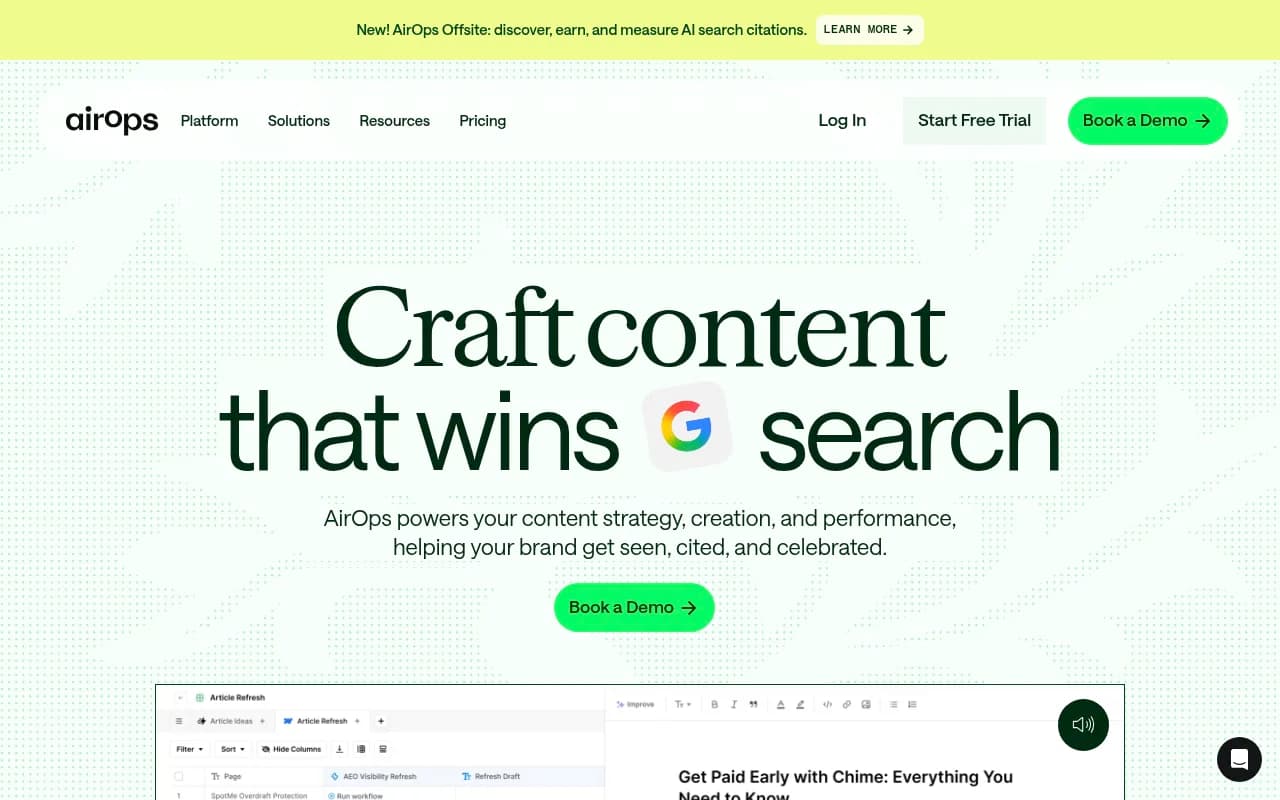
AirOps is the most interesting of the four for GEO purposes, because it's the only one that was built with AI search visibility as a core use case rather than an afterthought.
AirOps describes itself as an "end-to-end content engineering platform for AI search visibility." That framing is meaningful. Rather than starting from "AI writing tool that also does SEO," AirOps starts from "what does it take to rank in AI-generated answers?" and builds content workflows around that question.
In practice, this means AirOps focuses on structured content production that's designed to match how AI models retrieve and cite information. It's more technical than the other three platforms — it's aimed at content engineers and SEO teams who understand how AI search works, not marketers who want a quick draft.
According to Averi's 2026 AI marketing platform roundup, AirOps is specifically called out as a platform that "tracks AI-search visibility" — putting it in a different category from general-purpose AI writers.
The tradeoff is accessibility. AirOps has a steeper learning curve than Writesonic or Copy.ai, and it's less suited to teams that just want to produce content quickly without thinking about AI search architecture. It's a power tool for teams that are serious about GEO, not a general-purpose writing assistant.
GEO scorecard for AirOps:
- Monitoring: Partial (AI search visibility tracking)
- Gap analysis: Moderate
- Content creation for AI search: Strong (purpose-built)
- Attribution: Partial
Head-to-head comparison
| Capability | Copy.ai | Writesonic | AirOps | Jasper AI |
|---|---|---|---|---|
| AI citation monitoring | None | Limited | Partial | None |
| Prompt gap analysis | None | Limited | Moderate | None |
| Content creation for AI search | Moderate | Strong | Strong | Good |
| Brand voice control | Good | Moderate | Limited | Excellent |
| Team collaboration | Good | Moderate | Moderate | Excellent |
| Traffic attribution | None | Limited | Partial | None |
| AI crawler logs | None | None | None | None |
| Free tier | Yes | Yes | No | No (trial only) |
| Starting price | Free / paid | ~$39/mo | Custom | $49/mo/seat |
| Best for | Marketing copy at scale | SEO + content volume | AI search content engineering | Brand-led marketing teams |
The pattern here is clear: none of these four platforms are full GEO solutions. They're content creation tools with varying degrees of GEO awareness. AirOps comes closest to a genuine GEO orientation, but even it doesn't give you the full picture — prompt tracking across 10+ AI models, real-time citation monitoring, AI crawler logs, and content gap analysis grounded in actual prompt data.
What's missing from all four
Here's the honest gap that none of these platforms fill: the feedback loop.
GEO isn't just about writing content. It's about knowing which prompts matter, writing content that addresses them, publishing it, watching AI crawlers index it, and then tracking whether citations increase. That cycle requires data that none of these four tools generate.
Specifically, what's missing:
- Real-time monitoring of how your brand appears in ChatGPT, Perplexity, Gemini, Claude, and other AI models
- Prompt-level data: which questions are users asking AI models about your category, and who's getting cited?
- AI crawler logs: is GPTBot actually reading your pages? Are there indexing errors?
- Citation attribution: which of your pages are being cited, by which models, and how often?
For teams that are serious about GEO, these four tools work best as content production engines downstream of a dedicated GEO platform. You use the GEO platform to identify what to write, then use Writesonic, AirOps, or similar tools to produce it at scale.
Promptwatch is built specifically for that upstream role — tracking AI visibility across 10 models, running answer gap analysis to show exactly which prompts competitors rank for that you don't, and generating content briefs grounded in real prompt data. It's what sits before the content creation step, not instead of it.

Which tool should you use?
The right answer depends on where you are in your GEO maturity.
If you're just starting to think about AI search and need to produce a lot of content quickly, Writesonic is the most practical starting point. It has the broadest feature set at the lowest price, and its SEO tooling gives you at least some signal about whether your content is working.
If you're running a large marketing team that needs brand consistency across campaigns, Jasper is worth the premium — just don't expect it to do GEO for you. It's a content execution platform, not a visibility platform.
If you're a content engineer or SEO specialist who wants to build content specifically for AI search, AirOps is the most purpose-built option in this group. It's not for everyone, but for the right team it's the most aligned with how AI search actually works.
If your primary need is marketing copy automation — ads, emails, short-form content — Copy.ai's workflow features are genuinely strong. For GEO specifically, though, it's the weakest of the four.
And if you want to actually measure your GEO performance — see which prompts you're winning, which pages AI models are citing, and where your competitors are beating you — you'll need a dedicated platform alongside whichever writing tool you choose.
The bottom line
Copy.ai, Writesonic, AirOps, and Jasper are all legitimate tools for AI-assisted content creation. The GEO capabilities vary significantly, with AirOps and Writesonic being the most relevant for teams focused on AI search visibility.
But calling any of them a GEO platform is a stretch. They're content tools. GEO requires monitoring, gap analysis, and attribution that none of them provide end-to-end. The teams getting real results from GEO in 2026 are using these tools for what they're good at — producing content — while using dedicated visibility platforms to know what to produce and whether it's working.
That's not a knock on any of these tools. It's just an accurate description of what they are.