Key takeaways
- Most AI visibility tools send your prompts, domain and sometimes competitor names to US-based LLM providers. That makes the tool a data processor and the LLM vendors its subprocessors.
- A free plan does not change your GDPR obligations. You still need a DPA, a subprocessor list, a transfer mechanism and a clear answer on where data is stored.
- Elmo is open source and self-hostable, which is a real advantage, but self-hosting does not remove third-party flows to scraping and LLM providers.
- Dageno is operated by a US company (DINGX LLC). I found no public DPA, subprocessor list or EU hosting statement. Ask for them before you sign up.
- For Llumo, I found no reliable public information on GDPR, data residency or pricing. Treat it as unverified until the vendor shows you documents.
Why this question matters more than it seems
Most teams treat AI visibility tools like any other marketing dashboard: sign up, paste your domain, add a few prompts, look at charts. The GDPR question usually shows up later, when someone from legal or the DPO asks where the data goes.
The honest answer is that it goes quite far. To measure how your brand appears in ChatGPT, Gemini or Perplexity, a tool has to run prompts against those systems, often through scraping services or API providers, most of them in the US. Your domain, your brand name, your competitors and sometimes the wording of real customer questions are in those requests.
That does not make these tools unusable for European companies. It means a free tier with a nice interface is not enough evidence on its own. This guide covers what I could verify about Dageno, Elmo and Llumo, what I could not, and how to decide.
One caveat up front: I am not a lawyer, and this is not legal advice. Your DPO has the final word.
Does GDPR even apply to a prompt tracker?
Only if personal data is involved. If your prompts are generic category questions ("best CRM for small agencies") and your brand and competitor names are all company names, you may be processing very little personal data.
It gets murkier quickly. A named prospect in a prompt, customer language copied from support tickets, or a founder's name in a brand alias list is personal data. Pseudonymised data is still personal data under GDPR. Only truly anonymised data falls outside it (Recital 26).
Even when no personal data is involved, a DPO will still ask where processing happens and who the subprocessors are. Having the answers ready saves an awkward procurement round.
The framework: what to get in writing
Howseen, a vendor that sells a competing tool, published a GDPR checklist for AI visibility tools (updated October 30, 2026). It is vendor-authored, so read it as a checklist, not neutral analysis. Still, the structure is sensible and matches how GDPR actually works.
The tool acts as your processor. The LLM providers it queries are subprocessors. Under Article 28(1), you as controller may only use processors that give sufficient guarantees, and a processor may not engage another processor without written authorisation.
Five things to get in writing from any vendor:
- A signed data processing agreement (DPA).
- A published subprocessor list.
- Verifiable data residency, ideally EU or EEA.
- Deletion on request and data minimisation.
- Published data flows showing what leaves the tool and where it goes.
Transfers to US providers also need a valid mechanism, such as Standard Contractual Clauses. The EU-US Data Privacy Framework has been recognised as adequate since July 10, 2023, so ask whether each provider in the chain is certified.
The stakes are real. Under Article 83, breaches of processor obligations can reach EUR 10M or 2% of worldwide annual turnover, and unlawful third-country transfers can reach EUR 20M or 4%. Fines at that level are rare for a marketing dashboard, but they explain why legal teams ask.
Quick comparison of the three tools
| Tool | Operator / model | Free option | Verified GDPR material | Main open question |
|---|---|---|---|---|
| Dageno | DINGX LLC, United States | Brand Explorer and Brand Overview free with registration | Privacy policy (updated Mar 2, 2026), says data is not sold | No DPA, subprocessor list or EU hosting statement found |
| Elmo | Open source (MIT), self-host or Elmo Cloud | Self-hosting is free | Code is inspectable, you control your database | Third-party services (scraping, LLM judging) still receive prompts |
| Llumo | Unknown from public sources | Not verified | Nothing found | Everything: operator, hosting, DPA, pricing |
Dageno
Dageno is listed in our catalog as a GEO platform with autonomous agent execution.

What I could confirm: the operator is DINGX LLC, based in the United States. The privacy policy was last updated March 2, 2026, says personal data is not sold, and describes optional Google Analytics 4 and Search Console integrations that you can revoke. The stated contact response time is 30 days, which is worth remembering if you ever need to file a deletion request.
On the free side, an October 2026 press release says Brand Explorer and Brand Overview are free forever with registration and no credit card. Paid plans start at $49/month (shown as originally $89, with a 7-day trial), then $199 for Growth and $410 for Scale, with custom pricing available. The platform tracks prompts in 86 countries and regions. Dageno's own price comparison against Ahrefs, Peec AI and OtterlyAI is vendor-supplied, so take it as marketing.
What I could not find: a DPA, a subprocessor list or any EU hosting statement. That does not mean they do not exist. It means you should ask for them before putting anything sensitive in. A US operator is not disqualifying, since SCCs and the Data Privacy Framework exist for exactly this, but the burden is on the vendor to show which mechanism they use.
My take: for a free exploration of public brand data, the risk is low. For a paid account with customer-derived prompts, get the paperwork first.
Elmo
Elmo is the one where the EU story can actually be good, with caveats. It is MIT-licensed, self-hostable and open source, and the GitHub repo was active as of October 30, 2026 (1,228 commits, 42 tags). It tracks ChatGPT, Claude, Perplexity, Gemini, Copilot, Grok and Google AI Overviews. There is also a hosted Elmo Cloud and a cloud MCP server.
Elmo says self-hosting is free, with no per-seat or per-prompt fees, and that you keep ownership of your data and prompts. If you run it on EU infrastructure, your stored results sit where you put them. That is a stronger position than any closed SaaS can offer by default.
But self-hosting does not mean data stays home. Two details from the research:
- Elmo supports SearchApi for scraping ChatGPT, Copilot, Gemini, AI Mode and AI Overviews. Self-hosters therefore send prompts to those scraping and LLM providers.
- A recent commit moved mention and sentiment judging to a third-party service called Jev from TypeSafe. The commit message says TypeSafe is listed as a subprocessor and that Jev needs its own key and has a cost.
So you become the controller of your own deployment, and you inherit the job of managing those subprocessors yourself. That means signing your own DPAs with each provider you plug in. For a team with engineering capacity and a DPO who likes transparency, that is a fair trade. For a marketer who wants a login and a chart, Elmo Cloud is the path, and then you are back to asking the standard questions of the hosted vendor.
Do not confuse it with ELMO Software, an unrelated HR product.
Llumo
I looked for Llumo's GDPR position, data residency and pricing and found nothing relevant. The searches returned only generic results about AI visibility tools.
I will not guess. If you are evaluating Llumo, treat it as a blank slate and ask the six questions in the checklist below. If the vendor cannot answer the first two (DPA and subprocessors) in a single email, that tells you what you need to know.
Questions to send any vendor
Based on the Howseen checklist, adapted a little:
- Can you sign a DPA?
- Who are your subprocessors, and what is the transfer mechanism for each?
- Where is my data stored (database, application servers, backups)?
- Can you track buyer questions in my languages and markets?
- Which AI engines do you track, and via the real interfaces or APIs?
- Can you prove impact rather than just give a score?
Questions 4 to 6 are not strictly GDPR, but they stop you paying for a compliant tool that does not do the job.
What free actually costs you
Free tiers are rarely free in the data sense. Not because vendors are sinister, but because free users generate prompt volume that someone pays to run. Common trade-offs to look for:
- Limited or no DPA on free accounts, with contracts reserved for paid plans.
- Shared infrastructure with no residency guarantee.
- Data retention you cannot control.
- Product analytics and marketing tracking baked into the app.
The practical rule: use free tiers with public, non-sensitive prompts. Keep anything that mentions people, customers or unreleased products out until you have a signed agreement.
EU-friendly alternatives worth a look
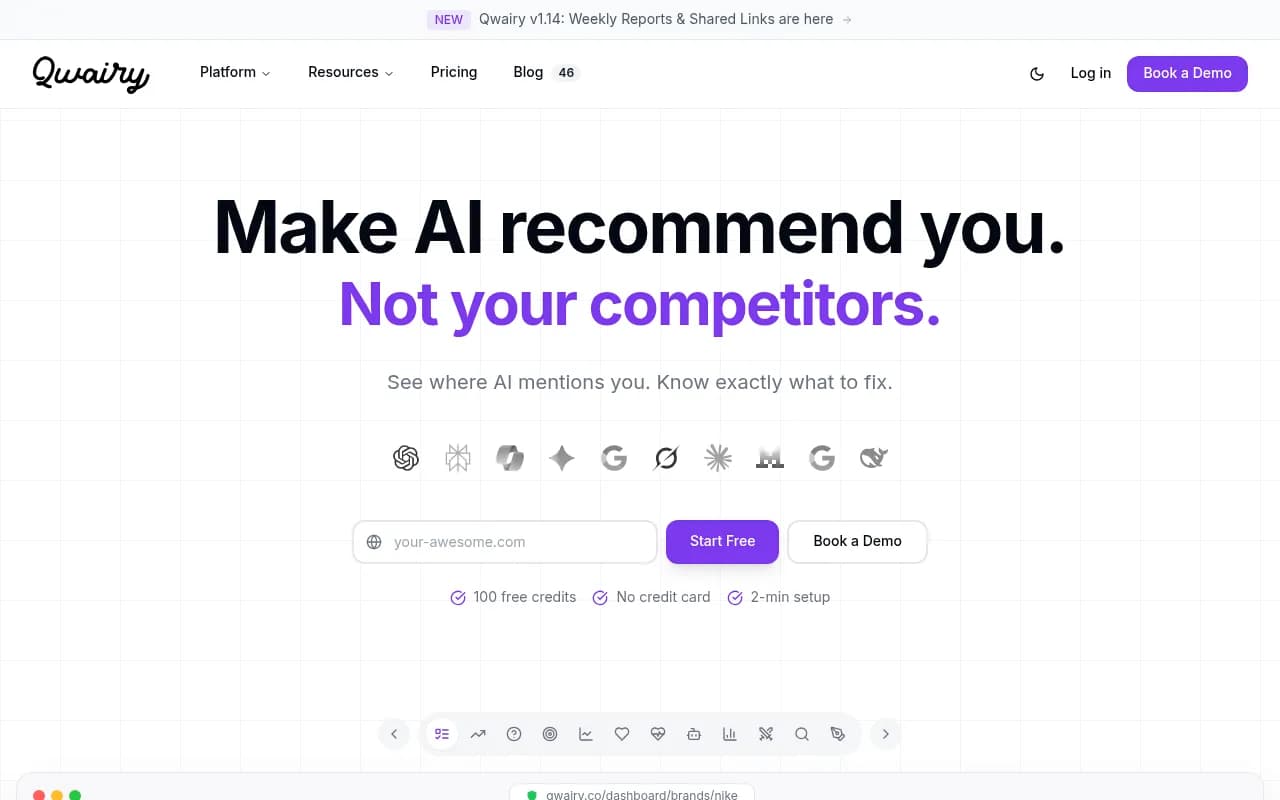
Kime describes Peec AI as best for European agencies, and Howseen claims a Frankfurt-hosted database and application servers with billing in euros. Both are vendor claims, so verify them. Qwairy is described on Elmo's comparison page as offering EU data hosting and GDPR alignment, built in France, which is again a competitor's description.

If you want a platform with an enterprise security posture, Promptwatch is ISO/IEC 27001 certified and GDPR compliant, which tends to matter in procurement reviews. It also goes beyond prompt tracking with IP-verified crawler logs and content tooling, though you should still request the DPA and subprocessor list like you would from anyone else.

Other trackers in the catalog you may want to shortlist and run through the same checklist: [tool:otterly-ai], [tool:rankshift], [tool:llm-pulse] and [tool:profound]. For a broader view, the directories at bestgeosoftware.com and ai-rank-tools.com list many more.
Do not forget the crawler side
Privacy of the tool is one half. The other half is what AI systems can read on your own site, which has its own data implications. Promptwatch Data shows OpenAI accounted for 79.8% of verified AI crawler requests in the week of Aug 31 to Sep 6, 2026, down from 94.8% in the week of Jun 8 to 14. The mix covers OpenAI, Anthropic, Google, Perplexity and Mistral, and only requests from operator-published IP ranges are counted, so spoofed user agents are excluded. See the full AI crawler traffic report.
The practical advice from that report: check robots.txt, CDN and WAF rules for every provider. If a provider is large in the mix but near zero in your logs, you are probably blocking it. That is a configuration check, not a privacy one, but it belongs in the same audit.
What the market looks like right now
The market is crowded. Third-party roundups like Kime's comparison of 11 tools and accessibilitychecker.org's list of 10 picks both include free and low-cost options, but neither is a GDPR audit. A ranking tells you what a tool tracks, not where it stores your prompts.
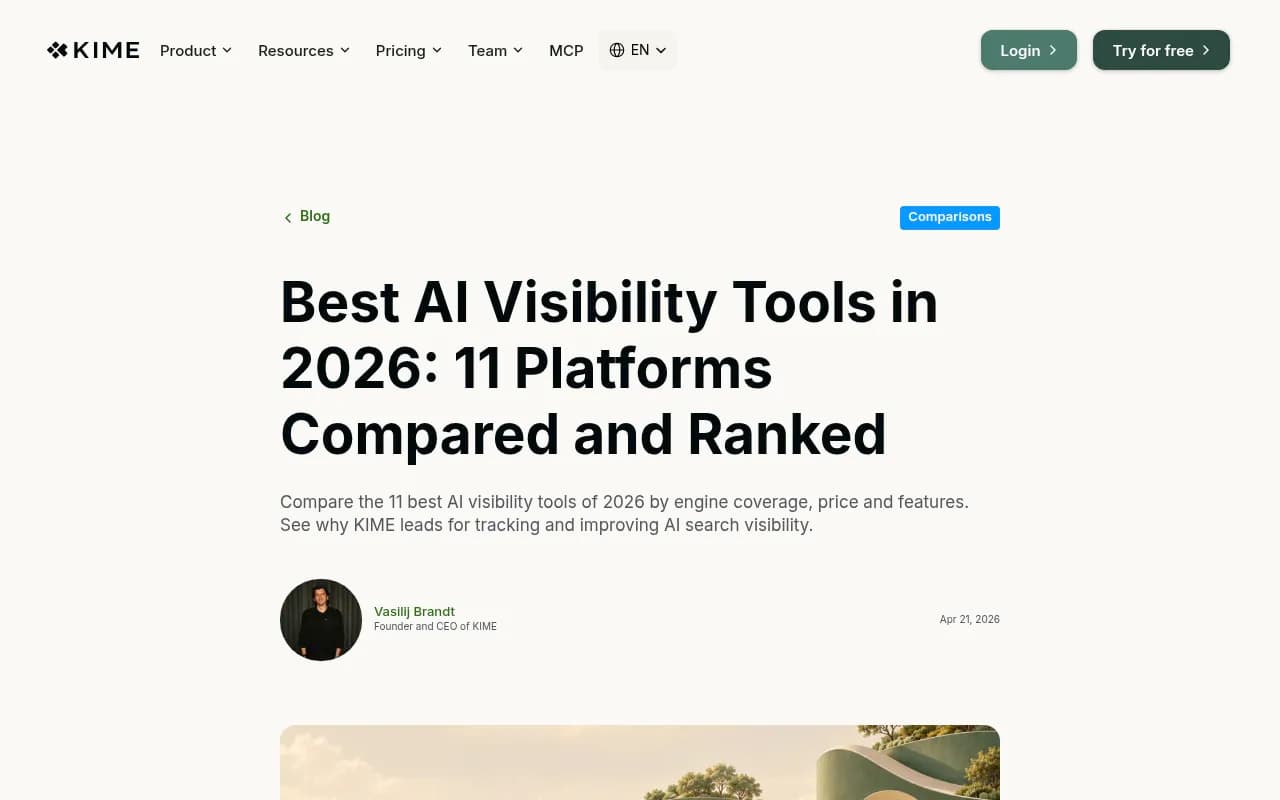
Use roundups to build a shortlist, then use the checklist above to cut it down. Kime's own claims of pricing (Otterly from $29/month, Kime from EUR 99/month) are from a vendor that ranks itself first, so confirm on each pricing page.
A note on the Digital Omnibus
A draft GDPR "Digital Omnibus" reportedly proposes a legitimate-interest basis for AI processing. I only saw a LinkedIn snippet, so treat it as unverified and do not plan around it. Build your vendor process on the rules as they stand today.
A simple decision path
- Exploring with public data only: a free tier from Dageno or a self-hosted Elmo on a test server is reasonable. No contract needed, but do not paste personal data.
- Running real monitoring for a European brand: pick a vendor that signs a DPA, publishes subprocessors and can state where data lives. Ask in writing.
- Strong engineering team and strict privacy needs: self-host Elmo in the EU, sign DPAs with each scraping and LLM provider you connect, and document the flows.
- Llumo or any tool with no public documentation: do not enter anything beyond your brand name until they answer the checklist.
Bottom line
The free tools are not unsafe by default, and they are not safe by default either. Elmo gives you the most control but hands you the compliance work. Dageno looks like a normal US SaaS with a standard privacy policy and unanswered questions about DPAs and hosting. Llumo is a blank. Send the six questions, get the DPA and subprocessor list in writing, and keep personal data out of prompts until you have them.
If you would rather hand the evaluation to specialists, 1001 SEO Media helps teams choose and run AI visibility tooling as part of their GEO work.