Key takeaways
- Most SaaS teams need two or three tools, not an all-in-one monster. Match the stack to how many pieces you publish each month, not to your funding round.
- Buyer-stage queries ('best CRM for a small sales team', 'X alternatives') now resolve inside ChatGPT, Perplexity and AI Overviews, so a classic SEO suite alone leaves a blind spot.
- Per Promptwatch Data (Sep 28 to Oct 4, 2026), product pages (22.4%), landing pages (16.8%) and listicles (13.6%) are the most cited content types in ChatGPT. For commercial prompts, product, landing, listicle and comparison pages make up almost 70% of citations.
- Early stage: Google Search Console, a keyword tool and a free AI visibility check. Growth stage: add a content optimizer and an AI visibility platform. Scale-up: add technical crawling, attribution and an execution layer.
- Don't upgrade your stack until you publish 10+ pieces a month. Tools don't create growth. Shipping pages does.
Why SaaS SEO needs its own stack
SaaS keyword sets look different from most B2B. They skew toward 'alternatives to X', 'best Y for Z', integration searches and comparison pages. Buyers do more research and compare more vendors than in most categories, and a growing share of that comparison happens in an AI assistant rather than on Google.
That changes what you need from tooling. The 2026 stack has to cover four jobs: research (what to write), optimization (how to write it), technical health (can bots read it), and AI visibility (are you in the short list the model produces). Several sources I read for this guide split the category the same way: SEO suites, AI content optimizers, AI visibility trackers, and content engineering platforms.
One warning before the stacks. A lot of the 'best SaaS SEO tools' articles online are written by vendors who rank themselves first. I've tried to avoid that by organizing by stage and by job, and by being honest about where each tool is overkill.
What AI search is actually citing from SaaS brands
Before picking tools, it helps to know what you're trying to influence. Promptwatch Data has two reports worth reading for any SaaS team.
On software prompts (Sep 28 to Oct 4, 2026), ChatGPT's most cited software domains were GitHub (1.2% of software citations), learn.microsoft.com (0.98%) and G2 (0.73%). Docs and help centers earned the largest share by source type at 2.64%, vendor sites 2.01%, and review sites and analysts 1.57%. G2, Gartner, Capterra and Software Advice together out-earned any single vendor, Microsoft included.
On content type, Promptwatch's ChatGPT citation share by content type report shows commercial prompts leaning on product pages (26.0%), landing pages (20.6%), listicles (15.0%) and comparisons (7.9%). For branded prompts, reviews matter more than usual at 5.6%, more than three times their overall share.
And freshness matters differently by format. The content half-life report found news pages lose half their citations in about five weeks, while landing pages and docs keep most of theirs for months. For a SaaS team, that argues for investing in evergreen product, comparison and docs pages over chasing news.
What this means in practice:
- Your product and comparison pages are doing the heavy lifting. Treat them like core assets.
- Docs, help centers and a public GitHub presence get cited. Keep them crawlable.
- G2 and Capterra profiles are not a side quest. Keep them complete.
- You need something that measures all of this, because you can't eyeball it.
The stack at a glance
| Stage | Monthly publishing | Core tools | Rough monthly budget |
|---|---|---|---|
| Pre-seed / seed | 2 to 4 pieces | Google Search Console, a keyword tool, free AI visibility checks | $0 to $150 |
| Seed to Series A | 4 to 10 pieces | One SEO suite, one content optimizer, one AI visibility tracker | $300 to $700 |
| Series B | 10 to 25 pieces | SEO suite, optimizer, AI visibility platform with content execution, technical crawler | $800 to $2,000 |
| Series C+ | 25+ pieces | Enterprise suite, optimizer, AI visibility platform with crawler logs and attribution, agency support | $1,500 and up |
Budgets are rough. Vendor pricing changes constantly, so confirm on each vendor's site before you commit.
Stage 1: Pre-seed and seed (the lean stack)
You have no SEO headcount, maybe a founder writing posts on weekends. The goal is to publish the pages that matter most and know whether they work. Don't buy a suite yet.
What to use
Start with Google Search Console and Google Analytics. They're free and they answer most early questions: which queries you show up for, which pages convert.
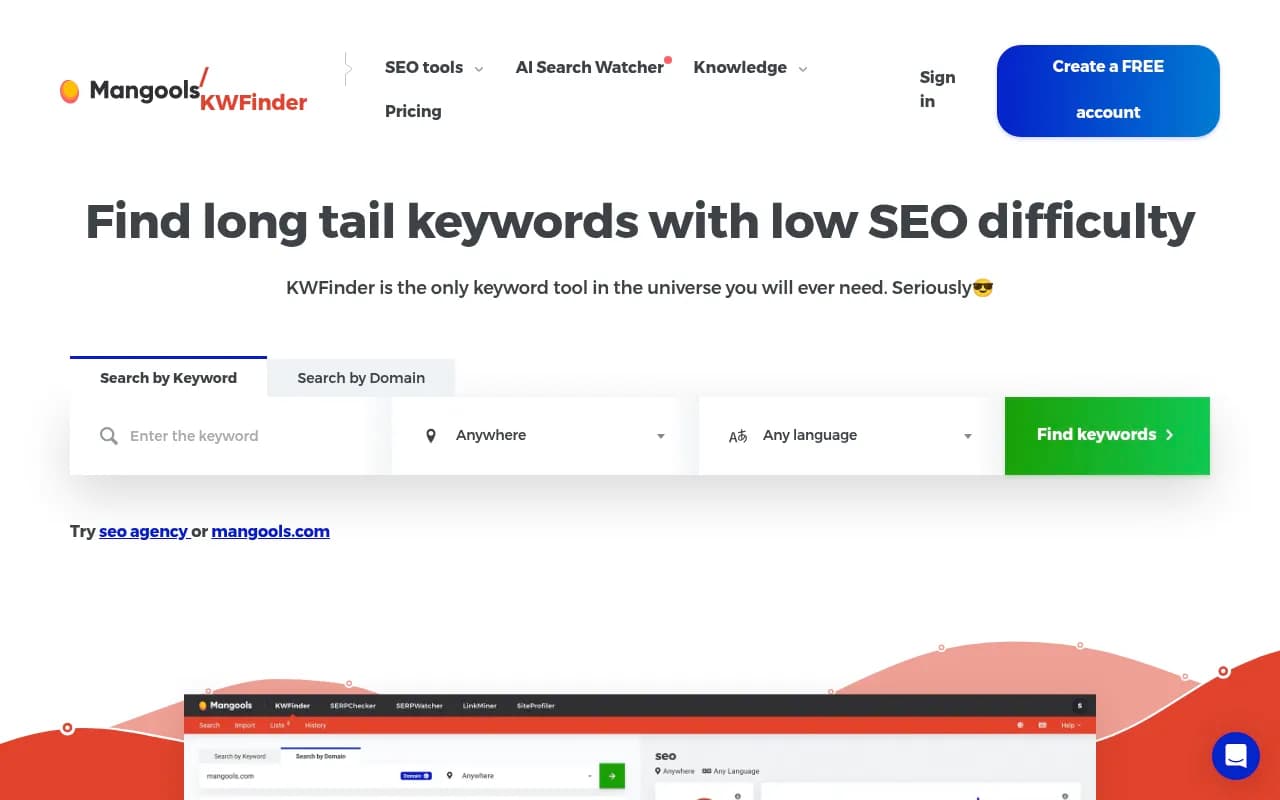
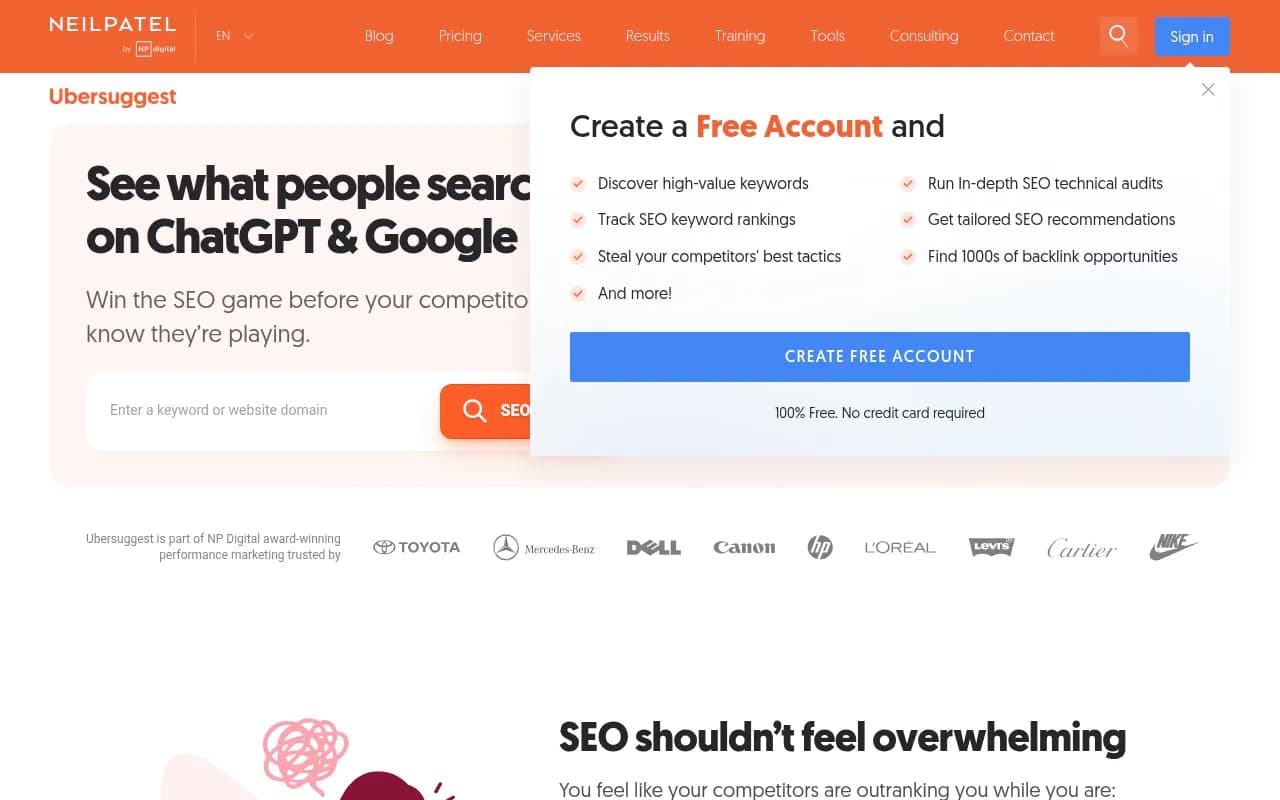
For keyword research on a budget, Mangools KWFinder is hard to beat for the price, and Ubersuggest works for quick checks.
For AI visibility, don't pay for anything yet. Run a free scan to see how ChatGPT, Gemini and Perplexity describe you. Promptwatch has a free AI Visibility Report that needs no login, and its free Explore plan tracks 10 prompts in ChatGPT. That's plenty to learn whether you show up at all for your five or six money prompts.

What to publish first
Write in this order: your own product and use-case pages, then 'X alternative' pages for your two or three biggest competitors, then a comparison page or two, then integration pages. That ordering follows the citation data above. Blog posts about thought-leadership topics come last.
What to skip
Skip enterprise suites, content scoring tools and any 'AI writes 100 articles' platform. You don't have enough published pages for optimization tooling to matter.
Stage 2: Seed to Series A (the first real stack)
You've hired a marketer or a part-time contractor, and you're publishing four to ten pieces a month. Now a suite pays for itself.
An SEO suite
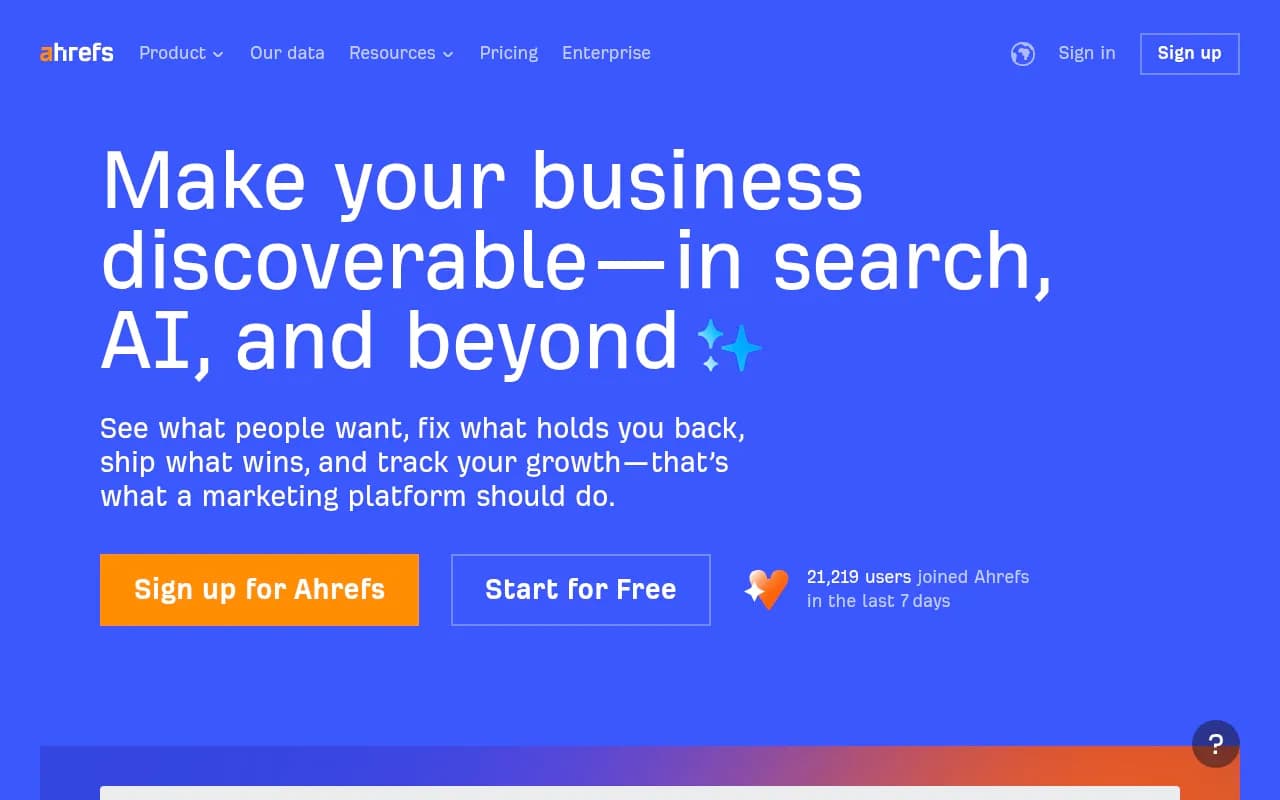
Pick one. Ahrefs is the most common choice among funded SaaS teams for backlinks, competitor research and rank tracking. Semrush is the alternative if you also want its AI toolkit and broader marketing features. SE Ranking is the value pick, and the sources I checked list its Growth plan in the roughly $200 to $280 range depending on the source and billing, so verify current pricing.
Don't stack Ahrefs on top of Semrush. One vendor said it best: teams burn thousands on overlapping subscriptions and still can't crack the top 10, because the problem was never the tools.
A content optimizer
Once you're writing consistently, an on-page tool helps with topical coverage. Surfer SEO, Clearscope and Frase are the usual names. Surfer and Frase cost less. Clearscope is pricier and suits teams with an editorial process.

An AI visibility tracker
This is where the budget conversation gets interesting. At this stage you want something that tells you which prompts you win, which competitors beat you, and which sources the models cite. Options in our catalog include Otterly.AI, Peec AI and Rankshift, which are monitoring-focused and fine if all you need is a scoreboard.
Otterly.AI



If you want the tracker to also tell you what to do next, Promptwatch's Essential plan ($95/month at the time of writing, confirm on promptwatch.com/pricing) adds content gap analysis, a site audit and an API on top of tracking across all models. The Action Board turns gaps into a prioritized to-do list, which matters when your whole marketing team is two people.
Free utilities worth keeping
Screaming Frog has a generous free tier for crawling up to 500 URLs, which covers most early SaaS sites. Google PageSpeed Insights handles performance checks.
Stage 3: Series B (the execution stack)
Now you're publishing 10 to 25 pieces a month and the bottleneck shifts. It's no longer 'what should we write'. It's 'how do we ship this volume without quality collapsing, and how do we prove it matters'.
Content engineering and workflow
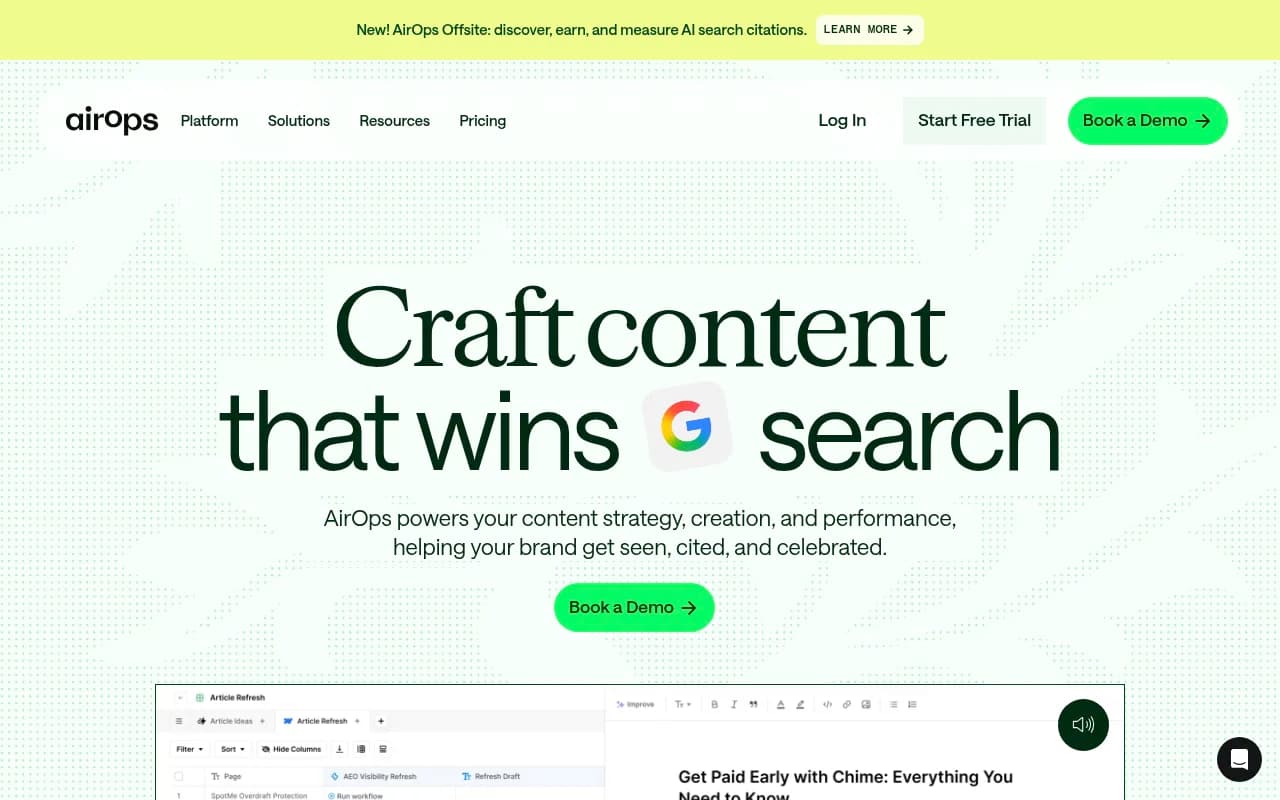
AirOps is built for content engineering workflows, structuring and refreshing content so models can parse it. MarketMuse is stronger on planning and gap analysis. Gushwork and Search Atlas lean toward automation.
A realistic caution: AI-generated content at volume without a brand voice or real product knowledge reads like everyone else's. Whatever you automate, keep a human on the review inbox and feed the system real facts, positioning and proprietary data.
AI visibility with a feedback loop
This is the stage where monitoring-only tools start to feel thin. You need to see whether pages you publish get crawled, cited and clicked. Promptwatch's Business plan ($579/month, confirm on the pricing page) is built for this: IP-verified AI crawler logs show whether GPTBot, ClaudeBot or PerplexityBot are reading your pages, visitor analytics track AI-referred traffic and conversions, and the Content Agent plans, writes and publishes against your visibility gaps to Webflow, Framer or WordPress. Published pages are tracked after the fact and underperformers return as actions.
SaaS teams get evidence from this kind of setup. Crisp reported 2x higher conversion rates from AI traffic than traditional channels and scaled to 5 to 10 articles a day, and TreeHouse (Pararius) grew AI search to roughly 25% of organic conversions after fixing crawler access and publishing proprietary data.
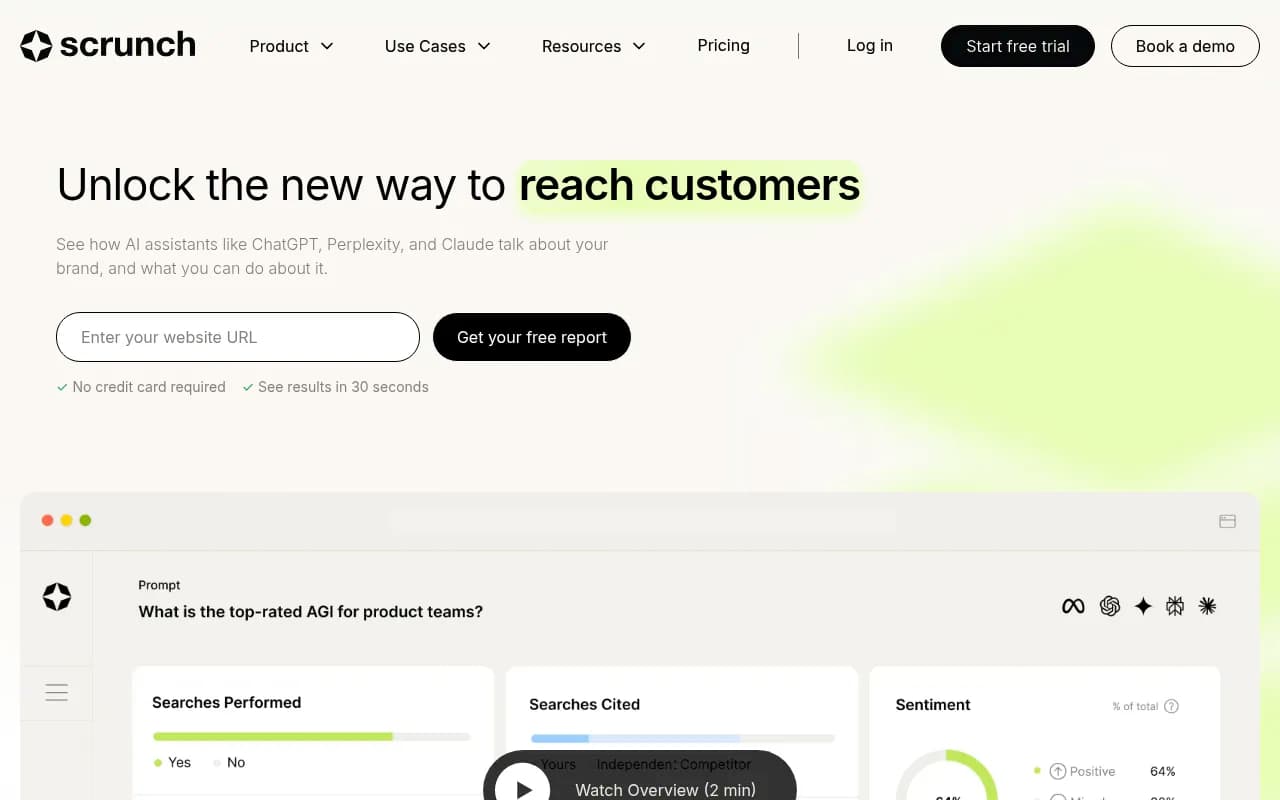
Alternatives at this tier include Profound (strong monitoring, higher price), AthenaHQ and Scrunch AI. For a wider look, the GEO software directory at bestgeosoftware.com lists more options by category.
Profound


Technical crawling
At this size, a desktop crawler runs out of room. Sitebulb makes audits more readable, JetOctopus and OnCrawl handle large sites and log analysis. If your marketing site is a JavaScript app, check how it renders for bots. Prerender.io exists for exactly that problem.

Stage 4: Series C and beyond (the scale-up stack)
You have an SEO lead, maybe a small team, and executives asking for pipeline attribution. One source suggests a stack like Ahrefs Advanced plus Clearscope Business plus an AI visibility platform at this stage. That's a reasonable shape, though I'd add attribution and an experimentation tool.
What changes
- Reporting. You need to show AI-referred traffic and revenue, not just mentions. Pair your AI visibility platform with a B2B attribution tool such as Dreamdata or HockeyStack.
- Testing. SearchPilot and SplitSignal let you A/B test SEO changes instead of guessing.
- Governance. Look for SSO, audit logs and security certifications. Promptwatch is ISO/IEC 27001 certified and GDPR compliant, which helps in procurement reviews.
- Support. At some point it makes sense to bring in outside specialists rather than hire five people. See the agency note below.
Enterprise suites
BrightEdge, seoClarity, Conductor and Botify are the usual names. They're expensive and built for large sites. Most SaaS marketing sites don't have the page count to justify them. If you do (large docs, programmatic integration pages, multi-language), they make sense.
Side by side: which AI visibility tool for which stage
| Tool | Tracking | Fixes and content | Crawler logs | Best stage |
|---|---|---|---|---|
| Promptwatch | Real UI data, many models | Content Agent, Action Board, CMS publishing | Yes, IP-verified | Seed to enterprise |
| Profound | Strong | Limited | Limited | Series B+ with budget |
| Otterly.AI | Basic | No | No | Seed to Series A |
| Peec AI | Basic | No | No | Seed to Series A |
| Semrush AI Toolkit | Within SEO suite | Some content tools | No | Teams already on Semrush |
| Ahrefs Brand Radar | Within SEO suite | No | No | Teams already on Ahrefs |
If you're comparing rank trackers more broadly, ai-rank-tools.com is a useful directory.
Common mistakes I see SaaS teams make
Buying the stack before the process
A suite, an optimizer and a tracker won't help if nobody owns the publishing calendar. Decide who ships what each week first.
Ignoring non-blog assets
Because product pages, landing pages and docs are the most cited formats, a team that only invests in the blog is optimizing the wrong layer. Audit your docs and help center. Make sure they're crawlable and not buried behind a login.
Forgetting review sites
G2, Capterra and Gartner listings show up repeatedly in software citations. An outdated profile with a 2023 screenshot is a quiet leak.
Treating AI visibility as a vanity metric
Mentions are nice. Traffic and conversions are better. Whichever platform you choose, check that it can connect AI visits to signups, or at least to your analytics.
When to bring in an agency
A tool stack doesn't replace strategy, and at some point your team will hit the ceiling of what two people can ship. 1001 SEO Media works with SaaS teams on technical SEO, content, digital PR and generative engine optimization, with no long-term contracts, and uses Promptwatch for AI visibility work. If you're past 10 pieces a month and still stalling, an audit is usually cheaper than another subscription.
A simple decision checklist
- Publishing fewer than 4 pieces a month? Stay on free tools and one free AI visibility check.
- Publishing 4 to 10? Add one suite, one optimizer and one AI visibility tracker.
- Publishing 10+? Add a platform that closes the loop from gap to published page to citation, plus a real crawler.
- Asked for attribution by the board? Add a B2B attribution tool and test SEO changes properly.
- Paying for two tools that do the same thing? Cut one this week.
For more options outside this guide, browse the software directory at SurferStack.
The bottom line
SaaS SEO in 2026 is a two-front job: rank in Google and be named in the answers buyers get from ChatGPT, Perplexity and AI Overviews. Start with free tools, add one suite and one optimizer when you publish consistently, add AI visibility measurement early, and only buy execution and attribution layers once your volume justifies them. Check the data on what AI engines cite from software brands at Promptwatch Data, then spend your next tool dollar on whichever layer is your current bottleneck.