Key takeaways
- YouTube matters most for Google AI Overviews. In Promptwatch Data's Sep 28 to Oct 4, 2026 report, YouTube was the top social source in AI Overviews at 4.28% of citations, but ChatGPT cited all social platforms combined only 0.46% of the time.
- Small channels get cited. Nearly 80% of cited videos had under 100K views, and about 80% of citations came from channels under 100K subscribers.
- You need three kinds of tools: YouTube-native optimizers (vidIQ, TubeBuddy), video production tools, and an AI visibility tracker that shows which videos engines actually cite.
- Titles, descriptions, chapters and clean captions do more work than polish or production budget.
Why YouTube SEO changed in 2026
For years, YouTube SEO meant ranking inside YouTube search and maybe grabbing a Google video carousel. That is still true. But now your video is also raw material for AI answers. Search Engine Land put it bluntly: YouTube is core search infrastructure, the second most-visited site in the world at roughly 48.6 billion visits a month, and brands that treat it as a nice-to-have are ceding visibility in AI Overviews.
That is the opportunity. The catch is that it isn't equal across AI engines, and a lot of the "AI tools for YouTube" content online ignores this. Let's look at the data first, then the tools.
Where AI engines actually cite YouTube
I'd treat this as the most important section of the guide, because it decides where you spend money.
Promptwatch's social media citations report for Sep 28 to Oct 4, 2026 shows a sharp split:
| Engine | Social share of citations | YouTube share | Notes |
|---|---|---|---|
| Google AI Overviews | 12.2% | 4.28% | YouTube is the top social platform |
| Perplexity | 2.7% | 0.79% | Down from 2.67% in the earlier report |
| ChatGPT | 0.46% | Near zero | Reddit fell from 5.19% to 0.09% |
The earlier YouTube in AI Search report (Jan 31 to Feb 27, 2026) had YouTube at 2.25% in AI Overviews and 2.74% on Perplexity, and 0.05% on ChatGPT. So the AI Overviews share nearly doubled in eight months while Perplexity's dropped. These numbers move fast. Check the data hub at promptwatch.com/data before you build a plan on any single figure.
The practical read: if your buyers search on Google, YouTube is worth real investment. If your audience lives in ChatGPT, don't expect video to carry your visibility there.
What cited videos look like
This is the encouraging part. From the February data:
- Nearly 80% of citations went to videos with under 100K views.
- The 10K to 100K view bucket was the largest at 36%.
- Only about 7% of cited videos had more than 1M views.
- 43% of cited videos had fewer than 100 likes.
- About 80% of citations came from channels under 100K subscribers.
Engines match titles, descriptions and transcripts to the question. Popularity isn't the filter. A small channel with a clear, direct answer can beat a giant one with a vague title.
The three tool categories you need
Most lists mash everything into one ranking. They shouldn't be compared directly. Here's how I'd split it.
| Category | What it does | Example tools |
|---|---|---|
| YouTube-native optimization | Keywords, titles, tags, A/B tests inside YouTube | vidIQ, TubeBuddy, YouTube Studio |
| Research and SEO suites | Keyword demand, competitor data, YouTube tracking next to web search | Ahrefs, Semrush, Google Trends |
| AI visibility tracking | Which videos and pages AI engines cite for your prompts | Promptwatch, AIclicks, Ahrefs Brand Radar |
| Video production | Scripts, editing, avatars, repurposing | Descript-style editors, Pictory, Synthesia, HeyGen, InVideo |
YouTube-native tools
vidIQ
vidIQ is the default recommendation for most creators. It has a keyword generator, search volume and competition scores, AI-assisted title and idea suggestions, and competitor research. There's a free plan. A recurring complaint is that it can feel heavy if all you want is a simple title check. Surfer Academy's walkthrough of AI tools used by SEOs lists vidIQ alongside Surfer and Gummy Search, which tells you how it's perceived: a normal part of a working SEO's stack, not just a creator toy.
I didn't verify current vidIQ or TubeBuddy pricing for this guide, so check their sites.
TubeBuddy
TubeBuddy is the other long-standing option, strongest on tag optimization and A/B testing of titles and thumbnails. If you're a small team that already lives in YouTube Studio, TubeBuddy's workflow feels more native. If you want deeper keyword research, vidIQ tends to get picked.
YouTube Studio
Free, and underrated. Search terms reports, retention curves and traffic source data tell you what vidIQ can only estimate. Start here before paying for anything.
SEO suites that now cover video
Ahrefs has pushed into AI visibility with Brand Radar, which tracks brand appearances across AI answers and also scans YouTube (titles, descriptions, transcripts), TikTok and Reddit in one view.
Semrush is the other big suite worth a look if you already pay for it, since keyword research there can sit alongside your web SEO work.
For free demand signals, Google Trends is still the fastest way to check whether a topic is rising before you film.
AI visibility tools: finding which videos get cited
This is the newer category, and it answers a question vidIQ can't: which YouTube videos do AI engines already pull in for the prompts my customers ask?
Promptwatch
Promptwatch tracks YouTube as a citation source across AI engines, including which videos and channels get cited and a filter for your own channels. That lets you see whether your videos are showing up in AI Overviews, Perplexity or ChatGPT answers, and how your pages land in the same prompts. It also connects the citation data to the content gap work: if AI answers a prompt with a competitor's video and your site has nothing, you get a brief to fix it. Most pure trackers stop at showing you the list.

AIclicks
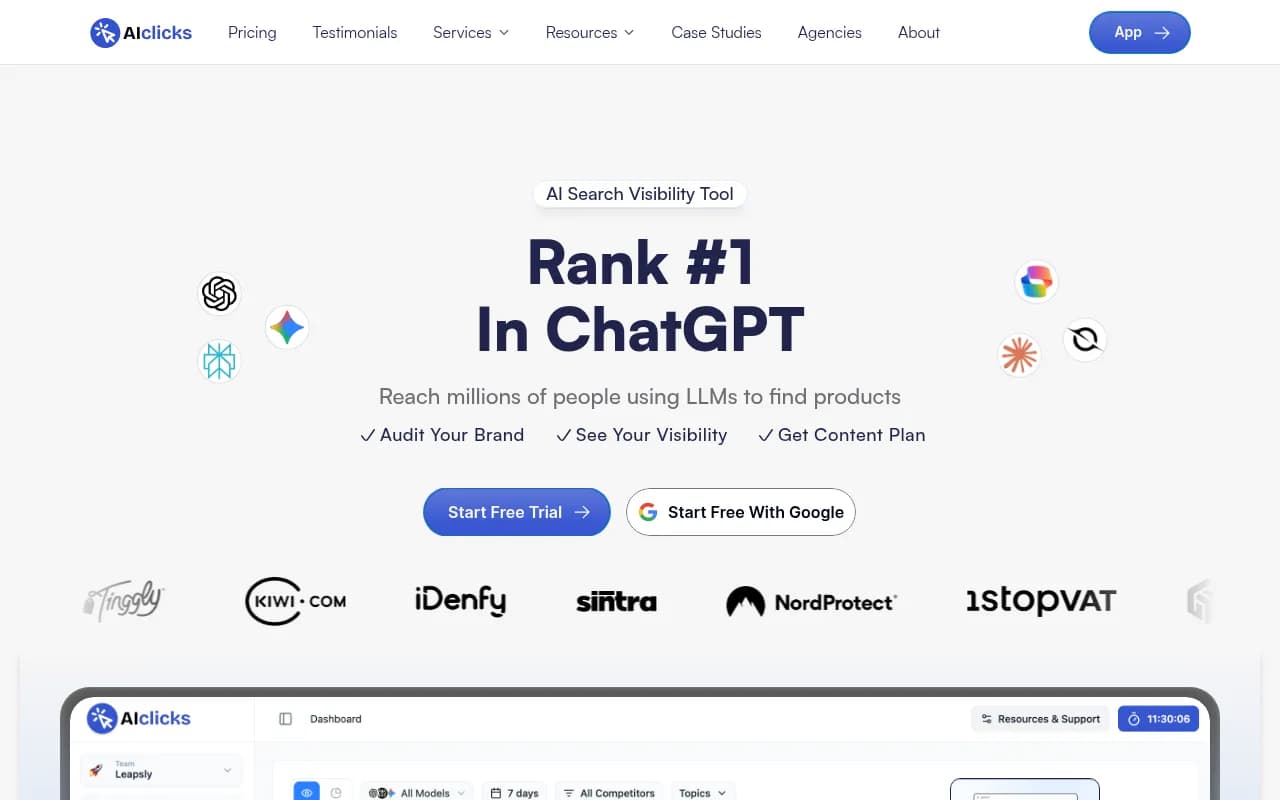
AIclicks has a Sources view where you can filter citations down to YouTube videos for your tracked prompts. It then turns cited sources into content and outreach tasks, such as classifying a creator as independent, partner or competitor and exploring collaborations like updated walkthroughs or comparison videos. Their article lists it at $59/mo on one page and Pro $189/mo on another, and the piece is vendor-authored, so confirm pricing directly. It isn't a YouTube upload optimizer, so you'd pair it with vidIQ or TubeBuddy.
If you want to compare more options in this category, the GEO software directory lists a lot of them.
Video production tools worth knowing
Production tools don't improve rankings on their own. What they do is lower the cost of publishing more videos that answer specific questions, which is what the citation data rewards. A short list:
- Pictory turns blog posts into short videos, useful for repurposing written content.
- Synthesia and HeyGen generate presenter-style videos from text. Fine for explainers and support content. Viewers can tell, so use them where a face isn't the point.
- InVideo handles text-to-video drafts.
- Canva handles thumbnails and quick visuals.
A piece of advice from one of the sources I read: always have a human check story, pacing and disclosure on AI-generated video. I agree. Generated video with no point of view is the fastest way to publish a lot of content that nobody cites.
Research and audience tools
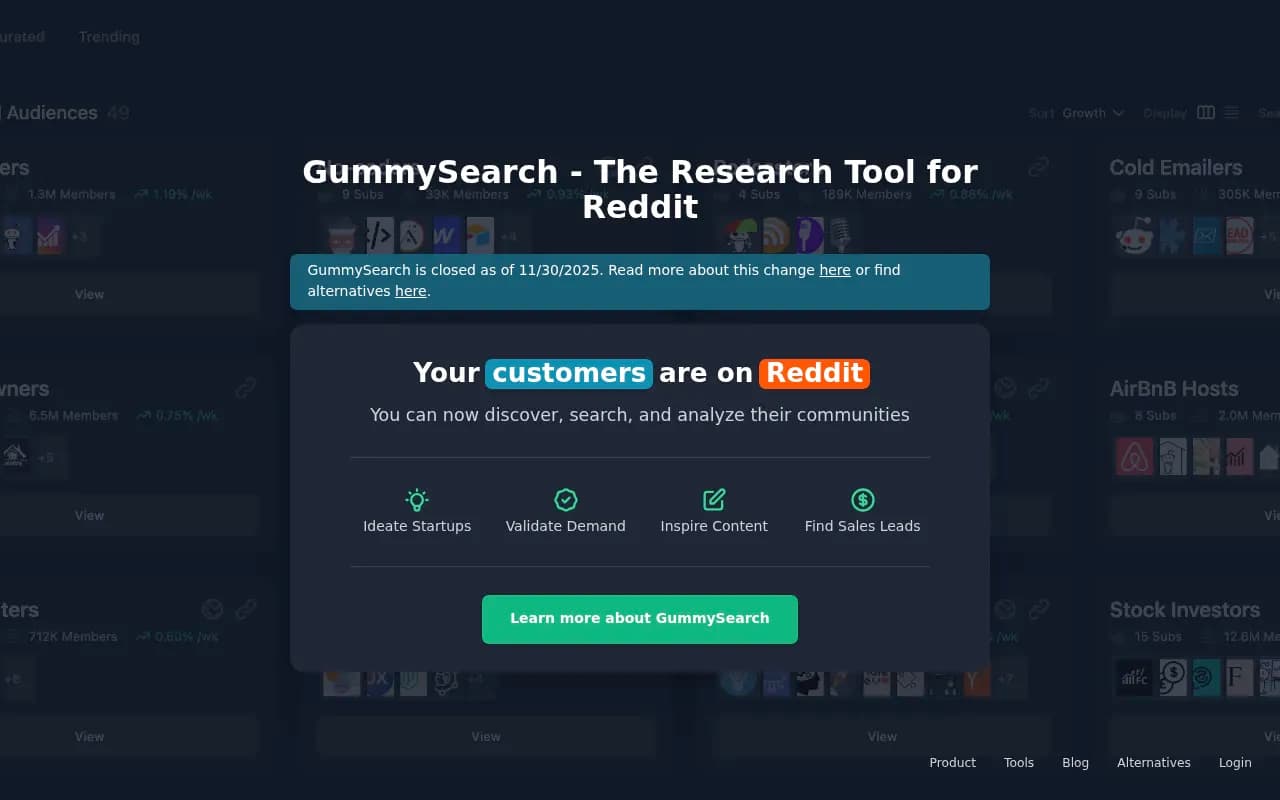
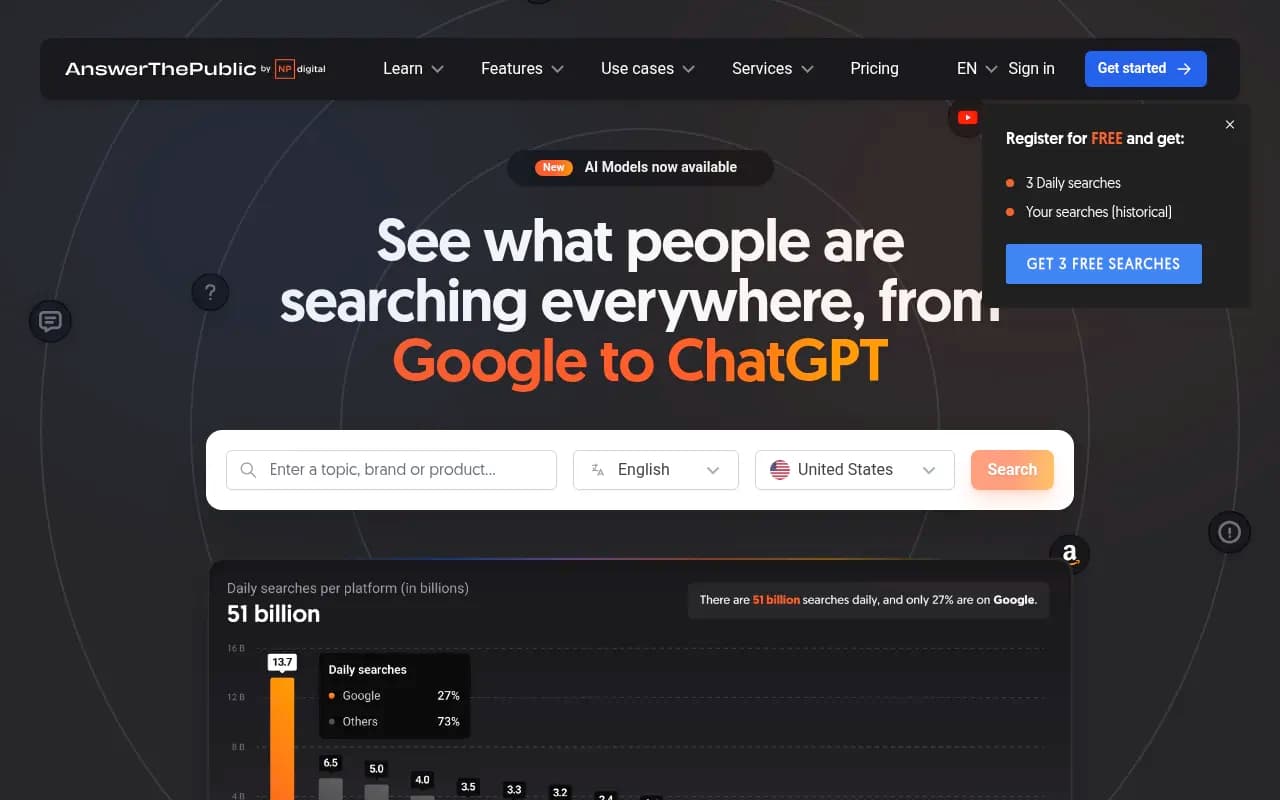
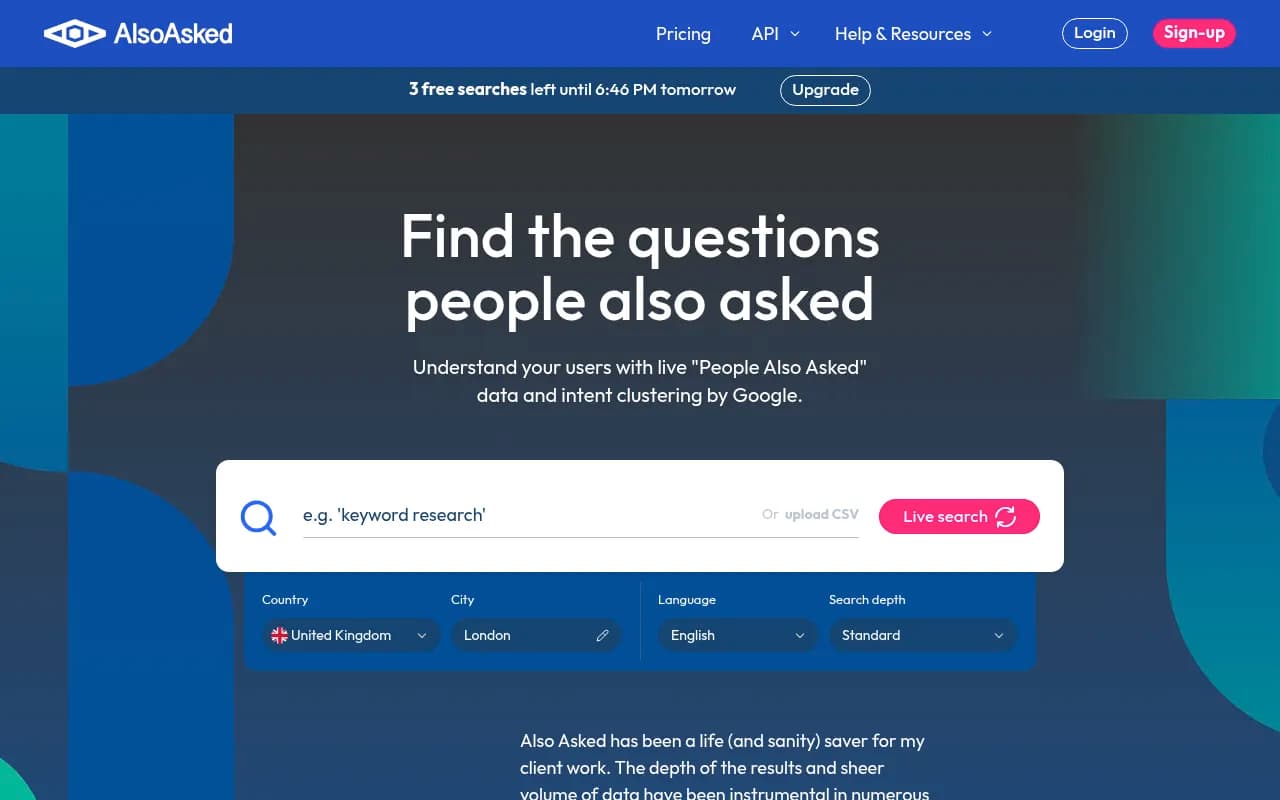
Topics come from questions. GummySearch surfaces Reddit pain points (Matt Kenyon of Surfer Academy lists it first in his AI stack video), and tools like AnswerThePublic and AlsoAsked show the phrasing people use. That phrasing becomes your video title.
A workflow that fits how engines cite video
Here's the tactical version, based on Promptwatch's advice from the YouTube citation data:
- Pick the prompts first. Use an AI visibility tracker to see which questions your buyers ask and which videos are cited today.
- Put the exact question in the title. Not a clever hook. The question.
- Summarize the answer in the first lines of the description.
- Add chapters so engines can locate the right segment.
- Keep captions accurate and make spoken answers able to stand alone. If someone could clip 30 seconds and it still makes sense, good.
- Update older videos. Back-catalog videos with 1K to 100K views are the sweet spot, since that's where most citations land. Rewrite titles and descriptions before you shoot anything new.
- Keep channel metadata clear: about page, playlists and topic focus.
- If you sponsor creators, choose for topical fit, not audience size.
Then measure. Track whether the new or updated video starts getting cited, and whether the supporting article on your site does too.
Which tool should you pick?
| If you are | Start with | Add later |
|---|---|---|
| A solo creator | YouTube Studio + vidIQ (free plan) | TubeBuddy for A/B tests |
| A brand with a channel supporting content marketing | vidIQ + an AI visibility tracker such as Promptwatch | Ahrefs or Semrush if already in your stack |
| An agency | Promptwatch or AIclicks for citation research, vidIQ for channel work | Video production tools for scale |
| Mostly targeting ChatGPT | Skip heavy video investment | Focus on pages, docs and product content |
The last row matters. Per Promptwatch's data, ChatGPT's most cited content types are product pages, landing pages and listicles, not video. Spend accordingly.
What I'd be skeptical of
- Claims that one AI tool will "go viral" for you. Engagement still decides whether YouTube itself recommends a video. AI helps you understand keywords and relevance, but viewers still have to click and watch.
- Vendor roundups. The best-known YouTube SEO lists are often written by tools that include themselves. Useful, but read them with that in mind.
- Any citation share figure without a date. Perplexity's YouTube share fell from about 2.7% to 0.79% between reports. AI Overviews went the other way.
Bottom line
Use vidIQ or TubeBuddy for the YouTube side, an AI visibility tracker for the AI search side, and a video production tool only once you know which questions deserve a video. For most teams targeting Google, YouTube is now the first social channel worth funding. For ChatGPT, it barely registers.
If you're weighing whether to build this in-house or hire help, agencies like 1001 SEO Media combine technical SEO, content and AI search work, which is useful when video, site content and AI visibility all need to move together.