Key takeaways
- Every serious GEO platform now claims API and MCP access, but plan gating differs a lot. Profound keeps both on Enterprise, while Peec and Otterly open them on cheaper plans.
- None of the vendors we checked advertises a native Snowflake or BigQuery connector. Expect to build a small ETL job against the REST API, so rate limits and date-range caps matter more than tool counts.
- MCP is for analysts and agents asking questions. The REST API is for scheduled loads into a warehouse. Buy for the one you actually need.
- Store the engine, date, country, and prompt ID with every citation row. Citation counts per response differ a lot by AI engine.
- Most pricing and tool-count figures below come from vendor-written comparison pages. Verify them in vendor docs before procurement.
What "fits your data warehouse" really means
I'll be blunt about the research gap first. When I looked for official documentation on warehouse sync from GEO vendors, I found none. No direct Snowflake share, no BigQuery transfer, no Databricks connector. What exists is a REST API, sometimes an MCP server, and sometimes a Looker Studio connector.
So "fits your warehouse" translates into four practical questions:
- Can you pull raw prompt responses and citations, or only aggregated scores?
- How much history can one request return, and how fast are the rate limits?
- Are the API and MCP on the plan you can afford?
- Do keys have scopes, so a read-only pipeline credential can't edit your prompts?
A headline visibility number is easy to export and nearly useless in a warehouse. You want the response-level rows so you can join them with CRM, web analytics, and revenue tables.
API vs MCP: pick the right interface
People conflate these. They solve different problems.
- REST API. Deterministic, schedulable, paginated. This is what your Airflow, dbt, or Fivetran-style job calls at 2 a.m. to land yesterday's data.
- MCP server. A tool interface for AI clients like Claude, ChatGPT, or Cursor. It lets an analyst say "which competitors gained citations this week?" without writing SQL. Some MCP servers also write, for example editing prompts or queueing content.
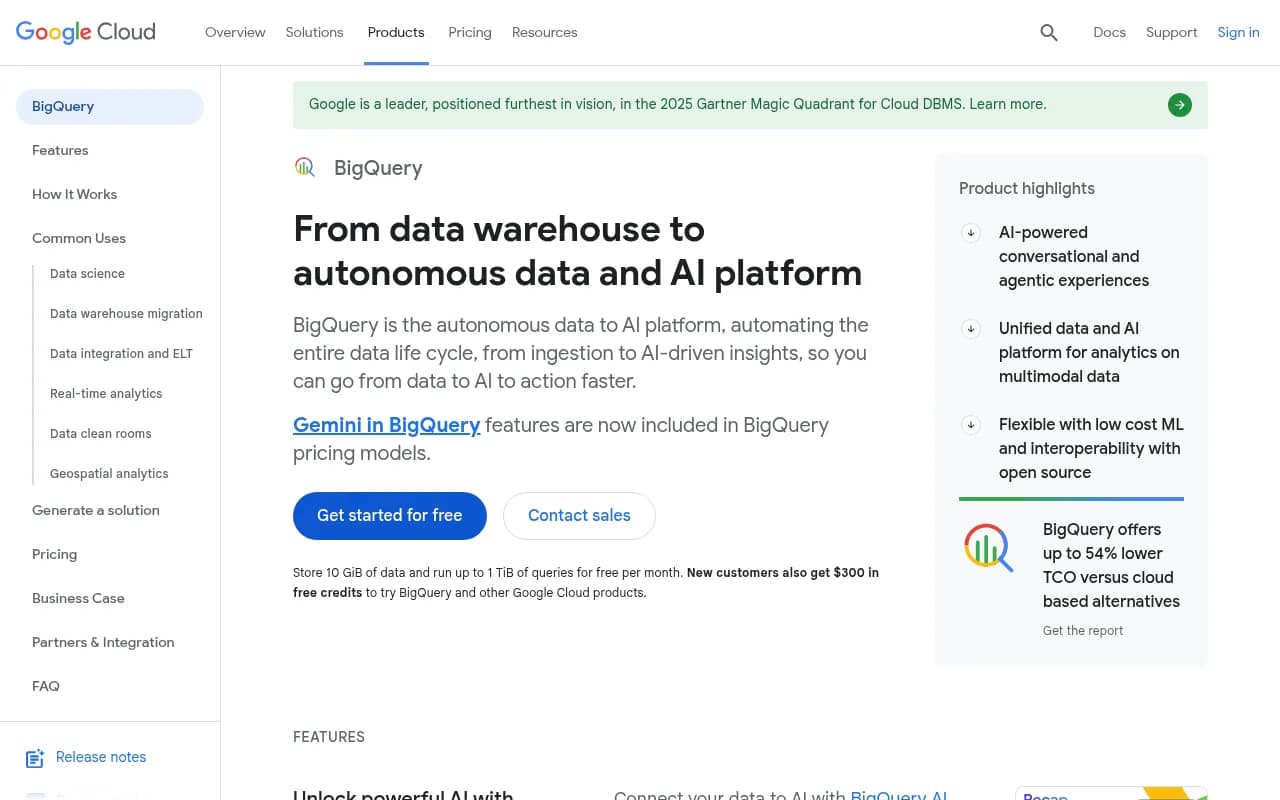
The warehouse-side story is the same idea in reverse. Warehouses now ship their own MCP tooling, and Google describes BigQuery as exposing MCP tools so agents can discover and enrich data assets. If your stack is Google Cloud BigQuery, an agent can in principle query GEO tables you landed there and a GEO vendor's MCP side by side.
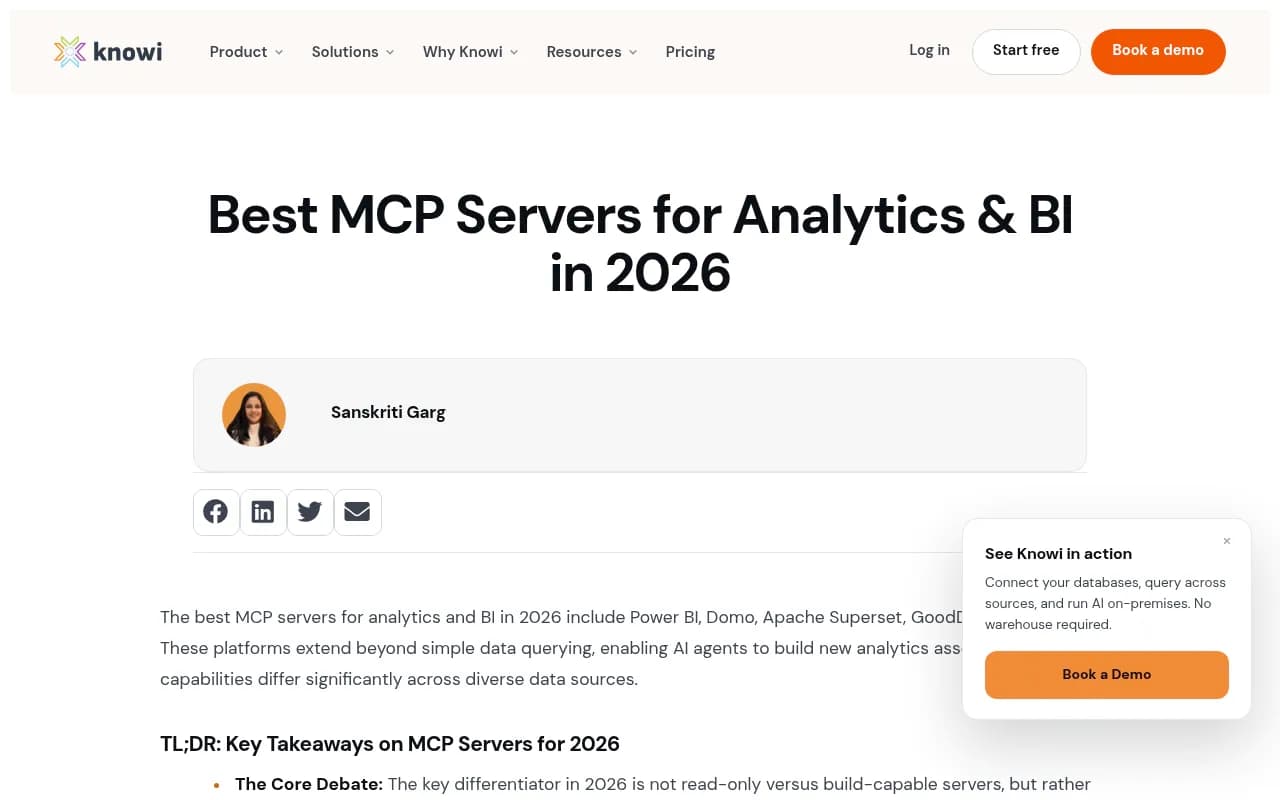
The BI-layer MCP market is moving too. Knowi's 2026 roundup lists Power BI, Domo, Apache Superset, GoodData, and Knowi as build-capable MCP servers, though with the caveat that data has to live inside each ecosystem.
Platform comparison: API, MCP, and warehouse readiness
The numbers below are a mix of our own product facts and third-party claims. Geoptie, Cairrot, and Meikai are all competing vendors, so treat their figures as leads to verify, not facts.
| Platform | REST API | MCP | Reported gating | Warehouse notes |
|---|---|---|---|---|
| Promptwatch | REST API v2 on every plan; date ranges up to 92 days | Hosted MCP, 110+ read and write tools | Every plan; limits scale from 500 to 50,000 requests/hour | Scoped keys, Looker Studio from Professional, CSV/Excel exports |
| Profound | v2 reports API: visibility, citations, sentiment, fan-outs, raw answers | About 60 tools, OAuth or API key | Enterprise only; 600 requests/hour per key reported | Strong raw data, highest entry cost |
| Peec AI | API starts at the $245 Pro plan | 51 read and 48 write tools reported | MCP reported on every plan; 200 requests/min per project | Looker Studio from $495; exports need cleanup |
| Otterly.AI | API from $189 reported | OAuth only, 31 read and 15 write tools reported | Standard plan: 2,000 API and 2,000 MCP requests/month reported | Monthly request caps can bite a daily load |
| Scrunch | API returns up to 1,000 records per request | "Scrunchie", 51 tools | Agency and Enterprise for API; Core MCP unclear | Verify MCP on Core before buying |
| BrightEdge | API plus a recently launched MCP server | Rankings, traffic, competitive data | Enterprise SEO suite | More SEO suite than GEO-native |
One more data point from Cairrot: enterprise API access at some vendors is routed through custom pricing that reportedly starts in the mid four figures monthly. Get that quote in writing.
Promptwatch: the one built around closing the loop
Promptwatch is the option I'd shortlist first when the warehouse is the destination, mostly because API and MCP access are not paywalled to a top tier. Every plan includes MCP and API access, with the REST API v2 covering visibility, prompts, responses, citations, sentiment, crawler and visitor analytics, shopping, Ads Radar, site audit, content, and publishing.

Three details matter for pipelines:
- Date range. Requests can span up to 92 days, so a full quarter backfills in one call instead of dozens.
- Scoped keys. Project, organization, and read-only API keys mean your ETL credential can't change monitors. On Business, Agency Scale, and Enterprise, the audit log records whether a change came from the dashboard, the API, an MCP client, or Agent Chat.
- Data from real interfaces. Responses are collected from the actual UIs of ChatGPT, Google AI Overviews, AI Mode, Gemini, Perplexity, Copilot and others, in each country and language. User-facing citations can differ from API output, which matters if you are joining this to what customers see.
The MCP server (110+ tools, one-click OAuth or API key) works with Claude, Claude Code, ChatGPT, Cursor, Codex, and any MCP client. Analysts can ask questions in chat, and Agent Chat can build dashboards or PDF reports on request. Rate limits climb with the plan: 500 requests/hour on Essential, 2,000 on Professional, 10,000 on Business, and 50,000 on Enterprise.
For teams that want the loop closed rather than just exported, Promptwatch also ties prompt data to IP-verified AI crawler logs and visitor analytics. That gives you a join key between "AI cited this page" and "this page sent traffic." Pricing starts at $95/month for Essential, $245 for Professional, and $579 for Business, with Enterprise tailored; confirm on the pricing page. There is a 7-day free trial on monthly billing, and the API and MCP docs are public.
If you want a structured side-by-side, the 2026 GEO platform comparison is our own page, so read it as a vendor's view.
Profound: deepest raw data, enterprise gate
Profound is the one most often named when someone says "enterprise API." Its v2 reports API reportedly returns visibility, citations, sentiment, query fan-outs, and raw prompt answers, and its MCP server can write to prompts, knowledge-base documents, projects, and content agents.
Profound

The catch is access. Both API and MCP are reported as Enterprise-only, so a pilot is hard. If you are comparing the two head to head, see Promptwatch vs Profound.
Peec AI and Otterly: cheaper entry, narrower plumbing

Peec is attractive on price and MCP access (reported on every plan, including Starter). The API starts at the $245 Pro plan, and Looker Studio from $495. One reviewer described spending half a day each week cleaning Peec exports in Excel before moving to AthenaHQ for its in-platform filters. That's one anecdote, but it is a useful warning: ask for a sample export and check column structure before you commit.
Otterly.AI

Otterly reportedly opens API and MCP from $189, but with monthly request caps (2,000 API and 2,000 MCP on Standard). That is fine for a weekly pull and thin for daily response-level loads across many markets.
Scrunch, AthenaHQ, and the rest

Scrunch reportedly starts API keys and MCP at Agency Core, $500/month, though Scrunch's MCP availability on Core is flagged as unclear. Ask directly. The 1,000-records-per-request cap means pagination design matters.

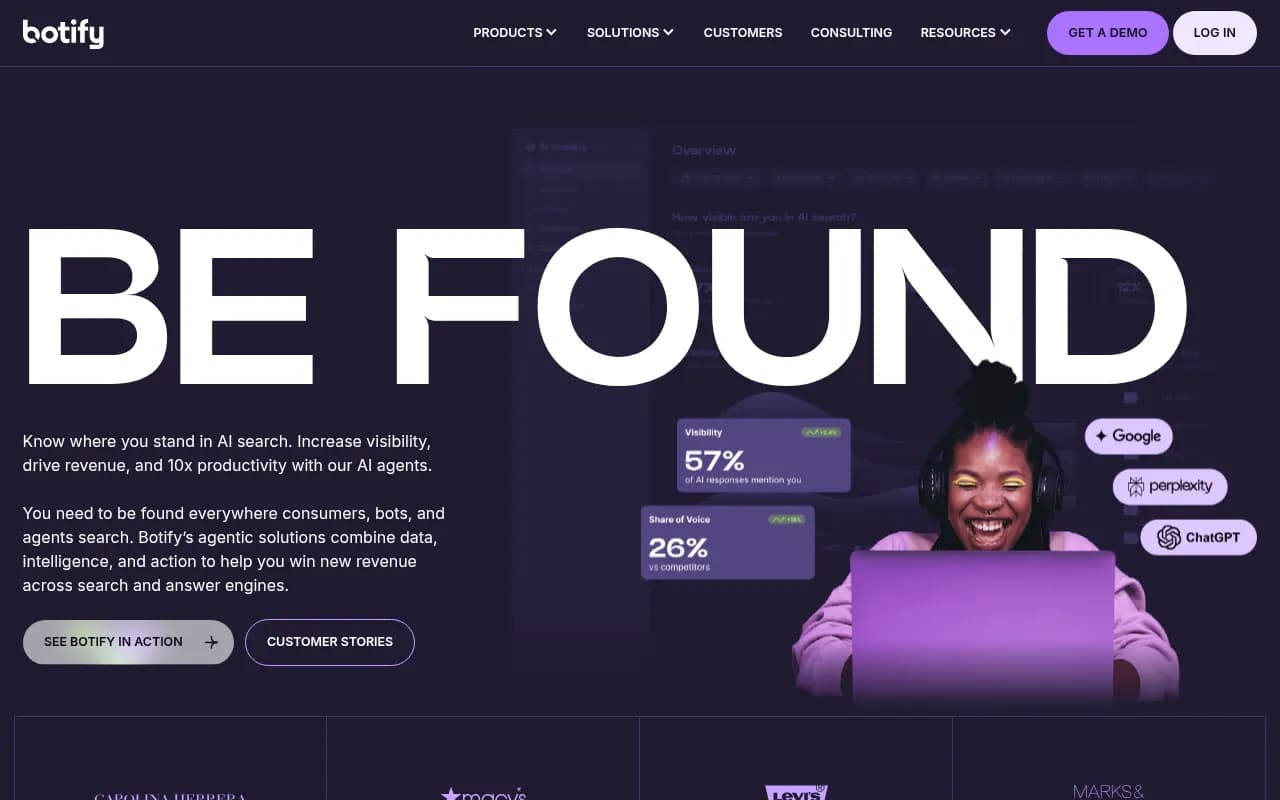
AthenaHQ offers its API as an add-on, which can look cheap until you total it. Other names in the category to evaluate include Evertune, Conductor, Botify, and seoClarity on the suite side. For a wider scan, the GEO software directory at bestgeosoftware.com lists many more.
Designing the warehouse schema
Here is where Promptwatch's own data helps. In Promptwatch Data's Average Sources Per Response report, ChatGPT cites about 5 sources per web-search answer, Google AI Overviews about 10, and Perplexity almost exactly 10 every day. Copilot swung from under 2 to nearly 17 within weeks before settling low. Averages across engines are meaningless without normalising.
Citation behavior also shifts abruptly. Promptwatch Data found reddit.com's share of ChatGPT citations fell from about 4% to 0.5% on August 14, 2026, and that ChatGPT started using the site: operator at scale on August 8, 2026. If your table doesn't carry dates and engine, those step changes become unexplainable noise in your trend lines.
A minimal layout:
-- one row per prompt run
CREATE TABLE geo_responses (
  response_id STRING,
  run_date DATE,
  engine STRING,        -- chatgpt, aio, perplexity...
  country STRING,
  language STRING,
  prompt_id STRING,
  prompt_text STRING,
  brand_mentioned BOOL,
  position INT,
  sentiment_score INT
);

-- one row per citation in a response
CREATE TABLE geo_citations (
  response_id STRING,
  run_date DATE,
  engine STRING,
  cited_url STRING,
  cited_domain STRING,
  citation_rank INT,
  is_own_domain BOOL
);
Partition by run_date, keep engine and country as clustering columns, and never overwrite history. Re-pulling the same window should be idempotent on response_id.
A short evaluation checklist
Before you sign anything, run these tests during the trial:
- Pull 30 days of raw responses and citations. Time it and count the requests.
- Check that the API returns response text, not just scores.
- Confirm a read-only key exists, and that it works for both the API and MCP.
- Ask what happens at the rate limit. Does it return 429s, or does the account lock?
- Confirm in writing whether MCP is on your plan tier.
- Check SSO, audit logs, and data residency if procurement will ask.
- Test a sample export in Looker Studio or your BI tool for column sanity.
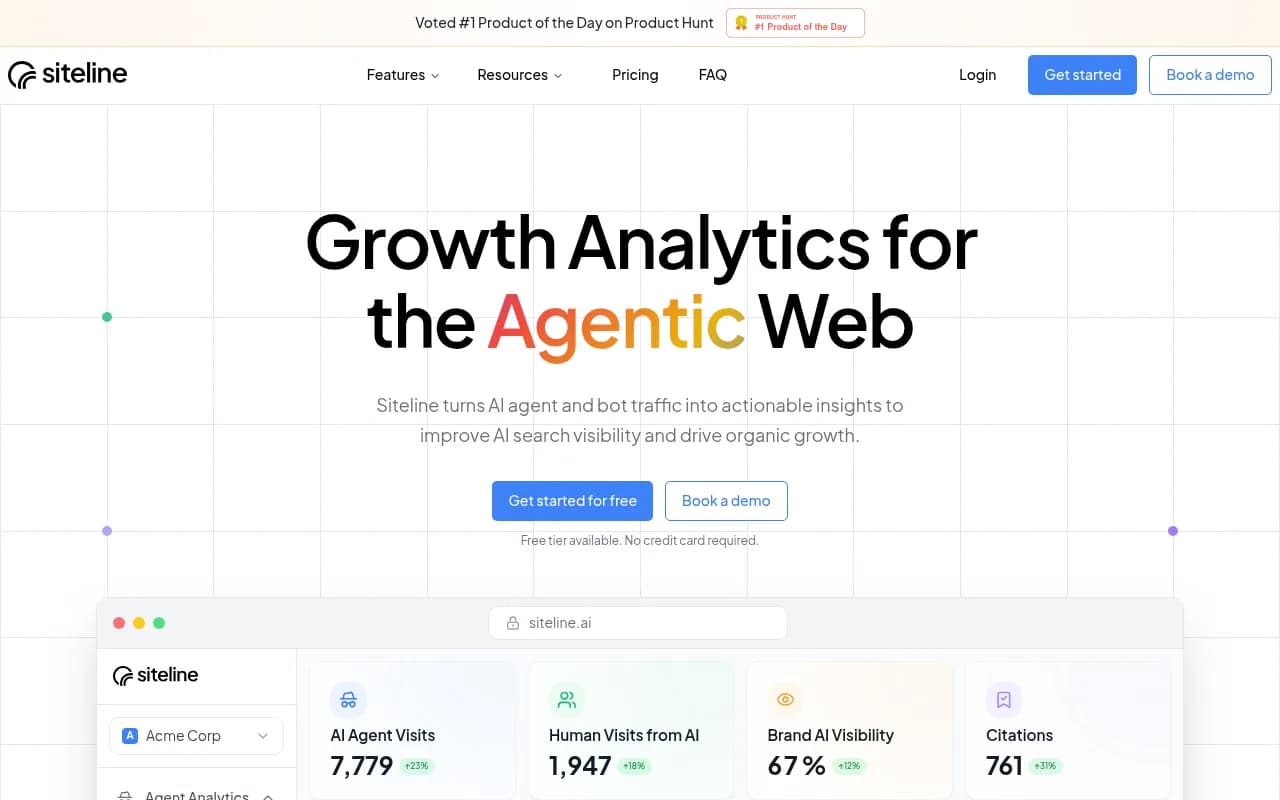
Also keep an eye on the AI crawler side. Tools like Siteline AI and Promptwatch's crawler logs add a first-party table of bot hits you can join to citations, which is a lot more useful than prompt data alone.
Which one for which team
- Warehouse-first, budget-conscious: Promptwatch, since API and MCP are not locked to the top plan.
- Largest budget, wants raw-answer depth: Profound, accepting the Enterprise gate.
- Small analytics pilot: Peec or Otterly, but test export quality and request caps.
- Agency stack: Scrunch Agency or a Promptwatch agency plan (Kick-off $199, Growth $399, Scale $799), which include API and MCP with unlimited projects.
- Already on a big SEO suite: BrightEdge, seoClarity, or Conductor may be easier to procure, even if GEO depth is thinner.
What I would not do is trust any vendor-written ranking, including ours, as a final answer. Meikai's buyer's guide, for example, ranks Meikai first and says it was written from vendor materials published by July 2026. Useful as a shortlist, not as evidence.
If you want agencies or consultants to run the evaluation, 1001 SEO Media works with Promptwatch for GEO and AI visibility programs. For a wider tool scan, the AI rank tools directory is a good next stop.
Bottom line
Pick the interface you need, then pick the plan that actually includes it. For most teams, a scheduled REST pull into a partitioned schema plus an MCP server for analysts covers 90% of the value. Start a trial, pull a month of response-level data, and see whether it lands cleanly in your warehouse before talking contracts.