Key takeaways
- Fund the durable assets first: pricing, landing, docs and comparison pages hold their ChatGPT citations far longer than news does.
- Budget for measurement across many prompts and engines, because almost half of ChatGPT responses cite 10 or more domains.
- Keep tactics flexible. Reddit's share of ChatGPT citations collapsed in a single day in August 2026, so single-engine bets are risky.
- Add a paid line for ChatGPT ads next to organic GEO, and name one owner for the whole AI search budget.
- Pay for crawler visibility. If you can't see which AI bots read your site, you can't tell an access problem from a content problem.
Why 2027 GEO budgets need a different shape
Most 2026 GEO spend was experimental. A tracker subscription here, a few articles there, a Reddit push someone read about on LinkedIn. For 2027, finance teams will ask what the money bought.
The general budget mood supports asking. Forrester's 2027 budget planning guides report that after a year of caution, more than 80% of leaders expect budgets to increase over the next 12 months. Rising budgets also mean closer scrutiny. Larridin's 2027 AI budget guidance makes a point that applies directly to GEO: assign clear ownership of the AI bill, and measure spend against outcomes instead of treating it as a fixed subscription line.

I should be upfront about one gap. I found no analyst forecasts from Gartner or Forrester specific to GEO budgets, and no verified pricing benchmarks across vendors. What follows leans on first-party citation data from Promptwatch Data and on general planning frameworks. Treat the numbers as inputs to your own model, not as industry averages.
What the 2026 data says is worth locking in
The useful question for a budget owner is which assets keep paying off and which decay. Promptwatch Data has an answer.
Evergreen commercial pages hold their citations
Promptwatch Data's content half-life study tracked every page ChatGPT cited on July 6, 2026 through October 4, 2026. After 30 days, ChatGPT still cited 78% of landing pages and 76% of docs. After 60 days it cited 69% and 67%. Comparisons held at 72% after 30 days and 63% after 60.
Product pages, reviews and how-tos sat at about 55% after 60 days, with a half-life of 74 to 77 days. News was the outlier: half of news pages were gone after 36 days, and almost a quarter were never cited again after day 0.
The budget translation is simple. Landing pages, docs and comparisons are long-term assets that deserve a maintenance budget. News and PR content gets short bursts of attention, so fund it as a campaign, not a base.
Product and landing pages are what ChatGPT cites most
In Promptwatch's ChatGPT content type data for September 28 to October 4, 2026, product pages were 22.4% of classified citations and landing pages 16.8%. That means roughly 39% of citations go to pages that describe what a company sells. Listicles were 13.6%, how-tos 8.7% and comparisons 5.9%.
For commercial prompts like "best CRM for small businesses", product pages took 26.0%, landing pages 20.6% and listicles 15.0%. Those types plus comparisons made up almost 70% of commercial citations. For branded prompts, reviews rose to 5.6%, more than three times their overall share.
If your 2027 content plan is mostly blog posts, this data argues for rebalancing. Complete specs and pricing on product pages, strong landing pages, presence in third-party listicles, and a review collection program all map to what gets cited.
Crowded answers change what you measure
Promptwatch Data on unique domains per response shows that 47.6% of cited ChatGPT responses cite 10 or more unique domains, and 66.1% cite at least 8. For organic prompts, 52.5% cite 10 or more. Brand-specific prompts are tighter: only 21.3% cite 10 or more, and the most common count is five.
With that many sources per answer, a binary "were we cited?" metric tells you little. Budget for tooling that tracks position, how the model describes you, and trends across a large prompt set. One prompt is an anecdote.
Keep the tactics flexible
Here is the part where I'd push back on anyone asking you to lock in a channel plan for twelve months.
Reddit is the cautionary tale
Promptwatch Data recorded that reddit.com's share of ChatGPT citations fell from about 4% to 0.5% on August 14, 2026. In the October 2026 social citations report, social platforms were just 0.46% of ChatGPT citations (September 28 to October 4), down from 5.8% in the earlier report. Reddit fell from 5.19% to 0.09%.
Google AI Overviews looks completely different: social platforms were 12.2% of its citations, about 26 times ChatGPT's share, with YouTube at 4.28%, Facebook at 2.38% and Reddit at 2.15%. Perplexity sat at 2.7%.
Anyone who funded a Reddit seeding program for ChatGPT in early 2026 watched that investment lose its main payoff in a day. The lesson isn't that social is dead. It's that engine behavior shifts without warning, so hold a flexible reserve and revisit the engine-by-engine mix quarterly.
Other changes that arrived overnight
Two more from Promptwatch's catalog: ChatGPT started using the site: operator at scale on August 8, 2026, jumping from about 0.4% to about 17% of fan-out queries (data). And the GPT-5.3 rollout on March 4, 2026 cut average citations per response (data). Neither was announced in a way a planning calendar would catch.
Add a paid line for AI search
Promptwatch Data on ChatGPT ads shows ChatGPT served no ads until May 27, 2026, then began showing them in 1.69% of responses. Across a 90-day window, ads appeared in an average of 20.1% of responses that ran a web search. The rate passed 30% on July 1, peaked at 43.9% on a single day, and averaged 32.4% over the most recent seven days.
By prompt type, organic prompts carried about 73% of ads, brand-specific prompts about 18% and competitor comparisons about 9%.
Two budget consequences follow. First, a paid placement line next to organic GEO is now reasonable to plan. Second, competitors may be bidding on your brand prompts, so someone should be watching which advertisers appear there. Promptwatch's Ads Radar is built for exactly that.
Fund crawler visibility and technical access
A content budget is wasted if AI bots can't read the pages. Promptwatch's AI crawler traffic data covers IP-verified requests from June 8 to September 6, 2026. OpenAI accounted for 79.8% of verified requests in the week of August 31 to September 6, down from 94.8% in early June. Anthropic, Google, Perplexity and Mistral are taking a growing share, and Meta-WebIndexer rose from about 2% to nearly 38% of tracked crawler requests between mid-July and August 9 (data).
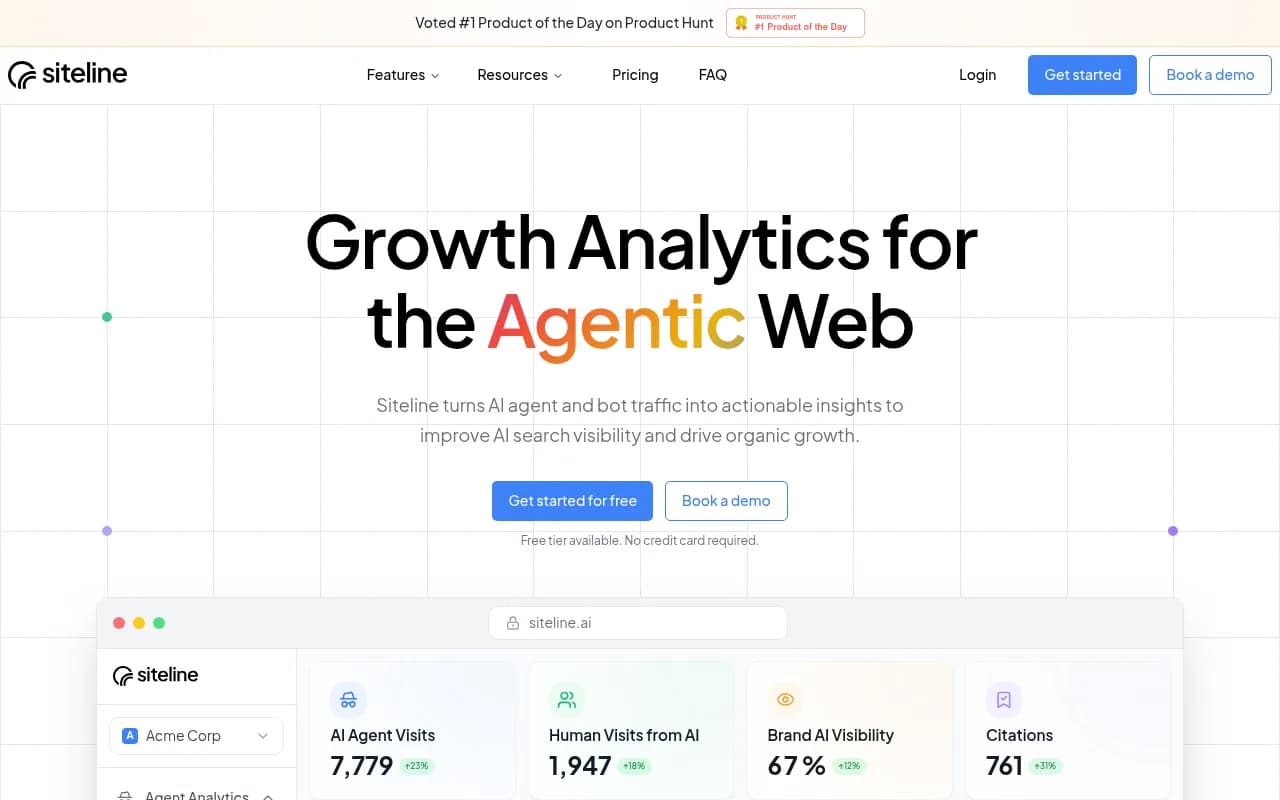
The practical audit: check robots.txt, CDN and WAF rules for every provider, then compare your own logs to that mix. A provider that is large in the benchmark but near zero in your logs suggests you're blocking it. Promptwatch's AI crawler logs cover this, and Siteline AI and Scriptbee are other options for AI agent traffic analytics.
A planning framework for the GEO budget
Makingsense's 2027 technology budget guidance ranks investments on business impact, urgency and risk, readiness, and measurability. It never mentions GEO, but it adapts well. Here it is applied:
| Line item | Impact | Urgency | Readiness | Measurable? | Lock in or stay flexible |
|---|---|---|---|---|---|
| Maintenance of pricing, landing, docs and comparison pages | High | High | Usually yes | Yes, via page-level citations | Lock in |
| AI visibility platform across engines | High | High | Yes | Yes | Lock in |
| AI crawler logs and technical access fixes | High | High | Needs setup | Yes | Lock in |
| Review and third-party listicle presence | Medium-high | Medium | Partial | Partly | Lock in a base, flex above it |
| Net-new content production | Medium-high | Medium | Depends on gaps | Yes, if tied to prompts | Flexible, release quarterly |
| ChatGPT ads | Unknown for your category | Medium | Easy to start | Yes, if traffic is attributed | Pilot, then scale |
| Single-engine social tactics (Reddit, etc.) | Volatile | Low | Easy | Yes | Keep small and flexible |
| News and PR bursts | Short-lived | Event-driven | Easy | Yes | Flexible |
The fpa-trends article on testing hidden budget premises is a good companion read. Its core idea is that undocumented assumptions are what break budgets. Write down yours for GEO: that engines will keep citing the same source types, that AI traffic will be attributable, that one provider's crawler is the only one that matters. Then test them.

Deloitte's 2027 commercial real estate outlook makes a related point from outside marketing: leaders should govern AI before scaling it, and the firms that outperform will be those acting with the most discipline, not those spending the most. That applies here. A GEO program with an owner, a baseline and a review cadence beats a bigger program with none.
Choosing the platform layer
This is the line item most teams argue about, and it's the one where category matters. Prompt trackers tell you whether you were mentioned. Fuller platforms also tell you why, and help fix it. For enterprise planning, the checklist I'd use:
- Data from the real interfaces of ChatGPT, AI Overviews, AI Mode, Gemini, Perplexity and Copilot, not just API outputs, because user-facing answers and citations can differ.
- IP-verified crawler logs, so access problems are separate from content problems.
- Visitor analytics that attribute AI traffic and conversions. Note that ChatGPT stopped sending a referrer on October 8, 2026, so attribution needs a UTM-based fallback.
- Content gap analysis and a way to act on it, not only a dashboard.
- Security posture: ISO/IEC 27001 and GDPR compliance matter in procurement.
- Usage-based costs you can forecast, which is Larridin's point about consumption billing applied to your own vendor.
Promptwatch covers that checklist in one product. It monitors prompts across the major engines, traces citations and crawler activity, then acts through the Action Board and Content Agent, and measures results with visitor analytics. It is ISO/IEC 27001 certified and rated 4.7/5 on G2. Business is $579/mo and is the first plan with the Content Agent, faster-than-daily tracking, state and city tracking, Fact Check, Shopping and Ads Radar. Confirm current pricing at promptwatch.com/pricing.

How the main options compare for planning purposes:
| Tool | Strength | Typical fit |
|---|---|---|
| Promptwatch | Monitoring plus crawler logs, visitor analytics, content creation and publishing | Teams that want to fix gaps and measure results in one place |
| Profound | Enterprise AI visibility monitoring | Large brands prioritizing tracking depth |
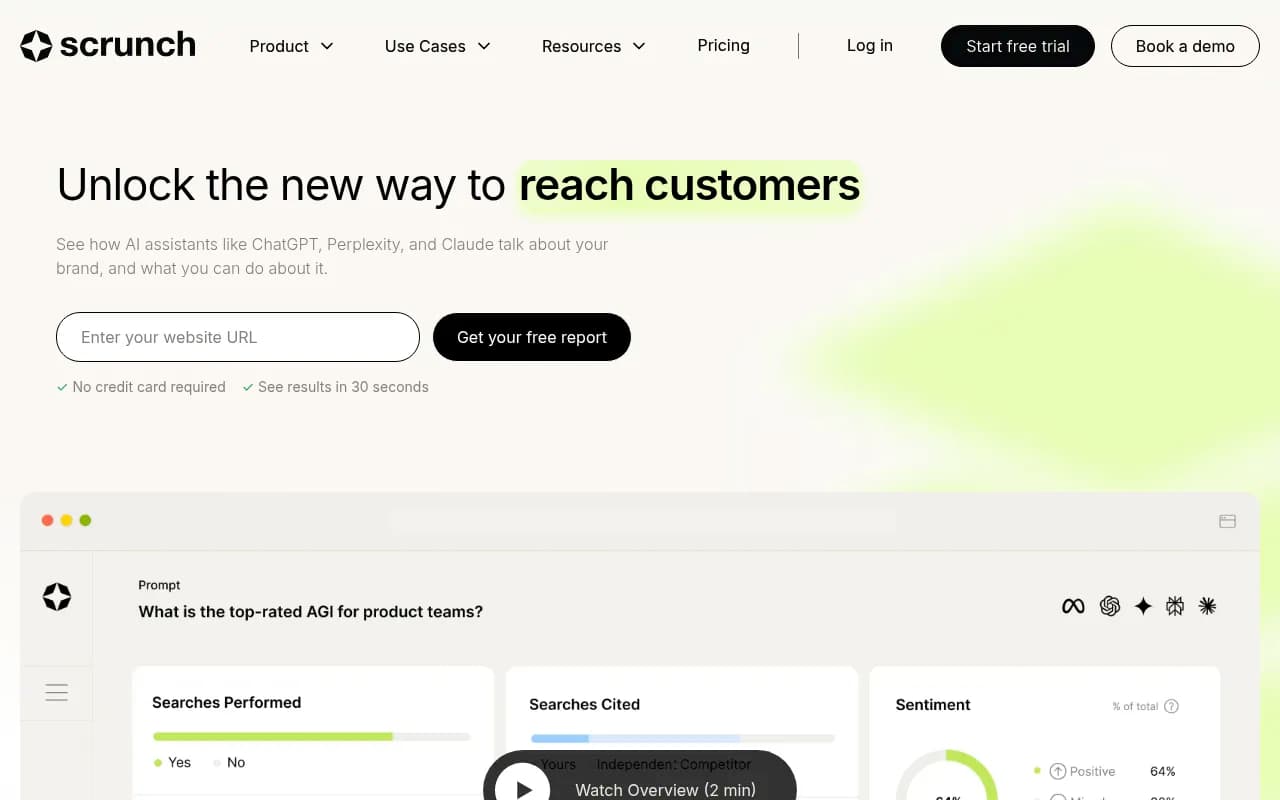
| Scrunch AI | AI visibility tracking across LLMs | Monitoring-focused teams |
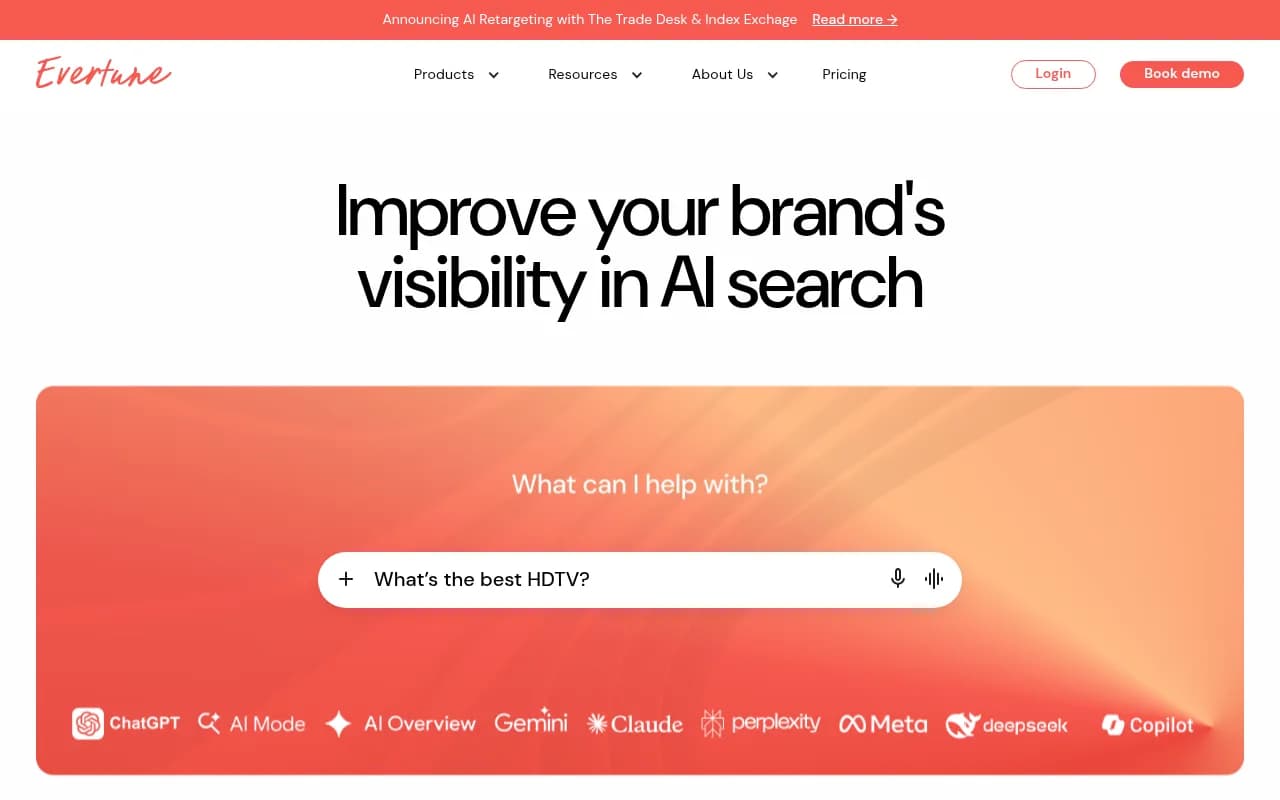
| Evertune | Enterprise GEO insights for large brands | Fortune 500 programs |
| Semrush | Traditional SEO suite with AI search features | Teams already standardized on Semrush |
| Otterly.AI | Basic brand mention tracking | Small teams starting out |
Profound

Otterly.AI

See Promptwatch's head-to-head against Profound or its 2026 platform comparison for the vendor's own side-by-side. For a wider market view, the directory at bestgeosoftware.com lists more options. If you want a reality check before committing budget, Promptwatch also offers a free AI visibility report and a 7-day trial.
Hiring help versus building in-house
Some enterprises will run this with their own SEO and content teams. Others will bring in an agency for technical SEO, content production and GEO strategy. 1001 SEO Media is one example of an agency in that space: it combines technical SEO, content, digital PR and GEO, works without long-term contracts, and uses Promptwatch as its AI visibility platform. Whichever route you pick, make sure the contract ties activity to the measurable items in the table above.
A 2027 GEO budget checklist
- Name one owner for the AI search line, covering tools, content and paid placements.
- Baseline your current visibility, citations and AI-referred traffic before January so Q1 results mean something.
- Audit AI crawler access for every provider, and fix blocks before funding more content.
- Rebalance content toward product, landing, docs and comparison pages, and schedule their upkeep.
- Reserve 15 to 25% of the GEO budget as flexible, to be released quarterly. That number is my rule of thumb, not an industry benchmark.
- Pilot ChatGPT ads on a few prompts and watch which competitors show up on your branded prompts.
- Review the engine mix every quarter, because Reddit-style reversals can arrive in a day.
What to commit to now
Commit to the durable things: page upkeep, crawler access, measurement across engines, and a named owner. Stay loose on engine-specific tactics and anything that depends on one platform's current quirks. The 2026 data says the quirks will change before your fiscal year does.