Key takeaways
- ChatGPT fans out roughly 47% of its search-enabled answers into multiple sub-queries, not the literal prompt you typed, per LoudFace's measurement of 3,718 AI answers between July and August 2026.
- "Near me" prompts almost always get decomposed into location-specific and intent-specific sub-queries (think "best plumber Austin Texas," "emergency plumber reviews Austin," "24 hour plumbing service near downtown Austin") rather than being searched verbatim.
- Local review platforms, directory sites, and Google Business Profile data feed these sub-queries heavily, which is why local SEO fundamentals still matter in an AI search world.
- Standard rank trackers only show you whether you appeared for the prompt you typed in. They don't show the sub-queries the model actually ran, which means you can rank for the tracked prompt and still be invisible in the final answer.
- Tools built for local visibility, paired with AI-specific tracking like Local Falcon for geo-grid data and Promptwatch for AI citation and crawler data, get you closer to seeing what's actually happening.
Why "near me" isn't one query anymore
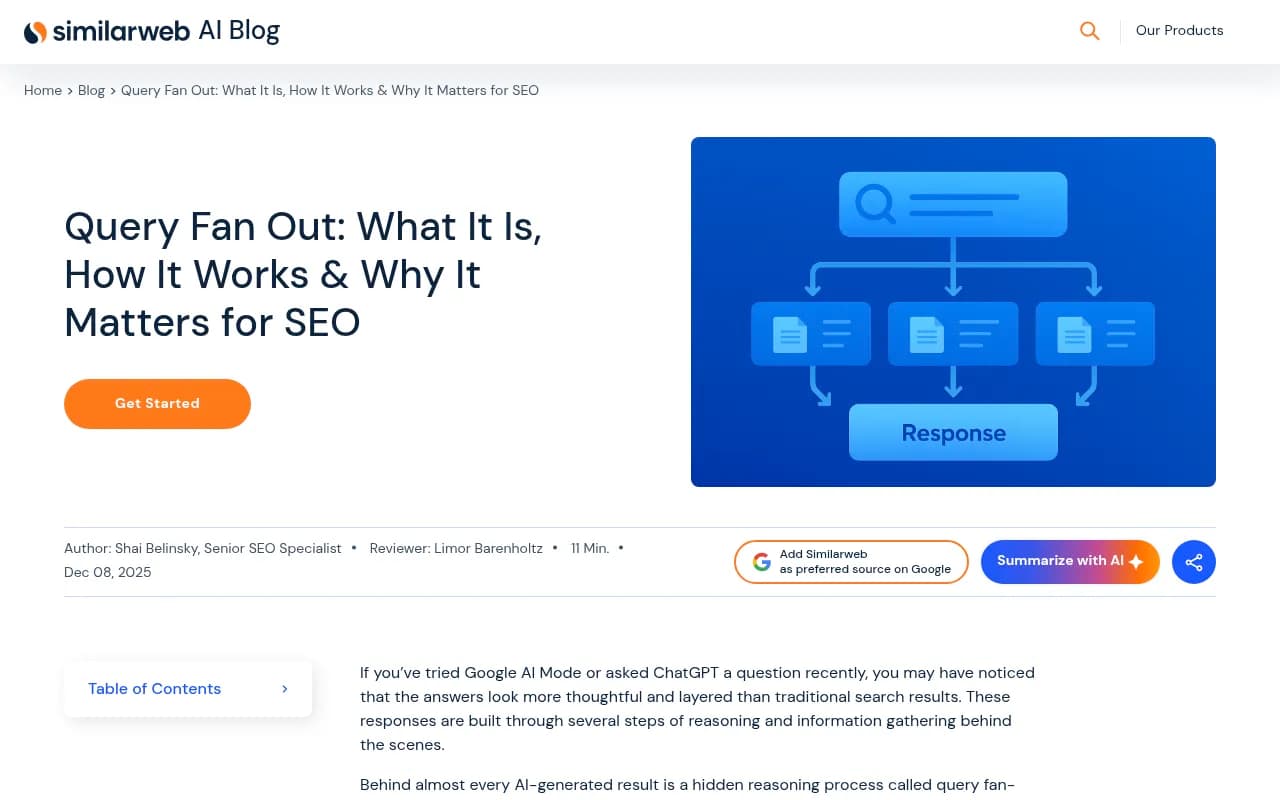
Someone types "best HVAC company near me" into ChatGPT. You'd think the model goes and searches that exact phrase. It doesn't. It breaks the question apart, runs several narrower searches in parallel, and stitches the results into one answer. This is called query fan-out, and it's the retrieval step hiding behind almost every AI-generated answer today.
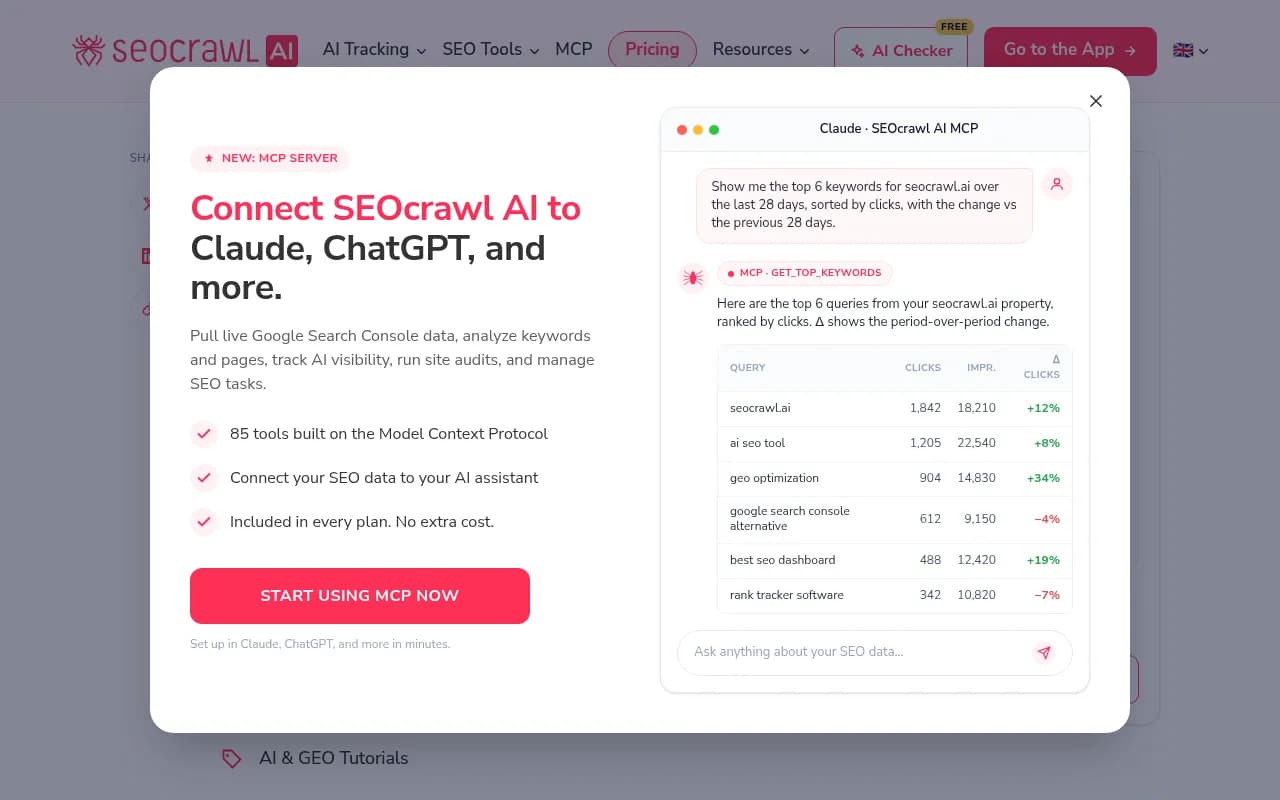
Google popularized the term when describing AI Mode, but the behavior isn't exclusive to Google. SEOcrawl AI describes it plainly: query fan-out "turns a single user prompt into dozens (and sometimes hundreds) of parallel sub-queries that an LLM retrieves and synthesizes into one answer." ChatGPT does it. Perplexity does it, though less often. Google AI Mode leans on it heavily.
For a local business this matters more than it does for, say, a SaaS company competing on a single head term. "Near me" prompts carry an implicit location and an implicit urgency, and the model has to resolve both before it can retrieve anything useful. A vague geographic phrase like "near me" gets rewritten into an actual place name behind the scenes, then split further into sub-questions about pricing, availability, reviews, and service area.
What actually happens when someone types a "near me" prompt
I tested this the boring way: typing local prompts into ChatGPT with search enabled and watching what it actually looks up. A prompt like "best emergency plumber near me" in a user located in Austin tends to fan out into something like this:
- "emergency plumber Austin Texas 24 hour service"
- "top rated plumbers Austin reviews"
- "plumber near downtown Austin availability"
- "Austin plumbing company pricing emergency call"
None of those four sub-queries is the original prompt. Each one pulls a different slice of the web: local directories for the first, Google reviews and Yelp for the second, Google Business Profile and map results for the third, competitor pricing pages for the fourth. The final answer merges whatever came back from all four searches, weighted by how trustworthy and specific each source looked.
Similarweb's research team frames the shift bluntly: "You're no longer competing for one search query. You're competing across every sub-query the AI system generates." For local businesses, that means optimizing your Google Business Profile, your review volume, and your service-area pages isn't optional context, it's literally what feeds the sub-queries that decide whether you show up.
How often does this actually happen?
Here's where the numbers get interesting, and a little uneven depending on the engine. LoudFace measured 3,718 AI answers to tracked buyer prompts across two engines between July 26 and August 25, 2026:
| Engine | Answers measured | Answers that fanned out | Median sub-queries per answer | Most sub-queries in one answer |
|---|---|---|---|---|
| ChatGPT | 2,375 | 47% | 1 | 15 |
| Perplexity | 1,343 | 2% | 1 | 7 |
The median tells you fan-out is not universal, most single answers still run on one query. But the overall rate tells a different story: nearly half of ChatGPT's answers split the original prompt into multiple searches, and the long tail on some of those answers runs to fifteen separate sub-queries for a single question. Perplexity barely bothers.
A separate angle on ChatGPT's retrieval behavior comes from Promptwatch's own tracking: ChatGPT's query fan-out data shows how many web searches ChatGPT triggers per response and how that volume has trended over time, which is useful context if you're trying to figure out whether your category is one where fan-out is common or rare. On August 8, 2026, ChatGPT Search also started using the site: operator at scale inside its fan-out searches, jumping from roughly 0.4% to about 17% of all fan-out queries almost overnight, according to Promptwatch's data on ChatGPT's site-operator fan-outs. That's relevant for local businesses too: if ChatGPT is running site: searches as part of its fan-out, it's increasingly checking individual domains directly rather than relying purely on general web search, which puts more weight on whether your own site (not just your Yelp listing) is crawlable and clearly structured.
Why your rank tracker doesn't see any of this
Most "AI visibility" tools, and most local SEO rank trackers, watch the prompt you typed and record whether your business showed up in the final answer. That's useful, but it's watching the output, not the process. If your business gets left out of an answer, a prompt-only tracker tells you "not visible" and stops there. It can't tell you whether you were left out because your Google reviews are thin, your service-area page doesn't mention the right neighborhood, or your site simply wasn't indexed for the sub-query that mattered.
Otterly.AI's own writeup calls this the "query fan-out problem" directly: "ChatGPT does it. Google AI Mode does it. Perplexity does it. The mechanism is identical: break the user's query into multiple sub-queries" and most content strategies are still built around the one visible prompt instead of the several invisible ones underneath it.
For a local business the practical fix isn't exotic. It's the same local SEO groundwork that's always mattered, just now feeding a different kind of retrieval:
- Keep your Google Business Profile categories, service areas, and hours current. Sub-queries about availability and location pull from this data directly.
- Build out service-area pages with actual neighborhood and city names, not just "near me" language on your own site. A sub-query like "plumber downtown Austin" needs a page that actually mentions downtown Austin.
- Push for fresh reviews across Google and the review sites your category leans on. A sub-query fishing for "top rated" pulls whatever has the most recent positive signal.
- Make sure pricing and service details are easy to find and unambiguous. A pricing-focused sub-query rewards clarity over vague "contact us for a quote" pages.
Tools for tracking local AI visibility
General-purpose AI visibility trackers exist, but very few are built with local, multi-location businesses in mind. Here's how the landscape breaks down.
| Tool | Focus | Good for local fan-out visibility? |
|---|---|---|
| Local Falcon [tool:local-falcon] | Visual geo-grid rank tracking for Google Business Profile | Yes, for map pack and geo-grid, not for AI chat answers |
| BrightLocal [tool:brightlocal] | Local SEO platform for multi-location businesses | Yes, for citations and review management feeding sub-queries |
| Whitespark [tool:whitespark] | Local SEO toolkit, citation building | Yes, for the citation data sub-queries often pull from |
| Uberall [tool:uberall] | Multi-location marketing, AI and local search visibility | Partially, covers listing consistency across locations |
| Chatmeter [tool:chatmeter] | Multi-location reputation and search visibility AI | Partially, strong on reputation signals |
| Promptwatch [tool:promptwatch] | AI search visibility and GEO, with prompt fan-out data and crawler logs | Yes, closest to seeing the actual sub-query and citation layer |
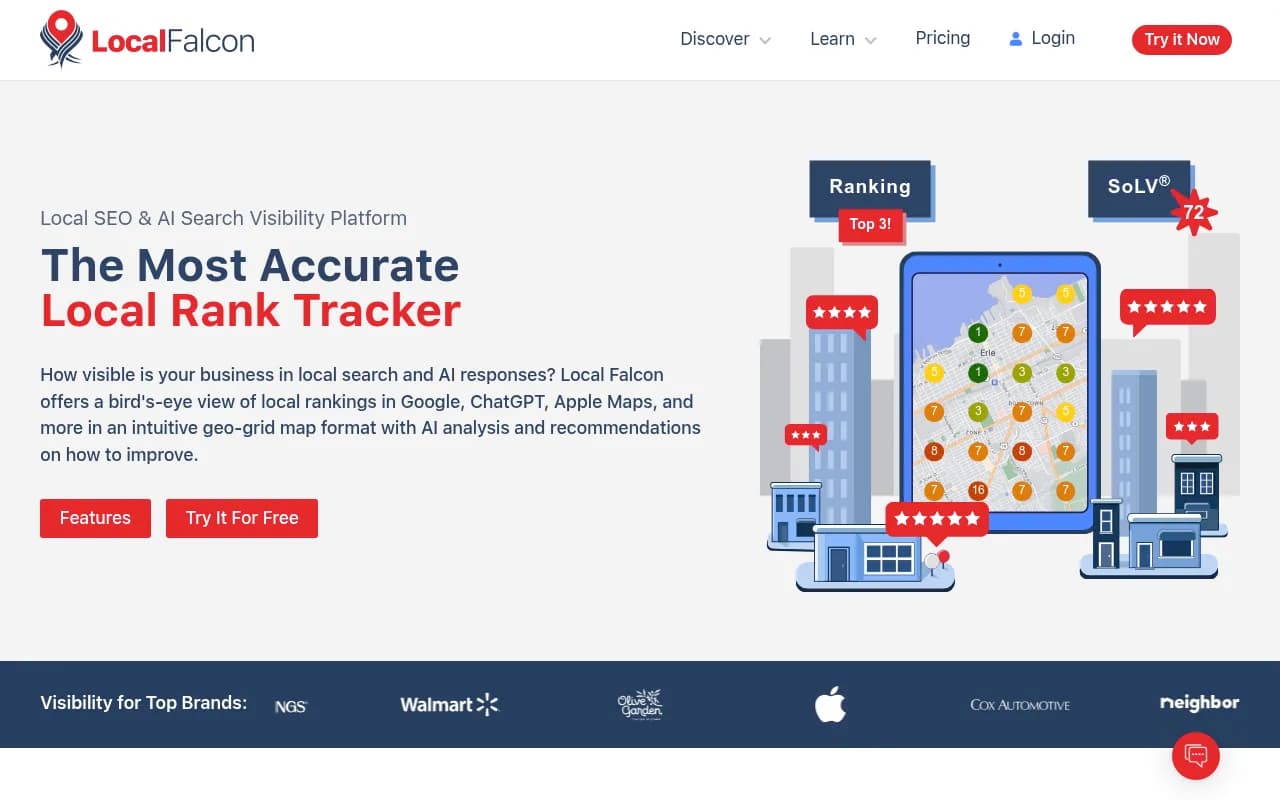
Local Falcon and BrightLocal solve the part of the problem that predates AI search entirely, geo-grid map pack visibility and citation consistency, which still feeds the local data layer that AI sub-queries draw from.
What none of the pure local SEO tools do is show you the actual sub-queries an AI engine ran, or which of your pages got cited in response to them. That's the gap Promptwatch is built to close. Its prompt intelligence layer tracks fan-out patterns and citation rates per prompt, its crawler logs show whether AI bots are actually reading your service-area pages, and its citation analytics reveal which specific pages (yours or a competitor's) get pulled into the final answer.

If you're a multi-location brand trying to figure out which locations are winning and which are getting skipped entirely in AI answers, that's a different problem than tracking one storefront's map pack ranking, and it needs the citation-level data most local SEO tools don't have.
A practical way to audit your own fan-out exposure
You don't need an expensive platform to start. Open ChatGPT with search turned on and ask it the exact question a customer would ask, phrased the way a real person would phrase it, including "near me" or your city name. Watch the little "searching the web" indicator; on most sessions it'll briefly show the actual queries it's running before it gives you the answer. Write those down. Do it five or six times with slightly different phrasing and you'll start to see a pattern in what the model is actually looking for.
Then go check whether your website, your Google Business Profile, and your top three review sites actually answer those specific sub-queries, not the original prompt. If the sub-query is "emergency plumber pricing Austin" and your homepage doesn't mention pricing or Austin anywhere, that's your gap, and it's a much more useful gap to know about than "I wasn't visible for 'best plumber near me.'"
For a deeper look at how AI citation behavior shifts over time across engines, and how much of it depends on content type, Promptwatch's average sources per response data is worth a glance, it shows how many sources engines like ChatGPT, Claude, Perplexity, and Gemini typically pull per answer, which gives you a rough sense of how many sub-queries you're realistically competing across.
If you're a local business owner or marketer trying to figure out which of these tools fits your budget and location count, the directory of GEO software at bestgeosoftware.com is a reasonable place to keep comparing options as the category keeps shifting month to month.