Key takeaways
- Otterly.AI is the most affordable entry point for AI visibility monitoring, starting at $29/month, but it's a tracking-only tool with no content optimization or gap analysis
- Goodie AI targets enterprise GEO teams with a strong feature set, but pricing is opaque and it lacks some of the action-oriented capabilities that matter most for actually improving visibility
- Promptwatch is the only one of the three that closes the full loop: find where you're invisible, generate content to fix it, then track whether it worked
- If you're just starting out and want cheap monitoring, Otterly.AI gets you in the door; if you want to actually move the needle, Promptwatch is the more complete platform
The AI visibility tool market has exploded. There were maybe 3 serious options in early 2025. By April 2026, there are over 20, and the gap between "monitoring dashboard" and "optimization platform" has become the most important distinction to understand before you spend any money.
This comparison focuses on three tools that come up constantly in practitioner conversations: Goodie AI, Otterly.AI, and Promptwatch. They're not the same type of product, which is exactly why the comparison is worth doing carefully.
What we're actually comparing
Before getting into features and pricing, it helps to be clear about what problem each tool is trying to solve.
The core challenge is this: AI models like ChatGPT, Perplexity, Claude, and Gemini are now answering questions your customers used to Google. When someone asks "what's the best project management tool for remote teams?" or "which CRM is best for B2B SaaS?", they get an AI-generated answer -- not a list of blue links. Whether your brand appears in that answer, and how it's described, is what AI visibility is about.
Monitoring tools tell you where you stand. Optimization platforms tell you what to do about it. The best tools do both.

Goodie AI
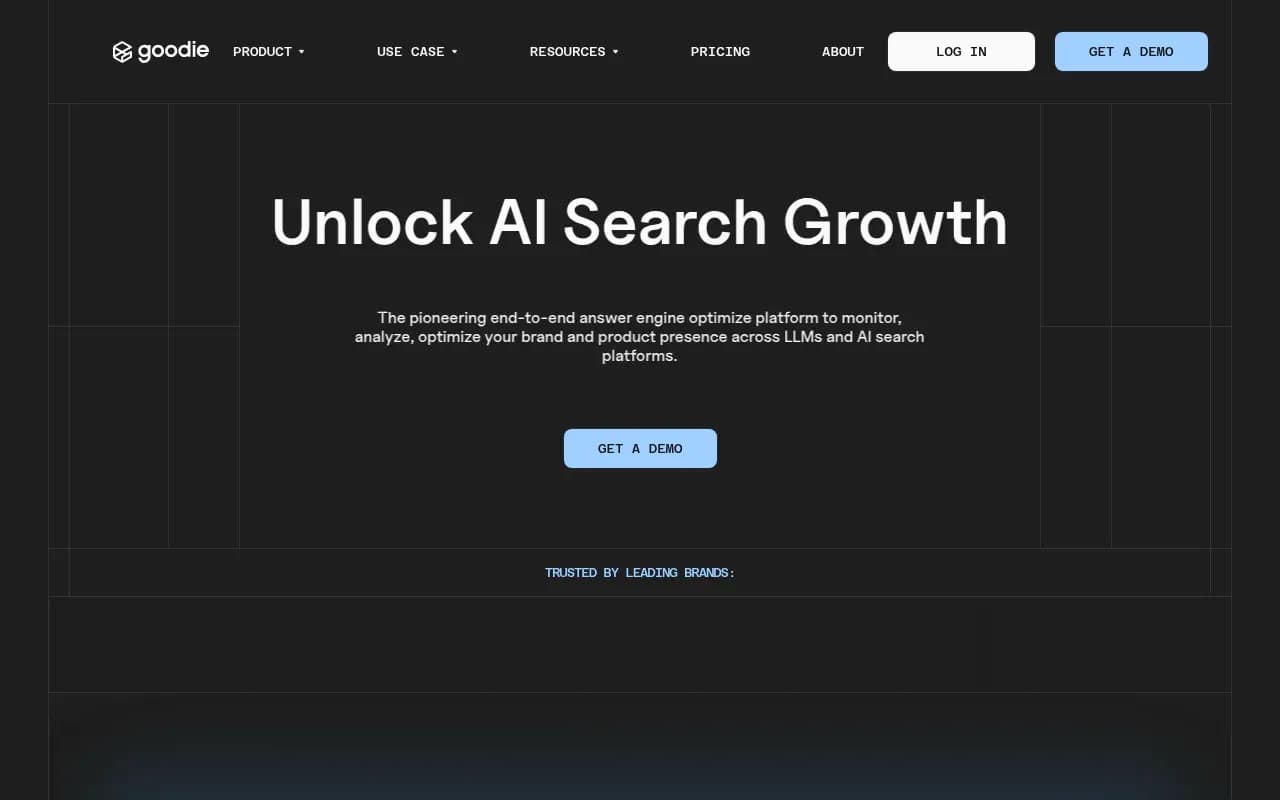
Goodie AI positions itself as an enterprise-grade GEO platform. It's built for brands that are serious about AI search and want a comprehensive view of how they appear across multiple LLMs.
What it does well
Goodie AI covers a solid range of AI models and gives you brand mention tracking, share of voice analysis, and competitor benchmarking. The interface is designed for marketing and SEO teams that need to report upward -- you get dashboards that look good in a slide deck and metrics that map to business outcomes.
For enterprise teams with dedicated GEO resources, Goodie AI provides the kind of depth you'd expect from a premium product. It handles multi-model tracking reasonably well and gives you a clear picture of where your brand stands relative to competitors across different AI platforms.
Where it falls short
The pricing is not publicly listed, which is a red flag for any team trying to evaluate tools without a sales call. Based on community reports and positioning, Goodie AI sits at the higher end of the market -- which is fine if the ROI is there, but harder to justify when you're still figuring out whether AI visibility monitoring is worth the investment at all.
More importantly, Goodie AI is primarily a monitoring tool. It shows you the data. What it doesn't do particularly well is help you act on it. There's no built-in content generation, no answer gap analysis that surfaces the specific prompts you're losing to competitors, and no crawler log visibility to understand how AI bots are actually reading your site.
Otterly.AI
Otterly.AI

Otterly.AI is the most accessible tool in this comparison. It's been around long enough to have a real user base, and its pricing is transparent and genuinely affordable.
What it does well
Otterly.AI starts at $29/month (or $25/month billed annually) for its Lite plan, which includes daily tracking of 15 prompts and covers Google AI Overviews alongside several LLMs. For a small team or a solo marketer who wants to start monitoring AI visibility without a big commitment, this is a reasonable entry point.
The interface is clean, the setup is fast, and you can start seeing data within a day or two of signing up. Otterly.AI also has a free tier with limited functionality, which is useful for a quick sanity check before committing.
Community feedback on Otterly.AI is generally positive for what it is: a lightweight monitoring tool that does what it says on the tin.
Where it falls short
Otterly.AI is monitoring-only. That's not a criticism -- it's just what it is. You can see whether your brand appears in AI responses. You can track share of voice over time. You can compare yourself to competitors.
But when you see that a competitor is getting cited for a prompt you're not, Otterly.AI can't tell you why, can't help you figure out what content to create, and can't generate that content for you. You're on your own for the "what do I do about this?" part.
At $29/month, that's a reasonable trade-off. At higher tiers (Otterly.AI scales up to $989/month for agencies), the value proposition gets harder to defend when more capable platforms exist at similar price points.
Promptwatch
Promptwatch takes a different approach from both Goodie AI and Otterly.AI. It's built around what the team calls the "action loop": find the gaps, create content to fill them, track the results.

What it does well
The core differentiator is that Promptwatch doesn't stop at showing you data. The Answer Gap Analysis feature identifies specific prompts where competitors are being cited but you're not -- and crucially, it tells you what content your site is missing that would make AI models want to cite you.
From there, the built-in AI writing agent generates articles, listicles, and comparison pieces grounded in real citation data. Promptwatch has processed over 880 million citations, so the content recommendations aren't generic SEO filler -- they're based on what AI models actually cite when answering questions in your category.
The crawler log feature is something most competitors don't offer at all. You can see exactly which AI bots (GPTBot, ClaudeBot, PerplexityBot, etc.) are hitting your site, which pages they're reading, and whether they're encountering errors. This matters because, as one practitioner noted in a Reddit thread on AI visibility, being invisible to AI models sometimes has nothing to do with content quality -- it's a technical access problem that no monitoring tool would catch.
Promptwatch also covers 10 AI models: ChatGPT, Perplexity, Google AI Overviews, Google AI Mode, Claude, Gemini, Meta/Llama, DeepSeek, Grok, and Mistral. That's broader coverage than either Goodie AI or Otterly.AI.
Other capabilities worth noting: Reddit and YouTube tracking (AI models frequently cite these sources, and most tools ignore them entirely), ChatGPT Shopping monitoring, prompt volume and difficulty scoring, and traffic attribution via GSC integration or server log analysis.
Pricing
Promptwatch's pricing is public and tiered:
- Essential: $99/month (1 site, 50 prompts, 5 articles/month)
- Professional: $249/month (2 sites, 150 prompts, 15 articles/month, crawler logs, state/city tracking)
- Business: $579/month (5 sites, 350 prompts, 30 articles/month)
- Agency/Enterprise: custom pricing
A free trial is available. Annual billing reduces the monthly cost.
Where it falls short
Promptwatch is more expensive than Otterly.AI at every tier. If you genuinely only need basic monitoring and have no interest in content optimization, you're paying for features you won't use. The Essential plan at $99/month is a reasonable starting point for most marketing teams, but it's a bigger commitment than Otterly.AI's $29 entry.
Side-by-side comparison
| Feature | Goodie AI | Otterly.AI | Promptwatch |
|---|---|---|---|
| Starting price | Not public | $29/month | $99/month |
| AI models covered | Multiple (unspecified) | 6 platforms | 10 platforms |
| Brand mention tracking | Yes | Yes | Yes |
| Share of voice | Yes | Yes | Yes |
| Competitor benchmarking | Yes | Yes | Yes |
| Answer gap analysis | No | No | Yes |
| Built-in content generation | No | No | Yes |
| AI crawler logs | No | No | Yes (Professional+) |
| Reddit/YouTube tracking | No | No | Yes |
| ChatGPT Shopping tracking | No | No | Yes |
| Prompt volume/difficulty | No | No | Yes |
| Traffic attribution | No | No | Yes |
| Free trial | Unclear | Yes (limited) | Yes |
| Target audience | Enterprise | SMB/Agency | SMB to Enterprise |
Which one should you actually sign up for?
The honest answer depends on where you are and what you need.
If you want to dip your toes in for minimal cost, Otterly.AI is the right starting point. $29/month gets you real data on whether your brand is showing up in AI responses. It won't tell you what to do about it, but it'll tell you where you stand. That's a reasonable first step.
If you're an enterprise team with a dedicated GEO function and need a polished dashboard for stakeholder reporting, Goodie AI is worth evaluating. Just be prepared for a sales conversation before you see pricing.
If you want to actually improve your AI visibility -- not just track it -- Promptwatch is the more complete option. The combination of gap analysis, content generation, crawler logs, and traffic attribution means you're not just watching a number go up and down; you have a system for moving it in the right direction. The 6,700+ brands using it, including Booking.com and Center Parcs, suggest the platform delivers on that promise at scale.
The broader point: most AI visibility tools are monitoring dashboards. They show you data and leave you to figure out what to do with it. That was fine in 2024 when just having visibility data was novel. In 2026, with AI search driving a meaningful percentage of referral traffic for most sites, "we're tracking it" is no longer enough. The tools that help you act on the data are the ones worth paying for.
A note on the monitoring-only trap
One thing that comes up repeatedly in practitioner communities is the frustration of having good data and no clear path forward. You can see that a competitor is getting cited for 40 prompts you're not. You can see your share of voice is declining. But the tool just shows you the gap -- it doesn't help you close it.
This is the core limitation of monitoring-only tools, and it's worth being honest about when evaluating Otterly.AI or Goodie AI. The data is valuable. But data without action is just anxiety.
The tools that are winning in 2026 are the ones that connect visibility data to content creation to traffic attribution -- a complete loop rather than a single data point. That's what separates a monitoring tool from an optimization platform.
Other tools worth knowing about
If none of the three main options quite fit your situation, a few others are worth a look:
Peec AI covers multiple languages and is strong for B2B and SaaS brands with international audiences.

Profound is a solid enterprise option with a read/write AI model and automation capabilities, though it's priced accordingly.
Profound

SE Ranking is worth considering if you're already using it for traditional SEO -- the AI visibility add-on integrates cleanly with your existing workflow.
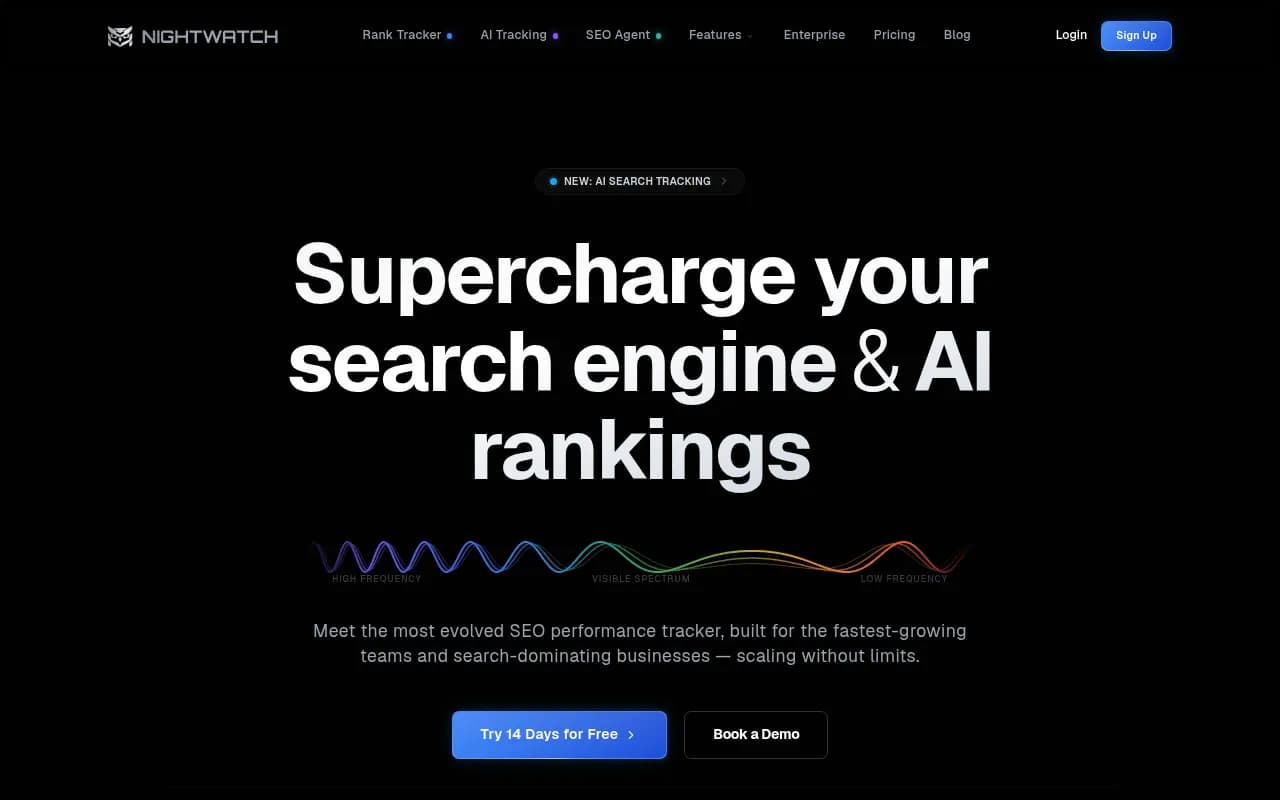
Nightwatch is a good option if you need both traditional rank tracking and AI visibility monitoring in one place, starting at $39/month with an AI add-on.
Bottom line
Goodie AI, Otterly.AI, and Promptwatch are solving related but different problems. Otterly.AI is a cheap, honest monitoring tool. Goodie AI is a premium monitoring tool with enterprise positioning. Promptwatch is the only one of the three that's genuinely trying to help you improve your visibility, not just measure it.
For most marketing teams in 2026, the question isn't whether to track AI visibility -- it's whether you're going to do anything about what you find. Pick your tool accordingly.