Key takeaways
- Goodie AI, Rankshift, LLM Pulse, and Omnia are all entry-level AI visibility tools aimed at small teams who want to track brand mentions across ChatGPT, Perplexity, and similar platforms without enterprise pricing.
- All four are primarily monitoring tools -- they show you where you appear (or don't), but none offer meaningful content generation or optimization workflows to help you fix visibility gaps.
- LLM Pulse is the most agency-friendly of the four, with clean reporting and multi-client support. Rankshift has the clearest UI for solo operators. Omnia and Goodie AI are the most minimal.
- If you outgrow these tools quickly -- which many teams do -- Promptwatch is worth evaluating as a step up: it covers the full cycle from gap analysis to content creation to tracking results.
The AI visibility tool market has exploded. There are now well over 40 platforms claiming to track how your brand appears in ChatGPT, Perplexity, Gemini, and the rest. Most of them look the same on a landing page. The differences only show up when you actually try to use them.
This guide focuses on four tools that show up repeatedly in conversations about lightweight, affordable options for small teams: Goodie AI, Rankshift, LLM Pulse, and Omnia. None of them are enterprise platforms. None of them are trying to be. The question is whether any of them give you enough to actually act on -- or whether they're just dashboards that tell you what you already suspect.
Let's get into it.
What these tools actually do (and don't do)
Before comparing them head-to-head, it's worth being clear about what this category of tool does.
AI visibility tools track how often your brand appears in AI-generated answers. You set up a list of prompts -- things like "best project management tools for startups" or "what CRM should a small sales team use" -- and the tool runs those prompts across one or more AI models, then reports back whether your brand was mentioned, how prominently, and with what sentiment.
That's the core loop. Where tools diverge is in:
- How many AI models they cover
- How often they run prompts
- Whether they show you competitor data
- Whether they help you do anything about the gaps they find
The four tools in this guide all sit in the "monitoring-first" tier. They're good at showing you data. They're less good at helping you act on it. That's not a dealbreaker for every team -- but it's worth knowing going in.
The tools
Goodie AI
Goodie AI positions itself as a simple entry point into GEO (Generative Engine Optimization) monitoring. The pitch is straightforward: set up your brand, define some prompts, and see how you're showing up across AI search engines.
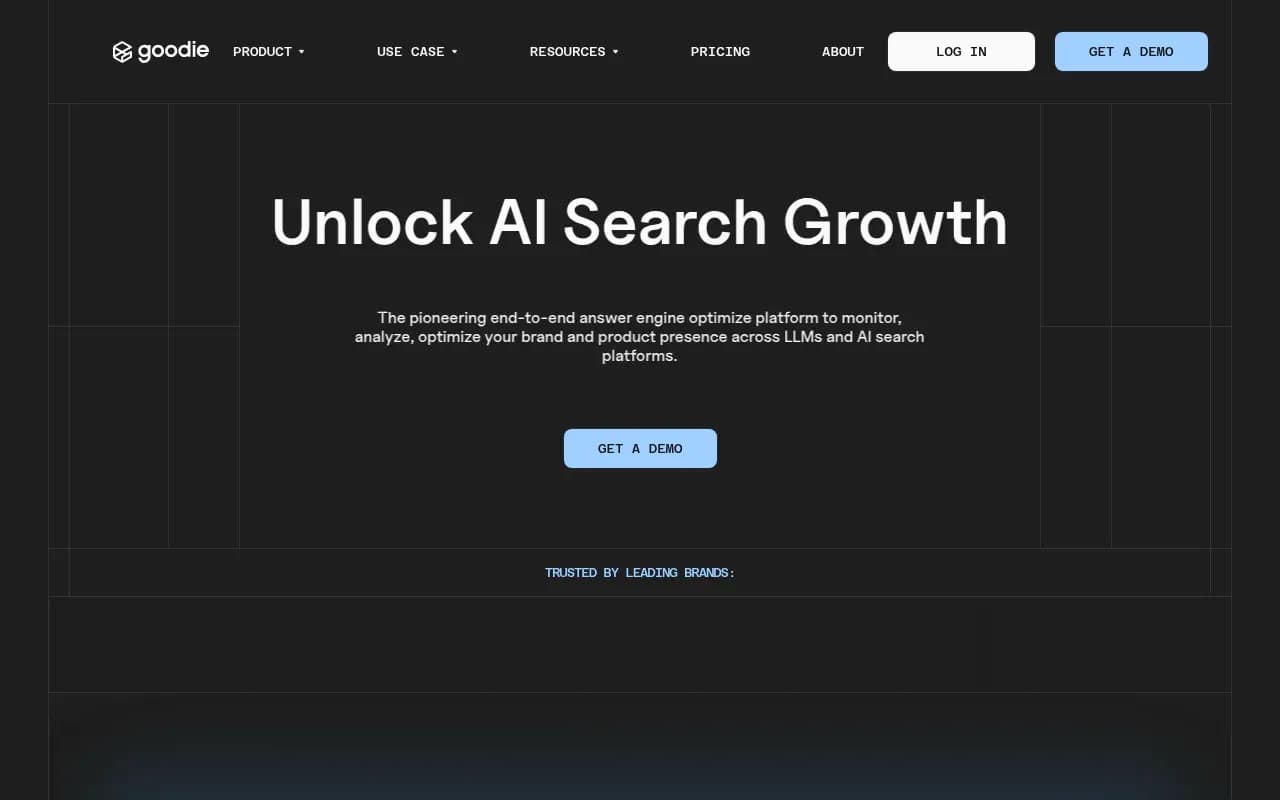
The interface is clean and minimal. For a solo founder or a small marketing team that just wants a pulse on AI visibility without a complex onboarding process, that simplicity is genuinely useful. You're not wading through feature menus you don't need.
The limitations are real, though. Goodie AI's model coverage is limited compared to more mature platforms. It doesn't offer prompt volume data (so you can't tell which prompts are actually worth tracking), and there's no content gap analysis or optimization workflow. You'll see where you're missing -- but the tool won't help you figure out what to write to fix it.
Best for: Founders or small teams who want a basic read on AI visibility and aren't yet ready to invest in a full platform.
Rankshift
Rankshift focuses specifically on tracking brand visibility across ChatGPT, Perplexity, and AI search more broadly. It's built with a clean, modern UI that makes it easy to get started quickly.

What Rankshift does well is clarity. The dashboard makes it obvious which prompts you're winning and which you're not. Competitor comparisons are available, which is more than some tools at this price point offer. For a small team that wants to benchmark itself against two or three competitors without a lot of setup friction, Rankshift is genuinely usable.
The gaps: like Goodie AI, Rankshift is a monitoring tool. There's no content generation, no crawler log data, and no traffic attribution. You can see that a competitor is outranking you for "best email marketing tool for e-commerce" -- but Rankshift won't help you create the content that might change that.
Best for: Small marketing teams or solo operators who want clean competitor benchmarking without a steep learning curve.
LLM Pulse
LLM Pulse markets itself specifically toward agencies and small teams that want straightforward AI brand tracking. The emphasis is on clean reporting and multi-client support, which makes it a bit more structured than Goodie AI or Rankshift.
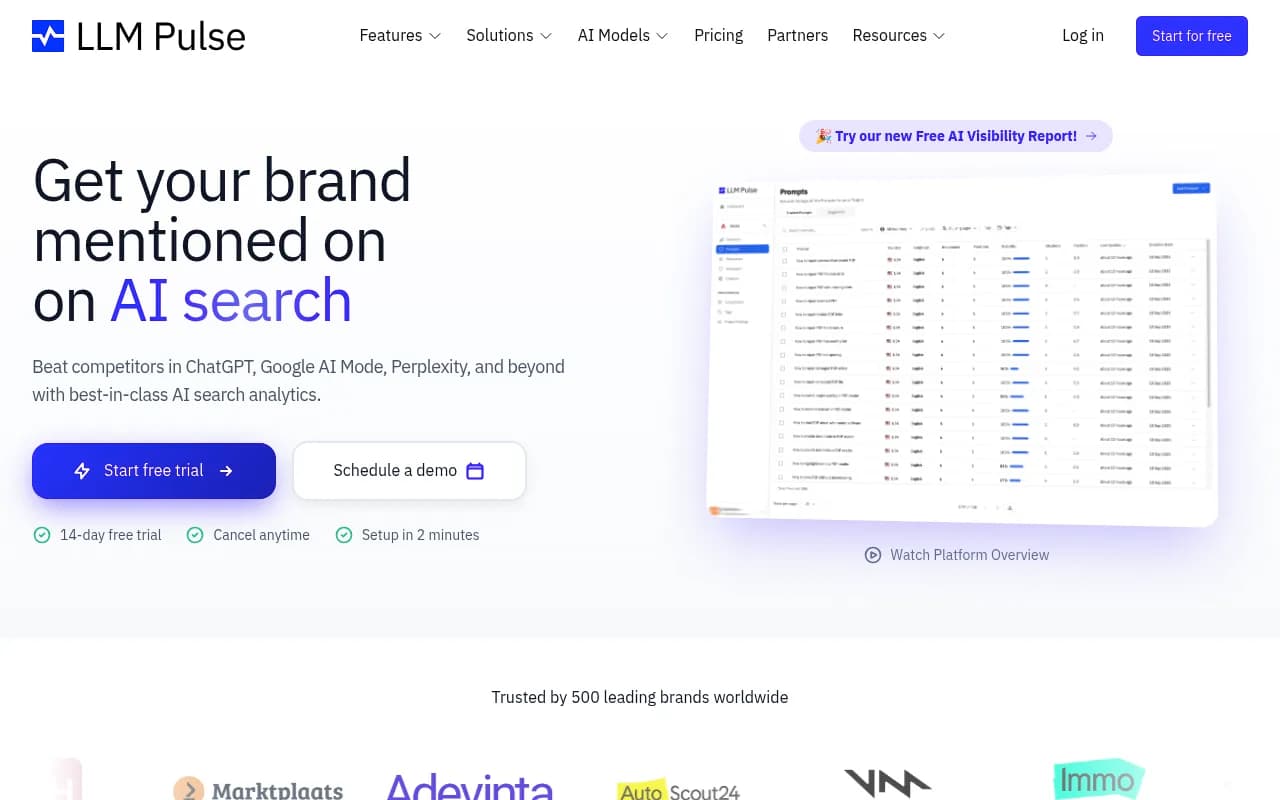
The agency angle is real. LLM Pulse's reporting is designed to be shareable -- you can pull together visibility data for a client without a lot of manual work. That's a meaningful differentiator if you're managing AI visibility for multiple brands rather than just your own.
On the feature side, LLM Pulse tracks mentions across the major AI models, shows share-of-voice trends over time, and lets you set up prompt groups by topic or campaign. It's more organized than the other three tools in this comparison, which matters when you're juggling more than one brand.
The ceiling is still the same: no content optimization, no crawler monitoring, no gap-to-fix workflow. It's a reporting tool, not an optimization platform.
Best for: Small agencies or consultants managing AI visibility for multiple clients who need clean, shareable reporting.
Omnia
Omnia (useomnia.com) takes a slightly different angle -- it focuses on measuring brand presence in AI-generated answers with an emphasis on accuracy and response quality, not just mention counts.
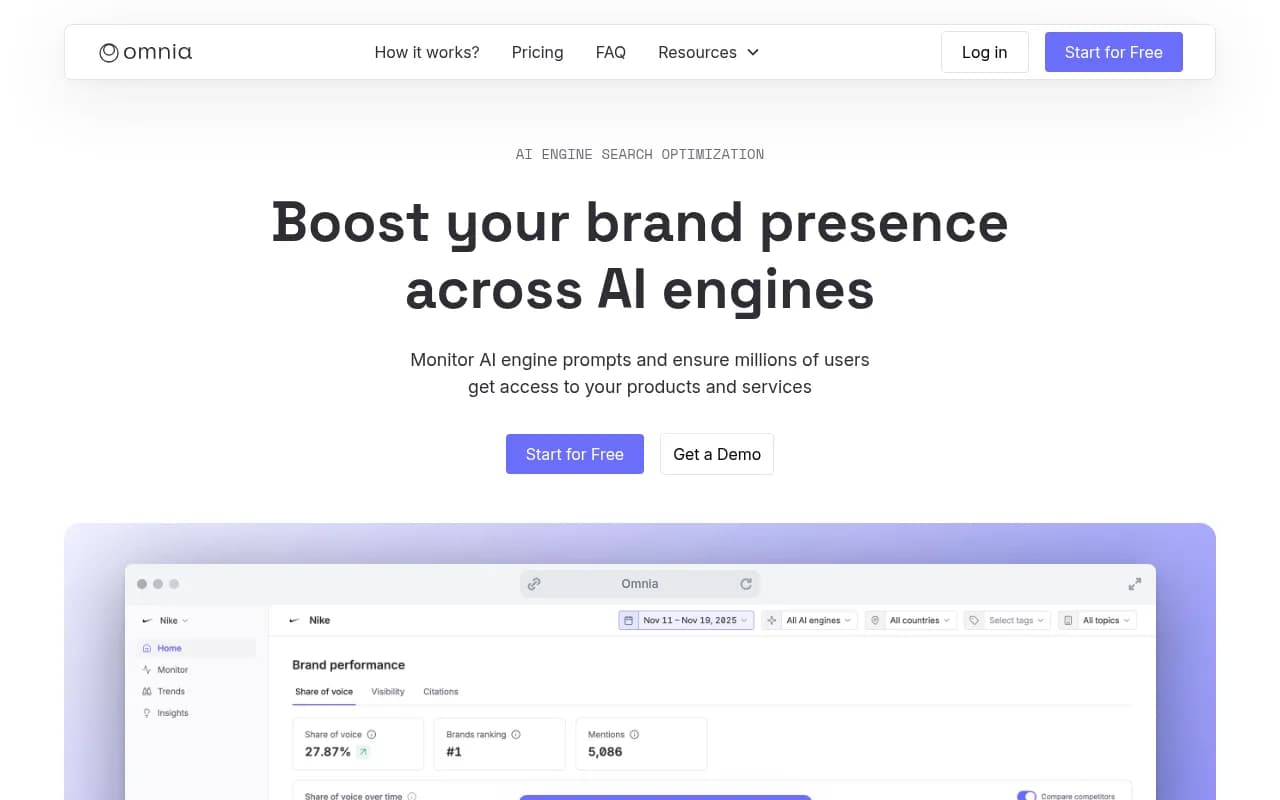
The distinction matters. A lot of AI visibility tools just count whether your brand name appeared in a response. Omnia tries to go a level deeper: was the mention positive? Was your brand recommended, or just referenced? That nuance is genuinely useful for brand teams who care about how they're being described, not just whether they're showing up.
The tradeoff is that Omnia is narrower in scope. It doesn't have the breadth of prompt management that LLM Pulse offers, and it's not trying to be a full GEO platform. Think of it as a brand sentiment layer for AI search, rather than a comprehensive visibility tracker.
Best for: Brand managers who care more about the quality and sentiment of AI mentions than raw share-of-voice metrics.
Head-to-head comparison
| Feature | Goodie AI | Rankshift | LLM Pulse | Omnia |
|---|---|---|---|---|
| AI models covered | Limited | ChatGPT, Perplexity | Multiple major LLMs | Multiple major LLMs |
| Competitor tracking | Basic | Yes | Yes | Limited |
| Prompt management | Basic | Basic | Organized by groups | Basic |
| Sentiment analysis | No | Limited | Limited | Yes (core feature) |
| Multi-client / agency support | No | No | Yes | No |
| Content gap analysis | No | No | No | No |
| Content generation | No | No | No | No |
| Crawler / bot log monitoring | No | No | No | No |
| Traffic attribution | No | No | No | No |
| Prompt volume data | No | No | No | No |
| Best for | Solo founders | Small teams | Small agencies | Brand managers |
The pattern is consistent: all four tools are monitoring dashboards. They vary in how they present data and which specific angle they emphasize (competitor benchmarking, agency reporting, sentiment quality), but none of them close the loop from "here's where you're invisible" to "here's what to do about it."
The monitoring-only ceiling
This is worth saying plainly, because it affects how you should think about these tools.
Monitoring your AI visibility is useful. Knowing that you appear in 12% of relevant ChatGPT responses while your main competitor appears in 34% is actionable information -- in the sense that it tells you there's a problem. But knowing there's a problem and knowing how to fix it are different things.
None of these four tools will tell you:
- Which specific topics or content angles are driving your competitor's visibility
- What content you're missing that AI models are actively looking for
- Whether AI crawlers are even finding your existing pages
- Which of your pages are being cited and which are being ignored
That's the gap between monitoring tools and optimization platforms. For a team just getting started with AI visibility, a monitoring tool might be enough -- you're learning the landscape, building a baseline, figuring out which prompts matter. But most teams hit the ceiling within a few months and start asking "okay, now what?"
If you're already past that point, platforms like Promptwatch are worth a look. Promptwatch covers the full cycle: answer gap analysis that shows exactly which prompts competitors are visible for but you're not, content agents that generate articles grounded in real prompt data, and page-level tracking that shows which content is actually getting cited by which models.

It's a different category of tool -- and a different price point -- but for teams that have moved past "I want to see my visibility score" to "I want to actually improve it," the gap matters.
How to choose between these four
If you're deciding between Goodie AI, Rankshift, LLM Pulse, and Omnia specifically, here's the honest breakdown:
Choose Goodie AI if you want the simplest possible entry point and you're still figuring out whether AI visibility tracking is worth investing in at all. It's a low-commitment way to start.
Choose Rankshift if you want clean competitor benchmarking and a modern interface. It's the most polished of the four for a solo operator or small in-house team.
Choose LLM Pulse if you're an agency or consultant managing visibility for multiple clients. The reporting structure is better suited to multi-brand workflows than the other three.
Choose Omnia if brand sentiment is your primary concern -- if you care more about how AI models describe your brand than about raw mention frequency.
What to watch for as you evaluate
A few things worth checking before you commit to any of these tools:
Prompt freshness: How often does the tool actually re-run your prompts? Some tools run queries weekly or even less frequently, which means you're looking at stale data. AI models update their knowledge and behavior regularly, so prompt frequency matters.
Model coverage: "Tracks ChatGPT" can mean very different things. Does it track the web-browsing version? The API? The actual user-facing interface? The answers can differ significantly. Ask specifically which version of each model is being queried.
Prompt construction: Who builds the prompts? If you're defining them yourself from scratch, you're guessing at what real users ask. Better tools give you some signal about which prompts have actual search volume or user intent behind them.
Export and reporting: If you need to share data with stakeholders or clients, check whether the tool has usable export options. Some of these lighter tools have minimal reporting capabilities.
The bigger picture
The AI visibility tool market in 2026 is crowded with monitoring dashboards. Most of them are built on the same basic mechanic: schedule prompts, store responses, display metrics. The differentiation is in data quality, model coverage, and -- most importantly -- whether the tool helps you do something with what you find.
For small teams on tight budgets, Goodie AI, Rankshift, LLM Pulse, and Omnia are all reasonable starting points. They're accessible, they're not overwhelming, and they'll give you a baseline sense of where you stand in AI search.
Just go in knowing what they are: trackers, not optimizers. The moment you want to move from "I see the gap" to "I'm closing the gap," you'll need something more.

The market is maturing fast. Teams that start with a lightweight tracker today will likely want more capability within six to twelve months. Building that expectation into your evaluation now -- and choosing a tool you can grow with or migrate from cleanly -- is probably the most practical thing you can do.