Key takeaways
- Google AI Overviews and AI Mode are built on the same Gemini model but behave as separate ranking systems with different citation logic, user intent, and optimization requirements.
- Only 14% of URLs cited in AI Mode rank in Google's traditional top 10, meaning classic SEO rankings don't automatically translate to AI Mode visibility.
- Being cited in an AI Overview drives 35% more organic clicks and 91% more paid clicks than not being cited -- making AIO citation one of the highest-leverage wins in search right now.
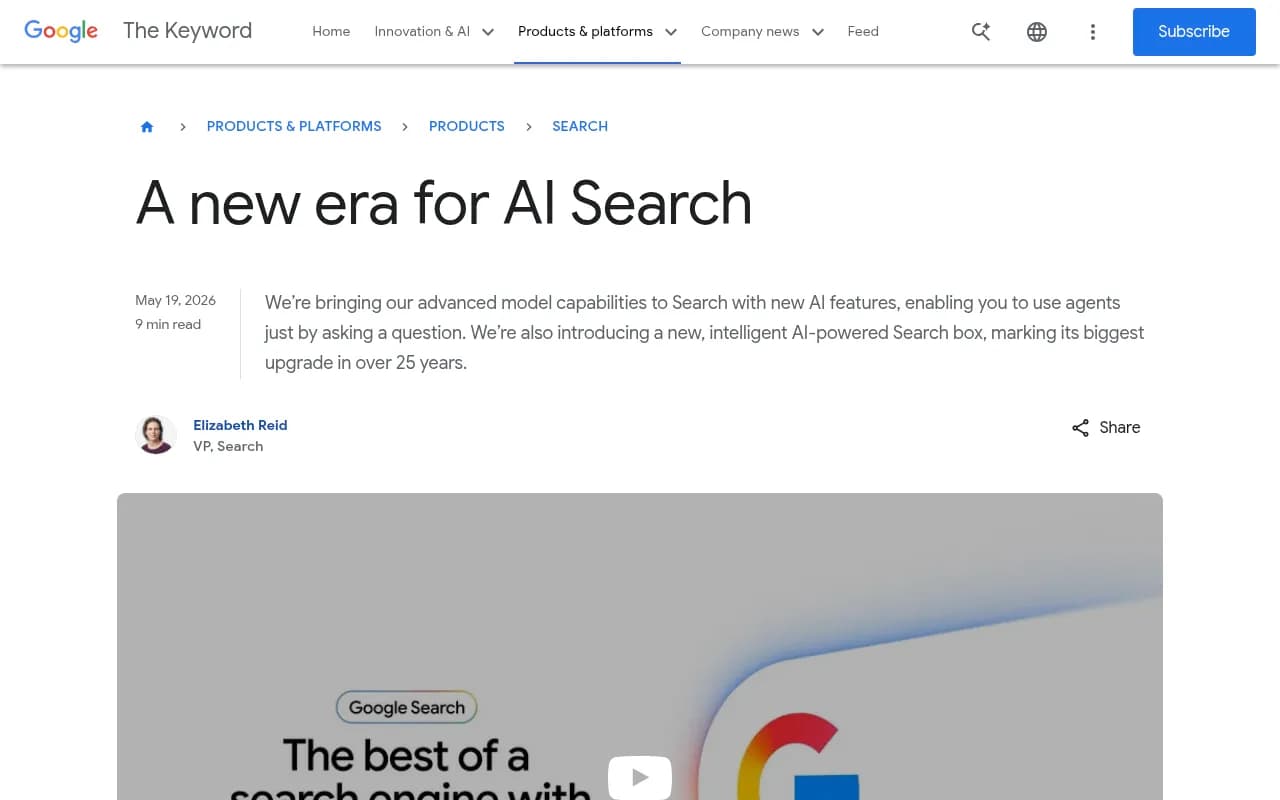
- Google announced at I/O 2026 (May 19) that AI Overviews and AI Mode are merging into "one seamless AI Search experience," but the optimization strategies remain distinct for now.
- Winning in both surfaces requires different content approaches: AI Overviews reward concise, structured answers; AI Mode rewards depth, entity clarity, and conversational authority.
Google has quietly built two different AI search systems inside the same search box, and most SEO teams are treating them as one problem. That's a mistake that's costing visibility right now.
AI Overviews and AI Mode share an underlying model (Gemini), but they serve different users doing different things. The citation signals differ. The content formats that win differ. Even the traffic impact differs. If you're writing one "AI SEO strategy" and hoping it covers both surfaces, you're probably underperforming on at least one of them.
Here's what actually separates them, and what to do about it.
What each surface actually is
Before getting into strategy, it's worth being precise about what we're talking about -- because the terminology gets sloppy fast.
Google AI Overviews
AI Overviews (AIOs) are the AI-generated summaries that appear above the blue links on a standard Google SERP. They launched broadly in the US in May 2024 and now reach roughly 2.5 billion users per month. Since January 27, 2026, they've been powered by Gemini 3 as the default model worldwide.
The key thing to understand about AIOs: they appear in the context of a normal search. The user typed something into Google, got a page of results, and the AIO sits at the top of that page. The user didn't ask for a conversation. They asked a question and want an answer fast.
AIOs are primarily triggered by informational queries -- "what is," "how does," "why does," that kind of thing. They synthesize a short answer and cite a handful of sources. Those citations are the prize.
Google AI Mode
AI Mode is a dedicated tab on Google Search, sitting next to "All," "Images," and "Shopping." It launched broadly in 2025 and hit 1 billion monthly users within 12 months. It runs on Gemini 3.5 Flash and is built for longer, more complex, conversational queries.
The average AI Mode query is 3x longer than a classic Google search. Users in AI Mode are researching, comparing, planning -- not just looking for a quick fact. The experience is closer to Perplexity or ChatGPT than to traditional Google Search.
This matters because the citation logic is different. AI Mode pulls from a much wider source pool, synthesizes across more documents, and weights things like entity clarity, source authority, and freshness more heavily than traditional ranking signals.
The convergence announcement (and why it doesn't change your strategy yet)
At Google I/O on May 19, 2026, Google announced that AI Overviews and AI Mode are being merged into "one seamless AI Search experience." The boundary between the two surfaces will blur over the next few quarters.
But here's the thing: the optimization work doesn't blur with it. Even if the surfaces eventually share a unified interface, the underlying intent differences -- quick answer vs. deep research -- will still require different content approaches. Think of it like how Google's desktop and mobile results technically come from the same index but still require different optimization considerations.
The numbers that should change how you prioritize
A few data points from quickseo.ai's 2026 analysis of AI Overviews are worth sitting with:
- Being cited in an AI Overview earns 35% more organic clicks and 91% more paid clicks compared to not being cited.
- In AI Mode, only 14% of cited URLs rank in Google's traditional top 10.
That second number is the one that should make you stop. If you're assuming that ranking #1 in traditional Google automatically means you'll be cited in AI Mode, you're working from a false premise. AI Mode is pulling from a different pool, using different signals. A site that ranks #1 organically can be completely invisible in AI Mode while a site ranking #15 gets cited repeatedly.
The first number tells you that AIO citation is worth fighting for -- not just for brand awareness, but because it actually drives measurable traffic and conversion lift.
How the ranking systems differ
| Factor | AI Overviews | AI Mode |
|---|---|---|
| Primary trigger | Informational queries | Complex, conversational, research queries |
| Query length | Short (standard search) | 3x longer than classic search |
| Citation pool | Skews toward top-ranked pages | Only 14% of citations come from top 10 |
| Content format that wins | Concise, structured, direct answers | Depth, entity clarity, conversational authority |
| User intent | Quick answer | Research, comparison, planning |
| Traffic impact | +35% organic clicks when cited | Emerging -- harder to measure directly |
| Freshness weight | Moderate | Higher (especially for fast-moving topics) |
| Brand mentions signal | Moderate | High |
Strategy for AI Overviews
AIOs reward content that answers questions directly and efficiently. Google's model is essentially asking: "If I had to summarize an answer to this query, which page would I pull from?" The pages that win are the ones that make that job easy.
Structure for extraction
The most reliable AIO citation pattern is content that leads with the answer. Not a preamble, not a definition of the topic, not a history of the concept -- the actual answer, in the first paragraph.
Use clear H2 and H3 headings that mirror the question being asked. If someone searches "how does AI Mode work," your section heading should be something close to "How AI Mode works" -- not "Understanding Google's conversational search interface."
Bullet lists and numbered steps get extracted frequently. If your answer involves a process, format it as a numbered list. If it involves a comparison, use a table. These structures are easy for Gemini to lift and cite.
Answer the full question, not just the obvious part
AIOs often synthesize across multiple sources because no single source answers the complete question. If you can write content that covers the primary question AND the follow-up questions a user would naturally have, you reduce the model's need to go elsewhere.
This is where traditional SEO content often falls short. A 300-word FAQ answer might rank fine organically but gets passed over for AIO citation because it only covers part of the question. A 600-word answer that addresses the question, the context, and the common misconceptions is much more citable.
Technical signals still matter
Page speed, Core Web Vitals, and crawlability are table stakes. If Google's crawler can't efficiently read your page, it won't be in the citation pool regardless of content quality. Make sure your pages are clean, fast, and properly indexed.
Google Search Console is still the best free tool for monitoring which of your pages are being indexed and how they're performing in traditional search -- which remains a prerequisite for AIO citation.
Strategy for AI Mode
AI Mode is a different problem. The 14% overlap with traditional top-10 rankings means you need to think about this surface almost independently.
Entity clarity and brand authority
AI Mode weights entity signals heavily. This means Google needs to understand clearly what your brand is, what it does, who it serves, and what it's known for. Vague or inconsistent entity signals -- different descriptions across your site, inconsistent brand mentions across the web -- hurt your chances of being cited.
Make sure your About page, homepage, and key landing pages all describe your brand consistently. Use schema markup (Organization, Article, FAQ, HowTo) to give Google structured signals about your content and your entity.
Tools like WordLift can help you implement structured data and entity optimization systematically, which is particularly valuable for AI Mode visibility.
Freshness and topical depth
AI Mode handles research queries, which means users are often looking for current, comprehensive information. Stale content that hasn't been updated in 18 months is at a disadvantage, especially in fast-moving categories.
Build a content update cadence. Identify your most important pages and schedule quarterly reviews. When you update a page, make the update visible -- add a "Last updated" date, add a new section addressing recent developments, or revise the introduction to reflect current context.
Topical depth matters too. AI Mode tends to cite sources that have established authority on a topic, not just sources that have one good article. If you have five strong articles on a topic, you're more likely to be cited than if you have one great article and nothing else on the subject.
Conversational content formats
Because AI Mode users are asking longer, more complex questions, the content that gets cited tends to be more conversational and comprehensive. This doesn't mean longer for the sake of longer -- it means content that genuinely addresses the nuance of a question.
Comparison content performs particularly well in AI Mode. "X vs Y" articles, "best tools for [specific use case]" lists, and "how to choose between X and Y" guides match the research intent of AI Mode users almost perfectly.
Brand mentions across the web
SE Ranking's analysis of AI Mode citation signals identifies brand mentions as a significant factor -- not just links, but mentions. Reddit threads, YouTube videos, third-party reviews, and industry publications that reference your brand by name contribute to the signal that tells AI Mode "this is a credible source worth citing."
This is a shift from traditional SEO, where a mention without a link was largely worthless. In AI Mode, unlinked brand mentions in credible contexts carry real weight.

Tracking visibility across both surfaces
Here's the practical problem: most SEO tools were built for traditional rank tracking. They'll tell you where you rank for a keyword in the blue links. They won't tell you whether you're being cited in AI Overviews or AI Mode, and they definitely won't tell you which pages are being cited, by which AI surfaces, and how often.
You need different tools for this.

Promptwatch tracks AI visibility across Google AI Overviews, AI Mode, and nine other AI search engines. It shows you which pages are being cited, which prompts are triggering citations, and -- importantly -- which prompts your competitors are visible for that you're not. That gap analysis is where the actual optimization work starts.
SE Ranking has built out AI visibility tracking alongside its traditional rank tracking, and their research team (cited earlier in this guide) has published some of the most useful data on AI Mode citation signals available right now.
Semrush has added AI Overview tracking to its platform, though its approach uses fixed prompts rather than dynamic prompt monitoring -- useful for baseline tracking, less useful for discovering new opportunities.
The B2B angle: AI Mode is changing the buying journey
One thing worth flagging specifically for B2B marketers: Discovered Labs' analysis of the May 2026 search update found that AI Mode is materially changing how B2B buyers research software before contacting sales or booking demos.
Buyers are now using AI Mode to do the kind of research that used to happen in sales calls. They're asking "what's the difference between X and Y for a company with 50 employees" or "what are the main complaints about [software] from enterprise users." If your content doesn't show up in those AI Mode responses, you're invisible during a critical decision-making moment.
For B2B companies, this means:
- Comparison content is no longer optional. If you're not publishing honest, detailed comparisons of your product vs. competitors, AI Mode will cite someone else's comparison when buyers ask.
- Use case specificity matters. "Our software helps businesses" won't get cited. "Our software helps logistics companies track carrier performance across 50+ lanes" will.
- Customer language beats marketing language. AI Mode responds to the way buyers actually phrase questions, not the way marketing teams write product descriptions.
Putting it together: a practical prioritization framework
Given limited time and resources, here's how to think about where to focus:
If you're primarily losing traffic from informational queries -- blog posts, FAQ pages, educational content -- AI Overviews is your immediate problem. Focus on structured content, direct answers, and making your pages easy to extract from.
If you're in a B2B category, a high-consideration purchase category, or any space where buyers do serious research before converting, AI Mode is where your future pipeline is being decided. Invest in comparison content, topical depth, and entity clarity.
If you're not sure which surface is affecting you more, track it. You can't optimize what you can't measure, and the citation patterns in AIOs vs. AI Mode are genuinely different enough that guessing will waste effort.
The convergence Google announced at I/O 2026 will eventually simplify this picture. But "eventually" isn't now, and the brands that build visibility in both surfaces before the merge will be in a much stronger position when the dust settles.
Ahrefs has added AI Overview tracking to its platform and remains a solid starting point for understanding which of your pages are appearing in AI-generated results alongside traditional rank data.
AccuRanker offers real-time rank tracking with on-demand updates -- useful for monitoring traditional rankings that still feed into AIO citation pools.
One thing most guides won't tell you
The framing of "how do I rank in AI Overviews" is slightly off. You don't rank in AI Overviews the way you rank in blue links. You get cited. And the difference matters.
Citation is about trust and relevance at the moment of synthesis. Google's model is assembling an answer and deciding which sources to attribute. The signals that drive citation are different from the signals that drive ranking -- they overlap, but they're not the same thing.
The brands winning in AI search right now aren't just doing better SEO. They're thinking about their content as source material for AI synthesis: clear, credible, structured, and specific enough to be useful when a model is trying to answer a real question.
That's the actual game in 2026.